• Link to X
  • Link to Facebook
  • Link to Instagram
  • Link to TikTok
  • Link to Youtube
  • About
    • About Us
      • President
      • Board of Directors
      • Board of Advisors
      • Financials
      • Our Methodology
      • Success Tracker
      • Contact
  • Act Now
    • 30 Ways to Help
      • Email Congress
      • Call Congress
      • Volunteer
      • Courses & Certificates
      • Be a Donor
    • Internships
      • In-Office Internships
      • Remote Internships
    • Legislation
      • Politics 101
  • The Blog
  • The Podcast
  • Magazine
  • Donate
  • Click to open the search input field Click to open the search input field Search
  • Menu Menu

Archive for category: Development

Information and stories on development news.

Activism, Development, Global Poverty

Potential Hope for Myanmar: Will the IDA Offer Aid?

Myanmar
Earlier this summer, the state counsellor and minister for foreign affairs  (also a Nobel Peace Prize winner) of Myanmar, Daw Aung San Suu Kyi, spoke at the opening ceremony of an International Development Association (IDA) meeting held in Myanmar to spread awareness about conditions in her country.

IDA is a sector of the World Bank that aims to assist the world’s poorest nations. IDA is currently working towards a triannual replenishment initiative and Myanmar is one of the possible recipients. The recent meeting was the second of four talks about the replenishment plan in 2016.

While the meeting was held in a more urban area of the country, Suu Kyi urged attendees to consider sending aid to the rural villages of her country. According to Suu Kyi, these areas suffer from a lack of electricity, hunger, poor education, and a lack of jobs.

She told her audience, “We would like to work together with you to lift our people…out of a situation where they are dependent either on other institutions or on other people to survive. We want our people to feel that they are capable of carving out their own destiny.” While Myanmar has already received financial report from IDA, the country hopes to receive greater aid in the future.

While speaking, Suu Kyi organized her points to fit with the numerous themes of the meeting. She worked to highlight how each theme would impact the small nation. She also shared that two of the nation’s current goals include working towards national reconciliation and internal peace.

Suu Kyi does not wish to take aid away from other countries that may need it as much, if not more, than Myanmar, and acknowledges that she knows many other nations working towards development too.

She believes that Myanmar needs more material and logistical support from the IDA to address some of the current issues plaguing the country. In the words of Suu Kyi, “ending poverty is a difficult task, and we all have to join in.” Suu Kyi supports Myanmar, now it’s up to the IDA if they do too.

– Carrie Robinson

Photo: Flickr

September 17, 2016
https://borgenproject.org/wp-content/uploads/borgen-project-logo.svg 0 0 Borgen Project https://borgenproject.org/wp-content/uploads/borgen-project-logo.svg Borgen Project2016-09-17 01:30:342020-06-05 14:15:32Potential Hope for Myanmar: Will the IDA Offer Aid?
Development, Economy, Global Poverty

10 Facts About Poverty in Uzbekistan

Poverty in Uzbekistan

Uzbekistan, formally known as the Republic of Uzbekistan, is a landlocked country in Central Asia. It is widely recognized for its beautiful mosques, stunning historical architecture and vibrant cultural heritage. The country has a rich history as a key stop along the ancient Silk Road, which has left a lasting legacy in its cities, such as Samarkand, Bukhara and Khiva.

Poverty in Uzbekistan is dropping. Though rarely making headlines, the country has seen sustained economic growth in the past several years. This progress is attributed to various reforms and investments aimed at modernizing the economy and improving living standards. If trends continue, Uzbekistan is expected to become a successful, developed country free from extreme poverty in the near future. Below are 10 facts about poverty in Uzbekistan and the progress made to alleviate it.

  1. In 2023, 11% of the population of approximately 36.5 million lived below the national poverty line, a drop from 14.1% in 2013.
  2. While Uzbekistan has experienced increased urbanization in recent years, 75% of those living in extreme poverty in Uzbekistan still live in rural areas. The International Fund for Agricultural Development (IFAD) has been working to reduce poverty in rural Uzbekistan. Its four projects in the country aim to increase rural prosperity sustainably and have impacted more than 98,000 households.
  3. Child health remains a hurdle to overcome, with 13 out of every 1,000 babies dying before their fifth birthday. In comparison, only six babies die in the first year of life on average in the United States (U.S.).
  4. Poverty in Uzbekistan is contradicted by the overall economic growth of about 5.9% in the last decade.
  5. In 2011, the World Bank reclassified Uzbekistan from a low-income country to a lower-middle-income country, which indicates that the country is making sustained progress toward development.
  6. Between 2001 and 2013, real wages doubled as job prospects improved.
  7. Literacy rate, often a prerequisite for growth and poverty reduction, has risen to 100% as of 2022.
  8. Foreign trade has quadrupled in the past 15 years, helping to improve household incomes across the country.
  9. Currently, Uzbekistan is the World Bank’s third-largest client in Europe and Central Asia. The World Bank has 27 projects in the country, all of which aim to improve Uzbekistan’s agricultural sector, energy, transport, health, education, water supply and sanitation. The projects also aim to improve both urban and rural infrastructure.
  10. To further reduce poverty and improve living conditions, Uzbekistan has set a goal of becoming an industrialized, upper-middle-income country by 2030. It aims to achieve this goal by modernizing its agricultural sector, reducing its ownership of state-owned assets and enterprises and addressing restraints in the financial markets.

With steady growth and economic improvements, Uzbekistan has positioned itself to become a successful, developed nation in the near future. As these improvements continue, poverty in Uzbekistan is anticipated to decline and living standards will significantly improve across the country.

– Sara Christensen

Photo: Flickr
Updated: June 06, 2024

September 10, 2016
https://borgenproject.org/wp-content/uploads/borgen-project-logo.svg 0 0 Borgen Project https://borgenproject.org/wp-content/uploads/borgen-project-logo.svg Borgen Project2016-09-10 01:30:012024-06-06 03:30:0410 Facts About Poverty in Uzbekistan
Development, Foreign Aid, Sustainable Development Goals

New Deal Promotes Peace Necessary for Development

New Deal Promotes PeaceThe traditional conception of foreign aid simply involves transferring funds to a foreign government, but this model proved extremely limited in its effectiveness in weak states. As a consequence, the recognized government has limited ability to exercise authority and doesn’t possess a full monopoly on the use of force. A new deal promotes peace, though, and has the potential to improve these shortcomings.
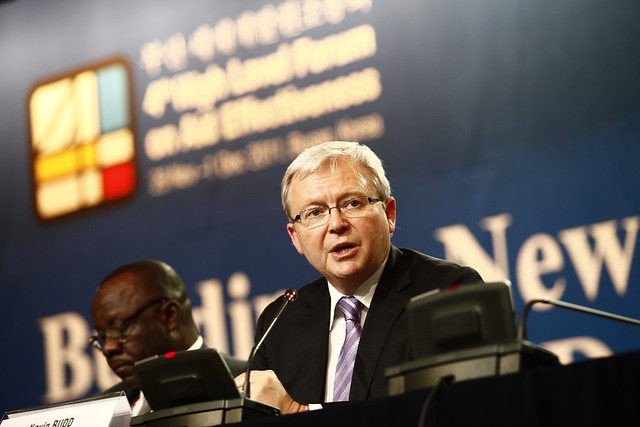
One way that governments have attempted to address these issues is through the New Deal for Engagement in Fragile States, signed by over 40 countries at the Fourth High-Level Forum on Aid Effectiveness in Busan, Korea in 2011. The New Deal promotes peace in the hopes that increased societal stability will lead to development.

In 2014, then-UN General Assembly President John Ashe said that “stability and peace are essential enablers of sustainable development, just as violence is one of its greatest obstacles.”

In accordance with the idea that peace and development are inextricably linked, the New Deal established Five Peacebuilding and Statebuilding Goals (PSGs) that both strong and fragile states committed to pursuing in states with weak institutions: legitimate and inclusive politics, justice, security, revenue and services and economic foundations.

The project was based upon the notion that civil society, development partners and government can work together for development. For the last five years, the New Deal worked on how to better integrate civil society into the peace-building process as a central actor, rather than one on the periphery. As a framework, the New Deal promotes peace and can be used by countries as a means to effectively implement sustainable development.

Unfortunately, while lofty in ideals, the implementation of the PSGs and the New Deal has had mixed levels of success. As each country faces different types and levels of fragility, integrating New Deal policies with existing frameworks can be difficult; and, assessing that fragility requires comprehensive engagement with the population.

Additionally, the technocratic tendencies of the New Deal could oftentimes hamper dialogue and meaningful participation of civil society.

While yet imperfect, commitment to the New Deal remains strong, as countries realize the necessity to address peace and development in conjunction with one another. Therefore, societies cannot experience growth and development without a responsive and resilient state.

For the 1.4 billion people who live in fragile states today, there is still much work that remains to be done. The building of stable institutions requires time, political capital, prolonged commitment and country leadership. In the context of the New Deal, peace and development must be pursued, in conjunction with one another, in order to establish stable institutions and resilient growth.

– Adam Gonzalez
Photo: Flickr

September 9, 2016
https://borgenproject.org/wp-content/uploads/borgen-project-logo.svg 0 0 Borgen Project https://borgenproject.org/wp-content/uploads/borgen-project-logo.svg Borgen Project2016-09-09 01:30:382024-06-11 02:48:20New Deal Promotes Peace Necessary for Development
Development, Global Poverty

Nonprofit Aims to Increase Women’s Land Rights in India

Land Rights in India

Rajesh Prabhakar Patil of the Impatient Optimists agrees with Melinda Gates that data is generally sexist, meaning there is often more research about men than women. He also believes that there is an urban bias — individuals living in rural areas are often excluded from studies.

This means that it can be especially difficult to find information about the plight of rural women. Patil, along with the nonprofit Landesa, seeks to change and gather more information about women’s land rights in India.

The Plight for Women’s Rights

Patil’s passion for women’s land rights in India stems from his personal belief that “land can provide [women] with a powerful tool to fight poverty — [the ability] to create opportunity.”

In rural India, one in 10 families includes a “dispossessed woman” who cannot own property. This could be a woman who is disabled, divorced, widowed or otherwise unable to live independently due to the stipulations regarding land rights for women.

Sometimes, women who are dependent upon their family, but are caught in dysfunctional relationships, cannot escape abuse due to their inability to purchase land and property that could serve as a refuge.

The lack of data regarding rural women in India can have a negative impact on women and their families. The government of the state of Odisha introduced a policy to give government-owned land to rural families in 2005. Unfortunately, due to a lack of documentation, many rural women were not considered as recipients for the program.

Landesa

Landesa, a nonprofit supported by the Gates Foundation, aims to find and assist women in India and other parts of the world who seek land ownership.

The organization conducts field research and works with local government officials to identify women and families in need of land. In India alone, 1,105,000 families have benefited from Landesa’s work.

According to Landesa’s website, an estimated 18 million families are both poor and landless in India. Their goal is to provide land to these women and lift their families out of poverty. The organization has been working with government leaders from various Indian states since 2000.

“What women do need is to be counted and to have programs responsive to their existence and their needs,” said Patil in a June 2016 post.

Patil appears optimistic about Landesa’s work on increasing women’s land rights in India. Rural women’s quality of life and access to opportunity may see an increase if they’re given the right to own land.

– Carrie Robinson

Photo: Flickr

September 4, 2016
https://borgenproject.org/wp-content/uploads/borgen-project-logo.svg 0 0 Borgen Project https://borgenproject.org/wp-content/uploads/borgen-project-logo.svg Borgen Project2016-09-04 01:30:282020-06-17 14:06:43Nonprofit Aims to Increase Women’s Land Rights in India
Children, Development, Education, Global Poverty, Health

Stronger Anti-Poverty Efforts for Disadvantaged Children

Disadvantaged Children
The United Nations International Children’s Emergency Fund (UNICEF) warned that 69 million disadvantaged children under the age of five will die of preventable causes by 2030 unless countries strengthen their anti-poverty efforts.

The World’s Children

UNICEF’s annual flagship report, the “State of the World’s Children 2016,” said that based on current trends, 167 million adolescents will live in poverty and 750 million women will have been married as children by 2030.

Despite recent advances in reducing global poverty, the report reflected the increasing risk that the world’s most disadvantaged face and the need for governments and aid organizations to do more to tackle inequality.

Many countries in the West were unwilling to accept millions of refugees and migrants fleeing poverty and conflict, mostly in the Middle East and Africa, around the time the 172-page report was released.

In a foreword to the report, Anthony Lake, the executive director of UNICEF said that inequities are shaping the survival rates of poor children and “perpetuat[ing] intergenerational cycles of disadvantage and inequity that undermine the stability of societies.”

Progress is Progress, but We Need More

The report acknowledged that progress was made to expand development and improve the plight of the world’s poor. Extreme poverty and global under-five mortality rates have been nearly halved since the 1990s and boys and girls attend primary school in equal numbers in 129 countries.

However, the report noted the benefits of anti-poverty efforts have been unequal and limited in many developing areas around the world.

Children born to uneducated mothers are three times more likely to die before the age of five than those born to women with secondary education in sub-Saharan Africa and Southeast Asia. Girls who grow up in extreme poverty are also twice as likely to be married as children than girls from the wealthiest neighborhoods.

Nearly half of the 69 million disadvantaged children projected to perish from preventable causes will reside in sub-Saharan Africa where 247 children live in multidimensional poverty.

The report also found that insufficient access to quality education is still prevalent. Between 2010 and 2013, development assistance for basic education declined by 11%.

The number of children who do not attend school has also increased since 2011 and almost two in five adolescents who do finish primary school have not learned to read, write or do basic arithmetic.

The report recommended an increase in the investment of youth and education in order to guarantee a better future for the world’s children. According to UNICEF, cash transfers have helped children stay in school longer and each additional year of education that a child receives can increase his or her adult earnings by 10%.

Disadvantaged children need strengthened anti-poverty efforts for increased access to education, disease prevention and lower mortality rates — tasks that the global community can help accomplish.

– Sam Turken

Photo: Flickr

September 4, 2016
https://borgenproject.org/wp-content/uploads/borgen-project-logo.svg 0 0 Borgen Project https://borgenproject.org/wp-content/uploads/borgen-project-logo.svg Borgen Project2016-09-04 01:30:192024-05-27 09:34:31Stronger Anti-Poverty Efforts for Disadvantaged Children
Development, Health

Protect Against Zika: Can New Trends in Vaccinations Help?

Protect against zikaTop scientists around the globe are working and using new technologies to find out whether new trends in vaccinations could help protect against Zika. With the most recent and most popular public health crisis at the forefront of international attention –the Zika virus outbreak– the world is bringing new information, methodology, literature and scientific measures at a pace that keeps followers baffled. Now, scientists hope to set a world record for the speed at which they can develop a Zika vaccine, and new technologies are helping them along the way.

These novel prevention and intervention procedures could change the way that the public health field addresses epidemics, namely viruses.

Leading the pack with the first grant, biotech company Inovio received approval from the Food and Drug Administration to conduct an experimental Zika vaccine trial on humans. They have already been able to prevent the virus from taking hold in monkeys, and Harvard Medical School reports developing two successful Zika vaccines that have shown promise in mice.

Although many companies and institutions are gunning to be the first, funding can be problematic. President Obama said that a Zika vaccine could be produced relatively quickly should Congress provide a budget for it. Democrats struck down a bill allotting 1.1 billion dollars to research for the vaccine because of tacked-on, unrelated political moves. The president attributed the denial of the bill to typical politics.

Despite this setback, new technology still allows for research to be conducted by private institutions. A relatively recent bit of tech called DNA vaccination now allows current Zika researchers to develop effective vaccines. This form of the shot only contains a fraction of the viral DNA, as opposed to an entire viral unit, allowing the production of these treatments to be more cost-effective and less dangerous.

In the past, one pitfall for researchers was the potency of the vaccine. This type of shot has to enter a cell in order to take hold (unusual in the world of vaccines), so it became necessary to invent new delivery technologies. Now, an electric shock may replace the classic puncture-style injection– a development claimed by Inovio.

So, can new trends in vaccinations help protect against Zika? Researchers hope to have a successful answer and vaccine in mass production by 2018.

– Connor Borden

Photo: Pixabay

September 3, 2016
https://borgenproject.org/wp-content/uploads/borgen-project-logo.svg 0 0 Borgen Project https://borgenproject.org/wp-content/uploads/borgen-project-logo.svg Borgen Project2016-09-03 01:30:502024-05-27 09:33:20Protect Against Zika: Can New Trends in Vaccinations Help?
Development

B-Energy: Biogas, Backpacks and Digester Systems

B-Energy
Solar and wind energy projects have been praised as potential ways to reduce global poverty. But German start-up organization B-Energy is promoting efficient use of another form of renewable energy to improve life in the developing world.

B-Energy has supplied households in Africa with biogas balloon backpacks, digester systems and stoves to help them convert organic waste into harnessed biogas. The energy that the bags and digesters produce can serve as cooking fuel and provide people with a source of income.

Developing countries have struggled to supply stable forms of energy to many of their inhabitants. According to the World Energy Outlook, approximately 80 percent of people without electricity live in rural areas in Sub-Saharan Africa and developing Asia. With no other alternative for energy, many people rely on biogas and struggle to efficiently transport and store it.

Founded by German entrepreneur Katrin Puetz, B-Energy serves as an innovative and affordable system that offers a reliable source of energy from human and animal waste and agricultural residue. B-Energy’s method revolves around its ‘B-pack’, which is an inflatable balloon backpack that holds methane gas produced from waste in a biogas plant or digester. People without their own plant can refill their B-packs at a nearby digester.

According to the BBC, each bag comes with a metal pipe, which users can attach to a gas-cooking stove. The bags hold 1.2 cubic meters of gas—enough for about five hours of cooking—and spare households from relying on wooden fires to prepare food.

Another key aspect of B-Energy’s system is that it creates entrepreneurial opportunities. As a “social business venture,” Puetz’s start-up encourages individuals with biogas digesters to sell their biogas to households. People with B-packs can also profit from supplying their leftover gas to others. B-Energy even provides aspiring entrepreneurs with a beginner’s kit—which includes a biogas digester, B-backpacks and stoves—and professional training to help them launch their biogas business.

Since its inception in 2014, B-Energy has steadily grown, establishing franchises in Sudan and Ethiopia. Puetz refused to accept grants from global charities in order to prove that her enterprise can be self-sufficient.

Moving forward, a significant obstacle for B-Energy is to determine how to lower the cost of its system. The Inter Press Service has reported that Ethiopians have to pay approximately 12,000 birr—equivalent to $600—for a biogas plant, two backpacks and a cooking stove.

Puetz hopes to make the B-Energy systems more affordable by allowing franchises and households to pay in installments. This change would expand access to his innovative energy solution and assist countless more in need.

– Sam Turken

Photo: Geographical

August 26, 2016
https://borgenproject.org/wp-content/uploads/borgen-project-logo.svg 0 0 Borgen Project https://borgenproject.org/wp-content/uploads/borgen-project-logo.svg Borgen Project2016-08-26 01:30:332024-12-13 17:54:41B-Energy: Biogas, Backpacks and Digester Systems
Activism, Aid Effectiveness & Reform, Development, Global Poverty

Three Attributes for an Improved U.S. Aid Package to Cuba

U.S. Aid Package to Cuba
“The changes in Cuba are for more socialism,” reads a sign in Havana. As relations between the United States and Cuba become warmer, this statement reflects how the U.S. aid package to Cuba should strive to protect its notable accomplishments in human development.

An improved U.S. aid package to Cuba is essential, and with it must come certain qualifications and stipulations that benefit both the U.S. and Cuba.

But what exactly should Americans look for in the next set of policy changes toward the island nation? Here are three attributes to support for an improved U.S. aid package to Cuba.

1. Lifting restrictions on U.S.-backed NGOs

It is true that Cuba boasts one of the lowest rates of extreme poverty in the world—1.5 percent in 2006. But despite this achievement, the island still suffers from food insecurity.

With an average monthly income of $20, even a typical Cuban government employee cannot afford meat daily. Milk, cheese or ice cream are reserved as weekly treats, and an aging population means that Cuba will struggle to meet more specific nutritional requirements in the future.

Yet many NGOs, especially those from Europe, must bypass subsidiaries in the United States and look elsewhere for funding. Major funding partners such as the World Bank, IMF and Inter-American Development Bank are blocked due to American veto powers in these institutions. These restrictions limit capacity-building in the agricultural sector.

In the words of one Cuban teacher, this is all too clear: “People want to leave Cuba just because they are hungry.”

2. Funding for Collective Enterprise

Cubans love to share, and one of the ways the island recovered from the fall of the Soviet Union was through its collective (public-private) business. In fact, the number of small to medium-sized firms has grown to roughly half a million since Raul Castro took office.

Raul has also implemented other changes. Private and hybrid firms can now sell services to each other and to government entities. New credit lines are being issued with unlimited ceilings, and decreases in the value of welfare and food subsidies are motivating Cubans to try entrepreneurship.

For instance, at Bella II Beauty in Havana, one esthetician is now making $42 per month instead of the $14 while under government control. Her business is one such worker cooperative.

“The inspector would come and the products that weren’t from here,” she says, “I had to hide them.”

Under the collective business model, workers can now streamline operations to increase profits, with each having say in their decision-making.

To add to this, the Cuban government is cutting back on expenses, as its banks are unable to provide more than $40 in loans to individual citizens. The Brookings Institution estimates that over 500,000 civil service jobs will be terminated in coming years to halt the bloating of public sector employment.

An improved U.S. aid package to Cuba would, therefore, support economic cooperatives with training, technical expertise, and financial resources to continue their growth.

3. Support for the Housing Sector

Every three days in Havana, at least two buildings collapse on average. This statistic sums up the state of Cuban housing: a cramped, expensive and decaying affair.

Over 85 percent of Cubans own their homes thanks to transfer measures that turned renters into owners during the revolution. But there are 11.2 million residents living in 3.9 million homes. This means that Cubans often live with not only their partners, but also their parents and grandparents.

Government estimates indicate that more than 500,000 additional housing units are required to meet demand, but construction is lagging. In order to reach that goal within eight years, the government would need to build 70,000 units per year, compared to its current yield of 16,000.

This is another opportunity for NGOs to offer properly trained labor and grants, especially since mortgages are illegal in Cuba to prevent real-estate speculation. In the words of prize-winning jurist Rodolfo Fernandez, “Housing is for living in, not for making a living from.”

An improved U.S. aid package to Cuba would preserve these unique advances by finding a middle ground between full-fledged capitalism and the more regulated (think: France) vision held by the island’s citizens.

– Alfredo Cumerma

Photo: Pixabay

August 24, 2016
https://borgenproject.org/wp-content/uploads/borgen-project-logo.svg 0 0 Borgen Project https://borgenproject.org/wp-content/uploads/borgen-project-logo.svg Borgen Project2016-08-24 01:30:172024-12-13 18:05:49Three Attributes for an Improved U.S. Aid Package to Cuba
Development, Technology

Cell Phones in Africa Transform Banking

Cell Phones in AfricaIt is fair to say that cell phones have officially infiltrated Africa’s countries and completely transformed people’s methods of banking and agriculture. The increase of ease for both of these professions have factored into poverty reduction and the betterment of African lives. When it comes to banking, having access to cell phones in Africa is both useful and productive.

Cell Phones and Personal Finances

Cellular devices can easily be used to keep track of funds, to store funds in a safe location and to transfer funds. In 2007, Safaricom–Kenya’s largest mobile operator–and Vodafone developed a money transferring service called M-PESA. By 2012, M-PESA obtained 15 million Kenyan users–more than a third of the population. This newfound access to portable technology has also been extremely helpful in pulling people out of poverty-stricken situations.

For example, many users transfer their funds to individuals who are still trapped in severely impoverished rural areas. M-PESA provides a safer way to send someone money, so it cannot be stolen easily. The individuals who use M-PESA to store their funds also benefit. Their funds can be easily managed, which has caused an increasing amount of families to adopt this technology.

“One study found that in rural Kenyan households that adopted M-PESA, incomes increased by 5-30 percent,” according to The Economist. This proves that mobile phones help people climb the financial ladder to live better lives. There are also many African startup companies who have used M-PESA as a platform to initially pave their way in the business world.

Cell Phones and Agriculture

As previously stated, mobile phones have changed Africans’ way of agriculture as well. Farmers, the largest employers in Africa, now rely on their mobile phones for critical informational tips. “By serving as platforms for sharing weather information, market prices, and micro-insurance schemes, mobile phones are allowing Africa’s farmers to make better decisions, translating into higher-earning potentials,” according to CNN.

Farmers can figure out distant crop prices faster than ever before and effectively track the gestation of their cows. Therefore, the use of cell phones in Africa has allowed farmers to drastically improve their agricultural methods, which makes it easier to sustain their livelihood. The Borgen Project advocates for the world’s poor and knows how essential it is for developing countries to be able to sustain themselves. The use of cell phones in Africa have only helped in that regard, and it looks as if the technology is here to stay.

Cell Phones and Technological Advancements

Due to the technologically advanced world surrounding Africa, most Africans can enjoy the today’s “tech” nuances and pass over the dying technology of the past (such as landlines). In the year 2002, around one-in-10 Africans owned a mobile phone. In 2006, “There were 50 million new mobile subscribers… and in 2007 the total number of mobile subscriptions reached an estimated 200 million.” On average, that adds up to 20-plus active mobile phones for every 100 people.

The decline in cost and simplistic nature of mobile technology are the reasons why so many Africans have chosen to use portable tech. A report by the UNCTAD stated, “A decline in the cost of information and communication technology (ICT) has extended its use by the poor, who capitalize especially on information obtained by telephone to support livelihoods in agriculture and various small businesses.”

It is incredible to see how the proliferation of cell phones in Africa have so positively impacted the continent in such a short amount of time.

– Terry J. Halloran

Photo: Flickr

August 18, 2016
https://borgenproject.org/wp-content/uploads/borgen-project-logo.svg 0 0 Borgen Project https://borgenproject.org/wp-content/uploads/borgen-project-logo.svg Borgen Project2016-08-18 01:30:192024-12-13 17:54:44Cell Phones in Africa Transform Banking
Development, Global Poverty, Women and Female Empowerment

Landesa’s Fight for Female Land Rights in India

women's land rights

The nonprofit organization Landesa is taking an important step in the battle against global poverty. Its goal is to increase female land rights in rural areas.

Though women make up about 43 percent of the agricultural labor force in the poorest regions of the world, they are often denied rights to own, control or inherit land. The lack of land rights can cause difficulties for women living in poverty who are “dispossessed,” meaning unmarried, widowed, divorced or disabled. These women are often forced to rely on extended family members for shelter, food and other necessities.

In Odisha, India alone, an estimated 500,000 single and landless women live in rural areas. Without access to land, they have few methods to adequately support themselves or lift themselves out of poverty.

Programs that aim to alleviate poverty by distributing land often fall into the trap of ignoring the ways in which experiences of land ownership and poverty are gendered. Odisha launched a government program called Vasundhara in 2005. The program allocated plots of government land to landless, rural families. However, due to government policies that overlooked the needs of rural, dispossessed women, many women were ineligible for the program.

Landesa, with support from The Bill and Melinda Gates Foundation, is working to rectify these oversights with a new woman-centric program that will help identify women in need through local health workers. They are working to create an inventory of single women in need of government land and social security entitlements. They are then served through Women Support Centers that help them apply for government services.

Over 5,000 dispossessed  women have been the beneficiaries of homestead land, and another 15,000 cases are currently being verified. The land rights project, though relatively new, is experiencing much success and is set to establish female land rights for thousands worldwide.

– Jordan Little

Photo: Flickr

August 17, 2016
https://borgenproject.org/wp-content/uploads/borgen-project-logo.svg 0 0 Borgen Project https://borgenproject.org/wp-content/uploads/borgen-project-logo.svg Borgen Project2016-08-17 01:30:492024-12-13 17:55:31Landesa’s Fight for Female Land Rights in India
Page 109 of 163«‹107108109110111›»

Get Smarter

  • Global Poverty 101
  • Global Poverty… The Good News
  • Global Poverty & U.S. Jobs
  • Global Poverty and National Security
  • Innovative Solutions to Poverty
  • Global Poverty & Aid FAQ’s
Search Search

Take Action

  • Call Congress
  • Email Congress
  • Donate
  • 30 Ways to Help
  • Volunteer Ops
  • Internships
  • Courses & Certificates
  • The Podcast
Borgen Project

“The Borgen Project is an incredible nonprofit organization that is addressing poverty and hunger and working towards ending them.”

-The Huffington Post

Inside The Borgen Project

  • Contact
  • About
  • Financials
  • President
  • Board of Directors
  • Board of Advisors

International Links

  • UK Email Parliament
  • UK Donate
  • Canada Email Parliament

Get Smarter

  • Global Poverty 101
  • Global Poverty… The Good News
  • Global Poverty & U.S. Jobs
  • Global Poverty and National Security
  • Innovative Solutions to Poverty
  • Global Poverty & Aid FAQ’s

Ways to Help

  • Call Congress
  • Email Congress
  • Donate
  • 30 Ways to Help
  • Volunteer Ops
  • Internships
  • Courses & Certificates
  • The Podcast
Scroll to top Scroll to top Scroll to top