• Link to X
  • Link to Facebook
  • Link to Instagram
  • Link to TikTok
  • Link to Youtube
  • About
    • About Us
      • President
      • Board of Directors
      • Board of Advisors
      • Financials
      • Our Methodology
      • Success Tracker
      • Contact
  • Act Now
    • 30 Ways to Help
      • Email Congress
      • Call Congress
      • Volunteer
      • Courses & Certificates
      • Be a Donor
    • Internships
      • In-Office Internships
      • Remote Internships
    • Legislation
      • Politics 101
  • The Blog
  • The Podcast
  • Magazine
  • Donate
  • Click to open the search input field Click to open the search input field Search
  • Menu Menu

Archive for category: Developing Countries

Information and stories about developing countries.

Aid, Developing Countries, Global Poverty, Poverty Reduction

Bankers Without Borders: Global Integration

bankers-without-borders
The developing world is constantly in need of skilled professionals to not only provide immediate assistance but also to help train future workers so as to create a sustainable and self-sufficient community workforce.

For years, organizations like Doctors Without Borders, and Engineers Without Borders have been doing just that: on the one hand these organizations provide care and construct necessary structures respectively, but they also train and instruct local medical students and potential engineers.

However, as developing economies grow, there too needs to be financial assistance and instruction. Bankers Without Borders is attempting to propel developing countries into commercial modernity.

The mission of the organization is to enable citizens in developing countries to realize their full economic potential given the proper tools and training.

The organization was founded by a parent body called the Grameen Foundation. The Grameen Foundation was formed to help optimize other NGOs in terms of gross impact and overall efficiency.

In 2008, the group realized it could use its expertise to directly help those living in abject poverty.

Bankers Without Borders works as an independent organization and also teams up with local and global businesses to offer educational, financial, and consulting services across the developing world.

The organization utilizes nearly 19,700 business professionals, all of whom volunteer their time to help grassroots campaigns, small businesses, and individual investors and entrepreneurs.

As cliché as it is to say, knowledge is power, and anyone who posses it can reach a higher plane of potential. Those living in poverty certainly have the drive to become financially independent, and Bankers Without Borders is giving them the tools.

By encouraging modern, practical, and useful financial knowledge as well as helping to optimize new businesses, the organization is proving to be a huge relief to developing economies.

Bankers Without Borders hopes that one day those in developing countries can pass on the information learned to the next generation, thereby creating strong and self-sufficient modern economies.

– Joe Kitaj

Sources: Bankers Without Borders, Stand4, Doctors Without Borders, EWB-USA
Photo: Bankers Without Borders

September 30, 2015
https://borgenproject.org/wp-content/uploads/borgen-project-logo.svg 0 0 Borgen Project https://borgenproject.org/wp-content/uploads/borgen-project-logo.svg Borgen Project2015-09-30 14:05:082020-06-29 11:36:08Bankers Without Borders: Global Integration
Developing Countries, Global Poverty, Health

The Nursery of the Future

Nursery of the Future
Premature births are a very real scare for mothers in developed countries like the U.S., but in developing countries, they can mean almost certain death. Worldwide, premature birth is the leading cause of death for children under five years of age. Despite advances in technology that have made tremendous strides in improving health outcomes for babies born earlier than 37 weeks, in developing countries, where women may be at a higher risk for giving birth prematurely, this technology is generally widely unavailable due to high prices and lack of access to adequate healthcare. Nursery of the Future is working affordable alternatives to those who need it most.


The Birth of Nursery of the Future


A bioengineering professor at Rice University in Texas, Rebecca Richards-Kortum, consistently saw this problem and wanted to do something about it. Along with colleagues and students, Richards-Kortum has begun to develop “the Nursery of the Future.” The team has developed prototypes of alternatives to high tech, and high cost medical machinery that is common across the U.S., for use in more underdeveloped areas around the world.

One such example of a low cost alternative is a belly band. One common problem in preemies is neurological underdevelopment that can cause the baby to stop breathing. In hospitals across the countries, monitors alert nurses if a baby stops breathing and the nurse then stimulates the baby somehow to remind them to breathe. In developing countries, these monitors are often too expensive to be used and often times infants die before a nurse notices. The belly band developed by Richards-Kortum and Maria Oden, a colleague, was designed with a tiny motor attached to it that detects when a baby’s air intake is low, or they stop breathing, and vibrates to remind the baby to breathe.

The belly band is just one step towards the development of a whole “Nursery of the Future” kit. Richards-Kortum and the team hope to make the Nursery available for under $10,000 and widely accessible for community hospitals. The belly band has been tested in Texas and is approaching its first international trial in Malawi in the near future. The Nursery of the Future is a huge step in the global fight against child mortality and overall accessibility and affordability of medical devices. Innovations made in the Nursery Kit for preemies hold promise for innovations in other medical technologies that could improve access to essential medical devices around the world.

– Emma Dowd

Sources: Houston Chronicle, TED Talks

September 29, 2015
https://borgenproject.org/wp-content/uploads/borgen-project-logo.svg 0 0 Borgen Project https://borgenproject.org/wp-content/uploads/borgen-project-logo.svg Borgen Project2015-09-29 07:15:432024-12-13 17:54:06The Nursery of the Future
Developing Countries, Disease, Global Health, Global Poverty

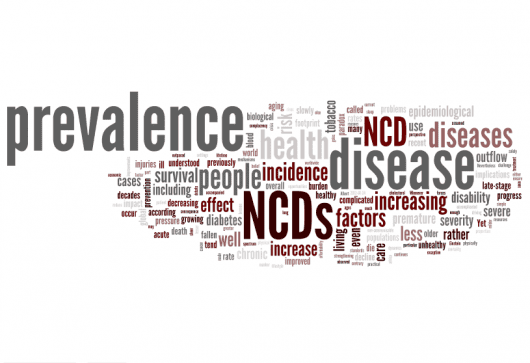
NCDs 101: How Do We Solve This Growing Problem?

ncd
The devastating effects of non-communicable diseases (NCDs) can be seen all around the globe. NCDs are responsible for the majority of deaths in developing countries, and they are not receiving the attention they need in order to be stopped.

NCDs are diseases that cannot be passed from person to person. Also known as chronic diseases, they last a long time and progress slowly. The four main types of NCDs are cardiovascular diseases, cancers, chronic respiratory diseases and diabetes. They can affect anyone of any age, gender, ethnicity, location or income.

However, the distribution of NCDs is not so equally spread. 80 percent of deaths caused by NCDs occur in low and middle-income countries, according to the World Health Organization (WHO).

As well as being concentrated in areas of poverty, NCDs have a large global impact. Sixty-eight percent of global deaths in 2012 were due to NCDs, and 42 percent were premature (before the age of 70) and avoidable, the WHO reports.

The combination of the prevalence of these diseases with the location (countries that are unable to help themselves), means that this problem is quickly growing out of control. Disease-specific solutions are being administered (vaccinations for AIDS, tuberculosis and malaria) in lieu of improving conditions so that NCDs are not even given a chance to affect a population.

Of course, vaccinations for communicable diseases are necessary as well, but they cannot be the sole solution in working toward better health. NCDs are proving to be more of a problem globally than other diseases, and, as such, the health conditions in suffering countries need our attention.

It is a fact that when measures are taken to prevent them, NCDs no longer majorly affect an area. This can be seen by the low numbers of deaths caused by NCDs in the U.S.–only 413 per 100,000 population in 2012 versus 967 per 100,000 in Mongolia, according to the WHO.

The difference between the U.S. and these affected countries is fewer risk factors. Tobacco use, unhealthy diet and physical inactivity are the top offenders, and lower-income countries lack the capacity to prevent and control these risks.

Although the UN has seen progress with its aid efforts, the focus on NCDs is lost. Goal six of the Millennium Development Goals (MDGs) lays out the initiative to combat HIV/AIDS, malaria and other diseases, but NCDs are not mentioned in the statistics.

For such a globally present cause of death, it would seem natural that NCDs would be a priority for 2015. However, that is simply not the case.

So, where do we go from here?

We know that if the major risk factors for NCDs were eliminated, around three-quarters of heart disease, stroke and type 2 diabetes would be prevented, as well as 40 percent of cancers, according to the WHO.

Health Affairs argues that Universal health coverage provides the opportunity for these diseases to be eradicated long-term. As far as combating NCDs, people in areas of extreme poverty need to be supplied with ways to obtain the necessary medicines without having to pay out-of-pocket.

More attention needs to be given to making accessible health care in developing countries a reality and taking care of those who are losing their lives due to preventable diseases.

In doing so, we must remember: we can conquer NCDs.

– Ashley Tressel

Sources: Health Affairs, UN, WHO, WHO 1, WHO 2, WHO 3, WHO 4
Photo: NotEnoughGood.com

September 29, 2015
https://borgenproject.org/wp-content/uploads/borgen-project-logo.svg 0 0 Borgen Project https://borgenproject.org/wp-content/uploads/borgen-project-logo.svg Borgen Project2015-09-29 02:16:102024-12-13 18:05:07NCDs 101: How Do We Solve This Growing Problem?
Children, Developing Countries, Global Health, Global Poverty

NeoVent Reaches Babies in the Developing World

Developing World's Babies Can Now Breathe Easier
In rural parts of the developing world, health care is iffy at best. If there is a healthcare facility, it often lacks trained employees and equipment. The equipment may even be outdated due to the expense to update it. And, too often, people traveling to a healthcare facility die in their travels.

This is the case seen in newborns when they are born in a rural village and must make the voyage to the nearest healthcare facility. It is very common for premature newborns to have difficulty breathing.

“Hospitals supply continuous positive airway pressure (CPAP) to keep the lungs ‘open’ as the baby breathes on its own. However, very premature babies who cannot breathe on their own require dual pressure treatment along with CPAP to provide both negative and positive pressure to the lungs at a normal breathing frequency.”

In first world countries, this is an easy fix because they are usually born at a hospital with the necessary equipment. However, this is not true in the rural parts of the developing world. Babies that need treatment for underdeveloped lungs do not have access to the dual pressure treatment system because the equipment is expensive, difficult to operate, or hard to upkeep.

According to the World Health Organization, the mortality rate of premature infants in underdeveloped countries can be up to eight times higher than in the U.S., due to lack of resources. But there is hope for the newborn babies of the developing world.

Stephen John and Joseph Barnett, two engineering students at Western Michigan University (WMU), invented the NeoVent. This device is an easy-to-operate dual-pressure system that is aimed at helping premature babies breathe.

“The NeoVent consists of an innovative oscillatory relief valve, and is driven by excess air generated by the CPAP machine. Air at a constant pressure is transported from the CPAP machines into the child’s airway via a tube. The tube is submerged into water to produce bubbles, which are caught in a small inverted bowl on the relief valve.”

As this tube fills bubbles, a positive pressure is applied to the infant’s lungs, bringing in air. And as the bubbles disperse, a negative pressure is applied to the infant’s lungs, pulling air out of the lungs. This is seen as a breathing motion on the infant’s chest.

By keeping the developing world in mind, John and Barnett have priced the machine at a mere $25. The engineering students plan to implement the NeoVent in limited resource facilities in Nepal, Kenya and Uganda.

John and Barnett received $3,500 as U.S. winners of the 2015 James Dyson Award. The students plan to use this money to start clinical trials and manufacture a second round of production level devices.

The NeoVent also won the Lemelson-MIT undergraduate “Cure It” competition and the Brian Thomas Entrepreneurial competition at Western Michigan University. In addition to these awards, NeoVent is also the recipient of a VentureWell E-teams grants and a research grant from WMU’s honors college.

NeoVent maybe not look like the expensive technology in state of the art hospitals, but it functions just the same. By creating an effective and affordable device, John and Barnett will be saving many premature infants’ lives in the developing world.

– Kerri Szulak

Sources: Machine Design, WMU News
Photo: Flickr

September 21, 2015
https://borgenproject.org/wp-content/uploads/borgen-project-logo.svg 0 0 Borgen Project https://borgenproject.org/wp-content/uploads/borgen-project-logo.svg Borgen Project2015-09-21 01:30:322020-06-25 19:28:40NeoVent Reaches Babies in the Developing World
Developing Countries, Global Poverty, USAID

USAID Sets New Goals for Maternal Health

maternal health
The United States Agency for International Development, or USAID, is a government organization in charge of allocating funds and aid to global issues.

Millions around the globe have felt such power and emotion in the form of kisses, hugs, listening ears, and countless late nights.

However, maternal and child survival continues to be among the key issues that feed into the poverty crisis in developing countries around the world.

According to the UN, “a woman dies from complications in childbirth every minute – about 529,000 each year – the vast majority of them in developing countries.”

As part of the Millennium Development Goals, which concluded earlier this year in 2015, several countries banded together in order to increase maternal and child survival by three-quarters. While the target was not met, significant progress was made and millions of lives were saved in countries that normally do not receive the care and resources required for a healthy delivery.

Now that 2015 is coming to an end, many countries and organizations are now setting new goals to improve maternal and child survival. USAID recently came out with its new goal to reach an additional 38 million women with increased access to care during childbirth.

With this goal in mind, an action plan was put together in order to achieve this milestone. On their site the organization stated, “the USAID report details how to reach 38 million of the most vulnerable women around the world with increased access to health care during delivery by 2020.”

This plan includes a focus on 24 target countries including, but not limited to Ethiopia, Nepal, Afghanistan, Haiti, and India.

With this aid, more mothers have had access to care during and after the birth of their children. A recent article from the USAID Impact blog reported successes within some of these target countries.

The organization reports that in Ethiopia, 38,000 workers have been trained and dispatched around the country to help mothers and children. In Nepal, female workers travel to provide women with antiseptic gel, free of charge, to reduce infant infection. Malawi has increased efforts to save infants born without fully developed lungs.

Similar stories are beginning to flourish in developing countries around the world. With countries receiving the necessary resources and aid during this vulnerable time for both mother and child, lives are being saved and general health standards improved.

The survival of these mothers and children around the globe is imperative if we are to alleviate the poverty crisis our world now faces.

To quote the USAID Impact post, “When a child dies, and when a mother dies giving birth, it is a tragedy for all of us…because it continues the cycle of extreme poverty that holds the entire world back. Together, we can break that cycle.”

When a mother is lost, children and fathers feel the strain and the community as a whole is affected. When a child is lost, the community misses out on that child’s potential accomplishments and impact. With USAID reaching out to the formerly unreachable, maternal and child survival increases and the community as a whole improves.

– Katherine Martin

Sources: UNICEF, USAID 1, USAID 2
Photo: pixabay

September 21, 2015
https://borgenproject.org/wp-content/uploads/borgen-project-logo.svg 0 0 Borgen Project https://borgenproject.org/wp-content/uploads/borgen-project-logo.svg Borgen Project2015-09-21 01:30:072024-12-13 18:05:08USAID Sets New Goals for Maternal Health
Developing Countries, Women & Children

Midwives in Chiapas: Lowering Maternal Mortality Rates

quotes about humanity

Maternal mortality rates in Mexico have steadily decreased over the past fifteen years. The global maternal mortality rate has decreased by nearly 50 percent between 1990 and 2013. However, the work is far from over.

Ninety-nine percent of maternal deaths happen in underdeveloped countries according to the World Health Organization. Chiapas is the poorest state in Mexico with a poverty level at over 76 percent.

Maternal mortality rates can be significantly lowered with skilled care and supervision throughout the childbirth and traditional birth attendants are being trained to offer this care through workshops and programs in Chiapas.

Traditional midwives are extremely important in communities within Chiapas because of the negative connotation that comes with hospitals and the hesitation that women have toward giving birth in hospitals. Fifty-five or more out of every 100,000 women die in Chiapas during childbirth.

The traditional midwives are receiving training for problems that arise during obstetric emergencies. Understanding the protocol will allow them to act quickly in situations that may cost the mother’s life.

https://www.youtube.com/watch?v=jCuE8Y0d8sk

One such organization is the Global Pediatric Alliance. The alliance has started a training program for midwives in Chiapas. They have programs in four different municipalities in Chiapas. Los Altos de Chiapas is the first community and 88 percent of the population is poor. Fifty-six percent of the population lives in extreme poverty.

The plan is to train at least 120 Tzeltal and Tzotzil-speaking midwives between 2014 and 2017. An estimated 100,000 people will be impacted by the project. The second municipality is Las Margaritas, a highly marginalized area with extremely low Human Development Index rankings.

The isolated communities in the area particularly suffer from the lack of care adequate obstetric care. The program with GPA has already held five trainings for 29 traditional birth attendants in the area.

The training of midwives is changing the maternal mortality rates and the risks of home births in Chiapas.

– Iona Brannon

Sources: Arizona State University, Global Pediatric Alliance, New York Times, Reuters, World Health Organization 1, World Health Organization 2

September 20, 2015
https://borgenproject.org/wp-content/uploads/borgen-project-logo.svg 0 0 Borgen Project https://borgenproject.org/wp-content/uploads/borgen-project-logo.svg Borgen Project2015-09-20 07:48:212024-05-27 09:27:53Midwives in Chiapas: Lowering Maternal Mortality Rates
Activism, Developing Countries, Global Poverty

Developing World Connections: Poverty-Alleviating Projects

Developing World Connections Creates Poverty-Alleviating Projects for Underdeveloped Communities
Of the 31 million people living in Peru, roughly 26 percent of them live in poverty. With the idea of a globally engaged, poverty-free and socially just world, Developing World Connections and its many volunteers work alongside locals to counter poverty in Lima, Peru and surrounding communities among many other countries on different continents.

Developing World Connections’ mission is to connect people and resources through international community development. The organization has impacted nine countries on three different continents so far.

Developing World Connections has worked in Peru, Guatemala, Nepal, India and Kenya among others. Some of the projects include working with children and youth, education and training, food and water security and homes and community building. As a whole, the organization is focused on having a global impact.

In Nepal, Developing World Connections works with Creating Possibilities, an organization dedicated to increasing the rights for women and children. The goal of this partnership is to help women make substantive income to provide their children. In India, Developing World Connections works with Comfort the Children International to create sustainable change.

Developing World Connections bases its projects on a number of guiding principles as follows:

  1. The main approach is to achieve its goals through sustainable community development. The organization will work with and support community-led projects created based on community needs and priorities. The organization determines these needs and priorities through in-country Host Partners, whom they work with to alleviate poverty, promote human rights and empower communities.
  2. The second approach is being of service. With its belief that serving others has a greater impact on one’s well-being, Developing World Connections dedicates its time to helping communities through bottom-up, egalitarian and grassroots initiatives.
  3. Developing World Connections aims to develop meaningful connections with the people and communities it serves, with the purpose being to connect everyone — development partners, community members, volunteers and donors — on a larger scale. These strong connections open up the possibility of enriching each other’s lives, gaining hands-on development experience and learning more about the global community.
  4. Developing World Connections uses its fourth principle, integrity, accountability and transparency, to form meaningful connections. It contributes honesty and openness to its image while making sure all responsibilities to stakeholders are met.
  5. The fifth principle puts the fourth one on fellow people, encouraging them to have integrity, accountability and transparency with the world around them to gather a true understanding of the global community.
  6. Lastly, Developing World Communities puts in an effort to implement projects to help everyone, regardless of race, sex, religion or political affiliations.

– Julia Hettiger

Sources: Developing World Connections, Verge Mahazine, Haganaisworth
Photo: Flickr

September 20, 2015
https://borgenproject.org/wp-content/uploads/borgen-project-logo.svg 0 0 Borgen Project https://borgenproject.org/wp-content/uploads/borgen-project-logo.svg Borgen Project2015-09-20 01:30:592020-06-25 10:26:13Developing World Connections: Poverty-Alleviating Projects
Developing Countries, Global Poverty

Making a Difference: School Gardens in Developing Countries

School Gardens in Developing Countries

Right now, world leaders are faced with a daunting challenge. At the current rate the population is growing, it is predicted that there will not be enough food to feed the world, especially in developing countries. Fortunately, the introduction of school gardens to education gives hope to the end of global poverty.

For many children in developing countries, students must walk to school at an utmost of 4 miles. Some children even walk to school knowing they will not have a lunch because their family could not afford the cost.

According to the World Food Programme (WFP), 795 million people are undernourished, meaning one in nine people will not receive enough food to lead a normal, healthy and active life.

Students cannot focus or comprehend new information in the classroom without a proper meal. If students do not learn and go to school, the cycle of poverty will most likely continue.

A solution to this problem exists with school gardens that can help overcome the nutritional crisis. Not only will children be guaranteed a meal during lunch, but they can also learn how to eat a healthy and nutritious meal.

For 14-year-old Marita Wyson, a student from Malawi, her school garden is making a lasting impact on her life and helping her gain the proper nutrients for healthy adolescent development.

“I am able to understand what my teachers are telling me,” she said. “My grandmother doesn’t have to worry so much about how she will provide food for me and my sister.”

With governments partnering with organizations around the world, school gardens are becoming increasingly popular and have shown to give students a better understanding about the environment. If children are introduced to agriculture and the environment at an early age, they are more likely to have a better attitude about the subject.

While the deadline for the U.N.’s 2015 Millennium Development Goals has passed this September, two of the most important goals — cutting poverty in half and making primary education universal — have come a long way since the turn of the century.

While poverty has been cut in half since 1980, primary education lags behind in developing countries including sub-Saharan Africa.

The introduction of these school gardens in developing countries may become the turning point in eradicating global poverty. With the world united, school gardens can make not only an immediate difference but ensure the future of children living in developing countries.

– Alexandra Korman

Sources: FAO, KCET, The Christian Science Monitor, Vox World, WFP
Photo: Flickr

September 20, 2015
https://borgenproject.org/wp-content/uploads/borgen-project-logo.svg 0 0 Borgen Project https://borgenproject.org/wp-content/uploads/borgen-project-logo.svg Borgen Project2015-09-20 01:30:502020-06-25 10:28:50Making a Difference: School Gardens in Developing Countries
Developing Countries, Development, Disease, Global Poverty, Health

Experts to Create a Global Health Risk Framework

What is the Commission on Global Health Risk Framework
In response to recent outbreaks of infectious diseases such as Ebola, Middle East respiratory syndrome (MERS), severe acute respiratory syndrome (SARS) and H1N1, the National Academy of Medicine is coordinating a new Commission on Global Health Risk Framework. The framework will address the need for better local and global health infrastructure to stem the spread of diseases on a global scale.

The Commission is a multinational, independent board made up of 18 members from 11 countries. The National Academy of Medicine serves as the secretariat. Those serving on the board are members of their countries’ health ministries and funds while others work in universities and the insurance industry.

To create the framework, the Commission will convene four workshops, each lasting up to three days. Topics include governance for global health, financial responses to pandemic threats, resilient health systems, and research and development of medical products.

A wide range of experts will address the layout of related global initiatives, challenges and lessons learned from past health threats, and the reactions of governments, communities, and the private sector during threats.

The first public meeting was held in Washington D.C. on July 29, 2015. At the conclusion of the four workshops, the commission will publish a consensus report on how to address the issues raised and will provide detailed recommendations for fixing  problem areas. The report is scheduled for release by the end of 2015.

– Katherine Hewitt

Sources: NAM 1, NAM 2, News Medical
Photo: Flickr

September 19, 2015
https://borgenproject.org/wp-content/uploads/borgen-project-logo.svg 0 0 Borgen Project https://borgenproject.org/wp-content/uploads/borgen-project-logo.svg Borgen Project2015-09-19 01:30:452020-06-26 02:08:48Experts to Create a Global Health Risk Framework
Developing Countries, Global Poverty, Technology

Field Ready Uses 3D Printing to Create Disaster Relief Supplies

Field Ready Uses 3D Printing to Create Disaster Relief Supplies
The United Nations Office for Disaster Risk Reduction (UNISDR) calculates that 2.9 billion people have been affected by disasters between 2000 and 2012. According to UNISDR, 1.2 million were killed and $1.7 trillion in damages sustained. Natural disasters and other humanitarian emergencies are a profoundly influential part of the global human experience.

Unfortunately, recovery from disaster can be just as costly, both to governments supplying aid and victims of the disasters themselves. In the aftermath of floods, earthquakes, conflict and other emergencies, access to basic items needed for survival is severely limited and expensive. NGO Field Ready understands this struggle.

“In a humanitarian disaster, simple items can mean the difference between life and death,” the organization’s website explains.

However, the site goes on to state, “A bucket, for instance, essential for health and hygiene, may only cost a few dollars in a capital city but supply chains and support costs mean that in reality this simple item is expensive and can take weeks or even months to arrive in the hands of disaster victims.”

The good news? 3D printing technology may just be the solution. Field Ready specializes in using the technology to meet the needs of disaster victims and provide humanitarian relief.

Following the 2010 earthquake that devastated Haiti, Field Ready worked with other relief organizations to print products like mosquito-net closures and tools for aid workers, TB patients, newborn babies and maternal care. The organization’s efforts established safer patient areas and workspaces, as well as reducing the risk of mosquito-borne disease.

During their first stint in Haiti, Field Ready’s members were especially struck by the shortage of maternal health equipment. Although nurses and doctors could sometimes improvise makeshift tools such as clamps for newborn children’s umbilical cords, Field Ready sought a better solution.

They were able to print clamps on 3D printing presses, reducing the risk of neonatal umbilical sepsis. Field Ready also trained Haitian staff to use 3D presses to ensure that they would have a permanent alternative to importing costly equipment from more developed areas at additional expense. Instead, health workers are now able to print parts and tools when needed.

Field Ready also printed a prototype for a prosthetic hand, assembled from only five parts, and proved the capacity for 3D presses to produce items needed to maintain and improve the printers themselves.

In total, Field Ready’s efforts in Haiti assisted a dozen aid workers and 60 medical patients. The organization has since set its sights on improving conditions in Nepal.

“In the coming weeks, an assessment will be carried out to determine how Field Ready can best contribute to medium and long-term recovery and reconstruction efforts,” the organization promised.

These efforts, they believe, will likely focus on repair and capacity building, with an eye to help the Nepalese spearhead their own recovery and development.

“Even in crisis situations, people need more than just ‘stuff’ […] they need the skills and knowledge that will empower them to look after themselves and those around them,” the organization asserts.

Field Ready seeks to give disaster victims that tool for empowerment through technology. Through training disaster survivors in developing areas, the organization is able to leave a lasting impact. Trainees learn skills they can use to generate income and continue to develop solutions to supply issues facing marginalized regions.

Field Ready has an eye to expand, with the goal of a worldwide network of 3D printing technicians and kit designers. Linked by the Internet, this network would have the potential to share designs and solutions instantaneously on a global scale.

– Emma-Claire LaSaine

Sources: Sci Dev Net, Field Ready, UNISDR, Relief Web
Photo: 3D

September 12, 2015
https://borgenproject.org/wp-content/uploads/borgen-project-logo.svg 0 0 Borgen Project https://borgenproject.org/wp-content/uploads/borgen-project-logo.svg Borgen Project2015-09-12 08:07:282020-06-30 09:10:40Field Ready Uses 3D Printing to Create Disaster Relief Supplies
Page 138 of 157«‹136137138139140›»

Get Smarter

  • Global Poverty 101
  • Global Poverty… The Good News
  • Global Poverty & U.S. Jobs
  • Global Poverty and National Security
  • Innovative Solutions to Poverty
  • Global Poverty & Aid FAQ’s
Search Search

Take Action

  • Call Congress
  • Email Congress
  • Donate
  • 30 Ways to Help
  • Volunteer Ops
  • Internships
  • Courses & Certificates
  • The Podcast
Borgen Project

“The Borgen Project is an incredible nonprofit organization that is addressing poverty and hunger and working towards ending them.”

-The Huffington Post

Inside The Borgen Project

  • Contact
  • About
  • Financials
  • President
  • Board of Directors
  • Board of Advisors

International Links

  • UK Email Parliament
  • UK Donate
  • Canada Email Parliament

Get Smarter

  • Global Poverty 101
  • Global Poverty… The Good News
  • Global Poverty & U.S. Jobs
  • Global Poverty and National Security
  • Innovative Solutions to Poverty
  • Global Poverty & Aid FAQ’s

Ways to Help

  • Call Congress
  • Email Congress
  • Donate
  • 30 Ways to Help
  • Volunteer Ops
  • Internships
  • Courses & Certificates
  • The Podcast
Scroll to top Scroll to top Scroll to top