• Link to X
  • Link to Facebook
  • Link to Instagram
  • Link to TikTok
  • Link to Youtube
  • About
    • About Us
      • President
      • Board of Directors
      • Board of Advisors
      • Financials
      • Our Methodology
      • Success Tracker
      • Contact
  • Act Now
    • 30 Ways to Help
      • Email Congress
      • Call Congress
      • Volunteer
      • Courses & Certificates
      • Be a Donor
    • Internships
      • In-Office Internships
      • Remote Internships
    • Legislation
      • Politics 101
  • The Blog
  • The Podcast
  • Magazine
  • Donate
  • Click to open the search input field Click to open the search input field Search
  • Menu Menu

Archive for category: Developing Countries

Information and stories about developing countries.

Developing Countries, Global Health, Global Poverty

World Bank: Public in Favor of Global Health Initiatives

world bankA new study from the World Bank shows a growing emphasis on global health concerns among the public in developed countries.

The study asked respondents in France, Germany, Japan, the United States and the United Kingdom a series of questions about global issues. A total of 4,000 interviews were conducted, including some that focused on members of the public with university degrees who follow global news closely.

The study reached three important conclusions.

First, many people were concerned about global health and outbreaks of infectious diseases. This is largely due to the outbreak of Ebola, which made headlines around the world in previous months.

In total, 72 percent of those polled followed Ebola news closely over the past year. Among those respondents who are college-educated and who follow global news closely, 85 percent followed Ebola news closely.

Many respondents (31 percent) ranked global health as one of their top three important concerns, just behind terrorism (60 percent) and global warming (40 percent).

Respondents were also concerned that their country was not ready for the next global health outbreak. According to 40 percent of responses, the global community will face an epidemic within the next ten years. Those living in the United States, the United Kingdom and France were most concerned about global infectious disease preparedness.

Finally, and perhaps most importantly, respondents in the survey agreed that it would be of great benefit to increase funding for global health measures in the developing world.

Doing so, most believed, would protect their own countries from the spread of infectious diseases originating abroad. Many felt this would be cost-effective and were supportive of doctors and nurses from their own countries going abroad to help.

The results shed light on changes in public perception of global health following the Ebola outbreak. The anxiety stemming from that event has launched global health into the forefront of international issues, alongside terrorism and global warming.

There is hope that this increased awareness might result in greater levels of funding for preventive measures.

– Kevin McLaughlin

Sources: Devex, Newsweek, World Bank

Sources: Pixabay

August 16, 2015
https://borgenproject.org/wp-content/uploads/borgen-project-logo.svg 0 0 Borgen Project https://borgenproject.org/wp-content/uploads/borgen-project-logo.svg Borgen Project2015-08-16 01:30:552024-12-13 18:04:47World Bank: Public in Favor of Global Health Initiatives
Developing Countries, Global Poverty, Health

Twin Pregnancy in Developing Countries

Twin_births
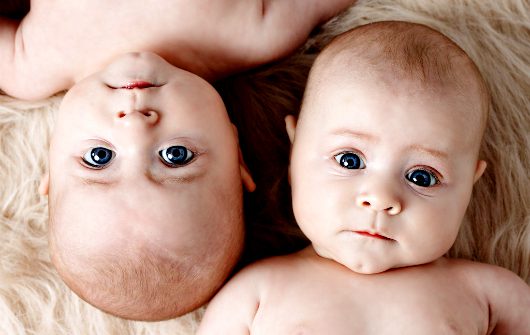
Multiple births, two or more babies born at the same time, are a relatively small percentage of all the births worldwide. Twins represent only 3.3 percent of births in the United States (CDC) and, depending on the global region looked at, the rate is even lower in the developing world.

But even with such small numbers, twin births can present a large health concern for both mother and unborn children alike. The risks are even more pronounced in the developing world.

Twins have a much higher chance of being born prematurely, and they can be underweight, which often leads to more time in the NICU. Also, twin-twin transfusion, “when identical twins share a placenta and one baby gets too much blood flow, while the other baby doesn’t get enough,” is a possibility. The most startling statistic is that in the developing world, “among stillbirths, the proportion of twins is probably somewhat higher than among live births, as fetal (and neonatal) mortality is higher among twins.”

Complications arise when mothers do not receive adequate prenatal care. Women in the developing world often do not receive enough care when they are pregnant with a single child, let alone the need for additional monitoring and ultrasounds when having a multiple birth.

A study conducted in urban Guinea-Bissau found that “sixty-five percent (245/375) of the mothers who delivered at the hospital were unaware of their twin pregnancy.” Sometimes a mother will not measure larger than average to indicate a twin pregnancy, a second heartbeat is not always discernable, and/or bloodwork is not drawn to measure hCG (pregnancy hormone). Even if any of those previous criteria were met, only an ultrasound can confirm a multiple birth.

The unborn children are not the only ones at risk; mothers also face pregnancy complications at a higher rate when carrying multiple children, like pre-term labor, anemia, gestational diabetes, preeclampsia, hyperemesis gravidarum (severe morning sickness), polyhydramnios (too much amniotic fluid), miscarriage/stillbirth, postpartum depression and postpartum hemorrhage.

While these issues have the possibility to affect all mothers experiencing a multiple birth, the complications can be exacerbated when they live in poverty. Access to a hospital for an emergency may not be possible, especially in regions that are remote. Finances to afford a hospital stay can also be an issue, especially since many multiple births are delivered through c-section.

A 2008 study done in a rural mission tertiary hospital in Nigeria found that of the twin deliveries that happened there, 60 percent of the twins were delivered c-section, 36.4 percent were vaginal deliveries and the remaining 4 percent had vacuum deliveries. C-sections are often performed due to emergencies, premature delivery and fetal malpresentation.

Even though it seems like twin pregnancy is bleak, the opposite can be true. The UN’s fifth Millennium Development Goal is to improve maternal health. While multiple births are not specifically addressed, the positive improvements to help mothers and their unborn babies will also help those pregnant with twins. Multiple births must be monitored as a high-risk pregnancy but not all (or any) complications may occur. But with improved medical care, when those complications do arise they can be addressed and the rate of stillborn twins can decline even further.

– Megan Ivy

Sources: NIH 1, CDC, March of Dimes, UN, NIH 2, NIH 3
Photo: Babies Magz

August 8, 2015
https://borgenproject.org/wp-content/uploads/borgen-project-logo.svg 0 0 Borgen Project https://borgenproject.org/wp-content/uploads/borgen-project-logo.svg Borgen Project2015-08-08 01:30:522024-05-27 09:26:36Twin Pregnancy in Developing Countries
Advocacy, Children, Developing Countries, Education, Gender Equality, Global Poverty

Harry Styles Speaks In Video About Education

Harry_Styles

On July 27, Harry Styles of One Direction spoke in a video sanctioned by his campaign, action/1D, about his views on global education and those who deserve a better quality of life.

“I want to live in a world where every child can go to school,” Styles said at the beginning of the video.

Styles, along with bandmates Louis Tomlinson, Liam Payne and Niall Horan, recently launched the action/1D campaign to inspire fans and promote awareness for global education, poverty, climate change, disease and inequality.

With action/1D, supporters can get involved in the campaign by posting pictures and videos that correspond to a topic related to the cause. Fans of One Direction can also catch the boys in videos where each band member will begin with the phrase: “I want to live in a world where…”

In Styles’ video, he spoke about how much he enjoyed school, and the children that he met in Ghana who dream of getting an education. These children cannot afford school, Styles said, and they spend their days working instead of learning.

“At the moment, they have to work all day every day just to earn enough to eat,” Styles said.
The “What Makes You Beautiful” singer brings light to a continuing problem.

According to UNICEF, there are almost 624,000 children not in primary school. Those who do receive an education do not learn the tools required to be successful in secondary school or professional work.

“Often, the school environment is not conducive to learning: classes are overcrowded, water and sanitation facilities are lacking and trained teachers and school books are in short supply,” UNICEF reports.

For those children with disabiliites, education is even more difficult to attain. According to the 2010 national census, 20% of children with physical disabilities are not attending school.

In addition, gender inequality does not provide for an equal amount of girls in school as boys. The national average amount of education is seven years, and in Northern Ghana, girls attend school for just three years.

“Making education available to 100 percent of people around the world is one way to ensure that poverty declines,” the article said.

Along with The Borgen Project, Styles and other members of action/1D agree that education a key to ending extreme poverty. One Direction’s campaign, which is associated with a similar organization, action/2015, seeks to create a world where education, along with health, climate change and inequality, are no longer a problem.

This year, two U.N. summits will gather some of the most influential people in the world. During each conference, these leaders will formulate plans to fix these issues.

With the help of these conferences, numerous humanitarian organizations and Styles, extreme poverty just might end; as Styles pointed out in his video, this change can begin with education.

“Going to school could literally change their lives, but for now, all they can look forward to is a life of struggle, and they deserve so much more,” he said.

Action/1D asks fans of the band to group together to make a difference. To contribute to the cause and to learn more about the campaign, visit the action/1D website.

– Fallon Lineberger

Sources: Action/1D 1, Action/1D 2, Action/2015, The Borgen Project, United States Census, Twitter, UNICEF
Photo: Sugarscape

August 6, 2015
https://borgenproject.org/wp-content/uploads/borgen-project-logo.svg 0 0 Borgen Project https://borgenproject.org/wp-content/uploads/borgen-project-logo.svg Borgen Project2015-08-06 07:45:042024-06-04 01:17:41Harry Styles Speaks In Video About Education
Developing Countries, Food Security, Global Poverty

“Plant Doctors” Fighting Hunger in Kenya

Plant_Doctors
Every year across the developing world an enormous percentage of crops are thrown away due to disease, which contributes to hunger. But what if those sick plants could be cured? In Kenya, when there are sick plants, they call in the “Plant Doctors.”

The Food and Agriculture Administration defines the major developing world’s food crops in order of volume as rice, wheat, maize, cassava, fresh vegetables and sweet potatoes. Other essential crops are sugarcane, oil palm fruits and soybeans. With approximately 4.47 billion people out of the global population of 5.77 billion living in the developing world, the health of these plants are immensely important to food security.

Crops grown in the developing world are more commonly used to feed the public rather than for export. Because of this, volume is lower, there are much lower input costs so pesticides/herbicides are used less extensively or are less effective, and far less inorganic fertilizer is used. Additionally in developing countries, the plant varieties are usually not improved, resistant or higher yielding. The effect of viruses on agriculture in poor nations is more significant and less food grown as a result.

Plant Doctors are highly trained plant health advisers educated in the science of botany and global plant health who take research from the laboratory to the fields to help farmers eradicate diseases plaguing their crops. They also run Plant Clinics, where farmers can take a sample plant to find diagnosis of the problem and give best-practice advice. The plant clinic also provides a meeting place for Plant Doctors and the farmers they aim to serve.

The Plant Clinic works like a doctor’s office visit. When a farmer has a problem with sick plants, the sample plant can be brought in to a Plant Clinic, which operates in local farmers markets. A trained Plant Doctor will then diagnose the problem and recommend an affordable, locally available solution that the farmer can use to manage it. If the farmer follows the plant doctor’s advice; losses are reduced and productivity increases, increasing food to sell and feed his or her family.

Miriam Otipa is a Plant Doctor. She is the Principal Research Scientist & Head of the Plant Pathology Department, Kenya Agricultural and Livestock Research Organization. She posted a blog at Feed the Future about her experiences and the importance of Plant Doctors. She says in her blog that in Kenya, greenhouse farmers routinely lose between 80-100 percent of their tomato crops to pests and diseases.

As Miriam Otipa explains in her blog, it was while growing up in a small Kenyan Village she became interested in career in science. She turned her curiosity and childhood questions into solutions for struggling farmers with ailing crops.

According to Miriam Otipa, success in curing diseased plants is spreading across Kenya. Through the PlantWise program, supported by an international nonprofit called CABI, she has trained over 140 agricultural extension staff to operate 89 Plant Clinics in 13 counties across Kenya and has jointly trained 45 farmers as Plant Nurses, who regularly visit farms, assist with plant examinations, and encourage farmers to use nearby Plant Clinics.

In developing nations, food insecurity is a sad consequence of global poverty. Plant Doctors can help treat sick plants improving agricultural yield and increase the food on hungry people’s tables.

– Jason Zimmerman

Sources: USAID, Plantwise
Photo: Flickr

August 6, 2015
https://borgenproject.org/wp-content/uploads/borgen-project-logo.svg 0 0 Borgen Project https://borgenproject.org/wp-content/uploads/borgen-project-logo.svg Borgen Project2015-08-06 01:30:462020-07-03 08:44:00“Plant Doctors” Fighting Hunger in Kenya
Developing Countries, Gender Equality, Global Poverty

Do Gender Equality Programs Work in Developing Countries?

gender_equality_programs
Until now, there has been no method to assess the effectiveness of Gender Equality Programs (GEPs) in developing countries. In July 2015, UN Women published a research report entitled “The Effect of Gender Equality Programming on Humanitarian Outcomes.” The researchers developed a unique assessment tool, Gender Intensity Measure, to analyze data and determine the degree to which gender equality and women’s empowerment are perceived to be effective by the beneficiaries of GEPs.

The research, commissioned by UN Women, was conducted by the Institute of Development Studies at the University of Sussex in 2013 and co-funded by the Department of Foreign Affairs, Trade and Development of Canada. IDS collected and analyzed information from four case-study locations: Nepal, the Philippines and two sites in Kenya: the county of Turkana and the Dadaab refugee camps.

The research study surveyed over 2,000 households in crisis and focus groups in the four locations. The Gender Intensity Measure interviewed women as well as men, humanitarian workers and community leaders to determine how gender-sensitive programs promote gender equality and empower women—and why.

The report confirms that the quality of life for all community members is improved with GEPs. The study measured improved humanitarian outcomes as well as gender equality for all community members. Specific examples of the effectiveness of GEPs from each of the four sites include:

In Nepal, women were able to afford school fees and supplies for their children because of programs that promote income-earning opportunities for women.

In the Philippines, hunger was decreased by 37 percent in households where women reported being more satisfied with the availability of gender equality programming.

In Dadaab refugee camps, 70-90 percent of pregnancy deliveries were attended by skilled personnel due to programs encouraging women to utilize safer delivery options.

In Turkana, the proportion of literate children per household rose by 4.8 percent, due to increasing the Gender Intensity Measure from low to high.

In the Philippines, Nepal and Turkana, women noted greater decision-making power when humanitarian services were considered to be gender-equal.

In Dadaab, women noted greater empowerment and young girls’ aspirations increased when women held leadership roles in the implementation of humanitarian services.

“The Effect of Gender Equality Programming on Humanitarian Outcomes” also provides guidance as to how to increase the effectiveness in the future. For example, two issues that need improvement are increasing awareness of GEPs and the involvement of men and boys in order to empower women.

Prior to this unique research, GEPs were measured only on paper by how well they prioritize gender equality programming according to the Inter-Agency Standing Committee Gender Marker. The Gender Marker rated aid proposals only to see if they were designed well, meaning if they would satisfactorily benefit women, men, girls and boys equally. The Marker also predicts (but does not measure) the effectiveness of a program.

Humanitarian programs that promote gender-sensitive programming are crucial to achieving the Millennium Development Goals. “Empowering women and girls is not only the right thing to do: It’s also smart economics and vital to ending poverty and boosting shared prosperity,” according to the World Bank.

– Janet Quinn

Sources: U.N. Women 1, U.N. Women 2, WHO Western Pacific Region, IRIN, World Bank
Photo: Why Poverty

August 6, 2015
https://borgenproject.org/wp-content/uploads/borgen-project-logo.svg 0 0 Borgen Project https://borgenproject.org/wp-content/uploads/borgen-project-logo.svg Borgen Project2015-08-06 01:30:402024-06-07 04:47:23Do Gender Equality Programs Work in Developing Countries?
Developing Countries, Global Poverty

How Wood Stoves Can Save Lives

wood stovesEach day, 3 billion people cook meals over a fire, producing air pollution that results in 4.3 million deaths a year. To reduce this number, wood stoves can be used as an alternative to open fires. Providing a safe wood-burning cook stove would be a three-fold win for the millions of people in the developing world because:

  1. It would directly improve their health by reducing smoke inhalation.
  2. It would aid the environment by reducing the amount of wood needed for fuel.
  3. It would reduce poverty by minimizing the amount of time spent gathering wood and cooking food each day.

Potential Energy is a nonprofit dedicated to making and adapting life-changing technologies to be used in the developing world. With this goal in mind, they created the Berkeley-Darfur Stoves to improve the lives of women and their families.

Potential Energy first designed the stove in the Lawrence Berkeley National Laboratory. The stoves are low-cost and high-efficiency. They reduce the amount of fuel used by 50 percent, saving the women and families time and money. In addition, they asked for input from Darfuri women to maximize usage.

Some of the modifications that arose from the Darfuri women’s suggestions were a tapered wind color to maintain efficiency in the windy Darfur environment. The stove itself has feet for stability and stakes in case additional stability is needed. Most importantly, there is a small firebox, which prevents the user from putting in more wood than is absolutely necessary.

Once the designing and production processes were set in place, Potential Energy opened up local workshops where they now produce about 100 stoves per day, creating jobs and local business. There are two facets to the business, sales and distribution, and both of these bring a steady income to the employees, all of who are from the area.

Potential Energy teams up with local community and women’s organizations to distribute the stoves to those most in need. As of 2014, 42,000 stoves have been distributed to areas in Sudan and Ethiopia.

– Hannah Resnick

Sources: Cookstoves, Potential Energy, Smithsonian
Photo: Wikimedia Commons

August 4, 2015
https://borgenproject.org/wp-content/uploads/borgen-project-logo.svg 0 0 Borgen Project https://borgenproject.org/wp-content/uploads/borgen-project-logo.svg Borgen Project2015-08-04 01:30:472020-07-03 10:37:14How Wood Stoves Can Save Lives
Developing Countries, Global Poverty

Women’s World Cup Star Ali Krieger Partners with MiracleFeet

miraclefeet

The sports buzz of the past few weeks has surrounded the U.S. Women’s World Cup team as they brought home the title of world champions. Amidst the attention and celebrations, some of the women are doing more than just playing soccer.

Goalie Hope Solo works with a variety of sports foundations and children hospital efforts. Players Ashlyn Harris, Ali Krieger, Abby Wambach, Alex Morgan, Tobin Heath, Christine Press and Megan Rapinoe advocate for the organization To Write Love on Her Arms: an organization that addresses depression, addiction, self-harm and suicide in our society. Midfielder Megan Rapinoe uses her platform for equality and human rights with groups such as HRC and GLSEN.

However, Ali Krieger, defender and midfielder for the U.S. Women’s National Team and Washington Spirit, has specifically paired up with MiracleFeet, an organization that “increases access to proper treatment for children born with clubfoot in developing countries.” Over the course of just five years, the organization has helped provide treatment for more than 10,000 children in 13 various countries.

Clubfoot is a distortion of the foot that is twisted so that the sole cannot properly be placed on the ground. With over 1 million children around the world currently living with untreated clubfoot, it is one of the most common birth defects worldwide. MiracleFeet is directly tackling this serious, but treatable concern for children.

In places such as the United States and Europe, clubfoot is detected before birth via ultrasounds and can be treated promptly after birth, allowing children to continue on with active lives. Mia Hamm and Troy Aikman are among many professional athletes that were born with clubfoot. Their active and successful lives are proof of the worthiness of treatment.

But in developing countries, the technology and methods needed are not readily available for many children. Without treatment, life is increasingly difficult in developing countries. Stigmas, discrimination, shame and the inability to walk directly impacts their access to education and healthcare.

Disturbingly, children and adults with untreated clubfoot also fall prey to increased neglect and physical and sexual abuse.

The good news is that a child in a developing country with clubfoot can be completely treated through MiracleFeet for just $250. While so many issues in our world are unsolvable or out of reach, treating clubfoot is neither of those.

The process to correct clubfoot is known as the Ponseti method. Plaster casts are applied to the child’s feet for four to six weeks and are changed weekly to ensure proper and swift treatment. Over the next several years, a brace is worn at night to prevent relapsing. This simple and inexpensive treatment for children changes their lives forever.

When asked why she has partnered with the organization, Krieger responded that “People need people in this world… With MiracleFeet, every kid has the chance to walk, to run or even one day play soccer.”

By promoting it on her website and through videos describing what MiracleFeet does for children and why she has partnered with them, Ali Krieger has spread the word of this need and cause to people around the world.

“Giving this opportunity to them, it’s something that people should cherish and take a part of.” MiracleFeet is not just correcting clubfoot; it’s rewriting the stories of countless lives.

– Katherine Wyant

Sources: TWLOHA, Human Rights Campaign, GLSEN, Medical News Today, Miracle Feet, Alikrieger, Vimeo
Photo: Soccer.com

July 31, 2015
https://borgenproject.org/wp-content/uploads/borgen-project-logo.svg 0 0 Borgen Project https://borgenproject.org/wp-content/uploads/borgen-project-logo.svg Borgen Project2015-07-31 08:02:382024-12-13 17:52:06Women’s World Cup Star Ali Krieger Partners with MiracleFeet
Developing Countries, Global Poverty, United Nations

The MDGs Are the “Most Successful Anti-Poverty Movement in History”

anti-poverty_movementThe Millennium Development Goals (MDGs) progress, endorsed exactly fifteen years ago in 2000, was recently reflected upon in July 2015. This substantial success set a significant precedent for the upcoming United Nations summit at the high-level plenary meeting of the General Assembly in New York this September.

The MDGs proved the power behind global action. This reassured the United Nations that this methodology demonstrates success and shows encouraging results. The United Nations and other intergovernmental organizations monitored more than 28 countries during the fifteen years to determine the results of eight MDGs, the first of which was a reduction in global poverty.

The results were highly satisfying. The United Nations noted that the MDGs showed shortcomings in its inability to reach the most vulnerable and did little to improve the conditions of the “ultra-poor,” but the U.N. Secretary-General firmly stated that these “successes should be celebrated [by] our global community,” while staying “keenly aware of where we have come short.”

The success of these developing countries was a direct consequence of “targeted interventions, sound strategies, adequate resources, and political will.” While the U.N. Secretary General’s special adviser, Jeffery Sachs, states that the upcoming Sustainable Development Goals (SDGs) proposal will be “the greatest, most complicated challenge humanity has ever faced” due to a “juggernaut of a world economy is pressing against the finite limits of the planet,” the MDGs are a shining beacon of hopeful resolve.

The global problems of the world are a global and generational responsibility that Sachs believes “requires the best intellects around the world to help solve [these] problems and design new, more sustainable systems.” Innovation is key. Sachs states that the world needs to reimagine its vision for the future in order to make the improvements envisioned in the SDGs to be proposed in September.

Millennium to Sustainable Development Goals, the United Nations clearly visualizes a future that, as Ban states, “strives to reflect these lessons [learned from the MDGs], build on the successes and put all countries together, firmly, on track towards a more prosperous, sustainable, and equitable world.” The SDGs aim to take a working methodology, global action and universal cooperation to see extreme poverty eliminated by 2030.

– Felicia L. Warren

Sources: UN 1, UN 2, UN 3, The Guardian
Photo: The Guardian

July 28, 2015
https://borgenproject.org/wp-content/uploads/borgen-project-logo.svg 0 0 Borgen Project https://borgenproject.org/wp-content/uploads/borgen-project-logo.svg Borgen Project2015-07-28 08:31:432024-06-11 02:48:10The MDGs Are the “Most Successful Anti-Poverty Movement in History”
Developing Countries, Global Poverty, Women, Women and Female Empowerment

Economic Incentives for Empowering Women in Developing Nations

empowering_women
In 2009, Bill Gates visited Saudi Arabia and was asked how Saudi Arabia could attain its goal of becoming one of the top countries in the world. In response, Gates said, “Well, if you’re not fully utilizing half the talent in the country, you’re not going to get too close to the Top 10.” Women deserve equal rights and treatment, but for many men in cultures that have yet to embrace this fact, this reality may not be enough to change minds. Enter money—what are the monetary incentives to help women contribute to the well-being of their own countries?

Women across the world represent about 40% of the world’s workforce. This is a huge figure and exemplifies the need for allowing this 40% to gain proper education to increase human capital potential, besides the obvious rights to education that any young girl or boy should possess. A study found that each year of education of women correlated with a decrease in child mortality by 9.5%. That’s a heavy figure to consider; it should be criminal for a developing country not to invest in women. The International Monetary Fund estimates that if women were able to access the same resources for agriculture, food production could increase by 2.5 to 4%. If that wasn’t enough reason to begin to treat women as equals in developing nations, then consider the fact that women make up a disproportionate figure of 70% of the world’s poor.

Allowing women to have equal rights and treatment in developing countries has a variety of benefits. Less workplace discrimination means more women can work instead of being outsiders to the economy of a country. Increasing the career opportunities and general rights for women could also usher in more investment from developed countries who may find more cultural connection with the developing nation. Studies have also shown that women are better at spending money in ways that benefit children than men, but, currently, women are earning significantly less than men across the world.

By empowering women in developing nations, poverty rates could be slashed, businesses could be started, existing industries could be revitalized and greater human capital resources could be fully realized. Gates said it best, and with elegance. The question really just becomes: why waste half of the talent you have?

– Martin Yim

Sources: New York Times, International Monetary Fund, The Guardian, United Nations
Photo: Water Encyclopedia

July 27, 2015
https://borgenproject.org/wp-content/uploads/borgen-project-logo.svg 0 0 Borgen Project https://borgenproject.org/wp-content/uploads/borgen-project-logo.svg Borgen Project2015-07-27 08:19:052024-12-13 17:51:56Economic Incentives for Empowering Women in Developing Nations
Developing Countries, Food & Hunger, Global Poverty

The Western Diet Nutrition Transition

western_diet

As worldwide poverty rates are reduced, it is expected that a decrease in malnutrition rates follow suit. However, new findings have shown that as people come out of poverty, a new type of malnutrition could take hold, with new and dangerous risks to their health.

The world of public health continues to change with populations and communities when new causes for concerns arise. Oftentimes, as countries become more developed, they become more urbanized. As people come out of poverty they often migrate to cities to find work. The most recent data estimates that by 2050, 70% of the global population will be living in cities. With such a high rate of urbanization, concerns for not only infrastructure, but also for health come up. The traditional health concerns for rapidly urbanized areas include issues of air pollution, overcrowding, trash, water use and infrastructural capacity. Recently, researchers are looking at a new health concern–the adoption of a western diet.

The western diet is characterized by major consumption of refined sugars and fats, animal products and overly processed food in conjunction with less consumption of plant-based foods. Basically, this means people consume more fats, sugars, salts, and meats, and less fruits and vegetables. This translates to more calories with less nutritional benefits. The United States has been coping with this problem for years now, as this type of diet leads to a plethora of health problems including obesity, diabetes and even cancer. We have seen in the United States how instances of “food desserts”—areas with little access to fresh, healthy foods, are related to lower income and urbanization rates and have been battling the outcomes of such. Now the problem has spread to become an even larger global health concern.

As developing countries become more urbanized, though poverty may be reduced, malnutrition and quality of life may remain stagnant, for other reasons. The programs in place that are aimed at alleviating these problems in poverty stricken areas are not targeting this new version malnutrition, which could lead to new dangerous trends. As large corporate fast food chains invest in markets abroad, populations coming out of poverty and into the city will likely be enticed by low prices and availability, similar to developed countries. Often times in developing countries people rely on subsidence farming which provides people with fresh fruits, vegetables, meats and grains. When these people no longer need to farm to survive but are still at fragile income levels, they are likely to fall victim to the cheaper, high caloric, low nutrition foods that will end up harming their health.

The good news is that these developing countries are experiencing economic growth, and individuals are coming out of poverty. Hopefully, as today’s world health leaders are much more aware of the very real risks that a western diet poses on one’s health, the threats to the health of these people and of these nations can be improved without the risk of falling back into a new kind of malnutrition.

– Emma Dowd

Sources: CNN, Huffington Post
Photo: CNN

July 25, 2015
https://borgenproject.org/wp-content/uploads/borgen-project-logo.svg 0 0 Borgen Project https://borgenproject.org/wp-content/uploads/borgen-project-logo.svg Borgen Project2015-07-25 09:04:082020-07-03 16:32:19The Western Diet Nutrition Transition
Page 140 of 157«‹138139140141142›»

Get Smarter

  • Global Poverty 101
  • Global Poverty… The Good News
  • Global Poverty & U.S. Jobs
  • Global Poverty and National Security
  • Innovative Solutions to Poverty
  • Global Poverty & Aid FAQ’s
Search Search

Take Action

  • Call Congress
  • Email Congress
  • Donate
  • 30 Ways to Help
  • Volunteer Ops
  • Internships
  • Courses & Certificates
  • The Podcast
Borgen Project

“The Borgen Project is an incredible nonprofit organization that is addressing poverty and hunger and working towards ending them.”

-The Huffington Post

Inside The Borgen Project

  • Contact
  • About
  • Financials
  • President
  • Board of Directors
  • Board of Advisors

International Links

  • UK Email Parliament
  • UK Donate
  • Canada Email Parliament

Get Smarter

  • Global Poverty 101
  • Global Poverty… The Good News
  • Global Poverty & U.S. Jobs
  • Global Poverty and National Security
  • Innovative Solutions to Poverty
  • Global Poverty & Aid FAQ’s

Ways to Help

  • Call Congress
  • Email Congress
  • Donate
  • 30 Ways to Help
  • Volunteer Ops
  • Internships
  • Courses & Certificates
  • The Podcast
Scroll to top Scroll to top Scroll to top