• Link to X
  • Link to Facebook
  • Link to Instagram
  • Link to TikTok
  • Link to Youtube
  • About
    • About Us
      • President
      • Board of Directors
      • Board of Advisors
      • Financials
      • Our Methodology
      • Success Tracker
      • Contact
  • Act Now
    • 30 Ways to Help
      • Email Congress
      • Call Congress
      • Volunteer
      • Courses & Certificates
      • Be a Donor
    • Internships
      • In-Office Internships
      • Remote Internships
    • Legislation
      • Politics 101
  • The Blog
  • The Podcast
  • Magazine
  • Donate
  • Click to open the search input field Click to open the search input field Search
  • Menu Menu

Archive for category: Children

Information and stories addressing children.

Aid Effectiveness & Reform, Children, Development, Education, Global Health, Global Poverty, United Nations

What Have the Millennium Development Goals Achieved?

What Have the Millennium Development Goals Achieved?

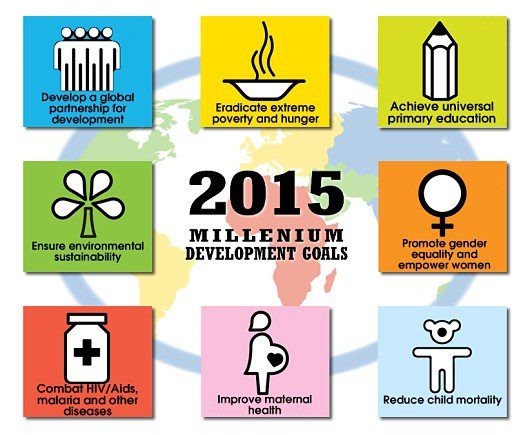
What Have the Millennium Development Goals Achieved? In 2000, the United Nations set out on a clearly defined mission to end global poverty by means of tackling eight core areas of need. Now we are looking back, 15 years later, and seeing how successful the UN was in meeting their goals-and where the new Sustainability Goals will need to take up the slack.

The Millennium Development Goals were designed as a framework for developing impoverished nations by addressing the most critical needs of the society, like reliable food sources, access to education, and adequate health care.
Each goal had specific targets which the United Nations hoped they would meet by 2015. Some goals had more success than others.

The UN’s goal of halving global poverty was met with resounding success, as the number of people living on less than one dollar and 25 cents a day dropped from one point nine billion in 1990, to 836 million in 2015. An estimated 14 percent of the global population are living in extreme poverty today, down from nearly half in 1990.

The reduction in the proportion of undernourished people globally narrowly missed its target, coming within two percent of the 50 percent reduction goal. Though narrowly missing their target, given the exponential human population growth over the last three two decades, it is still a considerable success.

The goals suffered two more near misses in their attempts to increase educational opportunities for all, including establishing gender equality in schools. An estimated 10 percent of children are not receiving any formal education, and only about two -thirds of developing countries have achieved gender equality in the classroom.

Goals four and five of the Millennium Goals, which addressed child and maternal mortality, respectively, both failed to meet their targets. While both the mortality rate of children under five and maternal deaths were reduced by over half, both failed to reach the two-thirds reduction target.

Goal six, stop and reverse the spread of HIV/AIDs, malaria, and other diseases was similarly not met in the given 15 year time frame. Although the rate of new HIV/AIDS infections has fallen by around 40 percent, an estimated two point one million people are still being infected annually. The fight against malaria and other diseases prevalent in developing areas has seen more success however, with an estimated six point two million malaria deaths averted between 2000 and 2015.

The final two goals of the 2000 Millennium Development Goals tackled strengthening infrastructure, sustainable development, and international partnership. While both goals are still on-going endeavors, over the last decade, two point six billion people have gained access to improved drinking water and official development assistance to developing nations has risen by nearly seven percent.

Overall, the United Nations has experienced great success in their struggle to address the needs of the poor around the world, but they are the first to admit that more work is needed. In the official Millennium Development Goals report, released earlier this month, Wu Hongbo Under-Secretary-General for Economic and Social Affairs admitted that success has been uneven across developing nations. “Millions of people are being left behind, especially the poorest and those disadvantaged because of their sex, age, disability, ethnicity or geographic location. Targeted efforts will be needed to reach the most vulnerable people,” said Hongbo.

The Quick and Dirty of Hits and Misses:
Goal #1: Target goal met and exceeded
Goal #2: Target goal nearly achieved
Goal #3: Not met
Goal #4: Not met
Goal #5: Not met
Goal #6: Not met
Goal #7: Target achieved ahead of schedule
Goal #8: No target specified, on-going action

The Sustainable Development Goals of 2015 will pick up where the Millennium Goals left off and continue to guide the United Nations as they work to eradicate global poverty.

– Gina Lehner

Sources: The Guardian, UN
Photo: Global Classrooms

July 9, 2015
https://borgenproject.org/wp-content/uploads/borgen-project-logo.svg 0 0 Borgen Project https://borgenproject.org/wp-content/uploads/borgen-project-logo.svg Borgen Project2015-07-09 15:02:462020-07-10 12:53:34What Have the Millennium Development Goals Achieved?
Children, Economy, Global Poverty, Health

How Coca-Cola Is Helping Deliver Medicines

coca_cola
Coca-Cola products reach every corner of the world while essential medicines do not. ColaLife, a UK charity, noticed this and decided to make a change. ColaLife uses Coca-Cola to open up the private sector supply chain to deliver affordable and effective medicines.

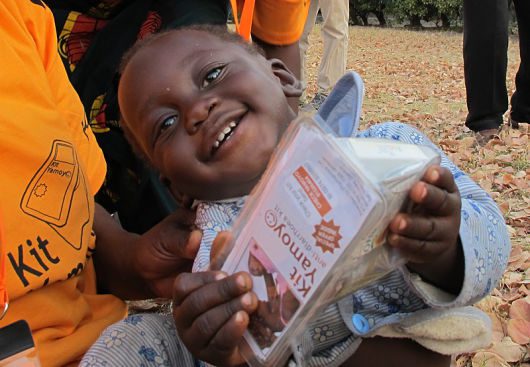
ColaLife produced the Kit Yamoyo, an anti-diarrhea kit. Diarrheal diseases cause life-threatening dehydration, which is the second leading cause of death in children under the age of 5 in developing nations. Each year, it takes the lives of 760,000 children, even though it’s curable.

The problem is that these children do not have access to the cure, which is what ColaLife sought to solve. The Kit Yamoyo contains Oral Rehydration Salts (ORS), soap, and zinc, which act as a cure. The package itself acts as a measuring device for water needed to mix up the ORS and zinc, and can also be used as a storage device as well as a cup.

The Kit Yamoyo has a v-shaped cup to easily fit into the Coca-Cola delivery crates. As a compact, low-cost product, the Kit Yamoyo piggybacks Coca-Cola’s supply chain to reach remote areas. It is a symbiotic relationship: Coca-Cola products continue to reach and get sold in remote areas, while the consumers gain access to more medicines than ever before.

The kits themselves are sold with Coca-Cola products. As the kits make their way out to the remote areas, the demand for them becomes greater. It’s a positive situation for everyone involved: Coca-Cola products are sold, the retailer makes a profit, and the consumer gets the medicine they need to help their children.

With enough funding, the Kit Yamoyo will have a big impact. It will widen vaccine coverage in remote areas and reduce death rates caused by dehydration and malnutrition. It will also encourage an increased investment in training and help health workers reduce child mortality rates. ColaLife has proven that the supply chain is just as important as the medicine itself.

– Hannah Resnick

Sources: ColaLife, University of Delaware, WHO, Zambia Daily Mail
Photo: Just Giving

July 9, 2015
https://borgenproject.org/wp-content/uploads/borgen-project-logo.svg 0 0 Borgen Project https://borgenproject.org/wp-content/uploads/borgen-project-logo.svg Borgen Project2015-07-09 15:00:312024-05-27 09:25:48How Coca-Cola Is Helping Deliver Medicines
Children, Education, Global Poverty

UK Government Set to Scrap Child Poverty Act as Rates Stay Consistent

UK Child Poverty-TBP

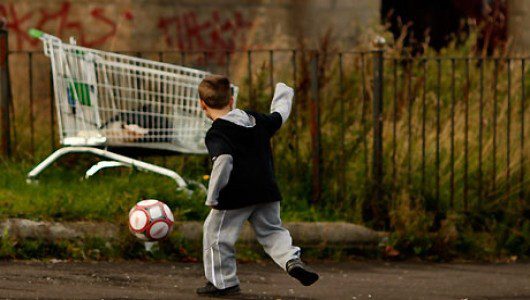
Secretary of State for Work and Pensions, Iain Duncan Smith, announced this past week that the U.K. government will be scrapping its Child Poverty Act. The act, which promised to end child poverty in the United Kingdom by 2020, is being terminated after a recent report stated that current child poverty levels are “unacceptably high.”

Smith has stated that the government will be replacing the act with new perspectives on how to view child poverty, chiefly by changing its definition altogether.

The original act defined child poverty as a child living in a household with an income below 60% of the country’s average. Smith has spoken out against this definition, calling it “deeply flawed” as well as “a poor test of whether children’s lives are genuinely improving.”

Duncan’s new plan defines child poverty by “levels of educational attainment, worklessness and addiction,” as opposed to “relative material disadvantage,” according to The Guardian.

This news prefaces a large cut in tax credits to be introduced in the July 8, 2015 budget as a means to reduce the welfare budget. These cuts make the original 2020 goal all the more unobtainable.

The commission that oversaw the act, the Child Poverty and Social Mobility Commission, will be renamed to simply the Social Mobility Commission.

“We want to eradicate child poverty. This is not a departure from that proposal,” Smith said. “What we want to do is to ensure, however, that we do this by changing the long-term life chances of those who live in the poorest families.”

– Alexander Jones

Sources: BBC, The Guardian 1, The Guardian 2
Photo: The Guardian

July 9, 2015
https://borgenproject.org/wp-content/uploads/borgen-project-logo.svg 0 0 Borgen Project https://borgenproject.org/wp-content/uploads/borgen-project-logo.svg Borgen Project2015-07-09 11:21:082020-07-10 19:50:06UK Government Set to Scrap Child Poverty Act as Rates Stay Consistent
Children, Development, Education, Global Poverty

The Youth of Yemen Promote Peace

The Youth of Yemen Promoting Peace

Yemen has been through a whole lot in the past few years. While political unrest has plagued the nation for years, in the recent months, the country has been dealing with ongoing airstrikes.

“Some days it’s calm, and some days it’s not. It’s so unpredictable. Right now, we’re on day four with no electricity. When it does come on, it will only be one for an hour,” Hana reports. At 26-year-old, Hana is a youth assistant project manager for the Foundation for Peace project.

The project was founded in 2012 by the Cooperative for Assistance and Relief Everywhere (CARE), with the goal of teaching members of the community to effectively prevent and resolve conflicts. They focus on women and youth that typically do not have the opportunity to be influential or participate in dialogue.

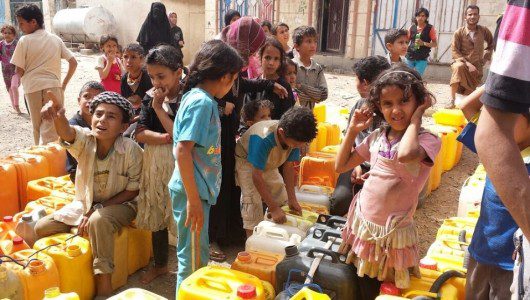
So far, 560 youth, women, and local community leaders have received training. In addition, CARE has provided 15 water tanks for poor neighborhoods.

Many people in the country do not have nearby access to water sources and have to walk for miles every day. The limited amount of water sometimes results in clashes within communities.

In the past, wealthy business owners and merchants have paid for trucks to bring water to the poor. However, the trucks wasted a lot of water since they did not offer an effective method of collection. To rectify this inefficiency, the water tanks that CARE installed are permanent. They allow for people to obtain water with ease and less conflict.

Airstrikes and a naval blockade, however, have been preventing essential supplies, such as fuel and food, from reaching Yemen. Because of the lack of fuel, prices have soared and the cost to ride the bus has doubled. Service has also become undependable and people have switched to riding bikes for transportation.

The closure of many Yemeni schools poses another issue. Yemen has a very large population of young people and the majority of them are unemployed and out of school. This leaves them susceptible to recruitment into dangerous militant groups.

Yet, Yemen’s youth are finding ways to stay out of trouble and bring about dramatic change. For example, they initiate groups that spread awareness about issues like women’s rights. Women are fighting for the right to ride bicycles, which is traditionally not allowed in Yemen.

They turn destroyed buildings and windows into art and paint messages of peace all over their cities. Young people are passionate about promoting peace and developing their nation.

The United Nations Development Program gives out a yearly National Award for the Best Innovative Small Business Plan to Yemeni youth. Young people are able to submit smart business ideas for a chance to make their ideas into an entrepreneurship opportunity.

The goal of the award is to kick start the motivation and genius of Yemen’s youth, as well as generate new opportunities for employment. With the award, young people start their own businesses to contribute to their community and the nation’s developing economy.

The youth’s ability to take their lives and future into their own hands also grants them a hearty amount of satisfaction and self-esteem. There are five winners chosen who each are given $20,000 and support from the UNDP while executing their idea.

At the moment, Yemen receives funding from organizations like CARE. But even without aid in the future, the youth hope to keep inspiring progress and peace.

– Lillian Sickler

Sources: CARE, Yemen Innovation And Creativity Award, The Globalist
Photo: Care

July 9, 2015
https://borgenproject.org/wp-content/uploads/borgen-project-logo.svg 0 0 Borgen Project https://borgenproject.org/wp-content/uploads/borgen-project-logo.svg Borgen Project2015-07-09 10:25:302024-05-24 23:48:54The Youth of Yemen Promote Peace
Children, Education, Gender Equality, Global Poverty, Inequality, United Nations

Effects of Gender Relations in Textbooks

Gender-Relations

The effort to educate the world’s poor is making strides with the United Nation’s new commitment to education, as well as the resourcefulness of people who see a need for their communities. The U.N. proposes that 90% of children have been reached. However, the majority of students are boys and many children who do not attend school are girls.

Getting to school is not the only challenge for girls. Part of the problem are the curricula’s textbooks that depict gender inequality. This is evident in countries like Thailand, Pakistan, Bengal and Kenya.

The stories, images or examples either do not include women or describe them in submissive, traditional roles like cleaning, cooking and serving men. The men are depicted as the ones who hold positions as political leaders, drivers, teachers or doctors. Often, history books leave out influential women in history or do not accurately portray the lives of women. For example, a Thai book shows only a man receiving a land title, when in reality a large portion of the women hold their own land titles. While these biases are subtle, studies have shown that they still reinforce negative stereotypes of women.

Rae Blumberg, who has done extensive research on gender relations in textbooks, insists that “When girls don’t see themselves in textbooks, they’re less likely to envision themselves doing great things.” There are already low percentages of women working in government and leadership positions in these poor nations. The textbooks only “reinforce, legitimate and reproduce patriarchal gender systems” that keep women out of these positions.

The lack of accurate portrayals of women in these positions can discourage young girls from getting an education or trying hard in class. However, educating women and young girls is the key to raising communities out of poverty. For instance, by keeping young girls in school, child marriage can be reduced. There are links between education and lower birth rates and birth mortality. Education can also protect children from diseases and malnutrition through the provision of health information, such as prevention techniques. With an education, girls can make a living and be positive contributors to their community, the economy and their family.

It is important to keep young girls in school. While changing cultural norms that prevent girls from attending school will take time, addressing bias in textbooks is a reasonable start. By replacing the textbooks or having conversations about the bias, more girls can succeed in getting an education that will hopefully eliminate gender biases.

– Katherine Hewitt

Sources: The Guardian, Manushi-India.org NPR, UNESCO Reuters Blogs
Photo: Fabius Maximus

July 9, 2015
https://borgenproject.org/wp-content/uploads/borgen-project-logo.svg 0 0 Borgen Project https://borgenproject.org/wp-content/uploads/borgen-project-logo.svg Borgen Project2015-07-09 08:03:052024-06-05 03:00:37Effects of Gender Relations in Textbooks
Children, United Nations

Collaborating on Early Childhood Development

early_childhood_development
The United Nations Messenger of Peace, Lang Lang, recently spent all day at a school in Beijing playing with kindergarten children. There, he shot a public service announcement with Cookie Monster from Sesame Street. All of this activity arose out of Lang Lang’s commitment to UNICEF’s early childhood development campaign.

UNICEF is advocating for worldwide early childhood development to be prioritized in the post-2015 international development agenda. Early childhood development is a key area of focus that could help bring improvements to countless other sectors.

Lang Lang is also a renowned pianist. By spending time with the children, Lang Lang was able to see firsthand how this Chinese model has used a combination of music, as well as creative art and play, to teach children ages 6 to 10.

Lang Lang compared the earliest years of a child’s life to early morning piano practice. It is easiest to remember a piano score first thing in the morning, with a fresh brain. In the same way, for young children, the early years are when learning first begins taking place. With time, the child’s worldview begins to take shape.

An estimated one in three children under the age of five in low- and middle-income countries are not reaching their full development. Evidence has shown that the quality of one’s early childhood is critical in shaping one’s lifetime development and happiness.

There are long-term consequences of early childhood development or the lack thereof. Chen Xuefeng, UNICEF China’s Early Childhood Development Specialist, points out that focusing on early childhood developmental improvements could help to break the cycle of poverty and build a more stable society.

The estimated returns on investment in early childhood care and education for disadvantaged children can be as high as 1:17. These numbers show that concentrated effort in this particular area is one of the most cost-effective strategies for reducing economic disparity.

China recently participated in a global meeting in South Korea called the World Education Forum. At this international meeting, the Declaration on Education 2030 was adopted, symbolizing the country’s commitment to make education a major focus in the 2015 agenda.

As September gets closer and the new Sustainable Development Goals must be set, the agenda focuses on areas that should be brought to the head of the discussion table. In order to successfully tackle the bigger issue of poverty, problems in areas like education, health and governance must first be solved.

International cooperation will be absolutely necessary in order to achieve the ultimate anti-poverty goal. Even more importantly, it is through action alone that change can be made. While pledges to purge the world of poverty are noble and not without impact, actions undoubtedly always speak louder than words.

– Sarah Bernard

Sources: Look to the Stars, UNICEF
Photo: BBC News

July 8, 2015
https://borgenproject.org/wp-content/uploads/borgen-project-logo.svg 0 0 Borgen Project https://borgenproject.org/wp-content/uploads/borgen-project-logo.svg Borgen Project2015-07-08 08:12:052024-05-27 09:25:19Collaborating on Early Childhood Development
Children, Global Poverty

Cambodian Street Children

Cambodian-Street-Children
In Cambodia, a country whose economic index consistently ranks lower than the regional Asia-Pacific average, many strides have been made in recent years in order to alleviate poverty levels, strides that have moved the country into the lower-middle class. Attempts to meet the Cambodian Millennium Development Goals, or CMDG’s, have also prompted successful efforts aimed at poverty alleviation, resulting in a decrease in poverty levels from 50% in 2007 to below 20% in 2012, according to the Cambodia Socio-Economic Survey.

Despite these broad strokes of progress in recent years, a third of the Cambodian population continues to live below the national poverty line, which was set at US$0.61 (R2,470) in 2007. The United Nations Development Program (UNDP) has also revealed that close to 40% of Cambodian children suffer from hunger, while 22% of the population continues to live in severe poverty.

Cambodia has struggled to recover from the legacy left behind by the Cambodian genocide —conducted by Pol Pot and the Khmer Rouge — that killed an estimated 3 million Cambodians between 1975 and 1979. One of the legacies of Pol Pot’s reign of terror, for instance, can be observed with regards to the structure of Cambodian demographics. Due to the Khmer Rouge’s systematic targeting of senior citizens, who were considered unfit to work as farmers in the Cambodian countryside, and the significant baby-booms that occurred at the conclusion of Pol Pot’s reign in the 1980s and 1990s, youths now make up a disproportionate percent of the Cambodian population. Out of a total population of 14.0 million, around 5.1 million (49.5%) are children under the age of 18.

Of this 49.5%, studies have also found that about 18% of children age 5 to 17 are engaged in economic activities, with the average age at which a child starts working set at 10.4 years old. These children are deemed street children, for as defined by the United Nations, “any boy or girl for whom the street in the widest sense of the word has become his or her habitual abode and/or source of livelihood, and who is inadequately protected, supervised or directed by responsible adults.”

A study conducted by the Cambodian Street Children Network (CSCN) discovered that these children take to the street for a variety of reasons. Traditional norms in Cambodian society, for instance, foster a mentality in which all members of the household are expected to contribute to the family’s livelihood. The fact that poverty is widespread in Cambodian society and that only 7% of occupations can earn more than US$3 a day, while 38% of occupations yield less than US$1, contributes to a scenario in which income generated from begging comes to be regarded as a “career;” especially as it can yield up to $15 a day in tourist-dense regions such as Siem Reap, home to the Angkor Wat mega-complex. Add to this the fact that many of these street children come from outer provinces in order to escape or alleviate poverty at home, have lost at least one parent or are orphaned by diseases such as AIDS — it is no wonder that the street is regarded as an opportune place to reap a profit.

In addition to these contributing factors, Cambodia also has a weak law enforcement set in place to protect street children. For instance, despite a Labor Code which establishes the minimum age for employment at 15 years, CSCN has noted that there is a pervasive and blatant disregard for this law, and others. According to the latest CSCN study, conducted in 2011, children under the age of 18 engage in a variety of street activities including, but not limited to, begging. The study found that, among various activities, 19% engaged in begging, 17% in scavenging, 7% in construction work, 5% in selling petty goods, 5% in stealing and 3% in picking insects.

The phenomenon of Cambodia’s street children is inextricably connected to Cambodia’s levels of poverty and its current ineffectiveness in dealing with a significantly youthful population. In light of this, it is thus important to reflect that Cambodia has been making strides to alleviate levels of poverty within the country since the 1990s. Many organizations, such as the CSCN, the Anjali House, an education center created for former street children in Siem Reap, and the ChildSafe hotlines, managed by English-speaking Khmer social workers, have also been set up in recent years in order to directly address the issue of Cambodia’s many children who take to the streets to survive.

However, in order to most effectively rescue Cambodia’s street children, more drastic steps need to be taken to alleviate poverty and to strengthen a corrupt and failed justice system — factors which ultimately foster and enable a Cambodian street child’s existence.

– Ana Powell

Sources: Asian Development Bank, Cambodian Street Children Network Canodia, The Heritage Foundation World Bank
Photo: Campus Gup Shup

July 8, 2015
https://borgenproject.org/wp-content/uploads/borgen-project-logo.svg 0 0 Borgen Project https://borgenproject.org/wp-content/uploads/borgen-project-logo.svg Borgen Project2015-07-08 06:58:342024-06-05 03:46:36Cambodian Street Children
Charity, Children, Global Poverty

The Shoe That Grows

The Shoe That Grows - TBP
Idaho native Kenton Lee’s “The Shoe That Grows” has seen quite a bit of media frenzy for its fascinating innovation. An idea that has been in the making since 2007, the unique invention could serve as the answer to those in developing regions who lack shoes.

Following his 2007 graduation from Northwest Nazarene University, aspiring philanthropist Kenton Lee embarked on monthly mission trips from Ecuador to Kenya. What would soon catch his attention was a stop at a Kenyan orphanage, where over 140 children with parents who died from AIDS resided.

While walking to a church, the fresh graduate spotted a 6-year-old girl wearing a white dress and a pair of shoes that were “four- or five-sizes too small.” They were so undersized that holes were made for the girl’s toes to hang out. Lee was also astonished by the unsanitary conditions within the orphanage, including a lack of clean water and on-and-off electricity.

Following the sighting, Lee spoke with the director of the orphanage to seek further information as to why the young girl and others lacked durable footwear. The director disclosed to Lee that shipments of shoe donations were made a year prior, but because those in need happen to be kids, they easily outgrow the shoes as they age. The optimistic designer later found that over 300 million children in developing countries lack shoes, resulting in the contraction of soil-transmitted diseases such as threadworms and Guinea worms.

Upon returning to the United States, Lee sparked an idea that could maintain comfortable footwear to poverty-stricken children in developing regions. That idea was The Shoe That Grows, but Lee knew his plan would not come to light if he did not seek help from a supportive team of volunteers to push his idea into effective force.

The year 2009 would mark Kenton Lee’s founding of Because International, a nonprofit organization to help propel the innovative shoe idea into the media. Following backfire from failed efforts to get big-name shoe companies like Nike onboard, Lee and voluntary members partnered with shoe development company Proof of Concept to pull the “growing shoe” design together.

Lee would explain in an interview with Buzzfeed that the base of the creation is a sandal made with compressed rubber material similar to tires. It was also indicated that the sandal could last up to 10 years with the help of durable leather and heavy-duty buckles.

The optimistic contributor later added in 2011 that the shoe could grow from a size 5 to a size 12, enabling users to adjust their shoe as their feet grow.

In 2012, Kenton Lee shared that, because Proof of Concept undergoes a 16-week shoemaking process, funding support would be urgently needed. Hence, in October 2012, Lee and Because International launched a two-week fundraising campaign via Crowdrise to meet a desired goal of $4,000 in order to produce a prototype of the innovative shoe. When enough money was raised, Lee and his wife traveled back to Kenya to test out 100 prototypes in four schools. Much to his liking, the disadvantaged schoolchildren “loved them,” and with a few tweaks, Lee had the final product ready in 2014.

In October 2014, Idaho news station KTVB was among the first to get a glance of the finished product, and they later disclosed on their official website that each pair would be sold for $10. The following year, British publication Daily Mail noted that the sandal-based wear had increased by $30. However, it also said that if 100 pairs were purchased, the price would be reduced to $12.

Alternately, Because International launched a digital page requesting willing donors to contribute $15 to fill duffle bags with 50 pairs of shoes each. Once filled, each bag is sent off to its destination to aid shoeless people.

While the growing shoe has accumulated praise, a few critics have remained skeptical of its potential performance, arguing that the product will fail like previous similar ideas attempted by other shoemakers. For example, created in 2002, the company INCHworm designed footwear that retained an accordion-like segment that could expand three sizes. However, the product immediately faced criticism when stockers failed to understand its purpose due to the shoe “only filling one niche,” and only serving as a “casual slip-on,” rather than being marketed as a sneaker or a dress shoe. Moreover, its price of over $45 did not sit well with consumers, which resulted in American disinterest and limited production in the United Kingdom.

By a stark contrast, Kenton Lee’s invention is not strictly designed for American sale, but rather for a wider release overseas for the betterment of underprivileged kids. With the global sale in perspective, individuals like Jacksonville State University professor Pam Hill hope the product is not “just limited to tropical or sub-tropical regions,” but is also geared toward children in “inclement [or] snowy” regions who lack the same essentials.

Some have been weary of the product’s production in China, where they hope the procession units will not add any unnecessary material that could pose as a harmful threat to the children. Lee, however, has noted that the factories have been long proponents of Proof of Concept.

With five nonprofit establishments backing the product, alongside a successful $50,000 crowdfunding campaign, 2,500 units have been sold in disadvantaged regions from Colombia and Peru to Kenya and Haiti. The Shoe That Grows is ready to make an impact. But when success is ultimately achieved, what will be next on Lee’s list?

Lee and Because International plan to produce a second project, tentatively titled “A Better Bed-net,” which will supply bedding to orphaned kids in mosquito-infested areas. The bedding is to be equipped with netting that will trap disease-carrying mosquitoes that try to make their way into orphan shelters. For now, Kenton Lee and his supportive network are carefully taking one step at a time to ensure that they are truly living up to their motto: “Making things better by making better things.”

– Jefferson Varner IV

Sources: The Shoe That Grows 1, The Shoe That Grows 2, OregonLive, Buzzfeed, Smithsonian, KTBV, Youtube 1, Daily Mail Online 1, Daily Mail Online 2, Youtube 2, CNN Money, The Cultureist, AOL Money UK, Idaho Entrepreneurs
Photo: Daily Mail
July 7, 2015
https://borgenproject.org/wp-content/uploads/borgen-project-logo.svg 0 0 Borgen Project https://borgenproject.org/wp-content/uploads/borgen-project-logo.svg Borgen Project2015-07-07 07:30:022024-12-13 17:53:59The Shoe That Grows
Children, Technology

A Children’s Storybook App, Sir Roger Moore and UNICEF

A Children's Storybook App, Roger Moore and UNICEF- TBP

Sir Roger Moore is lending his voice to a worthy cause. The James Bond veteran partnered with GivingTales, a new app geared toward children, to raise funds for the United Nations Children’s Fund, more commonly known as UNICEF.

Released on June 18, 2015, GivingTales is a collection of Hans Christian Andersen fairy tales, narrated by Sir Moore, Dame Joan Collins, Ewan McGregor and Stephen Fry. The free children’s app is available on iOS, Android and Windows Phone.

“I’ve been a long time admirer of Hans Christian Andersen’s work, and I think it’s a wonderful collection of fairy stories for children and adults alike,” said Moore, a UNICEF goodwill ambassador since 1991.

Moore’s narration of “The Princess and the Pea” is included with download, but other stories narrated by Collins, McGregor and Fry are available as in-app purchases for $3.99 each. Thirty percent of the proceeds will be donated to UNICEF United Kingdom to help children and mothers in developing countries around the world.

The stories in GivingTales are presented in a contemporary yet timeless way, teaching important lessons with lively animation and modern language.

GivingTales CEO Jacob Moller explained that the app seeks to keep the essence of Andersen’s work, while simultaneously condensing the stories into 6 to 10 minute shorts. Through A-list narration and animated illustrations by Hungarian artists, GivingTales provides classic stories with a breath of fresh air and entertainment.

Developed by renowned illustrators and producers, GivingTales is confident that it will succeed in the tech market, having future plans to introduce a new story with a new narrator every six to eight weeks. According to Sir Moore, American celebrities will also eventually narrate. Currently, the app is only in English, but will be available in other languages in the near future.

Having a strong relationship with UNICEF, GivingTales hopes to positively change the lives of many children around the world with the profits that they earn. Additionally, the children downloading and listening to the books will benefit educationally, from reading along or learning a new lesson from the story.

Because GivingTales is new and young, it must fiercely market itself in order to successfully contribute to UNICEF. Tech savvy Sir Moore, however, is already busy promoting the app on his Twitter account, advocating for the children who need it most.

– Sarah Sheppard

Sources: The Guardian, Look to the Stars
Photo: iDigital Media

July 7, 2015
https://borgenproject.org/wp-content/uploads/borgen-project-logo.svg 0 0 Borgen Project https://borgenproject.org/wp-content/uploads/borgen-project-logo.svg Borgen Project2015-07-07 07:24:072024-12-13 17:51:37A Children’s Storybook App, Sir Roger Moore and UNICEF
Children, Education

Education in Bangladesh Sails on Despite Floods

Education-in-Bangladesh-Despite-Floods

Ripped apart by rivers, drenched by monsoons and floating just above the sea, Bangladesh is like the toe that the Himalayas are using to test the waters of the Indian Ocean. All of this exposure to water leads to yearly flooding, an immense challenge for the developing nation of 156 million. From crop loss to infrastructure damage, the costs of flooding are massive hurdles to poverty reduction; the floods in 2004 costed the country seven billion dollars. Perhaps the most insidious impacts of the floods is their disruptive effects on education in Bangladesh.

Founded in 1998, the Bangladesh nonprofit Shidhulai Swanirvar Sangstha, recognized how the floods prohibited students from making it to school and decided to bring the school to them. They achieve this by bringing boats up the flooded waterways, which serve as both school buses and schools.

A fleet of 22 boats sail up the swollen rivers stopping to pick up children before they dock and class begins. Each boat takes around 30 children and has a small library and access to the world’s largest library through computers hooked up to the Internet and powered by solar panels.

With primary school attendance around 80%, increasing access to education is high on the agenda. The boat schools provide classes to an estimated 1,810 children. Although many more remain in need, Shidhulai Swanirvar Sangstha reaches some of the most vulnerable.

What’s more, the boat schools provide critically-needed adult education that focuses on sustainable agriculture, healthcare and climate change adaptation. These programs holistically target the restraints that keep them in poverty.

For example, the climate change workshops help farmers develop production methods, such as floating vegetable gardens and raising fish and ducks, that can endure longer flooding periods and raising sea levels, both of which are effects of a changing climate. The lessons on sustainable agriculture help farmers to reduce erosion and pollution, and increase yields. These programs work together to clean the environment, increase access to food and boost incomes. Healthcare, Shidhulai Swanirvar Sangstha’s other focus, brings medicines and doctors to rural parts of the country that have no access to clinics, keeping the populations healthy throughout the year.

What is even more important is that the success of the floating school model appears to be scalable. Many other parts of the world face similar issues that climate change will exacerbate. Cambodia, Nigeria, the Philippines, Vietnam and Zambia are all testing this innovative development strategy. The humanitarian arm of the United Nations that focuses on children and mothers, UNICEF, praises this method as “having a transformative impact upon education and communities in flood-prone regions.”

– John Wachter

Sources: Shidhulai Swanirvar Sangstha, World Bank BBC, UNICEF 1 UNICEF 2
Photo: Tenders On Time

July 7, 2015
https://borgenproject.org/wp-content/uploads/borgen-project-logo.svg 0 0 Borgen Project https://borgenproject.org/wp-content/uploads/borgen-project-logo.svg Borgen Project2015-07-07 07:07:402024-05-27 09:25:22Education in Bangladesh Sails on Despite Floods
Page 114 of 137«‹112113114115116›»

Get Smarter

  • Global Poverty 101
  • Global Poverty… The Good News
  • Global Poverty & U.S. Jobs
  • Global Poverty and National Security
  • Innovative Solutions to Poverty
  • Global Poverty & Aid FAQ’s
Search Search

Take Action

  • Call Congress
  • Email Congress
  • Donate
  • 30 Ways to Help
  • Volunteer Ops
  • Internships
  • Courses & Certificates
  • The Podcast
Borgen Project

“The Borgen Project is an incredible nonprofit organization that is addressing poverty and hunger and working towards ending them.”

-The Huffington Post

Inside The Borgen Project

  • Contact
  • About
  • Financials
  • President
  • Board of Directors
  • Board of Advisors

International Links

  • UK Email Parliament
  • UK Donate
  • Canada Email Parliament

Get Smarter

  • Global Poverty 101
  • Global Poverty… The Good News
  • Global Poverty & U.S. Jobs
  • Global Poverty and National Security
  • Innovative Solutions to Poverty
  • Global Poverty & Aid FAQ’s

Ways to Help

  • Call Congress
  • Email Congress
  • Donate
  • 30 Ways to Help
  • Volunteer Ops
  • Internships
  • Courses & Certificates
  • The Podcast
Scroll to top Scroll to top Scroll to top