• Link to X
  • Link to Facebook
  • Link to Instagram
  • Link to TikTok
  • Link to Youtube
  • About
    • About Us
      • President
      • Board of Directors
      • Board of Advisors
      • Financials
      • Our Methodology
      • Success Tracker
      • Contact
  • Act Now
    • 30 Ways to Help
      • Email Congress
      • Call Congress
      • Volunteer
      • Courses & Certificates
      • Be a Donor
    • Internships
      • In-Office Internships
      • Remote Internships
    • Legislation
      • Politics 101
  • The Blog
  • The Podcast
  • Magazine
  • Donate
  • Click to open the search input field Click to open the search input field Search
  • Menu Menu

Archive for category: Child Labor

Child Labor, Global Poverty

10 Facts About Child Labor in Morocco

10 Facts about Child Labor in Morocco
Morocco, led by the Justice and Development Party, has directly targeted poverty and led efforts to support social programs, employment opportunities and income equality. Although the real GDP of Morocco has been declining, economic growth is expected to increase by 3.3 percent between 2020 and 2021. In 2005, the Human Rights Watch released reports highlighting the relationship between child labor and the economy of Morocco. Since then, the Human Rights Watch, the United Nations and the World Bank have poured resources into Morocco in order to alleviate child labor and the economic strains which require families to push their children into labor. The Justice and Development Party has made significant progress in fighting child labor in Morocco; however, there is still work to be done. Here are 10 facts about child labor in Morocco.

10 Facts about Child Labor in Morocco

  1. Children in Domestic Work in Morocco: In 2017, 247,000 children between the age of seven and 17 had to work. Of these, 81.4 percent dropped out of school and 8 percent never attended school. The majority of these children live in rural areas. Morocco passed a human trafficking law that increased protections for children who were at risk for trafficking. This measure prohibited hazardous work for children, increased labor inspectors to enforce child labor laws and increased the criminal punishment for child labor.
  2. Legal Framework in Morocco: Many of the laws and regulations in Morocco do not meet international standards. Its 2018 laws on child labor, however, significantly improved legal protections for children. Morocco increased the minimum age for hazardous work to 18 and made education compulsory until 15 years old.
  3. Causes of Child Labor in Morocco: Poverty, poor quality education and a lack of access to education, electricity and water all impact whether or not children work. The rural population in Morocco is particularly susceptible to child labor due to the reliance of the rural economy on agriculture, rain patterns and rural-urban migration.
  4. Dangerous Forms of Labor in Rural Areas: In rural areas, 55 percent of working children work in unsafe environments. These environments include agriculture industries, forestry and fishing. Among these 154,000 children who work in rural areas, 20 percent work full time.
  5. Dangerous Forms of Labor in Urban Areas: In urban areas, the majority of children work full time in manufacturing or construction. Ninety-three percent of children who work in construction and public works work in hazardous environments.
  6. Abuse of Children in the Workplace: The Human Rights Watch reports that not only do many children participate in dangerous forms of labor, but many children are also abused in the workplace. Girls are especially vulnerable to deception regarding working conditions. Many girls work without a break for 12 hours at a time with no days off, and not enough food. Although Morocco limits workers to 44 hours per week, some girls reported working over 100 hours a week without a day off.
  7. Low Wages: Child laborers often work long hours for very low wages. The Human Rights Watch reports that on average, girls earn $61 per month, which is $261 below the average minimum wage for the industrial sector in Morocco. In Morocco, many employers provide room and board for child laborers. While this payment may seem thoughtful at first, girls report that they are often underfed and live in poor conditions. This only furthers the abuse that these children experience at the hands of their employers.
  8. Child Poverty and Child Labor: Between 2001 and 2014, the High Commission for Planning in Morocco reported that child poverty decreased by 6.2 percent per year. Because poverty is a leading cause of child labor, between 2001 and 2014, child labor also decreased.
  9. Promise Pathways Helps Decrease Child Labor: The United States Labor Department’s Bureau of International Labor Affairs funds Morocco’s Promise Pathways program, which creates a web of local individuals dedicated to working with local communities to target causes of child labor, including education quality and learning opportunities. In addition to educational programs, Promise Pathways provides alternatives to domestic work, such as classes and coaching. Since its inception, 4,300 children have been lifted out of child labor.
  10. Overall Decrease in Children in the Workplace: Although Morocco is a long way from ensuring that no children have to work, Morocco has decreased the overall number of children in domestic labor. In 1999, 517,000 children were child laborers. In 2011, only 123,000 children were engaged in domestic labor. The number of children working in domestic labor increased between 2011 and 2017 due to the decline in the economy. However, the Human Rights Watch estimates that human trafficking laws will alleviate child labor in Morocco.

These 10 facts about child labor in Morocco shed light on the difficulties child laborers face. With continued efforts by the Human Rights Watch and other humanitarian organizations, hopefully child labor will continue to decrease.

– Denise Sprimont
Photo: Flickr

February 6, 2020
https://borgenproject.org/wp-content/uploads/borgen-project-logo.svg 0 0 Lynsey Alexander https://borgenproject.org/wp-content/uploads/borgen-project-logo.svg Lynsey Alexander2020-02-06 01:40:512020-02-06 13:45:3510 Facts About Child Labor in Morocco
Child Labor, Children, Global Poverty, Poverty

Examining Countries with Child Labor

Countries With Child Labor 
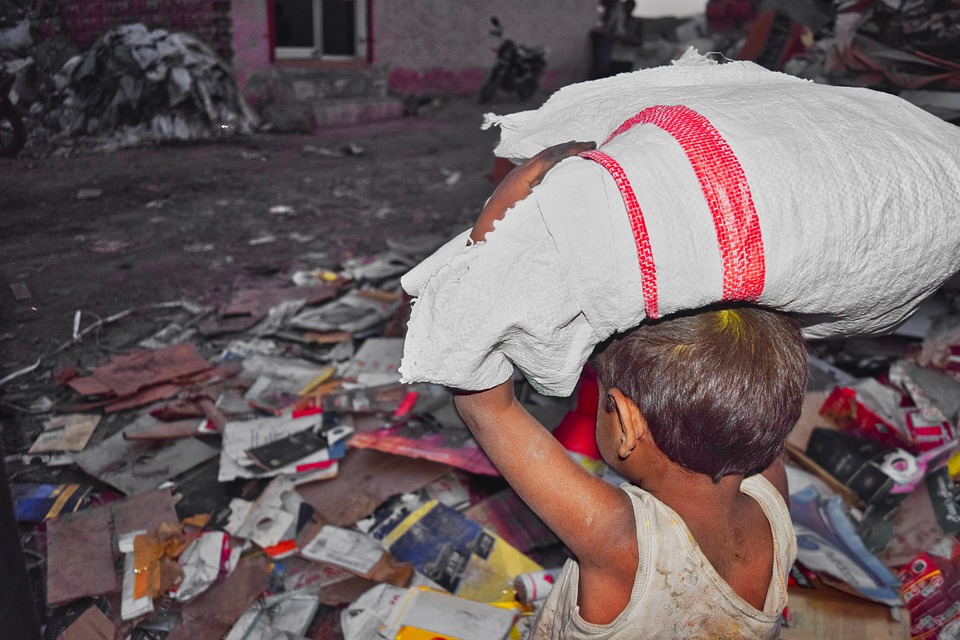
There are an estimated 218 million children as young as 5-years-old employed and exploited around the world. Countries with child labor often force and coerce children to work for free and many cases go undocumented due to child homelessness in impoverished areas. The International Labor Organization defines child labor as work that deprives children of their childhood, potential and dignity, and harms them physically and mentally.

Where Child Labor is Most Prevalent

Some of the worst cases of widespread child labor are Africa and Southern and Western Asia. A huge factor in child labor is poverty. These areas often poorly develop their educational systems and many children who work do not enroll in school at all.

In Nigeria, over 15 million children under the age of 14 are child laborers. Girls often start earlier than boys in domestic help positions, but both work in agriculture, fishing, mining and construction. Often, child labor is essential to the income of the households these children live in. Children work in similar positions in India where 33 million children ages 5 and older work manufacturing jobs.

This is not the worst form of child labor, however. In Somalia, people often force children into the armed forces. In 2018, military forces —both state and non-state—recruited 1,800 children. People also force many girls into sexual servitude and multiple clan militias in other countries use child soldiers. Afghanistan has been using children in war since the 1980s and with the continuing violence, there have been reports of 3,179 cases of children suffering killing or maiming because of conflict violence.

The Harm it Causes

Child labor, forced or voluntarily, exponentially stunts a child’s growth. Childhood is an important part of development, and putting children in dangerous and mentally-straining environments causes emotional damage and even kills some children. Countries with child labor put children to work in places where they are in danger of suffocation, drowning, amputation or even heavy equipment crushing them. Child labor is responsible for 2.78 million deaths and 374 million illnesses. Children who work at young ages often do not have the resources or opportunities as an adult to work; this leads to generational poverty.

Who is Helping

Action Against Child Exploitation (ACE) is an NGO that focuses on ending child labor. Founded in 1987, its project areas are Japan, India and Ghana. It has saved over 1,000 children from child labor, as well as supported education for 13,000 children. It works to stop child labor in cotton and cocoa production since 70 percent of child workers are in agriculture.

The Global March Against Child Labor is an organization of trade unions, teachers and civil societies that work to eliminate all forms of child labor and slavery and provide and ensure education. The movement started out as an 80,000 KM cross-country march against child labor in 1998. Today, the organization works toward the development of countries, education children, elimination of sex-trafficking and research on laws and policies in countries with child labor.

What People Can Do

Despite years of work against child labor, it is still a problem in many countries. Due to the lack of educational facilities, economic failure and extreme poverty, there is not a simple fix to the problem. What people can do is conduct research, raise awareness and reach out to their Congress members. There have been laws to protect children from others forcing them into work or military, but people are still doing little to enforce those laws. It will take many more years of effort, economic growth and child labor reformation to eradicate the continuing issue of child labor.

– Taylor Pittman
Photo: Flickr

January 18, 2020
https://borgenproject.org/wp-content/uploads/borgen-project-logo.svg 0 0 Lynsey Alexander https://borgenproject.org/wp-content/uploads/borgen-project-logo.svg Lynsey Alexander2020-01-18 10:30:042020-02-04 12:27:28Examining Countries with Child Labor
Child Labor, Children, Global Poverty

Global Infancia: The Blueprint for a Successful NGO

Global Infancia

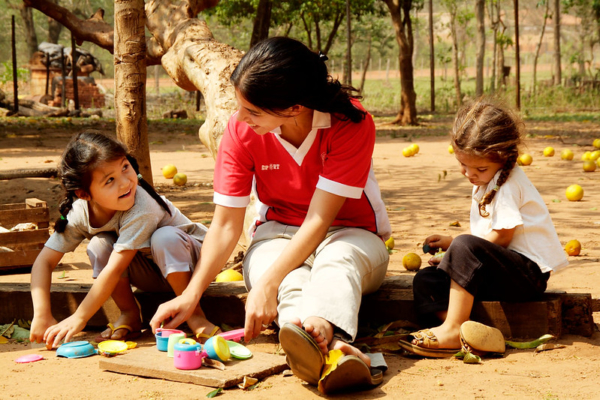
Global Infancia is a nongovernmental organization (NGO) that specializes in protecting children from abuse in Paraguay. It was founded in 1995, “Global Infancia works towards creating a culture which respects the rights of children and adolescents in Paraguay.”

It has attempted to promote the human rights of children in a myriad of ways, ranging from creating a branch of the government tasked with protecting children to founding a news agency focusing on children’s rights. Global Infancia represents the blueprint for a successful NGO because of its ability to form partnerships with governments, influence local communities, and follow through with its goals.

Partnerships with Governments

Studies have estimated that roughly 60 percent of children in Paraguay have been victims of violence. Faced with this fact, Global Infancia worked with the National Secretariat for Childhood and Adolescence along with the Paraguayan Government to pass a law stating “all children and adolescents have the right to be treated properly and with respect for their physical, psychological and emotional well-being. This includes protections for their image, identity, autonomy, ideas, emotions, dignity and individual values”.

Additionally, Global Infancia spearheaded the forming of Municipal Councils for the Rights of Children and Adolescence who have become instrumental in protecting children’s rights throughout Paraguay. Global Infancia’s work is proof of how a successful NGO can form fruitful partnerships with local governments.

Integration into the Local Community

Since the end of authoritarian rule in Paraguay, it has been working to integrate itself into local communities and promote the recognition of children’s rights. In the town of Remansito, Global Infancia is providing supplementary nutrition and school support to over 1,000 children. Approximately 22 percent of Paraguayans live below the poverty line. The child labor force of participation with a rate of 25 percent, shows that the conditions for many children in Paraguay are not ideal.

However, Global Infancia recognized these problems and has created national media campaigns to raise awareness for children’s rights and used training forums around the country to educate the public that violence against children will no longer be tolerated. Finally, Global Infancia has harnessed the power of local communities by “installing an alert system which reduces the demand for childhood labor”. These actions illustrate how a successful NGO employs the power of the communities they are working in.

Accomplishing Goals

At its inception, it was primarily focused on fighting the trafficking of babies and children. Today it has evolved into a children’s rights organization with a bevy of goals. Whether it be their success at establishing legal rights for children in Paraguay or the founding of CODENIS bodies which protect children throughout the country today, Global Infancia has had a considerable impact on Paraguayan society. In a 2017 report by the United States Department of Labor, experts found significant advancement in Paraguay’s fight to end child labor.

However, the current situation still puts many children in danger, requiring more resources to fully end child labor. With the help of Global Infancia and the multitude of other successful NGO’s, there are no doubts that Paraguay will continue to see improvements to children’s rights.

Overall, Global Infancia is a perfect example of how a successful NGO operates. From its crucial government and community partnerships to their impressive track record of accomplishing its goals.

– Myles McBride Roach

Photo: Flickr

November 12, 2019
https://borgenproject.org/wp-content/uploads/borgen-project-logo.svg 0 0 Jennifer Philipp https://borgenproject.org/wp-content/uploads/borgen-project-logo.svg Jennifer Philipp2019-11-12 19:05:062024-05-29 23:13:00Global Infancia: The Blueprint for a Successful NGO
Child Labor, Global Poverty, Poverty Reduction

Eritrea’s Efforts Toward Safer Child Labor Laws

safer child labor laws
Eritrea is a country in Africa founded in 1993. It is a fairly new country but has already faced many problems regarding poverty and its impact on the people who call Eritrea home. The poverty rate is roughly 50 percent of its 4.475 million inhabitants. Even before primary school, children often must start working due to the unfortunate circumstances that poverty created. A 2008 study showed that legislation already existed for safer child labor laws, but a 2016 study revealed Eritrea’s government offered very little implementation of these laws. With countless amounts of children in Eritrea’s workforce, the problem is less the actual laws in place, but the enforcement of these laws. Fortunately, Eritrea recently made big steps in furthering legislation for a safer workforce in 2019. Here is an overview of Eritrea’s progression toward safer child labor laws.

Eritrea’s Initial Legislative State

In 2008, the Bureau of International Labor Affairs conducted a study painting a clear picture of the state of child labor in Eritrea. Children in rural Eritrea often work labor-intensive jobs like working in fields, carrying water or collecting wood. Children in urban Eritrea can work as vendors selling cigarettes, gum or newspapers. At this time, there are some child labor laws in place to increase protection and safety. There is a minimum work age of 14. Children aged 14-18 have a daily work limit of 7 hours a day and they can only work between 6 a.m. and 6 p.m. Children under 18 cannot work in hazardous environments. These laws seemed like a positive start for Eritrean children.

The True Picture

In 2016, shocking evidence revealed the scope of the child labor issue in Eritrea. The U.N. released a full-detailed inquiry that determined Eritrea’s government was responsible for not only encouraging child labor, but participating in extrajudicial killings, tortures and sexual slavery. The Eritrean army, the National Security Agency, the president and the police force were all huge factors in worsening child labor conditions. This investigation did not change any legislation and was a major step back in Eritrea’s governmental support toward safer child labor laws.

Recent Progress

On June 3rd, 2019, Eritrea’s government ratified eight important conventions formed by the International Labor Organization (ILO). The ratifications exemplify huge progress for the country because it shows signs that there will be better enforcement of safer child labor laws from now on. ILO’s conventions include prohibition and elimination of the worst forms of child labor. Eritrea’s goal is to eliminate forced labor and end all forms of child labor by 2025. With the government’s agreement to these eight ratifications, that goal is actually within reach. The future lives of millions of children who live in Eritrea will soon change for the better.

The progression of Eritrea’s government toward safer child labor laws from 2008-2019 has been a struggle. While Eritrea’s government initially appeared to show interest in creating a safer working environment for its children, further research proved how little it really enforced legislation. This year witnessed exceptional progress, lighting the way for a brighter future in safer child labor laws.

– Kat Fries
Photo: Pixabay

November 7, 2019
https://borgenproject.org/wp-content/uploads/borgen-project-logo.svg 0 0 Lynsey Alexander https://borgenproject.org/wp-content/uploads/borgen-project-logo.svg Lynsey Alexander2019-11-07 23:12:542020-01-18 14:02:39Eritrea’s Efforts Toward Safer Child Labor Laws
Child Labor, Child Marriage, Child Soldiers, Children, Global Poverty

10 Facts About Child Labor in Saudi Arabia

Child Labor in Saudi Arabia
Many know Saudi Arabia as one of the richest countries in the world. With the second largest natural oil reserve underground, Saudi Arabia is rapidly accumulating wealth and political power in international affairs. However, there is a dark side to the flashy urban lights of Saudi Arabia. The wealth gap that exists between the rich and the poor, coupled with the country’s patriarchal tradition and its recent conflict with the Houthi movement in Yemen, puts many Saudi and immigrant children in danger of child labor, violence and economic exploitation. Here are 10 facts about child labor in Saudi Arabia.

10 Facts About Child Labor in Saudi Arabia

  1. Poverty is the main cause of Saudi Arabia’s Child Labor. While Saudi Arabia is famous for its wealth, thanks in large part to the second-largest oil deposits in the world, there is a big economic disparity between the poor and the rich. According to a study that the Saudi Arabian government funded in 2015, 22 percent of families in Saudi Arabia depend on their children’s income.
  2. The minimum employment age is 13. In the royal decree of 1969, Saudi Arabia enacted a law that set the minimum employment age to 13 years old and banned children from working in hazardous conditions. This does not apply to works in the family business, domestic labor and agricultural work. Some employers of Saudi Arabia exploit a loophole in the law. For example, this law does not address the child brides of Saudi Arabia. If a child bride does any house chores or agricultural work for her husband’s family, it will not be a violation of the minimum employment age law.
  3. There are cases of child labor trafficking from neighboring countries. Stemming from Saudi Arabia’s recent conflict with Yemen, which left Yemen devastated, wartorn and practically lawless, some Yemeni parents are seeking illegal agents who will traffick their children to Saudi Arabia. While some Yemeni parents traffick their children to Saudi Arabia to save them from the desperate conditions in Yemen, other parents traffick their children in hopes of economic relief provided by their children’s labor in Saudi Arabia. While deportation is the main concern of many Yemeni parents for their trafficked children, many trafficked Yemeni children are in danger of violence, hunger and sexual abuse.
  4. Child workers usually have parents who have low professional and education level. The low education and professional level of child workers’ parents, coupled with economic disparity, make poverty in Saudi Arabia hereditary. Saudi Arabia is taking steps to ameliorate this issue. In early 2018, the Saudi government declared that it aims to eradicate adult illiteracy by 2024. Saudi Arabia’s Ministry of Education established adult education centers across the country and launched the Learning Neighborhood program in 2006 in pursuit of this goal.
  5. Children of migrant workers in Saudi Arabia do not have protection under a law that prohibits forced or compulsory labor. Saudi Arabia’s labor law does prohibit forced labor, however, these measures do not extend to over 12 million migrant workers in the country. Some employers exploit this loophole in the labor laws, which sometimes results in physical, mental and sexual abuse of migrant workers and their children.
  6. Saudi Arabia’s citizenship requirement puts Saudi children in danger of child labor and human trafficking. A Saudi child’s citizenship comes from his or her father. If a child has a citizen mother and a non-citizen father, or from a mother who is not legally married to a citizen father, there is a chance that the country will consider the child a stateless person. As a result of being stateless, Saudi Arabia can deny a child state education, and in certain cases, medical attention. According to the U.S. Department of State, about 5 percent of street begging children in Saudi Arabia are Saudi nationals of unknown parents.
  7. The Saudi government is working with the international community to combat child labor. In 2016, with technical advisory services support from the International Labour Organization (ILO), Saudi Arabia ratified its report for ILO’s Minimum Age Convention of 1973. According to the United Nations’ 2016 report on Saudi Arabia’s adherence to the Convention on the Rights of the Child, Saudi Arabia adopted and implemented regulations against child abuse and human trafficking. As part of the new labor reforms and regulations in 2015, for example, the Labor Ministry of Saudi Arabia can impose SR $20,000 ($5,333) on employers who employ children under 15-years old.
  8. In 2014, the World Trade Organization (WTO) and the Women’s World Summit Foundation (WWSF) launched a campaign against child labor in Saudi Arabia. For 19-days, WWSF campaigned to raise awareness for child labor, abuse and violence against children and youth. The National Family Safety Program of Saudi Arabia also launched its four-day program which raised awareness for economic exploitation and abuse of children in Saudi Arabia. Through these campaigns, both WWSF and the Saudi government aimed to reduce child labor in Saudi Arabia by highlighting that child labor contributes to the abuse of children by harming children’s health, physical development, psychological health and access to education.
  9. UNICEF and the Saudi Ministry of Social Affairs opened a reception center for trafficked Yemeni children. Many trafficked Yemeni children end up in the streets of Saudi Arabian cities as beggars or street vendors. In the worst cases, these trafficked children are under severe danger of exploitation and abuse. When the Saudi authorities detained them, these Yemeni children usually went to prison or open-air enclosures with adult deportees. The center provides shelter for these children.
  10. Saudi Arabia’s Vision 2030 aims to address the country’s poverty. Launched in April 2016, the Saudi government plans to address the country’s poverty by improving state education and empowering nonprofit organizations. These improvements can lead to making more opportunities available for the children and parents of poor economic background, potentially reducing child labor in Saudi Arabia. In this pursuit, the Saudi government granted $51 billion to the education sector. The Ministry of education established educational centers all around the country to improve adult literacy and theories determine that this improvement in adult literacy will also improve child literacy.

Child labor in Saudi Arabia is both a local and international issue. While the stateless and poor children of Saudi Arabia turn to street vending and begging to support their families, many trafficked Yemeni children in the country are under constant threat of violence and exploitation. These 10 facts about child labor in Saudi Arabia show that with the help of the international community and the Saudi government’s increasing awareness of its less fortunate populace, a better future awaits for the children of Saudi Arabia.

– YongJin Yi
Photo: Flickr

October 25, 2019
https://borgenproject.org/wp-content/uploads/borgen-project-logo.svg 0 0 Jennifer Philipp https://borgenproject.org/wp-content/uploads/borgen-project-logo.svg Jennifer Philipp2019-10-25 10:30:262024-06-04 01:08:3710 Facts About Child Labor in Saudi Arabia
Child Labor, Education, Global Poverty

10 Facts About Child Labor in Afghanistan

10 Facts About Child Labor in Afghanistan
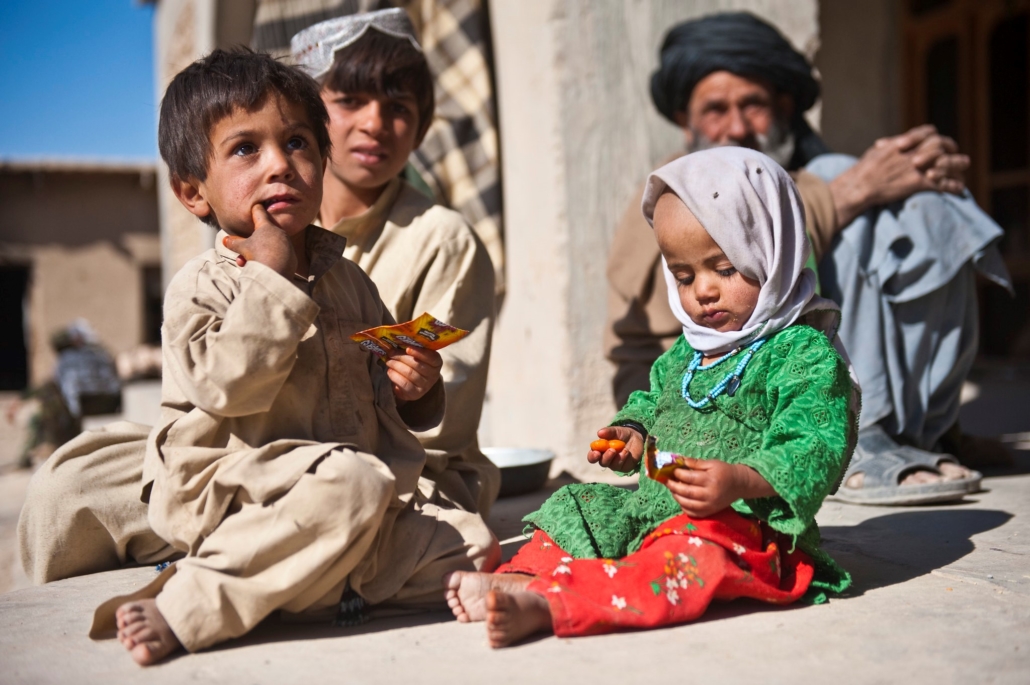
Child labor is prevalent in Afghanistan partly due to the quarrelsome war between its government and the Taliban. The country remains one of the poorest in the world where corruption and greed riddle workplaces. Children work long hours and in servile ways to provide goods for their families. It is the only way they are able to survive in an environment marked by poor conditions and minimal social opportunities. Below are 10 facts about child labor in Afghanistan.

10 Facts About Child Labor in Afghanistan

  1. The Motivation for Child Labor: A quarter of kids between the ages of 5 and 14 in the country suffer the burden of working in jobs that are hazardous to their health and well being. The main reason kids work is to help their families survive economically and bring food to the table.
  2. Types of Labor: Children work in many dangerous jobs, such as metal workers, tinsmiths, welders, miners, in the carpet industry and street vendors where the hours are long and the pay is not favorable. One of the jobs that children most fear is bonded labor where they work in brick kilns. Bosses force the children to owe a debt and it becomes insurmountable. The salary children earn is not enough to help them and their families afford a daily meal.
  3. Minimum Employment Age: Afghanistan’s labor law states that the minimum employment age is 18 and prohibits children under 14 from working. Children between the ages of 15 and 17 can work in jobs that express vocational training where the environment is not harmful. The hazardous conditions children must go through at work violates the country’s labor laws.
  4. Limited Enforcement of Labor Laws: According to the Human Rights Watch, the labor law was due for an overhaul to meet international standards, but the government abated its plans to do so. This further interfered with the notion of a child-labor-free country. The safety of children is in jeopardy because the government has not enforced the prohibition against child labor. Children working in prohibited and dangerous jobs go unnoticed as a result of the government’s lack of capacity to inspect workplaces.
  5. Terrorist Groups: Every day, the country’s ongoing war makes matters worse by forcing children to live in constant fear. Various cities in Afghanistan become targets for terrorist groups on a daily basis. Children are at high risk of armed groups abducting them as well as being vulnerable to spontaneous attacks. Armed groups recruit children for use in an armed conflict where many of them face serious injuries, psychological damage and death. In 2018, the country’s government opened a juvenile rehabilitation center for kids formally involved in an armed conflict where it served 34 children.
  6. A Barrier to Education: According to Afghanistan’s Central Statistics, 55 percent of the country’s population lives in poverty. Illiteracy occurs because of the country’s high poverty level where many parents are not able to afford the prices for their children’s education. Around 3.7 million kids between the ages of 7 and 17 do not attend school, and 60 percent of them are girls. Children lose the opportunity to go to school because they need to work long hours in order to make a living and provide for their families’ basic needs. Armed groups constantly target school buildings to use as training grounds, leaving many kids in fear of attending classes.
  7. Girls Education: There is a very low enrollment rate for girls due to the lack of female teachers in Afghanistan. The education system is flawed and only 48 percent of teachers in the country possess minimum academic qualifications. Many schools lack the proper sanitation facilities needed to encourage girls to enroll and only 16 percent of schools in the country are all-girls.
  8. Girls’ Access to Teacher’s Education: To improve conditions, Girls’ Access to Teacher’s Education, a UNICEF supported program, offers a training course to female students in high-school who want to become teachers. UNICEF supported 5,300 community-based schools and accelerated learning centers in 2018, where children learn critical life skills and basic literacy and numeracy skills. As a result, 150,000 students, more than half of them girls, benefited from the organization’s well-doing. In addition, UNICEF worked with the Ministry of Education to provide hand washing stations, safe drinking water and menstrual hygiene curricula to various schools in the country.
  9. Dangers of Migration: Many children flee Afghanistan as a result of the violence and poverty that plague the country. Some kids go to Iran where they continue to work in hazardous environments. They do not attend school. Returnees are vulnerable to recruitment by armed groups and traffickers.
  10. Displacement Due to Natural Occurences: Displacement of populations is a constant occurrence in the country and a major cause of child labor. It is also a reason why poverty remains persistent. Natural occurrences such as floods force families to leave their communities and start a new life. In 2018, a displacement of 266,000 people in the northern and western parts of Afghanistan came as a result of severe drought, further perpetuating child labor along with the selling of daughters for marriage.

The 10 facts about child labor in Afghanistan above demonstrate how the country is in a state of crisis due to high poverty levels among the population. Child labor remains a main obstacle that people around the world need to be aware of in order to make a difference. Afghanistan’s current war only adds to the challenge. However, organizations like UNICEF are working hard to fix the issue and inspire economic progress.

– Eduardo Hernandez
Photo: Flickr

October 24, 2019
https://borgenproject.org/wp-content/uploads/borgen-project-logo.svg 0 0 Jennifer Philipp https://borgenproject.org/wp-content/uploads/borgen-project-logo.svg Jennifer Philipp2019-10-24 07:06:282020-01-18 15:02:5110 Facts About Child Labor in Afghanistan
Child Labor, Children, Global Poverty

10 Facts About Child Labor in Syria

10 Facts About Child Labor in Syria

Since 2010, at least half of all Syrians have been displaced by the ongoing conflict. Children are the most vulnerable members of society, particularly during times of war or conflict. As a result, they often bear adolescent hardships far into adulthood. The poverty caused by extended warfare has forced many children to seek to supplement their household income by getting jobs of their own. Child labor in Syria is a serious issue that continues to worsen with time. Here are 10 facts about child labor in Syria.

10 Facts About Child Labor in Syria

  1. Child labor in Syria was a problem prior to the start of the war, but the conflict has greatly exacerbated the situation. Children are working in more than 75 percent of households with almost half of them being reported as providing a “joint” or “sole” source of income.
  2. The situation in Syria is characterized by hidden forms of exploitation and child labor. It is not uncommon to see children maintaining produce stands and working out in the open. However, child labor in Syria has increasingly turned towards working in factories or laboring as cleaners, garbage collectors, construction workers, mechanics or carpenters.
  3.  The hours that the children work prevent them from being able to seek adequate help in the form of counselors or therapists for dealing with traumatic stress. Save the Children and SAWA for Development and Aid are organizations that offer psychosocial support services and schools for refugee children. Additionally, UNICEF works with a number of other local organizations and NGOs to protect children’s rights. Enmaa is an NGO that does this specifically for children in Raqqa, one of the most devastated cities in Syria.
  4. Syrian law bars anyone who has not completed their basic education or is under the age of 15 from working. However, since the escalation of the war, this is rarely enforced. In Damascus, children as young as seven-years-old can be found working. In Lebanon, Syrian refugees as young as five-years-old work. Many children see nothing strange about their circumstances since they are surrounded by other children of similar ages.
  5. A joint report between Save the Children and UNICEF estimated that around 2.7 million youth in Syria are not in school. Furthermore, according to Human Rights Watch, nearly half of the refugee children outside of Syria do not have access to formal education. One in three schools cannot be used because they have been damaged, destroyed or now serve as centers for resettlement or military activity.
  6. Of the 1.1 million registered Syrians in Lebanon, the United Nations estimates there are at least another 400,000 unregistered. Seventy-one percent of Syrian refugees live below the poverty line, which is part of the reason many children are forced into being wage earners for their families. In Syria, more than 85 percent of the population now lives below the poverty line. Many of these children are forced into work as their parents are either unable to work or are unable to afford living expenses on their own.
  7. A report from the American University in Beirut found that around 70 percent of Syrian refugee children between the ages of four and 18 were working. According to UNICEF, upwards of 180,000 Syrian refugee children are child laborers in Lebanon.
  8. Agriculture, construction and cleaning are the only Lebanese industries in which Syrian refugees can work without a permit. Workers in these industries are among the lowest paid, and often times the work itself is temporary, meaning that constant uncertainty follows these laborers around.
  9. Some 30 percent of Syrian refugee children have been injured while working in Lebanon. Of these injuries, a mere 14 percent were reported to have been covered by the employer. The remaining 86 percent had to be paid for out of the pockets of the child or a relative.
  10. Children are sent away from their families either within Syria or to a neighboring country in order to earn money. Since Syria and the surrounding countries have nominal laws to prevent child labor, children are bereft of any bargaining power and sometimes work 10 hours a day for one to two dollars per shift.

Although these 10 facts about child labor in Syria are serious, there have been improvements in the lives of Syrian children made by organizations like UNICEF. In 2018, UNICEF trained 57,000 teachers, helping to ensure that there is not a shortage of teachers for the student in school. In 2019, UNICEF provided 289 consultations for women and children to receive healthcare  Significant resources are being mobilized to end child labor in Syria.

– Evan Williams
Photo: Flickr

October 22, 2019
https://borgenproject.org/wp-content/uploads/borgen-project-logo.svg 0 0 Kim Thelwell https://borgenproject.org/wp-content/uploads/borgen-project-logo.svg Kim Thelwell2019-10-22 01:30:312024-05-29 23:12:2210 Facts About Child Labor in Syria
Charity, Child Labor, Developing Countries, Global Poverty, Nonprofit Organizations and NGOs

7 Ways WE Charity is Making an Impact

WE CharityAn organization originally founded to stop child labor, WE Charity has since shifted its focus to addressing the leading causes of child labor and poverty, such as health care, education and job opportunities. Since 1995, WE Charity has helped millions of people both domestically and internationally by providing opportunities to make an impact on social issues around the world. WE Schools, WE Day, WE Villages and ME to WE are all sub-organizations that help to promote WE Charity’s mission to empower all people to help change the world. These are seven ways that WE Charity is making an impact.

7 Ways WE Charity is Making an Impact

  1. WE Charity aims to end child labor and poverty by focusing on the underlying causes, such as lack of access to clean water and health care, food insecurity and lack of education and job opportunities. WE Schools works domestically to help students understand social issues by providing curricular resources and professional development opportunities for educators as well as mentorship programs for students. WE Villages works internationally in developing countries to provide opportunities for improved independence in local communities.
  2. WE Charity provides various programs to ensure that communities have access to a wide range of educational backgrounds and career opportunities. These programs are offered to everyone—although they do focus more on women and girls—and include areas like animal husbandry, vocational training, leadership skills training, business and financial literacy and artisan projects. Over 30,000 women have been given the tools to maintain financial independence and provide for their families.
  3. WE Charity provides access to preventative health care and works to enhance health care programs that are already in place. It has helped to provide medical supplies, health awareness workshops and clinical resources. Over 130,000 patients have been helped in Kenya alone.
  4. WE Villages is a modern, sustainable development model that focuses on five pillars they claim are imperative for community development. These pillars are education, water, health, food and opportunity. WE Villages partners with communities in over nine countries in Africa, Asia and Latin America to provide sustainable community development.
  5. WE Villages has provided over 1,500 schools in partnered communities, allowing more than 200,000 children the opportunity to receive an education. One million people have better access to safe water and sanitation. Farmers located within WE Villages have helped to deliver over 15 million meals to local families.
  6. ME to WE is an offshoot organization that has created employment and economic opportunities for over 2,000 people in WE Village communities. Not only does it help provide financial opportunities in the communities, but it also provides a sustainable source of funding for WE Charity. Over the past five years, ME to WE has donated an average of 90 percent of profits to WE Charity, which is then reinvested into the charity and its programs.
  7. WE Charity hopes to double its impact over the next five years. Currently, it has impacted 12,300 schools and 2.3 million youth participants through the WE Schools program, but it hopes to reach 24,000 schools and 4.8 million students over the next few years. WE also hopes to double the amount of WE Villages from 50 to over 100 within the same timeline.

Together with its partner charities, WE Charity is working to raise awareness for a variety of social issues as well as focusing on putting an end to poverty and child labor. WE Charity has already helped millions of people by providing sustainable communities, access to healthcare, better education and safe water. Over the next several years they hope to double the number of people they have reached and make an even bigger impact around the world.

– Jessica Winarski
Photo: Unsplash

September 6, 2019
https://borgenproject.org/wp-content/uploads/borgen-project-logo.svg 0 0 Kim Thelwell https://borgenproject.org/wp-content/uploads/borgen-project-logo.svg Kim Thelwell2019-09-06 14:00:152024-05-29 23:10:477 Ways WE Charity is Making an Impact
Child Labor, Global Poverty

Child Labor in Ghana

child labor in Ghana

Ghana, a small African country nestled between Togo and Ivory Coast, is one of the highest achieving nations in the sub-Saharan region. It is the world’s second-largest producer of both cocoa beans and gold, and this generative economy has propelled much of the Ghanaian population out of poverty.

While ahead in some regards, Ghanaian children are still subject to human trafficking. According to the United Nations’ International Labour Organization, over 152 million children around the world are forced into the workforce. Africa is among the worst offending areas, and as such, brings child labor in Ghana to international concern.

Child labor is a National Issue

Currently, one out of every six children is involved in child labor in Ghana. Offending sectors are numerous and widespread; 88 percent of children work in agriculture, typically harvesting cocoa beans, while 2.3 percent are fishermen. Others are subjected to domestic or sexual work.

Many Ghanaian children participate in child labor due to desperation and ignorance. While free public education is available in Ghana, many families cannot afford the uniforms and books required to enroll in school. Poverty is, therefore, cyclical in these circumstances – much more than cheap labor is being exchanged. A child is also selling his or her childhood, dignity and future potential to their traffickers.

Lake Volta Region

Lake Volta is the largest man-made lakes in the sub-Saharan region. It is notoriously known as an area where the worst forms of child labor prosper. Here, one-third of children between the ages of seven and 14 work full-time.

Children are valued workers on Lake Volta because their labor is affordable and efficient. Recently, the lake’s fish population has decreased considerably. Fishermen, therefore, do not have the financial means to accommodate other sources of labor. Furthermore, children provide the nimble fingers needed to untangle fish from the minuscule-sized holes in fishing nets.

Aside from posing as a serious human rights violation, work on Lake Volta is quite dangerous for Ghanaian children. Nets often get stuck on objects underneath the surface. This forces children to go diving in order to prevent tears in the nets. Drowning is a concern, as well as contracting several illnesses including bilharzia and guinea worm.

Government Effort

The central government made several, moderate efforts to control the unbridled child labor in Ghana. In 2017, the National Plan of Action for the Elimination of Human Trafficking was enacted. With it, the government identified itself as an entity against the exploitation of its young generation. Children working in mines are a specific concern for the government, as mercury poisoning is prevalent among workers in this sector. Feeding programs have also been instilled in schools and refugee camps in order to protect children from malnourishment.

These efforts, while well-intentioned, are not efficiently enforced in the country. This leaves many children in enslavement, or at risk of falling into this dark reality.

International Action

Child labor is a human rights violation to which the international community has responded with animosity and vigor. There are countless organizations working to end all forms of child labor and trafficking.

APPLE is just one NGO that specifically works to hinder the growth of child labor in Ghana. This organization has stationed itself in fishing villages around the Lake Volta region. Their efforts to eliminate child labor compromises of immediate and long-term solutions. The banning of nets with small holes is believed to decrease the value of children on the lake, and education is provided in order to warn families of the calamities that human trafficking inflicts.

While the sub-Saharan region is not the only area that violates international human rights laws, child labor in Ghana is on the rise. Efforts to protect the most innocent collection of the population need to be mobilized with the utmost zeal. These children need aid in order to liberate, educate and relocate those displaced by this practice.

– Annie O’Connell
Photo: Flickr

August 30, 2019
https://borgenproject.org/wp-content/uploads/borgen-project-logo.svg 0 0 Kim Thelwell https://borgenproject.org/wp-content/uploads/borgen-project-logo.svg Kim Thelwell2019-08-30 08:11:142024-05-29 23:10:27Child Labor in Ghana
Child Labor, Global Poverty, Poverty, Poverty Reduction

10 Facts about Child Labor in Iran

Child Labor in Iran

Child labor is defined by the International Labor Organization as the exploitation of children through any form of work that deprives children of their childhood and interferes “with their ability to attend regular school, and is mentally, physically, socially or morally harmful.” The Human Rights Watch estimates that around 70 million children around the world are currently working in hazardous conditions across many sectors, including agriculture, mining and domestic labor. Unfortunately, in Iran, the number of child laborers continues to grow. Keep reading to learn the top 10 facts about child labor in Iran.

10 Facts About Child Labor in Iran

  1. As of 2012, around 11 percent of children in Iran were engaged in some form of illegal work. Under Iranian law, it is illegal to work under the age of 15. However, due to circumstances like poverty and organized crime, this law is not often followed. Often, criminal groups force children to sell items or beg on the street, and research shows that in some cases children as young as 3 years old have fallen victim to this kind of labor. Some children are forced to swallow packets of drugs and cross the border of Iran to excrete them. Many have died in this process. Additionally, children’s bodies have been found abandoned without certain organs in remote areas of Iran.
  2. Poverty is a major contributor to child labor in Iran, as homelessness increases a child’s vulnerability. The government reports that more than 60,000 children live on the streets in Iran. This makes it easier for perpetrators to target children who are in desperate need of food and shelter, especially if the parents are absent. In fact, About 60 percent of child laborers in Iran are the only source of income for their families.
  3. The problem is so vast that officials believe it cannot be handled by one single entity. In April 2018, Reza Jafari, the director of the Iran Welfare Organization’s office, said that “child workers are so numerous that no organization can single-handedly cope with the problem.” Government officials are working to tackle the issue from several angles, including welcoming outside help from nonprofits.
  4. Child labor has declined globally but is on the rise in Iran. Since 2000, the world has seen its child labor rate drop by a third, while Iran has experienced the opposite. Vice president of the Association for the Protection of Children’s Rights Tahereh Pazhuhesh said in June 2018 “despite the global reduction in the child labor statistics, we see child labor surge in Iran.” The worsening problem illustrates the urgent need for help in the area, as it is more and more common to see children working in sweatshops, markets, farms and more.
  5. Government officials believe that 90 percent of child laborers have been sexually assaulted. Reza Ghadimi, managing director of social services at the Organization of Tehran Municipality, released this statistic on a state-run news agency report in October 2017. He added that many of these children are also exposed to sexually transmitted diseases.
  6. The rate of HIV infection is higher for child laborers is higher than the average. The head of the AIDs Research Center of Iran, Dr. Minou Mohraz, said “the rate of HIV infection among Iran child laborers and street children is 45 times higher than the average.” Additionally, these children are often exposed to other sexually transmitted diseases such as Hepatitis B.
  7. While Iran’s government has banned child labor, state-sponsored institutions still hire child workers. Municipality contractors often recruit children aged 5 to 15 years old because they can pay them less. In fact, because children are less aware of their rights as workers, they can be paid up to 70 percent less than adults. Waste management is one industry that employs a particularly high number of children. This is especially dangerous because as Tehran City-Councilwoman Elham Eftekhari noted, “these children not only work but also live and sleep in garbage factories that are filled with vermin and odors.”
  8. The ILIA Foundation is looking to help, and the presence of NGOs in big cities like Tehran is on the rise. The organization are focusing their efforts on the root of the problem, which is extreme poverty. The ILIA Foundation is opening more outreach centers, which provide shelter and hands-on education for struggling children. The Foundation also partnered with U.N. refugee and health agencies to tackle the issue from all angles.
  9. UNICEF is working with the government to address the root of the problem. The group works with political leaders and focuses on promoting good parenting, as well as enhancing the State Welfare Organization’s capacity to monitor the problem. It also aims to improve Iran’s Child Protection in Emergency’s coordination mechanism.
  10. The Imam Ali Popular Students Relief Society is bringing a new approach to helping the street children of Iran. The group, which is recognized by the U.N., was organized in 2010 and has already gathered 12,000 volunteers to help its cause. The organization holds events for the children, like sports events, to bring them positivity and hope. Meysam Vahdei, the group’s head of sports, said “the only choice for most of these kids in their neighborhoods is violence, poverty and mis.ery. We have tried to give them self-confidence through sports to improve their lives.”

Child labor in Iran is not only a serious issue but a worsening one. These facts about child labor in Iran demonstrate the critical need for aid in the region. Poverty is at the heart of the problem and organizations are working to reduce these extreme conditions, in turn getting the children the help they need.

– Natalie Malek
Photo: Flickr

August 30, 2019
https://borgenproject.org/wp-content/uploads/borgen-project-logo.svg 0 0 Kim Thelwell https://borgenproject.org/wp-content/uploads/borgen-project-logo.svg Kim Thelwell2019-08-30 01:30:512019-12-16 10:26:5610 Facts about Child Labor in Iran
Page 6 of 7«‹4567›

Get Smarter

  • Global Poverty 101
  • Global Poverty… The Good News
  • Global Poverty & U.S. Jobs
  • Global Poverty and National Security
  • Innovative Solutions to Poverty
  • Global Poverty & Aid FAQ’s
Search Search

Take Action

  • Call Congress
  • Email Congress
  • Donate
  • 30 Ways to Help
  • Volunteer Ops
  • Internships
  • Courses & Certificates
  • The Podcast
Borgen Project

“The Borgen Project is an incredible nonprofit organization that is addressing poverty and hunger and working towards ending them.”

-The Huffington Post

Inside The Borgen Project

  • Contact
  • About
  • Financials
  • President
  • Board of Directors
  • Board of Advisors

International Links

  • UK Email Parliament
  • UK Donate
  • Canada Email Parliament

Get Smarter

  • Global Poverty 101
  • Global Poverty… The Good News
  • Global Poverty & U.S. Jobs
  • Global Poverty and National Security
  • Innovative Solutions to Poverty
  • Global Poverty & Aid FAQ’s

Ways to Help

  • Call Congress
  • Email Congress
  • Donate
  • 30 Ways to Help
  • Volunteer Ops
  • Internships
  • Courses & Certificates
  • The Podcast
Scroll to top Scroll to top Scroll to top