• Link to X
  • Link to Facebook
  • Link to Instagram
  • Link to TikTok
  • Link to Youtube
  • About
    • About Us
      • President
      • Board of Directors
      • Board of Advisors
      • Financials
      • Our Methodology
      • Success Tracker
      • Contact
  • Act Now
    • 30 Ways to Help
      • Email Congress
      • Call Congress
      • Volunteer
      • Courses & Certificates
      • Be a Donor
    • Internships
      • In-Office Internships
      • Remote Internships
    • Legislation
      • Politics 101
  • The Blog
  • The Podcast
  • Magazine
  • Donate
  • Click to open the search input field Click to open the search input field Search
  • Menu Menu

Archive for category: Aid

Aid, Development, Global Poverty

Development Plans Fight Rural and Transient Poverty in Jordan

Poverty in JordanRecent implementation of government programs and grants of foreign aid seek to address infrastructure inefficiency and improve conditions for those still living in poverty in Jordan.

Jordan is a chronically arid country, with less than five percent of land available for farming. For citizens in rural areas, prospects of self-sustainability through farming are limited by the little or no rainfall. Not only do poor farmers have fewer products to sell, they also have less to eat.

Approximately 20 percent of Jordanians live in rural areas where poverty is more prevalent than in urban areas. Approximately 19 percent of the rural population is considered “poor.”

These trends are also compounded by gender inequalities in Jordan. Families headed by women tend to have fewer economic assets than households headed by men. For example, 43 percent of male heads of households receive loans for agricultural development and 14 percent for income-generating activities, while 21 and nine percent of female heads of households receive loans.

According to the 2011-2020 National Employment Strategy, Jordan must overcome several barriers to youth and female employment, including transportation, in order to improve economic conditions for all. Inefficient transport creates disparities between economic city centers like Amman and more rural regions.

These issues reflect some of the obstacles the government’s development program, referred to as Jordan 2025, seeks to address. This initiative began in early 2016 with the Executive Development Plan dedicating nearly $2.5 billion to developmental programs, with almost $300 million devoted to road and transportation development. This focus on improving transportation infrastructure ultimately provides rural citizens with more employment options in major cities.

Beyond rural poverty, one-third of Jordan’s population lives in poverty during at least a quarter of the year. While a 2010 World Bank study found that 14.4 percent of the population lived in poverty, the same study indicated that 18.6 percent of the country’s population experienced transient poverty, including some typically lower-middle and middle-income households.

To help mitigate these issues and boost the slowing economy, the Jordanian government has accepted two loans from the World Bank within the past year. The first, introduced in September 2016, comprised a $300 million package to improve economic opportunities for Jordanians and Syrian refugees.

The second, approved in December 2016, consists of a $25 million contribution from the Global Concessional Financing Facility combined with a $225 million loan to improve energy and water spending as well as improve public service delivery.

“Improving the efficiency of the water and energy sectors, and the consequent savings, will provide the government with the fiscal space needed to invest more in economic development projects and improve the living conditions of citizens,” Jordan’s Minister of Planning and International Cooperation Imad Fakhoury said in an interview with the World Bank.

While these initiatives and international loans have yet to be fully implemented and their impact analyzed, these investments could potentially help diminish poverty in Jordan.

– Casie Wilson

Photo: Flickr

February 12, 2017
https://borgenproject.org/wp-content/uploads/borgen-project-logo.svg 0 0 Borgen Project https://borgenproject.org/wp-content/uploads/borgen-project-logo.svg Borgen Project2017-02-12 01:30:412020-05-26 21:10:49Development Plans Fight Rural and Transient Poverty in Jordan
Aid, Global Poverty

Patrimonio Hoy is Tackling Multidimensional Poverty

Multidimensional Poverty

Low-income families in Mexico have struggled for years to acquire and maintain affordable housing. In fact, 34% of Mexican families live in poor-quality homes, many of which are self-constructed. Patrimonio Hoy was created in 1998 to address this problem. The program provides low-income families with building materials, microfinance, technical assistance and logistical support so that they can acquire livable housing.

Patrimonio Hoy is a subsidiary of the multinational Mexican cement manufacturer CEMEX. After joining the Business Call to Action in 2014, its goals are to offer a market-based solution to meet the needs of low-income families, provide at least 125,000 low-income families in Mexico with affordable housing and replicate the model in other developing countries.

How it Works

Technical Assistance

A Patrimonio Hoy architect visits a family in their home to assess their house structure, discuss their building plans and evaluate their financial situation. After the assessment, the architect develops the building plan. This plan includes the design type and quantity of material needed to meet the required construction standards.

Financing

Families receive customized financing products according to their financial needs. New customers can choose a schedule with multiple deliveries of building materials. This schedule is then customized to each customer’s needs, ability to pay and the desired construction timeline.

Building Materials and Construction Services

Patrimonio Hoy has created additional demand for construction materials. This, in turn, has enabled local distributors to increase their sales without any additional investments.

In addition to helping customers acquire proper building materials, Patrimonio Hoy supervises the entire construction process. The program acts as a professional contractor and manages the legalization of land titles. This lightens the administrative burden on low-income families.

How Patrimonio Hoy Addresses Poverty

Patrimonio Hoy is addressing Millennium Development Goal 1: To eradicate extreme poverty and hunger. The program improves the lives of more than two million individuals through more than 3.3 million square meters of home construction. It also empowers families and encourages local economic development.

Patrimonio Hoy also addresses Millennium Development Goal 3: to promote gender equality and empower women. The program has trained more than 3,000 women promoters and their families in low-income communities.

Patrimonio Hoy also increases local employment and improves the local public school infrastructure. This brings greater responsibility in households and encourages better learning and health for children.

Expansion and Success

More than 750,000 low-income families in Latin America have benefitted from the project. Patrimonio Hoy has attained national coverage in Mexico (29 states, 56 cities) and has expanded across Latin America to Costa Rica, Colombia, the Dominican Republic, Nicaragua and Panama.

Patrimonio Hoy is constantly innovating and creating new business initiatives to further improve the quality of neighborhoods. Already the program has empowered families, and improved their general quality of life, ultimately preparing participating countries for steady economic and social growth.

– Liliana Rehorn

Photo: Flickr

February 11, 2017
https://borgenproject.org/wp-content/uploads/borgen-project-logo.svg 0 0 Borgen Project https://borgenproject.org/wp-content/uploads/borgen-project-logo.svg Borgen Project2017-02-11 01:30:122024-05-27 23:59:10Patrimonio Hoy is Tackling Multidimensional Poverty
Aid, Global Poverty, United Nations

The United Nations Seeks Greater Aid for Afghanistan

In recent days, the United Nations has sought greater aid for Afghanistan’s most vulnerable population.
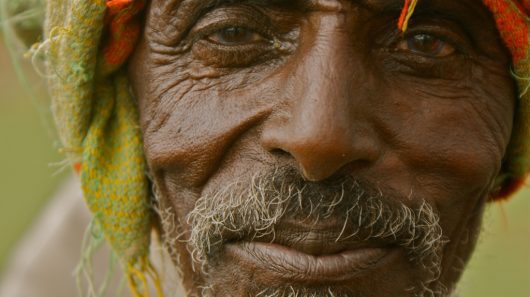
Those who qualify for humanitarian assistance in 2017 number at least 9.3 million—13 percent higher than last year and almost a third of its population. As Afghani people are displaced daily by the fighting between the Taliban and military groups, and thousands of refugees return from Pakistan and Iran, the government struggles to provide routine necessities for its people. A record of 8,397 civilians lost their lives due to the fighting in the first nine months of 2016, while another half a million people were displaced by last November. And so far, this trend is predicted to only grow.

But this wasn’t always the case. In fact, in 2014, it was believed that Afghanistan’s GDP would grow around 12 percent per year. This was prior to the international military force withdrawing from the country before it realized how fully Afghanistan’s economics depended on the foreign troops. Since 2002, foreign troops filled 800 bases, brought in hundreds of millions of dollars into their economy, and thus stood as Afghanistan’s single largest source of revenue. Their departure, then, was devastating. Annual GDP growth is now around one percent.

Afghan analyst Helena Malikyar wrote on the matter, “Projects attached to international aid – one of the largest sources of employment in the past decade – have for the most part shut down or placed in hibernation.”

The U.N.’s aid for Afghanistan, should it be received, will number 500 million dollars and will be given to the country’s 5.7 million most vulnerable population. Afghanistan currently carries malnutrition rates of about 15 percent in over a quarter of its provinces. Of the total 1.8 million people this affects, 1.3 million are children under the age of 5. Of the 9.3 million people in need of general aid, more than half are children. Not only facing malnutrition, the U.N. has reported abuse and exploitation, specifically through “forced marriage, sexual abuse and harmful child labor”.

While the U.N.’s aid for Afghanistan will assist a select group, it still will not be enough to end their plight. Until the Taliban’s insurgency ends and the economy is able to stand on its own, Afghanistan’s crisis must be watched carefully and tended to fervently.

– Brenna Yowell

Photo: Flickr

February 6, 2017
https://borgenproject.org/wp-content/uploads/borgen-project-logo.svg 0 0 Borgen Project https://borgenproject.org/wp-content/uploads/borgen-project-logo.svg Borgen Project2017-02-06 01:30:112024-06-11 02:48:26The United Nations Seeks Greater Aid for Afghanistan
Aid, Charity, Global Poverty

Seven Ways #GivingTuesday 2016 Succeeded

 #GivingTuesday CharityThe results of #GivingTuesday show that 2016 turned out to be a successful year in giving back to charity. In contrast with the high spending that occurs on Black Friday and Cyber Monday, #GivingTuesday offers a chance for the public to give back to charitable causes. According to the statistics, #GivingTuesday has demonstrated “double-digit growth,” projecting much hope for future years. Below are seven ways in which #GivingTuesday exceeded expectations this past year.
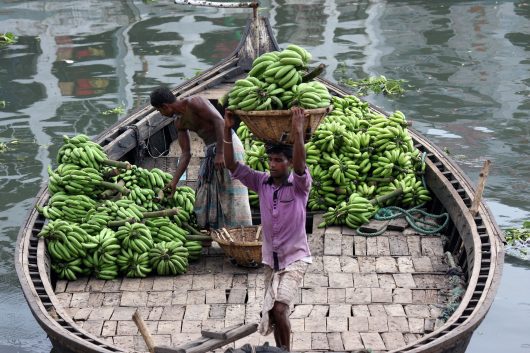
  1. iDonate is a popular giving platform that participated in funding for this year’s #GivingTuesday. It was revealed that this fifth consecutive year of the campaign accrued more support than other years. In fact, since 2012 when the campaign began, #GivingTuesday surpassed the initial first-year earnings from $12 million to $168 million for 2016. In addition, $50 million has been donated since 2015, which shows a 44 percent increase in total proceeds.
  2. Early data shows that the campaign received around 1.56 million donations.  The average contribution was over $100, and online donations increased by 20 percent.
  3. #GivingTuesday has gained momentum partially due to the increased utilization of mobile phones and advocacy from celebrities and major companies. The top five issues advocated for this year were education, environment, animals, health care and international affairs.
  4. The use of infographics this year have illustrated the impact #GivingTuesday has had. Similarly, funding platform CrowdRise used a virtual reality app to construct a building in which each brick represented a donation. Final donations ended up constructing a “Giving Tower,” virtually rising 6,853 feet tall which realistically surpasses the world’s current tallest tower in Dubai.
  5. The Bill and Melinda Gates Foundation started off #GivingTuesday 2016 by agreeing to match one million dollars worth of donations given on www.globalgiving.com at 50 percent. The Foundation’s initial goal of reaching 50 percent was achieved within the first few hours. The Foundation then raised its match point from $500,000 to $900,000. Ultimately, they succeeded in giving back to 9,800 charities.
  6. #GivingTuesday’s founding organization, 92y, compiled a report that revealed increased participation compared to previous years. In 2016, 98 countries participated in #GivingTuesday. Participation from 82 percent of the world’s largest companies, such as AOL and Macy’s, also increased.
  7. Other online funding platforms such as Blackbaud, Network for Good, CrowdRise, Razoo, GoFundMe and IndieGogo added to the advanced momentum. Blackbaud saw a 33 percent increase in nonprofit donations, Network for Good raised $7,654,954, CrowdRise raised over three million dollars from an accumulation of 26,018 donations, Razoo reached 2,556 charities, GoFundMe increased earnings by 46 percent from 2015, and IndieGogo hosted 132 campaigns, gaining 8,400 backers.

The Borgen Project participates yearly in #GivingTuesday and encourages readers to help give back to the world’s poor. Given the consistent growth seen over the past five years, Nov. 28, 2017, projects to be another prosperous year for giving back.

– Amy Williams

Photo: Flickr

February 2, 2017
https://borgenproject.org/wp-content/uploads/borgen-project-logo.svg 0 0 Borgen Project https://borgenproject.org/wp-content/uploads/borgen-project-logo.svg Borgen Project2017-02-02 01:30:412024-12-13 17:56:35Seven Ways #GivingTuesday 2016 Succeeded
Aid, Global Poverty

The BRAC Programme: Helping Alleviate Poverty in Bangladesh

Poverty in Bangladesh
“I don’t want to think about my life. It’s a very hard story.” This is the nation’s cry that representatives of the BRAC Programme hear countless times. Village communities in Bangladesh have withstood such extreme poverty conditions that the majority of the population are illiterate, cannot afford to eat, and many families have to separate from and relocate children in order to provide efficient child-rearing.

According to The Guardian, the BRAC Programme, otherwise known as the Bangladesh Rural Advancement Committee, seeks to equip impoverished individuals with accessibility to tangibles in the form of livestock so that they are able to financially sustain themselves within two years. Rather than providing a temporary fix, “poverty graduation,” as BRAC calls it, develops confident, self-sustaining people through financial education, literacy and learning to care for livestock. Children especially benefit from economic improvements as the likelihood of displacement has decreased and education opportunities have increased. In the village of Karli, every child now attends school, which is an increase from just 20 percent ten years ago.

BRAC also serves as a source of relief for recent disasters such as the fire that took place Dec. 4 in Korail, “the biggest slum” located in Dhaka, Bangladesh. Within the first hour of the fire, BRAC staffers were at ground zero helping facilitate first aid camps, provide food and water and connect victims with family members. The fire that rapidly spread destroyed 495 homes making 2,000 people homeless. According to the BRAC response team, it will cost 12.4 million Bangladesh taka (USD$156,000) to rebuild what was lost. Fortunately, thanks to the seven-day donation drive supporting the victims of Korail, BRAC has assisted in raising 8.8 million takas.

Continual success occurs in Bangladesh as a result of BRAC efforts; 90,000 families a year receive assistance and a total of more than “1.7 million households have been transformed.” Thirty-five-year-old Rezia Begum recalls she “was half-naked when BRAC arrived, I didn’t even have clothes.” That was almost 20 years ago; now she owns her own land and animals, all six of her children have received an education, and she participates in charitable acts rather than relying on contributions.

As one of the world’s leading organizations that targets poverty, the BRAC Programme seeks to empower impoverished people by tackling poverty “at the root, and plants trees of hope.” It is this newfound hope that can transform the narrative from heartache into joy in overcoming the conditions of poverty.

– Amy Williams

Photo: Flickr

January 29, 2017
https://borgenproject.org/wp-content/uploads/borgen-project-logo.svg 0 0 Borgen Project https://borgenproject.org/wp-content/uploads/borgen-project-logo.svg Borgen Project2017-01-29 01:30:052024-12-13 17:56:35The BRAC Programme: Helping Alleviate Poverty in Bangladesh
Aid, Aid Effectiveness & Reform, Global Poverty, USAID

Studies Find Americans Overestimate Foreign Aid Spending

Foreign Aid Spending
Much of what Americans believe about foreign aid spending is wrong. A recent Kaiser Family Foundation poll of 1,505 people found most couldn’t accurately place the percentage of its federal budget the U.S. spends on foreign aid. The average amount they guessed is 26 percent; the answer is less than 1 percent. Only one in every 20 people answered the question correctly.

Where do these misconceptions come from?

The U.S. spends more in net amount than any other country on foreign aid; the total came to some $32 billion in 2014. However, when looking at aid spending as a percentage of gross national income (GNI) , the amount the country and residents abroad take in as income, the U.S. spends a mere 0.19 percent of the wealth it receives each year in aid.

The American contribution falls flat behind larger benefactors like Sweden which donates 1.1 percent of its GNI, or Luxembourg at 1.07 percent and Norway at 0.99 percent.

The misconceptions of Americans regarding foreign aid are showing no signs of clearing up on their own. Another poll conducted by WorldPublicOpinion.org in 2010 found the median estimate Americans believe their country spent on foreign aid was 25 percent. When the poll asked them what would be an “appropriate” amount, the median answer was 10 percent.

These findings might even be humorous if so many people around the world weren’t living amid crushing levels of poverty. The erroneous views Americans hold of foreign aid spending have a direct impact on millions of people who struggle each day with hunger and a lack of economic opportunities.

Americans also host conflicting views regarding foreign aid based on their party affiliation. A survey conducted by yougov.com in 2016 revealed 49 percent of Americans identifying as Democrats believed U.S. aid should go to the poorest countries, while 59 percent of those identifying as Republicans believed aid should go to countries who support U.S. foreign policy.

Overall, 39 percent of Americans believed in aid for poor countries and 41 percent believed aid should be directed based on foreign policy support.

Our misconceptions of foreign aid influence how we think about the topic. In the Kaiser Family Foundation poll, 56 percent of those interviewed believed the U.S. spends too much on foreign aid.

However, when presented with the actual situation, namely the fact that the U.S. spends less than 1 percent of its $4 trillion federal budget on foreign aid, the poll found the number of Americans who think the U.S. is overspending on the aid dropped to 28 percent.

The wording of the questions also makes a difference. When the poll posed the question to Americans, “Do you think the U.S. is now spending too much, too little, or about the right amount on foreign aid?” 56 percent of respondents said too much.

However, when researchers modified the question to ask, “Do you think the U.S. is now spending too much, too little, or about the right amount in efforts to improve health for people in developing countries?” the percentage of those saying too much dropped to 28 percent.

Despite perceptions of corruption, elected officials tend to act in accordance with public opinion when faced with overwhelming support for spending measures. By dispelling the myths surrounding U.S. foreign aid spending, aid legislation will face less opposition as more Americans come forward to support it.

– Will Sweger

Photo: Flickr

November 26, 2016
https://borgenproject.org/wp-content/uploads/borgen-project-logo.svg 0 0 Borgen Project https://borgenproject.org/wp-content/uploads/borgen-project-logo.svg Borgen Project2016-11-26 01:30:462024-12-13 17:55:51Studies Find Americans Overestimate Foreign Aid Spending
Aid, Global Poverty

USAID and Coca-Cola: Improving Watershed Management

Watershed Management
To expand the Water and Development Alliance, Coca-Cola and USAID are donating a combined investment of $22 million to provide safe water and sanitation to communities throughout Africa, Asia, Latin America and the Middle East. Coca-Cola and USAID, through WADA, act in 22 countries worldwide including 16 countries in Africa.

The Water and Development Alliance hosts volunteers in the local communities to participate in watershed management. Keeping the locals involved in the process of establishing improved attitudes and behaviors promotes the importance of maintaining positive health benefits, such as better hygiene and sanitation. This also advocates for smart water usage, thus preventing wastefulness and ultimately protecting the environment while providing economic benefits.

The Global Environment and Technology Foundation encourages the development of new projects and continued progress as the partnership manager. GETF is a non-profit from Washington, D.C. that aims to build partnerships, such as the one between Coca-Cola and USAID, to aid humanity. The three core issues at the center of GETF’s mission are safe water and sanitation, clean energy and climate change reversal, as well as overall sustainability for communities around the world.

In places like Chimoio, Mozambique, the TextAfrica water treatment plant received the funding for restoration and expansion as the facility now benefits 25,000 people in the surrounding area. Partnerships between public and private entities can do a lot of good with adequate funding and oversight to fix problems anywhere in the world. Successful sanitation and hygiene education campaigns are spreading to over one million people across West Java, Indonesia through another WADA-supported project.

The partnership is not limited to Coca-Cola, USAID and GETF. A local non-profit in Kano State, Nigeria called Women Farmer’s Advancement Network helped implement eased water and sanitation access directly in their communities. Also, in Tarija, Bolivia, stakeholder forum PROAGUA raised support for improved water resources and watershed management to the benefit of 150,000 living within the large basin area.

It is important to remember that joining for a common purpose can aid in the fight against poverty, hunger and illness. GETF works to ensure that more successful partnerships such as this may form and make a difference in the lives of real people everywhere. Coca-Cola and USAID continue to strengthen their bond and find new innovative ways to bring basic needs to those struggling to maintain their way of life.

– Aaron Walsh

Photo: Flickr

November 19, 2016
https://borgenproject.org/wp-content/uploads/borgen-project-logo.svg 0 0 Borgen Project https://borgenproject.org/wp-content/uploads/borgen-project-logo.svg Borgen Project2016-11-19 01:30:162024-05-27 23:54:13USAID and Coca-Cola: Improving Watershed Management
Aid

The Mutually Beneficial Relationship Between Japan and Kenya

Japan and Kenya
This year, for the first time since its launch in 1993, the Tokyo International Conference on African Development (TICAD) will be held in Africa. Directors chose Nairobi, Kenya, as a symbol of the unique relationship between the two nations.

Japan’s involvement in Kenya started in 1903, and trade between the two countries expanded throughout the 20th century. A Japanese embassy in Kenya was established just six months after Kenya gained independence in 1963.

The cornerstone of the two countries’ relationship has always been trade. Japan has long been an importer of Kenya’s agricultural goods like tea and tobacco. Kenya, in more recent years, has begun importing cars, machinery and manufactured goods from Japan. In 2013, Kenya exported $46 million to Japan and imported $911 million.

Despite both the Kenyan and Japanese governments agreeing that the relationship has been mutually beneficial, the trade gap between the two nations has long favored Japan, causing distress for some Kenyan businessmen. As a result, the Japanese government has steadily increased its aid to Kenya and other African nations.

As of 2014, Japan had invested $14 billion in Africa, with Kenya receiving the most aid. Japan has funded over 300 development projects in Kenya in the past 27 years, with no signs of slowing down. Since 2012, the Japanese prime minister has funded Kenyan development projects totaling $28 million.

However, the relationship between Japan and Kenya extends beyond their economies. Japan has a large cultural influence in Kenya, which hosts Japanese film festivals and traditional Japanese art. The largest population of Japanese nationals in Africa resides in Kenya, and the largest population of foreign athletes in Japan is Kenyan.

Political relations between the countries are also unique in sub-Saharan Africa, with many signs of good faith and cordiality between the two nations. Kenya donated $1 million to Japan following the Fukushima Daiichi disaster in 2011. Several prime ministers and members of the Japanese royal family have traveled to Kenya recently, with the crown prince visiting in 2010. Likewise, the Kenyan president and countless ministers visit Japan each year.

In his opening address at the TICAD Summit, Kenyan President Uhuru Kenyatta expressed his hope for the collective futures of Africa, Japan and Kenya.

“We look forward to…a new strengthening of the ties not just between Africa and Japan, but also between African nations themselves,” said Kenyatta. “For Africa is rising, ladies and gentlemen.”

– John English

Photo: Flickr

November 3, 2016
https://borgenproject.org/wp-content/uploads/borgen-project-logo.svg 0 0 Borgen Project https://borgenproject.org/wp-content/uploads/borgen-project-logo.svg Borgen Project2016-11-03 01:30:132024-12-13 17:55:46The Mutually Beneficial Relationship Between Japan and Kenya
Advocacy, Aid, Charity, Global Poverty

Rethinking Effective Charity: Giving What We Can

Effective Charity
Giving What We Can (GWWC) is an international society that works to eliminate extreme poverty. It recommends effective charity organizations and its members pledge to give at least 10% of their income to such charities.

Dr. Toby Ord Established Giving What We Can in 2009

Dr. Ord, an Oxford ethics researcher, claims the inspiration for the organization came from Peter Singer’s essay “Famine, Affluence, and Morality,” which argues that the affluent have a moral obligation to donate to the people less well-off.

The organization draws heavily on modern ethical philosophy, especially the effective altruism movement. This philosophical movement attempts to use evidence and analysis to determine the most effective humanitarian causes and charities to donate to.

Taking a Top-down Approach to Evaluating Charities

The organization begins with the big-picture, evaluating which areas — health, education, emergency aid, etc. — require the most attention. The group compares sub-areas within those categories, such as specific diseases. Finally, it analyzes the particular charities that work in this sub-area, such as the Against Malaria Foundation.

In this evaluation process, the organization focuses on three main criteria: neglect, tractability and impact. A neglected cause means the issue is not receiving proper attention from humanitarian efforts. Tractability defines a cause that has a workable solution that the sponsor can effectively implement. Impact focuses on the number of lives that can be improved by investing in a given cause.

GWWC’s website uses schistosomiasis, a disease involving parasitic flatworms, as an example of a cause that clearly meets all three criteria: “[Schistosomiasis] affects millions of people (impact) but it’s cheap and easy to treat (tractability) […] However, it is relatively underfunded (it is part of the so-called ‘Neglected Tropical Diseases’).”

For this reason, GWWC lists the Schistosomiasis Control Initiative as one of its top charities. Its other established, most effective charity is the Against Malaria Foundation. They list Deworming the World Initiative and Project Healthy Children as promising top charities.

Though it accepts donations, Giving What We Can does not ask for them. Instead, the humanitarian organization prefers to play “a complementary role,” asking members to commit to giving to effective charities instead.

So far, GWWC’s 1,696 members have donated more than $36.3 million to effective charities and pledged to donate a further $649 million over their lifetimes.

– Steffen Seitz

Photo: Flickr

October 3, 2016
https://borgenproject.org/wp-content/uploads/borgen-project-logo.svg 0 0 Borgen Project https://borgenproject.org/wp-content/uploads/borgen-project-logo.svg Borgen Project2016-10-03 01:30:552020-06-09 13:55:19Rethinking Effective Charity: Giving What We Can
Activism, Aid, Aid Effectiveness & Reform, Global Poverty

Senate Debates the Purpose of Assisting the Developing World

U.S. Assistance to the Developing World
“Could each of you tell me the purpose of the United States giving economic assistance to other countries?” These were the words Senator Bob Corker used to kick off the debate over the effectiveness of current U.S. allocations, and the purpose of U.S. assistance to the developing world.

In general, all of the witnesses agreed that the purpose of U.S. assistance to the developing world is to promote economic growth and the conditions that sustain it, but each participant expressed nuances regarding how this goal can be accomplished.

Dr. Jeffrey Herbst, CEO of Newseum, believes that the key to improving U.S. assistance is to ensure the accountability of recipient governments. In his introductory remarks, he recommended that countries meet certain performance outcomes or be subject to the withdrawal of aid.

“If the recipient country is not committed,” said Herbst, “to private sector growth and a dynamic economy, then no matter what the design of foreign assistance is…the aid is not going to have a significant effect.”

But this is also a matter of perspective. Alicia Phillips Mandaville, Vice President of Global Development at InterAction, explained that many of the factors affecting program success are overlooked due to a lack of technical tools. Mandaville emphasized growth diagnostics and cost-benefit analyses to determine the real obstacles to growth and whether those can be overcome in the long term.

For instance, Mandaville pointed out that one common barrier to growth in West African countries is poor infrastructure. Roads there are congested and do not accommodate large transport vehicles, so the perceived solution is to simply make an infrastructure investment.

However, from a technical point of view, high transport costs are created not by the macro-situation, but rather by its surrounding actors. “The problem is that there are three different ministries allowed to set up safety checkpoints,” Mandaville explained. “So you’ve tripled the instances for graft, and you’ve slowed down speed by threefold.”

Mandaville and Herbst’s examples underscore this trend of awarding targeted aid programs to countries with strong records of good governance.

To round out this idea, Dr. Todd Moss of the Center for Global Development stressed that the future of U.S. assistance lies in the public-private partnership. Highlighting initiatives such as USAID’s “Power Africa,” he expressed that “the deployment of commercial capital for public policy purposes” is the greatest enabler of economic growth.

To date, “Power Africa” has secured funds from private actors such as the Africa Finance Corporation ($25 million) and SolarNow ($2 million), combining them with government contributions like those from the Swedish Development Agency ($1 billion).

The conclusion, then, is clear: the purpose of U.S. assistance to the developing world is to enable growth in countries committed to democratic governance. This assistance will compete with that of other donors (such as China) by enforcing metric-contingent funding, and it will promote the public-private investment model as its vehicle for deployment.

These changes are a signal to prospective governments that the U.S. is committed to producing results and not just “buying friends.”

– Alfredo Cumerma

Photo: Flickr

August 26, 2016
https://borgenproject.org/wp-content/uploads/borgen-project-logo.svg 0 0 Borgen Project https://borgenproject.org/wp-content/uploads/borgen-project-logo.svg Borgen Project2016-08-26 01:30:342024-12-13 17:54:52Senate Debates the Purpose of Assisting the Developing World
Page 56 of 65«‹5455565758›»

Get Smarter

  • Global Poverty 101
  • Global Poverty… The Good News
  • Global Poverty & U.S. Jobs
  • Global Poverty and National Security
  • Innovative Solutions to Poverty
  • Global Poverty & Aid FAQ’s
Search Search

Take Action

  • Call Congress
  • Email Congress
  • Donate
  • 30 Ways to Help
  • Volunteer Ops
  • Internships
  • Courses & Certificates
  • The Podcast
Borgen Project

“The Borgen Project is an incredible nonprofit organization that is addressing poverty and hunger and working towards ending them.”

-The Huffington Post

Inside The Borgen Project

  • Contact
  • About
  • Financials
  • President
  • Board of Directors
  • Board of Advisors

International Links

  • UK Email Parliament
  • UK Donate
  • Canada Email Parliament

Get Smarter

  • Global Poverty 101
  • Global Poverty… The Good News
  • Global Poverty & U.S. Jobs
  • Global Poverty and National Security
  • Innovative Solutions to Poverty
  • Global Poverty & Aid FAQ’s

Ways to Help

  • Call Congress
  • Email Congress
  • Donate
  • 30 Ways to Help
  • Volunteer Ops
  • Internships
  • Courses & Certificates
  • The Podcast
Scroll to top Scroll to top Scroll to top