• Link to X
  • Link to Facebook
  • Link to Instagram
  • Link to TikTok
  • Link to Youtube
  • About
    • About Us
      • President
      • Board of Directors
      • Board of Advisors
      • Financials
      • Our Methodology
      • Success Tracker
      • Contact
  • Act Now
    • 30 Ways to Help
      • Email Congress
      • Call Congress
      • Volunteer
      • Courses & Certificates
      • Be a Donor
    • Internships
      • In-Office Internships
      • Remote Internships
    • Legislation
      • Politics 101
  • The Blog
  • The Podcast
  • Magazine
  • Donate
  • Click to open the search input field Click to open the search input field Search
  • Menu Menu

Archive for category: Aid

Aid, Global Poverty, Politics

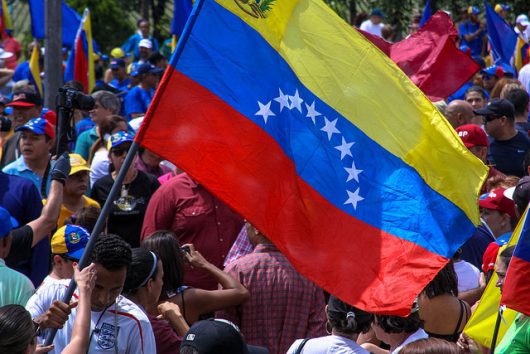
Humanitarian Assistance in Venezuela: Efforts of US Leaders


Over the past few years, Venezuelan citizens have suffered at the hands of oppressive government leaders, leading to an overall failing economy. Necessities such as food and medicine have become hard to obtain for lower and middle-class citizens. As a result, there has been a growing need for humanitarian assistance in Venezuela.

According to findings by the International Monetary Fund, Venezuela’s inflation rate reached an alarming 720 percent in 2016. This substantial rise in inflation subsequently led to an even higher rate of poverty among citizens, and an even greater need for humanitarian assistance in Venezuela.

Recent statistics from the National Survey of Living Conditions showed that the average number of Venezuelans who reported eating two or fewer meals per day increased from 11.3 percent in 2015 to 32.5 percent in 2016. Likewise, the average population reported an average increase in weight loss by more than 15 pounds due to the inability to afford adequate meals each day.

In response to this prevalent issue, U.S. Senator Ben Cardin (D-MD) and Senator Marco Rubio (R-FL) recently initiated a bill known as the “Venezuelan Humanitarian Assistance and Defense of Governance Act of 2017.” As its title suggests, one of the main goals of this bill is to provide humanitarian assistance in Venezuela. Within the bill, U.S. leaders cited that Venezuelan president Nicolas Maduro “rejected repeated requests from the Venezuelan National Assembly and civil society organizations to bring humanitarian aid into the country.” The bill also aims to protect the citizens’ human rights and the concept of democracy.

A total of $10 million has been set aside for the U.S. Committee on Appropriations to effectively carry out measures proposed in the humanitarian assistance bill. Some of these measures include providing a way to ensure that food, medicine and nutritional supplements are transported and distributed to citizens in need. Funds will further be used to improve “transparency and accountability” within Venezuelan government institutions.

– Lael Pierce

Photo: Flickr

May 21, 2017
https://borgenproject.org/wp-content/uploads/borgen-project-logo.svg 0 0 Borgen Project https://borgenproject.org/wp-content/uploads/borgen-project-logo.svg Borgen Project2017-05-21 01:30:162020-05-03 14:11:06Humanitarian Assistance in Venezuela: Efforts of US Leaders
Aid, Charity, Global Poverty

Charitable Giving: From the Business to the State


Pip’s Original Doughnuts and Chai is a quaint doughnut shop situated in the heart of Portland, Oregon. Last year it received media attention because of its Freedom to Give initiative. This initiative provides employees with an extra $30 in their paycheck. Employees are to use this extra cash to give to those in need as a form of charitable giving. Pip Employees may give their $30 to whoever and whatever they desire.

This story has inspired Pip’s employees and the surrounding community. Pip’s is the quintessential mom and pop shop, but giving back is not limited to small business.

Goldman Sachs, one of the largest investment banks in the world, has been striving to increase its charitable giving, particularly after the 2008 financial crisis. The Goldman Sachs Foundation has initiated the 10,000 Women and the 10,000 Small Businesses campaigns. The 10,000 Women campaign focuses on training women around the world in management and business. The 10,000 Small Businesses campaign serves to provide business assistance to small businesses around the world for up to five years.

The desire for small businesses to help the needy and commitment of big businesses to do so as well is similar to state involvement in fighting poverty. The reality is that small states tend to spend much on foreign aid, whereas big states could afford to spend more on fighting global poverty.

According to the World Economic Forum, a nonprofit foundation based in Geneva, the U.S. spends the most on foreign aid. Germany and the United Kingdom come second and third. However, when considering the percentage of a state’s gross national income, the U.S. does not even rank among the top ten. Sweden ranks first, the United Arab Emirates ranks second, and Norway ranks third.

This phenomenon demonstrates that big states have the capacity to give more than they currently do, just as a big business can afford to expand its charitable giving.

– Rebeca Ilisoi

Photo: Flickr

May 19, 2017
https://borgenproject.org/wp-content/uploads/borgen-project-logo.svg 0 0 Borgen Project https://borgenproject.org/wp-content/uploads/borgen-project-logo.svg Borgen Project2017-05-19 01:30:352024-12-13 17:57:59Charitable Giving: From the Business to the State
Aid, Global Poverty

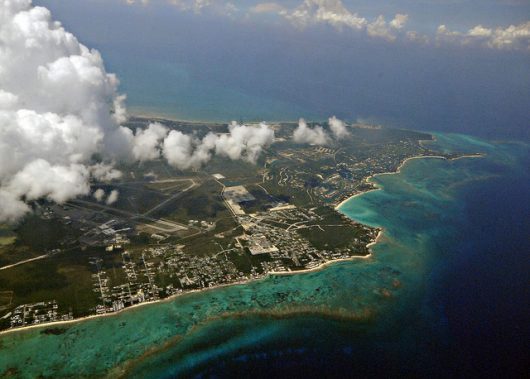
The Role of the OAS in Poverty Reduction in the Bahamas


The Organization of American States (OAS) in the Bahamas is a catalyst for the country’s development and offers many programs and activities that contribute to poverty reduction in the country.

The OAS has specifically focused on preserving the heritage of the Bahamas through the revitalization of the downtown area of capital Nassau and preserving the country’s historic sites while promoting local artisanship.

The organization is also focused on security for the Bahamas and facilitated strengthening the capacity of law enforcement and prosecutors in the Bahamas as well as the Caribbean. Security has always been a very important mandate for the organization and important to the role that the OAS plays in poverty reduction in the Bahamas.

The OAS has specifically worked along with the ministry of foreign affairs and the ministry of education, science and technology to offer fellowships and scholarships while empowering Bahamians and reducing poverty.

As of recently, the OAS has been working on partnering with the University of the Bahamas to reduce poverty through education, while expanding its role in poverty reduction in the Bahamas and the country’s further development.

The OAS has been very vocal about the low level of Bahamian participation in the scholarship opportunities by Bahamians. In 2013 alone, many scholarships were made available that Bahamians were not made aware of or did not participate. These scholarships give Bahamians access to financing and promote the organization’s role in poverty reduction in the Bahamas.

Jerome Fitzgerald, the minister of education, science and technology stated, “We have been given a world-class education. We, therefore, are mandated and required as leaders in education and policymakers to ensure that we afford all of our citizens the same opportunities for success.”The

The OAS promotes education as the key to poverty reduction in the Bahamas. Through organizations like this, poverty reduction in the Bahamas is hopeful.

– Rochelle R. Dean

Photo: Flickr

May 19, 2017
https://borgenproject.org/wp-content/uploads/borgen-project-logo.svg 0 0 Borgen Project https://borgenproject.org/wp-content/uploads/borgen-project-logo.svg Borgen Project2017-05-19 01:30:062024-12-13 17:57:59The Role of the OAS in Poverty Reduction in the Bahamas
Aid, Foreign Aid, Global Poverty

Why Foreign Aid Budget Cuts Don’t Save Money


Among the many controversial changes to the U.S. federal budget proposed by President Trump, reductions in spending on health in foreign countries may prove the most costly. Contrary to popular opinion, the amount of money spent by the U.S. on assisting foreign countries to stay healthy is extremely small, and foreign aid budget cuts will not save the country any significant amount of money.

“It is very troubling,” said Georgetown University global health expert Lawrence Gostin. “Especially when you think of the pivotal role the U.S. has played over the years in global health. The world is lost without U.S. leadership.”

For reasons unknown, one of the most persistent myths Americans believe about the federal budget is that the government spends nearly 20 percent of it on foreign aid. In reality, even before Trump’s proposal can take effect in 2018, less than one penny of every dollar goes to foreign assistance of all types. When factoring in the gross national income, the U.S. spends a shockingly low 0.16 percent of its budget on helping improve the lives of those in developing countries.

Cutting back on foreign aid spending may actually end up costing the U.S. The outbreak of the deadly Ebola virus, which occurred between 2014 and 2016, proved that there is no such thing as an isolated national health crisis in the current global economy. In order to protect American citizens from infection, the U.S. government had to spend $2.3 billion to help contain the spread of the epidemic.

Spending on foreign aid helps to prevent catastrophic outbreaks like Ebola from happening, which consequently results in financial savings. Perhaps most importantly, foreign aid budget cuts may not save money because foreign assistance spending is not so much a charitable donation as it is an investment in the future. According to the Lancet Commission, spending on global health can provide returns of a whopping nine times the initial investment.

The good news is the proposed budget cuts remain just that: a proposal. Congress must approve the full budget before the changes take place, and representatives rely on feedback from their constituents when making decisions on important matters such as these. Securing the future of foreign aid investment may be a phone call away, and our guide to contacting local representatives is a great place to start.

– Dan Krajewski

Photo: Flickr

May 4, 2017
https://borgenproject.org/wp-content/uploads/borgen-project-logo.svg 0 0 Borgen Project https://borgenproject.org/wp-content/uploads/borgen-project-logo.svg Borgen Project2017-05-04 01:30:512024-05-28 00:00:07Why Foreign Aid Budget Cuts Don’t Save Money
Aid, Global Poverty, Politics

Crowdpac’s Fundraising Mission: Bring Politics Back to the People


With growing anticipation for the 2018 political midterms, Crowdpac is on a mission to bring politics back to individuals and to assist with their fundraising campaigns.

Crowdpac provides direct access to politician information, simplifying the campaign process for newcomers and connecting people to candidates who are representing their political standpoints. The CEO, Steve Hilton, believes that money supports a majority of the current issues within politics. Large cash donations continually prove to be a vital component in winning an election. “You’ve got to raise money to do your campaign,” Hilton states. “And typically, that forces you to do things and say things and take positions that are not actually what you believe.”

During the 2016 Presidential campaign, 99.31 percent of the source funds for Bernie Sanders’ campaign (229 million dollars) were funded by individual contributions. In comparison, President Trump raised 132.2 million dollars from individual contributions.

Fundraising proves to be effective and critical to the success of a campaign, even in “small amounts at the state level.” A Utah resident, Dr. Kathryn Allen, has gained over half a million dollars for the Utah 2018 primaries. Through Crowdpac, people can find easily access her fundraising profile and can endorse her campaign.

Governor Arnold Schwarzenegger created a fundraising profile titled, “This is our chance to make gerrymandering unconstitutional” on the organization’s website. The former California Governor has partnered with Common Cause, a nonprofit organization working to create an “accountable government that serves the public interest”.

The fundraising profile includes Schwarzenegger’s reason behind his endeavor; the Wisconsin Republican Party plans to appeal a federal order, redrawing the state’s legislative districts. In November, a federal court ruled that Wisconsin’s districts give Republicans a continual advantage in state elections and must be redrawn.

“They’ve appealed the ruling to the Supreme court,” Schwarzenegger states, “and you can bet they’ll be well financed.”

The bipartisan, fundraising goal is to make gerrymandering unconstitutional and to bring politics back to people who want legitimate candidates representing their political standpoints. The campaign has already received 902 endorsements, 584 donations, and has raised 23,194 dollars. Shwarzenegger has also pledged to match all donations.

Crowdfunding platforms such as GoFundMe and Crowdpac allow people to raise money for the campaigns, representatives and political beliefs they support. America’s political system is founded on the principles of a representative democracy. Legitimate representatives are vital to providing accurate opinions of voting citizens.

– Madison O’Connell

Photo: Flickr

April 28, 2017
https://borgenproject.org/wp-content/uploads/borgen-project-logo.svg 0 0 Borgen Project https://borgenproject.org/wp-content/uploads/borgen-project-logo.svg Borgen Project2017-04-28 01:30:092024-05-28 00:00:12Crowdpac’s Fundraising Mission: Bring Politics Back to the People
Aid, Global Poverty, United Nations

UN Chief Requests Aid for the People of Mosul


At the apex of Islamic State (IS) control, 10 million people were living in territory under IS authority. However, that number has been steadily decreasing.

By December 2015, the Salafi jihadist group controlled an extensive territory in western Iraq and eastern Syria that formed an unrecognized proto-state. Outside of Iraq and Syria, IS controls territory in Libya, Sinai and Afghanistan.

The jihadist group gained international attention when it invaded and overtook Iraq’s second-largest city, Mosul. Iraq’s fight to remove the Islamic State group from Mosul has ravaged for six months, with the violence causing more than 215,000 citizens to become displaced.

Twenty miles west of Mosul, U.N. Secretary-General, Antonio Guterres, met with Iraqi citizens inside a camp designated for displaced individuals. He later stated that “these people have suffered enormously,” and without aid, “they go on suffering.”

The Secretary-General urges for increased funding for U.N. programs in Iraq. He calls for “international solidarity” and aid for the people of Mosul.

The U.N. estimates that $985 million is required for emergency funds to assist displaced individuals throughout Iraq. Providing shelter for thousands of people fleeing Mosul will cost at least $7 million as the fighting continues. Presently, U.N. programs in Iraq have only reached eight percent of their funding budget.

The current focus area in the larger battle against IS centers around the control of Mosul. The city is the jihadist group’s last critical bastion in Iraq. Financial assistance for Iraqi and Kurdish security forces is a key component for regaining Mosul, which has been under IS authority since 2014.

Nearly 750,000 people continue to live in western Mosul. There, the conflict between Islamic State militants and Iraqi and Kurdish forces has led to thousands of casualties. Most of the residents do not have access to clean drinking water or sufficient food. Excluding the Iraqi military, agencies have not been able to provide aid for the people of Mosul due to the extreme levels of violence in the area.

The U.N. Security Council called an emergency meeting shortly after the U.S. released 59 Tomahawk cruise missiles on a Syrian air base in early April. U.N. chief Guterres advised the council to unify and reach a peaceful agreement on moving forward in Syria. “For too long,” he states, “international law has been ignored in the Syrian conflict, and it is our shared duty to uphold international standards of humanity.” Guterres believes this is a “prerequisite” to ending the continued suffering of the people of Mosul and Syria.

– Madison O’Connell

Photo: Flickr

April 25, 2017
https://borgenproject.org/wp-content/uploads/borgen-project-logo.svg 0 0 Borgen Project https://borgenproject.org/wp-content/uploads/borgen-project-logo.svg Borgen Project2017-04-25 01:30:412020-05-07 17:11:09UN Chief Requests Aid for the People of Mosul
Aid, Global Poverty, United Nations, USAID

10 Facts About the International Affairs Budget


International Affairs Budget

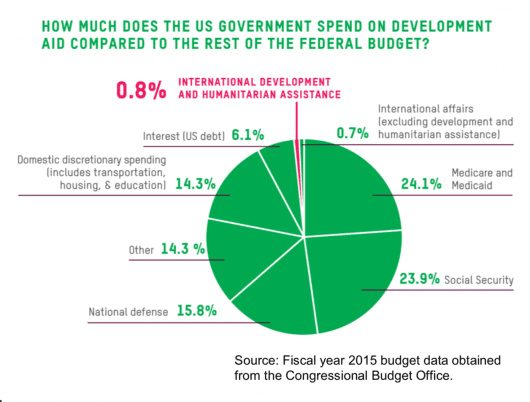
The Trump Administration recently released its federal budget proposal for Fiscal Year 2018 (FY18), proposing deep cuts for the International Affairs Budget. The proposal includes plans to cut State Department and USAID funding by 31 percent and the Treasury International Programs budget by 35 percent. The proposed $37.6 billion total budget cut for the State Department and USAID starkly contrasts the $54 billion increase proposed for the Department of Defense.

There has already been pushback to the proposal, including a letter signed by more than 120 retired generals and admirals against the cuts, and another opposition letter signed by more than 100 faith leaders.

Top 10 things you need to know about the International Affairs Budget

  1. It’s tiny. The International Affairs Budget accounts for less than one percent of the federal budget. The amount spent on foreign aid is often overestimated by the general public. A Kaiser Family Foundation poll published in 2015 asked respondents: “What percentage of the federal budget is spent on foreign aid?” — the average response was 28 percent.
  2. The International Affairs Budget is also referred to as the “150 account.” Foreign aid can be split into two functions: economic and development assistance (151), and security assistance (152). For FY17, the State Department requested $25.6 billion for the 151 account and $16.8 billion for the 152 account.
  3. Seven out of the top 10 recipients of economic and development assistance are African nations. Afghanistan is the largest recipient of economic and development assistance, as part of the ongoing reconstruction of the country after the U.S. military invasion in 2001.
  4. Money allocated to help alleviate global poverty is mutually exclusive from money allocated to help fund domestic poverty-reducing programs. In the overall federal budget, the International Affairs Budget is a completely separate account from the domestic expenditure. Therefore, spending money on global poverty does not have to compete with spending money on poverty here at home. Mattis Foreign Aid Quote
  5. The U.N. suggests that developed countries put 0.7 percent of their Gross National Income (GNI) toward overseas development and assistance. According to 2015 OECD statistics, the U.S. spends just 0.17 percent on overseas development and assistance — missing the U.N. target by 76 percent.
  6. The International Affairs Budget funds vital programs that have profound impacts on major global health threats. USAID assistance helped stall the recent Ebola outbreak in West Africa and continues to partner with local governments and organizations to ensure any further outbreaks are mitigated.
  7. USAID is the largest provider of food assistance in the world. Nearly 800 million people worldwide suffer from chronic hunger. Since its inception, around three billion people have benefited from USAID’s assistance programs.
  8. The International Affairs Budget has bipartisan support in Congress. U.S. Senator Ben Cardin (D-MD) led three of his bipartisan Foreign Relations Committee members in proclaiming that funding for the budget is “every bit as essential to ensuring America’s national security as funding for the Department of Defense, the Intelligence Community and law enforcement.”
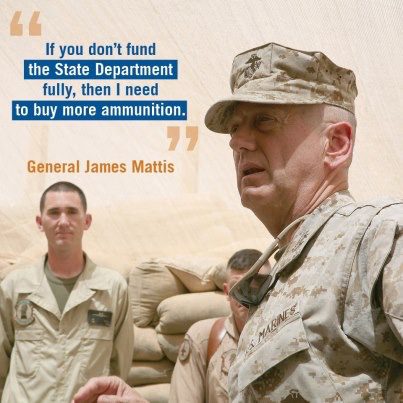
  9. The soft power of foreign assistance and development is supplementary to the hard power of the military. In 2013, U.S. Secretary of Defense James Mattis, as Commander of U.S. Central Command, remarked to Congress, “If you don’t fully fund the State Department, then I need to buy more ammunition.” Foreign aid and development can undoubtedly play a role in fostering positive growth and warm feelings toward the U.S. in societies that are at risk of succumbing to terrorist groups.
  10. Spending money on international development is not just a moral decision. In an ever-connected world, funding the International Affairs Budget creates jobs for American workers and boosts the American economy. In 1996, 39 percent of exports went to developing countries. Now, more than half of U.S. exports go to developing economies. Through aid and development, people living in developing economies are becoming more wealthy and more capable of affording American products.

The International Affairs Budget is a tiny component of the overall federal budget, but its impact in myriad areas is enormous. American jobs, economic growth, national security, and global health are just a few areas that will be affected if the proposed cuts by the Trump Administration are implemented.


– Michael Farquharson

Photo: Oxfam

April 22, 2017
https://borgenproject.org/wp-content/uploads/borgen-project-logo.svg 0 0 Borgen Project https://borgenproject.org/wp-content/uploads/borgen-project-logo.svg Borgen Project2017-04-22 01:30:402024-12-13 17:57:4510 Facts About the International Affairs Budget
Aid, Global Poverty

The African Prisons Project

African Prisons Project
The African Prisons Project (APP) is an organization that works alongside prisoners in Africa in order to improve prison conditions, assist with legal counsel and educate inmates.

The African Prisons Project was founded in 2007. The organization works with both prisoners and prison staff in order to create a more humane and rehabilitation based approach to incarceration. The group focuses its work on four areas: leadership, access to health, life skills and access to justice.

The APP provides leadership training through its legal education program with the University of London. This is extremely useful to prisoners who are unable to afford legal representation. It has empowered many prisoners to work on their own cases and that of their fellow inmates.

The APP works to improve prison healthcare by providing classes on healthcare, offering clinical services and building health infrastructure. The group also provides human rights training to prisoners and prison staff in order to inform and empower both prisoners and staff members to protect human rights. In addition, the organization also works to facilitate dialogue between the officials and policy-makers who legislate prisons, and the staff and prisoners who are affected by these policies.

Their work is extremely helpful to inmates all across Africa, many of whom would never see a lawyer without it. Most prisons in Africa are 300% full, which leads to the spread of diseases and inevitable human rights violations. The APP’s work across these fields seeks to minimize these risks and other risks to prisoners. In Uganda, 11.3% of all prisoners are HIV positive. This is almost twice the national rate, and it makes the healthcare work that the APP does even more necessary.

The education that the group provides is also extremely valuable. At APP targeted prisons, 67.3% of all inmates are illiterate. Of these prisoners, four out of five cannot afford a lawyer. In Uganda and Kenya, this rate is 90%, and it is common for inmates to wait a decade for a trial.

The APP has made great strides in providing protection and education to these inmates. Their rehabilitative approach has been acknowledged by the United Nations Sustainable Solutions Summit, and the group hosted the first-ever TEDx conference to take place inside a prison in Africa. The group has succeeded in overturning 57 convictions, 12 death sentences and gotten 298 cases dismissed.

When they cannot get a conviction overturned, the APP finds other ways to improve prisoners’ lives. Sometimes, this is through a legal education. Other times, they help by providing musical instruments to prisoners or recording a CD for inmates on death row. The African Prisons Project embraces many different roles in their efforts to create a more rehabilitative approach to incarceration in Africa.

– Eva Kennedy

Photo: Flickr


February 28, 2017
https://borgenproject.org/wp-content/uploads/borgen-project-logo.svg 0 0 Borgen Project https://borgenproject.org/wp-content/uploads/borgen-project-logo.svg Borgen Project2017-02-28 01:30:562024-12-13 17:56:40The African Prisons Project
Aid, War and Violence

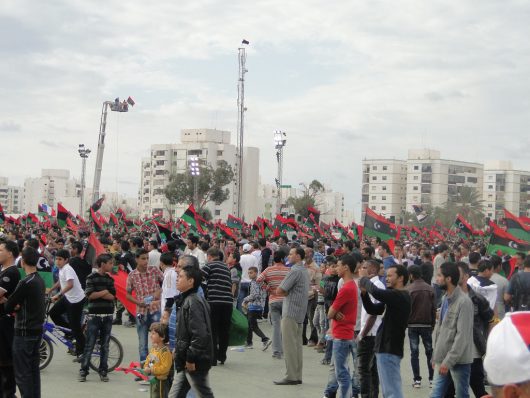
Eight Facts About the Libyan Crisis

8 Facts About the Libyan Crisis
Disputes in Libya date back to the 7th century when the Arabs conquered Libya and first spread Islam. Since then, it has developed first into a united country, then into a divided one. Now, the Libyan crisis is worsening. Here are eight facts about the Libyan crisis:

  1. Conflict in Libya has a long history. The beginning of the conflict in Libya dates back to the 7th century when Islam spread widely and became the national religion. In 2011, Arab Spring protests led to the first civil war in Libya.
  2. The conflict that led to the 2011 civil war began in 1969. Muammar Gaddafi led a group of military officers in a protest against King Idris in 1969, which landed Gaddafi in power of the new Libyan African Republic. As all power and wealth within Libya were under Gaddafi’s control, many pro-monarchy civilians lashed out, and anti-Gaddafi groups formed.
  3. Protests in neighboring countries spurred the war on. Word spread of revolts in neighboring countries, which inspired protests in Benghazi and other cities in Libya. War broke out in early 2011 as rebels opposed the Gaddafi government, but security forces defeated them. With the National Transitional Council, the main opposition group, now recognized as the new Libyan government, the first civil war ended in October 2011. The second civil war began in 2014, as the conflict began between various rebel groups seeking control of Libyan territory.
  4. During the Libyan civil war of 2011, it is estimated that between 10,000 and 15,000 people were killed. Death sources are from rebel sides, government forces and civilians. To date, since the 2014 crisis broke out, there have been 5,871 civilian deaths in Libya.
  5. Countries across the world have aided Libya’s citizens in a number of ways. Over the course of the Libyan crisis, the European Union has given almost $160 million in aid. Aid came in different forms: civilian resources, transportation, sanitation, healthcare resources, food supplies. Many other countries around the world have also donated generously, but those within the EU take the lead as a combined force.
  6. The Libyan crisis has produced thousands of refugees who flee to neighboring countries, for example, Egypt, seeking asylum. In May 2011, already around 746,000 people had fled Libya since the beginning of the War. Most Libyans fled to Italy, where 36,222 refugees currently reside. Surrounding European countries also continue to allow migrants to seek refuge.
  7. Gaddafi’s capture was a major turning point. The rebels captured and killed Colonel Gaddafi on Oct. 20, 2011. This is a key event within the Libyan crisis because the beginning of the conflict started with pro-Gaddafi forces and anti-Gaddafi rebels.
  8. International organizations tried to help Libya in solving civil issues. In March 2011, the United Nations Security Council issued a no-fly zone over Libya. NATO then authorized air strikes in order to protect civilians. Many countries give help by providing Libya with vital resources for its citizens, such as warmth, food and shelter.

For now, Libya continues its division while the international community continues providing aid. Recently, African leaders have held a mini-summit in Congo to discuss what further action is necessary. They decided that lifting the arms embargo was necessary to begin a more proactive approach to ending the war in Libya. Over 29 countries in the Middle East and Europe are continuing to open their borders to refugees, which is the greatest help that Libyan citizens can receive at present.

– Georgia Boyle

Photo: Flickr

February 19, 2017
https://borgenproject.org/wp-content/uploads/borgen-project-logo.svg 0 0 Borgen Project https://borgenproject.org/wp-content/uploads/borgen-project-logo.svg Borgen Project2017-02-19 01:30:372020-06-01 14:32:43Eight Facts About the Libyan Crisis
Aid, Global Poverty, Water

Know Your Cause: The Natives in the Amazonian Rainforests

Know Your Cause: The Natives in the Amazonian RainforestsThe Amazonian Center for Environmental Resources (ACEER) is a nonprofit organization focused preserving the Peruvian and Amazonian rainforests. With climate change and deforestation at the forefront of global issues at the moment, the organization does its part by educating on rainforest preservation. ACEER’s contributions don’t just help the environment, its work also strives to reduce global poverty by helping the natives in the Amazonian rainforests and Peruvian regions.

ACEER’s work to decrease deforestation helps the natives in the Amazonian rainforests keep their homes. Deforestation destroys the habitats of many animal and plant species which also destroys indigenous peoples’ home as the forests serve as their main source of food and shelter.

The organization’s AMIGOS! program strives to give the children in Amazonian areas a quality education. The AMIGOS! program does a lot to help the Peruvian schools in cities such as Puerto Maldonado and Iquitos and rural areas. The program has been around since 1995, teaching hundreds of children about rainforest ecology, history and conservation every year. AMIGOS! uses creative ways to teach those subjects, such as their Puppet House which feature characters like Yoqui the Brave Pirate who teaches children about protecting the rainforest’s ecosystems.

There is also a school-village partnership program to participate in community service projects such as installing solar pasteurization systems for clean drinking water and offering workshops for medicinal plant gardening. Since these Peruvian schools are one-roomed schools with almost no textbooks and few supplies, teachers lack resources to give children a quality education. American schools provide supplies such as pencils, chalkboards, and exercise books to these schools in need.

The organization also provides programs to study the water quality in the rainforests to ensure there is drinking water for the natives in the Amazonian rainforests as well as the wildlife. One such program is the Leaf Pack Program which has a network of teachers, students, and others studying the water quality in streams by using an experimental kit. The Leaf Pack experimental kit collects samples from a local stream and shares the data to determine if the water is safe enough to drink.

In 2012, ACEER received a major grant from the Blue Moon Fund to conduct ecosystem assessment along the Transoceanic Highway in Peru to make sure the water is drinkable. This organization has also worked with TriVita Inc. to bring safe drinking water to the Amazonian village by installing new surface water systems in 2014.

ACEER’s work does a lot to save the rainforest, but helping the environment has also helped the locals who live there. After all, global poverty and environmental issues are closely linked, so the efforts of this organization work with both issues to make the world better.

– Emma Majewski

Photo: Flickr

February 12, 2017
https://borgenproject.org/wp-content/uploads/borgen-project-logo.svg 0 0 Borgen Project https://borgenproject.org/wp-content/uploads/borgen-project-logo.svg Borgen Project2017-02-12 01:30:472024-06-05 04:37:51Know Your Cause: The Natives in the Amazonian Rainforests
Page 55 of 65«‹5354555657›»

Get Smarter

  • Global Poverty 101
  • Global Poverty… The Good News
  • Global Poverty & U.S. Jobs
  • Global Poverty and National Security
  • Innovative Solutions to Poverty
  • Global Poverty & Aid FAQ’s
Search Search

Take Action

  • Call Congress
  • Email Congress
  • Donate
  • 30 Ways to Help
  • Volunteer Ops
  • Internships
  • Courses & Certificates
  • The Podcast
Borgen Project

“The Borgen Project is an incredible nonprofit organization that is addressing poverty and hunger and working towards ending them.”

-The Huffington Post

Inside The Borgen Project

  • Contact
  • About
  • Financials
  • President
  • Board of Directors
  • Board of Advisors

International Links

  • UK Email Parliament
  • UK Donate
  • Canada Email Parliament

Get Smarter

  • Global Poverty 101
  • Global Poverty… The Good News
  • Global Poverty & U.S. Jobs
  • Global Poverty and National Security
  • Innovative Solutions to Poverty
  • Global Poverty & Aid FAQ’s

Ways to Help

  • Call Congress
  • Email Congress
  • Donate
  • 30 Ways to Help
  • Volunteer Ops
  • Internships
  • Courses & Certificates
  • The Podcast
Scroll to top Scroll to top Scroll to top