• Link to X
  • Link to Facebook
  • Link to Instagram
  • Link to TikTok
  • Link to Youtube
  • About
    • About Us
      • President
      • Board of Directors
      • Board of Advisors
      • Financials
      • Our Methodology
      • Success Tracker
      • Contact
  • Act Now
    • 30 Ways to Help
      • Email Congress
      • Call Congress
      • Volunteer
      • Courses & Certificates
      • Be a Donor
    • Internships
      • In-Office Internships
      • Remote Internships
    • Legislation
      • Politics 101
  • The Blog
  • The Podcast
  • Magazine
  • Donate
  • Click to open the search input field Click to open the search input field Search
  • Menu Menu

Archive for category: Aid

Aid, Development, Education, Foreign Aid, Global Poverty, Health

USAID to Provide Millions in Aid Abroad Through ASHA

ASHAThe U.S. Agency for International Development (USAID) has established the goal of ending poverty by the year 2030. Contributing to this effort is $23 million in awards that will be released by USAID to 25 countries this year through the agency’s Office of American Schools and Hospitals Abroad (ASHA).
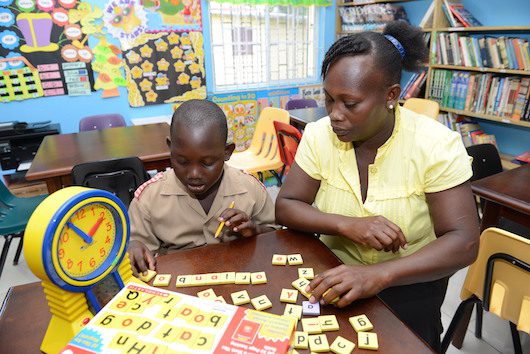
The funding will go to “U.S. organizations and their overseas partners to support construction projects and to purchase equipment for 15 hospitals and clinics, six secondary schools, 16 universities, and one library,” as stated on the USAID website. The awards were announced on Feb. 1, 2016, and will be allocated toward global innovation and development.

USAID/ASHA provides assistance to international schools and hospitals. The organization has also served a public diplomatic role in fostering positive relationships between countries. It provides health services and education to over 80 countries and 300 international institutions.

“It is a remarkable honor to play a role in overseas institutions which advance education and health in their countries and around the world,” says Katherine Crawford, director of USAID. The education awards will reach universities in regions of the Middle East, Asia, Latin America, the Caribbean and Africa.

Among the winners is Ashesi University College in Ghana, which received $700,000 to go toward classroom innovation. This funding will provide students with a rich engineering education that compares to top U.S. universities. Further contributions include the development of educational facilities in Somalia and Zambia.

In Somalia, USAID funding will help create a new science building, an auditorium and more areas for student dining. In Zambia, the award will help build a library that provides educational outreach and innovative programs to more than 35,000 children.

In the area of health, USAID will provide $570,000 in funding to the CURE Ethiopia Children’s Hospital. The funds will be utilized for operating room equipment, training and the delivery of medical care.

Other countries receiving a portion of this funding include India, where labor rooms for six women and a neonatal intensive care unit for 25 children and 45 mothers will become available.

In India, nursing training will also be accommodated by the grant. Medical equipment for maternal and pediatric programs will be made available in Afghanistan along with a diabetes-fighting program.

This grant will continue USAID’s overseas programs in the areas of health and education. USAID seeks to educate and provide care to the globally disadvantaged while promoting innovation in sciences and technology.

Through these awards, ASHA can impact communities and continue to stimulate progress.

– Mayra Vega

Sources: Foreign Affairs, USAID,
Photo: IBT

February 22, 2016
https://borgenproject.org/wp-content/uploads/borgen-project-logo.svg 0 0 Borgen Project https://borgenproject.org/wp-content/uploads/borgen-project-logo.svg Borgen Project2016-02-22 01:30:552024-05-27 09:33:13USAID to Provide Millions in Aid Abroad Through ASHA
Aid, Aid Effectiveness & Reform, Global Poverty

Using Data Literacy to Improve Development in Sudan

Data Literacy
The World Bank has launched a data literacy program to improve evidence-based policymaking and development outcomes in Sudan.

Funded by UKAid, experts from the World Bank will work over the next eight months to bridge the gap between data producers and data consumers. The program will bring together statisticians, who produce oftentimes complex development indicators, and journalists, academics and government officials, who use this data to inform policymaking.

“This initiative is timely,” said World Bank Country Representative to Sudan, Xavier Furtado. “In addition to better quality data, the World Bank hopes that the Evidence Base Program will contribute to greater transparency and accountability in how public policy is debated and decisions are made.”

Sudan faces a complex set of development issues requiring sound policy.

The most recent data from the World Health Organization indicates that the under-five mortality rate is 77 per 1000 children, the maternal mortality rate is 360 per 100,000 live births and the number of deaths due to tuberculosis is just over 25 per 100,000 citizens. The most recent data from The World Bank indicates that 46.5 percent of the population in Sudan is living in poverty.

But WHO notes that its figures haven’t been updated since 2013 and Sudan didn’t begin to measure these statistics until between 1990 and 2000. The World Bank also notes that its figures have not been updated since 2009. On the World Bank’s 0-100 scale of level of statistical capacity, Sudan sits just above 51, compared to the average for all sub-Saharan African countries of 70.

Finding solutions to the challenges facing Sudan will require targeted, efficient development programs and leaders cannot hope to make progress without first filling its data literacy and acquisition gaps.

The United Nations Development Program (UNDP) has also been working toward this objective. Since 2006, UNDP has hosted workshops designed to train government representatives on how to understand, analyze and utilize development data – hoping to foster better aid policy.

“We understand that changes will not happen overnight,” Furtado said. But by building capacity to collect, analyze and manage reliable data at national and provincial levels through its new program, the World Bank hopes to ingrain data use into the development culture of the fragile state. In turn, they estimate that better programs and more inclusive economic growth will occur.

– Ron Minard

Sources: UNDP, WHO, World Bank 1, World Bank 2
Photo: USAID

February 12, 2016
https://borgenproject.org/wp-content/uploads/borgen-project-logo.svg 0 0 Borgen Project https://borgenproject.org/wp-content/uploads/borgen-project-logo.svg Borgen Project2016-02-12 01:30:462024-05-27 09:28:51Using Data Literacy to Improve Development in Sudan
Aid, Economy, Global Poverty

Millennium Challenge Corporation Seeks Expansion

Millennium Challenge Corporation
The Millennium Challenge Corporation (MCC) is seeking approval from Congress to expand its operations over the coming years via the Millennium Compacts for Regional Economic Integration (M-CORE) Act.

In a recent testimony before the Senate Foreign Relations Committee, MCC CEO Dana Hyde argued that the organization would be more effective if given the authority to make regional investments, in addition to the single-country investments it is currently authorized to make.

“By making coordinated regional investments across multiple eligible countries, MCC can help countries work together to build and grow regional markets…and help generate new business and market opportunities for U.S. and other companies,” Hyde said.

The MCC has a singular mandate: reduce poverty through economic growth. The organization does this by initiating joint public-private investment projects in countries working toward democratic governance, open markets and human development.

Since its creation in 2004 by President Bush, the Millennium Challenge Corporation has committed $10 billion in over 58 projects in 25 countries. Around 70 percent of this investment has gone into infrastructure projects like highways and ports and an increasing percentage is being invested in energy.

The organization is currently only allowed to initiate projects within single countries, which, according to Hyde and other experts, is an impractical development strategy.

According to Hyde, countries cannot develop economically if they are unable to trade with their neighbors. Regional projects like cross-border highways and railways could make a bigger impact – especially among groups of small states.

“It’s easy to think about how regional engagement might be beneficial in the context of electricity,” said Center for Global Development President Dr. Nancy Birdsall. “The logic of a shared grid across borders is clear. To work, countries involved need to commit to a strong regulatory and financial structure outside the auspices of a single government for power trading and pricing.

However, initiating projects across multiple countries also poses a number of challenges. One such challenge occurs because neighboring countries are often not at the same level of development. For example, if the MCC wanted to begin a project across two countries, one may meet the required indicators for open governance and human development while the other might not.

The organization currently bridges this gap by undertaking threshold programs designed to assist near-eligible countries to become ready for investment.

Now, it wants the additional authority to conduct threshold programs at the same time it begins investment projects – meaning countries can begin projects before they are fully eligible to do so.

It may seem counter to MCC’s mandate, but Hyde argued that it is a necessary.

In her testimony, Hyde said the Millennium Challenge Corporation has a proven record of implementing successful country projects and is well equipped to take on the challenges of regional investments without straying from its mandate.

– Ron Minard

Sources: American Progress, Senate.gov 1, Senate.gov 2, MCC
Photo: Wikipedia

January 30, 2016
https://borgenproject.org/wp-content/uploads/borgen-project-logo.svg 0 0 Borgen Project https://borgenproject.org/wp-content/uploads/borgen-project-logo.svg Borgen Project2016-01-30 01:30:132020-06-22 08:21:22Millennium Challenge Corporation Seeks Expansion
Aid, Development, Global Poverty

EU Finances Program Tackling Poverty Reduction in Pakistan

Poverty_Reduction_in_PakistanIn 2015, the European Union (EU) and partners in Pakistan, including the non-profit National Rural Support Programme (NRSP), launched the SUCCESS program targeting rural development and poverty reduction in Pakistan. Based in the Sindh province, the program will provide aid for development in eight districts faced with high levels of rural poverty.

The Sindh Union Council and Community Economic Strengthening Support (SUCCESS) program will be funded for six years by the European Union. During the launch of the SUCCESS program, organizers told Pakistani newspaper The News, that the objective is to “reduce poverty through undertaking the Community Driven Development (CDD) based on the proven social mobilization approach of the Rural Support Programmes (RSPs).”

RSPs have been part of the country’s development strategy for decades. Utilizing community driven initiatives, they have a record for poverty reduction, aiding development and empowering women through community programs. Additionally, Deputy Secretary Sindh Ajaz Ali Khan told The News “it was encouraging that the SUCCESS programme would involve and be led by women.”

Social mobilization is also a key element for the SUCCESS program and NRSP to incorporate the poorest people into the development process. These programs provide a multi-level approach according to the NRSP website. They promote “a culture of participation, inclusivity and solidarity, direct provision of front-line services, planning and development, business creation, savings, conflict resolution, dialogue and interaction with local authorities.”

Approximately 770,000 rural households will be mobilized through the SUCCESS program. Going forward, households will come together in Community Organisations (COs), one of the several tiers the rural support programs use to mobilize and organize.

RSPN Chief Executive Officer Khaleel Ahmed Tetlay told The News that the SUCCESS program would focus on sustainable and financially viable approaches to poverty reduction in Pakistan. The program also aims to “link the community institutions with the government service delivery departments.”

The Daily Times in Pakistan reports a fundamental issue for the Sindh province is “to accommodate talented and educated youth into industry and job market.” With the support of the Sindh government, the organizations involved hope the SUCCESS program will help the province retain rural youth by creating new work opportunities.

– Cara Kuhlman

Sources: The Daily Times, National Rural Support Programme, The News
Photo: Google Images

January 4, 2016
https://borgenproject.org/wp-content/uploads/borgen-project-logo.svg 0 0 Borgen Project https://borgenproject.org/wp-content/uploads/borgen-project-logo.svg Borgen Project2016-01-04 08:09:312020-06-25 10:52:37EU Finances Program Tackling Poverty Reduction in Pakistan
Aid, Food & Hunger, Food Aid, Global Poverty

ShareTheMeal App Uses Technology to Fight Global Hunger

ShareTheMealThere are 795 million undernourished people in the world today. That’s one in nine people who are not getting enough food to lead a healthy life.
Those numbers make hunger and malnutrition the number one risk to health worldwide. That makes malnutrition a greater threat than AIDS, malaria and tuberculosis combined.

Enter the United Nations World Food Programme (WFP), the largest humanitarian agency fighting hunger today. Each year, the WFP reaches 80 million people with food assistance in around 80 countries.

As an initiative that relies completely on voluntary donations, two managers at WFP, Sebastian Stricker and Bernhard Kowatsh, have created a way to make donating even easier by using technology to fight global hunger.

In fact, thanks to them, donating is right at your fingertips.

That’s because they’ve created an app. It’s called ShareTheMeal.

Currently being hailed as the first of its kind, this free app allows iOS and Android users to fund food rations for as little as $0.50. While a small sum to most in the Western world, in other, poorer parts of the planet, the value can be life-saving. The sum is enough to provide the vital nutrition an individual needs a day.

“The simple act of sharing a meal is how people all over the world come together,” said Ertharin Cousin, the WFP’s executive director, “This digital version of sharing a meal is a tangible way that generation zero hunger can act to end hunger.”

Pilot tests for the app were performed in June 2015 across Germany, Austria and Switzerland. Using the technology to fight global hunger, more than 120,000 users provided more than 1.7 million meals for schoolchildren in the southern African country of Lesotho.

The money coming from Thursday’s global launch of ShareTheMeal will initially be used to support 200,000 Syrian refugee children living in the Zaatari camp in Jordan who participate in the WFP’s school meals program.

“By Christmas, we hope to have gathered enough shared meals, to feed these children for one year,” ShareTheMeal’s head of growth Massimiliano Costa says.

Improvements to hunger and living conditions in refugee camps as well as among Syrian communities is widely viewed as crucial to encouraging Syrians not to embark on risky travel to Europe.

If the app does well, the project will expand to other countries and regions. The WFP is already looking at the numbers. With two billion smartphone users worldwide, that statistic outnumbers the hungry children in the world 20 to 1.

The United Nations’ has set the ambitious goal of ending world hunger by 2023. Perhaps ShareTheMeal is the answer.

– Kara Buckley

Sources: ShareTheMeal, Forbes, Reuters, The Guardian                                                                                                                                                                                                                      Photo: Pixabay

November 17, 2015
https://borgenproject.org/wp-content/uploads/borgen-project-logo.svg 0 0 Borgen Project https://borgenproject.org/wp-content/uploads/borgen-project-logo.svg Borgen Project2015-11-17 01:30:112024-12-13 18:05:24ShareTheMeal App Uses Technology to Fight Global Hunger
Activism, Advocacy, Aid, Children, Education, Global Poverty, Hunger

Read to Feed: Global Education Lesson Plans

Global_Education_Lesson_Plans
Anyone and everyone can change the world, even in the slightest way. An organization known as Read to Feed gives children the opportunity to make a difference in the lives of families living in poverty.

The program encourages childhood reading while raising awareness of extreme global poverty in young minds. Read to Feed teaches and informs students of the realities of malnutrition and poverty, inspiring them to help those in need and providing an educational incentive to do so.

Here’s how it works: A child chooses a sponsor for each book he or she reads during a period of time set by his or her Read to Feed leader. The sponsor agrees to provide a certain amount of money for each book read or hour spent reading. Then, after the books have been read and the funds collected, the child chooses an animal through Heifer International to give to a family experiencing poverty.

Heifer International is an organization dedicated to ending global poverty and world hunger. Heifer provides families in impoverished communities with livestock and training to combat malnutrition as well as build a sustainable lifestyle.

Furthermore, Heifer encourages the families they have helped to share the training they receive with other families in their communities and pass on the first female offspring of their livestock to another family in need, thus creating a cycle of sustainability that has the power to lift entire communities out of poverty.

The wide variety of livestock provides families with meat, milk, wool and manure to grow their own agriculture. Kids can participate in Read to Feed individually or in groups; however, the program most often takes place in a classroom setting.

Furthermore, Heifer provides Global Education Lesson Plans so that teachers can inform students of the realities of global poverty and the impact that they can make in changing its course.

Read to Feed ultimately provides children with a way to make a difference in many lives. Reading a book is a fun incentive to end extreme poverty, both stimulating a child’s mind by increasing the number of books they read, and their knowledge of the world. Anyone can make a difference and everyone– no matter what age– deserves the chance to try.

– Sarah Sheppard

Sources: Heifer 1, Heifer 2, Learning to Give
Photo: Hiefer International

November 9, 2015
https://borgenproject.org/wp-content/uploads/borgen-project-logo.svg 0 0 Borgen Project https://borgenproject.org/wp-content/uploads/borgen-project-logo.svg Borgen Project2015-11-09 06:26:312024-12-13 18:04:59Read to Feed: Global Education Lesson Plans
Aid, Food & Hunger, Global Poverty

Freedom from Hunger: Alleviating Poverty in Mexico

freedom from hunger
As the Mexican economy continues to recover from the most recent recession, social concerns still remain.

Specifically, low wages, underemployment and inequitable income distribution are the causes of suffering in the impoverished southern states.

According to the Ministry of Social Development, 54% of all Mexicans live in poverty. Poverty standards in Mexico equate to $4 per day. However, 32% of the population lives on $2.50, and 24% live on less than $2.00. Characteristics of poverty include the lack of access to basic human needs such as nutrition, clean

Characteristics of poverty include the lack of access to basic human needs such as nutrition, clean water and shelter.

In 2005, nonprofit organization, Freedom from Hunger created Alcance. The organization’s principal focus is to assist financial institutions to integrate education and health protection services that specifically address women and their families.

Alcance works in conjunction with the Mexican government to coordinate microfinance networks. The purpose of these networks is to provide financial education and to equip financial institutions to disseminate funds.

As of 2014, Alcance launched a Saving for Change programs in two Mexican states where traditional microfinance has not reached the rural communities of the chronically poor.

The aim is to help institutions successfully manage social objectives and increase their ability to provide high quality, client-responsive services.

Organizations such as Mastercard also help create programs as global partners. The current program they fund will develop, test and document innovations in the integration of financial services. In addition, education will be provided for youth between the ages of 13 and 24 in Mali and Ecuador.

The program’s focus is to build a range of microfinance providers to offer products and services for youth living in poverty. The goal is to utilize these services to guide youth financially, in order to increase options for their future.

Youth participants’ parents and community leaders will be educated on how to be supportive of youth in ascertaining financial education building.

Programs to address education, health care, social security, quality of basic services in the household and income and social cohesion are necessities in helping to address the nation’s poverty.

– Erika Wright

Sources: Freedom from Hunger, The Mastercard Foundation
Photo: ChildFund.org

November 9, 2015
https://borgenproject.org/wp-content/uploads/borgen-project-logo.svg 0 0 Borgen Project https://borgenproject.org/wp-content/uploads/borgen-project-logo.svg Borgen Project2015-11-09 01:30:382020-06-24 19:22:04Freedom from Hunger: Alleviating Poverty in Mexico
Aid

The Difference Between a Non-Resilient and Resilient Village

The Importance of Creating Resilient Villages

Here in the U.S. when disasters are predicted and do strike, such as natural disasters and droughts, the government prepares and provides aid to people who need it.

Many villages and communities in developing countries do not have backup plans when it comes to shelter, food and money if economical, natural or health shocks should occur. In addition, with the increase of changing climate, villages are in need of training to adapt as the world around them changes.

A non-resilient village experiencing drought would most likely react as follows: less rain means fewer, if any, crops, which in turn makes it difficult to feed livestock such as cows.

Underfed cows will produce less milk and families may be forced to sell livestock and eat less. This causes malnutrition as well as illness to become more common, further weakening the resilience of an already ill-prepared village.

Another shock that a non-resilient village is not prepared for would be the breaking of a water pump. No one in the village knows how to maintain, fix or buy new parts for the pump.

Women and young girls are now forced to walk many miles a day to retrieve water, usually unsanitary, for the village to survive on. The results of this are not only diarrheal diseases which will cause malnutrition, but an increase in the possibility of attacks and rape on the women and girls.

Take the same two scenarios from above and re-imagine them with villages that have received resilience training.

When a drought is occurring in a resilient village, farmers will use their training, specific to their villages, to begin implementing practices to help. These practices could include planting crops in pits so that they receive rainwater run-off or planting trees to protect the soil.

There will be emergency stores of animal food and grain, and mothers understand that breastfeeding during normal and difficult times can help protect their babies against malnutrition.

When a water pump breaks in a resilient village the group placed in charge of its upkeep when it was installed will pull on specific funds saved for this occurrence. This team of villagers will be knowledgeable about the pump.

So, they will be able to find the problems and report and buy the parts needed for the repair. There will be no need to sacrifice women and children’s active roles in society, including a proper education.

These scenarios and others, put forth by Concern Worldwide, show both visually and textually the reality and the difference between a resilient and non-resilient village.

It is important that villages be taught emergency and preventative measures as well as how to adapt to a changing environment and different situations in order to ensure their survival and independence.

– Drusilla Gibbs

Sources: CGIAR, Concern Worldwide (UK)
Photo: Pixabay

October 27, 2015
https://borgenproject.org/wp-content/uploads/borgen-project-logo.svg 0 0 Borgen Project https://borgenproject.org/wp-content/uploads/borgen-project-logo.svg Borgen Project2015-10-27 01:05:302024-12-13 18:05:17The Difference Between a Non-Resilient and Resilient Village
Aid, Developing Countries, Education, Global Poverty

International Scholarships: Hope for Developing Countries

International Scholarships: Hope for Developing Countries

Nelson Mandela, former president of South Africa and education advocate, once stated that “education is the most powerful weapon which you can use to change the world.”

It is with this outlook that countries have banded together to make education a priority in developing countries where change is most needed.

Primary education and ensuring that each child has access to it has been a first step, but what next? USAID along with several other countries and organizations have begun expanding their focus on continued education.

On the USAID site, it explains that “higher levels of education can raise developing countries’ productivity significantly. One study shows that an additional year of average secondary or university-level education in a country raises national output by 19 percent.”

The U.N. News Center showed this in its report on economic growth within developing countries. Its feature article shared, “Economic growth alone does not automatically translate into human development progress. [Developing countries] are therefore not just tapping into global trade, but they are also improving health and education services, which have allowed them to sustain their growth.”

Countries such as the U.S., U.K. and Poland have helped to expand educational opportunities through international scholarships.

Go Poland is one project that has helped more than 400 international students continue their education outside of their home country.

On its site, the organization notes that “new scholarship programmes translate into higher numbers of foreigners studying in Poland. Foreign students in Poland acquire expertise which they will be able to use afterwards for the benefit of their home countries.”

The same goals are maintained in all other international scholarships awarded to students from developing countries. It is an investment in the students, developing countries and the world at large.

Future scholarships for 2016 are already being handed out to students in various developing nations. These scholarships provide hope for a better future in countries that still have much room for growth.

– Katherine Martin

Sources: Washington Post, USAID, UN, Polska Pomoc
Photo: Pixabay

October 24, 2015
https://borgenproject.org/wp-content/uploads/borgen-project-logo.svg 0 0 Borgen Project https://borgenproject.org/wp-content/uploads/borgen-project-logo.svg Borgen Project2015-10-24 01:30:552024-12-13 18:05:17International Scholarships: Hope for Developing Countries
Aid, Children, Global Poverty

Commissioner Mimica Announced Support Package for Peru

support package for PeruCommissioner Mimica of EU Aid began a voyage to Peru earlier this month on Oct. 9 to announce a support package for the development and health of young adults and children.

The support package for Peru is intended to accelerate the plans of the National Development and Social Inclusion Strategy, which aims to help five regions most affected by poverty in the Peruvian Amazon.

The finalized package suggests 40 million euros ($45.5 million), with a total 66 million euros ($75.1 million) being allocated to Peru between 2014 and 2017. This money will advance the already growing economy of Peru and assist the permanent reduction of poverty that has been reflected since this growth.

However, the solidarity of development has not been established, as about 54 percent still live in poverty and 19 percent live in absolute poverty (less than a dollar a day).

Social Inclusion Strategy will address this unequal growth, favoring those who have not benefited, despite the country’s economic boom. The stratagem prioritizes people into groups based off five core topics:

  1. Childhood Nutrition – focusing on fighting those who lack access to food and water
  2. Early Childhood Development – focusing on the development of infants and young children who do not live in stable conditions
  3. Development of Children and Teenagers – focusing on older children and teens who do not live with a stable family
  4. Economic Inclusion – focusing on incorporating those who have not benefitted from the economy into a better society
  5. Protection of Elders – focusing on poverty-stricken elders who are no longer able to provide for themselves

Furthermore, the developmental gap in the region is ensured to decrease by a three-part approach that focuses on three-time horizons – short, medium and long term.

Temporary relief will bring short term relief to those in extreme poverty while medium term relief promises capacity building such as providing services, and the long-term approach will aid with the creation of opportunities.

In this way, Peru will see a reduction of extreme poverty that substantiates and perpetuates the developmental growth of all priority groups.

MIDIS, the organization overseeing the National Development and Social Inclusion Strategy, defines people who are already in the process of social inclusion as PEPI; PEPI households must meet three of four focal points in order to be given PEPI status:

  1. Rural household
  2. Female-headed Household with less than primary education
  3. Head of house speaks indigenous language
  4. Located in the first quintile of national per capita income distribution

Of these dwellings, 60 percent live between walls of adobe, 84 percent have dirt floors in their homes, 60 percent use wood to cook and 57 percent go without access to sanitation services.

The total number of people living in PEPI households (4.8 million) calculates to about 16 percent of the population. It is estimated by 2030 for the developmental gap to be significantly reduced by the support package for Peru with financial investment to be concluded for Peru in 2017.

– Emilio Rivera

Sources: European Commission, GOB, Nations Encyclopedia
Photo: Flickr

October 21, 2015
https://borgenproject.org/wp-content/uploads/borgen-project-logo.svg 0 0 Borgen Project https://borgenproject.org/wp-content/uploads/borgen-project-logo.svg Borgen Project2015-10-21 12:03:082020-06-25 21:35:07Commissioner Mimica Announced Support Package for Peru
Page 58 of 65«‹5657585960›»

Get Smarter

  • Global Poverty 101
  • Global Poverty… The Good News
  • Global Poverty & U.S. Jobs
  • Global Poverty and National Security
  • Innovative Solutions to Poverty
  • Global Poverty & Aid FAQ’s
Search Search

Take Action

  • Call Congress
  • Email Congress
  • Donate
  • 30 Ways to Help
  • Volunteer Ops
  • Internships
  • Courses & Certificates
  • The Podcast
Borgen Project

“The Borgen Project is an incredible nonprofit organization that is addressing poverty and hunger and working towards ending them.”

-The Huffington Post

Inside The Borgen Project

  • Contact
  • About
  • Financials
  • President
  • Board of Directors
  • Board of Advisors

International Links

  • UK Email Parliament
  • UK Donate
  • Canada Email Parliament

Get Smarter

  • Global Poverty 101
  • Global Poverty… The Good News
  • Global Poverty & U.S. Jobs
  • Global Poverty and National Security
  • Innovative Solutions to Poverty
  • Global Poverty & Aid FAQ’s

Ways to Help

  • Call Congress
  • Email Congress
  • Donate
  • 30 Ways to Help
  • Volunteer Ops
  • Internships
  • Courses & Certificates
  • The Podcast
Scroll to top Scroll to top Scroll to top