• Link to X
  • Link to Facebook
  • Link to Instagram
  • Link to TikTok
  • Link to Youtube
  • About
    • About Us
      • President
      • Board of Directors
      • Board of Advisors
      • Financials
      • Our Methodology
      • Success Tracker
      • Contact
  • Act Now
    • 30 Ways to Help
      • Email Congress
      • Call Congress
      • Volunteer
      • Courses & Certificates
      • Be a Donor
    • Internships
      • In-Office Internships
      • Remote Internships
    • Legislation
      • Politics 101
  • The Blog
  • The Podcast
  • Magazine
  • Donate
  • Click to open the search input field Click to open the search input field Search
  • Menu Menu

Archive for category: Aid

Aid, Developing Countries, Global Poverty

Ending Extreme Poverty: 10 Facts About the World Bank

10 Facts About the World Bank
Since 1944, the World Bank has built a massive global partnership with two major goals fueling its work. It is working to end extreme poverty by 2030 and to increase the poorest population’s share of national wealth in each country.

Below are 10 facts about the World Bank:

  1. The World Bank is just what its name says: a bank, albeit on a larger scale. Providing loans, knowledge and guidance, the organization works with governments, the private sector, civil society organizations and regional development banks.
  2. The organization was started over 70 years ago and was first called The International Bank for Reconstruction and Development. Originally the organization worked to improve conditions in countries devastated by World War II, but this quickly evolved into efforts to end global poverty once and for all.
  3. There are now 189 countries who are members of the World Bank Group. This means only seven countries in the world are not members of the institution. The leading members of the Group are the U.S., Japan, Germany, France and the U.K.
  4. The World Bank consists of five organizations: The International Bank for Reconstruction and Development, The International Development Association, The International Finance Corporation, The Multilateral Guarantee Agency and The International Centre for Settlement of Investment Disputes.
  5. In 2015, the organization made 302 global commitments totaling $60 billion.
  6. So where does this money come from? The World Bank is backed by subscriptions paid by its member countries, bond flotations (money made from issuing new securities and expenses) from international markets and earnings from its own assets.
  7. The World Bank attributes much of its success to its diverse staff of economists, professionals in public policy and social scientists.
  8. The organization is headquartered in Washington, D.C., but today more than one-third of its staff are located in individualized country offices.
  9. Four issues that the World Bank has identified as standing before its goals are as follows: access to schools, healthcare, electricity and safe water.
  10. The World Bank’s impact is visible. In 2013, an estimated 10.7 percent of the world’s population lived in extreme poverty. Though this is nowhere near a stopping point, it is less than half of the percentage estimated in 1990.

These 10 facts about the World Bank illustrate its mission and actions that are making dramatic changes internationally. The organization has a new goal of ending global poverty by 2030 by lowering the number of people who make less than $1.90 a day to three percent.

– Emily Trosclair

Photo: Flickr

June 23, 2017
https://borgenproject.org/wp-content/uploads/borgen-project-logo.svg 0 0 Borgen Project https://borgenproject.org/wp-content/uploads/borgen-project-logo.svg Borgen Project2017-06-23 01:30:442024-12-13 17:58:08Ending Extreme Poverty: 10 Facts About the World Bank
Aid, Developing Countries, Global Poverty, Water

How S’well Bottles Serve the World

How S'well Bottles Serve the World
Sarah Kauss, the CEO and Founder of S’well, launched the company in 2010 with the primary goal of ridding the world of plastic water bottles and doing some good for the environment. S’well grew immensely in popularity since its creation. It now partners with UNICEF, American Forests, Drink Up and (RED) to serve global needs.

S’well bottles serve the world through the company’s partnership with UNICEF USA, contributing $800,000 since 2015 to help provide clean and safe water to the world’s most vulnerable communities. S’well is dedicated to supporting water programs across Madagascar through 2018, where nearly 50 percent of the population lacks access to clean drinking water. The company aims to assist in building infrastructure, educating families on water-borne diseases and promoting national reform to make long-lasting change.

In addition to UNICEF, S’well also supports (RED), an organization paving the way toward an AIDS-free generation. Through its global impact and the help of many partners, (RED) raised $465 million over the past decade. This year, S’well introduced the (RED) Water Bottle to fight HIV, after an eye-opening and hopeful visit to Kenya to witness (RED)’s efforts firsthand. Since 1990, Kenya successfully halved both the number of child deaths and HIV prevalence in adults. To continue down this road of achievements, S’well supports education, treatment and awareness-building efforts in the fight against HIV/AIDS. Twenty percent of the retail price for every (RED) bottle is donated to the cause.

The fact that S’well bottles serve the world with such an embedded purpose contributes to the company’s success. The product is marketable by its listed description as “… the only reusable bottle that looks great and does good. It keeps your drinks cold for 24 hours and hot for 12 while giving back to those in need.” S’well’s social mission is best outlined by Kauss, “… it’s just the right thing to do… It’s part of our DNA, it’s part of our mission statement and part of everything that we do.” S’well has expanded rapidly through its ties with Starbucks. It is launching its products at the bustling business around the world – with thousands of locations in North America, Brazil, Asia, Europe, the Middle East, Russia and South Africa.

The thought of how the purchase of a single water bottle can make a difference in developing areas is inspiring and certainly worth reflecting on. S’well bottles serve the world in more ways than one. They benefit the environment and charitable causes in America, while reaching out on a global scale.

– Mikaela Frigillana

Photo: Flickr

June 21, 2017
https://borgenproject.org/wp-content/uploads/borgen-project-logo.svg 0 0 Borgen Project https://borgenproject.org/wp-content/uploads/borgen-project-logo.svg Borgen Project2017-06-21 01:30:302024-12-13 17:58:07How S’well Bottles Serve the World
Aid, Charity, Global Poverty

Wealth in Dubai: Generous Strides in the Global Poverty Effort

Wealth in Dubai: Making Generous Strides in the Global Poverty EffortFrom a small pearl fishing village to one of the richest cities in the world, Dubai has made quite the journey. Dubai is the largest and most populous city in the United Arab Emirates and is home to the tallest building in the world, the Burj Khalifa.
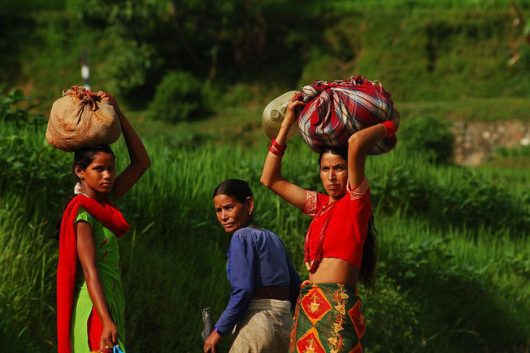
People believe that wealth in Dubai stems from its oil industry. However, it only accounts for about 7 percent of its total revenue. The big bucks are in Dubai’s real estate.  Reports show that most of the state’s $82.11 billion in revenue come from its investment in real estate, airlines, and sea ports.

Dubai has shown that its population has no plans to hold onto its wealth.  The city has made tremendous strides toward the eradication of global poverty and plans to continue to do so until it is eliminated.  Forty-six years after the foundation of the UAE, international aid provided by its government and non-governmental organizations has been estimated at $15.23 billion.  This international support using wealth in Dubai makes it one of the world’s largest contributors to foreign aid.

“Foreign aid and assistance are one of the basic pillars of our foreign policy.  For we believe that there is no true benefit for us from the wealth that we have unless it does not also reach those in need, wherever they may be, and regardless of their nationality or beliefs,” founder and former president of the UAE Sheikh Zayed bin Sultan Al Nahyan said.

The majority of Dubai’s foreign aid goes to programs that focus on the assistance of the poor, healthcare, energy generation, transport and storage.  In recent years, the state has put an emphasis on the pursuit of solar energy.

Dubai’s leaders say that sustainability and clean energy are priorities for any long-term resolution to issues created by poverty.  They say that further investment in solar energy will lead to its use in emergency operations, schools, refugee camps and other aid processes of this kind.

– Emily Trosclair

Photo: Flickr

June 18, 2017
https://borgenproject.org/wp-content/uploads/borgen-project-logo.svg 0 0 Borgen Project https://borgenproject.org/wp-content/uploads/borgen-project-logo.svg Borgen Project2017-06-18 01:30:292020-04-18 12:55:46Wealth in Dubai: Generous Strides in the Global Poverty Effort
Aid, Developing Countries, Development, Global Poverty

The Importance of Community Cooperation in Global Development


When outside aid organizations enter developing countries with the best intentions to help, it is important that these organizations partner with local businesses and individuals. Community cooperation is essential to effective and long-term global development. The alternative is short-lived relief that lasts only as long as the aid organization’s presence persists in the region.

Community cooperation, however, ensures that no vacuums are left in communities after aid is inevitably retracted. Creating self-sustaining communities is key to long term relief.

There are many organizations that have grasped hold of this idea. The following are a few examples of such:

Global Water Partnership (GWP)

Global Water Partnership is a global action network whose goal is to reach a water-secure world. The organization has over 3,000 partners in 183 countries. It focuses on educating countries and communities about water management. GWP believes that good governance concerning water management can only be accomplished with collaborative efforts.

Save the Children

Save the Children believes that education helps children to reach their full potential. Through its education programs, Save the Children has helped train teachers and parents on effective teaching practices, encouraged education practices outside of the classroom and ensured that students continue learning after crises occur.

World Vision

World Vision is a Christian humanitarian organization that seeks to “empower people out of poverty.” Partnering with locals is the core of World Vision’s approach to global development. Local partnerships allow “programs to be more effective by benefiting from greater legitimacy, local knowledge, resources, and long-term ownership.”

Cooperative for Assistance and Relief Everywhere (CARE)

CARE is a humanitarian aid organization that works around the globe to “save lives, defeat poverty and achieves social justice.” The organization’s approach to aid often involves partnering with locals. For instance, one of its facets for gender-based violence (GBV) relief involves equipping local activists with the tools needed to provide case managers for women and children who are survivors of GBV. CARE’s economic development programs also involve local education by teaching women and families sound financial habits and by creating entrepreneurs.

The purpose of many nonprofit and aid organizations is to effectually become unneeded. A nonprofit fighting illiteracy wants everyone to eventually know how to read. Once literacy rates reach 100 percent (or 99 percent, accounting for margin of error), aid can withdraw from regions around the world.

The longevity of the impact of these organizations is dependent on their ability to prepare future generations. If the hypothetical literacy-focused nonprofit withdrew without leaving behind any local teachers then future generations would be left in a disadvantageous state.

A helping hand without explanation and aid without education is hurtful in the long term. Community cooperation is key to effective relief.

– Rebeca Ilisoi

Photo: Flickr

June 17, 2017
https://borgenproject.org/wp-content/uploads/borgen-project-logo.svg 0 0 Borgen Project https://borgenproject.org/wp-content/uploads/borgen-project-logo.svg Borgen Project2017-06-17 01:30:552020-04-18 13:01:18The Importance of Community Cooperation in Global Development
Aid, Education, Global Poverty, Refugees

12 Facts About the World’s Champion: Malala Yousafzai


Malala Yousafzai, the world’s youngest and most powerful champion for girls’ education, may soon be attending one of the most prestigious schools in the world: the University of Oxford. Back in March of this year, Yousafzai announced that she had received a conditional offer (based on her A Level grades) from Oxford and that she plans to attend the University. She plans to study philosophy, politics and economics (PPE), and work on her organization, the Malala Fund. To commemorate this outstanding individual, here are 12 facts about her life, her achievements and her organization.

12 Facts About Malala Yousafzai

  1. At the young age of 12, when her hometown of Swat was held by the Taliban in 2009, Yousafzai wrote for a BBC blog critiquing the hardline Islamic movement under a pseudonym, even while she and her father were receiving multiple death threats.
  2. Yousafzai was the first recipient of Pakistan’s National Youth Peace Prize.
  3. Archbishop Desmond Tutu, a world-renowned social rights activist and retired Anglican bishop, nominated Malala Yousafzai for the International Children’s Peace Prize in 2011.
  4. Yousafzai was an international figure by now, and Taliban leaders voted among themselves to kill her. On October 9, 2012, Malala’s school bus was attacked by a gunman. He broke through the door and demanded to know where Yousafzai was. When some of the girls looked her way, she was shot in the head.
  5. Miraculously, the 15-year-old survived the attack. She was flown to Birmingham, U.K., for treatment. Her attack was condemned worldwide, and, after protests in Pakistan, more than 2 million people signed a right to education petition. The petition became a bill later ratified by the National Assembly, making it Pakistan’s first Right To Free and Compulsory Education Bill.
  6. In 2013, Yousafzai and her father co-founded the Malala Fund, an organization that advocates at all political levels to ensure all girls complete 12 years of school.
  7. The Malala Fund currently has programs in Pakistan, Kenya, Nigeria and in various countries for Syrian refugees.
  8. In Pakistan, a country with the second-largest number of girls not in school, the program focuses on getting more girls in school, building schools, providing materials (books, uniforms, etc.) and grants for secondary schooling.
  9. In Kenya, a country quickly evolving into its digital era, the Malala Fund works to ensure girls can take advantage of the technology trend.
  10. In Nigeria, the organization helps girls who have escaped from Boko Haram get an education.
  11. For Syrian refugees in Jordan and Lebanon, the organization opens new schools and funds educational programs in safe refugee camps.
  12. In October 2014, Malala Yousafzai won the Nobel Peace Prize. At age 17, she is the award’s youngest recipient.

<

As Yousafzai continues to push for girls’ education around the globe, we should follow in her footsteps and do what we can do alleviate global poverty and ensure global education.

– James Hardison

Photo: Flickr

June 16, 2017
https://borgenproject.org/wp-content/uploads/borgen-project-logo.svg 0 0 Borgen Project https://borgenproject.org/wp-content/uploads/borgen-project-logo.svg Borgen Project2017-06-16 07:30:222024-12-13 17:58:0412 Facts About the World’s Champion: Malala Yousafzai
Aid, Developing Countries, Global Poverty

International Monetary Fund: Lending to Developing Nations


According to The Organization for Economic Co-operation and Development (OECD), in 2015, Japan spent 0.22 percent of its budget, about $9 billion, on development assistance. While developed countries spend an average of less than one percent of their budget on foreign aid, Japan’s generosity made it the fourth most generous nation of 2015.

A 2010 agreement with the International Monetary Fund (IMF), a Trustee of the Poverty Reduction and Growth Trust (PRGT), assures that Japan will lend $2.7 billion to secure a total of $8 billion gathered from other nations in new loan resources for low-income countries. The loan agreement was effective in April of 2017. This will allow the IMF to increase aid to low-income countries hit particularly hard in the current global economic crisis by providing more loans for recently reformed concessional lending facilities.

The PRGT has three facilities that work on the concessional financing framework. There are the Extended Credit Facility to provide flexible longer term support; the Standby Credit Facility to address short-term needs; and the Rapid Credit Facility to provide immediate emergency support. These facilities are in place to help countries with governments with low financial stability and a “protracted balance of payment problems.”

Additionally, a 2017 IMF press release reveals that Japan “agrees to provide additional $2.5 billion to International Monetary Fund’s Trust benefitting low-income member countries, bringing [its] total contribution to $5.2 billion.” This would be Japan’s fourth contribution to the PRGT. This makes Japan one of the first 10 countries to respond with an additional loan under the current campaign.

The money that countries like Japan lend ensures that receiving countries can be financed to fix struggling institutions. The loans enable rebuilding international reserves, stabilizing currency, paying for imports and overall economic growth. What makes the IMF different from other international lending or donating organizations is the fact that it does not lend money for specific projects.

Since 2005, the IMF’s goal has been to re-stabilize the world’s economy, which is in a a state of crisis unseen since the Great Depression. As a result, the IMF has created a flexible credit line for countries that show potential to put their economies back on track and implement strong policies to keep it that way. Countries like Japan can see a return on their investments while developing nations can continue to develop.

– Vicente Vera

Photo: Flickr

June 16, 2017
https://borgenproject.org/wp-content/uploads/borgen-project-logo.svg 0 0 Borgen Project https://borgenproject.org/wp-content/uploads/borgen-project-logo.svg Borgen Project2017-06-16 01:30:552020-04-18 13:09:09International Monetary Fund: Lending to Developing Nations
Aid, Global Poverty

The Success of PEPFAR in South Africa


A U.S. global initiative has made significant strides in helping with the HIV/AIDS epidemic in South Africa. The President’s Emergency Plan for AIDS Relief, or PEPFAR, has provided substantial support programs to the African nation including clinical services, HIV counseling and testing and various programs emphasizing treatment to adolescent girls and young women.

The PEPFAR initiative came into effect during the Bush administration, providing the president with declarative powers to help fight HIV/AIDS and other diseases. The program was renewed and expanded in 2008, and its funding was tripled.

In an article published by the Christian Science Monitor, Sharonann Lynch, the HIV and TB policy advisor for Doctors Without Borders, notes PEPFAR as one of the most significant AIDS relief programs in the region.

“It’s not every day in global health where a program gets to essentially say they’ve turned the tide on an epidemic, and that’s what PEPFAR has done,” Lynch said.

Lynch believes that PEPFAR is integral in bringing awareness to the disease and to the possibility of its future eradication across the globe.

“When PEPFAR was announced, you didn’t have anyone talking about ending AIDS – and now that’s exactly what the US and other governments have committed to. They can see it in sight,” Lynch said.

According to a report published on the PEPFAR website, seven million people of all ages were living with HIV in 2015. Approximately 180,000 deaths were attributed to AIDS the same year.

In 2016, the plan and various other partners and organizations contributed HIV testing and counseling to more than 10.4 million people. These programs have also been integral to providing life-saving antiretroviral treatment to more than 3.4 million people.

PEPFAR focuses heavily on women and children affected by HIV/AIDS. The organization provided antiretroviral treatment to 220,626 expectant mothers to reduce the risk of mother-to-child HIV transmission in 2016. The plan has also provided care and support for 407,056 orphans and vulnerable children affected by HIV/AIDS by providing funding to the health and social welfare systems of South Africa.

According to a report published by the CDC, approximately 52 percent of deaths in South Africa were caused by HIV/AIDS in 2006. With the help of programs such as PEPFAR, the number of fatalities has dropped significantly, from roughly one-half to one-third, in South Africa.

– Drew Hazzard

Photo: Flickr

June 12, 2017
https://borgenproject.org/wp-content/uploads/borgen-project-logo.svg 0 0 Borgen Project https://borgenproject.org/wp-content/uploads/borgen-project-logo.svg Borgen Project2017-06-12 07:30:532020-04-18 13:20:34The Success of PEPFAR in South Africa
Aid, Global Poverty, Refugees

New Aid to Come to Nigerian Refugees


According to the Internal Displacement Monitoring Centre, there are almost 2,152,000 internally displaced Nigerian refugees as of Dec. 31, 2015. The displacement has been caused by Nigerian terrorist group Boko Haram.

Boko Haram is an Islamic terrorist group that has been trying to enforce Sharia law onto Nigeria and other Northern African countries. Despite its violent strategic nature, the military campaign led by the newly elected president of Nigeria, Muhammadu Buhari, has proven successful in recent efforts.

As reported by the International Crisis Group, Nigeria has been more successful in fending off Boko Haram and it has become less of a threat. Nigerian forces have been able to clear Boko Haram out of some occupied territory, thus opening up opportunities for citizens to return to their homes and humanitarian efforts to distribute much-needed aid.

The U.N. Refugee Agency (UNHCR) states that there are an estimated 8.5 million Nigerians refugees requiring humanitarian aid in 2017. Thankfully, the head Commissioner for Refugees, Filippo Grandi, has brought up a way for ensuring protection and solutions for the growing population Nigerians that are returning to their previously occupied homes. Working closely with the Nigerian government, Grandi presented a plan called “Directions on Protection, Access and Solutions for IDPs and Returnees in North-East Nigeria.”

The plan prioritizes voluntary returns and protection from gender-based violence to ensure the dignity and safety of those receiving aid. Access to both therapy and legal support, specifically to settle cases of unclaimed or claimed land, was also outlined in the plan. The main goal of UNHCR seems to be to establish social harmony among the tense community.  Goals of “empowerment,” “community reconciliation” and “gender equality” were also included.

With the U.N. raising more than $670 million in pledges that will help support aid for Nigerian refugees and their neighboring countries over the next two years, the victims of the widespread terrorism in North Africa will now have new found funding and resources to help them adjust back into their home lives.

– Vicente Vera

Photo: Flickr

May 31, 2017
https://borgenproject.org/wp-content/uploads/borgen-project-logo.svg 0 0 Borgen Project https://borgenproject.org/wp-content/uploads/borgen-project-logo.svg Borgen Project2017-05-31 01:30:512024-06-11 02:48:28New Aid to Come to Nigerian Refugees
Aid, Developing Countries, Global Poverty

Organizations Fighting Poverty in Developing Countries


Thanks to multilateral partnerships between nonprofit organizations, intergovernmental organizations and governments around the world, extreme poverty has gone down by 50 percent since 1990. Here is a list of influential organizations that are working to better the lives of the world’s poor. This list is not exhaustive, and is merely a sample of some of the exemplary organizations doing work in problem areas such as global health, water, sanitation, food, housing and education.

Oxfam

Oxfam is currently fighting poverty in developing countries by taking on issues of inequality, discrimination and unequal access to resources. It provides assistance during humanitarian crises. Also, it is very involved in educating the world’s poor about human rights and civic engagement to change the root causes of poverty at the political level.

United Nations Development Program (UNDP)

Founded on the belief that all people should have a chance to live with dignity, opportunity and safety. The UNDP helps countries develop policies that lead to sustainable development, democratic governance, peace building, climate and disaster resilience. The UNDP is a giant agency that delegates country-specific activities and programs through its Resident Coordinator System (RCS) that has offices in 130 countries. The organization’s highest goal is to implement the Sustainable Development Goals in all countries of operation.

United Nations Children’s Fund (UNICEF)

UNICEF fights for children’s rights and welfare by strengthening legislation and social services. Initiatives include early childhood development, nutrition, immunization, WASH (water, sanitation and hygiene), children with disabilities and education.

United Nations Office for the Coordination of Humanitarian Affairs (UNOCHA)

UNOCHA is responsible for coordinating humanitarian relief efforts during natural disasters and conflict. In addition, UNOCHA raises awareness and encourages involvement among U.N. member states of humanitarian crises.

United Nations Department of Economic and Social Affairs (U.N. DESA)

The U.N. DESA creates and analyzes data pertaining to the economic and social aspects of sustainable development. U.N. member states draw from these when creating U.N. resolutions as well as drafting local policy plans in their home countries. The U.N. DESA’s in-depth policy analysis has helped to resolve many of the world’s most pressing socioeconomic issues.

The Borgen Project

The Borgen Project is an influential U.S. nonprofit fighting poverty in developing countries through civic engagement and education. The organization believes that developed countries have a moral obligation to help the world’s poor. The organization advocates on Capitol Hill for poverty reduction legislation, increasing the international affairs budget and making poverty reduction a primary focus of U.S. foreign policy.

U.S. Agency for International Development (USAID)

USAID facilitates development abroad by allocating the U.S. international aid budget towards projects that increase agricultural productivity, lower child mortality rates and deadly diseases, provide humanitarian assistance during natural disasters and prolonged conflict and promote democracy, economic growth, environmental resilience and women’s empowerment.

Overseas Development Institute (ODI)

ODI is an independent think tank that researches a myriad of topics from climate and energy to poverty and inequality. The Institute’s goal is to facilitate international development by providing policy advice, consultancy services and training programs to fight poverty.

Concern Worldwide

Concern Worldwide is a phenomenal non-government organization that is fighting poverty in developing countries by providing lifesaving humanitarian aid. This aid is primarily focused on elevating world hunger, increasing world health and responding to emergencies and natural disasters.

The Hunger Project

The Hunger Project recognizes that poverty is sexist. Two-thirds of the world’s illiterate population are female and 60 percent of HIV/AIDS cases today affect women. The Hunger Project believes that empowering women is essential to ending world hunger and poverty. It fights for clean drinking water, nutrition and sanitation as well as economic growth.

Bill and Melinda Gates Foundation (BMGF)

The BMGF has been instrumental in saving the lives of 122 million children since 1990 largely through its efforts to increase access to health care and vaccinations, which have all but eradicated polio and halved rates of malaria and tuberculosis around the world.

World Bank Group

The World Bank Group funds development projects around the world through traditional loans, interest-free credits and grants. The World Bank Group also produces some of the world’s leading research and publications concerning development policies and programs. It offers policy advice, analysis and technical assistance to developing countries throughout the project application process as well.

The Earth Institute

The Earth Institute, directed by Jeffrey Sachs, is part of New York University. The institute is comprised of two dozen research facilities in the fields of Earth and climate science, public health, economics, law, business and public policy all focused on the future sustainability of our planet. It applies its research to developing policies and solutions to the world’s problems, especially sustainable development and the alleviation of poverty.

Red Cross

The Red Cross in an international NGO that provides urgent assistance to those affected by disaster through vaccination campaigns, disaster preparedness, reconnecting families separated by conflict and natural disasters.

Engineers Without Borders (EWB)

EWB is fighting poverty in developing countries by providing real-world engineering solutions to tough problems all over the world. Whether that be through increasing access to clean drinking water in rural communities or building roads and dams, EWB is committed to community-driven development by working alongside community members throughout the project.

There are thousands of other organizations that are also working to do their part on local to international scales. They are all working to end poverty and increase standards of living in developing countries.

– Josh Ward

Photo: Flickr

May 24, 2017
https://borgenproject.org/wp-content/uploads/borgen-project-logo.svg 0 0 Borgen Project https://borgenproject.org/wp-content/uploads/borgen-project-logo.svg Borgen Project2017-05-24 01:30:562024-12-13 17:57:58Organizations Fighting Poverty in Developing Countries
Aid, Global Poverty

The National Fadama Development Project in Nigeria


In 1996, the World Bank described poverty in Nigeria as “widespread and severe.” Low per capita income, high unemployment, low industrial utilization capacity and high birth rates are some of the challenges the country is facing despite its vast resources. Low productivity in agriculture is another cause of the widespread poverty in Nigeria.

The National Fadama Development Project (NFDP) has been incorporated by the government to address the challenge of poverty in Nigeria. The project was started in 1990 and is now in its third phase. It is a $450 million project and is being implemented in 36 states and Nigeria’s Federal Capital Territory. Phase I and Phase II of the project helped to raise the incomes of rural farmers by 63 percent.

Fadama is the Hausa name for irrigable, low-lying plains underlain by “shallow” aquifers found along major river systems. The Fadama concept is an old tradition in Hausa, where flooded land is used for growing a variety of crops and small-scale irrigation.

This land is suitable for irrigation, fishing and providing feed and water for livestock.
The objective of The NFDP III is to increase the incomes of the farmers, reduce rural poverty, increase food security and contribute to the development of the Millennium Development Goals. Six minimum components of The NFDP III are:

  1. Local governance and communication
  2. Small-scale community owned infrastructure
  3. Advisory service and input support development
  4. Support to the Agricultural Development Programs
  5. Asset acquisition for individual Fadama Users Groups
  6. Project management, monitoring and evaluation

The NFDP is driven by the community. Local community members oversee the design and implementation of the project. This leads to empowerment, skill and capacity building, and has led to improving livelihoods and income generation. The local communities have created more than 2000 development plans. Construction of wells, storage facilities and other initiatives have developed the farm infrastructure, and the farmers have acquired 8,000 pieces of equipment.

This project has supported large and diverse residence of transient wildlife, including herbivores, carnivores and migratory birds. In the Ondo state, 50,000 households have benefited from the project. Veterinary clinics, roads, small bridges and 174 kilometers of rural roads have been constructed. The NFDP III is expected to reach about 317,000 direct beneficiary households and 1.4 million indirect beneficiary households.

“The Third National Fadama Development Project Additional Financing is a unique opportunity to demonstrate how the World Bank Group can support Nigeria to drive its Agricultural Transformation Agenda (ATA),” said Adetunji Oredipe, task team leader for the project. “It is therefore not surprising to see the high level of commitment and political support availed the project by the federal government.”

Through these joint efforts by the NFDP III and the Nigerian government, it is hopeful that the country’s poverty-related issues will improve.

– Aishwarya Bansal

Photo: Flickr

May 22, 2017
https://borgenproject.org/wp-content/uploads/borgen-project-logo.svg 0 0 Borgen Project https://borgenproject.org/wp-content/uploads/borgen-project-logo.svg Borgen Project2017-05-22 01:30:432024-12-13 17:57:57The National Fadama Development Project in Nigeria
Page 54 of 65«‹5253545556›»

Get Smarter

  • Global Poverty 101
  • Global Poverty… The Good News
  • Global Poverty & U.S. Jobs
  • Global Poverty and National Security
  • Innovative Solutions to Poverty
  • Global Poverty & Aid FAQ’s
Search Search

Take Action

  • Call Congress
  • Email Congress
  • Donate
  • 30 Ways to Help
  • Volunteer Ops
  • Internships
  • Courses & Certificates
  • The Podcast
Borgen Project

“The Borgen Project is an incredible nonprofit organization that is addressing poverty and hunger and working towards ending them.”

-The Huffington Post

Inside The Borgen Project

  • Contact
  • About
  • Financials
  • President
  • Board of Directors
  • Board of Advisors

International Links

  • UK Email Parliament
  • UK Donate
  • Canada Email Parliament

Get Smarter

  • Global Poverty 101
  • Global Poverty… The Good News
  • Global Poverty & U.S. Jobs
  • Global Poverty and National Security
  • Innovative Solutions to Poverty
  • Global Poverty & Aid FAQ’s

Ways to Help

  • Call Congress
  • Email Congress
  • Donate
  • 30 Ways to Help
  • Volunteer Ops
  • Internships
  • Courses & Certificates
  • The Podcast
Scroll to top Scroll to top Scroll to top