• Link to X
  • Link to Facebook
  • Link to Instagram
  • Link to TikTok
  • Link to Youtube
  • About
    • About Us
      • President
      • Board of Directors
      • Board of Advisors
      • Financials
      • Our Methodology
      • Success Tracker
      • Contact
  • Act Now
    • 30 Ways to Help
      • Email Congress
      • Call Congress
      • Volunteer
      • Courses & Certificates
      • Be a Donor
    • Internships
      • In-Office Internships
      • Remote Internships
    • Legislation
      • Politics 101
  • The Blog
  • The Podcast
  • Magazine
  • Donate
  • Click to open the search input field Click to open the search input field Search
  • Menu Menu

Archive for category: Aid

Activism, Advocacy, Aid, Global Poverty

How Big Business Contributes to Global Food Security

Food_Security
Approximately 805 million people around the world are starving. Extreme poverty, rapid population growth, climate change and shrinking resources are a few of the crucial factors threatening global food security.

It is estimated that by 2050 the world’s population will have grown to more than nine billion people, meaning food production will have to increase by as much as 70% in order to feed the world.

Big businesses recognize the importance of fighting global hunger. As a result, a few major companies are leading efforts to improve global food security.

Amway

Amway, a leader in the nutrition and vitamin market, launched the Nutrilite Power of 5 Campaign to raise awareness of childhood malnutrition.

The company developed Nutrilite Little Bits, a micronutrient supplement that provides impoverished children with the key nutrients and vitamins often missing from their diets.

The Nutrilite Power of 5 Campaign has provided Nutrilite Little Bits to thousands of children in 11 countries since its inception in 2014.

Amway has committed to providing five million Nutrilite Little Bits by the end of 2016. This act has the potential to benefit more than 14,000 malnourished children.

General Mills

Food giant, General Mills, pledged to work closely with smallholder farmers in developing economies to sustainably source 100% of their top ten priority ingredients by 2020.

“We know that when farmers have the knowledge and resources for their farms and families to thrive, the benefits accrue well beyond the individual and extend to the community and societal levels,” said General Mills Foundation Associate Director Nicola Dixon.

General Mills wants its farmers to produce enough to feed their families and generate an income while raising the living standards in their communities. Millions have already benefited from the company’s work.

Cargill

Cargill, one of the world’s largest food and agriculture businesses, committed to providing more than $13 million in grants through a broad set of programs focused on food security, sustainability and nutrition.

The grants will be focused on promoting sustainable agricultural practices, improving market access and productivity for farmers, supporting childhood nutrition and education and advancing healthy diets and preventing diet-related health issues in low-income communities.

“The private sector can be a catalyst for lasting change by jumpstarting innovation and economic development,” said Ruth Rawling, Cargill’s vice president of corporate affairs.

One of the grant recipients is CARE USA, which has partnered with Cargill for over 25 years to combat poverty and long-term hunger among some of the world’s most vulnerable communities.

Cargill’s grants are expected to benefit more than one million people in 15 countries.

Global food security is one of the most dire issues facing the world. One’s ability to feed themselves is directly correlated to their productivity and ability to earn a living.

There is great potential to vastly reduce poverty, increase incomes for the world’s poor and expand the world’s consumer base as big businesses further their investment in global food security.

– Sara Christensen

Photo: Flickr

August 25, 2016
https://borgenproject.org/wp-content/uploads/borgen-project-logo.svg 0 0 Borgen Project https://borgenproject.org/wp-content/uploads/borgen-project-logo.svg Borgen Project2016-08-25 01:30:352024-12-13 17:54:45How Big Business Contributes to Global Food Security
Aid, Food & Hunger, Food Aid

The Dangote Foundation Donates Food in Abuja, Nigeria

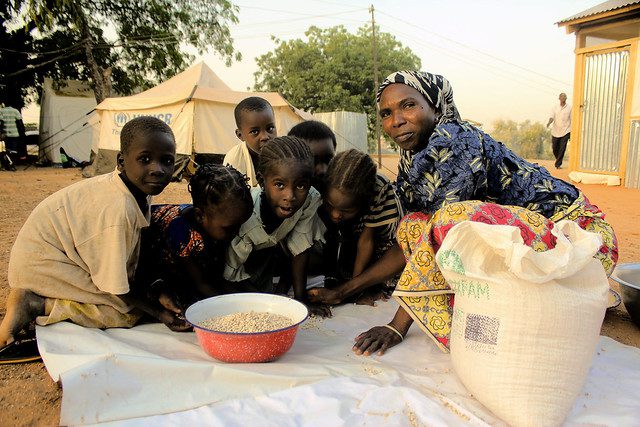
Dangote FoundationThe Dangote Foundation delivered food items worth millions of Nigerian naira to thousands of vulnerable internally displaced persons (IDPs) in Abuja, the Federal Capital Territory of Nigeria.
During a visit to the IDP camps of Abuja, Dangote Foundation chairman Alhaji Aliko Dangote was saddened by what he saw and pledged to alleviate the suffering of thousands of IDPs. The Dangote Foundation is a branch of the Dangote Group. The foundation provides charitable funds to a variety of causes in Nigeria and other African states.

Abuja currently has 13,481 internally displaced persons according to the latest assessment by the International Organization for Migration’s Displacement Tracking Matrix. The Dangote Foundation donated food items to the IDPs during Ramadan as a philanthropic action geared toward alleviating poverty in Nigeria.

The Federal Capital Territory (FCT) Minister Malam Muhammad Musa Bello directly received the donation and ensured that the IDPs would expressly benefit from the donations. These items included Dangote sugar, Dangote salt, Dangote Spaghetti, rice, Danvita and wheat meal.

The FCT Minister stated that the donation Abuja received was extremely generous and the country is grateful to the foundation. Moreover, the FCT Administration is committed to alleviating poverty and respects non-governmental organizations with a similar mission.

This donation has been one of many recent philanthropic actions by the Dangote Foundation in Nigeria. Within a span of five years, the foundation has donated N6.3 billion to various IDP camps in Nigeria. Currently, one US dollar equals 315.25 Nigerian Naira.

Previously, the Foundation made donations to Nigerian universities and women’s causes. They have also provided donations during ethnoreligious crises. In addition, the Dangote Foundation donated to the World Food Program to help Pakistan during massive flooding in 2010 and raised over N11billion for flood relief in Nigeria.

In coordination with the Gates Foundation; the Dangote Foundation, USAID and Nigerian governors joined together to secure political and financial resources to enhance immunization programs within Nigeria in order to keep the country polio-free.

The Dangote Foundation focuses on health, education, economic development and disaster relief through their commitment to decreasing the amount of people suffering or dying from poverty-related issues.  The Dangote Foundation’s donations work to rectify the lack of education for children, to create quality healthcare and support underprivileged adults by improving access to education and healthcare.

– Kimber Kraus

Photo: Flickr

August 20, 2016
https://borgenproject.org/wp-content/uploads/borgen-project-logo.svg 0 0 Borgen Project https://borgenproject.org/wp-content/uploads/borgen-project-logo.svg Borgen Project2016-08-20 01:30:092024-05-27 09:35:03The Dangote Foundation Donates Food in Abuja, Nigeria
Aid, Global Poverty

Postal Initiative: Helping Rural Africans Receive Remittances

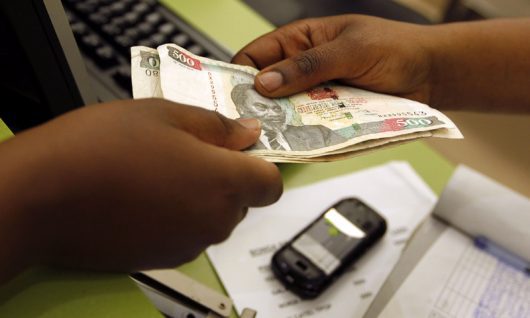
Rural AfricansAlthough remittances are a lifeline for many people in Africa, collecting money from abroad has long been a challenge for rural Africans. Postal systems in remote areas are unable to process money transfers because of operational constraints.

Many post offices in sub-Saharan Africa lack computers, Internet access and other modern technologies necessary to provide financial services. The World Bank has reported that postal employees also often have little to no experience in handling transfers.

In an effort to improve access to remittance payments, the International Federation of Agricultural Development (IFAD) is implementing the African Postal Financial Services Initiative. According to IFAD, the initiative which is being implemented in 10 African countries will provide post offices with the technology, business model and expertise necessary to process remittance payments and offer other services in an efficient and safe manner.

Africa is among the world’s leaders in receiving money from remittances—of the $431.6 billion transferred to and within developing countries from abroad in 2015, Africa received $65 billion. Remittances also make up at least five percent of GDP in 14 African states, including Liberia and Mali.

However, high transaction fees have reduced the value of remittances for many Africans. According to the World Bank, sub-Saharan Africa is the most expensive region in the world to send remittances with an average cost of 9.5 percent in 2015. In Western Africa, the cost of collecting remittances can exceed 10 percent.

The high fees are set by money-transfer operators and are in part a result of a lack of competition in the remittance market. Two of the largest money transmitters, Western Union and MoneyGram, have relied on exclusivity agreements that prevent competitors from partnering with banks and other remittance payout agents.

The overall cost of collecting remittances is higher for rural Africans who must sacrifice time at work and risk their safety to travel long distances to and from financial service providers.

The IFAD and World Bank believe that remittance services would become more efficient and less costly once more postal offices in remote sub-Saharan areas are able to process money transfers.

Unlike commercial banks, which are mainly concentrated in sub-Saharan Africa’s largest cities, 80 percent of post offices operate in sparsely-populated areas where they are more accessible for rural Africans. Post offices also enjoy high levels of trust by people who would rather avoid banks, the World Bank has reported.

Postal systems that process remittances transfers and offer financial services are common and have been beneficial in other developing countries around the world. In India, the India Post has nearly 139,000 post offices in rural areas that offer savings accounts and act as an agent for partner institutions. Brazil’s postal operator, Correios, also has a financial operations branch that process remittances and provides basic banking services.

– Sam Turken

Photo: DAWN

July 28, 2016
https://borgenproject.org/wp-content/uploads/borgen-project-logo.svg 0 0 Borgen Project https://borgenproject.org/wp-content/uploads/borgen-project-logo.svg Borgen Project2016-07-28 01:30:332024-12-13 17:54:42Postal Initiative: Helping Rural Africans Receive Remittances
Aid, Global Poverty

PROMESA: A Bill to Address Poverty in Puerto Rico

Poverty in Puerto Rico

Poverty in Puerto Rico continues to be a major issue, indicating that the island is anything but a “rich port.”

For many years, Puerto Rico has relied heavily on tourism to boost its economy, but the Zika virus, which is linked to severe birth defects and neurological diseases, has scared many tourists away during the peak of tourist season.

As a precaution against contracting the virus, tourists have canceled their plans to visit the island, resulting in a loss of about $28 million in revenue.

In addition, the island cannot pay its $72 billion of debt or meet the $30 billion shortfall in its state pension fund. At this rate, Puerto will soon run out of money.

According to The Week, for decades Puerto Rico issued bonds to cover budget deficits. However, the securities are exempt from federal, state and local taxes, making them attractive to investors. In 1996, Congress ended tax breaks for U.S. manufacturers operating in Puerto Rico. As a result, the island doubled its debt over the next 10 years.

Unemployment in Puerto Rico currently stands at more than 12 percent and the poverty rate is a staggering 45 percent. The Week also reports that the foreclosure rate is increasing, water and electricity rates have spiked and sales tax rose last year from seven to 11.5 percent, the highest in the U.S.

In addition, more than 440,000 Puerto Ricans have fled the country for mainland states, primarily nearby Florida.

In 2014, the U.S. Census estimated that 58 percent of children live below the federal poverty rate in Puerto Rico. It has been documented that children who experience poverty are at a higher risk for health problems, academic difficulties, criminal behaviors and unemployment. Children in Puerto Rico are faring worse than other U.S. Hispanics due to low quality early childhood care and education.

The Obama administration is working closely with Puerto Rico officials to resolve the crisis. They have dedicated a team to closely monitor the crisis and provide financial advice. The administration has aided in providing a steady flow of previously obligated federal funds to the island.

In May 2016, the U.S. House of Representatives proposed a bill that would create a federal control board to oversee Puerto Rico’s finances, manage any debt restructuring and enforce balanced budgets. On July 9, 2016, the U.S. House of Representatives approved the bill, sending it to Senate for consideration.

However, a $2 billion payment is due on July 1. Gov. Alejandro Padillo said in an appeal to the U.S. Senate in December, “We have no cash left.” In a statement, the White House urged Senate to act promptly “so the president can sign the bill into law ahead of the critical July 1 debt payment deadline.”

House Speaker Paul Ryan also insisted Congress act quickly, warning lawmakers of a “deepening crisis” on the island. Ryan said, “The island is shutting down with closed schools; hospitals are beginning to close, that’s today. Tomorrow there could be policemen without cars, there could be blackouts at hospitals.”

The Obama administration has warned that, if unaddressed, poverty in Puerto Rico could grow into a humanitarian crisis. If the bill is passed, Congress can provide the critical tools Puerto Rico needs to restructure its debt, fix its healthcare system and jumpstart its economy.

– Jacqueline Venuti

Photo: Flickr

June 30, 2016
https://borgenproject.org/wp-content/uploads/borgen-project-logo.svg 0 0 Borgen Project https://borgenproject.org/wp-content/uploads/borgen-project-logo.svg Borgen Project2016-06-30 01:30:012024-06-05 04:10:47PROMESA: A Bill to Address Poverty in Puerto Rico
Advocacy, Aid, Global Poverty

The World Bank Confronts Crisis in a Globalized World

World_crisis The World BankOn April 5, 2016, the World Bank Group’s President Jim Yong Kim gave a speech titled “Development in a Time of Crisis” addressing the need for world powers to step in and address the obstacles that keep developing economies from flourishing.
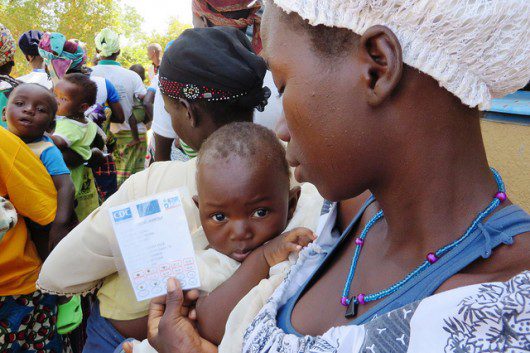
Kim began his speech addressing the Syrian refugee crisis that has caused political polarization in a lot of developed countries.

He insists that the only way to combat the risk of future refugee crises is ameliorating poverty in displaced nations. “If fragile states still have 47 percent of their people living on less than two euros (about $2.27) a day by 2030, while the developed world prospers, the flow of migrants will not stop,” Kim noted.

In the speech, the World Bank President mentions Europe and Germany specifically lauding them for their efforts to settle the displaced Syrians. Part of the strategy to counter the risk of further displacement is increasing the amount of foreign aid that gets circulated to the developing economies.

Earlier this year, a report from the Organization for Economic Cooperation and Development recorded a 13 percent increase in the amount of Foreign Direct Aid circulated.

Expanding this kind of aid will lead to the poverty relief that can reduce the size of migratory crises. With this in mind, Kim began a discussion on how the World Bank can best mitigate these problems. In particular, he made reference to a recent loan to the country of Jordan.

The “groundbreaking” loan seeks to reward the Middle Eastern country for their efforts in easing the migratory crisis in neighboring Syria.

The loan, accepted in late March 2016, will provide $100 million to support the Jordanian education system as refugees enter the country. While funds provided to middle-income nations like Jordan typically come with a particular interest rate, this   concessionary loan will be provided with a longer payback period and less interest.

These types of new lending schemes are part of a New Financing Initiative which is expected to roll out programs worth $20 billion over 5 years.

The Jordanian loan and the financing initiative behind it led Kim to discuss three of the broader changes in the objectives of the World Bank:

  • “First, addressing the challenge of global threats that cross boundaries and regions will become ever more central to achieving our mission.” Kim asserts this as necessary in a globalized world where problems can quickly spread across the world.
  • “Second, we must focus much more effectively on managing risk and uncertainty.” Protecting those rising out of poverty from falling back prevents the damage caused by sudden crises.
  • “The third major change for us is that we must do much more to address the deep pockets of poverty and rising inequality in countries at every income level.”

The top World Bank official closed the speech by acknowledging the threat of global pandemic. In fact, Kim cites studies saying diseases like Ebola and the Zika virus could “lead to tens of millions of deaths and a loss of as much as five percent of global GDP – or roughly $4 trillion.”

Ebola and Zika outbreaks over the past two years have shown the health risks that are prevalent in an interconnected world. The CDC has reported transmission of the Zika virus in over 35 nations and the Ebola outbreak caused over 11,000 deaths across various African countries.

In response, the World Bank plans to design and fund the Pandemic Emergency Financing which hopes to create “creating a response system that will cost millions of dollars per year that could save hundreds of thousands, if not millions, of lives – and save billions, if not trillions, of dollars.”

These issues are just a few that Kim hopes that the World Bank can address in the near future. He reminds the world that fighting poverty and global issues is a careful process focused on “one region, one country and one person at a time.”

– Jacob Hess

Photo: Flickr

April 30, 2016
https://borgenproject.org/wp-content/uploads/borgen-project-logo.svg 0 0 Borgen Project https://borgenproject.org/wp-content/uploads/borgen-project-logo.svg Borgen Project2016-04-30 01:30:212024-12-13 17:54:19The World Bank Confronts Crisis in a Globalized World
Aid, Global Poverty

World Humanitarian Summit: Humanitarian Aid Improvements

Humanitarian Aid

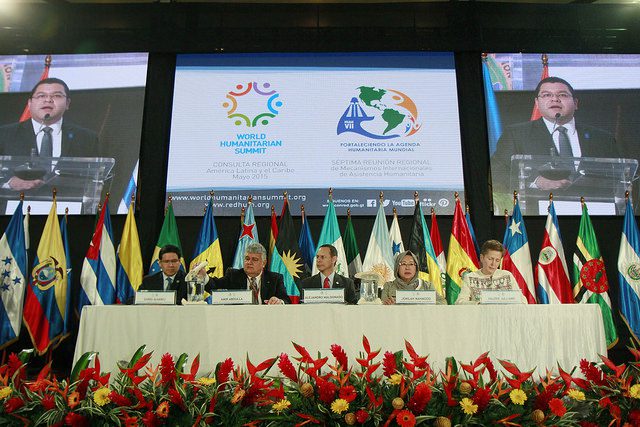
In March 2016, U.N. Secretary General Ban Ki-Moon announced proposals for improving the effectiveness of humanitarian aid. These suggestions will be brought forth at the first World Humanitarian Summit (WHS) in May 2016 in Istanbul. Proposals to be discussed include ending refugee limbo, increasing refugee access to education, and localizing disaster response.

According to IRIN, the U.N. has worked in consultation with over 20,000 people for improvements in crisis response. The summit will cover the trends and findings pertaining to the utilization of humanitarian aid more efficiently through future crises that arose from this work.

With the influx of refugees to Europe at its highest since WWII, improving the assistance system will be a top priority at the WHS. Concerning the refugee crisis, the summit hopes to merge ideas on how to address the problem more equitably for all states. For instance, the Secretary General recommends that more countries share the financial and hosting responsibilities.

Other ideas that the summit will deliberate upon include providing sustainable livelihoods for refugees in their host countries. This involves providing more immediate access to education rather than refugees remaining in a period of limbo. Another innovative idea to be discussed is a “global finance package,” which would deliver increased funds to hosting countries.

Ban Ki-Moon will also advocate for Security Council members to abstain from vetoing resolutions potentially aiding and preventing crises and atrocities, states IRIN.

In order to successfully provide aid, Ban Ki-Moon says that following international law is an essential factor. Too often hospitals and schools are bombed and destroyed, further disabling quick and effective humanitarian aid provisions. The summit will debate how to competently ensure that international law is respected by all states.

The conference’s discourse on improving humanitarian assistance will also mention the need to localize financing and to empower local organizations.

One round table at the summit will be called “Catalysing Action To Achieve Gender Equality,” covering issues pertaining to gender equality in the face of crises. Myriad women’s needs are left behind in displacement settings. This roundtable will discuss solutions to women’s inclusion in decision-making during crises.

The program’s website states, “The summit is an opportunity to confront these global challenges head-on and generate greater global leadership and political will to end conflict, alleviate suffering, and reduce risk.”

– Mayra Vega

Photo: Flickr

April 23, 2016
https://borgenproject.org/wp-content/uploads/borgen-project-logo.svg 0 0 Borgen Project https://borgenproject.org/wp-content/uploads/borgen-project-logo.svg Borgen Project2016-04-23 01:30:152024-12-13 17:54:14World Humanitarian Summit: Humanitarian Aid Improvements
Aid, Development, Global Poverty

Highlighting the Benefits of Cash Transfers

Cash TransfersCash transfers are one of the most thoroughly evaluated types of humanitarian aid that have been shown to effectively reach individuals and families in developing countries and can be provided with accountability. This form of aid has proven effective in reducing suffering by increasing limited household budgets and providing for basic needs.
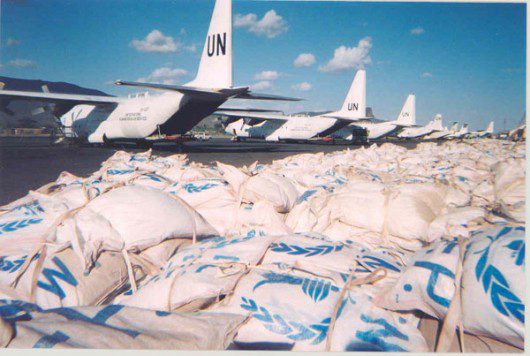
According to a report by the Center for Global Development (CGD), cash transfers may come in the form of “an envelope of cash, a plastic card, or an electronic money transfer to a mobile phone, with which [recipients] can buy food, pay rent and purchase what they need locally.”

This report also suggests that these transfers should be complemented by services such as immunization and sanitation, where cash transfers may not be sufficient.

Other benefits through transfers include the transparency provided. They allow precise measurement of how much aid is arriving to the desired target population.

Receivers are granted the benefit of being able to choose what the aid is spent on. This decision making process further empowers communities and allows them to receive what they really need.

Despite the benefits, the CGD states that cash transfers are still often overlooked in favor of other forms of assistance. Today, cash payments make up only six percent of aid. Evidence from global crises, in Ethiopia, for instance, has proven that “cash was more effective than food aid by 25-30 percent,” says the CGD.

There are also challenges in the distribution of cash transfers. According to the World Bank, one challenge is ensuring that cash directly reaches needy recipients, avoiding corrupt processes and opportunistic elites.

Overall, cash transfers are practical. They can also reduce administration and operating costs. Respected nonprofits such as Give Well assert that unconditional cash transfers help the poor begin to create a better life on their own terms.

Giving the impoverished the freedom to utilize cash payments means they have the ability to meet individual needs and accelerate progress in their developing countries.

– Mayra Vega

Sources: Center For Global Development, World Bank, The New York Times
Photo: Flickr

March 29, 2016
https://borgenproject.org/wp-content/uploads/borgen-project-logo.svg 0 0 Borgen Project https://borgenproject.org/wp-content/uploads/borgen-project-logo.svg Borgen Project2016-03-29 01:30:192024-12-13 18:05:54Highlighting the Benefits of Cash Transfers
Aid, Food & Hunger, Food Aid, Global Poverty, USAID

Hope on the Horizon: Increase in Food Assistance for Iraq

Food Assistance in IraqAn increase in food assistance for Iraq will become a reality thanks to the U.S. Agency for International Development (USAID). The U.N. World Food Program (WFP) in Iraq will receive an additional $20 million in emergency food assistance per an announcement from Stuart E. Jones, U.S. Ambassador to Iraq, made on Feb. 29, 2016, according to USAID.
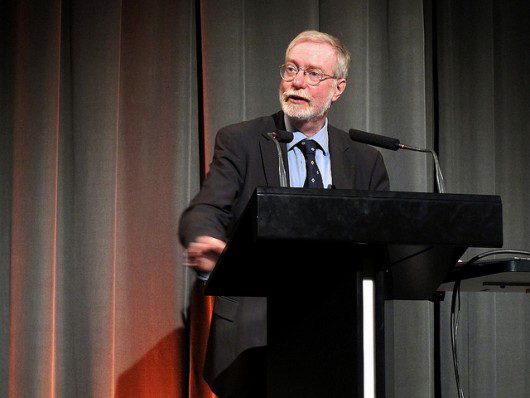
With this new support, provided through USAID’s Office of Food for Peace (FFP), the U.S. government has contributed nearly $623.8 million to support humanitarian activities in Iraq since the 2014 fiscal year, according to USAID’s Iraq-Complex Emergency Fact Sheet.

The new funding will support the distribution of household food parcels, including beans, dry peas, flour, oil and rice — and immediate response rations for vulnerable populations comprising ready-to-eat food items, such as beans, biscuits, canned meat, canned peas and dates according to USAID’s Iraq-Complex Emergency Fact Sheet.

USAID is helping the WFP reach 1.5 million displaced and conflict-affected Iraqis throughout the country according to USAID’s Feb. 29, 2016 press release.

This significant boost in aid has the potential to help Iraqis who were adversely impacted by cuts to the WFP last year. In August 2015, the WFP was forced to cut back food assistance due to a funding shortfall, according to the U.N.

“Unfortunately, lack of funds and the rise in the number of displaced Iraqis forces us to reduce the size of the food rations we provide to tens of thousands of families living outside camps,” said Jane Pearce, WFP representative and country director in Iraq, in an August 2015 press release.

This recent increase in food assistance for Iraq comes at a crucial time. The food and medicine shortage in Iraq resulted in the death of approximately 20 children and older persons in recent weeks according to a report by the International Organization for Migration (IOM).

Between December 2015 and January 2016, the price of some food commodities in Fallujah increased by more than 800 percent, according to the WFP; as of late February, a 110-pound bag of rice cost $400 and a 110-pound sack of wheat flour was priced at $550, reported the IOM.

There is hope that this increase in food assistance for Iraq is a sign of more good to come for internally displaced persons living in the country.

– Summer Jackson

Sources: UN, USAID 1, USAID 2
Photo: Wikipedia

March 23, 2016
https://borgenproject.org/wp-content/uploads/borgen-project-logo.svg 0 0 Borgen Project https://borgenproject.org/wp-content/uploads/borgen-project-logo.svg Borgen Project2016-03-23 01:29:532024-06-11 02:48:18Hope on the Horizon: Increase in Food Assistance for Iraq
Aid, Foreign Aid, Global Poverty

The Bottom Billion: Causes and Solutions

The Bottom BillionAccording to Paul Collier, a professor of economics at Oxford University and the author of “The Bottom Billion,” a book about the poorest one billion people in the world, “the countries at the bottom billion coexist with the 21st century, but their reality is the 14th century: civil war, plague, ignorance.”

Countries and their citizens in the bottom billion find their conditions getting worse, not better. For instance, during the 90s, while globalization lifted millions out of poverty in China and India, the income of the bottom billion “actually fell by 5 percent.”

Most of the bottom billion live in 58 countries, 70 percent of which are in Africa and most of the rest, in Central Asia. These countries are among the poorest in the category of “developing countries or Third World countries.” Some of the countries in the bottom billion include Rwanda, Congo, Sudan, Chad, Somalia and Ethiopia.

So how does a country fall within the bottom billion group? The answer to this is multidimensional and lies in what Collier terms as “poverty traps.” According to Collier, these poverty traps include conflict, being landlocked, abundant natural resources and bad governance.

When it comes to war-torn countries, Rwanda, Congo, Somalia and Sudan are some examples that fall into this category. As a result of the conflict, the economy is destroyed, lives of innocent civilians are damaged and the political unrest also causes isolation and a lack of foreign investment.

Being landlocked with bad neighbors is also a disadvantage for developing countries. When we consider a country like Switzerland, a landlocked country in the developed world, its proximity to its surrounding countries does not compromise its security and it has the ability to trade with powerful and wealthy neighboring countries. This is not the case for developing countries, which are often surrounded by poor or unstable countries.

Having abundant resources may sound like a benefit rather than a disadvantage. However, with countries like Sudan and Somalia, even though natural resources such as copper and diamonds are abundant, corrupt politicians and other leading authorities within the country are able to seize power and divide the spoils, making their economies more vulnerable.

With the levels of corruption in developing countries, it is impossible for there to be sustainable growth. Accountability, transparency, monitoring and evaluation are needed to advance these countries and lift their citizens out of poverty.

To address these issues, Collier believes that aid should be increasingly concentrated in the most difficult environments and military intervention should be focused on “protecting democratic governments.” For instance, the British helping Sierra Leone is an example of productive military intervention.

Laws and charters have also been put forward as possible solutions. Collier suggests that international charters should be adopted for natural resources, budget transparency, post-conflict situations and investment.

Finally, Collier highlights that the bottom billion need to diversify their exports and are in need of temporary protection from Asia.

The situation faced by people in the bottom billion, though dire, can be addressed. While outside intervention may be necessary in some cases, change ultimately must come from within, with the end goal being for countries to prosper autonomously and independently.

– Vanessa Awanyo

Sources: The Guardian, The Economist, GSDRC
Photo: Flickr

March 16, 2016
https://borgenproject.org/wp-content/uploads/borgen-project-logo.svg 0 0 Borgen Project https://borgenproject.org/wp-content/uploads/borgen-project-logo.svg Borgen Project2016-03-16 01:30:022024-06-05 04:10:45The Bottom Billion: Causes and Solutions
Aid, Global Poverty

AmeriCares Sends Aid to Fiji for Recovery Efforts

AmeriCares
Category five super-cyclone Winston made landfall in Fiji on Feb. 22, 2016. With winds of up to 180 mph, Winston was both the strongest cyclone to ever hit Fiji and the strongest cyclone on record to make landfall in the South Pacific archipelago overall. Fortunately, AmeriCares has stepped in to support Fijians in need.

AmeriCares, an emergency response and global health organization based in Stamford, Connecticut, is currently helping Fijians in their recovery and relief efforts. The organization has dispatched an emergency response team of volunteers to provide the medical care and assistance that some inhabitants require. AmeriCares has also prepared approximately 5,000 pounds of medical and relief supplies to deliver to Fiji.

Founder Robert C. Macauley first conceived of AmeriCares during the Vietnam War. In 1975, he and his wife sent an aircraft to Vietnam in order to airlift 300 infant orphans to safety in California. In order to do so, Macauley was forced to take a mortgage out on his house.

Since then, AmeriCares has worked in over 140 countries. These countries include North Korea, where the organization has sent medical supplies since 1997 — and Syria, where $7 million in medical aid has been delivered since 2012.

Approximately 909,389 people inhabit 110 of the 332 islands that compose Fiji. In Cyclone Winston’s wake, 347,000 now find themselves in need of humanitarian aid, of whom 120,000 are children, says UNICEF.

42 Fijians have been confirmed dead and some of the villages within the more remote islands of Fiji are thought to have been completely obliterated by the storm. An article by the Huffington Post reports that 35,000 are currently living in evacuation centers, some of which are running low on supplies.

https://www.youtube.com/watch?v=mXXk1U7HgSw

Two major hospitals were also damaged by the cyclone, according to AmeriCares’ website. AmeriCares’ aid may thus prove an important component in supplementing some of the infrastructural support that was lost in the cyclone.

– Jocelyn Lim

Sources: AmeriCares, The Huffington Post, UNICEF, William Grimes

March 12, 2016
https://borgenproject.org/wp-content/uploads/borgen-project-logo.svg 0 0 Borgen Project https://borgenproject.org/wp-content/uploads/borgen-project-logo.svg Borgen Project2016-03-12 01:30:142020-06-21 19:29:22AmeriCares Sends Aid to Fiji for Recovery Efforts
Page 57 of 65«‹5556575859›»

Get Smarter

  • Global Poverty 101
  • Global Poverty… The Good News
  • Global Poverty & U.S. Jobs
  • Global Poverty and National Security
  • Innovative Solutions to Poverty
  • Global Poverty & Aid FAQ’s
Search Search

Take Action

  • Call Congress
  • Email Congress
  • Donate
  • 30 Ways to Help
  • Volunteer Ops
  • Internships
  • Courses & Certificates
  • The Podcast
Borgen Project

“The Borgen Project is an incredible nonprofit organization that is addressing poverty and hunger and working towards ending them.”

-The Huffington Post

Inside The Borgen Project

  • Contact
  • About
  • Financials
  • President
  • Board of Directors
  • Board of Advisors

International Links

  • UK Email Parliament
  • UK Donate
  • Canada Email Parliament

Get Smarter

  • Global Poverty 101
  • Global Poverty… The Good News
  • Global Poverty & U.S. Jobs
  • Global Poverty and National Security
  • Innovative Solutions to Poverty
  • Global Poverty & Aid FAQ’s

Ways to Help

  • Call Congress
  • Email Congress
  • Donate
  • 30 Ways to Help
  • Volunteer Ops
  • Internships
  • Courses & Certificates
  • The Podcast
Scroll to top Scroll to top Scroll to top