• Link to X
  • Link to Facebook
  • Link to Instagram
  • Link to TikTok
  • Link to Youtube
  • About
    • About Us
      • President
      • Board of Directors
      • Board of Advisors
      • Financials
      • Our Methodology
      • Success Tracker
      • Contact
  • Act Now
    • 30 Ways to Help
      • Email Congress
      • Call Congress
      • Volunteer
      • Courses & Certificates
      • Be a Donor
    • Internships
      • In-Office Internships
      • Remote Internships
    • Legislation
      • Politics 101
  • The Blog
  • The Podcast
  • Magazine
  • Donate
  • Click to open the search input field Click to open the search input field Search
  • Menu Menu

Archive for category: Aid

Aid, Charity, Global Poverty

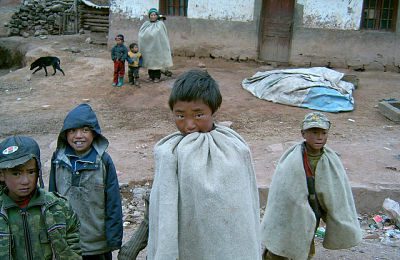
How to Help People in China

How to Help People in China
Despite the rapid economic growth that China has experienced in the last few decades, 400 million Chinese people still suffer from poverty, especially in rural areas. The following paragraphs provide detailed information on how to help people in China:

1. Teach for China

Formerly known as the China Education Initiative, Teach for China is a program founded in 2008. Teach for China works to reduce the gap in education level between rural and urban China. To deal with the shortage of teachers in rural areas, Teach for China hires top university graduates from both the United States and China for two years to work as teachers in primary and secondary schools in Yunnan and Guangdong provinces. The American volunteers are responsible for teaching English, while the Chinese volunteers focus on other core subjects, including math, science and Chinese literature. As of today, approximately two-thirds of the volunteers are Chinese, while the remaining one-third are from the U.S.

2. UNDP’s programs

Another example of how to help people in China is through the United Nations Development Programme’s various programs aimed at mitigating poverty and inequality in China. The organization focus on tackling the root causes of poverty in China. Additionally, the UNDP emphasizes sustainability and ensures that its actions are in line with China’s values and cultural identity. The specific programs include partnering with leading national institutions in China to support their policy research and provide policy recommendations, and an initiative that focuses on inclusive development for ethnic minorities.

3. Donations to NGOs

Another way to reduce poverty in China is to donate to NGOs dedicated to helping the rural poor in China.

Save the Children, one of the world’s largest NGOs focuses on raising the quality of educating Chinese children in impoverished communities. Since 1992, it has established child-friendly spaces in rural communities and schools where children can safely learn, play and socialize. Immediately after the Sichuan earthquake in 2008, it established a permanent office in Chengdu and has helped millions of homeless children and families affected by the earthquake ever since.

Another nonprofit organization that aims at ending the poverty crisis in rural China is Project Partner. Its uniqueness lies in the fact that while even the largest charities operating in other developing countries cannot work in China, it can, because of close relationships it has established with its partners since 1982. The organization accepts donations to various projects it carries out, as identified by its Chinese partners.

To provide clean water, for example, Project Partner digs wells and builds water storage systems. To improve health care, it builds clinics and trains doctors. Project Partner also offers scholarships and trains teachers in order to bring education toq rural areas. Project Partner also organizes regular trips to China to work directly with the people it supports through donations and fundraising. The participants can either help facilitate medical clinics, teach English, join youth soccer camps or visit rural Chinese villages.

These are the most typical examples of how to help people in China. Through these direct channels, it will be easier to alleviate poverty in rural China. This will help the nation achieve the Sustainable Development Goals.

– Minh Joo Yi

Photo: Flickr

July 13, 2017
https://borgenproject.org/wp-content/uploads/borgen-project-logo.svg 0 0 Borgen Project https://borgenproject.org/wp-content/uploads/borgen-project-logo.svg Borgen Project2017-07-13 01:30:242024-05-28 00:02:54How to Help People in China
Aid, Global Poverty, Hunger

5 Organizations Fighting Famine in East Africa


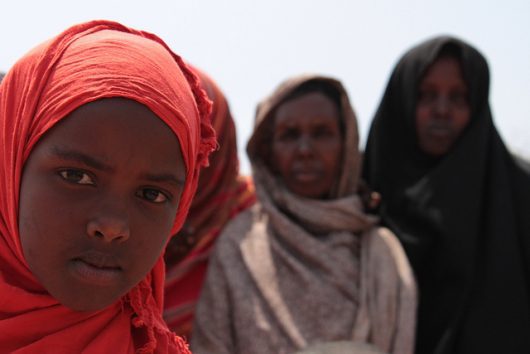
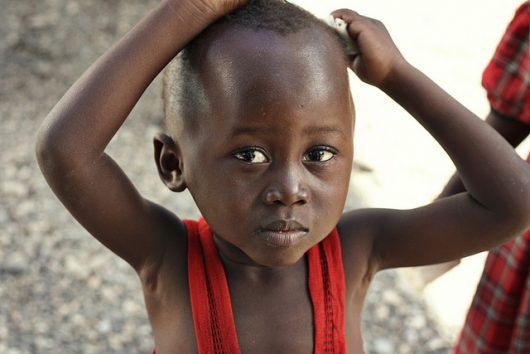
According to U.N. Secretary-General for Humanitarian Affairs Stephen O’Brien, the world faces its worst humanitarian crisis since World War II in the current famine affecting certain African and Middle Eastern countries. More than 20 million people in Yemen, South Sudan, Somalia and Nigeria are facing severe starvation and malnutrition. In addition to the U.N.’s push to mobilize aid to these countries, smaller organizations have made a concentrated effort to fight famine in East Africa.

5 Organizations Fighting Famine in East Africa

  1. Feed My Starving Children (FMSC) is a nonprofit organization focused on fighting global starvation, annually producing more than a million meals that are shipped to impoverished countries. FMSC operates in several locations around the Twin Cities, hosting volunteer meal preparation shifts six days a week. The current East African crisis has prompted FMSC to increase its efforts. The organization now aims to produce an additional 10 million meals to reduce starvation in Somalia.
  2. The Léger Foundation has been combatting global poverty and social exclusion for over 65 years. In June 2017, it joined Canada’s growing Famine Relief Fund, which focuses on providing aid to the millions of Africans affected by the famine. While currently responding to humanitarian demand in Cameroon, The Léger Foundation is expanding outreach to other countries afflicted by the famine including Nigeria and South Sudan. As a new member of the Famine Relief Fund, the foundation will see its donations doubled by Canada’s government through the end of June to support famine relief.
  3. SOS Children’s Villages is another member of the Famine Relief Fund dedicated to fighting famine in East Africa. SOS traditionally operates as a nonprofit centered on providing homes for orphaned and abandoned children and has built more than 550 children’s villages. These provide children with food, shelter, education and a family life. The recent famine has prompted SOS Children’s Villages to shift its focus to East Africa. Fundraising efforts are now aimed at alleviating food shortages caused by drought and subsequent livestock loss.
  4. Caritas Australia is a Catholic charity working to end poverty and facilitate global development for people of all backgrounds. Recently Caritas launched a program called Africa Emergency Appeal to mobilize its humanitarian network of partners to respond to the famine in East Africa. Caritas and its partner agencies currently provide local assistance in delivering clean water, sanitation supplies and food such as sugar, beans and maize flour.
  5. Save the Children is a British charity that promotes children’s rights and seeks to improve conditions for children globally through healthcare and education. In response to the famine in East Africa, Save the Children aims to reach children under the age of five and provide aid to those most at risk for malnutrition and diseases such as malaria. With humanitarian infrastructure already in place in the affected countries, Save the Children can turn its focus to fighting famine in ways such as increasing malnutrition screenings in Nigeria or distributing vouchers for supplies in Somalia.

These are just a few of the many organizations that have responded swiftly to the growing humanitarian crisis in Africa. While there is still need for further funding in these countries, these organizations are doing all they can to bring immediate relief and save lives.

– Nicholas Dugan

Photo: Flickr

July 7, 2017
https://borgenproject.org/wp-content/uploads/borgen-project-logo.svg 0 0 Borgen Project https://borgenproject.org/wp-content/uploads/borgen-project-logo.svg Borgen Project2017-07-07 07:30:502020-05-15 20:31:505 Organizations Fighting Famine in East Africa
Aid, Charity, Education, Food Aid, Global Poverty

How Sustainable is the McGovern-Dole Program?


The McGovern-Dole International Food for Education and Child Nutrition Program was established in 2000 by former Senators George McGovern and Robert Dole. It has fed millions of children all over the globe by way of school meals made from surplus U.S. agricultural products. In 2006, McGovern and Dole were awarded the World Food Prize for their work on the program. This award is seen as the “Nobel Prize for hunger.”

The program is credited with helping improve school attendance as well as feeding the hungry, as free school meals provide families with an extra incentive to send their children to school. This is especially the case for girls, as parents sometimes decide to keep them home from school to do housework.

McGovern-Dole has made recent news because the Trump administration’s 2018 budget outline proposes eliminating the program, citing that it “lacks evidence that it is being effectively implemented to reduce food insecurity.”

Forbes contributor Tim Worstall contends Trump’s claim that McGovern-Dole fails to reduce food insecurity is accurate. He points out that because McGovern-Dole consists only of food donations, it lacks sustainability, doing nothing to inject money into local economies or help farmers grow their crops. Although the program feeds people effectively, it is not a long-term solution to ending hunger locally.

This being said, McGovern-Dole does have sustainability measures in place, though they may not address food insecurity directly. The program is concerned with education. All meals through the program are offered through schools. This allows McGovern-Dole to track data such as the number of kids taking medication or learning to read at school. This helps other education-centered organizations focus their efforts. McGovern-Dole also implements teacher training, school infrastructure improvements and nutrition programs for pregnant women in the communities it serves.

Alternatives to direct food aid programs are not always reliable. The cash-based transfer, a form of assistance by which individuals in need receive bank transfers or vouchers to exchange for food at stores owned by the World Food Programme, is ineffective in communities with extremely unstable markets or bank services. Direct food aid like McGovern-Dole provides hungry individuals with food regardless of the state of the market in a community.

– Caroline Meyers

Photo: Flickr

July 7, 2017
https://borgenproject.org/wp-content/uploads/borgen-project-logo.svg 0 0 Borgen Project https://borgenproject.org/wp-content/uploads/borgen-project-logo.svg Borgen Project2017-07-07 07:30:122024-05-28 00:00:08How Sustainable is the McGovern-Dole Program?
Aid, Developing Countries, Global Poverty

The Role of AHGOs in Providing Humanitarian Relief

AHGOs
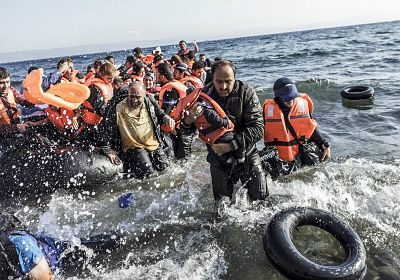
In the wake of the Syrian refugee crisis, a new form of relief organization has emerged, known as Ad Hoc Grassroots Organizations (AHGOs). In a study that explores their role in Lesvos, Greece, the Public Library of Science (PLOS) identified 41 AHGOs and interviewed 13 of them.

AHGOs are helpful at providing quick humanitarian relief. They are particularly potent when governments are not able to respond as quickly to disasters. According to the report done by PLOS, in the future, AHGOs should be recognized as new humanitarian actors.

These groups are created specifically to provide relief for a particular cause. AHGOs previously provided relief during the earthquake in Haiti in 2010 and Hurricane Sandy in 2012. In this instance, the 13 that were contacted were formed in 2015 with the intent of assisting refugees that fled the crisis in Syria, made their way over the Mediterranean, and landed in Lesvos.

Organizations are different than nonprofit organizations, non-governmental organizations (NGOs) and intergovernmental organizations (IGOs). After they serve their purpose they are rendered ineffectual. Their expiration date might make the notion of them seem unnecessary. How might temporary ad hoc organizations be more effective at providing relief than other pre-existing organizations?

PLOS explores this notion in its article. Because of their lack of infrastructure, AHGOs provide ordinary people who want to help by responding to disasters. Many volunteers working in Lesvos were there because they expressed a simple desire to help and were surprised that more aid had not already been sent by the United Nations and international non-governmental organizations (INGOs).

Volunteers working with AHGOs in Lesvos expressed that their lack of structure could also be negative. The volunteers tended to take the form of paramedics, nurses, and those experienced in the wilderness. Despite the skills that the volunteers brought with them, many were ill-prepared for refugee care.

However, on the positive side, AHGOs have the ability to reach surge capacity quickly. Surge capacity, in a humanitarian context, is defined as “the ability of an organization to rapidly and effectively increase its available resources in a specific geographic location.” The Humanitarian Practice Network defines surge capacity as the ability to “scale operations [people, money, and materials] up swiftly, smoothly and productively.”

Reports on standard INGOs express their inability to reach surge capacity. Therefore, the AHGO’s ability to reach surge capacity is favorable. It further demonstrates the speedy effectiveness of grassroots movements. Humanitarian aid can benefit from the buffed and nuanced structure of longstanding INGOs as well as the small-scale potency of AHGOs.

– Rebeca Ilisoi

Photo: Flickr

July 6, 2017
https://borgenproject.org/wp-content/uploads/borgen-project-logo.svg 0 0 Borgen Project https://borgenproject.org/wp-content/uploads/borgen-project-logo.svg Borgen Project2017-07-06 07:30:332024-05-28 00:02:35The Role of AHGOs in Providing Humanitarian Relief
Aid, Global Poverty

7 Organizations Helping People in Guatemala

How to Help People in Guatemala
Out of a population of 16.3 million, 59 percent of Guatemalans live in poverty, and 23 percent live in extreme poverty. However, efforts are being made to improve living conditions for the country’s people. Here are some organizations that are setting examples of how to help people in Guatemala.

7 Organizations Helping People in Guatemala

  1. The World Food Program (WFP) has worked in Guatemala for 43 years and supports the country’s residents with essential services. In 2016, they provided food to 627,400 people and aid to 16,875 drought-affected homes. WFP also advocates for a country strategic plan that focuses on overcoming Guatemala’s food security and nutrition challenges.
  2. SOS Children’s Villages offers counseling and training programs to Guatemalan families. They also provide children with nutritious food and housing if they cannot live with their families. For young people who are victims of poverty and violence, SOS supports and trains them to accomplish their goals.
  3. ActionAid helps Guatemalans access education, health, and other necessary services. Since the country’s rural area has few schools above the primary level, the organization’s distance learning program allows students to hear class lectures on the radio. ActionAid also runs disaster workshops that prepare Guatemalans for earthquakes, fires and other natural disasters.
  4. Children International utilizes various tactics to help Guatemalans. They teach residents the fundamentals of proper nutrition, provide school uniforms to poor families who cannot afford them and teach Guatemala’s youth important life and job skills. As a result, Guatemalan teenagers now score 85 percent on leadership knowledge assessments (above the global average) and 89 percent on management skills.
  5. Mayan Families uses education and community development programs to help the impoverished communities of Guatemala’s Lake Atitlán region. In 2015, they operated six centers that focused on bilingual fluency, early childhood literacy, parental education and nutrition. The nutrition programs have also improved Guatemalan children’s weight, oral hygiene and scholastic performance.
  6. Habitat for Humanity has supported 75,605 Guatemalan families since 1979. In 2016 alone, they helped 1,718 families. In addition to helping reduce Guatemala’s housing deficit by 4.6 percent, Habitat for Humanity is planning a nine-day trip to teach volunteers how to help people in Guatemala. A professional construction leader will supervise the volunteers while they lay block foundations, dig for septic tanks and perform other tasks in building and improving homes for residents.
  7. Water For People (WFP) collaborates with Guatemala’s local community and government to ensure that 95 percent or more of the country’s residents can access sanitary water. WFP also works with Guatemalan microfinance institutions to support loans for community water projects. Guatemala’s local government and community provide finances for school and water sanitation systems, relieving underfunded schools of those expenses.

With these organizations and their efforts, Guatemalans could live better lives in the near future. Additionally, programs dedicated to education and learning facilities will make many job opportunities available to the country’s youth. As these organizations continue their work, they show others how to help people in Guatemala.

– Rhondjé Singh Tanwar

Photo: Flickr

July 5, 2017
https://borgenproject.org/wp-content/uploads/borgen-project-logo.svg 0 0 Borgen Project https://borgenproject.org/wp-content/uploads/borgen-project-logo.svg Borgen Project2017-07-05 07:30:202024-12-13 18:04:577 Organizations Helping People in Guatemala
Aid, Foreign Aid, Global Poverty

Private Businesses Speak Up on Cutting of Foreign Aid Budget

Private Businesses Speak up on Cutting of Foreign Aid Budget
Shortly after taking office in 2017, the Trump administration released its proposed budget cuts for FY 2018. Among the proposed cuts was a 31 percent decrease in the foreign aid budget, which includes cutting funding to the United Nations, the World Bank and other diplomatic institutions. With the already low foreign aid budget potentially decreasing, impoverished nations still do have dependable allies in the U.S. other than the government.

After the release of the proposed foreign aid budget cuts, American business leaders from companies such as Walmart, Nike and Coca-Cola signed a letter to Secretary of State Rex Tillerson urging him to reevaluate the proposed cuts. The May 22 letter highlights the fact that 95 percent of the world’s consumers live outside of the U.S. and that “eleven of America’s top fifteen export markets are in countries that have been recipients of U.S. foreign assistance.”

Not only are private businesses lobbying the government to take responsibility when it comes to stepping up foreign aid policy, but they have also stepped up in their own funding to developing countries and their economies.

According to The Guardian, private sectors have invested money to developing countries at a faster rate than government foreign aid; they receive 27 percent more foreign business investments than development aid. The investments, which have increased nine-fold since the year 2000, are starting to bring countries out of poverty with increasing business capital flow into their economies.

As businesses see more market potential in countries where citizens could come out of poverty and would have more money to spend on luxury goods, they have an incentive to invest in development.

For example, The Coca-Cola Company and The Bill and Melinda Gates Foundation teamed up with TechnoServe to invest in eastern African farmers to produce fruit for their Minute Maid drinks. As a result, local farmers were educated on how to produce better crop yields that would benefit both Coca Cola’s production and the farmers’ incomes. This venture was titled Project Nurture and increased the incomes of 54,000 farmers.

“We are committed to working with you in your role as Secretary of State to share our perspectives on the importance of U.S. international affairs programs to boost our exports abroad and our jobs here at home,” read the May 22 letter to Tillerson. Whether the proposed 31 percent foreign aid budget cut goes into effect or not, private businesses will continue to invest in foreign markets and give aid to developing countries. It is also important to note that, in budgetary matters, Congress holds the power of the purse. While the President is able to propose budgetary cuts, they must be approved by Congress before going into effect.

– Vicente Vera

Photo: Flickr

July 4, 2017
https://borgenproject.org/wp-content/uploads/borgen-project-logo.svg 0 0 Borgen Project https://borgenproject.org/wp-content/uploads/borgen-project-logo.svg Borgen Project2017-07-04 07:30:532024-12-13 17:58:10Private Businesses Speak Up on Cutting of Foreign Aid Budget
Aid, Global Poverty

10 Facts About Microloans

Facts About Microloans
Today’s world economy is dominated by big businesses and cut-throat hierarchies. Microlenders finance those who may be left out of the typical business model, such as underprivileged or under-qualified entrepreneurs, by giving them microloans.

There are numerous nonprofit microlenders that focus on helping aspiring businessmen and women enter the marketplace. Organizations such as Kiva, Zidisha, the Business Center for New Americans and Grameen America strive to provide clients with the loans they need in an educational and sustainable way.


Here are 10 Facts About Microloans.


  1. Microloans are typically for no more than $50,000, hence the prefix “micro.”
  2. Microloans allow new business owners to take care of startup expenses. It can be extremely difficult for entrepreneurs with little disposable income to receive funding to begin their projects, which is where microloans come in. Most microloans lay the groundwork that allows businesses to survive on their own. For example, an entrepreneur who is hoping to sell dairy products may need a small loan to purchase two cows. After making this purchase, the business owner may keep breeding the cows and selling their milk, becoming more and more financially independent and eventually repaying the creditors and turning a profit. In this case and many others, the initial loan is crucial to the entrepreneur’s eventual success.
  3. The requisites for obtaining a microloan are more attainable than those of a traditional loan. The process of choosing who receives microloans is generally more personal, according to the microlending nonprofit Accion. The organization states that “it’s about your character as a business person, not just your credit score.” Though traditional financial factors are considered, microlenders look at the whole picture.
  4. Nonprofit microlending organizations largely work to educate aspiring entrepreneurs in struggling communities or developing nations. In addition to helping with loans, these organizations aid in business training and often build strong relationships with their borrowers. This can help someone with little business background find footing in the small business world more easily. These microlenders tend to charge little to no interest, making them more accessible to more applicants.
  5. Different microlending organizations specialize in lending to different groups of people. For instance, Zidisha provides microloans to entrepreneurs in developing countries, whereas the Business Center for New Americans works specifically with refugees, immigrants and other marginalized Americans. Grameen America fights economic inequality by loaning to women stuck in systems of poverty.
  6. Some microloan organizations utilize crowdfunding. Kiva, for example, posts approved loan requests online. Supporters from all over the world can view vendor profiles and project descriptions and lend as little as $25 to each project. The vendors update their lenders as their businesses grow, providing evidence that lenders can use their economic privilege to help produce sustainable outcomes.
  7. To boost financial outreach and follow up on repayments, organizations like Kiva sometimes use field partners to facilitate transactions. These partners act as intermediaries between lenders and borrowers. A downside to these partner loans is that the partners may charge the borrowers interest. Kiva’s direct loans, on the other hand, are always interest-free.
  8. Microlenders must acknowledge that their loans will not always be repaid. Kiva recognizes that borrowers occasionally fail to move their businesses in lucrative directions and that repayments are not always possible. As a result, the goal for such an organization is that borrowers repay their lenders as much as possible, even if they cannot completely refund the original amount.
  9. Microlending preserves a sense of pride on the part of the borrower that donating does not always maintain. The recipients of microloans are not merely given their requested funds but rather enter partnerships with their creditors. They are responsible for what they do with the funds by the repayment system. Many organizations believe this is a more sustainable way to create economic change than donations.
  10. Microlending may seem small, but it can have community-wide effects. Microloans can have, as the Kiva website describes, a “ripple effect,” especially in developing communities. In whatever form they take, the loans generate empowerment and opportunities that can pervade the entirety of a borrower’s community.

Microloans are vital to the success of small business ventures around the globe, enabling businesses that would be ineligible to receive traditional loans to grow and thrive in the competitive market. These 10 facts about microloans show that anyone can be a microlender. Go to any of the previously mentioned organizations’ websites to learn more and make a difference in someone’s community today.

– Sabine Poux

Photo: Flickr

July 3, 2017
https://borgenproject.org/wp-content/uploads/borgen-project-logo.svg 0 0 Borgen Project https://borgenproject.org/wp-content/uploads/borgen-project-logo.svg Borgen Project2017-07-03 07:30:502024-05-28 00:02:3810 Facts About Microloans
Aid, Food Aid, Global Poverty

Cash-Based Transfers: Food Assistance That Empowers


The cash-based transfer is a form of food assistance that has been supported by the World Food Programme (WFP) and the Food and Agriculture Organization of the United Nations since the early 2010s. In contrast to in-kind food assistance, which feeds hungry individuals by way of donations of food, cash-based transfers consist of physical money, debit cards and vouchers distributed to those in need and allow people freedom in selecting their food.

Cash-based transfers are both practical and empowering. Individuals that receive aid of any kind are often viewed as passive recipients. However, the program recognizes that people that receive aid know their nutritional needs best and deserve the agency to choose their own food.

The cash-based transfer is also a more sustainable aid program when compared to in-kind food assistance. The money provided through aid goes into local economies and provides support for a future in which hungry individuals will be able to obtain food from their communities. For example, $1.29 billion USD were introduced into Egypt, Iraq, Jordan, Lebanon, Syria and Turkey by WFP to revitalize those economies in the wake of the Syrian conflict.

Users of cash-based transfers can redeem them in stores connected to WFP and related U.N. agencies. This allows WFP to track what is bought and informs their future decisions concerning what foods they stock in their stores and what amounts of money are appropriate for cash-based transfers. The program is sustainable in its implementation on the ground and through the feedback that it provides to WFP.

However, the cash-based transfer is not always the most effective form of food assistance. It is inappropriate in areas with severely disrupted markets or untrustworthy banks and is too dependent on the structure to function in times of crisis, such as in the event of a tsunami, during which time direct donations of food are necessary for basic survival. WFP contends that it evaluates areas in need case-by-case and determines what combination of in-kind and cash-based transfer aid is appropriate. One variation on the cash-based transfer allows access to this type of aid conditionally— for instance, if a family’s children stay in school, they receive cash-based transfers. Other cash-based transfers only allow for the purchase of specific items.

It is important to note that cash-based transfers currently comprise less than 10 percent of overall global humanitarian aid. U.S. in-kind aid programs such as the McGovern-Dole Food for Education Program and Food for Progress are established and have succeeded in feeding billions of people all over the globe. However, the humanitarian nature and sustainability of cash-based transfers will likely continue to appeal to different governments as they search for long-term solutions to world hunger.

– Caroline Meyers

Photo: Flickr

July 2, 2017
https://borgenproject.org/wp-content/uploads/borgen-project-logo.svg 0 0 Borgen Project https://borgenproject.org/wp-content/uploads/borgen-project-logo.svg Borgen Project2017-07-02 07:30:142024-12-13 17:58:18Cash-Based Transfers: Food Assistance That Empowers
Aid, Development, Global Poverty

IBM’s Science for Social Good Program is Helping Save the World

IMB Uses New Science for Social GoodThe International Business Machines Corporation (IBM) is a major research organization that focuses on computer wear and consultations. They also study cognitive computing and information technology. As of 2017, IBM holds the most patents of any business in the United States, making it a hub for progressive thinking. Aware of their resources, IBM announced their new program, Science for Social Good, on June 6. This program encourages IBM to partner with scientists and nonprofit organizations solving social issues through a more modern lens.

The Cary Institute of Ecosystem Studies is one of the organizations IBM is working with. The Cary Institute’s mission is to research and address the problem of the Zika virus in Central and South America. When the Zika virus arrived in Brazil through mosquitos, it gave babies many life-threatening diseases, such as brain under-development. Without a widely distributed vaccine in countries where only high-class citizens have access to health care, many unborn children are at risk.

Science for Social Good is assisting The Cary Institute in “applying machine learning and data science tools to identify primate species that could become animal reservoirs for Zika” in order to contain and combat the disease. In a short period of time, IBM technology helped pinpoint areas where Zika is most prevalent. Then, they created  through mobile phone apps that map out these locations, allowing citizens to stay more informed and cautious. This technology also identified primate species that carry the disease in the wild.

In addition to The Cary Institute, IBM is assisting the emergency food service St. John’s Bread and Life. IBM will create an artificial intelligence supply chain model of emergency food operations and share it with cloud computing technology. Thus, Bread and Life can share its most advanced practices with other organizations to better help those in need. The digitization of new organizations would make both education on hunger issues and providing aid to the needy much easier.

“Science for Social Good is built on the premise that applied science and technology can solve the world’s toughest problems,” reads IBM’s research page. With companies like these beginning to take a more globalized approach to problem-solving, we may see more research projects like Science for Social Good in the future.

– Vicente Vera

Photo: Flickr

June 30, 2017
https://borgenproject.org/wp-content/uploads/borgen-project-logo.svg 0 0 Borgen Project https://borgenproject.org/wp-content/uploads/borgen-project-logo.svg Borgen Project2017-06-30 01:30:002024-12-13 17:58:11IBM’s Science for Social Good Program is Helping Save the World
Aid, Charity, Global Poverty

10 Richest Countries in the World Include Some of the Most Generous


Several of the 10 richest countries in the world are also leaders in foreign aid and charitable donations to organizations that fight poverty both at home and abroad.

According to Global Finance Magazine, which utilized data provided by the International Monetary Fund, the 10 richest countries in the world by GDP per capita are Qatar, Luxembourg, Macao, Singapore, Brunei, Kuwait, Ireland, Norway, the United Arab Emirates and San Marino.

Kuwait
Number five on the list with a per capita GDP of $71,263, Kuwait has a history of offering humanitarian aid to developing countries, particularly in the Arab world. The Kuwait Fund for Arab Economic Development has provided a total of $18.5 billion in loans to 104 countries in support for education, health services and agricultural development since the fund’s establishment in 1961. Part of the fund is also put aside to assist Kuwait’s citizens in finding housing.

Kuwait is also known for providing humanitarian relief in the wake of natural disasters and violent conflict. The country recently provided $500 million to Yemen and pledged another $500 million to Syria. In 2015, Kuwait’s contribution to foreign aid was 2.1 percent of its GDP, more than twice the U.N. Official Development Assistance target.

The United Arab Emirates (UAE)
Ranked ninth on the list with a per capita GDP of $67,696, in 2013 the UAE was recognized as the top humanitarian donor of the year, having contributed nearly six billion dollars in aid to over 140 countries to provide food, shelter and education to vulnerable populations, particularly in countries such as Egypt, Libya, Yemen, Jordan, Lebanon and the occupied Palestinian territories. Dubai, the UAE’s largest city, is also the location of the International Humanitarian City, which houses more than 50 commercial companies and nongovernmental organizations instrumental in the delivery of aid to areas of the world in need.

Ireland
Ireland is the seventh richest country in the world and has a GDP of $69,374. In 2013, 49 of the top Irish companies donated over 24 million euro to local groups and organizations that focus on issues such as homelessness, education and disability services. The country increased its foreign aid budget, offering 640 million euro for developmental assistance in 2016, a seven percent increase from the previous year. Minister for Foreign Affairs and Trade Charles Flanagan defined the fight against poverty and hunger worldwide as being “at the core of Irish foreign policy.”

Norway
Just behind Ireland with a GDP of $69,296, Norway allocates large amounts of aid money toward global education and health. It spent the third-highest percentage of gross national income on foreign aid in 2016 out of all the countries in the U.N., placing it just behind the UAE. Norway has recently proposed to double its support for renewable energy and is working with Kenya through the Oil for Development program to help Kenya protect its natural resources while gaining a foothold in the petroleum sector.

These nations, four of the 10 richest countries in the world, give back for a variety of reasons. The UAE claims that the humanitarian element is the single deciding factor in its policy on foreign aid, citing an Islamic belief that it is an obligation to help the less fortunate. Others see foreign aid as a means to strengthen its own political, diplomatic and economic positions. According to Dr. Hessah Al-Ojayan, assistant professor of finance at Kuwait University, Kuwait uses foreign aid to achieve “smaller ‘wins’ in the day-to-day global political arena.” Similarly, Norway’s partnership with Kenya, which the government has called “an engine of economic growth in Africa” and “increasingly important for Norwegian interests,” has the potential to be mutually beneficial.

Several of the 10 richest countries in the world have also made it to the Charities Aid Foundation (CAF) World Giving Index top 20. The rankings are determined by three criteria: the percentage of people surveyed from that country who say that they have helped a stranger, donated money or volunteered time. These statistics show that not only the governments of these countries, but also the citizens themselves, are generous to the less fortunate. Ireland ranks ninth on the list, followed by the UAE at 10th, Norway at 14th and Kuwait at 19th.

– Emilia Otte

Photo: Flickr

June 24, 2017
https://borgenproject.org/wp-content/uploads/borgen-project-logo.svg 0 0 Borgen Project https://borgenproject.org/wp-content/uploads/borgen-project-logo.svg Borgen Project2017-06-24 07:30:292024-12-13 17:58:0910 Richest Countries in the World Include Some of the Most Generous
Page 53 of 65«‹5152535455›»

Get Smarter

  • Global Poverty 101
  • Global Poverty… The Good News
  • Global Poverty & U.S. Jobs
  • Global Poverty and National Security
  • Innovative Solutions to Poverty
  • Global Poverty & Aid FAQ’s
Search Search

Take Action

  • Call Congress
  • Email Congress
  • Donate
  • 30 Ways to Help
  • Volunteer Ops
  • Internships
  • Courses & Certificates
  • The Podcast
Borgen Project

“The Borgen Project is an incredible nonprofit organization that is addressing poverty and hunger and working towards ending them.”

-The Huffington Post

Inside The Borgen Project

  • Contact
  • About
  • Financials
  • President
  • Board of Directors
  • Board of Advisors

International Links

  • UK Email Parliament
  • UK Donate
  • Canada Email Parliament

Get Smarter

  • Global Poverty 101
  • Global Poverty… The Good News
  • Global Poverty & U.S. Jobs
  • Global Poverty and National Security
  • Innovative Solutions to Poverty
  • Global Poverty & Aid FAQ’s

Ways to Help

  • Call Congress
  • Email Congress
  • Donate
  • 30 Ways to Help
  • Volunteer Ops
  • Internships
  • Courses & Certificates
  • The Podcast
Scroll to top Scroll to top Scroll to top