• Link to X
  • Link to Facebook
  • Link to Instagram
  • Link to TikTok
  • Link to Youtube
  • About
    • About Us
      • President
      • Board of Directors
      • Board of Advisors
      • Financials
      • Our Methodology
      • Success Tracker
      • Contact
  • Act Now
    • 30 Ways to Help
      • Email Congress
      • Call Congress
      • Volunteer
      • Courses & Certificates
      • Be a Donor
    • Internships
      • In-Office Internships
      • Remote Internships
    • Legislation
      • Politics 101
  • The Blog
  • The Podcast
  • Magazine
  • Donate
  • Click to open the search input field Click to open the search input field Search
  • Menu Menu

Archive for category: Aid

Aid, Global Poverty

How to Help People in Puerto Rico

How to Help People in Puerto Rico
Puerto Rico experiences extreme debt. It is $70 billion dollars behind in expenses. As a result, non-profits are lending their assistance to Puerto Rico to help its citizens and economy. Those wondering how to help people in Puerto Rico can rest assured that there are a variety of ways to be able to do so.

Here are four ways you can help people in Puerto Rico:

  1. Forming more locally owned businesses in Puerto Rico would help Puerto Ricans, bringing more income and attractions to the area. There are organizations such as Parallel 18 that are ready to fund new business owners in Puerto Rico with $40,000. Investors can also help Puerto Ricans by investing in small businesses. In addition to benefiting Puerto Rican business owners, the American investor also gains.
  2. Donating to charities is another way to help. Donating time or money of any amount will make a difference in Puerto Rico.
  3. Volunteering with Pro Familia, Puerto Rico’s version of Planned Parenthood can help many women and children by ensuring that women are provided with health screenings, birth control and a secure future.
  4. Finally, buying local and spreading the word about Puerto Rican products and businesses can benefit business owners. Additionally, encouraging others to take their yearly vacations to the little island can benefit those living in Puerto Rico.

Meanwhile, the U.S. is currently making an effort to help by ensuring Puerto Ricans have a temporary benefit of Medicaid assistance.

Without this help, the island would need to fund Medicaid on its own for the fiscal year of 2018. In its current financial state, this would be impossible. Over 900,000 people would be without healthcare without this form of aid.

In the words of Bernie Sanders, “We cannot allow Puerto Rico’s budget to be balanced on the backs of the most vulnerable people – working families, veterans, the elderly, children and the poor.” He continues by saying that not only is this immoral, but it is economically a bad decision as well.

Puerto Ricans can really use all the help they can get. Take action by learning how to help people in Puerto Rico today.

– Noel Mcdavid

Photo: Flickr

July 23, 2017
https://borgenproject.org/wp-content/uploads/borgen-project-logo.svg 0 0 Borgen Project https://borgenproject.org/wp-content/uploads/borgen-project-logo.svg Borgen Project2017-07-23 01:30:252024-05-28 00:03:15How to Help People in Puerto Rico
Aid, Children, Global Poverty, United Nations

Narrowing the Gap: Investing in the Poorest Children


On June 28, the U.N. International Children’s Emergency Fund (UNICEF) released its report “Narrowing the Gaps: The Power of Investing in the Poorest Children.” The new peer-reviewed report compiled data from 2003-2016 and supports the claim that investing in the health of the world’s poorest communities saves lives and is cost-effective. The following are 10 facts learned from the compelling report.

  1. This report is a result of UNICEF’s 2010 prediction that although the cost of reaching the poorest children is high, greater results would outweigh the cost.
  2. The key finding in “Narrowing the Gaps: The Power of Investing in the Poorest Children” is that for every million dollars invested in the most deprived populations, the number of lives saved is nearly double that saved by an equal investment in other populations.
  3. The number of lives saved is even greater for children under five. More than four more lives are saved per $1 million invested in poor communities compared with other communities.
  4. In this report, people living on an average income below $3.10 per day were considered to be poor.
  5. Children living in extreme poverty are twice as likely to die before five years of age than children living in better circumstances. Most die from preventable diseases.
  6. While progress was made to address the global under-five mortality rate, UNICEF discovered that until recently little to no progress was achieved to lower preventable childhood deaths, specifically among the world’s poorest communities.
  7. The report analyzed data from 51 countries and found that gaps in health coverage between poor and non-poor populations narrowed in 37 of the 51 countries by the end of the study. Coverage did not decrease for non-poor populations, coverage increased for both.
  8. In the final year of the study, UNICEF estimated that 1.1 million lives were saved due to increases in coverage, including 940,000 lives from impoverished populations.
  9. However, UNICEF’s prediction is that by 2030, 70 million children under the age of five will still die from preventable diseases unless action is taken.
  10. To prevent this from happening, the report suggests governments and organizations identify the poorest children and communities. Governments should then invest in proven, low-cost high-impact interventions, strengthen health systems, work with the private sector to spur innovation and monitor results to ensure equity between poor and non-poor populations.

While previous thought may have suggested that investing in the extreme poor is a hopeless cause, UNICEF’s report “Narrowing the Gaps: The Power of Investing in the Poorest Children” clearly shows that doing so saves more lives and is more cost-effective. Pursuing equity in health coverage between and investment in poor and non-poor communities is right not just in principle but also in practice.

– Sean Newhouse

Photo: Flickr

July 22, 2017
https://borgenproject.org/wp-content/uploads/borgen-project-logo.svg 0 0 Borgen Project https://borgenproject.org/wp-content/uploads/borgen-project-logo.svg Borgen Project2017-07-22 07:30:102024-12-13 17:58:22Narrowing the Gap: Investing in the Poorest Children
Aid, Developing Countries, Global Poverty

Project C.U.R.E. Provides Aid with Donated Medical Supplies


Listed in Forbes 200 Largest and 20 Most Effective U.S. Charities, Project C.U.R.E. started from humble beginnings, when a doctor from Evergreen, Colorado visited a hospital in Rio De Janeiro and saw the tragic consequences patients were facing due to a lack of medical supplies. Just thirty days after returning to the U.S., Dr. James Jackson had collected $250,000 worth of medical supplies in his garage to send back to that hospital. Now, thirty years after its founding, Project C.U.R.E. contributes $43 million annually to charitable services, providing donated medical supplies to ensure that health centers in 130 countries have the means to provide care to patients who are often among the most vulnerable in the world.

A Venezuelan gynecologist explained to the Human Rights Watch that 90% of medical and surgical supplies were lacking at her general hospital. In countries like Venezuela, where sexual education and women’s health are already often overlooked and inaccessible, the black market often controls the distribution of medical supplies and prices are three to four times the U.S. standard.

With $51 million in private support, Project C.U.R.E. has been able to expand across the U.S. and now has distribution warehouses in Colorado, Arizona, Texas, Illinois, Pennsylvania, and Tennessee. With their contributions reaching as much as $38 million in supplies to Nigeria alone, Project C.U.R.E. has gained support not only from individual volunteers and donors across the country but from medical supply companies and other non-profit organizations.

In 2014, the Ebola outbreak led to an outpour of generosity to countries facing the health emergency. In Colorado, Project C.U.R.E. was able to send 240,000 pounds of donated medical supplies to Sierra Leone, with enough examination gloves to weigh a ton on their own. The gloves were donated by Medline, the largest privately held medical supply company in the U.S., which recognized how even the most commonplace supplies in U.S. health facilities were critical and coveted abroad. That year, 30 percent of hospitals in Sierra Leone lacked sterile gloves.

With their recent expansion into the northeast region of the U.S., AmerisourceBergen, a Pennsylvania-based non-profit pharmaceutical sourcing and distributing organization, gave Project C.U.R.E. a $50,000 grant in 2016. AmerisourceBergen (ranking 12th on the Fortune 500 list) was inspired by the 60 regional U.S. health centers and multiple seaports that Project C.U.R.E.’s new Pennsylvania distribution center offered.

Every week, two or three cargo containers full of donated medical supplies leave Project C.U.R.E.’s warehouses. Those medical supplies provide the tools for life-saving surgeries, vaccines, treatments, and childbirths. And with those material means, this organization also provides the intangible but imperative gift of empowerment and hope to countries who need it the most.

– Brooke Clayton

Photo: Flickr

July 22, 2017
https://borgenproject.org/wp-content/uploads/borgen-project-logo.svg 0 0 Borgen Project https://borgenproject.org/wp-content/uploads/borgen-project-logo.svg Borgen Project2017-07-22 01:30:442024-12-13 17:58:22Project C.U.R.E. Provides Aid with Donated Medical Supplies
Aid, Global Poverty, Politics

Relations Between the Philippines and the EU

Philippines and the EUAs of May 2017, the Philippines decided to end development assistance from the European Union. The Philippines is willing to reject €250 million worth of aid to prevent the EU from interfering in its internal affairs.

Relations between the Philippines and the EU have soured in the past year. In 2016, EU member countries called for strict monitoring of human rights abuses committed under President Rodrigo Duterte’s ‘war on drugs’ policy. Almost 9,000 people were killed in the Philippines since Duterte took office on June 30. Many were small-time users and dealers who police say were sho tin self-defense by officers during legitimate operations.

Presidential spokesman Ernesto Abella said that Duterte approved a recommendation from the finance ministry “not to accept grants that may allow interfering with internal policies.”

EU official Gunnar Wiegand defended the EU’s practice of setting conditions in exchange for aid. “You know why? Because it’s the money of our taxpayers. They want to know where their money goes,” Wiegand said.

The longstanding relationship between the Philippines and the EU became formal in 1980 in the European Cooperation Agreement with the Association of Southeast Asian Nations (ASEAN). In July 2012, the EU-Philippines Partnership Cooperation Agreement provided a legal framework for further cooperation in a range of areas. These included political dialogue, trade, energy, transport, human rights, education, science, technology, justice, asylum and immigration.

This agreement also doubled the planned grant assistance to the Philippines for the period of 2014 to 2020. Funds increased to €325 million, up from €130 million in the period from 2007 to 2013. The Delegation of the European Union to the Philippines states that this seven-year support strategy focuses on “the rule of law” (improved governance and increased cooperation in the justice sector) and “inclusive growth” through sustainable energy and job creation.

The EU also provided aid to Manila’s efforts to end the insurgency in Mindanao, a 50-year conflict that killed more than 120,000 people, displaced one million and prevented economic growth in the region.

The EU is also one of the most important providers of aid to the Philippines in the case of natural disasters. One example of such was after Super Typhoon Haiyan in 2013. The EU provided €180 million in humanitarian assistance and early recovery interventions to help those affected by Haiyan.

Wiegand stated that the EU will not “beg” the Philippines to accept its aid and that there are “no lack of other countries” for the EU to fund if the Philippines rejects its offer.

Some officials contend that this is only a temporary setback for relations between the Philippines and the EU. Economic Planning Minister Ernesto Pernia is skeptical of Manila’s decision. “I will not take that as policy. It is more of a reaction to criticism. I don’t think it’s going to remain as such,” Pernia said.

– Hannah Seitz

Photo: UN Multimedia

July 20, 2017
https://borgenproject.org/wp-content/uploads/borgen-project-logo.svg 0 0 Borgen Project https://borgenproject.org/wp-content/uploads/borgen-project-logo.svg Borgen Project2017-07-20 01:30:152024-05-28 00:03:08Relations Between the Philippines and the EU
Aid, Global Poverty

6 Ways to Help People in Venezuela

The South American nation of Venezuela is suffering one of the worst humanitarian crises, not only in its own history, but in the entire continent. There is a severe shortage of medicine, medical supplies, food, and several other goods. Consequently, this has caused families to suffer from hunger, disease and a lack of essential care. However, citizens around the world have started to help people in Venezuela. There is a variety of ways to provide aid.
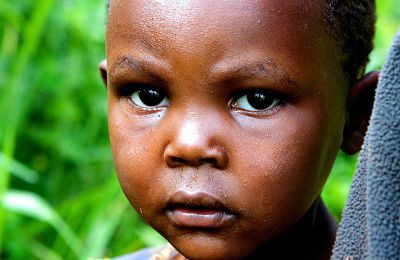
First of all, it is worthwhile to get perspective on the magnitude of the situation. The figures coming out of the country are dire. Recent surveys found that 76 percent of public hospitals and 85 percent of private pharmacies lack basic medicines. The 2016 maternal mortality rate has increased to 79 percent since 2009. The infant mortality rate is up 21 percent since 2015.

A 2015 survey conducted by leading Venezuelan universities and civil groups in over 20 cities found that 87 percent of interviewees had difficulty purchasing food. Additionally, 11.4 percent of children in vulnerable areas experience acute malnutrition (humanitarian agencies usually declare 10% a food crisis). A more recent study found that 75 percent of the country’s people lost an average of 19 pounds.

In spite of the terrible crisis, the state is doing little to aid its citizens. Since March 2017, the deterioration of the political, economic and social situations have led to the outbreak of intense protests against the government. Several international organizations such as the Human Rights Watch, have criticized the current Venezuelan government for continually downplaying the presence of a humanitarian crisis and doing little to seek international assistance. The lack of government action means that the help of the international community is necessary now more than ever. Below are six different ways to help people in Venezuela at this critical time.


Ways to Help Venezuela


  1. Read about Cuatro Por Venezuela. This organization seeks to provide medicine, medical supplies and food to those in need. Additionally, if you are shopping on Amazon, shop through smile.amazon.com and list Cuatro Por Venezuela as your charity of choice. A percentage of all your purchases will go to that cause.
  2. You can help raise funds for ‘Alimenta La Protesta’ (Feed the Protests). This group gathers food and water for the protesters who are risking their lives to help better conditions in the country.
  3. Read, learn about and consider helping the Chamos organization. Chamos seeks to improve the living standards of the most deprived children in the country.
  4. Purchase basic medical supplies through this Amazon link and choose the option to send them to a center in Miami. Without additional cost, they will go to Caracas and the ‘Cruz Verde’ at the Central University of Venezuela, which is giving first-aid to injured protesters.
  5. Call your representatives and express your concern regarding the crisis in Venezuela. Demand a stronger response to the humanitarian crisis and the abuses perpetrated by the Venezuelan government. If you live in the United States, ask for representatives to support legislation such as this one.
  6. Raise awareness by sharing links and information through social media or any other outlet available to you.

Government negligence and the continual refusal to ask for international assistance means that helping people in Venezuela may not be easy. Because of political hurdles, large international NGOs have very small or nonexistent operations in the country. Thus, raising awareness and calling for a stronger response from the world’s governments is a crucial key in how to help people in Venezuela.

– Alan Garcia-Ramos

Photo: Pixabay

July 17, 2017
https://borgenproject.org/wp-content/uploads/borgen-project-logo.svg 0 0 Borgen Project https://borgenproject.org/wp-content/uploads/borgen-project-logo.svg Borgen Project2017-07-17 01:30:132020-06-03 09:04:096 Ways to Help People in Venezuela
Aid, Global Poverty

5 Tips for Helping People in Uganda

Helping People in UgandaWanting to help the world is noble, but it is a daunting task when so many countries and people are in need. However, choosing where to contribute can help you focus on improving individual’s lives instead of feeling overwhelmed. Helping people in Uganda, for example, feels like a much more achievable goal.
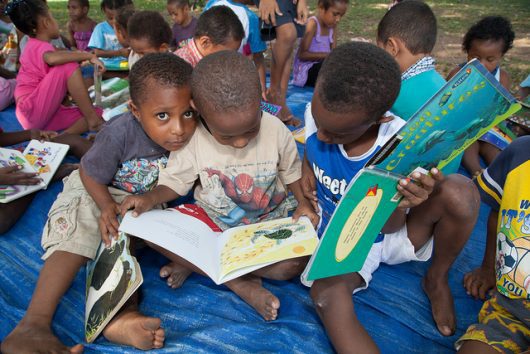
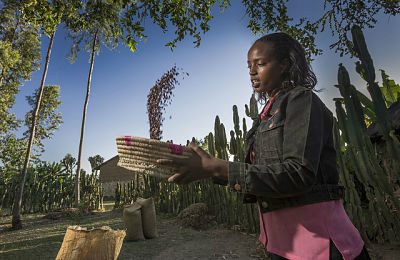
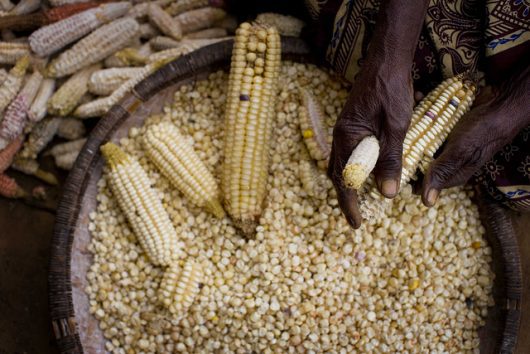
There are dozens of nonprofits dedicated to helping people in Uganda. In fact, many organizations have people whose job it is to help people decide how they are best able to aid someone half a world away.

If you’re wondering how to help people in Uganda, here are some tips:

  1. Begin by educating yourself about Uganda. What is the current state of the economy, government, major needs, etc?
  2. Research organizations already doing aid work in the country. Find out what these groups are doing and how they are doing it. There are websites and articles with lists of nonprofits in Uganda like GlobalGiving, this article from The Washington Post and the Uganda National NGO Directory.
  3. Decide what issue needs the most attention or what you are most passionate about. For example, maybe there are fewer organizations fulfilling a certain need. Perhaps you majored in nutrition and think nutritious meals should be a larger focus.
  4. Contact someone at an organization with questions on what it does and how to help.
  5. Advocate for the cause. If done correctly, others will likely be motivated to join you.

Another way you can help the people in Uganda is by contacting congressmen and encouraging protection of the International Affairs Budget31. President Trump’s administration has proposed a 31 percent cut to the State Department and USAID, both of which support development and diplomacy around the world and creates jobs in America.

You can also contact your representatives about the AGOA and MCA Modernization Act, the READ Act, Economic Growth and Development Act and many more. The Borgen Project website has information about these pieces of legislation, as well as many more.

You can stop wondering how to help people in Uganda and put this knowledge into action. Stay educated, become passionate and decide that helping people is an important step for you to take.

– Emily Arnold

Flickr

July 16, 2017
https://borgenproject.org/wp-content/uploads/borgen-project-logo.svg 0 0 Borgen Project https://borgenproject.org/wp-content/uploads/borgen-project-logo.svg Borgen Project2017-07-16 07:30:512024-06-04 01:08:215 Tips for Helping People in Uganda
Aid, Charity, Global Poverty

10 Books About Nonprofits to Change Your Mind


Within the world of nonprofit work, many have incredible stories to share that expand others’ perspectives. Here is a list of books about nonprofits specifically focused on global poverty. Some are about what inspired certain organizations, some about the work that they do and some about behind-the-scenes logistics.

  1. “Mountains Beyond Mountains: The Quest of Dr. Paul Farmer, A Man Who Would Cure the World” by Tracy Kidder; Founder of Partners in Health, Paul Farmer is a believer in change when change seems impossible. This book describes Farmer’s pursuit of improving global health by working in places from Harvard to Peru and Haiti. His goal is to cure the world because “the only real nation is humanity.” For a list of books about nonprofits, this one is a must.
  2. “Pathologies of Power: Health, Human Rights and the New War on the Poor” by Paul Farmer; Paul Farmer’s own book details his personal experiences working in developing countries. He describes the social and economic injustice that the poorer citizens of the world face and explains why it should be among everyone’s priorities to help. He writes with optimism, believing that our sense of justice will evolve with medical and social technology.
  3. “The Blue Sweater” by Jacqueline Novogratz; By blending personal stories and theory, Jacqueline Novogratz’s memoir demonstrates her approach to ending world poverty. Moving from credit analysis to nonprofit work, she started the Acumen Fund, which invests in ideas and companies fighting against poverty. She illustrates the global reach of the need for this kind of work by using personal stories from her travels.
  4. “Three Cups of Tea: One Man’s Mission to Promote Peace…One School at a Time” by Greg Mortenson; This is the story of one man’s journey from mountaineering to the school building in Pakistan. Mortenson’s 55 schools, many for girls, offer education in a dangerous place and illustrate the power one individual can have for change.
  5. “Out of Poverty: What Works When Traditional Approaches Fail” by Paul Polak; Polak focuses on a grassroots approach to ending poverty based on his 25 years of experience. He wants to help those who make less than a dollar per day stand on their own two feet rather than have developed countries swoop in and save them. His approach involves low-cost and innovative ways to implement change.
  6. “Managing to Change the World: The Nonprofit Manager’s Guide to Getting Results” by Alison Green and Jerry Hauser; Another highlight of management on the list of books about nonprofits, this one focuses on getting results through effective management skills. It reminds us that office work can be just as important as getting dirty on the ground.
  7. “Forces for Good: The Six Practices of High-Impact Nonprofits” by Leslie R. Crutchfield, Heather McLeod Grant and J. Gregory Dees; This book discusses the six characteristics that make 12 different nonprofits successful, especially when one looks at their levels of impact. Big or small, organizations can apply these six ideas to their own work, especially in the wake of the global recession.
  8. “Good to Great: Why Some Companies Make the Leap…and Others Don’t” by Jim Collins; As the title suggests, this book outlines certain companies that were able to go from average to amazing. Collins and his research team list seven characteristics that helped these companies build strong and long-term foundations for success.
  9. “The Networked Nonprofit” by Beth Kanter and Allison H. Fine; In today’s society, businesses rely heavily on social media to engage consumers, and nonprofits are no exception. In terms of books about nonprofits, this is another that focuses on management. Social media can be a great tool for raising awareness as well as fundraising and reaching donors.
  10. “A Fistful of Rice: My Unexpected Quest to End Poverty Through Profitability” by Vikram Akula; This personal story about the intersection between philanthropy and capitalism shows how business ideas can be applied to global problems. Akula writes about using capitalism to transform many of India’s poor citizens first into first consumers and then into business owners.

Everyone has a book, movie or song that completely changed the way he or she sees the world. Perhaps it was a particularly inspiring character or a plot that defied imagination. Often the most amazing stories humans tell each other are true.

– Ellen Ray

Photo: Flickr

July 14, 2017
https://borgenproject.org/wp-content/uploads/borgen-project-logo.svg 0 0 Borgen Project https://borgenproject.org/wp-content/uploads/borgen-project-logo.svg Borgen Project2017-07-14 07:30:592024-05-28 00:02:3110 Books About Nonprofits to Change Your Mind
Aid, Global Poverty, Sustainable Development Goals, United Nations

What Is Smallholder Market Support?

Smallholder Market Support
What is smallholder market support? Through the continued and increased bolstering of small-scale producers, it may be the best way to achieve Zero Hunger.

The Zero Hunger Challenge, launched in 2012, combines all five elements of the United Nations Sustainable Development Goals (SDGs) in an effort to “end hunger, eliminate all forms of malnutrition, and build inclusive and sustainable food systems.”

One of the U.N.’s SDGs is to bring an end to rural poverty by increasing the incomes of small-scale producers and thus increasing their productivity. The success of small-scale farmers is essential to the success of the Zero Hunger Challenge and feeding the growing population. Increasing smallholders’ productivity starts with improving their livelihoods, and this is where smallholder market support comes in.

Smallholder farmers make up the majority of the world’s impoverished people, despite the fact they produce most of the world’s food. Smallholder farmers face many challenges that hinder their capacities. These challenges include a lack of post-harvest management, suitable storage and productive markets or financing. This is not to mention the challenge farmers face in producing enough to make it through the season and generating a small surplus, a goal not easily achieved.

The World Food Programme has developed innovative solutions that has aided two million smallholder farmers in 60 countries in their agricultural development. Two of the most profound solutions include Purchase for Progress (P4P) and Home-Grown School Feeding.

P4P aids in connecting smallholders to larger markets and, in turn, widening their range of crops and broadening business opportunities. Home-Grown School Feeding links domestic smallholders with national schools to supplement their meal systems. Both of these programs, among many other effective agendas implemented, utilize private-sector and government systems to support smallholders.

These efforts are not only humane and ethical–they are sustainable. The question remains for many: what is smallholder market support and why should it be encouraged and funded? Smallholder market support has the long-term ability to turn current recipients of agricultural assistance into our future global food producers. Smallholder market support can eliminate world hunger within our lifetimes.

– Catherine Fredette

Photo: Flickr

July 13, 2017
https://borgenproject.org/wp-content/uploads/borgen-project-logo.svg 0 0 Borgen Project https://borgenproject.org/wp-content/uploads/borgen-project-logo.svg Borgen Project2017-07-13 07:30:142024-05-28 00:02:54What Is Smallholder Market Support?
Aid, Developing Countries, Global Poverty, Hunger

What is Food Assistance for Assets and How Does it Work?


More than 10% of the world’s population does not have regular access to food and 50% of these families are farmers. The majority of hungry people live in Asian and African countries. Countries with higher natural disaster rates are not able to access food regularly, due to the destruction of their communities and farmlands. The World Food Programme began the Food Assistance for Assets (FFA) program and other programs like it to help combat this issue. FFA focuses on restoring land and rebuilding communities while assisting people in need, but many people have never heard of it.

Food Assistance for Assets is a program that feeds people and works through them to rehabilitate suffering communities. Through this program, people are given work, such as building and repairing bridges and roads. In return, they gain two things. First, they are paid so that they can buy food for themselves and their families. In addition, the work that they have done helps strengthen and develop their communities, many of which have fallen victim to natural disasters.

While this program may seem to only benefit individuals, it has helped larger communities as well. FFA programs exist in 52 countries, where 10.1 million people have received help from the program. Rehabilitation programs include building water wells and planting trees to restore forests.

These facts help shed light on the impact of the Food Assistance for Assets programs and emphasizes the work that this program does to provide food to people around the world. There is enough food produced in the world to feed everyone, but without programs like FFA, many people are unable to access or pay for enough food to feed their families. Several organizations, including the U.N., hope that through assistance programs such as the FFA and through the increased sustainability of food, world hunger will be eradicated by 2030.

– Helen Barker

Photo: Flickr

July 13, 2017
https://borgenproject.org/wp-content/uploads/borgen-project-logo.svg 0 0 Borgen Project https://borgenproject.org/wp-content/uploads/borgen-project-logo.svg Borgen Project2017-07-13 01:30:492024-05-28 00:02:34What is Food Assistance for Assets and How Does it Work?
Aid, Charity, Global Poverty

How to Score a Ticket to the Global Citizen Festival


The Global Citizen Festival launched in 2012 as part of the Global Poverty Project, founded by Hugh Evans and Simon Moss. The movement is based on an online platform and mobile application that utilizes the power of education, communications, advocacy, campaigning and the media to take action against extreme poverty. The Global Poverty Project partners with other organizations such as UNICEF, OXFAM, ONE, Save the Children, The Global Fund and more.

The result of last year’s festival was 1.3 million online actions taken, leading to 44 commitments and announcements. Combined, these announcements are worth $1.9 billion and could impact 199 million people, just from the Global Citizen Festival of 2016 campaign. Commitments have not only been made by U.S. companies such as Walmart, UPS and Johnson & Johnson but also by nations such as the Netherlands and Canada.

With more than 60,000 participants attending the first festival on the Great Lawn in Central Park, the event quickly became popular. In 2016, the performance lineup included Rihanna, Demi Lovato, Kendrick Lamar and Metallica. There were also special guests like Coldplay’s Chris Martin. The band headlined the previous year and Martin is the current Global Citizen Festival curator.

The festival is free, but spectators cannot just attend. Instead, fans must engage with campaigns in order to win Global Citizen Festival spots. Activists can accumulate points that act as currency to bid on tickets to the Global Citizen Festival and other live events. The restriction is that only current campaign points can be used during each campaign.

For the upcoming July Global Citizen Festival in Hamburg, Germany, the organizers plan on handing out 9,000 free tickets to the show to people who sign up and pledge action.

“In bringing the Global Citizen Festival to Germany for the first time, we are calling on the G20 to take action and responsibility for moving forward on the Global Goals,” Global Citizen CEO Hugh Evans said.

– Stefanie Podosek

Photo: Flickr

July 13, 2017
https://borgenproject.org/wp-content/uploads/borgen-project-logo.svg 0 0 Borgen Project https://borgenproject.org/wp-content/uploads/borgen-project-logo.svg Borgen Project2017-07-13 01:30:452020-06-08 08:44:52How to Score a Ticket to the Global Citizen Festival
Page 52 of 65«‹5051525354›»

Get Smarter

  • Global Poverty 101
  • Global Poverty… The Good News
  • Global Poverty & U.S. Jobs
  • Global Poverty and National Security
  • Innovative Solutions to Poverty
  • Global Poverty & Aid FAQ’s
Search Search

Take Action

  • Call Congress
  • Email Congress
  • Donate
  • 30 Ways to Help
  • Volunteer Ops
  • Internships
  • Courses & Certificates
  • The Podcast
Borgen Project

“The Borgen Project is an incredible nonprofit organization that is addressing poverty and hunger and working towards ending them.”

-The Huffington Post

Inside The Borgen Project

  • Contact
  • About
  • Financials
  • President
  • Board of Directors
  • Board of Advisors

International Links

  • UK Email Parliament
  • UK Donate
  • Canada Email Parliament

Get Smarter

  • Global Poverty 101
  • Global Poverty… The Good News
  • Global Poverty & U.S. Jobs
  • Global Poverty and National Security
  • Innovative Solutions to Poverty
  • Global Poverty & Aid FAQ’s

Ways to Help

  • Call Congress
  • Email Congress
  • Donate
  • 30 Ways to Help
  • Volunteer Ops
  • Internships
  • Courses & Certificates
  • The Podcast
Scroll to top Scroll to top Scroll to top