• Link to X
  • Link to Facebook
  • Link to Instagram
  • Link to TikTok
  • Link to Youtube
  • About
    • About Us
      • President
      • Board of Directors
      • Board of Advisors
      • Financials
      • Our Methodology
      • Success Tracker
      • Contact
  • Act Now
    • 30 Ways to Help
      • Email Congress
      • Call Congress
      • Volunteer
      • Courses & Certificates
      • Be a Donor
    • Internships
      • In-Office Internships
      • Remote Internships
    • Legislation
      • Politics 101
  • The Blog
  • The Podcast
  • Magazine
  • Donate
  • Click to open the search input field Click to open the search input field Search
  • Menu Menu

Archive for category: Advocacy

Information and news on advocacy.

Advocacy, Global Poverty, Refugees and Displaced Persons

What are Climate Refugees and How Can They be Protected?

What are Climate Refugees and How Can They be Protected?
At the end of 2015, there were 65.3 million refugees worldwide. The global community is struggling to provide resources for the world’s displaced peoples, and the situation has caused both economic and security issues. Many people are ignorant to the fact that there is another group of people who are extremely vulnerable to losing their homes.

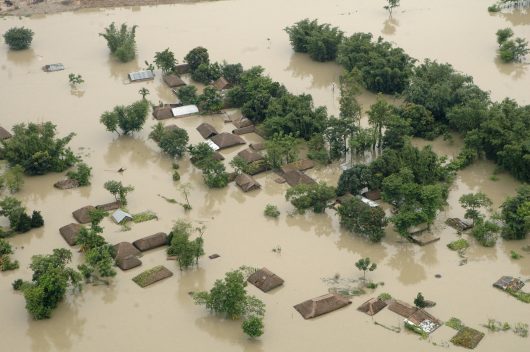
Climate refugees, or environmental migrants, are forced to leave their homes because of climatically induced environmental changes or disasters. Specifically, people may be displaced because of drought, a rise in sea level, ecological changes, desertification or extreme weather patterns. Protecting climate change refugees grows increasingly relevant as the number of displaced peoples across the globe continues to skyrocket.

Since 2008, an average of 27 million people have been classified annually as climate refugees and in 2009, the Environmental Justice Foundation declared that nearly 10 percent of the world’s population were at risk in terms of losing their homes to climate change related issues.

As climate change continues to spread and develop, more and more people fall victim to environmental migration. The existence of environmental migrants proves that climate change is not solely about the environment and that its effects reach into many aspects of society, including politics, health and economics. Protecting climate refugees is important, as sources have suggested there could be as many as 50 to 200 million by the year 2050, most of these people being subsistence farmers and fishermen.

Just this year, the U.S. resettled its first climate refugees. The population is from the Isle de Jean Charles in southeastern Louisiana and they had to leave their homes due to severe flooding. In order to resettle its residents, the U.S. government has put forth a $48 million grant and has realized the harsh reality of this problem.

According to the International Organization for Migration, “Climate refugees often fall through the cracks of asylum law.” Currently, it is very difficult for an environmental migrant to achieve refugee status. The term “climate refugee” is not officially recognized by international law and according to the International Bar Association, “there are no frameworks, no conventions, no protocols and no specific guidelines that can provide protection and assistance for people crossing international borders because of climate change.”

The World Bank estimates that with a 1-meter rise in sea level, Bangladesh would lose close to 20 percent of its land mass. Currently, almost 200,000 Bangladeshi’s lose their homes annually due to river erosion and rising sea levels. The islands of Kiribati, Nauru and Tuvalu are already facing significant migration patterns due to the rising sea.

The lack of international protocol regarding climate refugees, such as the ones from Bangladesh and the small islands in the Central Pacific, means that there is also a lack of resources and pathways that can lead these people to a successful resettlement. Because of this, migration experts have been stressing for several years that at risk countries should first look into improving living conditions for vulnerable populations.

This includes helping them secure a consistent access to food and water, rebuilding infrastructure and establishing efficient emergency warning systems. As countries become more aware of their ecological situations, there is more pressure to provide resources for potential climate refugees.

In order to protect climate refugees, there needs to be a change in the international law that defines a “refugee.” The number of people affected in a negative way climatically grows by the day.

Besides advocating for universal policies regarding climate refugees, there are things that can be done to slow climate change and its negative effects. Supporting clean energy and anti-carbon emission related legislation can make a difference in improving the lives of communities who are vulnerable to environmental migration.

– Peyton Jacobsen

Photo: Flickr

November 11, 2016
https://borgenproject.org/wp-content/uploads/borgen-project-logo.svg 0 0 Borgen Project https://borgenproject.org/wp-content/uploads/borgen-project-logo.svg Borgen Project2016-11-11 01:30:132024-12-13 17:55:53What are Climate Refugees and How Can They be Protected?
Advocacy, Gender Equality, Global Poverty

Canadian Prime Minister Stands Against Sexism in Poverty

Canada and its Strong Stance on Sexism in Poverty
Canada’s Prime Minister Justin Trudeau recently condemned sexism in poverty in response to a letter by the ONE Campaign. The open letter was released by Bono and the ONE Campaign on International Women’s Day in March. It was signed by some of the most influential women in the world, including Charlize Theron, Cheryl Sandberg and Angelique Kidjo.

Trudeau is the first world leader to formally respond, addressing the campaign thus: “On behalf of the Government of Canada, I am writing back to let you know that I wholeheartedly agree: Poverty is Sexist. Women and girls are less likely to get an education, more likely to be impoverished, and face a greater risk of disease and poor health.”

According to Melinda Gates, one reason poverty is sexist is time. It takes time to finish an education, learn a new life skill or start a business. Men in developing countries are more likely to have access to this time because women are responsible for the vast majority of unpaid housework. There are also more tangible barriers restricting women’s ability to work, whether in the form of laws barring women’s employment or a lack of access to child care for working mothers.

Trudeau had the opportunity to lead by example when Canada hosted the Fifth Replenishment Conference of the Global Fund in Montréal on Sept. 16. The conference brought global health leaders together to fight HIV/AIDS, malaria and other diseases. According to Trudeau, such collaboration is an important step to ending sexism in poverty because young women account for 74 percent of all HIV infections among adolescents in Africa.

Canada has increased its contribution to the Global Fund by 20 percent to $785 million CDN, all of which will go toward providing mosquito nets, medication and therapy. The Global Fund aims to save millions of lives and prevent hundreds of millions of new infections by 2019.

According to the ONE Campaign, nowhere in the world do women have the same opportunities as men do, a fact due in part to the sexism inherent in poverty. Trudeau’s response is one of many steps needed to rectify this major inequality.

– Sabrina Santos

Photo: Flickr

November 4, 2016
https://borgenproject.org/wp-content/uploads/borgen-project-logo.svg 0 0 Borgen Project https://borgenproject.org/wp-content/uploads/borgen-project-logo.svg Borgen Project2016-11-04 01:30:412024-05-27 23:53:34Canadian Prime Minister Stands Against Sexism in Poverty
Advocacy, Education, Global Poverty, Poverty Reduction

The King Scholar Program at Dartmouth College

King Scholar Program
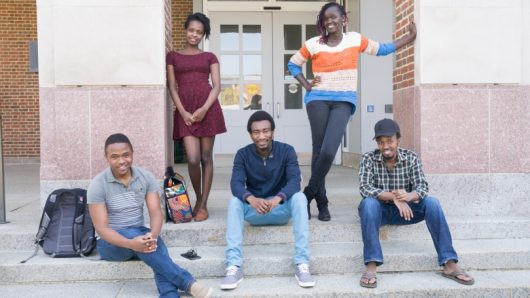
The King Scholar Program is a full scholarship gifted to Dartmouth College students who are dedicated to alleviating poverty in their home countries. The program was funded by Dorothy and Robert King, who wanted to, “help address the problem of global poverty by funding exceptional students from developing nations in Latin America, Africa, and Asia at Dartmouth.”

Students who receive the King Scholarship have ongoing academic mentorship throughout their career at Dartmouth College and course development that encourages them to focus on leadership and international development.

The King Scholar Program encourages its participants to actively participate in ending global poverty. For example, during the students’ participation in the program, they must return to their homes for one summer to research and report how they would end poverty in their countries. After graduating, the students are encouraged to return to continue their work.

Additionally, during their freshman and sophomore years, King Scholars participate in King Leadership Week, which takes place in Washington, D.C. and New York. During this event, they have the opportunity to meet leaders in international development, gain context for work being done in the field and network for future employment.

There is no special application for the King Scholar Program, but the Dartmouth Admissions Office, “elects students for this special honor who embody the vision of the program, including a commitment to alleviating poverty, a record of academic excellence, and a passion for global issues.” The program’s current members hail from Jamaica, Zimbabwe, Kenya, Rwanda and Burkina Faso and all share a similar passion to making a difference in their countries.

By encouraging young students from developing countries to make a difference in alleviating global poverty, the King Scholar Program is creating influential leaders who are ready to make palpable changes in their home countries. This causes students to have a stronger connection to the work they are doing, and be inspired to make a change. This type of education is one that makes a lasting difference in terms of fighting global poverty.

– Julia Arredondo


October 22, 2016
https://borgenproject.org/wp-content/uploads/borgen-project-logo.svg 0 0 Borgen Project https://borgenproject.org/wp-content/uploads/borgen-project-logo.svg Borgen Project2016-10-22 07:01:172024-05-24 23:42:52The King Scholar Program at Dartmouth College
Advocacy, Global Poverty

How Augmented Reality Can Revolutionize Poverty Awareness

Augmented Reality
No other app has taken the world by storm like Pokemon Go and for good reason. The popular mobile game uses a system called augmented reality (AR), which combines the virtual world with the real world to create an immersive and interactive experience. Users of Pokemon Go have been seen wandering the streets with their phones out, trying to catch creatures as they pop up all over town as a result. The phone camera activates when a Pokemon is found, displaying the creature in the user’s immediate surroundings.

Augmented reality has been a lumbering force in technology since the 1970s. Sports channels used an early form of augmented reality, overlaying analysis and information on top of real-time matches. App developers have been utilizing augmented reality to deliver information more frequently since the arrival of Pokemon Go. Nonprofits could easily tap into augmented reality’s potential by using it to spread awareness for their causes in interactive and accessible ways. Four years ago, an organization called Save the Children tried exactly that.

Save the Children teamed up with Aurasma, an augmented reality developer, to create a rudimentary app that opened a video when users pointed their phones at Save the Children newsletters. Users had the option to click through to a donation page after opening the video.

Save the Children Senior Digital Fundraising Executive Alexandra Bono commented on the campaign. “At Save the Children, we are always looking for new ways to engage people with the human stories behind our life-saving appeals,” said Bono. “This campaign, facilitated by Aurasma, brings together these two channels in a compelling new way which we hope will support donations to our East Africa appeal.”

Crisis, a charity to help the homeless, also used Aurasma’s augmented reality app in an art exhibit dedicated to homelessness in the United Kingdom. Viewers could point their phones at the artwork on display to open interviews with the artists.

Now that advanced technology allows apps to display changing landscapes as users walk, the possibility for new charity-related apps is endless. For example, an app could superimpose a real-time image of Rwandan streets onto a New York intersection, giving users a glimpse into Rwandan conditions.

Quit, an anti-smoking foundation, created a similar app that displayed a pair of lungs through webcam. The lungs’ condition accurately reflected the damage done by smoking. If users said they were young and smoke-free, the lungs displayed would appear perfectly healthy. If users said they were lifetime smokers, the lungs appeared blacker and shriveled.

Charities can effectively grab the attention of Generation Y by continuously innovating and finding new ways to manipulate technology.

– Regina Park

Photo: Flickr

October 15, 2016
https://borgenproject.org/wp-content/uploads/borgen-project-logo.svg 0 0 Borgen Project https://borgenproject.org/wp-content/uploads/borgen-project-logo.svg Borgen Project2016-10-15 01:30:412024-05-27 23:53:27How Augmented Reality Can Revolutionize Poverty Awareness
Advocacy

Zade Dirani Becomes a UNICEF Ambassador

Zade Dirani becomes a UNICEF Ambassador
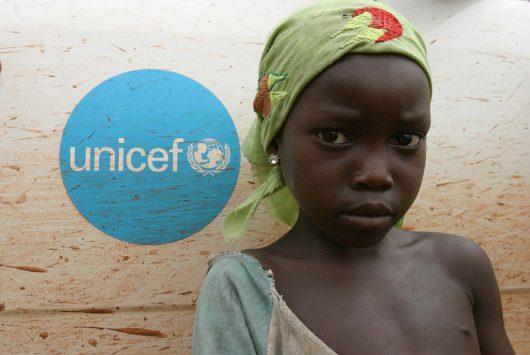
Zade Dirani recently became the Regional UNICEF Ambassador for the Middle East and North Africa. The famous Jordanian pianist is continuing on with his steadfast involvement in advocacy and charity work. Dirani joins the ranks of other ambassadors like Egyptian actor, Mahmoud Kabil and Lebanese entertainer, Nancy Ajram.

Previously, as the founder of the Zade Foundation for International Peace and Understanding, Dirani demonstrated a passion for helping others.

Now in his new partnership with UNICEF, he will be working to further the rights of children in the Middle East and North Africa, with a special focus on children caught in conflict or dealing with violence and poverty.

Dirani is an immensely talented pianist. Previously described as a “Piano Prodigy” by People Magazine, he has touched tens of thousands of people in live performances, including Nelson Mandela and Queen Elizabeth.

In the past, through his namesake foundation, Dirani used his musical talent working with young musicians to foster a culture of peace and understanding. Work done through the Zade Foundation attempts to create peace builders and future community leaders.

The piano superstar is already hard at work. Dirani went on his first a field visit as a UNICEF Ambassador to a Za’atari, Jordan refugee camp and to the neighboring town of Mafraq, Jordan.

There, he played for groups of around 300 children and adolescents. Dirani met and spoke to youth from various different backgrounds, bringing joy to many who had fled the violence in Syria.

Dirani spoke about the experience saying, “I wanted to bring my music to children and youth – today and in the months to come – as a way to engage them and become a form of therapy for those who have witnessed things that no child should ever experience.” His talent and commitment to his cause are inspiring and a valuable asset to UNICEF.

– Jordan Little

Photo: Flickr

October 10, 2016
https://borgenproject.org/wp-content/uploads/borgen-project-logo.svg 0 0 Borgen Project https://borgenproject.org/wp-content/uploads/borgen-project-logo.svg Borgen Project2016-10-10 01:30:452024-12-13 17:55:46Zade Dirani Becomes a UNICEF Ambassador
Advocacy, Aid, Charity, Global Poverty

Rethinking Effective Charity: Giving What We Can

Effective Charity
Giving What We Can (GWWC) is an international society that works to eliminate extreme poverty. It recommends effective charity organizations and its members pledge to give at least 10% of their income to such charities.

Dr. Toby Ord Established Giving What We Can in 2009

Dr. Ord, an Oxford ethics researcher, claims the inspiration for the organization came from Peter Singer’s essay “Famine, Affluence, and Morality,” which argues that the affluent have a moral obligation to donate to the people less well-off.

The organization draws heavily on modern ethical philosophy, especially the effective altruism movement. This philosophical movement attempts to use evidence and analysis to determine the most effective humanitarian causes and charities to donate to.

Taking a Top-down Approach to Evaluating Charities

The organization begins with the big-picture, evaluating which areas — health, education, emergency aid, etc. — require the most attention. The group compares sub-areas within those categories, such as specific diseases. Finally, it analyzes the particular charities that work in this sub-area, such as the Against Malaria Foundation.

In this evaluation process, the organization focuses on three main criteria: neglect, tractability and impact. A neglected cause means the issue is not receiving proper attention from humanitarian efforts. Tractability defines a cause that has a workable solution that the sponsor can effectively implement. Impact focuses on the number of lives that can be improved by investing in a given cause.

GWWC’s website uses schistosomiasis, a disease involving parasitic flatworms, as an example of a cause that clearly meets all three criteria: “[Schistosomiasis] affects millions of people (impact) but it’s cheap and easy to treat (tractability) […] However, it is relatively underfunded (it is part of the so-called ‘Neglected Tropical Diseases’).”

For this reason, GWWC lists the Schistosomiasis Control Initiative as one of its top charities. Its other established, most effective charity is the Against Malaria Foundation. They list Deworming the World Initiative and Project Healthy Children as promising top charities.

Though it accepts donations, Giving What We Can does not ask for them. Instead, the humanitarian organization prefers to play “a complementary role,” asking members to commit to giving to effective charities instead.

So far, GWWC’s 1,696 members have donated more than $36.3 million to effective charities and pledged to donate a further $649 million over their lifetimes.

– Steffen Seitz

Photo: Flickr

October 3, 2016
https://borgenproject.org/wp-content/uploads/borgen-project-logo.svg 0 0 Borgen Project https://borgenproject.org/wp-content/uploads/borgen-project-logo.svg Borgen Project2016-10-03 01:30:552020-06-09 13:55:19Rethinking Effective Charity: Giving What We Can
Advocacy, Global Poverty, Politics and Political Attention, Poverty Reduction

SUN Movement’s Campaign for Fighting Malnutrition

SUN Movement
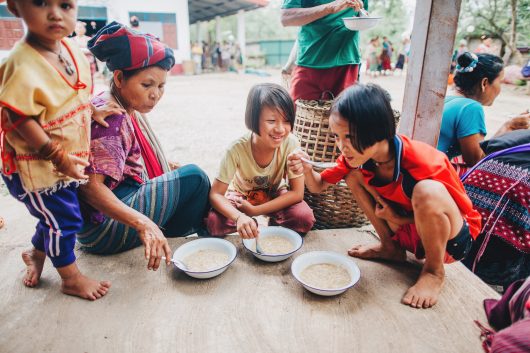
Malnutrition accounts for nearly half of all deaths among children under five. While the majority of these deaths occur in Africa and Asia, the loss of human life due to hunger and malnutrition is a global burden. Malnourished children are more likely to get sick, suffer from abnormally severe symptoms of common illnesses and die from otherwise preventable illnesses. Thankfully, organizations such as the SUN Movement work to reduce this hunger-related child mortality rate.

Malnutrition and Infection

The link between malnutrition and infection can create a cycle wherein poorly nourished children have a weaker immune system, which in turn deteriorates their nutritional status. Malnutrition can also stunt a child’s growth, predisposing them to cognitive disabilities.

Hunger and malnutrition take a particularly severe toll on the developing world, where one out of six children (about 100 million) are underweight, one in three children are stunted and 66 million children go to school hungry.

The SUN Movement

Scaling Up Nutrition, or SUN Movement, is a worldwide campaign to alleviate hunger and malnutrition. SUN aims to unite governments, the United Nations, civil society, researchers, donors and business into a cohesive movement to improve global nutrition.

Focusing on the goals established at the 2012 World Health Assembly, SUN movement identifies four strategic processes as the major institutional changes needed for scaling up nutrition worldwide:

  1. Endorsement of National Nutrition Policies that Incorporate Best Practices. Newly enacted laws and policies should reflect proven interventions while paying special attention to women and their role in society.
  2. Sustained Political Commitment and Establishment of Functioning Multi-stakeholder Platforms. Improving nutrition requires a political environment grounded in multi-stakeholder platforms. The dialogue around hunger and nutrition should be open, for different groups to share the responsibility of scaling up nutrition throughout the entire world.
  3. Alignment of Actions Across Sectors and among Stakeholders. The country plans to improve nutrition should reflect frameworks of mutual responsibility and accountability among stakeholders.
  4. Increased Resources for Nutrition and Demonstration of Results. Multiple sectors and stakeholders should increase financial resources for the implementation of plans to improve nutrition.

Each participating country is required to meet state-specific goals and objectives for scaling up nutrition before they can partake in SUN Movement events, like the Annual Global Gathering. This event is where government leaders and multi-stakeholder groups meet to collaborate, share progress, learn from each other and offer new practices for improving nutrition.

SUN Movement has several mechanisms for maintaining oversight and staying on track to achieve its goals. The SUN Networks align resources and foster collaboration, the lead group provides strategic oversight and enforces accountability and the executive committee represents SUN Movement at the international political level. There is also a secretariat and multi-partnered trust fund.

SUN Movement acts like the United Nations for Hunger and Nutrition, with clear guiding principles to achieve goals through cooperation and collaboration. The multifaceted structure of SUN Movement accurately confronts the varied nature of hunger and malnutrition, making the organization an important player in the fight to improve nutrition worldwide.

– Jessica Levitan

Photo: Flickr

October 2, 2016
https://borgenproject.org/wp-content/uploads/borgen-project-logo.svg 0 0 Borgen Project https://borgenproject.org/wp-content/uploads/borgen-project-logo.svg Borgen Project2016-10-02 01:30:522024-05-27 23:53:00SUN Movement’s Campaign for Fighting Malnutrition
Advocacy, Global Poverty, Women & Children

Why We Need a Breastfeeding Advocacy Initiative

Breastfeeding Advocacy Initiative
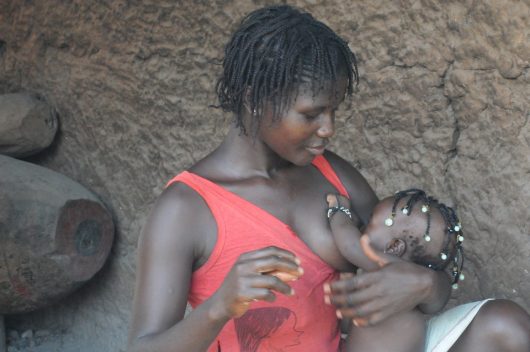
Only 38% of infants are exclusively breastfed for their first six months of life. Improper and insufficient breastfeeding contributes to nearly 800,000 preventable child fatalities every year. A breastfeeding advocacy initiative would not only challenge the social pariah of the practice but also contribute to the improvement of mothers’ and children’s health worldwide.

Breast milk contains all of the nutrients that babies need in their first six months and has the ability to strengthen a child’s immune system to protect against illness. Breast milk has also increased children’s physical and cognitive development.

The benefits of breastfeeding extend beyond a baby’s health. Mothers who breastfeed reduce their risk of suffering from postpartum hemorrhage, which is a leading cause of death among new mothers. Mothers also find themselves at reduced risk for diabetes and breast cancer.

Why Breastfeeding is No Longer the Norm

So why then are such a small percentage of babies exclusively breastfed? One reason for low breastfeeding rates is the issue’s generally low prioritization by political leaders and policymakers.

Women also feel that breastfeeding is looked down upon in the workplace and the public sphere. For instance, if women cannot find a comfortable place to breastfeed at work, then their child is less likely to receive his or her’s natural source of nutrients. Additionally, there are many companies that sell formula and aggressively market the concoction as being a better alternative to breastfeeding.

To improve breastfeeding statistics, there is a global breastfeeding advocacy initiative underway with support from organizations such as UNICEF and the World Health Organization. Initiatives focus on educating mothers and communities about the benefits of breastfeeding and supporting policies and programs that spread this message.

In the West African nation of Guinea-Bissau, one in 10 children will die before they reach five years of age. Organizations such as UNICEF and the non-governmental organization CARITAS work tirelessly to improve this statistic, and a fruit of their labor has been the nutrition bungalows that now exist in Guinea-Bissau.

Nutrition Bungalows

At these bungalows, mothers of children under five years old are invited to gather monthly for information sessions. The sessions are often interactive and they focus on promoting health for mothers and children. Mothers can also have their children measured and weighed to ensure that they are meeting developmental milestones.

These nutrition bungalows and all other projects incorporating a global breastfeeding advocacy initiative aim to spread awareness and increase support for exclusive breastfeeding in both the political and social spheres. In doing so, the lives of mothers and children can be saved and their quality of life improved.

– Nathaniel Siegel

Photo: Pixabay

October 2, 2016
https://borgenproject.org/wp-content/uploads/borgen-project-logo.svg 0 0 Borgen Project https://borgenproject.org/wp-content/uploads/borgen-project-logo.svg Borgen Project2016-10-02 01:30:162024-05-27 09:35:04Why We Need a Breastfeeding Advocacy Initiative
Advocacy, Global Poverty

Voice of Wisdom: The Elders Speak Up About El Niño

El Nino

In response to the El Niño weather phenomenon, The Elders have asked that world leaders take initiative in filling the $2.5 billion gap in funding. This funding is necessary to alleviate the global effects of El Niño on poorer communities.

The Elders and Their Cause

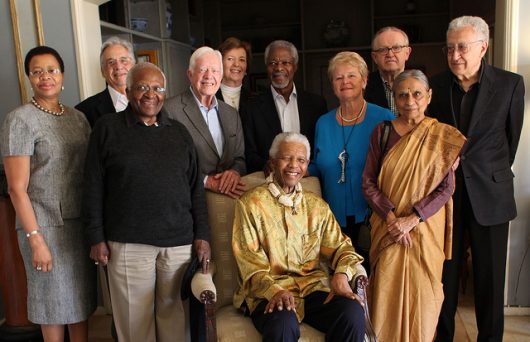
The Elders are a group of activists and advocates brought together by Nelson Mandela in 2007. They work together, using their influence and experience, to promote human rights, peace and justice on a global scale. Their attention has turned toward the problem of human-induced climate change due to the effects of the El Niño weather event. This year brought the strongest El Niño yet, which led to numerous droughts and severe flooding in many areas.

While the weather pattern itself is over for the year, the aftermath is still very much present and widespread. A lack of water in many areas caused extensive crop loss and increased food prices. Food shortages are running rampant in eastern and southern Africa as over 26 million children lack food security and one million suffer from severe malnutrition. Food shortages, however, are not the only concern. El Niño also warms bodies of water, which in turn contributes to the spread of the Zika virus, a virus transmitted by the Aedes aegypti mosquito.

All of the issues associated with El Niño could lead to mass migration as communities are forced out of their regions by uninhabitable weather and poor health conditions.

Aid Options

The Elders have recommended two steps that governments can take to aid victims of El Niño. The first step is to financially assist governments of climate-vulnerable countries by developing contingency plans and creating safety measures in the event of another climate-related crisis. The second step is to create and agree upon a “concrete road map” at the United Nations Climate Conference. This road map will hopefully lead to funding the $100 billion annual commitment to climate action in developing countries by the year 2020.

The current climate crisis requires immediate aid but The Elders believe that El Niño also needs a long-term response.

Kofi Annan, chair of The Elders, addressed the most recent El Niño event in a letter to all world leaders. “I am confident that your country will play its part in ensuring that the world’s most vulnerable people are protected now and into the future,” said Annan.

This sentiment reverberates to those struggling through El Niño’s devastation and serves as a reminder that global solutions require global support.

– Jordan R. Little

Photo: Flickr

September 5, 2016
https://borgenproject.org/wp-content/uploads/borgen-project-logo.svg 0 0 Borgen Project https://borgenproject.org/wp-content/uploads/borgen-project-logo.svg Borgen Project2016-09-05 01:30:342024-05-27 09:33:20Voice of Wisdom: The Elders Speak Up About El Niño
Advocacy, Global Poverty, Refugees

3 Artists’ Thoughts on Immigration: Salcedo, Ai and Banksy

Artists' Thoughts on ImmigrationArt has a history of inspiring social change, creating awareness and questioning human nature. The public can infer artists’ thoughts on immigration and social issues through their work.

Approximately 227,316 migrants have entered Europe and 2,920 were reported dead or missing on Mediterranean and African routes in 2016, according to the International Organization for Migration.

Three elite artists have brought issues surrounding immigration to the forefront as tensions continue to increase around the world.

Doris Salcedo

In 2007, Colombian artist Doris Salcedo changed the floor of the Tate modern with her installation piece, Shibboleth. The work is a 548-foot long crack that began very thin and steadily grew wider, ultimately splitting the entire gallery in two.

The crack represents the experience of being an immigrant in Europe and the segregation and discrimination that accompanies it. A wire mesh lines the inside of the crack’s walls, replicating a chain wire fence, which is a common divider along borders.

The name, Shibboleth, holds much significance. It is a word that distinguishes a specific class or social group of those who belong from those who do not belong.

Shibboleth changed the museum space itself, forcing a disruption in the gallery that visitors had to become used to. The piece illustrates in an abstract, but unavoidably literal way, the racism and hatred that divides Europe.

Ai Weiwei

Chinese artist Ai Weiwei created an installation on the Konzerthaus Berlin for the Cinema for Peace Gala on February 15, 2016. He wrapped each of the buildings six columns with over 14,000 life jackets that were salvaged from refugees entering Europe.

This artists’ thoughts on immigration are hard to ignore — the life jacket installation acknowledged the thousands of lives lost in the past year and reminded us of the hardships undergone by those trying to reach safety.

Ai is also known for his political activism. The artist closed his “Ruptures” exhibition in Copenhagen to protest Denmark’s new laws that deter refugees from seeking asylum in January 2016.

Banksy

The elusive Banksy has also contributed to the ongoing migration discussion with powerful pieces that appeared recently.

One of Banksy’s pieces depicts a girl from Les Misérables emerging from tear gas with a torn French flag in the background. This mural followed reports of French officials entering the camp with tear gas to drive out refugees. The Quick Response (QR) code in the bottom left corner of the mural links to a video of the police raids at the Calais Camp.

The Calais Refugee Camp, also known as “The Jungle,” holds about 7,000 refugees, according to the BBC. Banksy donated wood and supplies from his closed Dismaland “bemusement park” to help build shelters at the refugee camp. The materials were used to build 12 accommodations, a playground and a community center.

Another Banksy mural surfaced on the wall of a tunnel in the Calais Refugee Camp in December 2015. The piece portrays former Apple CEO Steve Jobs carrying an early Apple computer in one hand and holding a bag over his shoulder.

Banksy makes it clear through his work that artists’ thoughts on immigration can make the refugee issue a worldwide conversation.

Highlighting Jobs’ origin as the son of a Syrian migrant, Banksy reminded viewers that, “Apple is the world’s most profitable company, [one that] pays over $7 billion a year in taxes — and it only exists because they allowed in a young man from Homs.”

His statement stands in stark contrast to the popular opinion that accepting refugees will have a negative impact on a country’s economy.

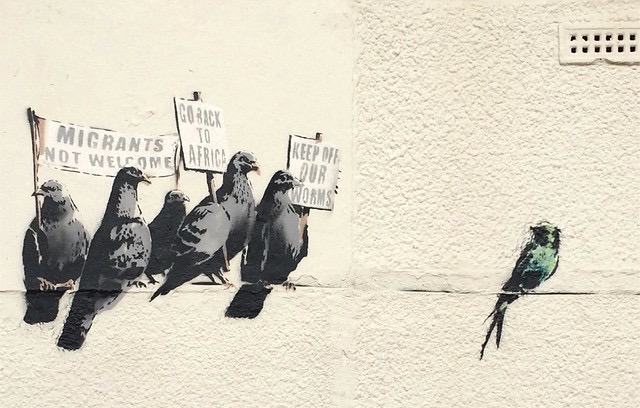
Banksy’s recent murals are part of a new series centered on Europe’s treatment of refugees in the current migration crisis.

Each of the pieces by Salcedo, Ai and Banksy show how artists’ thoughts on immigration can be used as a powerful tool for social awareness. At a critical time of forced movement and migration around the world, an artist’s striking representation of current events and issues promotes empathy and critical thought.

– Erica Rawles

Photo: Flickr

September 2, 2016
https://borgenproject.org/wp-content/uploads/borgen-project-logo.svg 0 0 Borgen Project https://borgenproject.org/wp-content/uploads/borgen-project-logo.svg Borgen Project2016-09-02 01:30:402024-05-27 09:34:263 Artists’ Thoughts on Immigration: Salcedo, Ai and Banksy
Page 38 of 77«‹3637383940›»

Get Smarter

  • Global Poverty 101
  • Global Poverty… The Good News
  • Global Poverty & U.S. Jobs
  • Global Poverty and National Security
  • Innovative Solutions to Poverty
  • Global Poverty & Aid FAQ’s
Search Search

Take Action

  • Call Congress
  • Email Congress
  • Donate
  • 30 Ways to Help
  • Volunteer Ops
  • Internships
  • Courses & Certificates
  • The Podcast
Borgen Project

“The Borgen Project is an incredible nonprofit organization that is addressing poverty and hunger and working towards ending them.”

-The Huffington Post

Inside The Borgen Project

  • Contact
  • About
  • Financials
  • President
  • Board of Directors
  • Board of Advisors

International Links

  • UK Email Parliament
  • UK Donate
  • Canada Email Parliament

Get Smarter

  • Global Poverty 101
  • Global Poverty… The Good News
  • Global Poverty & U.S. Jobs
  • Global Poverty and National Security
  • Innovative Solutions to Poverty
  • Global Poverty & Aid FAQ’s

Ways to Help

  • Call Congress
  • Email Congress
  • Donate
  • 30 Ways to Help
  • Volunteer Ops
  • Internships
  • Courses & Certificates
  • The Podcast
Scroll to top Scroll to top Scroll to top