• Link to X
  • Link to Facebook
  • Link to Instagram
  • Link to TikTok
  • Link to Youtube
  • About
    • About Us
      • President
      • Board of Directors
      • Board of Advisors
      • Financials
      • Our Methodology
      • Success Tracker
      • Contact
  • Act Now
    • 30 Ways to Help
      • Email Congress
      • Call Congress
      • Volunteer
      • Courses & Certificates
      • Be a Donor
    • Internships
      • In-Office Internships
      • Remote Internships
    • Legislation
      • Politics 101
  • The Blog
  • The Podcast
  • Magazine
  • Donate
  • Click to open the search input field Click to open the search input field Search
  • Menu Menu

Archive for category: Advocacy

Information and news on advocacy.

Advocacy, Aid, Global Poverty

The World Bank Confronts Crisis in a Globalized World

World_crisis The World BankOn April 5, 2016, the World Bank Group’s President Jim Yong Kim gave a speech titled “Development in a Time of Crisis” addressing the need for world powers to step in and address the obstacles that keep developing economies from flourishing.

Kim began his speech addressing the Syrian refugee crisis that has caused political polarization in a lot of developed countries.

He insists that the only way to combat the risk of future refugee crises is ameliorating poverty in displaced nations. “If fragile states still have 47 percent of their people living on less than two euros (about $2.27) a day by 2030, while the developed world prospers, the flow of migrants will not stop,” Kim noted.

In the speech, the World Bank President mentions Europe and Germany specifically lauding them for their efforts to settle the displaced Syrians. Part of the strategy to counter the risk of further displacement is increasing the amount of foreign aid that gets circulated to the developing economies.

Earlier this year, a report from the Organization for Economic Cooperation and Development recorded a 13 percent increase in the amount of Foreign Direct Aid circulated.

Expanding this kind of aid will lead to the poverty relief that can reduce the size of migratory crises. With this in mind, Kim began a discussion on how the World Bank can best mitigate these problems. In particular, he made reference to a recent loan to the country of Jordan.

The “groundbreaking” loan seeks to reward the Middle Eastern country for their efforts in easing the migratory crisis in neighboring Syria.

The loan, accepted in late March 2016, will provide $100 million to support the Jordanian education system as refugees enter the country. While funds provided to middle-income nations like Jordan typically come with a particular interest rate, this   concessionary loan will be provided with a longer payback period and less interest.

These types of new lending schemes are part of a New Financing Initiative which is expected to roll out programs worth $20 billion over 5 years.

The Jordanian loan and the financing initiative behind it led Kim to discuss three of the broader changes in the objectives of the World Bank:

  • “First, addressing the challenge of global threats that cross boundaries and regions will become ever more central to achieving our mission.” Kim asserts this as necessary in a globalized world where problems can quickly spread across the world.
  • “Second, we must focus much more effectively on managing risk and uncertainty.” Protecting those rising out of poverty from falling back prevents the damage caused by sudden crises.
  • “The third major change for us is that we must do much more to address the deep pockets of poverty and rising inequality in countries at every income level.”

The top World Bank official closed the speech by acknowledging the threat of global pandemic. In fact, Kim cites studies saying diseases like Ebola and the Zika virus could “lead to tens of millions of deaths and a loss of as much as five percent of global GDP – or roughly $4 trillion.”

Ebola and Zika outbreaks over the past two years have shown the health risks that are prevalent in an interconnected world. The CDC has reported transmission of the Zika virus in over 35 nations and the Ebola outbreak caused over 11,000 deaths across various African countries.

In response, the World Bank plans to design and fund the Pandemic Emergency Financing which hopes to create “creating a response system that will cost millions of dollars per year that could save hundreds of thousands, if not millions, of lives – and save billions, if not trillions, of dollars.”

These issues are just a few that Kim hopes that the World Bank can address in the near future. He reminds the world that fighting poverty and global issues is a careful process focused on “one region, one country and one person at a time.”

– Jacob Hess

Photo: Flickr
April 30, 2016
https://borgenproject.org/wp-content/uploads/borgen-project-logo.svg 0 0 Borgen Project https://borgenproject.org/wp-content/uploads/borgen-project-logo.svg Borgen Project2016-04-30 01:30:212024-12-13 17:54:19The World Bank Confronts Crisis in a Globalized World
Advocacy, Global Poverty, Health

How GMOs Could Potentially End Poverty and Hunger in Africa

Hunger_Africa

One of the major ways extreme poverty and hunger can be terminated is an increase in agricultural activity. Genetically modified organisms, or GMOs, could potentially be a part of solving the poverty challenge.

Food products with GMOs are genetically engineered to increase crop yields, lower costs for food production, reduce the need for pesticides, enhance nutrient composition and food quality, resist pests and disease and increase food security.

Technological advancement has also made it possible for GMOs to withstand environmental stressors, allowing them to grow in conditions where they may not otherwise be able to thrive.

Though there are risks and controversies surrounding the use of GMOs, they could play a role in creating a new green revolution in Africa. African governments and donors can initiate the use of GMOs in Africa, according to the Center for Global Development (CGD).

Primarily, governments in Africa can develop cost-effective regulatory policies for these organisms. The policies would cover developing, testing, commercializing and importing genetically modified crops—most areas. Clear strategies would reduce uncertainty for potential investors by ensuring breakthroughs that occur can be distributed to farmers.

African governments can also exchange experiences and information about GMOs among each other. A platform to share information would help governments make cost effective decisions and learn potential opportunities and risks associated with GMO traits under certain conditions.

Pursuing South-South cooperation on GMO trade and regulatory policies is another tactic African governments can execute. Though the European Union is the largest market for African agricultural exports, trade with emerging markets is growing at a much faster rate. Thus, African governments should coordinate with countries like Argentina, Brazil, India and China to develop regulations for trading GMOS.

Lastly, the CDG says that donors should provide technology-neutral support for research and development for food security. Donors should also build capacity to facilitate trade in GMOs. African countries need support for research on modified staple crops, which donors can provide. In addition, EU donors should also provide technical and financial support due to its role as a major market.

Genetic modification is just one of many technologies that can improve agricultural productivity in Africa and the investments required to implement them could improve agricultural productivity as a whole.

– Kerri Whelan

Photo:  Flickr

April 28, 2016
https://borgenproject.org/wp-content/uploads/borgen-project-logo.svg 0 0 Borgen Project https://borgenproject.org/wp-content/uploads/borgen-project-logo.svg Borgen Project2016-04-28 06:37:222024-12-13 18:05:58How GMOs Could Potentially End Poverty and Hunger in Africa
Advocacy, Global Poverty, Women, Women and Female Empowerment

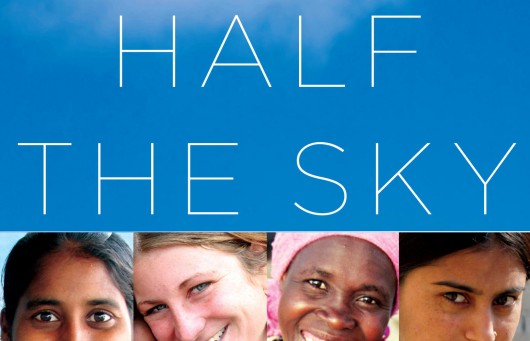
Takeaway from Reading “Half the Sky”

Half the sky

Reading a book like Half the Sky illuminates how unfair our world is. Though women make up about half of the world’s population, they are consistently discriminated against, overlooked and are in some cases, treated as second class citizens.

It is not surprising that the authors of Half the Sky, Nicholas D. Kristof and Sheryl WuDonn, are award winning writers for their work in raising awareness about the reality most women face in their countries in relation to discrimination.

Written as a series of essays, this book has two parts. The first part of the essay highlights the oppression and discrimination against women especially in developing countries and how this problem is often overlooked due to corruption, lack of strong justice systems and the patriarchal state of these nations.

The second part focuses on practical ways to create this “movement and effect the change needed” to address these situations.

From the beginning to the end of this enlightening book, it is obvious that the writers are very knowledgeable on their topic of discussion and their work shows extensive research in different areas of discrimination within different locations in developing countries.

From discussing issues such as women being promised work and ending up in sexual slavery and imprisonment, to illuminating health issues within developing countries such as women and girls ending up with fistulas after birth, women dying from HIV and AIDS, women and girls going through female genital mutilation as well as being overlooked in terms of getting an education, this book paints a sad reality of women’s lives in the developing world.

The most fascinating point that arises in the book is the fact that culture is the main catalyst for the way women are treated in their societies. In our dynamic world, culture in the developing countries seems unchangeable, especially in relation to its negative aspects. Another surprising fact in the book is the idea that older women in some of these societies are perpetrators of discrimination towards other younger women in the society.

Here, this is quite a deviation from what the “West” has portrayed in development; the idea that men are the main perpetrators of women’s oppression.

Half the Sky not only raises awareness about the injustices women faces but it also advocates for women to fight for their rights by speaking up and resisting the discrimination they face. Though the book points out a few strong and relentless women like Usha Narayane, Sunitha and Krishna who do exactly this and fight for justice, it highlights that most women in the developing world are vulnerable and are unable to get access to their rights.

Half the Sky is the voice of the vulnerable, uneducated and oppressed women in the developing world.

– Vanessa Awanyo

Photo: Google Images

April 21, 2016
https://borgenproject.org/wp-content/uploads/borgen-project-logo.svg 0 0 Borgen Project https://borgenproject.org/wp-content/uploads/borgen-project-logo.svg Borgen Project2016-04-21 01:30:212020-06-19 14:04:50Takeaway from Reading “Half the Sky”
Advocacy, Global Poverty

Musicians Who Fight Poverty in Unorthodox Ways

Musicians
Can you name at least three musicians who fight poverty in unorthodox ways? In a recently announced project, major hitters in the music industry will be joining together to produce a new album aimed at reducing poverty around the world. Some of the musicians already attached to the project include stars like Kanye West, Ellie Goulding and Mumford & Sons.

The album, entitled Metamorphoses, will be sponsored by Global Citizen, a nonprofit that brings people together to fight global poverty. This project is a logical extension of the organization’s previous work, which often includes organizing major concerts to raise funds and build awareness for poverty-fighting efforts.

What makes Metamorphoses unique is the fact that fans have been called upon to submit lyrics, poems, and even short stories for the musicians to incorporate into the 12 tracks. According to Global Citizen’s CEO, Hugh Evans, this highly interactive process will include material from people all over the world, making the project “a truly global tribute to our collective responsibility” to fight poverty.

How will the album ultimately help alleviate poverty? Producers are planning to employ slightly unorthodox methods that sidestep traditional fundraising techniques. Instead of buying the album with actual currency, fans can “purchase” Metamorphoses by making commitments to take action to fight poverty.

This kind of outreach has the potential to build lifelong warriors against poverty, as opposed to one-time donors. Those who “buy” the album are offering to engage with the anti-poverty movement through direct action, such as educating their elected officials about the issue and petitioning those with law-making power.

The project itself was dreamed up by Global Citizen in partnership with Ben Lovett of Mumford & Sons. According to Lovett, the “crowd-sourcing” of material makes the project especially exciting. “Metamorphoses has the potential to break down our preconceptions of the voices of creativity, what different people around the world are thinking and who has the right to be heard,” Lovett claims.

Set to be released in the Fall of 2016, Metamorphoses is destined to be an exciting and unique album with the potential to do a lot of good and foster activism through the power and process of creating music, according to Global Citizen.

– Jennifer Diamond

Photo: Flickr

April 13, 2016
https://borgenproject.org/wp-content/uploads/borgen-project-logo.svg 0 0 Borgen Project https://borgenproject.org/wp-content/uploads/borgen-project-logo.svg Borgen Project2016-04-13 01:30:382024-12-13 18:05:56Musicians Who Fight Poverty in Unorthodox Ways
Advocacy, Education, Global Poverty

Chimamanda Ngozi Adichie: A Literary Success

Adichie
Chimamanda Ngozi Adichie, a Nigerian novelist, nonfiction and short story writer sets the stage for African literature and young women everywhere. She is both a prominent feminist and one of the most prominent authors of African Literature, as reported by Vogue and The Times Literary Supplement.

Ten Facts About Chimamanda Ngozi Adichie

  1. Adichie was born on 15 September 1977 in Enugu, Nigeria, the fifth of six children to Igbo parents, Grace Ifeoma and James Nwoye Adichie.
  2. Adichie’s father, who is now retired, worked at the University of Nigeria, located in Nsukka. He was Nigeria’s first professor of statistics, and later became Deputy Vice-Chancellor of the University. Her mother was the first female registrar at the same institution.
  3. At the age of nineteen, Adichie left for the United States. She received a scholarship to study communication at Drexel University in Philadelphia for two years, and she went on to pursue a degree in communication and political science at Eastern Connecticut State University.
  4. Adichie completed a master’s degree in creative writing at Johns Hopkins University, Baltimore, as reported by Harvard.
  5. During her senior year at Eastern, Adichie started working on her first novel, Purple Hibiscus, which was released in October 2003. The book has received wide critical acclaim; according to Adichie’s personal site, it was shortlisted for the Orange Fiction Prize and was awarded the Commonwealth Writers’ Prize for Best First Book.
  6. Her second novel, Half of a Yellow Sun is set before and during the Biafran War. It was published in August 2006 in the United Kingdom and in September 2006 in the United States.
  7. Adichie’s third book, The Thing Around Your Neck (2009), is a collection of short stories.
  8. Her latest Novel Americanhah, was published around the world in 2013, and has received numerous accolades, including winning the National Book Critics Circle Award for Fiction and The Chicago tribune Heartland Prize for Fiction; and being named on of the New York Times Ten Best Books of the Year.
  9. Adichie’s 2009 TED talk, “The Danger of a Single Story,” has had more than eight million views.
  10. Reported in Vogue, Adichie loves teaching, and claims, “I want to make it valid, to dream about books and writing. Because in Nigeria it’s very hard; people will say to you, what do you mean, ‘writing’? Nigerians are a very, very practical people. And while I admire practicality, I feel we need to make a space for dreaminess.”

– Megan Hadley

Photo: Flickr

April 12, 2016
https://borgenproject.org/wp-content/uploads/borgen-project-logo.svg 0 0 Borgen Project https://borgenproject.org/wp-content/uploads/borgen-project-logo.svg Borgen Project2016-04-12 01:30:152024-12-13 18:05:56Chimamanda Ngozi Adichie: A Literary Success
Advocacy, Global Poverty

5 Prevailing Causes of Human Trafficking

Causes of Human Trafficking
Likened to modern slavery, human trafficking is driven mostly by similar motivations to those of slavery. The Department of Homeland Security defines human trafficking as the “illegal trade of humans for exploitation or commercial gain.” Exploitation frequently involves forcing victims into prostitution or slavery. Human trafficking can be separated into sex trafficking and labor trafficking. Though they have different purposes, there are general trends that explain the overall root causes of human trafficking.

According to a 2012 International Labour Organization (ILO) report, 21 million people are victims of forced labor. The Asia-Pacific region accounts for the largest number of forced laborers in the world with 11.7 million victims (56 percent of the global total), followed by Africa with 3.7 million (18 percent) and Latin America with 1.8 million victims (nine percent).

According to the Huffington Post, approximately 75 to 80 percent of human trafficking and slavery is for sex. The rest are forced into labor exploitation, such as agriculture and construction work. In 2015, 5,544 cases of human trafficking were reported, as stated in a study by the National Human Trafficking Resource Center.

Top 5 Causes of Human Trafficking

  1. Poverty, war, natural disasters and a search for a better life. Traffickers look for people who are susceptible to coercion into the human trafficking industry. Those people tend to be migrants, fleeing their homes either because of economic hardship, natural disasters, conflict or political instability. The displacement of populations increases individuals’ emotional vulnerability, and frequently they do not have the financial support to protect themselves. This makes them subject to abuse through trafficking.
  2. Women and children are targets. In some societies, the devaluation of women and children make them far more vulnerable to trafficking than men. Traditional attitudes and practices, early marriage and lack of birth registration further increase the susceptibility of women and children. They are also targeted because of the demand for women in sex trafficking. A report by Equality Now states that 20.9 million adults and children are bought and sold worldwide into commercial sexual servitude, forced labor and bonded labor. Women and girls make up 98 percent of the victims trafficked for sexual exploitation.
  3. Demand for cheap labor. The service industry, particularly restaurants and kitchens, are common exploiters of human trafficking. There is also a demand for cheap domestic and agricultural labor. Employees are often initially promised a safe work space and a steady salary, only to later find that they are paid less than minimum wage and worked over time. Business owners guilty of this behavior continue to practice these illegal norms because the victims of trafficking can rarely protect themselves and they have very few alternatives.
  4. Human trafficking generates a huge profit. According to the ILO, the human trafficking industry generates a profit of $150 billion per year. Two-thirds is made from commercial sexual exploitation, while the remainder comes from forced economic exploitation such as domestic work and agriculture. Human trafficking is the fastest-growing and second-largest criminal industry in the world, after drug trafficking.
  5. Cases of human trafficking are difficult to identify. Some challenges in identifying victims of human trafficking arise because victims are well-hidden or highly traumatized. Those that are traumatized are unlikely to divulge information to investigators, either because they are scared to confront law enforcement, or because they are too troubled to respond. Consumers of human trafficking also contribute to the crime’s hidden nature, according to a report by the Urban Institute. Both traffickers and consumers are aware of the huge risk they take by participating in this illegal behavior and will do their best to cover up any illicit activity.

Initiatives to diminish these causes of human trafficking include international cooperation agreements, national policies against trafficking, improved immigration policies that can detect the exit or entry of humans being illegally trafficked, and increased infrastructure to protect those that are being exploited for labor or sex.

– Michelle Simon

Sources: The Atlantic, US State Department, Urban Institute, International Labour Organization, Restaurant Opportunities Centers United, UNICEF, National Human Trafficking Resource Center, Huffington Post, The Department of Homeland Security, Equality Now
Photo: Flickr

April 8, 2016
https://borgenproject.org/wp-content/uploads/borgen-project-logo.svg 0 0 Borgen Project https://borgenproject.org/wp-content/uploads/borgen-project-logo.svg Borgen Project2016-04-08 01:30:512024-12-13 18:05:555 Prevailing Causes of Human Trafficking
Advocacy, Economy, Global Poverty, Malnourishment

Five Ways Global Communities Fight Poverty in Ghana

Global Communities Poverty in Ghana
A non-profit organization called Global Communities works to end poverty in Ghana with a 5-point plan in conjunction with USAID’s Multi-Sectoral Nutrition Strategy.

The non-profit organization works in more than 20 countries around the world, with Ghana being a focus of the recent programs. Global Communities, created about 60 years ago, works with the private sector, governments and local communities to provide the “means and ability to live and prosper with dignity,” something it ensures under its organization’s vision.

The Maryland-based organization paired with USAID in support of the Multi-Sectoral Nutrition Strategy to be implemented over the years 2014-2025. The program’s goal seeks to reduce chronic malnutrition by 20 percent over those 11 years. Global Communities has put forth these five goals in hopes of accelerating the fight against malnutrition in Ghana.

1. Provide more opportunities for economic growth through microfinance

Individuals who do not have access to the capital provided by large financial services corporations can gain access to funds through various microfunding institutions. These smaller companies allow a more intimate relationship between the lender and the borrower. Global Communities works through Boafo Microfinance Services in order to provide low-income Ghanaians with the money for new businesses, education and homes.

2. Build a more “resilient” Ghana by improving the nutrition in local diets

In order to reach this goal, Global Communities has partnered with the USAID/Ghana Resiliency in Northern Ghana (RING) program to “reduce poverty and improve the nutritional status of vulnerable populations.” The introduction of the sweet potato in local Ghanaian farms was a successful implementation of the partnership. Both USAID and Global Communities hope to educate communities on the importance of good nutrition instead of just providing temporary relief.

3. Create pathways for urban youth to become financially independent

Global Communities has joined the Youth Inclusive Entrepreneurial Development Initiative For Employment in opening up the construction sector to Ghana’s youth. In five of the biggest cities in Ghana, the initiative hopes to “reach more than 23,000 youth” by teaching them the skills for employment. Because Africa’s youth makes up a majority of the population, targeting this demographic is the most effective way to reducing poverty in Ghana.

4. Improve access to clean water and sanitation

Working with both the public and private sector, Global Communities is working to enhance the current water and sanitation infrastructure. With focus on “slum communities” in three cities, the non-profit seeks to optimize every individual’s condition while constructing water and sanitation services that can be sustainable. These efforts are paired with USAID’s Water Access Sanitation and Hygiene for the Urban Poor (WASH-UP) and USAID’s WASH for Health (W4H). An important part of the relief is affecting a change in behavior which can help create a poverty-free society that operates without relief.

5. Upgrade local neighborhoods and reinforce political and social institutions

After the basic needs of food, water and shelter are met, a society can begin to upgrade its political, economic and social conditions. Global Communities, with the Bill & Melinda Gates SCALE-UP program, echoes this idea as it reinforces educational and financial institutions for residents in the low-income communities of Accra and Sekondi-Takoradi. The expansion of government services, such as female inclusivity and public transportation, in those regions is being implemented through the Our City, Our Say project.

Global Communities is just part of a larger non-profit coalition fighting against global poverty in Ghana. The process includes numerous programs with funding from various foreign governments, each generating results through their focus on different parts of the Ghanaian society. Readers can follow the various programs and outcomes on the Global Communities website.

– Jacob Hess

Sources: Global Communities 1, Global Communities 2, USAID 1, USAID 2
Photo: Borgen Project

April 3, 2016
https://borgenproject.org/wp-content/uploads/borgen-project-logo.svg 0 0 Borgen Project https://borgenproject.org/wp-content/uploads/borgen-project-logo.svg Borgen Project2016-04-03 01:30:202024-12-13 17:54:12Five Ways Global Communities Fight Poverty in Ghana
Activism, Advocacy, Global Poverty, Volunteer

One Step at a Time to Help at Home and Abroad

Help the WorldSometimes, the task of making the world a better place can be overwhelming. On top of our daily schedules and expenses, there are so many causes to devote your time or money to. However, a quest to help the world does not have to involve curing cancer or achieving world peace — it can start with a few simple steps to address issues that matter:
Pick an issue area

The most important step to start improving the world is to find an issue you are passionate about. The more passionate you are about a cause, the more likely you are to enjoy working for it and the more inspiration you will find. The issue could be anything from rhino poaching in South Africa or water safety in Flint, MI to school supplies for children in Brazil.

Remember that there are problems both abroad and in your own backyard. Each cause is important and doing something is more effective than doing nothing.

Raise money

Organizations often need both money and manpower to keep their efforts running. How you want to contribute to a cause is up to you.

But if you are interested in donating or fundraising, there are many different options. Whether donations come from your own savings, running a fundraising campaign or asking family members to donate to a cause in lieu of gifts for a special occasion, the money you give to an organization will be very useful for keeping projects running. Donations do not have to be astronomical to make a difference!

Another way to contribute money is by shopping smart. When you are buying products for yourself or as gifts, try to buy products that give back. To start, you could look at this list from the Huffington Post of gifts that give back. Do research and find products that you love that have an added bonus of giving back.

Online websites also provide ways to give back. If you frequently order from Amazon, the company’s Amazon Smile program donates 0.5 percent of the price of eligible purchases to the charity of your choice.

Volunteer your time

You might also choose to work with a local organization on a regular basis or volunteer for a summer to work across the country or across the world. If you are interested in empowering youth, you could volunteer to tutor or become a mentor. You might also try volunteering to prepare food packages at your local Red Cross Food Bank and sort clothing donations at the Salvation Army.

Technology has opened up endless opportunities to volunteer with people around the world. If you are interested in helping teach English, Pax Populi, an online website sponsored by the U.N., allows volunteers to sign up as conversation partners for students in Afghanistan. This website also has opportunities to apply for translation, editing and research volunteer positions.

Another often overlooked but highly important volunteer position is to advocate for your chosen cause or organization. Efforts such as handing out flyers, making donor calls or contacting government representatives can be crucial in spreading the word.

Asking your Senate or Congressional leaders to support specific legislation is not nearly as intimidating as it may seem. Leaders respond well to requests from their constituents and putting pressure on them can spur change at the state or national level. Check out this page to see how we contact government representatives at the Borgen Project.

Stay connected

Lastly, the most important way you can help the world is to be knowledgeable and active in your community. Try to keep up with news reports and research topics of interest to you.

The world changing every day means the challenges it faces are changing as well. The best way we can help the world is to create a population of caring and active citizens.

– Taylor Resteghini

Sources: Amazon Smile, The Borgen Project, The Huffington Post, Pax Populi, UN Online Volunteers
Photo: Voluntariat

March 22, 2016
https://borgenproject.org/wp-content/uploads/borgen-project-logo.svg 0 0 Borgen Project https://borgenproject.org/wp-content/uploads/borgen-project-logo.svg Borgen Project2016-03-22 01:30:312020-06-21 19:12:16One Step at a Time to Help at Home and Abroad
Advocacy, Global Poverty, Volunteer

Ghalib Khalil’s Impact on Advocacy

Ghalib Khalil
The actions of individual people like Ghalib Khalil have been cited as the spark for many great advocacy and social movements. As Nelson Mandela once said, “It is time for the next generations to continue to struggle against social injustice and for the rights of humanity. It is in your hands.”


Ghalib Khalil: A Movement


This is exactly what took place in 2010 in Pakistan after the country was devastated by flooding. Ghalib Khalil, inspired to help his country recover from the natural disaster, realized that his own solitary efforts would not be enough to make a big difference. Guided by the advice of a teacher, the 15-year-old created the Rescue Pakistan Youth Foundation. Networking for the organization on Facebook, Khalil used his connections to mobilize support and a volunteer force of several hundred Pakistanis.

This volunteer force engaged in door-to-door collections to help make a difference, but Khalil knew that he still wanted to make a bigger impact. By reaching out to large international corporations and other non-governmental organizations (NGOs), Khalil was able to dramatically expand his impact on advocacy. Due to the creation of Rescue Pakistan Youth Foundation, he successfully raised more than $100,000 to aid in relief efforts.

Since then, Khalil’s impact on advocacy has only continued and increased. After Pakistan recovered from the flood, Rescue Pakistan Youth Foundation continued to take donations for local community projects, but Khalil has set his sights on the struggle for peace. Peacetide, originally named Friends Without Borders, is an international advocacy campaign that focuses on promoting mutual respect and peaceful relations between Israel and Palestine, India and Pakistan, Greece and Turkey, Kosovo and Serbia.

The campaign is aimed at 14 to 25-year-olds, using visual storytelling through videos, pictures, art, inspirational quotes and personal testimonials for peace from its members. To date, the campaign’s main promotional platform on Facebook has more than 40,000 followers.

Both Rescue Pakistan Youth Foundation and Peacetide have achieved a positive impact on advocacy on a grassroots level while helping to educate, promote international peace and make a tangible difference in local communities in Pakistan. The secret to the popularity of Khalil’s organizations is connection, which is perfectly summed-up in Peacetide’s motto, “Goodness is growing one friend at a time.”

– Claire Colby

Sources: Peacetide Facebook Page, The Xrtaordinary, International Political Forum
Photo: Flickr

January 15, 2016
https://borgenproject.org/wp-content/uploads/borgen-project-logo.svg 0 0 Borgen Project https://borgenproject.org/wp-content/uploads/borgen-project-logo.svg Borgen Project2016-01-15 01:30:102024-12-13 18:05:32Ghalib Khalil’s Impact on Advocacy
Activism, Advocacy, Refugees and Displaced Persons

5 Tips on How to Host Refugees at Your Home

How_to_Host_Refugees_at_Your_HomeWith recent global events, there are many refugees seeking a place to live and support from United States citizens. Here are five tips on how to host refugees at your home.

5 Tips on How to Host Refugees at Your Home

  1. Offer to host your home. There are many different charities and organizations that work to provide refugees a home such as VolunteerMatch, Integrated Refugee and Immigrant Services and World Relief. Through these organizations, you can fill out a form and get matched up with a refugee or refugees who need a place to call home. Some of the matches are temporary and only last a few months while others can be long-term and last a few years. The organizations also provide information on how to host refugees at your home.
  2. Share your knowledge. Once you have offered up your home, it is important that you teach refugees all they need to know about their new home. For example, teach them how to use household appliances, instruct them on basic housekeeping skills and introduce them to the community. They will need to know where the grocery store, the post office and other important places are located.
  3. Support them throughout the process. Make sure there is professional help available for the refugees such as counseling or a coordinator who can check in on them and see how they are doing as most have been through traumatizing experiences.
  4. Keep your boundaries. It is important to respect refugees and not force them to do things they may not feel comfortable with. Always give them the option to participate in an event or outing; never force them or make them feel like they have to take part.
  5. Think it through; don’t just go for it. Don’t offer up your home just for the sake of doing it. Make sure to think it through. As a host, you must understand that there are many challenges you may face and it might not go smoothly at first. Be sure you are prepared for all possible outcomes.

Hosting refugees can be a very rewarding experience and can make a huge difference in their lives.

– Jordan Connell

Sources: AOL, The Guardian, World Relief
Photo: Flickr

January 12, 2016
https://borgenproject.org/wp-content/uploads/borgen-project-logo.svg 0 0 Borgen Project https://borgenproject.org/wp-content/uploads/borgen-project-logo.svg Borgen Project2016-01-12 01:30:222020-06-23 13:22:225 Tips on How to Host Refugees at Your Home
Page 40 of 77«‹3839404142›»

Get Smarter

  • Global Poverty 101
  • Global Poverty… The Good News
  • Global Poverty & U.S. Jobs
  • Global Poverty and National Security
  • Innovative Solutions to Poverty
  • Global Poverty & Aid FAQ’s
Search Search

Take Action

  • Call Congress
  • Email Congress
  • Donate
  • 30 Ways to Help
  • Volunteer Ops
  • Internships
  • Courses & Certificates
  • The Podcast
Borgen Project

“The Borgen Project is an incredible nonprofit organization that is addressing poverty and hunger and working towards ending them.”

-The Huffington Post

Inside The Borgen Project

  • Contact
  • About
  • Financials
  • President
  • Board of Directors
  • Board of Advisors

International Links

  • UK Email Parliament
  • UK Donate
  • Canada Email Parliament

Get Smarter

  • Global Poverty 101
  • Global Poverty… The Good News
  • Global Poverty & U.S. Jobs
  • Global Poverty and National Security
  • Innovative Solutions to Poverty
  • Global Poverty & Aid FAQ’s

Ways to Help

  • Call Congress
  • Email Congress
  • Donate
  • 30 Ways to Help
  • Volunteer Ops
  • Internships
  • Courses & Certificates
  • The Podcast
Scroll to top Scroll to top Scroll to top