• Link to X
  • Link to Facebook
  • Link to Instagram
  • Link to TikTok
  • Link to Youtube
  • About
    • About Us
      • President
      • Board of Directors
      • Board of Advisors
      • Financials
      • Our Methodology
      • Success Tracker
      • Contact
  • Act Now
    • 30 Ways to Help
      • Email Congress
      • Call Congress
      • Volunteer
      • Courses & Certificates
      • Be a Donor
    • Internships
      • In-Office Internships
      • Remote Internships
    • Legislation
      • Politics 101
  • The Blog
  • The Podcast
  • Magazine
  • Donate
  • Click to open the search input field Click to open the search input field Search
  • Menu Menu

Archive for category: Advocacy

Information and news on advocacy.

Activism, Advocacy, Global Poverty

How Small, Simple Actions can Lead to Poverty Alleviation

How Small, Simple Actions can Lead to Poverty Alleviation
For people who live in extreme poverty and do not have access to clean water, sanitation, health services, education or regular food supplies, any form of help can make a big difference. For example, building a well can greatly improve the standards of living of a whole community. There are other affordable and simple acts that can lead to poverty alleviation.

The following three examples illustrate how even the most humble form of aid can help a community develop and advance:

1. MALAWI – William Kamkwamba: Poverty Alleviation in the Form of a Book

When Kamkwamba was 14 he decided to build an electricity-generating windmill to power his family home in the village of Masitala. After the success of the first windmill in powering four lights and two radios in his house, Kamkwamba began to build bigger windmills in order to power more houses and pump water for irrigation.

Currently, Kamkwamba runs an NGO called Moving Windmills Project. The organization is involved in multiple projects from building labs for developing farm tools to providing secondary school scholarships.

All that was needed to create the first windmill were spare parts, scrap and a rented library book. The book that began it all was “Using Energy” from the NGO-run community lending library. Something as simple as building a library and providing access to books therefore led to great improvements in Kamkwamba’s community.

It was because of a single book and an individual willing to do something that a village that had formerly run on kerosene for power was able to obtain electricity. Imagine what would be possible if someone like Kamkwamba was given access to good building materials instead of scrap from the beginning.

2. INDIA – Joe Madiath: Poverty Alleviation in the Form of Instruction

Madiath is the founder of Gram Vikas, which means “village development organization.” The organization focuses on providing water and sanitation, community health, education and renewable energy to marginalized areas in India. TED Ideas Worth Spreading describes Madiath’s programs as “helping villagers help themselves.”

One of Gram Vikas’ most important programs targets water and sanitation. Madiath says the lack of toilets and infrastructure for waste disposal are “the cause for 80 percent of the diseases in rural areas.” As such, it is the lack of clean water and sanitation that prevents poor people from gaining the level of health that will allow them to break out of poverty.

The basic idea is very simple: Better toilets will lead to better lives. The methods for turning this idea into reality are also simple. Gram Vikas organizes and helps a village to build toilets, showers, an elevated water reservoir and the piping that will take water to taps in every household.

Materials for construction include rubble, sand, cement, steel and the actual toilet seat. Most materials can be found locally and the government helps with whatever the village does not have. This means that in the end, the community covers around 60 percent of construction costs for sanitation. In other words, it is the villagers who improve their community. All they receive is training and instruction from Gram Vikas.

In the 1,200 villages that have participated in the program, 400,000 people have benefited and waterborne diseases have gone down 82 percent. This shows that something as simple as providing training and know-how to people in poverty is enough to greatly raise standards of living.

3. MEXICO – Pablo de Antuñano: Poverty Alleviation in the Form of Opportunity

Antuñano works for Suma, an NGO that searches for talent in marginalized areas of Mexico City. The organization seeks to integrate youth into theater, cinema, sports, music and art.

By enabling youth who grew up in the street to participate in movies as paid actors, Suma prevents boys and girls from joining gangs or delving into the drug world. One Suma success story is Jonathan Monroy.

Monroy told Reforma newspaper he would never have known he was a good actor if it was not for Suma’s program. He gets inspiration from his experience growing up in the streets of one of the most dangerous areas of Mexico City.

Acting gives Monroy something to be proud of as he looks forward to the future.

The three examples above show that aid does not necessarily have to take the form of large sums of money or massive construction projects. Acts as simple and humble as providing books, a running toilet or an opportunity to act in a movie can transform a person’s life for the better.

– Christina Egerstrom

Photo: Flickr
August 31, 2016
https://borgenproject.org/wp-content/uploads/borgen-project-logo.svg 0 0 Borgen Project https://borgenproject.org/wp-content/uploads/borgen-project-logo.svg Borgen Project2016-08-31 01:30:552024-05-27 23:53:36How Small, Simple Actions can Lead to Poverty Alleviation
Activism, Advocacy, Aid, Global Poverty

How Big Business Contributes to Global Food Security

Food_Security
Approximately 805 million people around the world are starving. Extreme poverty, rapid population growth, climate change and shrinking resources are a few of the crucial factors threatening global food security.

It is estimated that by 2050 the world’s population will have grown to more than nine billion people, meaning food production will have to increase by as much as 70% in order to feed the world.

Big businesses recognize the importance of fighting global hunger. As a result, a few major companies are leading efforts to improve global food security.

Amway

Amway, a leader in the nutrition and vitamin market, launched the Nutrilite Power of 5 Campaign to raise awareness of childhood malnutrition.

The company developed Nutrilite Little Bits, a micronutrient supplement that provides impoverished children with the key nutrients and vitamins often missing from their diets.

The Nutrilite Power of 5 Campaign has provided Nutrilite Little Bits to thousands of children in 11 countries since its inception in 2014.

Amway has committed to providing five million Nutrilite Little Bits by the end of 2016. This act has the potential to benefit more than 14,000 malnourished children.

General Mills

Food giant, General Mills, pledged to work closely with smallholder farmers in developing economies to sustainably source 100% of their top ten priority ingredients by 2020.

“We know that when farmers have the knowledge and resources for their farms and families to thrive, the benefits accrue well beyond the individual and extend to the community and societal levels,” said General Mills Foundation Associate Director Nicola Dixon.

General Mills wants its farmers to produce enough to feed their families and generate an income while raising the living standards in their communities. Millions have already benefited from the company’s work.

Cargill

Cargill, one of the world’s largest food and agriculture businesses, committed to providing more than $13 million in grants through a broad set of programs focused on food security, sustainability and nutrition.

The grants will be focused on promoting sustainable agricultural practices, improving market access and productivity for farmers, supporting childhood nutrition and education and advancing healthy diets and preventing diet-related health issues in low-income communities.

“The private sector can be a catalyst for lasting change by jumpstarting innovation and economic development,” said Ruth Rawling, Cargill’s vice president of corporate affairs.

One of the grant recipients is CARE USA, which has partnered with Cargill for over 25 years to combat poverty and long-term hunger among some of the world’s most vulnerable communities.

Cargill’s grants are expected to benefit more than one million people in 15 countries.

Global food security is one of the most dire issues facing the world. One’s ability to feed themselves is directly correlated to their productivity and ability to earn a living.

There is great potential to vastly reduce poverty, increase incomes for the world’s poor and expand the world’s consumer base as big businesses further their investment in global food security.

– Sara Christensen

Photo: Flickr

August 25, 2016
https://borgenproject.org/wp-content/uploads/borgen-project-logo.svg 0 0 Borgen Project https://borgenproject.org/wp-content/uploads/borgen-project-logo.svg Borgen Project2016-08-25 01:30:352024-12-13 17:54:45How Big Business Contributes to Global Food Security
Advocacy, Children, Global Poverty

5 Things to Know About #RaiseYourHand Campaign

#raiseyourhandA partnership between the jewelry and luxury goods brand Bulgari and the nonprofit Save the Children has led to a new philanthropic campaign entitled #RaiseYourHand. Together, these groups are working to aid children around the world who are affected by marginalization, natural disasters, war, disability and poverty. Here are the five things to know about #RaiseYourHand campaign:
  1. Bulgari has released a bracelet specifically created for Save the Children’s #RaiseYourHand campaign. The beautiful, sterling silver and black ceramic piece is available at some major retailers as well as on the Bulgari website and in Bulgari stores. $100 of each bracelet purchase goes straight to Save the Children making it a beautiful way to showcase your passion for the cause.
  2. #RaiseYourHand is more than just a catchy hashtag. In fact, Fabrizio Ferri, the campaign’s Creative Director, explained the meaning behind the campaign title, saying, “We raise our hand to signal our presence, our interest, our attention, our participation. To signal that we do not hide, that we have no fear, that we believe we have an answer. Raising our hand while wearing the ring or the bracelet symbolizes our support for Bulgari’s effort to raise funds for Save the Children.” The Instagram hashtag is a stream of celebrities and do-gooders from the fashion industry holding a hand up in support of children in need.
  3. The supporters of #RaiseYourHand include actresses Meg Ryan and Naomi Watts, models like Tali Lennox, Lily Aldrige, Helena Christensen and many others. Plenty of well-known faces have already taken initiative and gotten involved in a campaign that has done and will continue doing good for vulnerable populations in the world.
  4. This is not the first time Bulgari and Save the Children have worked together. In fact, they have been working together since 2009. This partnership has been extremely beneficial in raising funds for Save the Children programs, it has also led to more global visibility for the Save the Children organization.
  5. Already the partnership between Bulgari and Save the Children has been wildly successful. The sales of the custom-designed Bulgari pieces have helped raise $50 million for Save the Children. Said donations have impacted one million people spanning 33 countries on five different continents.

This partnership has already proven itself capable of doing massive amounts of good in the world. The CEO of Bulgari, Jean-Christophe Babin, spoke up about the work Bulgari and Save the Children do together, saying, “Bettering the world is a quality inborn in Bulgari’s company culture. We are proud to partner with Save the Children to do our part in making a better tomorrow.”

– Jordan Little
Photo: Forbes

August 15, 2016
https://borgenproject.org/wp-content/uploads/borgen-project-logo.svg 0 0 Borgen Project https://borgenproject.org/wp-content/uploads/borgen-project-logo.svg Borgen Project2016-08-15 01:30:172024-12-13 17:55:365 Things to Know About #RaiseYourHand Campaign
Advocacy, Politics and Political Attention

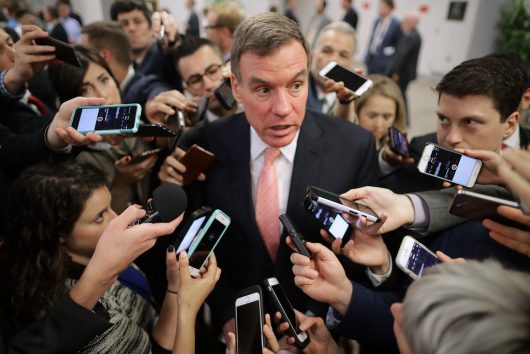
So You Want to Become a Senator?

How to Become a Senator
How do you become a Senator? For many people in the United States, the steps to becoming a senator may seem mysterious and inaccessible for the common citizen. In reality, there are few requirements insisted on by the Constitution. Being a senator can be challenging and rewarding, especially for one advocating for the world’s poor. During the six-year term after the election, a senator reviews specific bills and votes on whether or not they should become laws. One could even propose global poverty focused bills! Sound fascinating? Here are the requirements and recommendations on how to become a senator, for all of our budding politicians out there who want to help the world.


3 Eligibility Requirements in the Constitution:

  1. One must be at least 30 years old before being sworn into office.
  2. One must inhabit the state they want to represent.
  3. One must have U.S. citizenship for 9 years prior to running for Senate.


How to Become a Senator


  • Get Established in the Community: Many senators recommend participating in local politics first, called “coming up through the chairs,” before going for the big leagues. Run for smaller offices such as a local government committee member or as town mayor. See how the U.S. government processes work on a community level where you can gain a positive reputation and good credentials. Build up to running for higher positions such as your state’s governor. If you are then ready for the challenge, try and get elected as a senator.
  • Educational Background: Though it’s certainly not a requirement, a Bachelor’s degree or higher in law, political science, and/or business has proven to be important for senators. In our current congress, almost 40% of senators are lawyers, and 20% are bankers or businessmen. It’s possible to be elected without a background in these subjects, but the numbers don’t lie.
  • Make Sure to Have Party Backing: Gaining support from a political party is a gigantic help. People from the “party machine” will endorse you and help you to get elected into office in ways that would be challenging to do alone. Consider who will align with your goals of wanting to increase poverty-focused aid, and partner up with them!
  • Don’t Forget the Details: Did you remember to file candidacy with the state’s Secretary of State? In addition, signatures from people in one’s political party will be necessary to get on the ballot. Contact the state government to find out the minimum number needed.
  • Round Up a Campaign Committee and then Campaign: A good campaign can’t run without people working to support it. Campaigning is an expensive and time consuming process. A manager, fundraising person, and public relations professional will all be needed to get your ideas out there and to keep the campaign running smoothly. Advertise, participate in interviews, and give speeches. Inform your possible constituents about the importance of foreign aid, and get them all riled up and wanting to create change with you. All that’s left to do is campaign with all one’s heart!
  • Be Ready to Answer Foreign Aid FAQ’s: Military leaders, business leaders and humanitarian groups all recognize the importance of reducing global poverty. While it’s tempting to speak out against foreign aid while campaigning, many leaders quickly change their stance once confronted by military leaders on the role helping reduce human suffering plays in national security.

Finally, what is the one thing of importance that veterans of the Senate can all agree upon? “What matters… is a willingness to work and learn, to stand up for values, and most important, to earn trust.”

– Caylee Pugh

Sources: NY Times, How Stuff Works, US Senate
Photo: Maid in DC

August 10, 2016
https://borgenproject.org/wp-content/uploads/borgen-project-logo.svg 0 0 Borgen Project https://borgenproject.org/wp-content/uploads/borgen-project-logo.svg Borgen Project2016-08-10 06:04:152020-06-17 17:51:41So You Want to Become a Senator?
Advocacy, Global Poverty

Global Poverty Bills You Should Know About

Global Poverty Bills

The Borgen Project advocates for global poverty bills to be passed in the House and the Senate of Congress. The Borgen Project is currently fighting for three bills that could have a massive impact on global poverty.

First, the Electrify Africa Act, introduced in 2015, seeks to provide sub-Saharan African countries access to affordable and reliable power through a plan spanning several years.

The bill has two main goals: create a group comprised of several organizations–including the Overseas Private Investment Corporation (OPIC), U.S. Agency for International Development, the Trade and Development Agency and the Millennium Challenge Corporation–which will help coordinate the U.S. government regarding creating reliable sustainable energy on the African continent, and effectively utilize the United States’ influence as a world power to build international support for African energy programs.

Next, the Reach Every Mother and Child Act, also introduced in 2015, seeks to end preventable maternal and newborn deaths around the world.

According to WHO, around 830 women around the world die every day from preventable causes related to pregnancy and childbirth, such as severe bleeding, infections, eclampsia/pre-eclampsia (high blood pressure that develops during pregnancy) and unsafe abortions. That adds up to over 300,000 women dying every year, of which 99 percent of those deaths occur in developing countries.

The Reach Every Mother and Child Act would allow the United States to create an interagency group dedicated to ending maternal and child deaths in developing countries, including overseeing maternal and child health and nutrition funding.

Finally, The Borgen Project supports the Food for Peace Reform Act of 2015, which would overhaul the current U.S. programs for providing emergency food aid around the world, involving:

· improving product packaging and storage

· adjusting products to cost-effectively meet nutrient needs of target populations

· adopting new, or improving existing, specifications for micronutrient fortified food aid products to meet a population’s nutrient needs

· evaluating performance and cost-effectiveness of food products and programs for vulnerable groups, such as pregnant mothers and young children

Visit borgenproject.org/legislation for more information on global poverty bills and how you can help end global poverty by contacting your government representatives in the House and Senate.

– Bayley McComb

Photo: ABC News

July 29, 2016
https://borgenproject.org/wp-content/uploads/borgen-project-logo.svg 0 0 Borgen Project https://borgenproject.org/wp-content/uploads/borgen-project-logo.svg Borgen Project2016-07-29 01:30:082024-12-13 17:54:47Global Poverty Bills You Should Know About
Advocacy, Global Poverty

Four Small International Organizations Changing Lives

Small International Organizations

Changing the world starts by impacting one life at a time. One person’s desire to change the world, no matter how small or how insignificant it may seem, can make a world of a difference in the lives of others.

The following four small international organizations — HEED Uganda, Asha India, Ryan’s Well Foundation and Maiti Nepal — all started from humble beginnings and a single vision, which turned into much more.

HEED Uganda

HEED was founded in 2005 when two Washington-based mothers traveled to Uganda and began to provide for 17 orphaned, vulnerable and needy children from a remote village in the Mubende District of Uganda. They did not know how these sponsorships would work or what was in store for them but they knew the kids needed help. After seeing the sheer number of children in these villages that needed help, HEED’s mission grew to have full-time sponsors for 21 children.

The mission continued to grow in 2007 when they started a village school in the Mubende District. Here they hired teachers and supplied school necessities, certain meals and health treatments to give the hundreds of village kids a chance to grow up to be well-rounded adults. In 2009, HEED made further headway when it purchased farmland to provide food and income for the school, then installed a borehole for clean water for the school in 2011.

Schooling is provided to the orphaned and most vulnerable children in the village, regardless of their ability to pay fees.

Asha India

In 1988, Dr. Kiran Martin heard of the cholera outbreak in India’s south Delhi slum and felt compelled to use her medical skills to help Delhi’s poor. Martin went to the slum and borrowed a table in the shade to use as her office and began saving lives.

After seeing the lack of medicine, Martin requested assistance from the Indian government and acquired aides to assist her in expanding her medical help within Delhi’s slums.

Over 25 years later, Asha has helped save more than 500,000 lives within 60 of Delhi’s slums. The organization has expanded to the U.S. and many other countries in which Asha continues to save lives.

Ryan’s Well Foundation

In 1998, a six-year-old named Ryan learned that people were dying in other parts of the world because they did not have access to clean water. Ryan could not believe that people lived in those conditions and begged his parents to help him assist the people living without clean water.

Ryan started by doing extra chores and speaking at service clubs and school classes to raise money to build a well. Finally, Ryan raised the $2,000 needed to build a well at the Angolo Primary School in Uganda.

A few years later, in 2001, Ryan’s Well Foundation was formally created. Over the past 15 years, the foundation has built over 1,000 wells, with no end in sight.

Maiti Nepal

In 1993, school teacher Anuradha Koirala decided to right the world’s wrongs and do something about sex trafficking in Nepal. She started by setting up a home to provide safety and shelter for young children and women who got forced into Nepal’s sex trade.

She wanted to establish a place where people could go when they did not have anywhere safe to be. Her dream of just one safe house has turned into an organization called Maiti Nepal that has established three prevention homes, 11 transit homes, two hospices and a school. Currently, over 1,000 children are receiving service from Maiti Nepal daily, 1,200 sex traffickers have been convicted and 357 rape cases prosecuted, all made possible by one woman’s determination.

The founders of these four small international organizations give impeccable examples of ordinary people who started something small which turned into something extraordinary. Any positive difference, despite its perceived insignificance, can change the lives of people in need.

– Bella Chaffey

Photo: Flickr

July 28, 2016
https://borgenproject.org/wp-content/uploads/borgen-project-logo.svg 0 0 Borgen Project https://borgenproject.org/wp-content/uploads/borgen-project-logo.svg Borgen Project2016-07-28 01:30:172024-06-07 05:07:36Four Small International Organizations Changing Lives
Advocacy

Why Foreign Aid is Important

Importance of Foreign Aid
Here at The Borgen Project, we are often asked why foreign aid is important. Foreign aid can save the lives of millions of people living in poverty around the world. It addresses issues such as health, education, infrastructure and humanitarian emergencies.

Foreign aid is a broad term. In a wide sense, it can be defined as “financial or technical help given by one country’s government to another country to assist social and economic development or to respond to a disaster in a receiving country.”


2 Ways Foreign Aid Helps the U.S.


donate_poverty
Creates Jobs


world_hunger
Improves National Security


There are numerous reasons why foreign aid is important to help impoverished countries; discussed below are the six key targets.


Top 6 Benefits of Foreign Aid


  1. Infrastructure: roads, bridges, institutions and sewer systems get built, giving people the ability to be mobile and have access to basic necessities such as electricity and running water.
  2. Agricultural technology improvements: improvements enter the infrastructure within the agricultural businesses within recipient countries.
  3. Education: classrooms get built, teachers receive training and children gain basic educational needs.
  4. Health: vaccinations, mosquito nets, safe drinking water, access to hygiene education and basic sanitation are all brought in.
  5. Humanitarian issues and natural disaster emergencies: life-saving support comes to those affected and possibly displaced due to natural disasters, emergency shelters are built for people affected by violence, and counseling services are made available.
  6. National security: recipient countries can combat terrorism with the help of foreign aid as it decreases poverty, weak institutions and corruption and can help strengthen good governance, transparency and the economy.

Another reason why foreign aid is important is how it fosters a conducive diplomatic relationship between the donor and the recipient.

Impoverished nations receiving aid can eventually become independent and move towards democratic fundamentals with the help of donor countries.

There are hundreds of different donors of foreign aid. One of the most well-known donors of foreign aid comes in the form of Official Development Assistance (ODA).

It is provided by the Development Assistance Committee of the Organization for Economic Development Cooperation. The ODA provides foreign aid to poor countries in the form of grants and loans.

The ODA is important to impoverished countries as it provides specifically the materials needed to build effective infrastructure and expand educational programs and the access to schools. Additionally, it provides efficient responses to humanitarian emergencies.

One of the most well-known and largest providers of foreign aid is the International Development Association (IDA), which is part of the World Bank. It has 173 shareholders that provide grants and loans to 77 countries around the world, 39 of which are located in Africa.

The main goal of the IDA is to reduce inequalities, increase economic growth and improve the living conditions of those in poverty. These goals are addressed as IDA funds are given directly to the sectors of education, water, sanitation, agriculture and infrastructure.

The IDA provides little to no interest on its grants and loans and allows for a grace period of up to 10 years. It also allows the recipient country to make debt payments of up to 40 years.

Since 1960, the IDA has provided $312 billion in investments in 112 impoverished nations. In the last three years alone, there has been an average of $19 billion in grants and loans.

Foreign aid truly makes a difference to people living in poverty. It provides access to basic necessities and provides people essential conditions for living a peaceful and secure life.

– Kimber Kraus

Photo: U.S. Navy

July 25, 2016
https://borgenproject.org/wp-content/uploads/borgen-project-logo.svg 0 0 Borgen Project https://borgenproject.org/wp-content/uploads/borgen-project-logo.svg Borgen Project2016-07-25 01:30:412024-12-13 17:54:37Why Foreign Aid is Important
Advocacy

How to Find Jobs in Advocacy: 5 Simple Ways

How to find jobs in advocacyAre you a recent college graduate looking for your first full-time position? An experienced professional looking to make a difference? Or perhaps a high school student wanting to buff up your resume? Well, understanding how to find jobs in advocacy may prove beneficial for you.
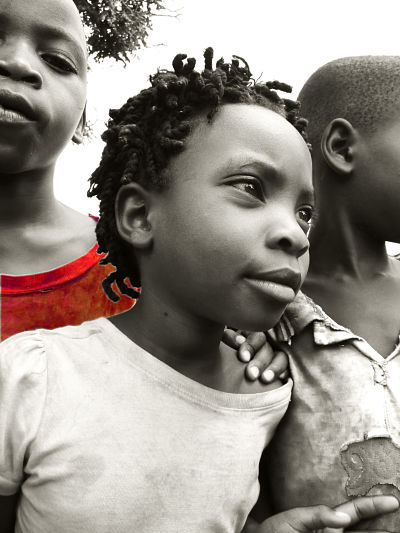

Advocacy is the action of generating public support for or recommending a particular cause or policy. One of the ways in which The Borgen Project makes a difference is through advocacy.

By teaching citizens skills on how to communicate with their government, The Borgen Project is able to both generate support for and recommend making global poverty a higher priority for U.S. foreign policy.

Here are five ways on how to find jobs in advocacy so you can begin a fulfilling, challenging career of improving people’s lives:

  1. Find your passion.
    Is there a cause you really believe in? Is there a problem you would like to address? Is there a topic you could talk about for hours and hours? Most employers, whether it’s listed in your cover letter or spoken about in an interview, want to know what motivates you to join their team. They want to know your passion because a passion-less person doesn’t make a good advocate, now does it? Don’t think too hard about it, though.While some peoples’ passion may be something specific, like woodcutting or kite flying, yours could be a broader goal such as helping other people.
  2. Reach out to local non-profit organizations.
    There is a very high chance that your community has at least one non-profit organization operating within it. While that non-profit organization may not be directly linked to advocacy, the people volunteering or working there may be able to direct you to other non-profit organizations more advocacy-geared. And if there is a link to advocacy, then you’re in luck.
  3. Search for jobs.
    In this day and age, the internet is your friend and the perfect place to start your advocacy search. You can look at popular websites like idealist.org, indeed.com or thenonprofittimes.com to find the perfect advocacy position for you. Most advocacy positions will be posted by non-profits organizations, local governments and lobbying firms.
  4. Volunteer.
    If you’re not having any luck landing a paid position, consider volunteering. It will not only beef up your resume, but it also has the potential to lead to a paid position in the place you are volunteering. In your volunteer position, your supervisors can get to know you, see how motivated you are to the cause and perhaps find a more permanent fit for you on their team. Building these connections can lead to positions you never even thought possible!Additionally, most non-profit organizations operate under a very tight budget so the majority of advocacy positions may be volunteer anyways. Take The Borgen Project for example–we have only 2 full-time and 4 part-time employees but have around 300 volunteers.
  5. Utilize your networks.
    A recent survey revealed that 85 percent of all jobs are filled through networking. LinkedIn is a great resource that connects you a network of over 400 million people. You can also utilize alumni networks, family and friend networks, and networks found through volunteering or reaching out to organizations. It is also important to keep in mind that networking is not always about meeting as many people as possible, but it is also about meeting a few well-connected people who can vouch for your ability and credibility.In the future, these types of connections can refer you to other well-connected people.

While this list is not exhaustive, hopefully, these tips on how to find jobs in advocacy will benefit you in your search.

– Alexis Pierce

Photo: Youth Advocacy Programs, Inc.

July 18, 2016
https://borgenproject.org/wp-content/uploads/borgen-project-logo.svg 0 0 Borgen Project https://borgenproject.org/wp-content/uploads/borgen-project-logo.svg Borgen Project2016-07-18 01:30:302024-05-27 09:34:19How to Find Jobs in Advocacy: 5 Simple Ways
Advocacy, Global Poverty

What are the Causes of Poverty?

what causes global poverty
As governments, aid workers and activists search for solutions to the urgent problem of widespread poverty and seek to combat its many negative effects, there is a need to identify the causes of poverty in order to create sustainable change. Understanding what causes global poverty is a crucial part of the process of devising and implementing effective solutions.

Most analysts would agree that there is no single root cause of all poverty everywhere throughout human history. However, even taking into account the individual histories and circumstances of particular countries and regions, there are significant trends in the causes of poverty.


Top 5 Causes of Poverty


  1. History
    Many of the poorest nations in the world were former colonies from which slaves and resources had been systematically extracted for the benefit of colonizing countries. Although there are notable exceptions (Australia, Canada and the U.S. being perhaps the most prominent), for most of these former colonies, colonialism and its legacies have helped create the conditions that prevent many people from accessing land, capital, education and other resources that allow people to support themselves adequately. In these nations, poverty is one legacy of a troubled history involving conquest.
  2. War & political instability
    Whatever the causes of war and political upheaval, it is clear that safety, stability and security are essential for subsistence and, beyond that, economic prosperity and growth. Without these basics, natural resources cannot be harnessed individually or collectively, and no amount of education, talent or technological know-how will allow people to work and reap the benefits of their labor. Laws are needed to protect rights, property and investments, and without legal protections, farmers, would-be entrepreneurs and business owners cannot safely invest in a country’s economy. It is a telling sign that the poorest countries in the world have all experienced civil war and serious political upheaval at some point in the 20th century, and many of them have weak governments that cannot or do not protect people against violence.
  3. National Debt
    Many poor countries carry significant debt due to loans from wealthier nations and international financial institutions. Poorer nations owe an average of $2.30 in debt for every $1 received in grant aid. In addition, structural adjustment policies by organizations like the World Bank and the International Monetary Fund often require poorer nations to open their markets to outside business and investors, thereby increasing competition with local businesses and, many argue, undermining the potential development of local economies. In recent years, calls for debt reduction and forgiveness have been increasing, as activists see this as a key means of reducing poverty. The United Nations has also made it a priority to examine how economic structural adjustment policies can be designed to place less pressure on vulnerable populations.
  4. Discrimination and social inequality
    Poverty and inequality are two different things, but inequality can feed widespread poverty by barring groups with lower social status from accessing the tools and resources to support themselves. According to the United Nations Social Policy and Development Division, “inequalities in income distribution and access to productive resources, basic social services, opportunities, markets, and information have been on the rise worldwide, often causing and exacerbating poverty.” The U.N. and many aid groups also point out that gender discrimination has been a significant factor in holding many women and children around the world in poverty.
  5. Vulnerability to natural disasters
    In regions of the world that are already less wealthy, recurrent or occasional catastrophic natural disasters can pose a significant obstacle to eradicating poverty. The effects of flooding in Bangladesh, drought in the Horn of Africa and the 2005 earthquake in Haiti are examples of the ways in which vulnerability to natural disasters can be devastating to affected countries. In each of these cases, already impoverished people became refugees within their own countries, losing whatever little they had, being forced out of their living spaces and becoming almost completely dependent on others for survival. According to the World Bank, two years after Cyclone Nargis hit Myanmar in 2008, the debt burden of local fishermen had doubled. The Solomon Islands experienced an earthquake and tsunami in 2007 and the losses from that disaster equaled 95 percent of the national budget. Without foreign aid, governments in these countries would have been unable to meet the needs of their people.

These are only five causes of poverty. They are both external and internal causes; both man-made and natural. Just as there is no single cause of poverty, there is no single solution. Nevertheless, understanding the ways in which complex forces like these interact to create and sustain the conditions of widespread global poverty is a vital step toward combating poverty around the world.

– Délice Williams

Source: Global Issues, USCCB, World Bank


June 25, 2016
https://borgenproject.org/wp-content/uploads/borgen-project-logo.svg 0 0 Borgen Project https://borgenproject.org/wp-content/uploads/borgen-project-logo.svg Borgen Project2016-06-25 04:34:542020-06-18 18:45:28What are the Causes of Poverty?
Advocacy

Advocacy 101: How to be an Advocate

Be an advocateAn advocate can be loosely defined as someone who publicly supports a cause. On a more focused note, the Citizen’s Committee for Children of New York defines an effective advocate as one who influences public policy and laws by using different strategies and information to encourage leaders to take action.

Many individuals would like to do their part to make a difference but are not sure where to start. Here are a few tips on how to be an advocate:

Know exactly what you are advocating for.

Conveying your message becomes easier when you immerse yourself into the cause and gain a thorough understanding of what you are supporting.

Garrett Swink, an advocate who uses social media as his primary advocacy tool, immersed himself into his cause by leaving the comfort of his desk and diving into the issues he was passionate about. In an article published by Connectivity, he said that immersion “provided [him] a better understanding of [his] audience and a clearer idea of how to expand it.” Although he advocated for a political figure, the same idea can and should be implemented when advocating for a cause.

Use technology to your advantage.

Online tools, such as social media platforms or YouTube, can help you be the best advocate you can be. In our modern world, technology allows you to spread messages efficiently, effectively and to large numbers of people. Know what technology your audience is mostly likely to use, then rev up the shares, likes, tweets, and posts to get the word out about your cause.

One advocate, Marvin Sapp, wasted no time implementing such modern methods. Sapp utilized the power of technology during his advocacy event by instructing attendees to contact their elected officials about his cause right then and there. In his most recent event, more than 3,500 people whipped out their phones, iPads, tablets and other devices to submit emails to their respective elected officials about supporting the Black Alliance for Educational Options.

Boil down your issue and focus your message.

A message that is concise, specific and to-the-point will make a more lasting impact.

One Jerusalem’s website is an example of effective advocacy through clear, well-written content. When creating the message, consider the audience and cater your approach to their skill level or interests. Instead of bouncing around between different approaches or angles to your message, be clear and consistent with the research you present, the solution you propose, and the “call to action” you promote.

Show the audience that you care.

An advocate who personally stands by their message motivates an audience.

Advocates who actually care don’t go unnoticed. Real people who care about real issues and solutions captivate perhaps normally apathetic audiences. Let your personal stories, non-verbals, and understanding of the cause shine through–make it known how invested you are about your message and your audience.

These are a few suggestions on how to be an advocate for a cause that is important to you. Effective advocacy can promote social change and justice in more ways than one. Advocacy is an important method of changing the world for a better tomorrow, and anyone can be an advocate–celebrities, local leaders or anyone passionate enough about a cause to do something about it.

-Julia Hettiger

Photo: Pixabay

June 25, 2016
https://borgenproject.org/wp-content/uploads/borgen-project-logo.svg 0 0 Borgen Project https://borgenproject.org/wp-content/uploads/borgen-project-logo.svg Borgen Project2016-06-25 01:30:362024-05-27 09:33:57Advocacy 101: How to be an Advocate
Page 39 of 77«‹3738394041›»

Get Smarter

  • Global Poverty 101
  • Global Poverty… The Good News
  • Global Poverty & U.S. Jobs
  • Global Poverty and National Security
  • Innovative Solutions to Poverty
  • Global Poverty & Aid FAQ’s
Search Search

Take Action

  • Call Congress
  • Email Congress
  • Donate
  • 30 Ways to Help
  • Volunteer Ops
  • Internships
  • Courses & Certificates
  • The Podcast
Borgen Project

“The Borgen Project is an incredible nonprofit organization that is addressing poverty and hunger and working towards ending them.”

-The Huffington Post

Inside The Borgen Project

  • Contact
  • About
  • Financials
  • President
  • Board of Directors
  • Board of Advisors

International Links

  • UK Email Parliament
  • UK Donate
  • Canada Email Parliament

Get Smarter

  • Global Poverty 101
  • Global Poverty… The Good News
  • Global Poverty & U.S. Jobs
  • Global Poverty and National Security
  • Innovative Solutions to Poverty
  • Global Poverty & Aid FAQ’s

Ways to Help

  • Call Congress
  • Email Congress
  • Donate
  • 30 Ways to Help
  • Volunteer Ops
  • Internships
  • Courses & Certificates
  • The Podcast
Scroll to top Scroll to top Scroll to top