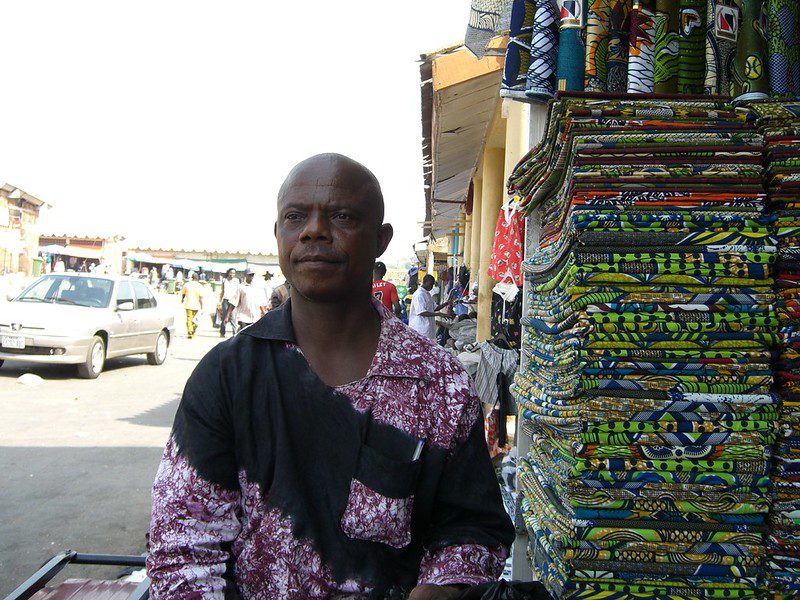
 In the shadow of Nigeria’s poverty statistics, where nearly two-thirds of citizens live on less than $2 a day, a quieter revolution is underway. In the dry-season heat of Benue State, a farmer rises at dawn to tend his maize and guinea corn. After each harvest, he sells part of his yield, feeds the rest to his livestock and uses their manure to fertilize the next crop. These animals double as savings and are sold once school fees are due. He has no insurance, no grant and no bank account, yet this quiet rhythm of work sustains his family.
Across Nigeria, millions live the same pattern of improvised survival. They are market women in Akwa Ibom, backyard gardeners in Borno and roadside tailors in Lagos. Their livelihoods may be invisible to the formal economy, yet they are fueling what researchers at the Institute of Development Studies (IDS) describe in their 2025 policy briefing, Growth from Below: Poverty Reduction beyond Social Protection in Nigeria, as the country’s most overlooked engine for poverty reduction.
Poverty Reduction in Nigeria
Nigeria’s economy, though the fourth largest in Africa by GDP, continues to grow too slowly to match its expanding population.
Since 2014, GDP per capita has stagnated, and inflation remains high, driven by soaring food and fuel prices. The International Monetary Fund (IMF) projects a modest 3% growth in 2025, below the continental average of 4%. For many Nigerians, these numbers translate into hunger. “Over a decade, Nigeria has experienced various shocks—political conflict, climate recurrence, floods, droughts and multiple economic crises,” Vidya Diwakar, deputy director at IDS’s Chronic Poverty Advisory Network, told The Borgen Project in a Zoom interview. “What we found is that many people tend to escape poverty through these informal investments.”
In 2023, the federal government declared a “state of emergency on food security” and launched large-scale farming initiatives. Dozens of programs, including MSME funds, skill-up training and tractor schemes, were rolled out to stimulate production.
But Dr. Stanley Ukpai, a CPAN researcher, told The Borgen Project in a Zoom interview that such interventions often overlook the informal economy. “We tend to see this approach to poverty alleviation where the government is making large investments,” he said, “but many times these investments don’t translate to substantial changes at the community and grassroots levels.”
The Rise of Growth from Below
That reality is at the heart of new IDS research, Growth from Below: Poverty Reduction beyond Social Protection in Nigeria (2025). Kareem Abdulrasaq, lead author of the study, told The Borgen Project in an interview: “There is no assistance; they still do it by themselves,” he explained. “It’s forms of agriculture, petty trading, livestock rearing and food processing—activities families created to survive, whether during a crisis or after it. This is what ‘growth from below’ really means.”
The study argues that household-level economic activity, not top-down welfare, has become Nigeria’s most effective engine of poverty reduction.
In Benue State, some farmers reinvest crop income to buy land and build homes. In Borno, a widow displaced by Boko Haram began growing vegetables to feed her children and sell at the market. In Akwa Ibom, a mother installed a palm oil press in her compound, turning a family tradition into income.
Across Nigeria, informal entrepreneurship functions as a safety net where formal systems fail. The IDS research highlights how these forms of resilience are now key drivers of poverty reduction. “Informal economies have historically been viewed as a cushion during crises,” Diwakar told The Borgen Project, adding that success should be measured by whether such enterprises enable sustained upward mobility through greater productivity.
Women at the Center
From roadside vendors to small processors, women make up the majority of micro-entrepreneurs. Yet policy is rarely on their side.
“The government is doing quite a lot,” said Ukpai, “but at the top level, there are these processes that don’t translate down to the communities. There’s a disconnect between policies on paper and real implementation at the grassroots.”
The IDS brief underscores this imbalance. While some social protection programs have offered women cash transfers or training, their coverage is inconsistent and short-lived. When the payments stop, many families fall back into poverty. Without legal recognition or access to formal finance, women rely on informal loans, often with high interest, to sustain their businesses.
One Akwa Ibom entrepreneur captured the dilemma: “I struggled even though I did not have money; I borrowed from somebody and installed the machine in my compound.” Her determination mirrors thousands of others whose work quietly sustains families and local markets.
Researchers agree that empowering women is one of the most effective paths out of poverty. The brief calls for fast-tracking the Women’s Rights and Inheritance Bill, enforcing joint land titling and ensuring that at least 40% of MSME grants go to women-led firms.
“Many young women during the cashless policy and fuel subsidy lost their capital,” Diwakar explained, “from which they could have invested or diversified their income.”
From Taxation to Support
Despite official rhetoric celebrating entrepreneurship, many small traders face harassment, multiple taxes and bureaucratic hurdles that stifle rather than support them.
“We come to the realization that we must support these groups to deepen their productivity, as opposed to revenue extraction, which is what we see,” said Ukpai. “If you have a little kiosk or a side shed where you run your informal business,” he added, “the community tax authorities are on your neck, the state tax authorities on your neck, even local touts want something. So even when there’s meager income, it’s dissipated through multiple taxation.”
The IDS team recommends “light-touch” registration systems, presumptive tax holidays for new micro-firms and bundled packages combining training, working capital and insurance. Such steps, they argue, would not only legitimize informal enterprises but also make them more resilient to shocks.
A Grassroots Blueprint for Change
The lesson emerging from Nigeria’s experience is clear: development can grow from below, but only if the state stops standing in its way. Supporting informal entrepreneurs, especially women, means acknowledging them as central to national growth, not as side characters in need of rescue.
As Ukpai put it, “For the government to take notice, it must recognize that people at community level already have strategies to escape poverty. Policy must meet them where they are—in the farms, the workshops and the markets.”
For Diwakar, poverty reduction in Nigeria “isn’t just about handouts; it’s about recognizing the systems of resilience that already exist and building policies that reinforce them,” she told The Borgen Project in a Zoom interview. With donor fatigue growing and global development budgets tightening, Nigeria’s “growth from below” offers a blueprint for sustainable, community-led development.
– Shannon Garrido
Shannon is based in Brighton, UK and focuses on Politics for The Borgen Project.
Photo: Flickr

Vocational Training Centers in Zimbabwe Are Empowering Youth
Her story mirrors a broader transformation happening at vocational training centers in Zimbabwe (VTCs), where thousands of young people are finding pathways out of unemployment through practical skills and innovation. Through public-private partnerships and industry-aligned curricula, such programs equip youth with the technical and entrepreneurial skills they need to boost employability and self-sufficiency.
A Nation Confronting Crisis
Zimbabwe’s economic challenges have been persistent and profound. High inflation, currency volatility and a weak investment climate have induced widespread downsizing and stifled job creation, particularly for youth. This is problematic in a country where 62% of the 15.9 million population are under 25. As formal employment opportunities disappear, informality has become pervasive. Today, 47.6% of those 15 to 24 years old do not have employment, education or training.
While Zimbabwe’s school enrollment rates are relatively high for sub-Saharan Africa, the education system still struggles with access, quality and inequality. Those with only early childhood education are almost completely excluded from the labor market. Even secondary school graduates often find themselves unable to secure employment in an economy that fails to provide adequate job-ready opportunities. This is the gap vocational education seeks to fill.
Education 5.0 and Vision 2030
Recognizing this, the government has placed vocational education at the center of its Vision 2030 development strategy. Through its Education 5.0 policy, learning is built on five pillars – teaching, research, community service, innovation and industrialization – to link education directly with production. It emphasizes hands-on training that bridges the divide between education and employment.
According to Zimbabwe’s Ministry of Higher and Tertiary Education, more than 5,000 students graduated from VTCs in 2024 – many of them school dropouts or individuals previously excluded from formal education. Training in carpentry, garment construction, agriculture and catering provides tangible, income-generating skills while encouraging entrepreneurship. To this end, the government plans to establish a VTC in each administrative district, expanding access to locally relevant technical education.
Youth and Gender: Closing the Opportunity Gap
Zimbabwe’s youth unemployment rate remains among the highest in Sub-Saharan Africa, and young women bear the brunt. Social expectations, early marriage and limited access to credit or land make it harder for women to pursue economic independence.
Vocational training centers in Zimbabwe now train women in trades once dominated by men – including welding, mechanics and electrical installation – while also expanding more traditional sectors like textiles, agriculture and hospitality. Young Africa Zimbabwe, for example, offers flexible, affordable courses with on-site childcare to support young mothers.
Yet, disparities persist. Female participation rates are high in VTCs like office management (92%) but drop to just 3.1% in mechanical engineering. Apprenticeships, which tend to lead to higher employment rates, remain male-dominated. Policymakers and educators therefore need to promote women’s participation in non-traditional fields and design targeted mentorship and scholarship programs.
Still, vocational education is about more than employment – it is about rebuilding confidence, fostering self-reliance and challenging the gender norms that have long constrained women’s economic participation.
Persistent Challenges
Despite notable progress, vocational training centers in Zimbabwe face significant barriers:
The Role of NGOs and Private Partners
In the absence of sufficient public funding, NGOs and private institutions have stepped in with innovative approaches – with transformative results.
Young Africa Zimbabwe, with training centers in Harare and Chitungwiza, offers vocational training that targets out-of-school youth aged 16-25, with strong links to both the government and local businesses. Meanwhile, CAMFED Zimbabwe focuses on empowering young women through vocational skills training, start-up grants and mentorship. In Mudzi district, its support for women in a baobab processing plant increased their earnings fivefold through improved processing and marketing skills. These initiatives complement government efforts by embedding practical, gender-sensitive and community-driven approaches that bridge education and employment.
Dorothy’s story is one of many, but it captures a broader truth. Across Zimbabwe, vocational training centers are not just teaching trades, they are nurturing independence, restoring dignity and offering a lifeline to a generation too often defined by unemployment. With sustained investment, thoughtful reform and deepened collaboration between government and civil society, VTCs could become one of the most powerful engines for youth empowerment – and a cornerstone of Zimbabwe’s economic recovery.
– Caroline Sheehan
Photo: Flickr
Kyrgyzstan: What the McGovern-Dole Cutoff Means for Schools
It does this by donating U.S. agricultural commodities and providing financial and technical assistance to implement school feeding and maternal and child nutrition projects. Mercy Corps has implemented the MGD program in Kyrgyzstan since 2012. It has provided fortified flour, rice, peas, lentils and vegetable oil, along with infrastructure upgrades such as kitchen rehabilitation and hygiene improvements.
Impact and Recent Developments
Between 2012 and 2021, the program supported approximately 510 schools. It delivered around 3,810 metric tons of commodities, reaching more than 100,000 children in kindergartens and primary schools. During the 2022–2023 academic year, the U.S. Embassy in Bishkek reported that about 24,000 schoolchildren in 120 rural primary schools received fortified food supplies.
These include 40 metric tons of vitaminized sunflower oil and 500 metric tons of staple foods. In May 2025, Reuters reported that the USDA canceled 17 McGovern-Dole projects as part of a reduction in U.S. international food aid, affecting countries including Kyrgyzstan.
The Impact of School Meals on Learning and Nutrition
Baseline and endline studies conducted in Kyrgyzstan have examined the relationship between school feeding, nutrition and educational outcomes. The International Security and Development Center (ISDC) report “McGovern-Dole Food for Education and Child Nutrition in Kyrgyzstan – Baseline Study on Nutritional Variables” (2020) documents the nutritional status of primary school students and their households. It shows that better diet diversity and nutrition knowledge correlate with improved cognitive and learning outcomes.
A follow-up Phase II study on child development under the same program surveyed more than 4,500 students and households. It found that the program improved nutrition knowledge, attitudes and behavior among participating families. Similarly, the Life in Kyrgyzstan (LiK) research conference paper “Child Development in the Context of a School Feeding Program in Kyrgyzstan” highlights that exposure to school meals and nutrition education supports better cognitive function and school performance.
The USDA emphasizes that MGD programs are designed to be sustainable, with the goal that “communities served… can ultimately continue the sponsored activities on their own or with support from other sources such as the host government or local community.”
Why the Program Matters
The MGD program’s objective is “to reduce hunger and improve literacy and primary education, especially for girls.” In Kyrgyzstan, where many rural families face limited access to nutritious meals, the school feeding initiative has become an important support system for children’s education and health. Studies from ISDC and Mercy Corps show that the combination of school meals, parental nutrition education and improved school infrastructure leads to healthier, better-performing students.
Globally, organizations such as the World Food Programme (WFP) and the School Meals Coalition note that school feeding programs serve as major social safety nets and generate long-term economic benefits. Analyses cited by these groups estimate that every U.S. dollar invested in school meals can yield up to $9 in returns through improved health, education and productivity.
Looking Ahead
Evidence from Kyrgyzstan shows that school feeding can improve nutrition knowledge, attendance and learning outcomes when implemented consistently. Mercy Corps and ISDC studies demonstrate that combining food provision with education, infrastructure and parental engagement strengthens long-term sustainability. However, the future of the McGovern-Dole Program remains uncertain as U.S. budget debates continue. Lawmakers have yet to confirm whether the program will receive renewed support, leaving schools and implementing partners in Kyrgyzstan without clear guidance on long-term funding.
Ensuring that Kyrgyz children continue to receive nutritious meals at school will help sustain progress in education, health and equality.
– Clara Garza
Photo: Flickr
The Garment Industry in Bangladesh: Mistreated Workers
The Bangladeshi government has lowered production costs to attract foreign investment to stay ahead of the competition. However, this comes at the expense of factory workers—the minimum monthly wage is just $133, less than a quarter of the estimated living wage. Nonetheless, organizations such as GoodWeave are making efforts to stop this mistreatment.
Bangladesh and the Race to the Bottom
The race to the bottom is the theoretical competition between emerging markets, such as Bangladesh. Foreign investment from large companies is very desirable for these states. However, to appear more attractive, they must offer cheaper production costs. This is generally achieved by cutting wages and working standards. In the case of Bangladesh, this has been done to an alarming level.
Since the late 1900s, the size of the RMG industry in Bangladesh has grown exponentially from $1.8 million in 1980 to $47 billion in 2023. This growth was possible because Bangladesh offered increasingly cheap production costs to U.S. and European clothing companies. Although this has allowed Bangladesh to maintain and even flourish, through periods such as the 2008 financial crash due to increased demand for cheap clothes, it has come at a price: workers’ rights.
The Rana Plaza collapse of 2013 is potentially the most telling evidence of the lack of safety in garment factories in Bangladesh. Rana Plaza was a major garment production hub and due to the lax building and safety regulations around this industry, the structure was completely unsound. This became apparent in 2013 when part of the building collapsed and killed more than 1,000 people. This is a clear example of how the cost-cutting to attract investment horrendously impacted the laborers.
RMG workers are also paid insufficiently. According to GoodWeave, more than 30% of Bangladeshi garment workers are paid below their minimum wage. This rate is already far below what the Economic Observatory considers a living wage. Furthermore, many workers are involved in subcontracts, usually correlating with being paid even less than their already underpaid colleagues for the same amount of work.
The Impact of GoodWeave
GoodWeave is a nonprofit organization aimed at ending child and forced labor. It is an influential actor in Bangladesh, researching and raising awareness around labor conditions within the RMG industry. An interview with Jamir Munayko, digital communications and fundraising manager at Goodweave, revealed how the organization has been working in Bangladesh.
Between December 2023 and July 2024, GoodWeave International undertook research in collaboration with the University of Nottingham’s Rights Lab and the Bangladesh Labor Foundation (BLF). They aim to document the existence of modern slavery and child labor within Bangladesh’s RMG industry.
GoodWeave has conducted fieldwork in Dhaka and Chattogram, two major RMG hubs, carrying out almost 2,000 surveys and 10 in-person focus group discussions with 88 workers, both adults and minors. The organization has been processing the data gathered alongside the University of Nottingham, which is helping to legitimize the information and make it an authentic basis for action.
GoodWeave has also contributed to the vocational training of 500 young people in Bangladesh, ensuring they move into safe and legal work, rather than the dangerous and partially illegal RMG industry.
International Efforts To Raise Working Conditions in Bangladesh
GoodWeave has also been working alongside international institutions such as the Netherlands Enterprise Agency and the U.K. Home Office’s Modern Slavery Innovation Fund.
“These projects focus on using the evidence generated by research to drive change. They disseminate and advocate the only comprehensive evidence base of risk, prevalence and root causes of modern slavery in Bangladesh’s RMG industry, with emphasis on export production,” Munayko stated.
There has also been direct interaction between GoodWeave and some of the brands that produce their garments in Bangladesh.
“In partnership with four U.K.-based companies and their Bangladeshi suppliers, modern slavery supply chain assessments are being carried out to identify risks and inform these brands of the results. This enables companies to gain visibility into the risks in their supply chains. Alongside this, rights and protections of vulnerable workers are being advanced through increased awareness, improved access to social protections and stronger business practices, all contributing to reducing modern slavery in the sector.”
What Does the Future Look Like for the RMG Industry?
According to Munayko, the future of the garment industry in Bangladesh is impossible to predict, particularly due to the changing U.S. tariffs since President Trump’s term began earlier this year. The fact that Bangladesh relies so heavily on the global market as its economic stimulus makes it vulnerable to things such as U.S. tariffs.
However, with the recent change of government in Bangladesh, the interim government has shown real interest in improving working conditions in the RMG industry. The Labor Reform Commission has been created and positive concrete action is on the way to happening. However, Munayko also stated that this change must happen soon, before more tragedies like the Rana Plaza disaster occur.
Conclusion
Bangladeshi garment workers earn far below a living wage and their working conditions are often unsafe. This stems from the government’s pursuit of foreign investment from international clothing companies by driving production costs down, a race to the bottom. However, the efforts of GoodWeave and other international organizations are pushing back against this exploitation, advocating for fair treatment and safer conditions for the workers of the garment industry in Bangladesh.
GoodWeave’s direct work through surveys and interviews helps raise awareness about conditions in the RMG industry. Its collaboration with brands that source from Bangladeshi garment factories marks a major step toward changing the system.
– Oliver Evans
Photo: Flickr
Garbage Cafes Tackle Waste and Poverty in India
India is one of the most densely populated countries in the world. It has a population of more than one billion within its territory, which makes up 17.5% of the world’s overall population. The country’s growth rate, however, has stood at less than 1% since 2018. It is located in South Asia, with countries around its borders such as Pakistan, China, Nepal and Bangladesh.
The country has 28 states and eight union territories, each with its own government bodies. It is officially known as the Republic of India and is known for having one of the largest democracies in the world. India has many facts that are unique to its people, but one unexpected fact is that it is currently the world’s largest producer of plastic waste.
Plastics for Change
According to Plastics for Change, India was labeled as the world’s biggest polluter. In 2024, it was reported that the country produced 20% of the overall plastic waste that pollutes land and oceans. There are more than 9 million tonnes of waste generated by the country each year, which exceeds competing countries such as China and Nigeria. The waste is largely created by population growth, urbanization and development within the economy. As the population increases, the need for resources expands, like building more housing and grocery stores. The need for plastic resources is especially high within urban areas.
Waste and Poverty in India
Poverty in India has decreased significantly between 2016 and 2021. The number of people living in poverty decreased from more than 300 million between 2015 and 2016 to around 230 million between 2019 and 2021. As of 2025, 83 million people live in poverty in India, with more females being impacted. This shows the country has taken great strides in investing in its people.
There have been large impacts, such as investments in the economy, roads and connectivity between local and urban areas. There have also been job creations in various fields and aid programs accessible to the public. India is currently known as the fastest-growing economy in the world and has a high gross domestic product (GDP). Even though poverty in India has not been eradicated, there are cafes in the country offering meals to people in need in exchange for collecting waste.
Garbage Cafes
It all began in 2019 after multiple reports of plastic waste impacting communities and cities in India. One such city that took the initiative was Ambikapur. One of the first “garbage cafes” opened with one simple policy: every person who turns in 2.2 pounds of plastic waste gets a full meal. These meals include rice, vegetables and other staples vital to one’s diet. For those who collect 1 pound of waste, they can purchase breakfast items. With this cafe serving 20 meals daily, it presents a solution to waste polluting the city’s streets. In total, the cafe has collected more than 20 metric tonnes of waste since its creation.
This garbage cafe prides itself on its slogan, “more the waste, better the taste.” It prioritizes two main issues within its city and India as well: hunger and plastic waste pollution. People who struggle to make ends meet for their families have access to meals that can benefit them and their loved ones. The cafe is operated by the Ambikapur Municipal Corporation (AMC), which oversees this local initiative.
Creation of Jobs
It may have started in Ambikapur, but garbage cafes have spread to other cities in India, such as Siliguri and Mulugu. These cafes have similar policies that provide meals to people in need who collect waste. Another campaign offers period products to those who collect plastic waste. These initiatives help rid streets of pollution while also providing citizens with basic needs. Cambodia has also adopted similar programs, showing how positive responses to these initiatives can lead to long-term benefits.
The Municipal Corporation has also provided jobs that would not have been available otherwise. It employs more than 400 women to sort plastic waste after collection. They are given the necessary tools, such as gloves and masks, to protect themselves. They also go around neighborhoods to collect the waste from homes. This shows the creation of jobs that help people who may have been unemployed, especially women who are often most impacted by poverty.
Looking Ahead
Garbage cafes have created opportunities for people in poverty to supply meals for themselves and their families. This shows the importance of investments in communities and how corporations can assert themselves in this role. For the 83 million who remain in poverty in India, there are initiatives by the government and garbage cafes to alleviate daily burdens. There are job openings, investments in community cleanups and meal provisions where necessary. India has shown one initiative that other countries can adopt to target two issues at one time.
– Nickaylia Anderson
Photo: Flickr
Remembering Jane Goodall
Background
When Goodall entered the forests of Gombe in 1960, she was the first to observe chimpanzees not only using, but making tools- shattering the myth that tool-making was uniquely human. Her approach revealed their emotional depth- grief, joy, friendship- and redefined our understanding of animal behaviour, and what it means to be human.
However, to remember her merely for her time spent beneath the trees in Tanzania would be to disregard much of her life’s work, for wildlife conservation was just the beginning for Goodall. Early on in her career, she recognized that protecting wildlife and championing community empowerment were undeniably inseparable pursuits, and that conservation cannot succeed in isolation from community well-being.
Today, through education, community-led conservation and youth empowerment, her work continues to uplift communities all around Africa.
Roots & Shoots
Roots & Shoots translates Goodall’s core belief– that every individual can make a difference- into an engine for poverty reduction. Founded by Dr Jane Goodall after a conversation with Tanzanian students eager to tackle poverty and environmental decline, the initiative has grown from a small youth group into a global movement that operates in more than 75 countries.
Its mission is to foster respect and understanding for all living things and inspire youth-led action to improve communities and protect the environment. Each Roots & Shoots group identifies local challenges and designs three projects: one for people, one for animals, and one for the environment. From school gardens and tree planting to beekeeping and waste recycling, these local initiatives connect to the wider Roots & Shoots mission: to promote compassion and sustainability.
Today, the program continues to fight poverty by equipping young people with leadership, vocational and environmental skills. By empowering youth to design locally relevant projects that deliver income, food security and skills while protecting the environment, the programme demonstrates how compassion can manifest practical solutions that strengthen communities and protect the ecosystems they depend on.
The TACARE Model
In 1994, the Jane Goodall Institute launched the TACARE program in the villages surrounding Gombe National Park and the Lake Tanganyika catchment in Tanzania. Faced with a shrinking forest island surrounded by deforested hillsides, farmland and housing settlements, Goodall recognized that addressing the needs of local communities is necessary for the chimpanzee habitat to succeed.
When basic livelihoods are insecure, people turn to practices such as charcoal production, slash-and-burn agriculture or deforestation, all of which degrade ecosystems and threaten wildlife. Key provisions of the program include managing soil fertility and erosion, improving medical and educational facilities and providing micro-credit programmes to launch sustainable income-generating activities. By improving economic opportunity and local well-being, the programme creates the conditions for communities to invest in conservation.
Impacting Communities
Additionally, TACARE’s use of mapping and various geospatial tools such as satellite imaging by local community members builds local leadership, understanding and long-term commitment to the agreed land-use plans. TACARE has been implicated in more than 100 communities in Tanzania and has inspired similar programmes across the region.
By placing communities at the centre, combining livelihood improvement with natural-resource stewardship, and using innovative tools to foster dialogue and decision-making, the TACARE model offers a blueprint for conservation-led development.
The Jane Goodall Institute and Women’s Education
In 1977, Goodall founded The Jane Goodall Institute, a global nonprofit organization. Headquartered in the United States, the Institute has offices in almost 30 countries across Africa, Europe and North and South America. Its model of community-centred conservation has influenced policy, research and sustainable development worldwide. Particularly, the Institute recognises that women are central to both poverty reduction and conservation, and works to foster their empowerment.
In rural Uganda, the Girls in Action program provides reusable sanitary pads, underwear and school supplies to increase school retention for girls since nearly one in four Ugandan girls aged 12 to 18 drops out of school when menstruation begins. The Initiative also offers reproductive-health training and peer counselling, encouraging young women to make informed choices about their future. Further, Girls in Action integrates environmental education into classrooms.
By enabling girls to stay in school, gain leadership skills and understanding of conservation, the programme uplifts entire households and strengthens the resilience of communities and ecosystems alike.
Empowerment
Through Dr Jane Goodall’s tireless work, conservation has become a path to empowerment and a tool against poverty. Her legacy endures not only in the forests of Gombe but in every community she has inspired to live in harmony with nature. In remembering her, the world inherits both her mission and her boundless belief in a better world.
– Elysha Din
Photo: Flickr
4 Charities Combating Period Poverty in Poland
Period poverty is when women lack adequate access to the quantity or quality of menstrual hygiene products. Many have criticized health care for women in Poland in recent years, not only for the abortion ban but also for poor levels of gynaecological care, a lack of funding from the national health fund and difficult access to contraception. Women’s health remains a taboo issue within Poland, with 41% of Polish women reporting that menstruation was never discussed in the family home.
The Kulczyk Foundation’s Period Study
In 2020, the Kulczyk Foundation conducted a large-scale survey on young girls and attitudes toward periods within Poland. This revealed shocking levels of menstrual shame and demonstrated high levels of period poverty. The study found that 21% of schoolgirls leave school due to a lack of access to menstrual products and that one-fifth of Polish women struggle to buy appropriate menstrual products. It also revealed that women and girls had misconceptions surrounding periods, with 25% of women thinking it was impossible to get pregnant during their period and 22% believing women should not go to the dentist during menstruation.
4 Charities Combating Period Poverty in Poland
Here are four organizations and charities that are doing the most to combat period poverty in Poland.
Looking Ahead
Despite period poverty remaining a significant issue for women and girls in Poland, the work of these organizations suggests a positive direction for removing the stigma surrounding menstruation and the reduction of period poverty in Poland.
– Alys Gaze
Photo: Flickr
Education in Haiti: How Organizations Fight For A Nation’s Stability
Where It Started
Haiti is currently the lowest-income country in the Western Hemisphere. This is due to high inflation and more than 50% of its population being in poverty. The starting point is tagged from 2018, when Venezuela halted all imports of oil into Haiti. A long-term result was price increases as high as 50% and country-wide protests. After a lockdown was put in place, this blocked aid programs and decreased opportunities for some relief.
After President Jovenel Moïse was assassinated in his home and the last members in office left their positions, this opened up more areas for violence within Haiti. In its capital, Port-au-Prince, armed militias have established themselves and are responsible for thousands of displaced people. Intergenerational poverty has persisted since 1804, when Haiti gained independence, because they were forced to pay millions of dollars in reparations to France. Haiti was forced to look elsewhere to foreign powers in order to access loans, which buried the nation in even more debt. In 2025, youth are faced with little to no educational and economic prospects. This can add to the cycle of violence and poverty.
Education in Haiti
The country is ranked 177th when considering national spending for education in Haiti. Education in Haiti is largely privately owned, with at least 80% of institutions. In addition, the private institutions are mainly run by outside organizations from America and Canada. Public institutions lack appropriate funding and are often held within churches or houses instead of school buildings.
The pandemic and political violence within the country have worsened the impacts on education in Haiti. With the destabilization in the government, the contribution to education sits at 10% of the nation’s budget. Teachers are being forced out of the profession or public institutions are not well-staffed at all. With the majority of families in poverty, students are not able to afford private institutions. With students having little to no opportunities to access private education, this causes the cycle of poverty to continue into the next generation. No education means a lack of access to higher-paying jobs and proper health care.
Organizational Support
Some organizations have done outstanding work to assist the people of Haiti. One such organization is Hope for Haiti. It is based in Naples, Florida and has assisted Haiti post-earthquake of 2010. This earthquake destroyed the majority of college institutions and destabilized other infrastructure in the nation. Hope for Haiti has donated millions of dollars and equipment toward Haiti’s education, health care, clean water and economic development.
Hope for Haiti is transparent with donations and financials on its website. To date, it has provided 50 college students with scholarships. In total, they have provided more than 7,000 Haitian students with educational access and provided teachers with educational training and cash support. The organization has also provided at least $49 million of medication and supplies across the nation. Its health care resources have also increased nutritional support for more than 7,300 children in Haiti. Clean water distribution systems have been distributed to more than 670 families and counting. Its mission has also provided students with clean water access.
Free Haiti Inc. is another organization that aims to connect the Haitian diaspora, the international community and the people of Haiti to organizations that can provide support. The organization is committed to providing sustainable development. Its website also provides details on current events in the country of Haiti and important matters of interest. Free Haiti Inc. provides eight focus areas, like housing and education, which are targeted to improve the quality of life from the ground level up.
Looking Ahead
The focus of these organizations will largely benefit people in poverty and children without access to education. Their programs aim to improve living conditions by expanding education, health care and economic opportunities within the country. With the current crisis in Haiti, there is an urgency to provide aid in multiple areas and support the next generation. A focus on education and increased economic opportunities in Haiti can have a lasting impact on reducing generational poverty.
– Nickaylia Anderson
Photo: Flickr
How Entrepreneurship is Driving Poverty Reduction in Nigeria
Across Nigeria, millions live the same pattern of improvised survival. They are market women in Akwa Ibom, backyard gardeners in Borno and roadside tailors in Lagos. Their livelihoods may be invisible to the formal economy, yet they are fueling what researchers at the Institute of Development Studies (IDS) describe in their 2025 policy briefing, Growth from Below: Poverty Reduction beyond Social Protection in Nigeria, as the country’s most overlooked engine for poverty reduction.
Poverty Reduction in Nigeria
Nigeria’s economy, though the fourth largest in Africa by GDP, continues to grow too slowly to match its expanding population.
Since 2014, GDP per capita has stagnated, and inflation remains high, driven by soaring food and fuel prices. The International Monetary Fund (IMF) projects a modest 3% growth in 2025, below the continental average of 4%. For many Nigerians, these numbers translate into hunger. “Over a decade, Nigeria has experienced various shocks—political conflict, climate recurrence, floods, droughts and multiple economic crises,” Vidya Diwakar, deputy director at IDS’s Chronic Poverty Advisory Network, told The Borgen Project in a Zoom interview. “What we found is that many people tend to escape poverty through these informal investments.”
In 2023, the federal government declared a “state of emergency on food security” and launched large-scale farming initiatives. Dozens of programs, including MSME funds, skill-up training and tractor schemes, were rolled out to stimulate production.
But Dr. Stanley Ukpai, a CPAN researcher, told The Borgen Project in a Zoom interview that such interventions often overlook the informal economy. “We tend to see this approach to poverty alleviation where the government is making large investments,” he said, “but many times these investments don’t translate to substantial changes at the community and grassroots levels.”
The Rise of Growth from Below
That reality is at the heart of new IDS research, Growth from Below: Poverty Reduction beyond Social Protection in Nigeria (2025). Kareem Abdulrasaq, lead author of the study, told The Borgen Project in an interview: “There is no assistance; they still do it by themselves,” he explained. “It’s forms of agriculture, petty trading, livestock rearing and food processing—activities families created to survive, whether during a crisis or after it. This is what ‘growth from below’ really means.”
The study argues that household-level economic activity, not top-down welfare, has become Nigeria’s most effective engine of poverty reduction.
In Benue State, some farmers reinvest crop income to buy land and build homes. In Borno, a widow displaced by Boko Haram began growing vegetables to feed her children and sell at the market. In Akwa Ibom, a mother installed a palm oil press in her compound, turning a family tradition into income.
Across Nigeria, informal entrepreneurship functions as a safety net where formal systems fail. The IDS research highlights how these forms of resilience are now key drivers of poverty reduction. “Informal economies have historically been viewed as a cushion during crises,” Diwakar told The Borgen Project, adding that success should be measured by whether such enterprises enable sustained upward mobility through greater productivity.
Women at the Center
From roadside vendors to small processors, women make up the majority of micro-entrepreneurs. Yet policy is rarely on their side.
“The government is doing quite a lot,” said Ukpai, “but at the top level, there are these processes that don’t translate down to the communities. There’s a disconnect between policies on paper and real implementation at the grassroots.”
The IDS brief underscores this imbalance. While some social protection programs have offered women cash transfers or training, their coverage is inconsistent and short-lived. When the payments stop, many families fall back into poverty. Without legal recognition or access to formal finance, women rely on informal loans, often with high interest, to sustain their businesses.
One Akwa Ibom entrepreneur captured the dilemma: “I struggled even though I did not have money; I borrowed from somebody and installed the machine in my compound.” Her determination mirrors thousands of others whose work quietly sustains families and local markets.
Researchers agree that empowering women is one of the most effective paths out of poverty. The brief calls for fast-tracking the Women’s Rights and Inheritance Bill, enforcing joint land titling and ensuring that at least 40% of MSME grants go to women-led firms.
“Many young women during the cashless policy and fuel subsidy lost their capital,” Diwakar explained, “from which they could have invested or diversified their income.”
From Taxation to Support
Despite official rhetoric celebrating entrepreneurship, many small traders face harassment, multiple taxes and bureaucratic hurdles that stifle rather than support them.
“We come to the realization that we must support these groups to deepen their productivity, as opposed to revenue extraction, which is what we see,” said Ukpai. “If you have a little kiosk or a side shed where you run your informal business,” he added, “the community tax authorities are on your neck, the state tax authorities on your neck, even local touts want something. So even when there’s meager income, it’s dissipated through multiple taxation.”
The IDS team recommends “light-touch” registration systems, presumptive tax holidays for new micro-firms and bundled packages combining training, working capital and insurance. Such steps, they argue, would not only legitimize informal enterprises but also make them more resilient to shocks.
A Grassroots Blueprint for Change
The lesson emerging from Nigeria’s experience is clear: development can grow from below, but only if the state stops standing in its way. Supporting informal entrepreneurs, especially women, means acknowledging them as central to national growth, not as side characters in need of rescue.
As Ukpai put it, “For the government to take notice, it must recognize that people at community level already have strategies to escape poverty. Policy must meet them where they are—in the farms, the workshops and the markets.”
For Diwakar, poverty reduction in Nigeria “isn’t just about handouts; it’s about recognizing the systems of resilience that already exist and building policies that reinforce them,” she told The Borgen Project in a Zoom interview. With donor fatigue growing and global development budgets tightening, Nigeria’s “growth from below” offers a blueprint for sustainable, community-led development.
– Shannon Garrido
Photo: Flickr
How Supergmiri.ge Helps Fight Poverty in Georgia
Everyone needs a superhero in their life – someone to look up to and someone who helps without expecting anything in return. In Georgia, everyday superheroes are stepping in to make that difference.
What is Supergmiri.ge?
Supergmiri.ge, which translates to “Superhero,” is a Georgian nonprofit platform that connects children living in poverty with donors who provide personalized, ongoing support. By covering essentials such as school supplies, clothing and daily needs, the initiative eases the financial strain on families while helping children participate fully in education and community life.
The platform operates with a 0% commission model, ensuring that every contribution directly benefits a child. This transparency builds trust and keeps the focus where it belongs – on changing lives. While not a substitute for national welfare programs, Supergmiri.ge offers a hopeful path toward breaking cycles of poverty, one child, one act of care and one everyday superhero at a time.
How It Works
Supergmiri.ge identifies children living in vulnerable or socially difficult conditions – those from families in poverty or without access to school activities, materials or other basic needs. The organization gathers profiles including their stories, needs, interests and ages.
These profiles appear on the Supergmiri website, allowing potential donors to learn about each child and choose whom to support
Donors, or “Superheroes,” can provide ongoing monthly assistance and support multiple children if they wish. Each donation funds customized items such as educational supplies, clothing, hygiene products and activity materials tailored to each child’s interests.
Transparency and Partnerships
Supergmiri.ge maintains strict transparency standards through its 0% commission model, meaning 100% of donations go to beneficiaries. Donors can track how their funds are used and see updates on the delivery of gift packages, according to Meliora.
The organization also partners with local businesses to expand its reach. Collaborations with e-commerce platforms like VELI.store, banks and CSR-focused companies help source and deliver products efficiently. The company Qwerty, for example, provided technical development and maintenance for the Supergmiri.ge website.
Scale and Impact
By the end of 2022, Supergmiri.ge had supported about 450 children with the help of 330 donors, collecting more than 900,000 GEL, Meliora reports. On its website, Supergmiri.ge stated it has raised 2,461,305 GEL as of 2025. During a collaboration with VELI.store, 506 children received 5,143 packages containing nearly 54,882 products (On.ge, 2023).
The website also publishes detailed records of donations, showing exactly how each contribution was used – reinforcing its commitment to transparency and accountability.
Real-Life Examples of Everyday Superheroes Changing Lives
Why These Stories Matter
These stories aren’t just blurbs; they’re real-life children whose lives have been impacted by donors. Supergmiri.ge humanizes poverty in Georgia by showing that even modest, sustained support from everyday superheroes can make a measurable difference in a child’s development and well-being.
The Future
While Supergmiri.ge tackles immediate needs, its real impact lies in the awareness it generates. The project humanizes poverty and invites public empathy – both critical ingredients for long-term social change. By combining transparency with personal connection, the initiative offers a model that other nations could replicate to empower children in need.
The platform’s success also reinforces a key global lesson: fighting poverty requires both systemic policy reform and grassroots compassion. Programs like Supergmiri.ge bridge that gap by showing that even small, consistent acts of care can create meaningful change.
In Georgia and beyond, everyday superheroes are proving that empathy, transparency and collective action can be just as powerful as policy when it comes to breaking the cycle of poverty.
– Salome Jincharadze
Photo: Flickr
CBMS: Targeting Poverty More Effectively
How It Links to Anti-Poverty Goals
In the effort toward poverty alleviation, CBMS strengthens the connection between information and policy. Using digital data poverty mapping, the system enables local governments to identify poor and near-poor households with precision. This targeting helps ensure that social aid, infrastructure and livelihood programs reach those who need them most.
In Palawan, for example, CBMS data revealed pockets of food insecurity, poor sanitation and low school attendance in remote municipalities. Those findings allowed local authorities to reallocate funds and target assistance more effectively, replacing broad interventions with tailored strategies. This approach shows how tech-based poverty solutions in the Philippines can turn data into practical change, aligning limited government resources with measurable local needs.
Technology and Local Empowerment
CBMS also represents a model of participatory, technology-driven governance. Enumerators use digital tablets to collect and verify household data, while each family is geo-tagged for inclusion in poverty mapping systems. The CBMS model goes beyond data capture; it empowers local residents to take part in defining and validating the information gathered.
This local involvement increases accuracy and transparency. As one regional PSA official remarked, “Data is not just numbers… it is the voice of the people.” When communities help collect and interpret their own data, programs become more accountable and citizens can better advocate for services that reflect their realities.
Challenges and What Lies Ahead
Despite its progress, the CBMS initiative still faces challenges. Some local governments lack the staff or resources to maintain robust data systems, and recent data privacy concerns have highlighted the need for stronger safeguards. Yet the overall direction remains promising. The Philippine Statistics Authority (PSA) has announced plans to expand CBMS coverage, integrate it with national poverty databases and include Sustainable Development Goal (SDG) indicators, allowing policymakers to track both global and local progress in real time.
If fully implemented, CBMS could become a cornerstone of evidence-based poverty reduction. Indeed, by uniting technology, data, and community participation, the system is positioning the Philippines to deliver more precise, transparent and inclusive solutions to ensure that no community is left unseen in the country’s ongoing fight against poverty.
– George Horberry
Photo: Flickr