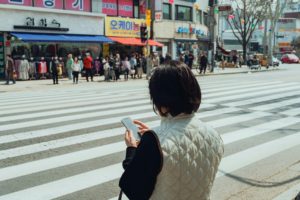
 South Korea glitters as a high-tech, high-income society. Yet beneath the sheen, a less visible crisis persists. Sex trafficking in South Korea is rooted in economic vulnerability, gender inequality and the misuse of migration and entertainment visa systems. Safety from sex trafficking traps is not only a societal struggle, but a struggle for anyone online, as many perpetrators dwell in chat rooms and live streams. The cases of the “runaway teen,” the migrant entertainer and the mother struggling to survive intersect here, not in spite of wealth, but because inequality persists.
Vulnerability in the Land of Affluence
Despite being classified as a high-income country, South Korea’s economic growth has not ended deep vulnerability for certain populations. According to the RAND Corporation, South Korea continues to have one of the largest gender pay gaps among the Organization for Economic Cooperation and Development economies (OECD), placing many women, especially single mothers, in precarious positions both financially and socially. Unfortunately, with that trend set, much of the evidence points to traffickers seeking the most impoverished, socially isolated and digitally disconnected people when preying on potential victims.
Online Exploitation
The U.S. State Department’s 2024 Trafficking in Persons (TIP) Report finds that many victims in South Korea are South Korean nationals, such as teenage girls, runaway youth and women in marginalized employment. Traffickers exploit victims online using debt traps, deceptive modeling opportunities or entertainment jobs. Children and adolescents in South Korea face sexual exploitation through chat apps and live-streaming, as they aren’t monitored by parents as much as other social media sites.
Human Rights Watch reported, “The overwhelming majority of the people targeted in digital sex crimes are women—80% in spy-cam cases.” Many victims are persuaded to interact with fake images, as well as false assurances of safety, to be vulnerable and open with the perpetrator. Once lured in, individuals are manipulated into exposing themselves, fearing that their reputation, relationships and personal safety are at risk.
Migration, Entertainment and Tourist Visas
Foreign women from Eastern Europe, Southeast Asia and the former Commonwealth of Independent States (CIS) enter South Korea under entertainment visas, tourist visas or other categories. A Korean academic study reveals that many women from Russia and Uzbekistan entered the country under tourism or spousal visas. However, a lot of those women transitioned into bar or club work and found themselves unable to exit due to debt or coercion.
A 2023 report by the Korean Women’s Development Institute (KWDI) states that victim identification remains weak; many migrant women do not recognize they are victims or fear deportation, hindering access to services.
Digital Frontlines and Hidden Coercion
The sex trafficking network in South Korea takes advantage of the country’s highly connected society. Chat apps, encrypted platforms and live-streaming are used to groom and traffic youth and adults alike. The infamous “Nth Room” case targeted young people through Telegram, demanding sexual content for cryptocurrency payments. This is not unique, as online platforms are common for recruiting people into sex trafficking.
Won Eun-ji, a university student who researched Nth Room, said, “They treated women, children and adolescents like products, not human beings.” Eun-ji clicked into a chatroom, thoroughly investigated it and came to realize the horrors associated with online predators. The lengths abusers went to satisfy themselves were overwhelming, causing him to tell his experiences to media outlets to help the public understand South Korea’s hidden sex slavery market.
Why Addressing Poverty and Inequality Matters in South Korea
Trafficking isn’t only a “developing-world” phenomenon. Poverty, limited social support and gendered economic oppression exist in advanced societies and they create ripe conditions for exploitation. In South Korea, youth who run away due to family conflict or educational pressures find themselves with nowhere to turn, making them susceptible to exploiters and sex trafficking.
A 2021 ECPAT study found that exploited male and female youth alike cited social isolation, stigma and lack of safe options as key vulnerability factors. Prevention must not only target “traffickers” but also the structural conditions, such as housing instability, youth outreach, migrant worker protections and a stronger social safety net.
Government Response
South Korea was upgraded to Tier 1 in the 2024 TIP Report, signaling progress in law enforcement, victim services and policy. However, significant gaps remain as victims still sometimes face investigation or deportation rather than protection. In a KWDI research report, experts say identifying victims when they do not self-identify, are undocumented or manipulated through various debts remains the most difficult area of investigation.
Victim identification among youth, migrants and men remains weak, as well as poverty-related vulnerabilities being rarely front and center in anti-trafficking strategies. Survivor-centered reforms are essential, incorporating safe return paths, debt relief, affordable housing and migrant legal aid.
What Can Be Done?
Much effort is focused on enforcement matters, but those alone isn’t enough. Expanding youth outreach and safe shelters for runaway or at-risk adolescents is essential, as well as increasing affordable housing and childcare supports for women with low income, reducing their vulnerability to coercion. Other measures that could help include strengthening protections and contract transparency for migrant entertainers and workers, such as cancelling passport seizure and providing legal recourse without fear of deportation.
Efforts to collaborate with tech platforms to detect grooming, enforce KYC and monitor financial flows linked to trafficking are essential. These measures must be complemented by policies that integrate poverty-reduction strategies into anti-trafficking frameworks, recognizing that economic justice is a fundamental aspect of human rights protection.
It’s Not Over
South Korea’s economic success should not overshadow the fact that pockets of vulnerability remain where traffickers operate, especially online. Poverty, gender inequality, digital recruitment and migration precarity form a potent risk matrix. Ultimately, the measure of a country’s prosperity is how it protects its most vulnerable, not just how many skyscrapers it builds.
– Nicole Fernandez
Nicole is based in Reno, NV, USA and focuses on Global Health for The Borgen Project.
Photo: Pexels

Senegal’s Film Industry: Source of Economic Opportunity
Post-Colonization Spark
After gaining independence from France in 1960, Senegalese artists began challenging colonial narratives that had long dominated the nation’s media. During this period, many Senegalese citizens were still influenced by European ideals. Even the country’s president preferred speaking French over native languages because it was viewed as more “professional.” This tension between colonial legacy and national identity became a central theme in early Senegalese cinema.
Ousmane Sembène, often called the father of African cinema, was one of the first filmmakers to use film as a tool for cultural liberation. His groundbreaking works, such as Xala and Ceddo, exposed the lingering effects of colonialism, class inequality and political corruption. Despite facing censorship from President Léopold Sédar Senghor, Sembène’s films gave Senegal a voice and paved the way for future generations of filmmakers. His legacy established cinema as a medium for self-expression, education and national pride.
Filmmaker Recognition
In recent years, Senegal’s film industry has experienced a creative and financial revival. Filmmakers such as Alain Gomis and Mati Diop have gained international recognition at major festivals, including the Pan-African Film Festival (FESPACO). These events not only celebrate African talent but also help globalize Senegalese cinema, generating exposure and financial opportunities for local artists. However, many award-winning Senegalese films are still co-produced with Western partners, which can sometimes limit creative control and authenticity.
To strengthen its domestic industry, Senegal has taken steps to invest in its creative infrastructure. In 2022, filmmaker Toumani Sangaré opened a film school in Dakar to train young professionals and reinvest in local communities. This initiative helps keep revenue within the country and promotes job creation for writers, directors, technicians and actors.
Cinematic Beauty and Funding Restraints
Senegal’s coastal beauty and cultural richness have also attracted major international productions. Platforms like Netflix have begun filming in Senegal because of its scenic landscapes and favorable climate, further boosting local employment and technical training opportunities. Regional television production has expanded rapidly, with content now available on YouTube, Amazon Prime and other streaming services. This digital accessibility has widened the audience for Senegalese films, helping creative workers reach global markets and generate sustainable income.
The economic impact of creative growth is significant. As film production increases, so do opportunities for small businesses in catering, transportation, costume design and tourism. Each new production stimulates local economies, providing a ripple effect that benefits entire communities. Additionally, international co-productions and streaming partnerships introduce new revenue streams that support long-term economic stability.
However, challenges remain. Senegal’s film industry still faces limited infrastructure, restricted access to funding and a shortage of domestic theaters. Many filmmakers rely on international grants or co-productions to finance their projects, which can limit their creative independence. Expanding government support through funds such as FOPICA (Le Fonds de Promotion de l’Industrie Cinématographique et Audiovisuelle) and encouraging private investment could help the industry become more self-sustaining.
Looking Ahead
Despite these barriers, the momentum of Senegal’s creative sector shows how culture and economy are deeply connected. By amplifying authentic Senegalese voices and stories, the film industry strengthens national identity while generating new paths out of poverty. Each project filmed in Dakar or Saint-Louis represents not just art but also economic empowerment, creating jobs, inspiring education and fostering community development.
– Miranda Yacynych
Photo: Flickr
Poverty, Digital Recruiters and Sex Trafficking in South Korea
Vulnerability in the Land of Affluence
Despite being classified as a high-income country, South Korea’s economic growth has not ended deep vulnerability for certain populations. According to the RAND Corporation, South Korea continues to have one of the largest gender pay gaps among the Organization for Economic Cooperation and Development economies (OECD), placing many women, especially single mothers, in precarious positions both financially and socially. Unfortunately, with that trend set, much of the evidence points to traffickers seeking the most impoverished, socially isolated and digitally disconnected people when preying on potential victims.
Online Exploitation
The U.S. State Department’s 2024 Trafficking in Persons (TIP) Report finds that many victims in South Korea are South Korean nationals, such as teenage girls, runaway youth and women in marginalized employment. Traffickers exploit victims online using debt traps, deceptive modeling opportunities or entertainment jobs. Children and adolescents in South Korea face sexual exploitation through chat apps and live-streaming, as they aren’t monitored by parents as much as other social media sites.
Human Rights Watch reported, “The overwhelming majority of the people targeted in digital sex crimes are women—80% in spy-cam cases.” Many victims are persuaded to interact with fake images, as well as false assurances of safety, to be vulnerable and open with the perpetrator. Once lured in, individuals are manipulated into exposing themselves, fearing that their reputation, relationships and personal safety are at risk.
Migration, Entertainment and Tourist Visas
Foreign women from Eastern Europe, Southeast Asia and the former Commonwealth of Independent States (CIS) enter South Korea under entertainment visas, tourist visas or other categories. A Korean academic study reveals that many women from Russia and Uzbekistan entered the country under tourism or spousal visas. However, a lot of those women transitioned into bar or club work and found themselves unable to exit due to debt or coercion.
A 2023 report by the Korean Women’s Development Institute (KWDI) states that victim identification remains weak; many migrant women do not recognize they are victims or fear deportation, hindering access to services.
Digital Frontlines and Hidden Coercion
The sex trafficking network in South Korea takes advantage of the country’s highly connected society. Chat apps, encrypted platforms and live-streaming are used to groom and traffic youth and adults alike. The infamous “Nth Room” case targeted young people through Telegram, demanding sexual content for cryptocurrency payments. This is not unique, as online platforms are common for recruiting people into sex trafficking.
Won Eun-ji, a university student who researched Nth Room, said, “They treated women, children and adolescents like products, not human beings.” Eun-ji clicked into a chatroom, thoroughly investigated it and came to realize the horrors associated with online predators. The lengths abusers went to satisfy themselves were overwhelming, causing him to tell his experiences to media outlets to help the public understand South Korea’s hidden sex slavery market.
Why Addressing Poverty and Inequality Matters in South Korea
Trafficking isn’t only a “developing-world” phenomenon. Poverty, limited social support and gendered economic oppression exist in advanced societies and they create ripe conditions for exploitation. In South Korea, youth who run away due to family conflict or educational pressures find themselves with nowhere to turn, making them susceptible to exploiters and sex trafficking.
A 2021 ECPAT study found that exploited male and female youth alike cited social isolation, stigma and lack of safe options as key vulnerability factors. Prevention must not only target “traffickers” but also the structural conditions, such as housing instability, youth outreach, migrant worker protections and a stronger social safety net.
Government Response
South Korea was upgraded to Tier 1 in the 2024 TIP Report, signaling progress in law enforcement, victim services and policy. However, significant gaps remain as victims still sometimes face investigation or deportation rather than protection. In a KWDI research report, experts say identifying victims when they do not self-identify, are undocumented or manipulated through various debts remains the most difficult area of investigation.
Victim identification among youth, migrants and men remains weak, as well as poverty-related vulnerabilities being rarely front and center in anti-trafficking strategies. Survivor-centered reforms are essential, incorporating safe return paths, debt relief, affordable housing and migrant legal aid.
What Can Be Done?
Much effort is focused on enforcement matters, but those alone isn’t enough. Expanding youth outreach and safe shelters for runaway or at-risk adolescents is essential, as well as increasing affordable housing and childcare supports for women with low income, reducing their vulnerability to coercion. Other measures that could help include strengthening protections and contract transparency for migrant entertainers and workers, such as cancelling passport seizure and providing legal recourse without fear of deportation.
Efforts to collaborate with tech platforms to detect grooming, enforce KYC and monitor financial flows linked to trafficking are essential. These measures must be complemented by policies that integrate poverty-reduction strategies into anti-trafficking frameworks, recognizing that economic justice is a fundamental aspect of human rights protection.
It’s Not Over
South Korea’s economic success should not overshadow the fact that pockets of vulnerability remain where traffickers operate, especially online. Poverty, gender inequality, digital recruitment and migration precarity form a potent risk matrix. Ultimately, the measure of a country’s prosperity is how it protects its most vulnerable, not just how many skyscrapers it builds.
– Nicole Fernandez
Photo: Pexels
How Best to Help? UK Aid in Myanmar
The Situation in Myanmar
The U.K. has devoted more than £100 million of aid to Myanmar since 2017, according to a statement from Parliamentary Undersecretary in the Foreign, Commonwealth, and Development Office Seema Malhotra. Rakhine state alone received £108 million on the country’s western coast, which has been involved in a conflict since a military coup in Myanmar in 2021.
Almost half of this aid went towards helping the Rohingya people, and other Muslim groups who have faced persecution by the military government. With Malhotra claiming this aid has reached 1.3 million people since 2022. The earthquake has worsened the political turmoil in Myanmar in March 2025.
In response to this, the U.K.’s Disasters Emergency Committee (DEC), a coalition of charities that the U.K. government supports through the aid match scheme, launched a specific appeal designed to rapidly increase U.K. aid in Myanmar.
Myanmar’s military government blocking aid to areas outside of military control has allegedly hampered this scheme, according to the U.K. governemnt. This raises questions over how U.K. aid in Myanmar can be more effective.
About the DEC
The DEC comprises 15 leading U.K. aid charities that collectively raise funds rapidly during overseas crises. This coalition intends to combine the different charities’ resources in order to reduce administrative costs and distribute U.K. aid in Myanmar and around the world as efficiently as possible.
The U.K. government’s aid match scheme supports the group, whereby the government donates an amount equal to that donated by the public for any given appeal.
Aid match has previously helped raise £50 million for the 2021 Afghanistan Crisis Appeal, and is currently also fundraising for aid schemes in Ukraine and Pakistan.
While aid match has previously been successful, there are fears that closely associating aid efforts with the U.K. government could lead to them being refuted by foreign governments, as is allegedly the case in Myanmar.
ActionAid
The charity ActionAid is a member of the DEC and has been active in Myanmar since 2001.
ActionAid’s primary focuses include defending women’s rights in Myanmar, through schemes that train police officers to enforce laws designed to prevent human trafficking and child marriage.
Earthquake damaged Myanmar’s agricultural sector, disrupting trading networks and destroyed farmland.
ActionAid have attempted to assist in Myanmar’s economic recovery by training women in the worst-affected regions to set up their own small businesses. The blocking of aid to regions outside of direct military control has slowed this process, potentially leaving women in these regions at risk of exploitation.
Independent Aid: Health and Hope
Health and Hope is an independent U.K. charity that works to help those living in Chin state, the poorest state in Myanmar.
Around 73% of people living in the Chin state are not able to meet their basic food needs, compared to 32% of the country as a whole.
Despite not contributing as much funding towards U.K. aid in Myanmar as some of its counterparts in the DEC; Health and Hope has helped train 329 Community Health Workers over the past year.
Health and Hope has, in fact, deliberately maintained as small a workforce as possible to deliver as large a proportion of donations as possible directly to its aid projects in Myanmar. The charity estimates that 88% of all external funding goes directly to aid projects. Their small size has also made Health and Hope less of a target for military blockades, that have prevented larger aid organisations from entering certain regions of Myanmar.
The Government’s Future Role
U.K. aid match has undoubtedly played a vital role in fundraising for various aid projects throughout the last decade, including in Myanmar. This scheme, combined with the public recognition of, and trust in, the DEC and its members, have helped to maximise the value of the aid assigned to Myanmar since the earthquake of March 2025.
– Billy Stack
Photo: Wikimedia Commons
mRNA: A Key Breakthrough in Developing an HIV vaccine
Populations At Risk
While anyone can contract HIV, certain groups face disproportionately higher risks due to social, economic and structural factors. Globally, key populations include gay and bisexual men, sex workers, people who inject drugs and transgender individuals—groups that often encounter stigma, limited access to health care and higher exposure to risk. The southern area of Africa has the highest rates of HIV, with the countries of Eswatini and Lesotho having the highest rates in the world at 27% and 20.5%, respectively. These statistics help paint a better picture of the people that HIV affects the most, as well as point to the need for an HIV vaccine.
HIV Vaccine: Developmental Progress
Recently, researchers published a new study in Science Translational Medicine. According to The Foundation for AIDS Research (amfAR), the tested vaccine uses an mRNA structure similar to the COVID-19 vaccine that could provide cells with the necessary information to fight an HIV infection by creating a membrane-bound version of HIV that would be easier for cells to fight, and develop an immune response that would take effect if it ever came into contact with HIV.
After successful tests in animals, human trials started. While some of the participants developed a rash as a result of the vaccine, the results were overall effective, with many people developing the necessary antibodies to fight against HIV. Overall, the tests proved that there is at least a path forward to developing an HIV vaccine. However, actions by the U.S. government led to a loss of funding, which could stall the progress of an HIV vaccine. But the progress so far shows that an HIV vaccine is possible in the future.
Looking Ahead
HIV remains a major global health concern. The recent mRNA-based study demonstrates that an HIV vaccine is within reach, offering hope that continued research and support could one day lead to a breakthrough capable of saving millions of lives worldwide.
– Charlie Means
Photo: Pixabay
Healing the River: Schistosomiasis in São Tomé and Príncipe
A Low-Level but Stubborn Threat
Recent studies confirm that São Tomé and Príncipe maintains a low but persistent level of schistosomiasis transmission, primarily caused by Schistosoma intercalatum. According to research published in PLOS Neglected Tropical Diseases in 2023, national prevalence remains low following repeated rounds of mass drug administration and health education campaigns. Ongoing surveillance continues to identify limited transmission in certain communities, underscoring the need for sustained control measures under World Health Organization guidance.
Momentum Since 2014
After a nationwide mapping survey in 2014, the Ministry of Health launched preventive chemotherapy with praziquantel in schools. In 2015 alone, more than 31,000 school-age children received treatment—an essential step to cut infections and protect those most at risk. Continued surveillance has turned up only sporadic cases, including a rare neuroschistosomiasis report in 2020, underscoring why vigilance still matters even as prevalence drops.
A 2024 Milestone: Halting Mass Drug Administration
Regional partners now point to a major achievement. The WHO Africa region’s ESPEN program reported in its 2024 annual review that São Tomé and Príncipe halted mass drug administration (MDA) in all endemic implementation units, marking a key waypoint toward elimination. ESPEN’s 2025 data updates also list STP among countries that did not conduct MDA in 2024, consistent with a transition from blanket treatment to targeted surveillance and response.
Water, Sanitation and Hygiene: The Long Game
Treatment alone cannot finish the job. Lasting gains depend on safe water, sanitation and hygiene (WASH) so people aren’t re-exposed to rivers and irrigation canals. UNICEF reports recent WASH actions in STP, including strengthening handwashing behaviours and coordinating a multisectoral WASH platform—efforts that protect families from schistosomiasis and other infections. Global JMP updates from WHO/UNICEF show why this matters: many health facilities and households worldwide still lack basic WASH services, a gap that sustains NTD transmission.
What’s Needed Next
São Tomé and Príncipe continue national efforts aligned with World Health Organization (WHO) guidance to control schistosomiasis. Current work includes post–mass drug administration monitoring, integrating surveillance into primary health care and coordinating with education and water agencies to sustain prevention gains. The Ministry of Health, with support from WHO and international partners, maintains praziquantel distribution in areas where transmission remains and tracks infection data to guide control strategies. These ongoing initiatives reflect the country’s commitment to meeting the WHO’s 2030 targets for neglected tropical diseases.
Why it Matters
Eliminating schistosomiasis saves children from anaemia, abdominal pain and missed classes, and it strengthens primary health care. With MDA paused and WASH investments growing, São Tomé and Príncipe has a real shot at stopping transmission. Sustained funding for surveillance and water infrastructure can help the islands turn a quiet success into a permanent victory.
– Katie Williams
Photo: Flickr
Education or Survival? Educational Challenges in Rural Punjab
Despite being close to Pakistan’s industrial hubs, rural Sialkot still faces deep-rooted inequality. Most families rely on small trades, farming or daily labor to make a living. For many, educating their children, especially daughters, feels out of reach. Schools are limited, transportation is expensive and traditional gender norms remain strong.
Waris is the only one in her family still in school. Her brothers fully support her, doing what they can despite financial strain. “We do have a small business, but education expenses are a big burden,” she says.
Waris’ Story: Education Beyond Boundaries
To overcome these educational challenges in rural Punjab, Waris’ family moved to Islamabad. This marked a turning point in Waris’ life. “It’s good for my personality development and my life,” she says, explaining that university education has given her confidence and exposure that rural girls rarely experience.
Yet, the journey has not been easy. “I face difficulties in paying my fees and managing transport. My family supports me, but it’s not easy for them,” she adds. Her words reflect the quiet determination of many rural students who leave their homes in search of a better future.
The Gender Divide in Rural Punjab
Educational challenges in rural Punjab are deeply intersectional with gender. This reflects the province’s wider gender gap, where female literacy is just about 63.4% compared to 75.4% for males. In her hometown, education beyond matriculation is not very common for girls. “In our area, education is so difficult for girls after matric, very few continue,” Waris explains. “Most get married early or start working in factories.”
Waris considers herself lucky to have parents who believe in education. “They’re not conservative. They want me to study and have a good job. But there’s still a lot of social pressure. People talk, but my family appreciates me and is standing by me.” Encouragingly, she also notes progress. “In old times, there were very few girls going to school. But now, things are changing. More girls are studying and they’re more passionate than boys.”
Dreams and Determination
Waris’ ambitions stretch far beyond her village. She aspires to enter politics to represent and uplift her community. “Education is as important as water,” she says. “It gives life meaning and power. Without it, people remain trapped.”
Her words carry a powerful message for policymakers and citizens alike: scholarships, free education and transport systems are essential if rural students are to compete equally with their urban counterparts.
The Path Forward
Waris’ story, from rural Sialkot to Islamabad, mirrors the broader dilemma faced by Pakistan’s working class: whether to prioritize education or focus on survival. Her journey highlights the significance and ever-cascading educational challenges in rural Punjab.
She shares her story as both a personal triumph and a reminder that true progress depends on making education accessible to all, regardless of geography, gender or income. For now, Waris continues to study, fueled by hope that one day her success will help open doors for others in her village who still dream of learning.
– Sidra Tahir
Photo: Flickr
Transformation: Humanitarian Aid in South Korea
Transition from Aid Recipient to Donor
Humanitarian aid in South Korea formally began in 1962. Back then, The International Development Association (IDA), a World Bank fund meant for the poorest countries in the world, granted Korea their first financial support. The first project undertaken with the money was a smart investment in infrastructure. The money helped build a railroad line for freight and passengers.
It was the first of many projects as South Korea went on to cooperate with the IDA to develop irrigation, railroads, highways, schools and universities. Soon, Koreans began reaping the benefits of international investment. The country moved onto industrial development, workforce education and R&D.
The history of humanitarian aid in South Korea is truly unlike any other country. In 2009, they became the first former aid recipients to join OECD’s Development Assistance Committee, an organisation of largest worldwide aid providers. The poverty reduction in the country has been incredible with GDP per capita rising from $158 in 1960 to $31 489 in 2020, due to an impressive growth rate of more than 7% a year.
According to OECD, Korea was the 13th largest donor in the world, with $3.94 billion donated in 2024. Its increased humanitarian activities are reflected in the impactful aid agencies, both state and private, established in the country.
Korea on the International Humanitarian Aid Stage
The Korea International Cooperation Agency (KOICA) is an organization the government created in 1991 under the control of the Ministry of Foreign Affairs as a unified grant issuer. It has since become one of the central institutions shaping humanitarian aid in South Korea, coordinating projects of different government branches. KOICA fights global poverty and supports sustainable economic development while also fostering friendly relationships with recipient countries.
The outreach of KOICA’s work is impressive with work across Asia, Africa, Latin America and the Middle East. As of 2021, their total financial support amounted to around $636 million with permanent offices set up across 47 countries. The organization is steadily developing its operations. Between 2018 and 2021, the total number of projects carried out increased from 260 to 311.
An interesting initiative of KOICA is the Global Diseases Eradication Fund, which collects money by obtaining a symbolic amount of 1,000 won from each international flight departing the country. KOICA then donates the gathered funds for treatment and prevention of infectious diseases in developing countries. The total amount of money the programme collected since 2007 in this way is 385.2 billion won.
A notable project funded by the Global Diseases Eradication Fund is the Global Alliance for Vaccines and Immunisation. With a budget of $30 million, KOICA supports the provision of vaccines and medicines necessary for children’s survival, which helps reduce the prices and make these life-saving items more widely available.
Good Neighbour
Established in 1991, Good Neighbour is a humanitarian aid organization in South Korea which aims to free the world from hunger. Its mission is to support neglected communities regardless of ethnicity, religion or ideology. Its first project took place in 1992 in Bangladesh. Besides long-term investments, the organization focuses on responding to humanitarian crises. For example, it took part in helping Somalia in 1993, in Rwanda in 1994 or in Ukraine in 2022. Besides working abroad, the Good Neighbour addresses domestic issues like child abuse. It has created a hotline for reporting abuse and contributed to changing relevant laws.
Council for Overseas Development Cooperation (KCOC)
The Good Neighbour’s international work is impressive, with the organization being one of the founding members of the Korea NGO Council for Overseas Development Cooperation (KCOC). Its international impact includes helping communities in areas like education, health care, water and income generation.
Dilafruz, a mother of six from Tajikistan, and her entrepreneurial success is an example of the tangible outcomes of Good Neighbour’s work. Her husband used to work in Russia, but he lost his job ,which put the family in a difficult place. Dilafruz recalls “there were days when I didn’t know how I would feed my children”. The community development project carried out by Good Neighbour helped women in the area, including Dilafruz, start small businesses and earn income.
Dilafruz, thanks to Good Neighbour, attended financial literacy, entrepreneurship sessions and consultations which led her to apply for her first loan of $80. She noticed that bread was always in demand in her area and set up a bakery which became a big success. Nowadays she employs several women from the area, who used to be housewives with no income. Even people from the capital drive down to her village to buy the bread. Dilafruz said that “Thanks to Good Neighbours, I found the courage to start. Now I’m helping others do the same”. She has already hosted exchange visits from Tajikistani women who wanted to learn about her business. Dilafruz is only one of many whom The Good Neighbour has helped.
Conclusion
South Korea is an inspiring example that shows how humanitarian aid can transform a country. Today, humanitarian aid in South Korea shows how far the country has come since the 1950s. From being one of the world’s poorest states, South Korea is now one of the biggest worldwide humanitarian aid donors. This change is especially reflected in increasing humanitarian NGO activity. Organisations like The Good Neighbour and agencies like KOICA are reinvesting in the world’s most vulnerable after they have been helped with financial aid themselves.
– Karol Hejduk
Photo: Wikimedia Commons
Vocational Māori Education in New Zealand
Contextualizing the Māori Experience
In 1840, there were 80,000 Māori in comparison to 2,000 non-Māori inhabiting New Zealand; by 1896, this figure has drastically reversed with 42,000 Māori to 700,000 non-Māori. Issues of inequality remain tightly bound to ethnicity as poverty disproportionately affects the Māori which, when combined with an education system that does not reflect their beliefs, has reinforced social barriers.
In 2023, 28.3% of Māori school leavers did not achieve the NCEA (National Certificate of Educational Achievement) Level 1, New Zealand’s official secondary school qualification, in contrast to just 14% of the non-Māori. Only 63.6% of Māori students remain enrolled in school until age 17, compared with 79% of non-Māori students.
Colonial Legacies or Responsibilities?
Educational disparities have close ties with historic prejudices; when European colonial authorities settled, the Māori experienced stigmatization. To form an agreement between the two, the settlers and the Māori signed the Treaty of Waitangi in 1840. However, Māori and English translations of the treaty vary on one crucial point: Māori authority. Article 3 of the treaty not only grants Māori with the same citizenship rights as European colonial authorities, but also states that the Crown should provide accessible and appropriate education. However, what some deem accessible and appropriate is both a changeable and controversial topic.
In a move the government hoped would create greater social equality, it formed the Treaty Principles Bill which was voted down in April 2025 and would have, had it not received a rejection, effectively dissolved the Treaty of Waitangi’s statement of the Māori’s need for individual determination and provision. Seeing differentiation as a form of discrimination or facilitation directly changes how Māori customs are honored, or not, in mainstream education. So, New Zealand’s continual legislative insecurity has resulted in alternate pathways to widen Māori access to education: the first within and the second outside of the classroom.
Schemes Within Mainstream Education
Against a defective educational background sits the so-called ‘Māori Renaissance,’ a phrase notably European in reference and a movement which prioritizes the iwi, the Māori term for their people. Created in 1995, the Māori Affairs Select Committee made a model to support iwi in their attainment of higher educational outcomes.
These outcomes were set to begin early, with the rollout of Te Kōhanga Reo from the 1980s providing a total immersion in Māori language for preschoolers. A more culturally conscious mode of teaching has also received encouragement in the classroom, as a renewed emphasis on building a whānau, an extended family, between teachers, students and parents has aimed to prevent further disaffiliation with mainstream education.
The 2025 Budget further affirms this aim, adding another $50 million in New Zealand’s capital funding to support Māori students’ success with enhanced curriculum and teacher training, including but not limited to:
There are also three Māori Universities offering anything from Bachelors in Māori Performing Arts, to Māori nursing, or even Mātauranga Māori, a degree in iwi philosophy. As an alternative to a purely vocational path, these courses bring Māori knowledge in line with more traditional degree paths to allow members of the community access to higher education without forfeiting their cultural beliefs.
However, on the June 7, 2025, the New Zealand government removed Māori and Pacific learners as an eligible category for extra funding, prompting insecurity and anxiety as to how Māori accommodations will continue to work in mainstream education.
Vocational Schemes Outside Mainstream Education
Vocational learning is an experience intrinsically Māori in practice, as past generations would impart crafts like weaving and woodworking in a familial practice known as the Tuakana teina dynamic. This principle also determines a Māori’s rights to ancestral lands, roles within the iwi and even, historically, potential marriages. With a focus on how individual responsibility intersects with the community, it provides an excellent framework for vocational training schemes.
A nonprofit actively utilizing this dynamic is the Tāwharau Housing Trust, which originated in 2017. It uses the customary acquisition models of the Māori community to teach trades within the construction industry, while also building affordable housing. One can translate ‘Tāwharau’ as the verb “to shelter” or the noun “a shelter,” which encapsulates the overall sustainability of the project as it not only addresses the housing needs of the immediate community, but provides future generations with the skills needed for job security.
The Rotorua School of Māori Arts and Crafts
Another vocational Māori education scheme in New Zealand is The Rotorua School of Māori Arts and Crafts, which originated in 1926. Translated as “The World of Light,” kinship is built between students and their instructors as they work on projects together such as the building of a meeting house, dining rooms and various other community buildings. Many of their graduates rejoin as staff to train the next generation of Māori carvers in a cyclical pattern not only preserving traditional practices, but also careers which support creative and cultural expression.
The Māori Trade Training Scheme
Finally, the Māori Trade Training Scheme, which has been operational since the 1960s, led Māori school leavers down vocational pathways by relocating them to specialist training centers. In addition to giving those who grew up in rural communities the opportunity to live in an urban environment, the trades on offer have come to range from carpentry to electrical work and even engineering to name a few.
Looking Ahead
Considering the closure of the Māori Trades and Training Fund on June 30 2025, the future of vocational Māori education in New Zealand is largely dependent on the community’s own self-determination in light of lost government aid.
– Carys Davies
Photo: Pixabay
Diseases Impacting Chile
Cancer Progress
In recent years, cancer has rivaled cardiovascular disease for the title of leading cause of death in Chile, with 31,440 reported cancer-related deaths in 2022. In response to cancer being one of the most persistent diseases impacting Chile, the government has implemented multiple policies to fight the disease. The government passed laws to lower tobacco use, increase the number of HPV vaccines and facilitate more cancer research and clinical trials within the country.
In 2018, Chile implemented a national cancer plan. The plan focuses on shortcomings in prevention, diagnosis and treatment for patients across the country. Officials saw success with the formation of a national cancer registry and the existing tumor banks, with one example being roughly 700,000 cholecystectomies being performed since the start of the plan.
Cardiovascular Disease Concerns
Heart disease remains one of the leading causes of death in Chile, at around 25% of all deaths. According to the World Health Organization (WHO), this number was 33,504 in 2023 – an increase in deaths from 2019. Significant risk factors like hypertension, which affects nearly one in four adults in the country, are often unknown to patients and lead to an increased risk for Cardiovascular Disease (CVD).
The Chilean government has embarked on a mission to increase awareness of hypertension and CVD as a whole. In 2013, the country partnered with the Pan-American Health Organization (PAHO) and the United States’ Centers for Disease Control and Prevention. Across the greater South American region, over three million people have received treatment for hypertension as a result of these partnerships. Concrete successes include the creation of public hypertension clinics, expansion of health coverage in the country and increased data collection to ensure patients are identified before cardiovascular disease can develop.
COVID-19 Difficulties
Chile never established a national lockdown, leading quarantine guidelines to be inconsistent in different localities. With more than 5 million total cases and more than 64,000 deaths, Chile was one of the most affected nations in South America. As recently as 2022, the country saw 13,433 COVID-19 deaths, despite having a vaccination rate of 94.62%.
Although COVID still poses a risk, Chile has demonstrated its ability to mobilize quickly when it comes to vaccinations. The success of vaccine distribution, combined with low vaccine skepticism in the country, means that Chile is equipped to respond more effectively to the next potential pandemic.
Looking Ahead
Chile’s proactive public health policies and investment in health care infrastructure offer a model for other developing nations. The few diseases impacting Chile still have a grip on the population, with preventable deaths in cancer and cardiovascular disease making up more than 50% of deaths in the country. However, Chile has reasons to be optimistic, with progress being made each year when it comes to infrastructure and research in combating these issues.
– Benjamin Pugh
Photo: Flickr
Morocco’s Gen Z Protests: Better Education and Health Services
Progress and Persistent Gaps
In the last two decades, life expectancy has increased from 66.8 years in 2000 to 75.7 years in 2025,
and vaccination coverage reached 94.5% in 2023, leading to the elimination of polio and diphtheria.
The government has also invested in educational accessibility for vulnerable groups with frameworks like the 2000 Education Framework Law and national initiatives such as the National Human Development Initiative (INDH) in 2006. However, despite these improvements, many Moroccans still lack access to quality health care and education.
Morocco’s Gen Z Protests
The GenZ212 movement started the protests in September 2025 and used social media platforms to mobilize hundreds of supporters to join the cause. About 200 protesters were arrested as police used force to disperse crowds. Studies revealed that 43% of young Moroccans aged 18–29 spend three to five hours per day on social media. Hundreds of young Moroccans also supported the movement online. They used social media platforms such as Instagram and TikTok to raise awareness and counter misinformation.
The movement grew from 1,000 to 180,000 members using the platform Discord for coordination, discussion and decision-making. They were not affiliated with political parties or unions and demanded more public spending on health and education, less corruption and greater political accountability.
Young Moroccans also participated in protests across many cities, including Casablanca and Rabat. GenZ212 used digital organizing as the backbone for their protests. The movement integrated digital awareness and civic action to demand political and social changes in the country.
The Current Situation
In rural areas of Morocco, residents often lack access to health care services due to worker shortages and limited insurance. Twenty percent of the population lives more than 10 kilometers from a primary care facility. Rural areas also face challenges in providing education services, including a lack of teacher training and classroom overcrowding. As of 2022, 64% of Moroccan 10-year-olds cannot read or understand a simple text.
In response, the Moroccan government and NGOs launched reforms to expand access to education and health care. In 2021, the WHO launched the National Plan to Combat Childhood Cancer at St. Jude Children’s Research Hospital to improve treatment access and expand pediatric oncology and palliative care. From 2020 to 2022, the childhood cancer survival rate rose from 68.2% to 72.2%, and the goal is to reach 80% by 2030.
The World Bank financed a total of $750 million by 2023 for Morocco’s Education Support Program to support the government’s Strategic Education Roadmap (2022–2026). The reform agenda aims to expand early childhood education, invest in teacher training and reduce learning poverty.
Earlier this year, the government reviewed these reforms with the goal of restoring confidence in public schools and addressing previous shortcomings. The education budget rose to $8.5 billion, up from $6.8 billion in 2019, with the expansion of 230 Pioneer Middle Schools, benefiting more than 200,000 students.
Post–Gen Z Protests
The civic participation and digital activism of Morocco’s Gen Z protests prompted a response from both the king and the government. On Oct. 10, King Mohammed VI addressed Parliament and called for faster social and economic reforms.
Government spokesperson Mustapha Baitas also acknowledged the protests. As a result, on Oct. 20, the government announced major social reforms in direct response to the demonstrations. The 2026 draft finance bill strengthens public education, creates 27,000 new jobs in education and health care, and allocates $13 million to these sectors. The youth political participation bill will cover up to 75% of campaign expenses and invite citizens under 35 to join politics. The party reform proposal will enhance political party transparency and encourage women and youth to join or establish political parties.
One sign of this new transparency was the public livestreaming of a parliamentary committee meeting on health care reform on Oct. 1. This event marked a shift toward transparency and public participation in policymaking.
Looking Forward
Morocco’s Gen Z protests marked a turning point in the country’s social and political landscape. Indeed, what began as a reaction to failures in health and education evolved into a nationwide demand for accountability, equality and transparency. The movement demonstrated the power of digital mobilization and the determination of Morocco’s youth to shape the future of their country. Morocco’s Gen Z has shown that civic engagement and collective action can drive reform for social justice and improved public services, offering hope that youth-led movements will help build a more equitable future for the country.
– Angela D’Avino
Photo: Pixabay