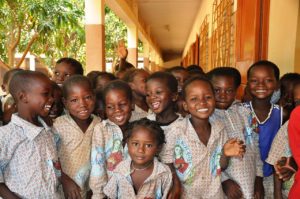
 Overlapping crises of conflict and displacement have profoundly disrupted education in Burkina Faso. As of February 2024, the Burkinabè Ministry of Education reported that 5,336 schools, representing more than 20% of the country’s schools, were shuttered due to insecurity, affecting more than 820,000 students and 24,000 teachers. In regions under attack, armed militants have targeted teachers, burned or looted school buildings and intimidated families to keep children out of class.
Between 2022 and 2023 alone, organizations documented more than 270 attacks on educational institutions, including arson and classroom damage. In parallel, mass displacement has uprooted millions of families within the country, leaving many children without access to stable schooling. Yet even in this precarious context, a range of targeted efforts are working to sustain learning.
From teacher training in psychosocial support to mobile and tablet-based classrooms reaching displaced learners, these interventions aim to bridge the gaps inflicted by conflict. Here are five concrete solutions helping children in Burkina Faso continue their education despite adversity.
Safe Schools Program: Supporting Teachers and Students
In Burkina Faso, the Safe School Program, led by UNICEF in collaboration with the Ministry of Education and several NGOs, aims to keep children learning safely despite ongoing violence and displacement. The initiative protects students and teachers in conflict-affected areas while promoting psychosocial well-being and resilience. A key part of the program focuses on training teachers to provide psychosocial support and manage classrooms effectively during periods of stress.
Many educators in Burkina Faso have experienced trauma themselves. Hence, the training helps them identify signs of distress in students and build a sense of safety and trust in the classroom. In an assessment of 583 teachers, more than 80% showed symptoms of stress or trauma, highlighting how vital this support is in sustaining education in Burkina Faso.
Since its launch, the program has reached more than 900,000 children and 10,000 teachers across approximately 4,400 schools. In the Center-Nord region alone, more than 11,600 children, including 6,000 girls, have benefited from safe learning spaces, while 2,000 children received direct psychosocial support. By focusing on safety, mental health and teacher empowerment, the Safe School Program shows how education can remain a source of stability and hope even in the midst of crisis.
Mobile and Tablet-Based Classrooms for Displaced Learners
In response to widespread school closures and attacks, UNICEF’s Education in Emergencies (EiE) program is helping children in Burkina Faso regain access to safe, quality education. The initiative focuses on reopening schools in conflict-affected areas, training teachers and creating protective learning spaces for displaced children. UNICEF and Save the Children have both introduced tablet-based learning programs as part of their EiE response.
The tablets are preloaded with literacy, numeracy and life skills lessons, designed for self-paced learning without needing internet access or money to pay for books. This approach helps bridge the gap for students whose schooling has been interrupted by displacement, keeping education in Burkina Faso a priority. Technology-based initiatives are helping to extend learning opportunities to children in regions where access to formal schooling remains limited.
Emergency Teacher Training: Adapting Pedagogy in Crisis
Rapid teacher training programs are crucial to sustaining education in crises like Burkina Faso. UNICEF’s humanitarian reports indicate that Burkina Faso’s EiE efforts include capacity building for teachers and facilitators, even amid instability. For instance, in late 2024, 18 teachers participated in “Alternate Emergency Classes” training, which covered protection, pedagogy and national language instruction.
Following prolonged school disruptions, catch-up classes led by trained teachers have been implemented to help children regain their learning momentum. From July to August 2024, UNICEF supported 14,314 children with daily remedial classes in five regions; teachers in these programs are trained to work with students who missed schooling.
NGO and Community-Led Learning Spaces
Local and community-driven initiatives have become essential in keeping education in Burkina Faso’s conflict-affected regions alive. Across the country, NGOs and grassroots groups establish temporary learning spaces and support host schools that have taken in displaced children. These locally run centers not only provide classrooms but also a sense of normality for children who have fled violence.
Organizations like Educo, working with partners like Terre des Hommes and INTERSOS, have supported around 40 schools welcoming displaced children. Through temporary classrooms and teacher support, these efforts are helping more than 20,000 learners, including 11,000 internally displaced students and children from host communities. Meanwhile, U.N.-Habitat has constructed new classrooms in urban areas such as Kaya, Kongoussi, Tougouri and Dori, where displaced families have pressured the existing infrastructure.
These projects are helping to reduce overcrowding and create safer, more stable spaces for children to continue their education in Burkina Faso. These initiatives show how local communities and organizations are stepping in to keep education going. They range from setting up temporary classrooms to expanding school facilities, ensuring children affected by conflict can continue learning in safer, more supportive environments.
International Support and Partnerships
International donors and development organizations are playing a critical role in sustaining education in Burkina Faso. They are helping finance infrastructure, bridging conflicts and supporting emergency access to learning. One example is the World Bank’s recent Restoring Education System Performance and Improving Resilience (REPAIR) Project.
The $140 million project aims to expand access to primary and pre-primary education, improve foundational learning and support emergency education for displaced and vulnerable children. It also includes investments in educational infrastructure and capacity building for the government. Under REPAIR, approximately 2.2 million students and 40,000 teachers in Burkina Faso are expected to benefit from its range of interventions.
Together, projects like REPAIR highlight how international partnerships can help sustain education even in times of crisis. Investing in infrastructure, teacher training and access for displaced learners, these collaborations are helping to keep classrooms open and give more Burkina Faso children the chance to continue their education.
Education Endures in Burkina Faso
Despite years of conflict and displacement, education in Burkina Faso continues thanks to the determination of teachers, communities and their partners. These efforts, from temporary classrooms to teacher training and school rebuilding, demonstrate how cooperation can sustain learning even in the most challenging circumstances. As people across the country work together to restore access and stability, education remains more than a necessity; it’s a source of hope and a path toward lasting peace and recovery.
– Lucy Williams
Lucy is based in Wrexham, UK and focuses on Global Health for The Borgen Project.
Photo: Pixabay

How Changing Weather Drives Gender-Based Violence in Somalia
Prolonged droughts, failed rainy seasons and displacement are raising everyday risks for women and girls. The result is a sharp rise in gender-based violence (GBV) in Somalia, turning a climate emergency into a public health crisis. The solutions exist. From safe spaces to bringing water closer to homes, programs cut risks and restore autonomy.
Water Scarcity Forces Longer, Riskier Journeys
Only 52% of people in Somalia have access to a basic water supply. When regulated systems fall short, families turn to distant or unsafe sources. Fetching water is usually the job of women and girls and the long walks can expose them to harassment and assault. This proves climate instability drives gender-based violence in Somalia.
UNICEF and partners extend pipelines, drill boreholes, repair systems and support community-led sanitation efforts so that water is closer to homes. Shorter walks mean fewer chances for abuse and more time for school and work.
Overcrowded Displacement Camps Heighten Protection Risks
Climate shocks destroy livelihoods and push families into cities. In many IDP sites, cramped shelters, poor lighting and unprotected latrines increase exposure to sexual violence. In 2021, Somali women and children made up 93% of reported GBV survivors and 74% of reports came from displaced communities. Lack of lockable latrines, privacy and lighting are major risks.
Changing climatic conditions are driving GBV in Somalia by worsening displacement, straining services and increasing the daily dangers women and girls face in overcrowded camps. Evidence shows that practical steps can significantly reduce GBV risks in overcrowded IDP sites. Safety audits in Baidoa revealed that camps lacking lighting or secure shelters left women particularly vulnerable at night.
In contrast, latrines equipped with locks and solar bulbs improved both safety and dignity for users. Together with better fencing, lockable shelters and alternative fuel sources to reduce firewood collection risks, these measures help create safer, more protective environments for displaced families.
Food Insecurity Drives Harmful Coping Strategies
Drought, conflict and price shocks erode income. Families face impossible choices that can increase GBV in Somalia, including survival sex and child marriage. UNFPA notes spikes in rape and IPV linked to displacement and scarcity.
Harmful practices like Female genital mutilation (FGM) are also used to increase girls’ “marriageability.” Cash assistance with protection measures, safe and inclusive distributions, plus GBV risk mitigation in food security programs. The United Nations Office for the Coordination of Humanitarian Affairs (OCHA) highlights how integrating gender analysis into food responses lowers risk while meeting needs.
Shocked Health Systems Limit Survivor Care
Climate and conflict damage roads and clinics, making reaching medical and psychosocial support harder. UNFPA reports gaps in rape treatment, case management and Mental Health and Psychosocial Support (MHPSS) in rural areas and camps, which can trap survivors in unsafe settings.
UNFPA’s One-Stop Centers and Women & Girls’ Safe Spaces provide confidential, survivor-centered care under one roof, from clinical services to legal referrals. In Bosaso, a UNFPA-supported One-Stop Center is fully operational and serving survivors. As weather changes are driving GBV in Somalia, these safe spaces are vital lifelines, ensuring women and girls have access to protection, support and pathways to recovery.
Women-Led Adaptation Reduces Exposure and Builds Autonomy
Women are leading climate solutions that also reduce exposure to violence. Training in solar energy, water systems and climate-smart livelihoods places women at the center of risk reduction. UNICEF’s Youth Empowerment Center in Dollow trained displaced youth, including young women like Amina, to install solar panels.
Bringing reliable power and water closer to homes reduces the need for trips to distant, unsafe locations. The UNDP and its partners are also scaling up water infrastructure and nature-based solutions in Somalia. As a result, thousands of women-headed households are gaining reliable water access, reducing the time spent on risky journeys.
Why This Is a Global Health Issue
Gender-based violence in Somalia is fueled by drought, displacement and stressed systems. Changing weather patterns are driving GBV in Somalia by worsening displacement, deepening poverty and heightening daily risks for women and girls. It raises trauma, maternal health risks and disease exposure in crowded sites with weak WASH services.
Tackling it means pairing climate finance with GBV prevention, expanding access to safe water and sanitation, investing in survivor services and backing women-led adaptation. These steps save lives, restore dignity and strengthen resilience to a changing climate, offering Somali women and girls a safer and more hopeful future.
– Lucy Williams
Photo: Wikimedia Commons
A Step Toward Health Equity: Free Health Screenings in Indonesia
While the new system applies to all Indonesians, there remain gaps as certain health care facilities have declined to accept this new health care system of coverage.
The Pemeriksaan Kesehatan Gratis Program
In Indonesia, the most common causes of death include stroke and heart disease, two conditions whose risks can often be managed with regular checkups. To address this, President Prabowo Subianto fulfilled one of his campaign promises by launching a program that offers free health screenings for all citizens of Indonesia each year on their birthday. The goal of these checkups is early detection of cardiovascular diseases, congenital disorders and other chronic conditions that require regular monitoring.
The program, known as Pemeriksaan Kesehatan Gratis (PKG), was designed to provide free health screenings to more than 280 million citizens of Indonesia. Interestingly, it uses citizens’ birthdays as a cultural connection point to encourage participation in the screenings. In addition to this unique aspect, encouraging Indonesians to keep in mind the importance of the checkup, the program also makes use of the digital program SATUSEHAT, which was promoted during the COVID-19 pandemic.
This would allow people to seamlessly use the already widely downloaded program for not only making appointments, but also offering access to a personal health record.
Shifting Indonesia’s Mindset Toward Preventive Care
While the program primarily targets reducing the impact of major chronic conditions and improving health outcomes, Health Minister Budi Gunadi Sadikin has emphasized another goal. He aims to change Indonesians’ mindset and behavior toward preventive health care through this campaign. When the campaign was launched, Sadikin noted, “Our culture is checking when we’re already sick … that cuts closest to the grave,” describing the behavior of Indonesians as looking to health care for treatment over prevention.
After eight months of the program, the health minister reiterated his stance during an October press conference, highlighting the major risk factors affecting Indonesians. “The easiest examples are high blood pressure, high blood sugar and cholesterol. Indonesians usually ignore these until they suffer a stroke or heart disease,” he said. He appears determined to shift the nation’s view of health care toward preventive care and transform Indonesia’s overall health culture.
Promoting Health Equity Through Free Access
An article in the Lancet magazine additionally comments on the effect of the program on health equity, which is important for improving the health outcomes for Indonesians facing poverty:
Conclusion
Overall, the PKG program is an ambitious initiative that aims to provide free health screenings to all citizens of Indonesia. Its goals include reducing mortality from conditions such as stroke and heart disease and shifting public attitudes toward preventive care. However, the program also has secondary effects that promote health equity. These benefits are especially valuable for Indonesians living in poverty, as they help improve access to health care within limited means.
– Nikhil N Kumar
Photo: Flickr
Reworking disability and poverty stigma in Ecuador
However, these quantitative measures do not tell the whole story. Whilst economic factors play a fundamental role in both causing and rectifying poverty, social factors play a pivotal role in addressing poverty where certain communities feel neglected and underserved. Estimates show that 6% of the Ecuadorian population has disabilities, and pervasive cultural attitudes continue to undermine that community which deprives them of crucial support. However, crucial work from both local and international NGOs is helping to improve the social landscape for disabled people and unravelling the link between poverty and stigma in Ecuador.
Focus on Inclusive Education
Hearts of Gold Foundation raises thousands of dollars each year to fund projects supporting children with special educational needs through curated, inclusive education models. Crucially, these models involve integrating children with special educational needs alongside mainstream children, ensuring a holistic, blended experience that helps to shatter stigma.
The program has helped bring 95 children together in the last year to promote values of diversity and community involvement, which has provided increasing educational opportunities for young children with special needs, allowing them to gain more qualifications and access to alternative vocational training.
More broadly, Hearts of Gold has a key focus on counselling and support for the most vulnerable communities in Ecuador, which permeates through their other projects. It funds numerous mental health counselling projects for young people and mothers in poor communities with the intention to break the poverty stigma in Ecuador, which particularly dismisses those with cognitive and intellectual disabilities because of their more abstract nature.
The Battle Against Cultural Perceptions
Whilst Ecuador has made clear progress with their social welfare programs, disabled people experience disproportionate poverty due to limited access to health services and obstructive employment practices rooted in discrimination.
Registration difficulties perpetuate this cycle of poverty, as approximately half of the 6% of disabled people in Ecuador are formally registered, underscoring the difficulty of that community to become integrated within education and employment, according to UNPRPD. These stigmatized processes are entrenched within Ecuadorian society through a plethora of ways, intersecting with gender, ethnicity and geographical location.
Women and girls with disabilities find it difficult to access health services and gender-based violence support, trapping them in a cycle of poverty and oppression, UNPRPD reports. Moreover, indigenous people with with disability in Ecuardor face additional challenges rooted in formal registration difficulties and co-existing oppression, with the overwhelming cultural attitude in Ecuador correlating disability with incapacity.
Disability and Poverty Stigma in Ecuador
Causes for Change International has helped to overcome disability stigma in Ecuador through a community-based approach that specifically focuses on access to healthcare facilities. Ultimately, this local approach has benefited disabled people in poorer communities that are more likely to face multidimensional poverty, and the focus on developing local healthcare facilities for disabled women further helps to address these specific stigmatized processes.
Ecuador faces numerous challenges that seek to obstruct its progress on social development and poverty reduction. However, both international and local organizations have prioritized community initiatives which integrates children and women with disabilities, allowing them to access basic facilities that up until now, had not been granted. Continuing projects like these are vital for showcasing that disabled people should not be disregarded by cultural perceptions and challenging these cultivated attitudes will help to reduce poverty further.
– Oscar McClintock
Photo: Flickr
Expanding Access to Health Care in Malawi
Population growth, urbanization, poverty and vulnerability to epidemics persist; yet, the government, along with its partners, continues to push for a vision of equitable access to high-quality care and financial protection for every citizen.
Health Care in Malawi
The foundation of the health transformation in Malawi rests on nine pillars defined in HSSP III: service delivery, social determinants, infrastructure, human resources, medical products, digital health, health research, leadership/governance and health financing. The Health Benefits Package (HBP) delivers essential interventions targeting maternal health, child survival, infectious diseases and a rising burden of noncommunicable diseases.
Key reform highlights include integrating vertical programs into comprehensive, unified health platforms and scaling digital health records across the system. Additional reforms focus on decentralizing district-level planning, strengthening supply chains and implementing performance-based management for health care workers.
Beyond government engagement, key NGOs and public-private partnerships, such as the Christian Health Association of Malawi (CHAM), expand essential services deep into rural areas. At the same time, new contracts incentivize client satisfaction and outreach.
Successes
Malawi has experienced one of Africa’s most rapid improvements in life expectancy, rising from 55.6 years in 2010 to 64.7 years in 2020. This represents an increase of more than nine years, outperforming many regional peers. This growth is largely due to dramatic reductions in mortality and infectious disease. Maternal mortality fell from 444 deaths per 100,000 live births in 2010 to just 349 deaths per 100,000 in 2017, meeting and surpassing the previous HSSP II target.
Under-five mortality fell from 84.2 deaths per 1,000 live births in 2010 to 38.6 per 1,000 in 2020. Infant mortality also declined, dropping from 52.4 to 29 per 1,000 over the same period. Meanwhile, HIV prevalence among adults ages 15–49 declined from 9.1% in 2017 to 8.1% in 2020 and HIV-related deaths dropped dramatically to 0.63 per 1,000 people by 2020.
The quality of health care in Malawi has also improved, as evidenced by rising client satisfaction levels from 83% in 2020 to nearly 90% in 2022. There is also an increased adherence to minimum standards and routine client feedback. Financial risk protection, a crucial shield against poverty, now sits at an index of 97.45%, among Africa’s highest. Additionally, out-of-pocket payments account for just 11.9% of total health spending, a significant contributor to keeping families out of medical poverty.
Furthermore, mobile clinics operated by NGOs and CHAM have brought care to remote populations. This is evidenced by more than 309,000 visits in Mulanje District from 2011 to 2013, helping to close service gaps created by stockouts and workforce shortages. Most notably, before these reforms, only 46% of rural Malawians were within 5 km of a health facility; outreach and mobile solutions have improved reach for both preventive and curative care.
Challenges
The persistent struggles to fully realize the health vision in Malawi are rooted in resource limitations, workforce gaps, infrastructure deficits and systemic inefficiencies. Although HSSP III’s eight-year implementation costs exceed $31 billion, the annual anticipated funding is just $690 million, which is only about 17% of what is needed. Human resource shortages remain acute: half of public sector health positions are vacant and high turnover rates, especially in rural areas, significantly impact service quality.
Drug stockouts and infrastructure limitations further impair consistent care; just few of local facilities in the 2012 Oxfam study had a full drug supply and deficiencies have persisted. Fragmented health data systems challenge proper planning and outcome monitoring, while noncommunicable disease rates have risen to account for more than 32% of deaths, stretching resources beyond infectious disease priorities.
Equity issues persist; rural and remote communities continue to face the greatest barriers to accessing care, despite the presence of mobile clinics and outreach services. Additionally, public-private partnerships have helped fill crucial gaps. However, sustainability constraints, including delayed payments, policy inconsistencies and financial pressures, threaten the long-term viability of the initiative.
Service utilization rates, while increasing in some areas, often strain limited facility capacity and staff morale. Transport, housing and food costs for patients and their guardians in remote regions still present significant obstacles, underscoring the need for more robust socioeconomic support.
Conclusion
The health care sector reforms in Malawi, anchored by HSSP III and supported by strong partnerships, have catalyzed substantial improvements in life expectancy, health care quality and poverty reduction. The government’s commitment to integrated care platforms, digital health solutions and financial protection has expanded the service reach and impact.
Yet, enduring challenges in funding, staffing, infrastructure and equity must be resolved for the country to achieve its universal health coverage goals. Continued investment, cross-sectoral collaboration and adaptive leadership are essential for building on these successes and ensuring lasting health gains for all Malawians.
– Akash Ramaswamy
Photo: Flickr
Food ATMs: How Smart Dispensers Are Redefining Hunger Relief
For thousands of families, it represents more than convenience; it’s peace of mind, knowing their family can eat without the stress of waiting or public scrutiny. Each quiet transaction is a small but meaningful reassurance in an unpredictable world.
What Are Food ATMs?
Food ATMs, sometimes called Grain ATMs, work like cash machines but dispense food instead of currency. Users authenticate with a biometric ID, smart card or QR pass and the machine releases a measured amount of grain based on eligibility. These systems are designed to prevent ration theft and eliminate the need for manual ledgers and oversight, making distribution more transparent and tamper-proof.
For many families, this means receiving their daily sustenance without anxiety or embarrassment, allowing them to focus on work, school and family life rather than waiting in long lines.
The Technology Behind Food ATMs
In India, the Annapurti Grain ATM can dispense up to 50 kilograms of grain within five minutes. It uses biometric verification and automation to reduce wait times by an estimated 70%, according to rollout reports from the state of Odisha. Machines are being adapted to run on solar power, making them functional even in regions with unstable electricity.
In the Philippines, the QR-based Paleng-QR initiative digitizes transactions in public markets, encouraging cashless and monitored distribution. For the families who rely on these systems, it means fewer hours spent waiting in queues and more certainty that their children will have food on the table. Each successful transaction offers a quiet reassurance that their daily needs are met efficiently and safely.
Global Expansion: Verified Examples
The concept of automated, dignity-focused resource distribution is spreading across regions:
The Quiet Revolution: Food Without Shame
Beyond speed and logistics, these machines challenge an age-old problem in aid distribution: public visibility and shame. Traditional food lines force recipients to wait in crowded spaces, often creating a sense of dependency and exposure. Automated, private collection allows families to receive aid quietly, preserving dignity.
Reports from digital aid pilots show increased participation when food access is available privately and without human gatekeepers. Parents and caregivers experience relief and confidence, knowing their families can receive essentials discreetly, allowing them to focus on daily life without fear of judgment. Each quiet visit to a food ATM reinforces autonomy and trust in the support system.
Challenges and Ethical Considerations
Digital systems require electricity, connectivity and maintenance, which are not always guaranteed in informal settlements or disaster-prone areas. Biometric or QR technologies risk excluding people without government IDs or mobile access. Moreover, digital records can raise privacy concerns, as transaction logs reveal when and how often people collect aid.
In response, some pilot systems are introducing offline verification modes and solar-powered units to reduce exclusion. Even small technical glitches can leave marginalized families without a meal or essential supplies, making reliable and inclusive access a matter that directly impacts their daily lives and dignity.
Closing
In Quezon City, digital access points are expanding through Paleng-QR. In India, the Grain ATM continues its rollout under public distribution reforms.
Families eat, students study and parents work, without the extra burden of food insecurity. Ultimately, food ATMs are not just dispensers but quiet tools of autonomy, dignity and transformative change.
– Diane Dunlop
Photo: Flickr
Education in Burkina Faso: Sustaining Learning Amid Conflict
Between 2022 and 2023 alone, organizations documented more than 270 attacks on educational institutions, including arson and classroom damage. In parallel, mass displacement has uprooted millions of families within the country, leaving many children without access to stable schooling. Yet even in this precarious context, a range of targeted efforts are working to sustain learning.
From teacher training in psychosocial support to mobile and tablet-based classrooms reaching displaced learners, these interventions aim to bridge the gaps inflicted by conflict. Here are five concrete solutions helping children in Burkina Faso continue their education despite adversity.
Safe Schools Program: Supporting Teachers and Students
In Burkina Faso, the Safe School Program, led by UNICEF in collaboration with the Ministry of Education and several NGOs, aims to keep children learning safely despite ongoing violence and displacement. The initiative protects students and teachers in conflict-affected areas while promoting psychosocial well-being and resilience. A key part of the program focuses on training teachers to provide psychosocial support and manage classrooms effectively during periods of stress.
Many educators in Burkina Faso have experienced trauma themselves. Hence, the training helps them identify signs of distress in students and build a sense of safety and trust in the classroom. In an assessment of 583 teachers, more than 80% showed symptoms of stress or trauma, highlighting how vital this support is in sustaining education in Burkina Faso.
Since its launch, the program has reached more than 900,000 children and 10,000 teachers across approximately 4,400 schools. In the Center-Nord region alone, more than 11,600 children, including 6,000 girls, have benefited from safe learning spaces, while 2,000 children received direct psychosocial support. By focusing on safety, mental health and teacher empowerment, the Safe School Program shows how education can remain a source of stability and hope even in the midst of crisis.
Mobile and Tablet-Based Classrooms for Displaced Learners
In response to widespread school closures and attacks, UNICEF’s Education in Emergencies (EiE) program is helping children in Burkina Faso regain access to safe, quality education. The initiative focuses on reopening schools in conflict-affected areas, training teachers and creating protective learning spaces for displaced children. UNICEF and Save the Children have both introduced tablet-based learning programs as part of their EiE response.
The tablets are preloaded with literacy, numeracy and life skills lessons, designed for self-paced learning without needing internet access or money to pay for books. This approach helps bridge the gap for students whose schooling has been interrupted by displacement, keeping education in Burkina Faso a priority. Technology-based initiatives are helping to extend learning opportunities to children in regions where access to formal schooling remains limited.
Emergency Teacher Training: Adapting Pedagogy in Crisis
Rapid teacher training programs are crucial to sustaining education in crises like Burkina Faso. UNICEF’s humanitarian reports indicate that Burkina Faso’s EiE efforts include capacity building for teachers and facilitators, even amid instability. For instance, in late 2024, 18 teachers participated in “Alternate Emergency Classes” training, which covered protection, pedagogy and national language instruction.
Following prolonged school disruptions, catch-up classes led by trained teachers have been implemented to help children regain their learning momentum. From July to August 2024, UNICEF supported 14,314 children with daily remedial classes in five regions; teachers in these programs are trained to work with students who missed schooling.
NGO and Community-Led Learning Spaces
Local and community-driven initiatives have become essential in keeping education in Burkina Faso’s conflict-affected regions alive. Across the country, NGOs and grassroots groups establish temporary learning spaces and support host schools that have taken in displaced children. These locally run centers not only provide classrooms but also a sense of normality for children who have fled violence.
Organizations like Educo, working with partners like Terre des Hommes and INTERSOS, have supported around 40 schools welcoming displaced children. Through temporary classrooms and teacher support, these efforts are helping more than 20,000 learners, including 11,000 internally displaced students and children from host communities. Meanwhile, U.N.-Habitat has constructed new classrooms in urban areas such as Kaya, Kongoussi, Tougouri and Dori, where displaced families have pressured the existing infrastructure.
These projects are helping to reduce overcrowding and create safer, more stable spaces for children to continue their education in Burkina Faso. These initiatives show how local communities and organizations are stepping in to keep education going. They range from setting up temporary classrooms to expanding school facilities, ensuring children affected by conflict can continue learning in safer, more supportive environments.
International Support and Partnerships
International donors and development organizations are playing a critical role in sustaining education in Burkina Faso. They are helping finance infrastructure, bridging conflicts and supporting emergency access to learning. One example is the World Bank’s recent Restoring Education System Performance and Improving Resilience (REPAIR) Project.
The $140 million project aims to expand access to primary and pre-primary education, improve foundational learning and support emergency education for displaced and vulnerable children. It also includes investments in educational infrastructure and capacity building for the government. Under REPAIR, approximately 2.2 million students and 40,000 teachers in Burkina Faso are expected to benefit from its range of interventions.
Together, projects like REPAIR highlight how international partnerships can help sustain education even in times of crisis. Investing in infrastructure, teacher training and access for displaced learners, these collaborations are helping to keep classrooms open and give more Burkina Faso children the chance to continue their education.
Education Endures in Burkina Faso
Despite years of conflict and displacement, education in Burkina Faso continues thanks to the determination of teachers, communities and their partners. These efforts, from temporary classrooms to teacher training and school rebuilding, demonstrate how cooperation can sustain learning even in the most challenging circumstances. As people across the country work together to restore access and stability, education remains more than a necessity; it’s a source of hope and a path toward lasting peace and recovery.
– Lucy Williams
Photo: Pixabay
Elderly Poverty in Samoa: How Tradition is Transitioning
At the core of the Samoan way of life and tradition is “Fa’a” culture. This encompassed shared values and social systems, placing strong importance on family, familial obligations, respect and service, where younger generations are expected to care for elders. Older adults in Samoa and across the Pacific Islands, have historically relied upon this tight, family, elder-based structure to aid their later lives.
What makes elderly social and economic vulnerability unique in less developed nations is the limited availability of social provisions, which increases dependency on informal networks such as family and friends. Additionally, most available work is agricultural and labor-intensive, excluding older people from being self-sufficient, unlike in regions such as Singapore, where elderly poverty has different causes and contexts.
Socioeconomic Challenges and the Impact of Migration
Samoa is one of the most stable and relatively healthy economies in the Pacific region, with the average family earning a lower-middle income. However, the social impact of migration, which disrupts traditional sociocultural structures, leaves certain groups extremely vulnerable. According to a 2022 report from the Samoa Bureau of Statistics, emigration rates are particularly high among those aged 15 to 24.
Combined with Samoa’s atypical family compositions and relatively high dependency ratios, this creates a socioeconomic burden on those “left behind.” The effects of migration have also coincided with other considerable factors contributing to elderly poverty in Samoa. This includes an increased frequency of natural disasters in the region, particularly detrimental to such a farming-dependent nation and a slow post-pandemic economic recovery.
In October 2024, the World Bank reported an increase in Samoa’s poverty rate from 18.8% to 21.9% in 2018, showing how severely the nation was affected by the COVID-19 pandemic. Economic recovery only began in 2023 with the easing of border restrictions and the return of tourism. Yet the limited research and attention given to such remote regions, like the Pacific Islands, make the situation, presumably worse since 2018, tougher to navigate and aid.
Community Resilience and NGO Efforts
Elderly poverty and vulnerability in Samoa and across remote Pacific Island regions are multidimensional issues, impacting social, economic, cultural and even psychological aspects of life. Addressing elderly poverty in Samoa requires coordinated and sustained action. Strengthened social safety measures like pensions, community-based elder care and inclusive migration policies would be invaluable. Meanwhile, NGOs and charities in the region provide hands-on, proactive support to those most affected.
ADRA Samoa is the national branch of the International Adventist Development and Relief Agency, founded in 1956, headquartered in Apia, whose humanitarian mission is to serve people “with no preference for race, gender or religion.” The organization aims to support vulnerable communities, especially elderly groups, through many practical measures. These include disaster readiness, housing, hygiene and sanitation in response to migration-inclusive community empowerment.
An example of its inclusive community empowerment work is completing a significant round of shelter projects across Samoa, coinciding with opening a new climate-resilient evacuation shelter in Savai’i. Through this initiative, the NGO built 26 new shelters and 26 hygiene facilities with accessibility features. These spaces also serve as meeting places for village and community programs. The organization’s efforts focus on vulnerable groups, such as older people, helping to rejuvenate community life and service, which are core values in Samoan culture.
Over the several decades of its work in Samoa, ADRA Samoa has improved the living conditions of more than 1,000 vulnerable Samoans, built more than 200 homes and hygiene facilities and assisted hundreds of families.
Final Remarks
Despite the challenges brought on by migration, economic shifts and other external factors, which highlight the complexities of global poverty, Samoa’s communities have shown remarkable resilience. Organizations like ADRA Samoa demonstrate the power of inclusive, community-driven initiatives that not only reduce poverty among older people but also restore hope and dignity to vulnerable populations. With continued attention and support, Samoa and the wider Pacific region prove that positive change is possible even in the most remote places.
– Mia Keen
Photo: Flickr
The Hidden Power of Food Tourism in Latin America
The undeniable influence of tourism has prompted Latin American countries to leverage visitor spending for domestic growth and development strategically.
Indigenous Groups
Latin America preserves its centuries-old heritage through its food practices. Travelers eager to experience authentic Latin American cuisine, rooted in rituals, customs and traditions that date back more than 2,500 years, help Indigenous communities flourish. For instance, the Oaxaca restaurant in Mexico, located in a state that is home to 15 Indigenous groups, immerses tourists in food preparation and sharing rituals.
It also celebrates the natural cycles of food growth and teaches visitors about the spirituality behind harvests and produce grown on sacred land. Marketing this as an attractive venture for tourists reinforces Indigenous influence within the social fabric. It sustains livelihoods by creating higher demand for their unique products and farmland, often their primary source of income.
Through tourism, these communities can strengthen their position in society and preserve a sense of continuity that might otherwise fade away.
Local Sourcing
Latin American restaurants prioritize sourcing local ingredients and supplies, which play a crucial role in revitalizing their communities. For example, Restaurante Manu in Brazil exclusively sources from independent distributors within a 300-kilometer radius, crafting unique dishes inspired by the harvests of local farmers, fishers and dairy producers. Its use of regional ingredients, such as purple potatoes, quinoa and maize and partnerships with independent, often family-run distributors, strengthen community ties.
It also celebrates the region’s rich biodiversity and culinary traditions through a contemporary lens. This approach makes food tourism in Latin America a key driver of economic prosperity. It supports sustainable livelihoods for small-scale producers, attracts new contributors, strengthens domestic markets and fosters a fairer food chain.
As a result, this distributed profit breathes new life into local communities, reviving shuttered restaurants and stimulating agricultural production. By dining at authentic restaurants, tourists help ensure that the money, time and effort communities invest in putting food on their plates are reinvested into improving local residents’ and businesses’ quality of life.
Social Change
Latin America weaves culinary art with social change. Revenue generated from food tourism in Latin America is funneled into development programs, creating meaningful improvements for the local communities of high-traffic tourist destinations. The community-owned Parwa Restaurant in the Peruvian capital capitalizes on the steady stream of 1,500 travelers that pass through the valley.
It reinvests its profits into collective initiatives such as an internet-connected computer center and the installation of water tanks across 45 family homes. In partnership with the Planterra Project, Parwa Restaurant launched a scholarship program for youth in underprivileged areas, training them in culinary arts and business strategy to help shape brighter futures. The restaurant also uses tourism revenue to expand employment opportunities within the community, offering monthly salaries, health insurance and professional development for local residents. The security and comfort resulting from the benefits of food tourism are amplified tenfold.
In Summary
Eating locally while on holiday allows tourism revenue to support meaningful community projects and outcomes. Showcasing Latin American cuisine on the global stage sparks a chain reaction, renewing national pride in ancestral culinary traditions, stimulating rural markets and enabling long-term social improvements to thrive. In this way, food tourism in Latin America not only preserves the spirit of its heritage but also flourishes because of it, creating a cycle of cultural and economic vitality.
– Emily Wooster
Photo: Flickr
La Piedra School: Transforming Cultural Education in Chile
Cultural Isolation and Domestic Segregation
According to the 2017 Chilean census, Indigenous people compose 12.8% of the Chilean population. Nonetheless, Chilean educational programs ostensibly lack cultural and linguistic diversity, which reinforces a sentiment of Indigenous isolation from Chilean society. For example, the Chilean government does not require public schools to incorporate interculturality into the early curriculum.
Generally, the Indigenous experience is excluded from textbooks and teachers, unversed in interculturality, are left with the discretionary authority to decide how to introduce the issue to classrooms, if at all. According to a 2016 survey by the Center for Public Studies, 67% of Chileans did not speak Mapuzugun, the native Mapuche language. Alarmingly, less than 20% of the Mapuche are fluent in their own native language.
Where It Began: Indigenous Displacement in Southern Chile
The Chilean-Mapuche conflict arose in the 19th century, when the Chilean Army overtook 90% of the Mapuche territory. Forced displacement toward the outskirts of society catalyzed a continuous cycle of Mapuche poverty, unemployment, domestic violence and illiteracy. In 2015, “end-of-mission” U.N. Reporter Philip Alston, deemed Indigenous rights the “Achilles’ heel of Chile’s [21st century] human rights record,” which sparked a series of armed conflicts between Mapuche activists and Chilean law enforcement.
Subsequently, Chilean media sources have frequently and unjustly painted the Mapuche as a violent demographic.
Bilingual Intercultural Education Program and the Traditional Educator
In 2009, the Ministry of Education integrated the Bilingual Intercultural Education (EIB) program into the General Education Law. The program introduced 1st through 6th-grade education in the Aymara, Quechua, Rapa Nui and Mapuche languages in schools where more than 20% of enrollees are Indigenous persons. However, this general law operates on a discretionary basis and parents can choose to opt their children out of bilingual programming.
Moreover, since many Chilean teachers are unfamiliar with Indigenous languages, “traditional educators” (Indigenous persons who lack formal training and professional educator status) spearhead curriculum in the classroom. Still, EIB schools are threatened by Chilean discrimination toward Indigenous populations. Frequent disrespect toward these communities, often perpetuated by the media, deters many young people in Chile from engaging with social issues affecting Indigenous groups. It seems that EIB programs and mere exposure to Indigenous languages are not enough to sustain an entire culture.
La Piedra School
As the most underserved region in Chile, Araucanía is heavily populated by the Mapuche people. This group has little representation in the Chilean Congress and often faces extreme police brutality during peaceful protests for community and Indigenous rights. For example, in 2015, the Mapuche Governor of Araucanía, Francisco Huenchumilla, was removed from office for advocating political reforms that would incorporate Mapuche rights. Although the Mapuche actively push for educational reform, their advocacy is often dismissed.
The first Mapuche political organizations (like the Sociedad Caupolicán) advocated for the protection of ancestral lands and increased access to cultural education. La Piedra School is compounding on this early effort to cultural reform; also providing work opportunities to the Mapuche people, many of whom are agriculturalists or teachers. In an effort to preserve Mapuche identity, La Piedra School in Temuco, Araucanía, Chile, provides an integrated academic and cultural education for Mapuche residents. This approach allows students to maintain their cultural heritage while pursuing a comprehensive and authentic curriculum.
Geometric Spatial Elements
The infrastructure features circumference, cardinal points and orthogonality, elements that are critical to Mapuche culture. The exterior also displays a sun, moon and earth emblem: three symbols that appear on the Mapuche coat of arms. The building’s circular design pays homage to the Mapuche tradition of convening in circles to reinforce equality within the community. To reflect this value, classrooms are arranged in a circle, with students seated equidistant from the teacher.
The structure also includes a courtyard for the Canelo Tree, an agricultural element deeply tied to Mapuche spirituality. This cultural feature invites “El Nguillatún” into the space, a Mapuche ceremony where communities express gratitude to spirits and make requests for good fortune. Nature, too, plays a critical role in Mapuche culture. The design allows sunlight to enter the classrooms before students take their seats, creating a sense of clarity and groundedness that permeates the learning environment.
Conclusion
Without sacrificing the curricular components of an inclusive bilingual education, La Piedra School effectively integrates elements of ethnocultural awareness into the learning environment. This demonstrates how education can meet standardized curricula while incorporating community language, oral traditions, iconography, reading and writing practices. Moreover, as a primary space for fostering cultural education, La Piedra can inform the Chilean public about Mapuche history, conflict and struggle and improve the quality of Mapuche life in intercultural spaces.
– Talia Gitlin
Photo: Flickr
Africa’s Leadership in the High Seas Treaty: Securing Food Futures
The treaty introduces the first global, legally binding framework to conserve marine biodiversity in areas beyond national jurisdiction. Although global attention centers on the treaty’s environmental impact, Africa highlights a human dimension safeguarding livelihoods, food and survival for millions of individuals who depend on the sea. This moment also cements Africa’s role in global ocean governance, showing how the continent aligns environmental governance with development goals.
Oceans and Africa’s Fight for Food Security
In many African nations, the ocean forms the backbone for daily survival, feeding families and supporting trade and employment. For Africa, protecting the oceans is directly linked to protecting people’s jobs and food sources. A World Bank report highlighted the key contribution of fisheries to food availability across the continent: “The sector presents a key social safety net… on average, fish and fish products account for 18% of animal protein intake by African consumers, and the sector provides employment to over 12 million people.” Greenpeace Africa noted that “Over 200 million Africans depend on fish as a primary source of protein.” However, years of unsustainable fishing practices and climate change have severely reduced fish populations and threatened food security across Africa.
According to the United Nations Educational, Scientific and Cultural Organization’s (UNESCO) Intergovernmental Oceanographic Commission, the High Seas Treaty seeks to tackle these challenges through a global framework aimed at conserving marine life, governing activities on the high seas and ensuring the fair sharing of ocean resources.
For coastal African states that rely heavily on the migration of fish species, stronger high-seas governance offers a pathway to improve food security and sustain employment for millions.
Khan stated that “diets of fish and aquatic foods provide animal-source protein, omega-3 fatty acids and micronutrients, including both vitamins and minerals, necessary for both the ill and the healthy,” reinforcing the importance of aquatic foods as a cornerstone of nutrition in Africa.
Africa’s Ocean Diplomacy
Africa’s role in global ocean governance has expanded significantly in recent years, with the continent taking on a central role in shaping international marine policy. Throughout the High Seas Treaty negotiations, the African group pushed for fairer systems of benefit-sharing and greater technical support for developing nations. Their advocacy helped secure provisions linking ocean conservation with fairer access to the sustainable use of ocean life for developing states. The treaty establishes practical tools to safeguard marine ecosystems.
Blue Diplomacy
For Africa, the High Seas Treaty marks a pivotal shift in its participation within global frameworks for ocean protection and environmental cooperation. Ambassador Michael Kanu, Sierra Leone’s lead negotiator, explained that by acting collectively, African countries ensured their interests were built into the framework shaping how the world manages the high seas. Naidoo described this proactive diplomacy as demonstrating “the continent’s ability to shape global norms, rather than merely adapt to them,” reflecting an emerging form of blue diplomacy. By signing on to the treaty, South Africa reinforced the message that caring for shared oceans is essential not just for the planet’s health but for Africa’s future prosperity.
Oceans and Survival
Senegal’s story highlights that ocean policy in Africa is not only about making agreements but about protecting lives. The decline of local fish stocks has forced many to leave in search of work elsewhere. The Environmental Justice Foundation reported that over half of Senegal’s fisheries are now depleted, while almost half of the boats allowed to fish there belong to foreign companies. As a result, large vessels have emptied the seas and ruined habitats, reducing the incomes of small local fishers.
The decline in fish availability has pushed many coastal workers to migrate irregularly toward the Canary Islands, a journey known for its high death toll.
Each year, West African nations lose an estimated $9.4 billion to illegal fishing operations, which account for around a third of the total fish caught across West African waters, according to the Stimson Center. But the damage goes beyond money, as illegal fishing undermines local governance and destroys jobs, threatening millions across the region.
A Humanitarian Frontier
As the High Seas Treaty comes into force, African nations are emerging as central players in shaping how the world governs the oceans. Their engagement goes beyond diplomacy and reflects a matter of survival. Africa’s role in global ocean governance will be crucial in defining how shared marine resources are protected and managed. For countless African communities, this effort is not just about safeguarding the environment but about keeping the ocean as a reliable source of food on their tables.
– Ciara Moore
Photo: Wikimedia Commons