Education Crisis in Haiti: Poverty and Violence Threaten Education
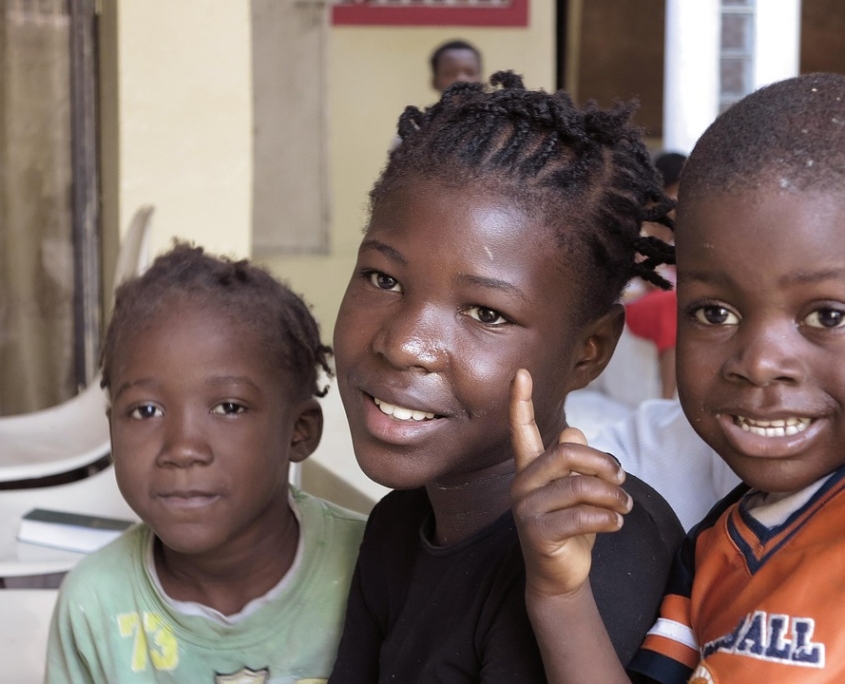 Haiti is facing a worsening crisis as violence continues to displace more than a million Haitians into tent cities. Armed groups now control an estimated 85% of Port-au-Prince, driving a record 1.3 million people from their homes in just six months, a 24% increase since December 2024, per the International Organization for Migration (IOM). More than half of those displaced—approximately 700,000—are children. The United Nations International Children’s Emergency Fund (UNICEF) reports that the number of internally displaced children has jumped by nearly 50% since September 2024, equating to one in eight children nationwide.
The future of Haiti’s youth hangs in limbo as schools have become fragile lifelines; some have transformed into shelters, while others are completely rundown, cutting countless children from the classrooms they once knew. Amid the education crisis in Haiti, however, a wave of grassroots initiatives and community-led action is pushing back with hope.
A Crisis of Scale and Impact
The United Nations (U.N.) estimates that 5.4 million Haitians are facing crisis-level hunger, with 5,636 people already in catastrophic famine conditions. The World Food Programme (WFP) is urgently appealing for $46 million to sustain emergency operations targeting 2 million people, including half a million children relying on school meals—a critical lifeline now at risk. At the same time, the U.N.’s 2025 humanitarian appeal for Haiti remains underfunded, with only 9.2% of its $900 million goal met.
The State of Education
More than 1,600 schools have closed in Haiti, a 60% increase in just four months—disrupting learning for more than 243,000 children. In the West and Artibonite regions, nearly 1,000 schools have shut down, impacting 300,000 students. Meanwhile, in the Grand South, the arrival of 103,000 displaced school-aged children overwhelmed the education systems. Plan International reports that more than 90% of displaced children in the South and Southeast—where 260,000 people sought refuge—have lost access to education.
Henry Noel, a volunteer of buildOn, a nonprofit that partners with rural communities to build schools and promote literacy, spoke with The Borgen Project, saying, “Right now, the education crisis in Haiti is unlike anything we’ve seen in years. Violence in Port-au-Prince has forced millions of people from their homes and almost half a million of those are children. Many of them were already out of school and the violence has only made things worse. Entire schools have been attacked or destroyed—I think about 300 schools [in the capital] were shut down because of the violence.”
Rising to the Challenge in Rural Communities
By early 2025, an estimated one million Haitians had been displaced by escalating gang violence. Many of these families fled to rural towns—places they once considered safe havens. Yet this mass migration has overburdened local schools, with large waves of out-of-school children arriving all at once. Noel states, “For the families who fled, especially into rural areas, schools are overwhelmed. We see classrooms with twice as many students as they were built for. Children who missed one or two years of lessons are trying to catch up, often without books, without supplies, sometimes even without shoes to walk the long distance to class. It’s devastating.”
Amid the education crisis in Haiti, buildOn—a nonprofit dedicated to breaking the cycle of poverty through education—has stepped up its efforts to rebuild hope and access to learning. BuildOn is an international nongovernmental organization (NGO) that brings education to rural areas, supporting displaced families. In 2024, it built a new school in Journu, serving 285 students—150 of whom were previously out of school.
Enroll Program
Its Enroll program provides accelerated learning, supplies, meals and community engagement to restore educational access quickly. “Through Enroll, we go into the communities, identify children who are not in school and create a plan with their families and teachers to bring them back. We provide accelerated learning for those who fell behind, school supplies like notebooks and pencils and even meals in some cases.”
Speaking on how buildOn is responding to the crisis, Noel said, “buildOn’s work is focused on two main areas: building safe schools in rural communities and helping out-of-school children re-enter the education system. Last year, for example, we built a new school in Journu, a rural community that received many displaced families. That school now serves about 285 students, 150 of whom had dropped out because of violence or poverty. For us, it’s not just about the building—it’s about giving those children a safe place where they can be children again.”
Building Hope Brick by Brick
Against the backdrop of a collapsing state, scorched schools and displaced millions, there remains a lifeline in classrooms carried on shoulders, songs played on guitars and books passed hand to hand. “The resilience of Haitian children and families is truly beautiful to witness. Despite everything, when we open a new school, the joy is incredible. Parents show up to help lay bricks, students are eager to learn, teachers are determined to keep going even when conditions are hard,” Noel said.
Where schools continue to teach, poetry fills the air and hands learn to stitch or strum, hope—and Haiti’s next generation—endures. As Noel concluded, “Don’t forget the children of Haiti. Every child deserves the chance to learn, no matter the circumstances. And even in the hardest times, education is possible—if we come together to make it happen.”
– Meagan Beaver
Meagan is based in Zephyrhills, FL, USA and focuses on Good News for The Borgen Project.
Photo: Pixabay
