The Garment Industry in Bangladesh: Mistreated Workers
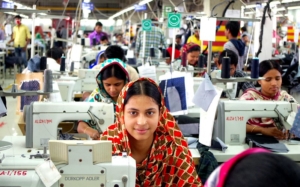 The garment industry in Bangladesh is the second largest on the planet in terms of exports. Between 2022 and 2023, the “Ready-made Garments,” or RMG, industry accounted for 84% of Bangladeshi exports. While this has led to Bangladesh, an emerging market, having one of the fastest-growing economies in the world, the labor force is suffering.
The Bangladeshi government has lowered production costs to attract foreign investment to stay ahead of the competition. However, this comes at the expense of factory workers—the minimum monthly wage is just $133, less than a quarter of the estimated living wage. Nonetheless, organizations such as GoodWeave are making efforts to stop this mistreatment.
Bangladesh and the Race to the Bottom
The race to the bottom is the theoretical competition between emerging markets, such as Bangladesh. Foreign investment from large companies is very desirable for these states. However, to appear more attractive, they must offer cheaper production costs. This is generally achieved by cutting wages and working standards. In the case of Bangladesh, this has been done to an alarming level.
Since the late 1900s, the size of the RMG industry in Bangladesh has grown exponentially from $1.8 million in 1980 to $47 billion in 2023. This growth was possible because Bangladesh offered increasingly cheap production costs to U.S. and European clothing companies. Although this has allowed Bangladesh to maintain and even flourish, through periods such as the 2008 financial crash due to increased demand for cheap clothes, it has come at a price: workers’ rights.
The Rana Plaza collapse of 2013 is potentially the most telling evidence of the lack of safety in garment factories in Bangladesh. Rana Plaza was a major garment production hub and due to the lax building and safety regulations around this industry, the structure was completely unsound. This became apparent in 2013 when part of the building collapsed and killed more than 1,000 people. This is a clear example of how the cost-cutting to attract investment horrendously impacted the laborers.
RMG workers are also paid insufficiently. According to GoodWeave, more than 30% of Bangladeshi garment workers are paid below their minimum wage. This rate is already far below what the Economic Observatory considers a living wage. Furthermore, many workers are involved in subcontracts, usually correlating with being paid even less than their already underpaid colleagues for the same amount of work.
The Impact of GoodWeave
GoodWeave is a nonprofit organization aimed at ending child and forced labor. It is an influential actor in Bangladesh, researching and raising awareness around labor conditions within the RMG industry. An interview with Jamir Munayko, digital communications and fundraising manager at Goodweave, revealed how the organization has been working in Bangladesh.
Between December 2023 and July 2024, GoodWeave International undertook research in collaboration with the University of Nottingham’s Rights Lab and the Bangladesh Labor Foundation (BLF). They aim to document the existence of modern slavery and child labor within Bangladesh’s RMG industry.
GoodWeave has conducted fieldwork in Dhaka and Chattogram, two major RMG hubs, carrying out almost 2,000 surveys and 10 in-person focus group discussions with 88 workers, both adults and minors. The organization has been processing the data gathered alongside the University of Nottingham, which is helping to legitimize the information and make it an authentic basis for action.
GoodWeave has also contributed to the vocational training of 500 young people in Bangladesh, ensuring they move into safe and legal work, rather than the dangerous and partially illegal RMG industry.
International Efforts To Raise Working Conditions in Bangladesh
GoodWeave has also been working alongside international institutions such as the Netherlands Enterprise Agency and the U.K. Home Office’s Modern Slavery Innovation Fund.
“These projects focus on using the evidence generated by research to drive change. They disseminate and advocate the only comprehensive evidence base of risk, prevalence and root causes of modern slavery in Bangladesh’s RMG industry, with emphasis on export production,” Munayko stated.
There has also been direct interaction between GoodWeave and some of the brands that produce their garments in Bangladesh.
“In partnership with four U.K.-based companies and their Bangladeshi suppliers, modern slavery supply chain assessments are being carried out to identify risks and inform these brands of the results. This enables companies to gain visibility into the risks in their supply chains. Alongside this, rights and protections of vulnerable workers are being advanced through increased awareness, improved access to social protections and stronger business practices, all contributing to reducing modern slavery in the sector.”
What Does the Future Look Like for the RMG Industry?
According to Munayko, the future of the garment industry in Bangladesh is impossible to predict, particularly due to the changing U.S. tariffs since President Trump’s term began earlier this year. The fact that Bangladesh relies so heavily on the global market as its economic stimulus makes it vulnerable to things such as U.S. tariffs.
However, with the recent change of government in Bangladesh, the interim government has shown real interest in improving working conditions in the RMG industry. The Labor Reform Commission has been created and positive concrete action is on the way to happening. However, Munayko also stated that this change must happen soon, before more tragedies like the Rana Plaza disaster occur.
Conclusion
Bangladeshi garment workers earn far below a living wage and their working conditions are often unsafe. This stems from the government’s pursuit of foreign investment from international clothing companies by driving production costs down, a race to the bottom. However, the efforts of GoodWeave and other international organizations are pushing back against this exploitation, advocating for fair treatment and safer conditions for the workers of the garment industry in Bangladesh.
GoodWeave’s direct work through surveys and interviews helps raise awareness about conditions in the RMG industry. Its collaboration with brands that source from Bangladeshi garment factories marks a major step toward changing the system.
– Oliver Evans
Oliver is based in Devon, UK and focuses on Business and Good News for The Borgen Project.
Photo: Flickr
