How Best to Help? UK Aid in Myanmar
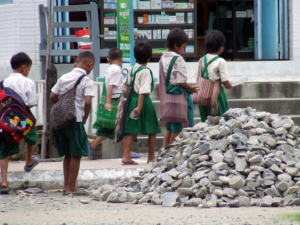 U.K. aid in Myanmar has risen rapidly since the earthquake of March 2025 and has taken a variety of forms. Different charities have focused on different geographical and societal groups, and have operated with different levels of government involvement.
The Situation in Myanmar
The U.K. has devoted more than £100 million of aid to Myanmar since 2017, according to a statement from Parliamentary Undersecretary in the Foreign, Commonwealth, and Development Office Seema Malhotra. Rakhine state alone received £108 million on the country’s western coast, which has been involved in a conflict since a military coup in Myanmar in 2021.
Almost half of this aid went towards helping the Rohingya people, and other Muslim groups who have faced persecution by the military government. With Malhotra claiming this aid has reached 1.3 million people since 2022. The earthquake has worsened the political turmoil in Myanmar in March 2025.
In response to this, the U.K.’s Disasters Emergency Committee (DEC), a coalition of charities that the U.K. government supports through the aid match scheme, launched a specific appeal designed to rapidly increase U.K. aid in Myanmar.
Myanmar’s military government blocking aid to areas outside of military control has allegedly hampered this scheme, according to the U.K. governemnt. This raises questions over how U.K. aid in Myanmar can be more effective.
About the DEC
The DEC comprises 15 leading U.K. aid charities that collectively raise funds rapidly during overseas crises. This coalition intends to combine the different charities’ resources in order to reduce administrative costs and distribute U.K. aid in Myanmar and around the world as efficiently as possible.
The U.K. government’s aid match scheme supports the group, whereby the government donates an amount equal to that donated by the public for any given appeal.
Aid match has previously helped raise £50 million for the 2021 Afghanistan Crisis Appeal, and is currently also fundraising for aid schemes in Ukraine and Pakistan.
While aid match has previously been successful, there are fears that closely associating aid efforts with the U.K. government could lead to them being refuted by foreign governments, as is allegedly the case in Myanmar.
ActionAid
The charity ActionAid is a member of the DEC and has been active in Myanmar since 2001.
ActionAid’s primary focuses include defending women’s rights in Myanmar, through schemes that train police officers to enforce laws designed to prevent human trafficking and child marriage.
Earthquake damaged Myanmar’s agricultural sector, disrupting trading networks and destroyed farmland.
ActionAid have attempted to assist in Myanmar’s economic recovery by training women in the worst-affected regions to set up their own small businesses. The blocking of aid to regions outside of direct military control has slowed this process, potentially leaving women in these regions at risk of exploitation.
Independent Aid: Health and Hope
Health and Hope is an independent U.K. charity that works to help those living in Chin state, the poorest state in Myanmar.
Around 73% of people living in the Chin state are not able to meet their basic food needs, compared to 32% of the country as a whole.
Despite not contributing as much funding towards U.K. aid in Myanmar as some of its counterparts in the DEC; Health and Hope has helped train 329 Community Health Workers over the past year.
Health and Hope has, in fact, deliberately maintained as small a workforce as possible to deliver as large a proportion of donations as possible directly to its aid projects in Myanmar. The charity estimates that 88% of all external funding goes directly to aid projects. Their small size has also made Health and Hope less of a target for military blockades, that have prevented larger aid organisations from entering certain regions of Myanmar.
The Government’s Future Role
U.K. aid match has undoubtedly played a vital role in fundraising for various aid projects throughout the last decade, including in Myanmar. This scheme, combined with the public recognition of, and trust in, the DEC and its members, have helped to maximise the value of the aid assigned to Myanmar since the earthquake of March 2025.
– Billy Stack
Billy is based in London, UK and focuses on Global Health, Politics for The Borgen Project.
Photo: Wikimedia Commons
