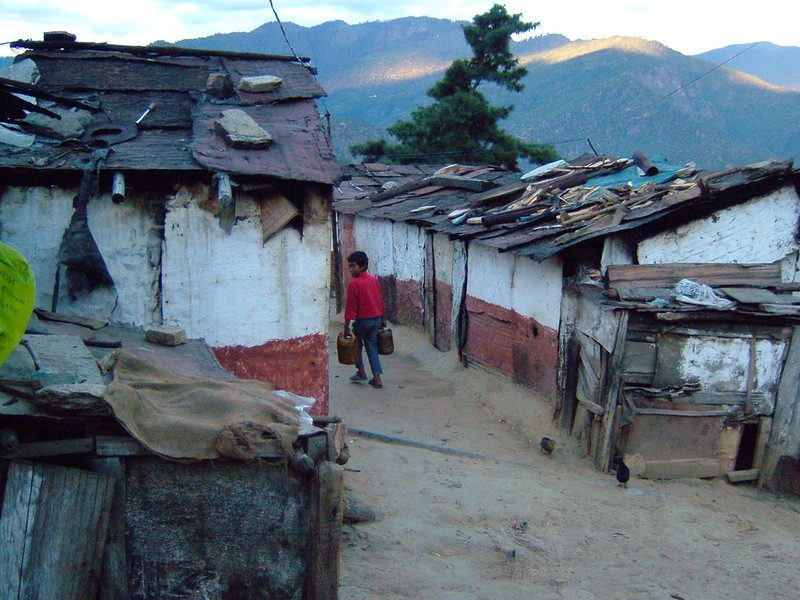
 Nepal, a landlocked country nestled in the Himalayan mountains, is one of the poorest countries in South Asia. In 2022, the national poverty rate stood at 20.3%. While this is a significant improvement from 68% in 1996, social and regional disparities mean that rural communities across Nepal experience a slower decline or even an increase in poverty compared to urban centers. As of 2024, more than 77% of Nepalis live in rural areas, making poverty alleviation an urgent and ongoing challenge.
One key factor behind Nepal’s enduring poverty is its geography. The country’s mountainous terrain, landlocked position and susceptibility to frequent earthquakes all make infrastructure development and economic growth difficult. This article explores how geographical barriers contribute to poverty in Nepal and highlights efforts underway to overcome them.
Inaccessible and Deadly Terrain
Nepal’s rugged mountains, steep hills and deep valleys make building and maintaining infrastructure, such as roads and electricity, challenging, particularly in remote regions. Heavy monsoon rains, floods and landslides frequently damage roads and homes, leaving many areas isolated for long periods. Many rural communities lack the financial resources to repair these damages. By 2012, more than half of Nepal’s roads built over the previous 15 years had become unusable due to poor maintenance.
Limited infrastructure also affects digital access. In 2022, the United Nations Children’s Fund (UNICEF) reported that only 3% of Nepali youth had access to computers and the internet, largely because of inadequate connectivity. This severely limits online education and remote work opportunities, particularly when travel becomes difficult or dangerous.
As a result, access to basic goods, employment opportunities and education is often time-consuming, costly, hazardous and unreliable. In Nepal, at least 90% of passenger and freight movement is done by road, which imposes heavy burdens on the poor and hinders long-term economic growth in rural areas.
Paving New Roads: The Rural Access Program Nepal
Between 2017 and 2023, the Rural Access Programme Nepal built more than 1,100 kilometres of road and improved access to markets, health and education facilities for more than 2.75 million people in rural areas. Beyond building and maintaining roads, the project trained more than 40,000 people in new income-generating skills and created at least 19 million days of employment, 40% of which were women.
This program marks a crucial step toward enchanting mobility, promoting gender inclusion, and reducing poverty in Nepal. The program is set to continue through 2025, further expanding its impact on rural connectivity and livelihoods.
Expanding Digital Connectivity
In early 2025, FC, Standard Chartered Bank Nepal Limited, and WorldLink Communications Ltd. partnered on a $29 million project to expand Nepal’s fiber networks and develop innovative, environmentally sustainable data centers. The initiative aims to bridge Nepal’s digital divide and promote inclusive economic and educational development.
WorldLink, Nepal’s leading internet provider, has already built a nationwide fiber network spanning more than 7,500 locations, including remote and underserved areas. Improved internet access has opened new avenues for education, job creation and entrepreneurship, and has helped to reduce regional disparities and support long-term economic growth.
Barriers to Trade
Nepal is landlocked between China and India, with no direct access to the sea. As a result, the country relies heavily on India for most of its international trade, making imports and exports both costly and time-consuming. Historically, the country has also experienced several trade disruptions and blockades along its border with India, which have further contributed to persistent poverty in Nepal.
Railways for Connection
Despite these challenges, Nepal has significant potential to boost trade and development by enhancing cross-border connectivity with its powerful and wealthy neighbors, China and India. Proposed railway projects linking Kathmandu with Keyrong (China) and Birgunj (India) will enhance trade, diversify the economy, reduce reliance on remittances and create jobs for millions of Nepalis. Moreover, by designing these railways to be sustainable and climate-resilient, Nepal could attract investment from global institutions such as the World Bank and the United Nations (U.N.) to fund these projects.
Destructive and Deadly Earthquakes
Nepal sits on the active boundary between the massive Indo-Australian and Asian tectonic plates. The ongoing collision of these massive plates causes frequent and powerful earthquakes, which destroy homes and infrastructure and injure thousands of people. These disasters are extremely costly and hinder stable economic growth, particularly in rural areas where resources for recovery are limited.
Seismic Resilient Infrastructure
Projects like the SAFER Project are working to develop earthquake-resilient infrastructure that increases human safety and reduces damage from seismic activity. The SAFER Project specifically aims to improve the seismic safety and resilience of schools and community buildings in Nepal through collaborations with rural communities, international researchers, developers, nonprofits and the Nepali government.
Techniques like base isolation, which decouple buildings from the ground, help structures remain stable during earthquakes by allowing the ground to move independently. SAFER also uses affordable, locally available materials like stone instead of costly concrete to make earthquake-resistant construction more achievable for rural communities.
By protecting schools and public facilities, initiatives like SAFER can help maintain school attendance and job security for teachers following natural disasters, supporting long-term community stability and development.
Overcoming Geographical Poverty in Nepal
From its rugged terrain and isolation to its landlocked trade barriers and seismic risks, Nepal’s geography poses numerous formidable challenges when it comes to poverty alleviation. Yet, the nation’s ongoing investments in infrastructure, connectivity and resilience offer hope to both Nepalis and other countries facing similar issues.
– Dylan Kretchmar
Dylan is based in Granville, OH USA and focuses on Good News and Technology for The Borgen Project.
Photo: Flickr

The Housing Market and Homelessness in Australia
The Human Rights Act begins January 2029 providing several years to lay the groundwork and set the plan into action with more than “3,400 approved applicants on the ACT’s public housing waitlist,” as the Australian Broadcasting Corporation stated. As a result of the passing of this new bill, those who do not have housing because of the unaffordable Australian housing market will likely benefit from this positive shift.
The Importance of Building More Houses
Building more houses is essential to the housing market in Australia. According to Bloomberg News, housing in Australia costs 14 times the annual disposable income. Acknowledging housing as a human right in the Australian Capital Territory is the first step toward addressing Australia’s housing crisis.
In 2024, the British Broadcasting Corporation (BBC) found that 122,000 people were homeless in Australia. The price of rent continues to rise as employment wages remain stagnant. Australia’s housing shortage, in combination with various underlying economic issues, contributes to the lack of shelter. Meanwhile, the current social housing structure is insufficient for providing temporary housing to those in need due to waitlists. The shortage is so severe that homelessness is affecting the elderly, one of the most vulnerable populations in the region.
Consequently, the UNSW City Futures Research Centre found that homelessness in Australia is mostly due to rent increases that have escalated for several years. Rent inflation has reduced the quality of living and increased the number of unhoused people by an “extra 10,000” per month, according to The Guardian.
As a result, the need for social housing has skyrocketed with the need for thousands of homes to undergo construction to provide enough homes for the unhoused population. For this to become a reality, a reasonable amount of funding for homelessness services is essential before the problem is resolved.
In October 2025, homelessness services for children in Brisbane, Australia, surged to 48%; a portion of these children are toddlers. Micha Projects chief executive, Karyn Walsh, says to reporters from the Australian Broadcasting Corporation, “Poverty is growing in Australia, and we can’t take our eye off it. People’s lives are impacted; people die from it.”
Addressing Poverty and Homelessness in Australia
Since many families are suffering from poverty, the Brisbane Zero collaboration has involved itself with campaigns to end and mitigate homelessness, assisting 2,125 children and 1,230 families. In addition, the Queensland government has increased the state budget with a 20% increase in funding for homelessness services over a set time. Support from the state government is essential for solving the homelessness crisis in Australia.
In turn, several charities are offering assistance. According to Katy Watson, a BBC Australia correspondent, “Supermarkets donate food” and other charitable efforts include “a laundry service, a mobile doctor surgery and a hairdresser.” Additionally, chaplains give meals to the hungry. These resources are necessary for the unhoused community.
Looking Ahead
Fortunately, several regions in Sydney will obtain new homes. The state government developer Landcom has outlined a plan to add more than 1,000 homes in Chatswood, New South Wales. Affordable living spaces and shopping centers are involved in this plan. In addition, 220 homes for essential workers are undergoing development in Annandale, Queensland.
– Lala McCullough
Photo: Unsplash
Agriculture and Nutrition Aid: Improving Food Security in Guatemala
In 2022, nearly half of children under 5, about 46.5 %, were stunted, making Guatemala one of the worst in the Western Hemisphere in terms of child undernutrition. To address this humanitarian emergency, a series of agriculture and nutrition-based initiatives launched by the Guatemalan government, the United Nations (U.N.) and international partners have sought to rebuild livelihoods and reduce hunger through sustainable rural development.
Poverty and Food Insecurity
According to the Integrated Food Security Phase Classification (IPC) and humanitarian monitoring sources, more than five million people (above 25% of the population) require humanitarian assistance in Guatemala. Around 2.7 million face severe acute food insecurity (IPC Phase 3 or worse). Guatemala’s food insecurity is deeply intertwined with rural poverty.
The majority of impoverished households live in rural and Indigenous communities, where subsistence farming is the main livelihood. Limited access to credit, irrigation and markets keeps smallholder farmers vulnerable to climate shocks. The Food and Agriculture Organization’s (FAO) recent report highlights how vulnerable communities face multiple deprivations, including low incomes, limited access to value chains and a high risk of climate-related impacts.
An analysis by the World Bank highlights that economic growth has not been sufficiently translated into poverty reduction or improved livelihoods for the most vulnerable populations.
Building Food Security Through Agriculture and Nutrition Aid
One of the most impactful interventions since 2022 has been the Home‑Grown School Feeding Program, led by WFP in partnership with Guatemala’s Ministry of Education and local farmer cooperatives. This initiative connects smallholder farmers directly with schools to supply nutritious food, ensuring that children receive regular meals while farmers gain reliable buyers. The program connects more than 500 farmers and 840 schools through a mobile procurement application, enabling farmers to browse school orders and deliver locally produced food.
According to WFP monitoring, the program improves children’s dietary diversity and supports rural incomes. In parallel, FAO, through its “Hand-in-Hand” initiative and other resilience programs, has been scaling up efforts to strengthen food production among vulnerable households. The FAO study notes that climate-smart practices, improved seeds and market integration are essential components of the solution.
The FAO also monitors agriculture livelihood-recovery projects that aim to boost both food security and incomes for rural families. The World Bank emphasizes that investment in human capital, agriculture and rural development is critical to addressing long-standing inequalities and food insecurity.
Continuing Challenges
Despite these encouraging results, Guatemala’s path toward food security remains fragile. Hundreds of thousands of children continue to face stunting and rural poverty remains entrenched among Indigenous and highland populations. The WFP country brief notes that Guatemala is disaster-prone and extended dry seasons and climate shocks severely damage the livelihoods of subsistence farmers.
Scaling successful programs nationally is limited by funding constraints, infrastructure gaps and institutional capacity. Without sustained investment in rural infrastructure, market access and social protection, localized gains risk being reversed by future shocks.
Conclusion
The past few years have shown that agriculture and nutrition-based aid can make a tangible difference in improving food security in Guatemala. Indeed, by linking local farmers to school-feeding programs, investing in climate-smart agriculture and focusing on vulnerable rural communities, the country and its partners have taken meaningful steps toward reducing hunger and poverty. While national statistics remain daunting, with child stunting at nearly half of all children under 5, widespread rural poverty and persistent acute food-security need, the evidence indicates that targeted interventions can improve outcomes.
With continued investment, expansion of proven models and stronger institutional capacity, Guatemala has the potential to transform its food system from fragile to resilient, making inclusive agricultural development a cornerstone of poverty reduction.
– Akash Ramaswamy
Photo: Flickr
Building Opportunity: Agriculture and Education in Burundi
The Borgen Project spoke with Francine Nahimana, a 25-year-old woman from rural Gitega, to learn more about how these challenges shape the lives of ordinary citizens and what solutions are helping Burundians rise above hardship. “People here are hardworking, but without opportunities and support, it is difficult to move forward,” Nahimana said.
Historical Impact
Burundi’s history of ethnic and political conflict has left deep social and economic scars. During years of unrest, schools and hospitals closed, families fled their land and many professionals left the country in search of stability. These years disrupted entire generations.
According to UNICEF, conflict forced thousands of children out of school, leading to widespread illiteracy and unemployment in later years. Many displaced families lost farmland, the backbone of Burundi’s economy and still face disputes over land ownership today. Nahimana explained that her community is still rebuilding: “Some people my age never had the chance to learn to read or write. That affects jobs today; many adults are still trying to catch up.”
Agricultural Impact
According to the International Fund for Agricultural Development (IFAD), roughly 80% of Burundians depend on agriculture for their livelihoods. Yet recurring droughts, soil erosion and limited access to modern tools continue to reduce yields and income. In rural Gitega, most families tend small plots of maize, beans or cassava.
Nahimana said that when rains fail, families cut back to one meal a day and ration food to children first. For many households, farming remains a matter of survival rather than a source of profit. The World Food Programme (WFP) estimates that more than half of Burundians face chronic food insecurity, highlighting the connection between environmental vulnerability and poverty.
Efforts to improve irrigation systems and promote climate-resilient crops have begun in parts of the country, offering hope that communities can protect both livelihoods and nutrition in the coming years.
Education in Burundi
Education in Burundi is both a challenge and a solution to poverty. According to UNESCO, while primary enrollment rates have increased, completion rates remain low, especially for girls. Families often struggle to afford school uniforms, materials or the long commute to secondary schools.
Nahimana recalled walking nearly an hour each day to reach class. “My parents believed girls should be educated, but many of my friends left school early to help at home or marry young,” she said. The lack of consistent schooling limits access to formal employment, leaving many young people dependent on subsistence farming.
Expanding access to education and vocational training in Burundi could empower citizens to pursue alternative livelihoods and break cycles of poverty.
Health Impact
Health care in Burundi remains fragile, especially in rural areas, where clinics are understaffed and medical supplies are scarce. For low-income families, medical costs can be devastating. When illness strikes, adults often lose workdays and children miss school, creating new obstacles to economic stability.
Nahimana said that even minor illnesses can send families into debt: “If someone gets sick, we borrow money to buy medicine and then the next month we can’t buy fertilizer or seeds.” Expanding community clinics and enhancing maternal and child health programs could prevent minor health issues from escalating into cycles of poverty.
Youth and Governance Impact
Burundi’s population is predominantly young; according to the United Nations Population Fund (UNFPA), more than 60% of the population is under the age of 25. This generation holds the potential to transform the country if provided with stable jobs and inclusive governance.
After years of instability, trust in institutions is slowly returning. National peacebuilding efforts, supported by the United Nations Peacebuilding Fund, aim to strengthen transparency and civic participation. Nahimana believes young people are ready to lead: “We are not defined by poverty, we are defined by perseverance. With education and opportunity, we can create a better future.”
Future Impact
Burundi’s challenges remain immense, but progress is possible. Investments in sustainable agriculture, affordable health care and education, particularly for girls, could significantly reduce poverty over the next decade. The World Bank and the United Nations Development Programme (UNDP) continue to partner with Burundi to improve rural infrastructure, access to credit and food security.
These long-term projects, paired with community-level resilience, aim to ensure that economic growth reaches every hill and valley. As Nahimana’s story shows, hope endures in Burundi’s hills. Each classroom that stays open, each seed that survives a dry season and each young woman who completes her education brings the nation one step closer to lasting prosperity.
– Katie Williams
Photo: Unsplash
Fighting Poverty With Renewable Energy in Grenada
The nation is held back by its small, service-based economy, which is heavily reliant on tourism and agriculture—sectors vulnerable to recent shocks such as the COVID-19 pandemic and increasingly frequent climate-related disasters. These industries are also largely unskilled, offering limited income prospects that keep many Grenadians in unstable economic positions.
Energy Dependence and Its Effects
Adding to the problem is Grenada’s energy situation. More than 98% of the nation’s energy comes from imported fossil fuels. The lack of self-sufficiency and renewable energy in Grenada subjects the population to high, unstable living costs due to international market fluctuations and import taxes in a remote region. It also affects demand and availability through supply chain disruptions. This can exclude remote or impoverished groups from basic resources and create structural challenges for small and family businesses relied upon for survival—forming a vicious cycle of poverty. The dependency on fossil fuels also worsens climate-related challenges, creating a cycle of environmental devastation.
A Focus on Renewable Energy Opportunities
The United Nations (U.N.) outlines that a strategic focus in Grenada should be placed on stabilizing and diversifying the economy, becoming more self-sufficient, and creating jobs and opportunities to unlock the nation’s potential. All of this can be achieved through developing the renewable energy industry. While the current situation is troubling, Grenada is on the brink of opportunity. The nation has access to various international funds and climate finance mechanisms, such as the Green Climate Fund (GCF), that can accelerate and actualize the transition to renewable energy and energy efficiency.
The Grenadian government’s “Grenada Vision 2030” illuminates this potential. “Grenada’s National Energy Policy” proposes to establish a 100% renewable energy target by 2030. The vision statement behind the initiative outlines a desire to “build a competitive green economy that will be affordable and provide universal access to resources to improve the living standards for current and future generations.” This project focuses on developing renewable energy systems and enhancing energy efficiency infrastructure.
Benefits of Renewable Energy Development
The benefits of developing and investing in renewable energy sectors are wide-ranging and particularly beneficial for smaller, remote nations. Broadly, the industry creates sustainable, skilled jobs, as well as labor in installation and maintenance, improving income capacities and opportunities. Energy production also promotes self-sufficiency, eliminating import taxes and foreign dependency while stimulating and investing in the nation’s own economy.
More individually, cheaper and more available energy would boost disposable incomes, leaving more money to be spent on health care, food and education—vital for families at risk of resource deprivation. It would also lower costs for small businesses and local services, supporting communities and promoting local entrepreneurship. The nature of the industry and technological focus would also attract foreign investment and support from organizations involved in promoting renewable energy and sustainability.
The Caribbean Centre for Renewable Energy and Energy Efficiency
The Caribbean Centre for Renewable Energy and Energy Efficiency (CCREEE) exemplifies the fundamental significance of this transition. As a nonprofit intergovernmental institution, CCREEE functions as a technical hub, advisory body and implementation partner for renewable energy and energy efficiency initiatives in the Caribbean. The organization’s core mission is to promote sustainability, reduce fossil fuel dependency and build public knowledge in clean energy and related technologies.
Examples of CCREEE’s work include training in professional renewable energy and efficiency jobs, supporting the creation of green-skill jobs, and advising the region’s governments on energy policies and strategies to help them meet targets such as “Grenada Vision 2030.”
A Tool for Sustainable Poverty Reduction
The initiatives of CCREEE demonstrate how renewable energy in Grenada is a fundamental tool to fight poverty, increase equity and mitigate climate-related shocks. The organization provides a case study for how collaboration, advocacy and research are just as vital in sustainably alleviating poverty as monetary donations. It is largely funded by Caribbean governments and regional bodies such as CARICOM, emphasizing the importance of supporting similar initiatives in nations that need them most.
– Mia Keen
Photo: Flickr
Tackling Geographical Poverty in Nepal
One key factor behind Nepal’s enduring poverty is its geography. The country’s mountainous terrain, landlocked position and susceptibility to frequent earthquakes all make infrastructure development and economic growth difficult. This article explores how geographical barriers contribute to poverty in Nepal and highlights efforts underway to overcome them.
Inaccessible and Deadly Terrain
Nepal’s rugged mountains, steep hills and deep valleys make building and maintaining infrastructure, such as roads and electricity, challenging, particularly in remote regions. Heavy monsoon rains, floods and landslides frequently damage roads and homes, leaving many areas isolated for long periods. Many rural communities lack the financial resources to repair these damages. By 2012, more than half of Nepal’s roads built over the previous 15 years had become unusable due to poor maintenance.
Limited infrastructure also affects digital access. In 2022, the United Nations Children’s Fund (UNICEF) reported that only 3% of Nepali youth had access to computers and the internet, largely because of inadequate connectivity. This severely limits online education and remote work opportunities, particularly when travel becomes difficult or dangerous.
As a result, access to basic goods, employment opportunities and education is often time-consuming, costly, hazardous and unreliable. In Nepal, at least 90% of passenger and freight movement is done by road, which imposes heavy burdens on the poor and hinders long-term economic growth in rural areas.
Paving New Roads: The Rural Access Program Nepal
Between 2017 and 2023, the Rural Access Programme Nepal built more than 1,100 kilometres of road and improved access to markets, health and education facilities for more than 2.75 million people in rural areas. Beyond building and maintaining roads, the project trained more than 40,000 people in new income-generating skills and created at least 19 million days of employment, 40% of which were women.
This program marks a crucial step toward enchanting mobility, promoting gender inclusion, and reducing poverty in Nepal. The program is set to continue through 2025, further expanding its impact on rural connectivity and livelihoods.
Expanding Digital Connectivity
In early 2025, FC, Standard Chartered Bank Nepal Limited, and WorldLink Communications Ltd. partnered on a $29 million project to expand Nepal’s fiber networks and develop innovative, environmentally sustainable data centers. The initiative aims to bridge Nepal’s digital divide and promote inclusive economic and educational development.
WorldLink, Nepal’s leading internet provider, has already built a nationwide fiber network spanning more than 7,500 locations, including remote and underserved areas. Improved internet access has opened new avenues for education, job creation and entrepreneurship, and has helped to reduce regional disparities and support long-term economic growth.
Barriers to Trade
Nepal is landlocked between China and India, with no direct access to the sea. As a result, the country relies heavily on India for most of its international trade, making imports and exports both costly and time-consuming. Historically, the country has also experienced several trade disruptions and blockades along its border with India, which have further contributed to persistent poverty in Nepal.
Railways for Connection
Despite these challenges, Nepal has significant potential to boost trade and development by enhancing cross-border connectivity with its powerful and wealthy neighbors, China and India. Proposed railway projects linking Kathmandu with Keyrong (China) and Birgunj (India) will enhance trade, diversify the economy, reduce reliance on remittances and create jobs for millions of Nepalis. Moreover, by designing these railways to be sustainable and climate-resilient, Nepal could attract investment from global institutions such as the World Bank and the United Nations (U.N.) to fund these projects.
Destructive and Deadly Earthquakes
Nepal sits on the active boundary between the massive Indo-Australian and Asian tectonic plates. The ongoing collision of these massive plates causes frequent and powerful earthquakes, which destroy homes and infrastructure and injure thousands of people. These disasters are extremely costly and hinder stable economic growth, particularly in rural areas where resources for recovery are limited.
Seismic Resilient Infrastructure
Projects like the SAFER Project are working to develop earthquake-resilient infrastructure that increases human safety and reduces damage from seismic activity. The SAFER Project specifically aims to improve the seismic safety and resilience of schools and community buildings in Nepal through collaborations with rural communities, international researchers, developers, nonprofits and the Nepali government.
Techniques like base isolation, which decouple buildings from the ground, help structures remain stable during earthquakes by allowing the ground to move independently. SAFER also uses affordable, locally available materials like stone instead of costly concrete to make earthquake-resistant construction more achievable for rural communities.
By protecting schools and public facilities, initiatives like SAFER can help maintain school attendance and job security for teachers following natural disasters, supporting long-term community stability and development.
Overcoming Geographical Poverty in Nepal
From its rugged terrain and isolation to its landlocked trade barriers and seismic risks, Nepal’s geography poses numerous formidable challenges when it comes to poverty alleviation. Yet, the nation’s ongoing investments in infrastructure, connectivity and resilience offer hope to both Nepalis and other countries facing similar issues.
– Dylan Kretchmar
Photo: Flickr
How Upcycling Plastic Feeds People in India
Strategic Investment in Food Insecurity Initiatives
At the government level, the Ambikapur Municipal Corporation’s (AMC) sanitation budget allocated funds toward a service called the Garbage Café. In 2019, this café served as a vehicle for reducing excessive plastic waste and serving food to homeless people in the city of Ambikapur. Government intervention has reduced the level of plastic waste in the country.
Over the past decade, the government has focused its efforts on the high level of plastic waste, ultimately implementing programs that inspire change in communities. Ambikapur had 226 tons of plastic pollution in 2024. As of 2025, the city has recycled almost all plastic waste in the area. According to The Economic Times, 170 nations approved the international treaty to end plastic pollution in 2023, making progress at the international level.
Current Climate Toward Upcycling Plastic
Millions of citizens have participated in giving away recyclable items. Reduce, Reuse, Recycle (RRR) center initiatives include “The three-week campaign imaginatively named, ‘Meri LiFE, Mera Swachh Sheher,’ is marked by significant mass mobilization, including the youth, SHGs, NGOs, market bodies, RWAs, startups, voluntary groups and celebrities.” Both NGOs and businesses have effectively mobilized people to participate in tackling the excessive plastic waste in the subcontinent.
India successfully engages the homeless population to clean up the plastic waste in cities, creating a solution for two major problems: hunger and pollution. Hungry people in India eat hot meals in exchange for their plastic at places like the Garbage Café, which feeds more than 20 people per day. While upcycling plastic waste, including water bottles and bags, is recycled to make material for new roads or brought to plastic waste facilities. In turn, it makes government income.
Upcycling Plastics Initiatives in India
India prioritized the LiFE (Lifestyle for Environment) movement, which addresses sustainability, resource management and climate change. Similarly, Swachh Bharat made an impact by expanding public sanitation. “The natural and mutually beneficial nexus between SBM and mission LiFE is unmistakable. Both are anchored to RRR – reduce, reuse and recycle – to achieve their objectives: clean cities and sustainable development, while providing a mainstay to the circular economy.” The BBC reports that the Swachh Bharat Mission Urban has seen plastic in landfills reach two tons per year in 2024.
How Repurposing Plastic Cleans Up Communities
A variety of people from different backgrounds reduce their community pollution levels by bringing plastic waste to collection centers, while government organizations like the Garbage Café distribute upcycled plastic to be made into new products. Recycling efforts reduce plastic waste in cities and landfills, making local communities a cleaner place to live, and most importantly, preventing low-income populations from experiencing malnutrition.
Another by-product of these services is the creation of jobs in India. Collection centers employ hundreds of women to separate waste for processing. India is actively improving its environment by reducing plastic in landfills through controlled consumption, thus releasing lower amounts of waste into the disposal system. Environmental conditions in Indian communities improved with the addition of RRR centers, inspiring similar initiatives, including zero-waste events.
Since employees at collection centers manage waste without hygiene support, processing surplus plastic presents health and safety challenges to staff. Standard supplies are not enough to prevent health complications caused by exposure to toxic waste. Professor Minal Pathak observed that staff may come in direct contact with bacteria without standard protective gear.
The Ambikapur Mission City Level Federation emphasized the significance of the women’s work at the waste facility, stating, “The centers have collected and recycled approximately 50,000 tons of dry waste such as plastic, paper/cardboard, metals and e-waste since they began in 2016.” The state of Chhattisgarh scaled the process of upcycling plastic through door-to-door collection of discarded plastic materials throughout the state.
Looking Ahead
While efforts to eliminate plastic waste have created a positive chain of events, Siliguri in West Bengal, India, provides meals for people who bring plastic. Adding to the upcycling plastic trend, Mulugu in Telangana state trades rice for a kilogram of plastic, while state-funded organizations serve free breakfast. The expansion of upcycling plastic programs designed to supply food to people living in poverty has resulted in additional Garbage Cafés in New Delhi. When campaigns shift public perception, collaboration between private citizens, government and NGOs increases community engagement, pushing India closer to combating hunger and waste with its continued support.
– Lala McCullough
Photo: Flickr
Paws for Progress: Commercialization of Voluntary Services
The Rise of the Professional Pet Care Economy
India’s burgeoning pet ownership, especially in Tier 1 cities, has created a significant market demand for reliable and professional pet services. With high-pressure work schedules and long commutes being common in cities like Bangalore, pet parents are increasingly seeking structured, trustworthy care for their dogs. This demand for safe and consistent dog walking services has professionalized the field, moving it beyond a purely informal arrangement to one supported by tech-enabled platforms and service quality standards.
This emerging pet care economy is highly compatible with the needs of the underemployed, including youth and women who may lack formal education credentials for traditional white-collar jobs. Numerous platforms and service providers now actively recruit and train individuals, often requiring minimal educational qualifications, sometimes even less than a 10th-grade completion, but emphasizing traits like reliability, punctuality and a genuine love for animals.
By offering flexible working hours, especially in the high-demand morning and evening slots, this employment model caters to students seeking part-time income or women looking for work that can be balanced with household responsibilities.
Professionalization Through Structured Training
The success of this unconventional livelihood relies on converting an informal activity into a reputable profession, primarily through systematic training and certification. Training programs instituted by service providers focus on three key areas to ensure a high-quality, trustworthy service. Trainees receive instruction on essential aspects of dog behavior, handling diverse breeds and basic pet first aid. This knowledge is critical for managing emergencies and building confidence in both the walker and the pet owner. There is emphasis on professional conduct, including adherence to scheduled walk times, clear communication with clients (often via app-based live updates and GPS tracking) and responsible clean-up of dog waste, which elevates the service’s perceived value. Workers are often paid commission-based or monthly salaries, with earnings potentially ranging from ₹10,000 to more than ₹30,000 per month, depending on commitment and location.
Social and Economic Empowerment
The impact of this phenomenon extends beyond mere financial transactions, offering a path to holistic empowerment for its workforce. Firstly, it offers an economic safety net; the high-demand, non-traditional nature of the work often results in hourly wages that are substantially better than those for comparable unskilled or manual labor jobs. Secondly, it provides a crucial boost to social capital and self-respect. The designation as a ‘certified’ or ‘professional’ dog walker, coupled with branded gear, gives workers a formal identity and status within the community. This recognition helps to dismantle pre-existing social barriers and instills a sense of pride in their contribution to the modern urban service sector.
Looking Ahead
The commercialization of voluntary services to a formalized profession—complete with training in canine behavior, safety protocols, and certified credentials—bestows a new sense of dignity and respect upon the workforce. These ‘professional dog walkers’ engage with the affluent urban society not as casual labor, but as skilled, reliable service providers, enhancing their self-esteem and public standing. For women, this employment not only provides a source of income but also an acceptable and safe avenue to move outside the home, build a professional identity and contribute visibly to the household’s financial well-being, thereby challenging traditional gender roles and fostering genuine empowerment.
– Syam Kumar
Photo: Flickr
How the Nonprofit Honduras Hope Improves Lives in Honduras
Economic instability and inflation, as well as political corruption and droughts exacerbated by inconsistent rainfall, worsened poverty in 2024, with climate instability intensifying issues related to food production and water access. Among those impacted, women, children, Indigenous and Afro-descendant populations appear to have been challenged the hardest. Environmental damage to the agricultural sector has placed particular pressure on rural communities and the marginalized populations that inhabit them.
About Honduras Hope
The organization, founded in 2001 by Reverend Bill Briggs, the coordinator, focuses on improving the lives of rural and indigenous populations in the San José and Plan Grande communities within the Department of Yoro. The nonprofit has a unique approach in which the board of directors works directly with “Patronatos,” or community councils, rather than arriving with a prescriptive aid solution.
As a 100% volunteer, nonprofit organization based in Franconia, NH, Honduras Hope improves lives through several trips to Honduras each year, working closely with local leaders to fundraise and kickstart initiatives. Such work acts as a complement to the organization’s own investments, which are fundraised through grassroots efforts, such as the concessions stand it ran on behalf of the Common Man food and restaurant chain at the Sandwich Fair in Sandwich, NH, in October 2025. The Borgen Project had the opportunity to speak with several board members at this event.
Briggs told The Borgen Project, “This is the third organization I’ve founded over the last 35 years,” all within Honduras. While all of his efforts have targeted the effects of poverty, Honduras Hope improves lives most effectively in the student population. The organization fights for children’s right to education. Briggs explained, “At the center of our organization and structure is the idea of hope – it’s in the name ‘Honduras Hope,’ after all.” This hope surrounds the work it does to propel disadvantaged students toward a path out of poverty.
How Does Honduras Hope Bring Hope to Students?
Briggs said that a central tenet of the speeches he regularly gives students is the phrase “si se puede,” or “yes you can.” The story of Dr. Cecile Lobo encapsulates how exactly Honduras Hope improves lives for students, empowering them with the idea that they can achieve their dreams by facilitating their education. With financial support from Honduras Hope, Lobo became the first Indigenous Tolupan doctor in Honduras.
Similarly, the organization established the San José boarding house for those unable to travel to school from rural mountain communities. After converting the home, which once belonged to a professional Honduran soccer player, Briggs explained that the nonprofit provided funding for school supplies and uniforms. It completed the project with the assistance of a residential supervisor to oversee the students and offer tutoring.
Girls’ Empowerment and Community Transformation
Kathy Swanson is a member of the Honduras Hope board of directors, serves on the Education Committee and leads both the Girls’ Empowerment Program and the Women’s Cooperative. She explained to The Borgen Project that at first, it was not expected of girls to attend secondary school or university or even to seek professional training. Cultural norms in the community resisted such action. Girls and women were instead expected to work within their communities.
However, Swanson’s belief that “girls have a right to dream, too” has been a guiding principle for Honduras Hope from the beginning. Since its work in Honduras, these community values have changed. Swanson recalled a transformative moment during her initial phase with Honduras Hope. During a meeting in which the committee faced significant resistance to sending young and adolescent girls to school, an older woman in the community stood up. The entire room fell silent as she explained that her hands, stained white down to the wrists, looked that way because they had spent nearly every day of her long life in starch. “She did not want her granddaughters to be cornered into that same life,” Swanson concluded.
This anecdote clearly moved Swanson and it also moved the community. They then paved the way for girls to seek their right to a different life. A 2023 newsletter detailed how Honduras Hope provided financial support to 34 students from Plan Grande to attend high school, with seven seniors on track to graduate. Furthermore, it reported that an average of 18 university students received scholarships each year to forge their path out of poverty. Additionally, 16 teenagers from San José and four mountain communities resided in the boarding house to attend high school in Yoro.
What Has Honduras Hope Done?
The organization funded two primary projects to completion. The first was the implementation of a new electrical program, which delivered electricity to Plan Grande near the end of 2023. Briggs noted that the program “was very tough to complete, politically,” given the widespread corruption in the nation. “At the end of the five-year project,” he said, “we are proud to say we covered the entire cost of installation.”
The second was the San José Water Project, a major milestone for the San José community, which previously had no means of accessing fresh water without long, arduous boat trips. It began nine months ago and was completed at the beginning of October 2025, a $60,000 initiative that now delivers water directly to the community. Briggs explained that navigating infrastructure across the 1.5 miles from the River Machigua to San José was very labor-intensive. However, the community rallied to complete it with financial support from Honduras Hope.
Additionally, Honduras Hope improves lives by implementing several other initiatives. For example, according to its 2023 newsletter, the Plan Grande nutrition program provided 69 preschoolers with nutritious, hot meals each week. For those unable to make the journey to the Community Center, the nonprofit purchased 200 broiler chicks for families to raise at home. Such work has been essential for those who otherwise don’t have the resources to eat.
– Shea Dickson
Photo: Pexels
Fighting Infant Mortality in Developing Countries
Survival Rates in High and Low-Income Countries
The survival rate of newborns varies significantly by region, with a notable disparity between high and low-income countries. Sub-Saharan Africa and South Asia show the least favorable conditions for infant survival. In fact, these areas accounted for more than 80% of deaths in children under 5 in 2022, many being in the neonatal stage.
These disparities are especially significant for extremely premature infants born before 28 weeks. On the low end, these infants experience a 10% survival rate in developing nations, compared to a rate of more than 90% in parts of the developed world, according to BMC Pediatrics. Without specialty care provided in the newborn stage, surviving preterm babies also have a higher chance of developing lasting health issues and disabilities.
One of the biggest challenges facing health care systems in developing countries is inaccessibility to medical technology and equipment. Due to high costs, inadequate infrastructure and a lack of professionally trained personnel, health care facilities are often unable to implement advanced technologies and deliver life-saving care.
Finding Solutions: IncuNest
Incubators are an essential piece of medical technology used to keep ill and premature babies healthy during their first days of life, while they are vulnerable to fatal complications such as infection and temperature dysregulation. However, high-tech incubators generally cost anywhere from $1,500 to $35,000, an unrealistic investment for many hospitals with limited resources.
Led by Pablo Sanchez Bergasa, Medical Open World developed a medical technology solution made to prevent infant mortality in developing countries effectively.
They created IncuNest, a low-cost incubator which aims to save the lives of vulnerable infants born into environments that lack the resources to keep them healthy. Their incubators cost a fraction of the mainstream price at €350 per unit, making them far more economically accessible. Constructed to be lightweight and portable, they are easy to transport to areas where they are necessary the most, with minimal infrastructure necessary for operation.
Easier to Operate
IncuNest is also easier to operate in areas that struggle with accessing electricity. Being extremely energy efficient, one incubator requires a maximum of only 130 watts and can operate using unconventional energy sources, such as car batteries. With significantly fewer resources required to run the incubators, the technology remains effective, focusing on the most important functions, such as sanitary confinement and temperature and humidity control.
IncuNest is also an open source technology, meaning that their blueprints are fully accessible via the IncuNest website, allowing anyone to construct their own incubators locally. This approach to decentralizing medical technology shifts the focus from incubators being a product to being a tool for advancing human development and well-being. So far, IncuNest operates in more than 200 locations and saved the lives of 4,000 infants.
Looking Ahead
With less developed areas struggling to implement advanced healthcare technologies, IncuNest poses as a blueprint addressing this inequality. Through the creation of medical innovations that are easy to acquire and distribute, more communities gain access to life-saving care. In addition, decentralized approaches that encourage local construction allow for solutions to be adopted more easily. Bridging the gap between healthcare systems in high and low-income nations has no one solution and will require various systematic changes. However, finding ways to bring effective technologies to communities that need them most is an important piece in achieving greater equality and addressing infant mortality in developing countries.
– Quinlan Bohannon
Photo: Flickr
South Asian Truck Art: An Art Form of the Poor
Origins
Truck art started in the 1920s, “Bedford trucks came from Great Britain, plying all over the country, carting goods”. The individuals driving the trucks decided to dress their vehicles in bright patterns and images to represent the “inspirations and imagination of the people at large, and they also show the close bond of the truck owner with his vehicle”. This gave birth to the concept of truck art, which now dons a majority of trucks in South Asia. The truck art still represents inspiring and important cultural or political images to the drivers.
Poverty Within the Asian Truck Art World
The countries that have the most truck art are also places with extremely high poverty rates. Pakistan, known for having intricately decorated trucks fill up the roads, has a poverty rate of 22%.
According to the working class people who paint the trucks, “people take up this profession not out of choice but out of necessity”. The trucks that have elaborate colors and images originate from these individuals in poverty who paint the trucks for the drivers. Within the world of poverty, aesthetics become a tool of making more of the living conditions inflicted upon them. “From clothes, accessories, decorative items, transport and housing, the aesthetic of the underprivileged is one that has to do with poverty. It is about making do with what is available, or something old and/or something used or even shabby.”
A Form of Hope
Although the drivers and painters are in conditions less than ideal, they use truck art to symbolize a hopeful outlook on life. Individuals interviewed had discussed how the images painted on trucks was not a reality of their lives, but instead their hopes. Despite living through conditions of poverty, truck art helps the workers involved – either through driving the truck or painting the art – hope for a different and better life. South Asian truck art is now popular worldwide for its beautiful and intricate designs, but what is not as popular is the art form’s origins of trying to improve one’s life through art and beauty when in poverty.
– Sara Tareen
Photo: Flickr