Africa’s Film Industry Can End PovertyAfrica’s film and creative economy, which includes film and television production, animation and digital media, music and sound engineering and digital distribution, is increasingly recognized as a driver of economic growth and employment. Across the continent, Africa’s film industry can help end poverty by generating jobs, supporting small enterprises and expanding exportable creative content. The inaugural Africa Cinema Summit in Accra addressed barriers to growth and explored strategies to harness the sector’s potential. UNESCO values the African film market at more than $20 billion.

International Effort

Nigeria’s collaboration with China demonstrates how international cooperation can accelerate skills development, financing and technology transfer while creating jobs for mutual benefit. At the summit, China presented the documentary Voices from the Frontline: China’s War on Poverty, which documented China’s success in lifting more than 800 million people out of poverty over 40 years. Nigerian officials considered these lessons to understand how Africa’s film industry can help end poverty by leveraging creative sectors as engines of socioeconomic growth.

IFC and AfDB Supporting Africa’s Film Industry

The International Finance Corporation (IFC) and the African Development Bank (AfDB) partnered with EbonyLife Media, Nigeria’s leading media company, to explore creating a pan-African investment vehicle for the film sector. The initiative aims to improve access to financing for productions that showcase African stories globally and support domestic job creation, particularly among youth. EbonyLife Media has produced some of the region’s highest-grossing films and maintains partnerships with Sony Pictures Television, Westbrook Studios, Stars, Macro Film Studios and Idris Elba’s 22 Summers.

Africa has the youngest population in the world, with 70% of sub-Saharan Africans under 30. By 2030, young Africans are projected to make up 42% of global youth, creating a large talent pool and an expanding audience for film and media content. Initiatives that show how Africa’s film industry can help end poverty must target this demographic to ensure sustained economic growth.

Economic Impact

South Africa’s film industry demonstrates measurable economic impact. In 2016–17, operational expenditure of R4.4 billion contributed to a total economic output of approximately R12.2 billion, with an employment multiplier of 4.9, meaning nearly two additional people benefited for each R1 invested.

Nigeria’s Nollywood produces roughly 50 films per week, generates an estimated R8.1 billion annually and ranks as the country’s second-largest employer after agriculture. Kenya produces higher-cost, higher-quality films, but lower revenue per film limits investment and scale.

Recent successes, including the Nigerian Netflix thriller The Black Book, which reached 5.6 million views in two days and ranked third globally, illustrate how Africa’s film industry can help end poverty by reaching global audiences and creating economic opportunities for local creators.

Looking Forward

Investment in skills development, production infrastructure, business support services and policy reform will transform Africa’s creative talent into sustainable economic outcomes. Coordinated efforts by governments, development finance institutions and private investors remain essential to realizing how Africa’s film industry can help end poverty, expand employment and promote inclusive economic growth.

– Mollie Skogen

Mollie is based in London, UK, and focuses on Technology and Celebs for The Borgen Project.

Photo: Flickr

Representation for Palestine“From Ground Zero” is a compilation of 22 short films shot by the people of Gaza while undergoing hardships that are only imaginable, from forced displacement to poverty in terms of food and shelter to extreme violence. They are able to show the way their lives are affected only by being in a certain place at a certain time, as Rashid Mashrawi himself phrased it at the London premiere. This film not only portrays economic hardship in conflict zones but also empowers those directly involved and affected, both on screen and behind the scenes. “From Ground Zero” serves as a cultural tool of representation for Palestine to raise awareness, build morale among marginalized communities and inspire meaningful dialogue around solutions to poverty in conflict. The ways in which this can be seen on the ground are manifold.

The Depiction of Poverty in Context

The film portrays life in the Palestinian territories, where poverty is not only economic but deeply tied to displacement, instability and systemic oppression. As stated in a United Nations report, “Poverty in the State of Palestine is projected to rise to 74.3%, affecting 4.1 million people, including 2.61 million people who are newly impoverished.” The report goes on to state the increase of “multidimensional poverty” in Palestine during this time, especially in the areas of housing, services and safety, among others.

This film allows us to analyze, through its audio-visual portrayal of scenes that highlight daily struggles, the impact and outcomes of these newly imposed dimensions of poverty. This is especially evident in the short film “Hell’s Heaven,” in which the narrator is forced to sleep in a body bag to keep warm, where he questions why it should only be provided to him after his death. This highlights a drastic impoverishment and unavailability of access to basic needs, employment and dignity.

Empowerment Through Participation

Most of those involved in the production, including non-professional actors, are directly affected by poverty and conflict, including the director Rashid Mashrawi, many of whose family members are in Gaza. His main purpose for creating this film was representation for Palestine from Palestinians. As he states, “I want to share our stories with the world.”

The act of storytelling gave voice and agency to people often excluded from public narratives. Alongside the despair and devastation, there is also a parallel current of hope, which has been a central aspect of the project from its inception. Amid stories of death and destitution told with a raw documentary realism, emerge narrative shorts that reveal the ways Palestinians continue to seek moments of joy and humanity. One segment captures a puppeteer bringing laughter to young audiences through marionettes. These glimpses of creativity and resilience remind viewers that even in the darkest circumstances, art persists as both refuge and resistance.

His characterization of these people as humans and not statistics gives a sense of reality to the disaster and deprivation they are facing, helping to shed light on the destruction from a non-political perspective. Mashrawi wants “cinema [to] play a role for justice, for humanity,” which can be achieved by using the preservative and far-reaching nature of cinema to highlight current issues. Additionally, it also preserves these stories in history by giving them their due importance and platform, allowing them to speak for themselves and take advantage of the medium of cinema.

Relevance to Current Poverty Issues

As poverty and displacement continue globally, especially in areas of prolonged conflict, the film remains timely. Serving as an educational and motivational resource in community development programs, it uses the arts to foster resilience, making its importance relevant beyond immediate events.

In the current climate of growing poverty and mass unemployment in Gaza—where labor market conditions in the West Bank have also deteriorated significantly—at least 96% of businesses have reported decreased activity and more than 42% have reduced their workforce. More than 300,000 jobs have been lost, pushing unemployment rates from 12.9% in 2023 to 32%. This represents a daily loss of $25.5 million in labor income, eroding the economic resilience of Palestinian households and deepening social hardship.

The scale of this loss reflects not only a financial crisis but also the diminishing sense of security and stability that underpins community life. It further emphasizes the importance of films like “From Ground Zero” in fostering hope and solidarity amid devastation—a symbol of representation for Palestine, especially for those directly and visibly affected every day.

Looking Ahead

“From Ground Zero” is not just a film—it is a platform for dignity, resistance and dialogue. By focusing on real experiences and empowering the impoverished through storytelling, Mashrawi’s work has become a tool for morale-building and advocating systemic change. It takes the viewer away from the political, as is prevalent in most dialogue surrounding Palestine, and focuses on the everyday problems like scarcity, poverty and violence faced by those on the ground.

As such, the film becomes a catalyst for awareness and change, opening up discussions around structural reform, aid and the importance of including marginalized voices in policy and media. Mashrawi is currently working on the follow-up “From Ground Zero Plus,” a series of 10 documentaries as representation for Palestine, where he hopes to present more stories and continue his legacy of spreading awareness for real people in crisis.

– Maryam Qutbuddin

Maryam is based in Reading, UK and focuses on Business and Good News for The Borgen Project.

Photo: Unsplash

Senegal’s Film Industry: A Cultural Voice and Source of Economic OpportunitySenegal’s independent film industry has become a vital force in shaping the country’s cultural identity and creating economic opportunities for creative workers. Once silenced by colonial influence, Senegal’s filmmakers have reclaimed the screen to share local stories that reflect their people’s experiences, struggles and resilience. Currently, the industry not only preserves Senegal’s cultural heritage but also generates income, creates jobs and reduces poverty through the growth of the creative economy.

Post-Colonization Spark

After gaining independence from France in 1960, Senegalese artists began challenging colonial narratives that had long dominated the nation’s media. During this period, many Senegalese citizens were still influenced by European ideals. Even the country’s president preferred speaking French over native languages because it was viewed as more “professional.” This tension between colonial legacy and national identity became a central theme in early Senegalese cinema.

Ousmane Sembène, often called the father of African cinema, was one of the first filmmakers to use film as a tool for cultural liberation. His groundbreaking works, such as Xala and Ceddo, exposed the lingering effects of colonialism, class inequality and political corruption. Despite facing censorship from President Léopold Sédar Senghor, Sembène’s films gave Senegal a voice and paved the way for future generations of filmmakers. His legacy established cinema as a medium for self-expression, education and national pride.

Filmmaker Recognition

In recent years, Senegal’s film industry has experienced a creative and financial revival. Filmmakers such as Alain Gomis and Mati Diop have gained international recognition at major festivals, including the Pan-African Film Festival (FESPACO). These events not only celebrate African talent but also help globalize Senegalese cinema, generating exposure and financial opportunities for local artists. However, many award-winning Senegalese films are still co-produced with Western partners, which can sometimes limit creative control and authenticity.

To strengthen its domestic industry, Senegal has taken steps to invest in its creative infrastructure. In 2022, filmmaker Toumani Sangaré opened a film school in Dakar to train young professionals and reinvest in local communities. This initiative helps keep revenue within the country and promotes job creation for writers, directors, technicians and actors.

Cinematic Beauty and Funding Restraints

Senegal’s coastal beauty and cultural richness have also attracted major international productions. Platforms like Netflix have begun filming in Senegal because of its scenic landscapes and favorable climate, further boosting local employment and technical training opportunities. Regional television production has expanded rapidly, with content now available on YouTube, Amazon Prime and other streaming services. This digital accessibility has widened the audience for Senegalese films, helping creative workers reach global markets and generate sustainable income.

The economic impact of creative growth is significant. As film production increases, so do opportunities for small businesses in catering, transportation, costume design and tourism. Each new production stimulates local economies, providing a ripple effect that benefits entire communities. Additionally, international co-productions and streaming partnerships introduce new revenue streams that support long-term economic stability.

However, challenges remain. Senegal’s film industry still faces limited infrastructure, restricted access to funding and a shortage of domestic theaters. Many filmmakers rely on international grants or co-productions to finance their projects, which can limit their creative independence. Expanding government support through funds such as FOPICA (Le Fonds de Promotion de l’Industrie Cinématographique et Audiovisuelle) and encouraging private investment could help the industry become more self-sustaining.

Looking Ahead

Despite these barriers, the momentum of Senegal’s creative sector shows how culture and economy are deeply connected. By amplifying authentic Senegalese voices and stories, the film industry strengthens national identity while generating new paths out of poverty. Each project filmed in Dakar or Saint-Louis represents not just art but also economic empowerment, creating jobs, inspiring education and fostering community development.

– Miranda Yacynych

Miranda is based in Pittsburgh, PA, USA and focuses on Business and Good News for The Borgen Project.

Photo: Flickr

Caribbean Carnivals ImpactThe impact of Caribbean carnivals across the region has helped the vibrant celebrations transcend into the realm of socio-economic development for locals. Every year, thousands of international tourists flock to the Caribbean for the atmosphere, sounds and cultural experiences that carnivals offer. For locals, equating carnival with community has shown how these celebrations can encourage collaboration, drive sustainability and bring prosperity to a region that consistently showcases creative talent.

While carnivals characteristically personify positivity and togetherness, the unstable tropical climate, combined with the repercussions of COVID-19 in the Caribbean, are two key reasons for slowed development in the region. By 2030, the United Nations (U.N.) projects that climate change will cause an additional 100 million people to suffer from conditions of extreme poverty. Natural disasters such as hurricanes and earthquakes have increasingly plagued the fragile islands of the Caribbean, leaving life-changing damage to property and devastation in their midst.

The severe implications of the global pandemic have also highlighted how important carnival is to economic growth. Without commercial and tourist interest, the monetary rewards and employment opportunities created by carnival can no longer be assured. Now that COVID-related travel restrictions have been lifted, the economic recovery of these island nations has revolved around a larger annual celebration of carnival.

Cruising into Celebration

Conventionally arriving in the Caribbean by plane or boat, international tourists come to experience the iconic impact and cultural showcases that carnivals offer. Having arrived on sandy shores, tourists seek to indulge in local festivals, cuisine and events which revolve around carnival season. On the picturesque island of Saint Vincent and the Grenadines, the Vincy Mas carnival takes months to prepare, opening up job vacancies such as event organizers, costume curators and float designers. These paid responsibilities are examples of longer-term contract roles that are available for native islanders to get involved in. The tourist demand for extra lavishness, pomp and splendor continues to drive the capacity and standards of carnivals year on year. In Vincy Mas alone, the 2022 Miss SVG contest generated more than $100,000 in revenue.

Alongside an increase in employment opportunities for local residents, carnival spectators are not limited to international tourists. The celebrations also have a powerful ability to unite Caribbean communities. In Trinidad and Tobago, carnival has an institutional dimension. Unlike other festivals with religious or political affiliations, carnival unifies people through creative dance, performance and expression. By appealing to those historically marginalized, carnival plays an important role in promoting the interests of the Caribbean community.

The National Carnival Commission of Trinidad and Tobago (NCC) has overseen the development of carnival enterprises since the 1990s. As a result, the festival has attracted one of the largest crowds in the Caribbean and promotes values of collaboration, equality and togetherness. This sense of community identity reinforces the impact of Caribbean carnival on development initiatives.

Procession, Publicity and Promoting Development

The creative forms of communication and expression are broadcast to thousands of people annually. In Antigua and Barbuda, the Antiguan government chose to promote its 2024 Sustainable Development Goals (SDGs) on a carnival float paraded through bustling streets. Using Caribbean carnival impact to grow public awareness for sustainable development initiatives enables governments to outline pathways toward ‘poverty alleviation’ and ‘well-being amongst others.’ The carnival float has a visual appeal that official documents or speeches do not.

Furthermore, official U.N. initiatives promoting development and climate awareness projects have recently adopted a carnival-style approach to relaying important messages. The 2025 Small Island Future Festival held in Barbados incorporated performances and showcases from more than 100 different creatives. An opening address by Mrs. Limya Eltayeb of the United Nations Development Program (UNDP) encouraged the Caribbean to work as a collaborative network of island nations striving to achieve sustainable targets by 2030. The festival championed innovative measures, such as tackling the dangerous rise of Sargassum algae arriving on once pristine coastlines.

Looking Ahead

Caribbean carnivals continue to have an impact on the Caribbean economy. Festivals across the region draw large numbers of tourists and create job opportunities for local residents. Beyond tourism, carnival has also been used to raise awareness of inequality and poverty brought on by natural disasters and the pandemic. The celebrations unite Caribbean communities through dance, performance and music and local governments increasingly use carnival as a platform to promote sustainability and crisis management.

– Ash Fowkes-Gajan

Ash is based in London and focuses on Good News and Politics for The Borgen Project.

Photo: Unsplash

Clowns Without BordersWhile often overlooked, comedy and entertainment have emerged as powerful tools in the fight against poverty. Beyond providing emotional relief, these creative industries offer economic opportunities and foster social cohesion in underserved communities. In 2019, the global live entertainment industry generated a total economic impact of $132.6 billion, supporting 913,000 jobs and contributing approximately $42.2 billion in labor income.

This substantial economic footprint underscores the potential of entertainment sectors to drive development and alleviate poverty. Moreover, cultural festivals have been shown to boost local economies significantly. For instance, the Adelaide Fringe Festival in Australia contributed $149 million to South Australia’s economy in 2024, supporting thousands of jobs and attracting nearly 60,000 interstate visitors.

Comedy as a Pathway to Opportunity and Healing

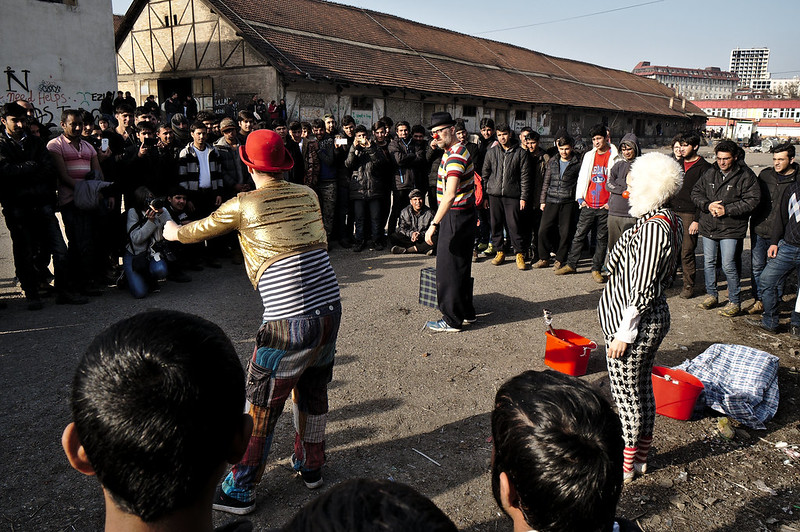
Many comedians and content creators have transformed their experiences with poverty into thriving careers on platforms like YouTube, TikTok and Netflix, proving that storytelling and humor can open the door to sustainable livelihoods. Organizations such as Clowns Without Borders use humor to raise awareness and funds while bringing joy to children in crisis zones. Its work highlights how creative expression can uplift communities affected by conflict and hardship. These examples illustrate how comedy and entertainment can serve as catalysts for economic growth and poverty reduction. Below are four ways in which these creative avenues are making a difference:

Stand-Up and Theater Schools

The International Theatre Project is dedicated to expanding access to theater for individuals living in poverty in developing countries. Since its inception in 2005, the organization has supported more than 2,700 students. Its programs aim to help young people present their thoughts confidently, solve problems collaboratively and see the world from new perspectives. Through this process, participants develop their identities, ensuring that poverty no longer defines them. The impact is significant, with more than 90% of students who participate in these programs pursuing higher education at universities.

Digital Platforms and the Television Industry

The French-Senegalese actor Omar Sy, the third of eight children born to immigrant parents, has risen to success through his talent and the television industry. In 2015, he played a role reflecting his roots in the movie “Samba.” Similarly, digital platforms like TikTok have become powerful tools for escaping poverty. Kenyan singer Michael Bundi, once on the verge of eviction due to financial struggles, gained significant attention and financial success after posting his songs on TikTok, as his music resonated with viewers.

NGOs Using Comedy to Bring Hope

Clowns Without Borders operates not only in the United Kingdom (U.K.) but in countries affected by conflict or disaster, such as Ukraine and Mozambique. The organization has been spreading laughter and offering moments of respite to more than 100,000 children over the past decade. Clowns Without Borders aims to reach an additional 1 million children over the next 10 years, continuing its mission to bring joy and hope to those who need it most.

Comedy Festivals Boosting Local Economies

The stand-up comedy scene in Kenya is booming, contributing to the local economy. Collectives like the Punchline Comedy Club, founded in 2017, organize open-mic nights, monthly shows and festivals that attract diverse audiences. These events provide platforms for emerging and established comedians, creating jobs in the entertainment industry. Artists such as Anthony “Ty” Ngachira and Eunice Njoki, known as Mammito, have seen their careers flourish through these opportunities, helping to grow the Kenyan comedy industry.

Moving Forward

Comedy and entertainment continue to play a growing role in global development efforts. From job creation in the live performance sector to digital platforms offering income opportunities, these creative industries contribute to economic inclusion and social resilience. Indeed, by supporting programs that expand access to arts and performance, governments and organizations could help strengthen livelihoods and bring visibility to voices often left unheard.

– Eléonore Bonnaterre

Eléonore is based in London, UK and focuses on Good News for The Borgen Project.

Photo: Flickr


Grassroots Gaming: Direct Relief and Bungie’s Humanitarian Efforts Gaming has evolved significantly from its novelty status in the 1950s to become a major industry, featuring several prominent companies that release high-budget titles. Within this expansive industry, some companies dedicate efforts to significant humanitarian work that benefits developing nations. A notable instance is the partnership between Direct Relief and Bungie, which has made considerable impacts despite limited coverage in mainstream media and gaming publications.

A Bungie Crash Course

Bungie is a “Triple A” video game development studio and publisher. It is best known for creating the Destiny series of live-service first-person shooters. The series is wildly popular and currently has two games; both installments have released several expansions. Within Destiny’s first week on the market in 2014, it made back its $500 million investment.

Work with Direct Relief Gaming

Direct Relief is a humanitarian organization focused on combating global poverty and responding to natural disasters. A lesser-known division, Direct Relief Gaming, collaborates extensively with gaming content creators and hosts its own charity livestream series, the Direct Relief Colosseum. This division has uniquely partnered with a game developer, Bungie, through the Bungie Foundation. While the Bungie Foundation primarily supports children’s initiatives, it has joined forces with Direct Relief several times to aid in disaster relief and pandemic responses, leveraging its community’s engagement for broader humanitarian impact.

Work In Nepal

In 2015, Nepal suffered from two high-magnitude earthquakes within three weeks, causing widespread devastation, displacement and critical injuries. In response, Direct Relief partnered with Bungie to raise funds for the victims. Bungie offered T-shirts and digital in-game items like shaders and emblems for sale, with all proceeds going to earthquake relief. The gaming community enthusiastically supported the initiative, purchasing more than 50,000 shirts. This effort successfully raised more than $1 million, making Bungie the largest single contributor to the relief efforts and marking the campaign as Bungie’s most successful charitable fundraiser. Due to this partnership, Direct Relief distributed essential medical supplies to organizations operating in Nepal.

Guardian’s Heart and COVID-19

During the COVID-19 pandemic, Direct Relief emerged as one of the largest humanitarian organizations distributing supplies globally. Partnering with Bungie, they launched the Guardian’s Heart fundraiser, which offered a special in-game emblem in Destiny 2 to donors contributing at least $20. The campaign successfully raised more than $780,000, funding critical medical supplies for first responders, especially in low- and middle-income countries with limited access. This initiative was part of Direct Relief’s broader impact during the pandemic; within a year, the organization donated 82 million units of personal protective equipment, 173 million defined daily doses of essential medicines and 36,000 pieces of diagnostic and intensive care equipment. Its efforts spanned more than 100 countries and distributed more than $50 million to health care providers worldwide, demonstrating a profound and far-reaching impact.

Looking Ahead

Bungie’s partnership with Direct Relief has made substantial impacts on global humanitarian efforts, particularly during crises like the Nepal earthquakes and the COVID-19 pandemic. Through innovative fundraising campaigns involving their gaming community, Bungie has raised significant funds to support disaster relief and medical supply distribution. These ongoing efforts highlight the role that the gaming industry can potentially contribute to global humanitarian causes.

– Meredith Wyrick

Meredith is based in Magnolia, TX, USA and focuses on Good News and Global Health for The Borgen Project.

Photo: Flickr