Poverty, Digital Recruiters and Sex Trafficking in South Korea
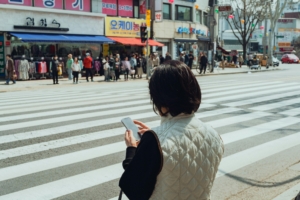 South Korea glitters as a high-tech, high-income society. Yet beneath the sheen, a less visible crisis persists. Sex trafficking in South Korea is rooted in economic vulnerability, gender inequality and the misuse of migration and entertainment visa systems. Safety from sex trafficking traps is not only a societal struggle, but a struggle for anyone online, as many perpetrators dwell in chat rooms and live streams. The cases of the “runaway teen,” the migrant entertainer and the mother struggling to survive intersect here, not in spite of wealth, but because inequality persists.
Vulnerability in the Land of Affluence
Despite being classified as a high-income country, South Korea’s economic growth has not ended deep vulnerability for certain populations. According to the RAND Corporation, South Korea continues to have one of the largest gender pay gaps among the Organization for Economic Cooperation and Development economies (OECD), placing many women, especially single mothers, in precarious positions both financially and socially. Unfortunately, with that trend set, much of the evidence points to traffickers seeking the most impoverished, socially isolated and digitally disconnected people when preying on potential victims.
Online Exploitation
The U.S. State Department’s 2024 Trafficking in Persons (TIP) Report finds that many victims in South Korea are South Korean nationals, such as teenage girls, runaway youth and women in marginalized employment. Traffickers exploit victims online using debt traps, deceptive modeling opportunities or entertainment jobs. Children and adolescents in South Korea face sexual exploitation through chat apps and live-streaming, as they aren’t monitored by parents as much as other social media sites.
Human Rights Watch reported, “The overwhelming majority of the people targeted in digital sex crimes are women—80% in spy-cam cases.” Many victims are persuaded to interact with fake images, as well as false assurances of safety, to be vulnerable and open with the perpetrator. Once lured in, individuals are manipulated into exposing themselves, fearing that their reputation, relationships and personal safety are at risk.
Migration, Entertainment and Tourist Visas
Foreign women from Eastern Europe, Southeast Asia and the former Commonwealth of Independent States (CIS) enter South Korea under entertainment visas, tourist visas or other categories. A Korean academic study reveals that many women from Russia and Uzbekistan entered the country under tourism or spousal visas. However, a lot of those women transitioned into bar or club work and found themselves unable to exit due to debt or coercion.
A 2023 report by the Korean Women’s Development Institute (KWDI) states that victim identification remains weak; many migrant women do not recognize they are victims or fear deportation, hindering access to services.
Digital Frontlines and Hidden Coercion
The sex trafficking network in South Korea takes advantage of the country’s highly connected society. Chat apps, encrypted platforms and live-streaming are used to groom and traffic youth and adults alike. The infamous “Nth Room” case targeted young people through Telegram, demanding sexual content for cryptocurrency payments. This is not unique, as online platforms are common for recruiting people into sex trafficking.
Won Eun-ji, a university student who researched Nth Room, said, “They treated women, children and adolescents like products, not human beings.” Eun-ji clicked into a chatroom, thoroughly investigated it and came to realize the horrors associated with online predators. The lengths abusers went to satisfy themselves were overwhelming, causing him to tell his experiences to media outlets to help the public understand South Korea’s hidden sex slavery market.
Why Addressing Poverty and Inequality Matters in South Korea
Trafficking isn’t only a “developing-world” phenomenon. Poverty, limited social support and gendered economic oppression exist in advanced societies and they create ripe conditions for exploitation. In South Korea, youth who run away due to family conflict or educational pressures find themselves with nowhere to turn, making them susceptible to exploiters and sex trafficking.
A 2021 ECPAT study found that exploited male and female youth alike cited social isolation, stigma and lack of safe options as key vulnerability factors. Prevention must not only target “traffickers” but also the structural conditions, such as housing instability, youth outreach, migrant worker protections and a stronger social safety net.
Government Response
South Korea was upgraded to Tier 1 in the 2024 TIP Report, signaling progress in law enforcement, victim services and policy. However, significant gaps remain as victims still sometimes face investigation or deportation rather than protection. In a KWDI research report, experts say identifying victims when they do not self-identify, are undocumented or manipulated through various debts remains the most difficult area of investigation.
Victim identification among youth, migrants and men remains weak, as well as poverty-related vulnerabilities being rarely front and center in anti-trafficking strategies. Survivor-centered reforms are essential, incorporating safe return paths, debt relief, affordable housing and migrant legal aid.
What Can Be Done?
Much effort is focused on enforcement matters, but those alone isn’t enough. Expanding youth outreach and safe shelters for runaway or at-risk adolescents is essential, as well as increasing affordable housing and childcare supports for women with low income, reducing their vulnerability to coercion. Other measures that could help include strengthening protections and contract transparency for migrant entertainers and workers, such as cancelling passport seizure and providing legal recourse without fear of deportation.
Efforts to collaborate with tech platforms to detect grooming, enforce KYC and monitor financial flows linked to trafficking are essential. These measures must be complemented by policies that integrate poverty-reduction strategies into anti-trafficking frameworks, recognizing that economic justice is a fundamental aspect of human rights protection.
It’s Not Over
South Korea’s economic success should not overshadow the fact that pockets of vulnerability remain where traffickers operate, especially online. Poverty, gender inequality, digital recruitment and migration precarity form a potent risk matrix. Ultimately, the measure of a country’s prosperity is how it protects its most vulnerable, not just how many skyscrapers it builds.
– Nicole Fernandez
Nicole is based in Reno, NV, USA and focuses on Global Health for The Borgen Project.
Photo: Pexels
