Transformation: Humanitarian Aid in South Korea
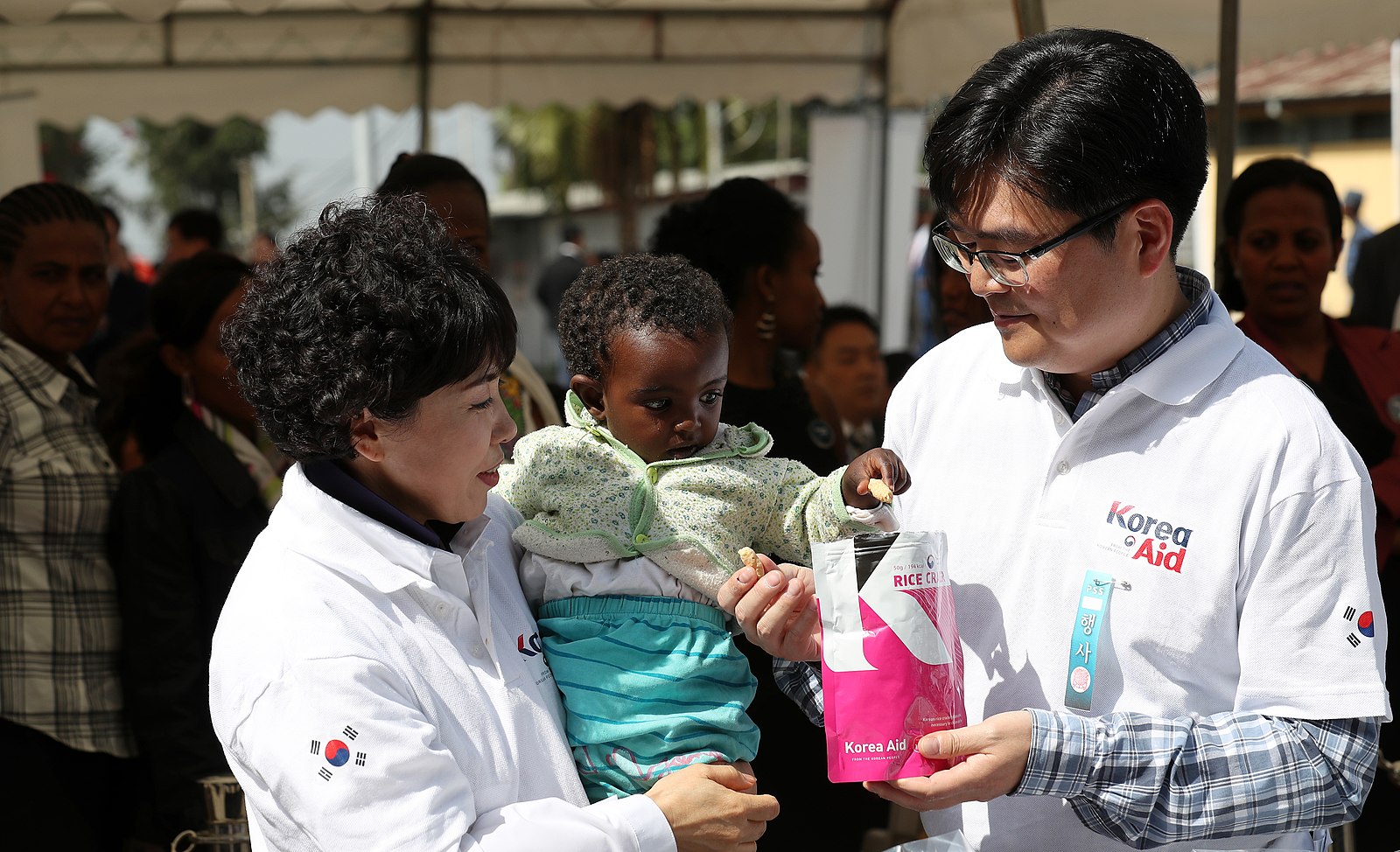 South Korea is a country in East Asia with a population of around 51 million. It shares the Korean Peninsula with North Korea putting it in a very tense political situation. Its history has been riddled with troubles, the most recent being the Korean War in the 1950s after which South Korea was left extremely impoverished. Since then its been on an incredible recovery path which is even more impressive considering its past.
Transition from Aid Recipient to Donor
Humanitarian aid in South Korea formally began in 1962. Back then, The International Development Association (IDA), a World Bank fund meant for the poorest countries in the world, granted Korea their first financial support. The first project undertaken with the money was a smart investment in infrastructure. The money helped build a railroad line for freight and passengers.
It was the first of many projects as South Korea went on to cooperate with the IDA to develop irrigation, railroads, highways, schools and universities. Soon, Koreans began reaping the benefits of international investment. The country moved onto industrial development, workforce education and R&D.
The history of humanitarian aid in South Korea is truly unlike any other country. In 2009, they became the first former aid recipients to join OECD’s Development Assistance Committee, an organisation of largest worldwide aid providers. The poverty reduction in the country has been incredible with GDP per capita rising from $158 in 1960 to $31 489 in 2020, due to an impressive growth rate of more than 7% a year.
According to OECD, Korea was the 13th largest donor in the world, with $3.94 billion donated in 2024. Its increased humanitarian activities are reflected in the impactful aid agencies, both state and private, established in the country.
Korea on the International Humanitarian Aid Stage
The Korea International Cooperation Agency (KOICA) is an organization the government created in 1991 under the control of the Ministry of Foreign Affairs as a unified grant issuer. It has since become one of the central institutions shaping humanitarian aid in South Korea, coordinating projects of different government branches. KOICA fights global poverty and supports sustainable economic development while also fostering friendly relationships with recipient countries.
The outreach of KOICA’s work is impressive with work across Asia, Africa, Latin America and the Middle East. As of 2021, their total financial support amounted to around $636 million with permanent offices set up across 47 countries. The organization is steadily developing its operations. Between 2018 and 2021, the total number of projects carried out increased from 260 to 311.
An interesting initiative of KOICA is the Global Diseases Eradication Fund, which collects money by obtaining a symbolic amount of 1,000 won from each international flight departing the country. KOICA then donates the gathered funds for treatment and prevention of infectious diseases in developing countries. The total amount of money the programme collected since 2007 in this way is 385.2 billion won.
A notable project funded by the Global Diseases Eradication Fund is the Global Alliance for Vaccines and Immunisation. With a budget of $30 million, KOICA supports the provision of vaccines and medicines necessary for children’s survival, which helps reduce the prices and make these life-saving items more widely available.
Good Neighbour
Established in 1991, Good Neighbour is a humanitarian aid organization in South Korea which aims to free the world from hunger. Its mission is to support neglected communities regardless of ethnicity, religion or ideology. Its first project took place in 1992 in Bangladesh. Besides long-term investments, the organization focuses on responding to humanitarian crises. For example, it took part in helping Somalia in 1993, in Rwanda in 1994 or in Ukraine in 2022. Besides working abroad, the Good Neighbour addresses domestic issues like child abuse. It has created a hotline for reporting abuse and contributed to changing relevant laws.
Council for Overseas Development Cooperation (KCOC)
The Good Neighbour’s international work is impressive, with the organization being one of the founding members of the Korea NGO Council for Overseas Development Cooperation (KCOC). Its international impact includes helping communities in areas like education, health care, water and income generation.
Dilafruz, a mother of six from Tajikistan, and her entrepreneurial success is an example of the tangible outcomes of Good Neighbour’s work. Her husband used to work in Russia, but he lost his job ,which put the family in a difficult place. Dilafruz recalls “there were days when I didn’t know how I would feed my children”. The community development project carried out by Good Neighbour helped women in the area, including Dilafruz, start small businesses and earn income.
Dilafruz, thanks to Good Neighbour, attended financial literacy, entrepreneurship sessions and consultations which led her to apply for her first loan of $80. She noticed that bread was always in demand in her area and set up a bakery which became a big success. Nowadays she employs several women from the area, who used to be housewives with no income. Even people from the capital drive down to her village to buy the bread. Dilafruz said that “Thanks to Good Neighbours, I found the courage to start. Now I’m helping others do the same”. She has already hosted exchange visits from Tajikistani women who wanted to learn about her business. Dilafruz is only one of many whom The Good Neighbour has helped.
Conclusion
South Korea is an inspiring example that shows how humanitarian aid can transform a country. Today, humanitarian aid in South Korea shows how far the country has come since the 1950s. From being one of the world’s poorest states, South Korea is now one of the biggest worldwide humanitarian aid donors. This change is especially reflected in increasing humanitarian NGO activity. Organisations like The Good Neighbour and agencies like KOICA are reinvesting in the world’s most vulnerable after they have been helped with financial aid themselves.
– Karol Hejduk
Karol is based in London, UK and focuses on Good News, Politics for The Borgen Project.
Photo: Wikimedia Commons
