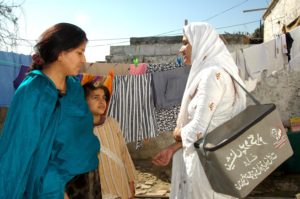
 For a low-income family living on the edge of poverty in rural Pakistan, even a minor illness can become a life-altering crisis. One medical emergency can push them deeper into systemic poverty, force children out of school and trap the family in debt they may never escape. A large majority of the Pakistani rural population falls under this socioeconomic category, where they remain “clustered just above the poverty line.”
Lacking access to quality health care, education and secure land or housing, they struggle to establish themselves within the middle class and remain constantly at risk of slipping back into poverty. At the same time, rising public debt and fiscal constraints have limited government investment in infrastructure, resulting in uneven service delivery and reduced access to essential health and education services. According to the World Bank, these domestic challenges disproportionately affect women and girls.
For example, if the journey to a school is more than five kilometres, the likelihood of girls being out of school is 76% higher than for boys.
Gendered Impacts of Poverty and Weak Health Systems in Pakistan
Furthermore, in low- and middle-income countries (LMICs) like Pakistan, particularly in rural areas, the provision of appropriate antenatal care is constrained by limited health infrastructure and a shortage of skilled medical professionals. To provide vital services to children who are most difficult to reach, community health systems are crucial. Failing social structures expose the “gendered face of poverty,” where deprivation is not only economic but also social and deeply politicized.
Women are the most excluded from public services, yet they bear the greatest burden of inadequate care. Gender-disaggregated data show that although about 45% of Pakistan’s population lives below the poverty line, more than 75% of those in poverty are women and girls. This inequality is further reflected in the World Economic Forum’s Gender Gap Index, where Pakistan ranks last out of 148 countries, underscoring persistent disparities in economic opportunity, political representation, health and education.
As a result, the country forfeits significant productive potential, as women’s labor force participation remains among the lowest in South Asia at just 21% in 2019. In Pakistan, women remain disproportionately poor due to deeply entrenched patriarchal practices, discriminatory laws and restrictive social norms.
Pakistan’s Lady Health Worker Program
As part of its national public health strategy, Pakistan’s Lady Health Worker (LHWs) program was launched in the mid-1990s to support families with limited access to formal health care. The initiative trains local women to deliver basic health services within their communities, particularly in low-income and rural areas where clinics and hospitals are scarce. LHWs provide prenatal and postnatal care, childhood immunizations, family planning guidance and basic health education.
Because they live and work in the communities they serve, they are often the first point of contact for families with health concerns. This accessibility allows health issues to be identified and addressed early, reducing the risk of complications that would otherwise require costly emergency care. Pakistan’s maternal mortality ratio has improved significantly, falling from 432 deaths per 100,000 live births in 1985 to 155 in 2023, highlighting the importance of expanded maternal health services.
Earlier high mortality rates were largely driven by high fertility levels and limited access to health care, with only 15% of women reporting at least one antenatal care visit during their most recent pregnancy. Social and cultural constraints, such as women’s restricted mobility outside the home without an escort, further limit access to health treatment in Pakistan.
Pathways Out of Poverty
For the LHWs themselves, the position represents a significant opportunity and a pathway out of poverty. The paid role advances their education through training and practical work experience, enhancing social mobility and helping to break down class and gender barriers. After three months of classroom training, LHWs undergo a year of on-the-job training.
Although training patterns vary across provinces, this typically includes 15 days of refresher training annually, plus one week of training each month over 12 months. Because they are required to build relationships across caste and class boundaries, some LHWs have gone on to become leaders within their communities. The project also aligns with Pakistan’s broader socioeconomic transformation, including rapid urbanization, increased media exposure, growing acceptance of female education and a rising desire among women to work, particularly after gaining access to schooling.
The program is state-backed, giving participants the status of holding a “government job.” As provincial funding has increased to offset earlier federal shortfalls, the programs in Khyber Pakhtunkhwa, Punjab and Sindh are now adequately resourced, following a period of severe financial constraints across regions.
Contribution to Poverty Reduction
The LHW program contributes to poverty reduction by addressing one of the most common causes of financial instability in low-income households: preventable illness. In rural areas, many families depend on daily wages, meaning even a short illness can result in lost income. When health care is delayed or unavailable, minor health issues can quickly escalate into crises that require costly treatment or long trips to distant hospitals.
LHWs help families avoid these financial shocks by delivering preventive care at the household level. Early treatment of common illnesses, childhood immunizations and prenatal checkups all reduce the likelihood of expensive medical interventions. The program’s core objective is to provide basic preventive, promotive and curative health services within communities, particularly for women and children living in marginalized rural areas and urban slums.
Through this model, approximately 90,000 LHWs deliver primary health care to an estimated 115 million people who would otherwise have limited or no access to health services. National Vision Action Planning documents highlight the critical role of LHWs in improving the quality and accessibility of Reproductive, Maternal, Newborn, Child and Adolescent Health and Nutrition (RMNCH) services. Their work strengthens community-based care, ensures continuity of treatment in rural districts and urban slums and helps remove financial barriers that prevent families from seeking timely care.
Final Remarks
Pakistan’s Lady Health Worker program demonstrates how poverty reduction in Pakistan is closely linked to access to basic, preventive health care. By delivering essential services directly to underserved communities, the initiative helps families avoid medical expenses and income losses that often deepen poverty. Its emphasis on early intervention shows that health care can function not only as a social service but also as an economic safety net for low-income households.
Community-based health care offers a practical, affordable and sustainable response to Pakistan’s widespread poverty. Long-term funding for initiatives like these may improve public health, promote home and help end intergenerational cycles of poverty, demonstrating that significant development often starts at the community level.
– Prubleen Bhogal
Prubleen is based in London, UK and focuses on Good News and Politics for The Borgen Project.
Photo: Pixnio

Digital Opportunity Trust: Promoting Digital Inclusion
Digital Opportunity Trust
Digital Opportunity Trust (DOT) is a Canadian organization that delivers programs to young entrepreneurs on how to profit from the digital economy. Since 2002, DOT has been working to bridge the digital divide by connecting young people globally to essential digital skills. More than 3 million people in impoverished communities across more than 20 countries have benefited from DOT’s youth leaders.
DOT fosters inclusive development by preparing young leaders to participate in the digital economy and support economic growth at a local level. DOT’s Youth Entrepreneurship program aims to mitigate barriers to digital inclusion by providing young people with access to digital tools in addition to skill training and development. With a solid foundation in digital competencies, DOT is positioning young entrepreneurs as leaders of economic growth.
Initiatives like the Digital Bridge Project aim to educate 10,000 young people in Kenya and Ethiopia on how to use digital tools for their professional and personal development by April 2026. This initiative cultivates a new generation of digitally literate leaders prepared to drive poverty reduction in the digital age.
Economic Benefits of the Digital Economy
We can look to Kenya’s progress for how digital inclusion can transform a society and strengthen its economy. The “Silicon Savannah” has seen steady growth in its Information and Communication Technology (ICT) sector since 2016, creating jobs across almost all industries. Kenya’s investment in developing human digital capital aligns with DOT’s efforts to create a “digitally savvy workforce” capable of tapping into new opportunities for economic growth in the digital sphere.
Creating more jobs, especially for young people and promoting sustainable development by leveraging digital markets. The combined efforts of the public and private sectors support job creation and economic diversification in the digital age. Furthermore, Kenya’s adoption of broadband infrastructure has positioned the country as a leader in Africa’s digital economy.
Through its progressive digital strategy policies, Kenya aims to create 300,000 new jobs by 2028 by integrating digital technologies across the agriculture, transport, manufacturing and trade sectors.
Rural Barriers and New Pathways
While progress is being made, the digital divide disproportionately impacts rural populations. Limited internet access among 83% of rural residents limits digital skill development and market participation. To bridge this gap, DOT Kenya youth leader Samuel Mathenge led training sessions that enabled youth in Nyeri County to engage with the digital market.
Through DOT’s Youth program, he strengthened his own skills and trained more than 600 young people in digital literacy. “My journey with DOT Kenya has not only transformed me into a confident digital skills facilitator but also a compassionate and patient leader,” Mathenge stated. Fresh off his DOT training and equipped with the confidence to lead, Mathenge worked with other young people to not only master digital tools but also prepare for the job market.
Together, they searched for careers in the tech sector, refining their CVs and preparing for interviews. DOT’s investment in one young entrepreneur has created a cycle of youth empowerment in Kenya. Mathenge is just one of thousands of DOT Youth leaders globally, working to foster inclusive development in their communities.
Digital Foundations for Poverty Reduction
Digital inclusion opens pathways for education, skill development and youth participation in the labour markets, laying a digital foundation for economic growth and poverty reduction. Indeed, initiatives by DOT empower young entrepreneurs to engage with the digital economy, equipping them with the skills and agency to drive sustainable growth. DOT places economic power in the hands of young leaders, enabling them to thrive in their communities and create lasting change.
– Hope Jowharian
Photo: Flickr
How Organizations Advance Equitable Health Care in Eritrea
Health Care Disparities in Eritrea
Numerous disparities in health care access and services exist between urban and rural populations in Eritrea. The percentage of women receiving antenatal care from a health care professional in Eritrea increased significantly from 49% in 1995 to 70% in 2002. However, access remained uneven, with 91% of women in urban areas receiving antenatal care compared to just 59% in rural areas
A similar disparity appears in facility-based childbirth. In urban areas, the proportion of women giving birth in a health facility rose from 58% in 1995 to 62% in 2002. In contrast, the figure for rural women increased only slightly, from 7% to 9% over the same period.
Disparities in access to obstetric services were also evident across education levels. In 2002, approximately 88% of women with some secondary education were assisted by a trained health worker during childbirth, compared with 36% of women with only primary education and just 12% of those with no formal education.
Multiple disparities also exist in child health outcomes:
Disparities in Mental Health Treatment
Due to the increasing prevalence of mental health disorders in Eritrea, mental illnesses are among the leading causes of disability, comorbidity and mortality in the country. In 2014, the prevalence rate for common mental disorders was 14.5% and the estimated number of children with intellectual disabilities was between 30,000 and 40,000. However, because adequate mental health workers and services are limited, many mental illnesses and disorders are likely undetected or misdiagnosed.
Nonetheless, several organizations provide essential support to Eritrean refugees. Around 5,000 people flee the country each month to escape hardship and mandatory military service, increasing the need for mental health services in refugee camps. Doctors Without Borders (MSF) launched a mental health program in 2015 in Ethiopia’s Hitsats and Shimelba camps, offering counselling and inpatient and outpatient psychiatric care.
The Jesuit Refugee Service (JRS) also provides Mental Health and Psychosocial Support through counselling, psychological first aid, referrals and community-based activities that strengthen social connection and resilience.
Expanded Program on Immunization
The World Health Organization (WHO) identified physical barriers as a major challenge to immunization coverage in rural communities. In response, WHO implemented the Expanded Program on Immunization (EPI) in Eritrea to improve vaccine access, reaching more than 42,000 children and 150,000 mothers. By 2024, the program achieved national immunization coverage rates exceeding 95% for several vaccines.
UN Sustainable Development Cooperation Framework for Eritrea
The country program for Eritrea, outlined in the U.N. Sustainable Development Cooperation Framework 2022-2026, aims to enable more Eritreans to benefit from equitable and inclusive health and social services by 2026. The program outlines some goals for improved health and social services, including:
To achieve these goals, the program implemented several interventions, including:
Additionally, the country program works in collaboration with UNICEF and the WHO to strengthen the distribution and supply chain systems for medicines and medical supplies across Eritrea. This joint initiative aims to address unmet needs in family planning, reduce preventable maternal deaths and combat gender-based violence and harmful practices.
Community-Based Programs
Conclusion
Notable work is being done to improve health care in Eritrea. Trained CHWs and volunteers extend services to areas previously out of reach. Organizations implementing health interventions benefit vulnerable populations and areas, including Eritrean refugees.
Organizations implementing health interventions are reaching vulnerable populations, including Eritrean refugees and helping to close existing care gaps. Together, these initiatives continue to drive progress toward a more equitable health care system in Eritrea.
– Sarah Merrill
Photo: Pixabay
How Public Libraries Are Alleviating Poverty in Rural South Africa
The Role of Public Libraries in Rural South Africa
Public libraries in rural South Africa play an essential role in enhancing the local information environment by providing equitable access to information, education and digital tools. In areas with limited resources, these libraries serve as crucial community hubs, offering a wide range of services, including access to books, the internet and educational programs. By bridging the digital divide, public libraries empower individuals with the skills needed to navigate the digital world, improving their chances of economic success and social inclusion.
Furthermore, libraries facilitate lifelong learning by offering various educational opportunities, from early childhood literacy programs to adult education and vocational training. In this way, public libraries help address information poverty, promote equality and contribute to sustainable development, alleviating poverty in rural communities across South Africa.
Empowering the Next Generation
One of the most significant ways libraries help reduce poverty in rural South Africa is through their work with children and young people. In under-resourced communities, libraries serve as spaces for learning and personal development. Programs such as after-school tutoring, reading clubs and skills workshops help improve literacy and encourage a lasting interest in education.
By supporting the education of the next generation, libraries play a vital role in breaking the cycle of poverty that has held many families back for generations. For young adults, libraries offer opportunities for personal development and career advancement. Workshops on job readiness, training on resume writing, application processes and interview skills are often conducted in collaboration with organizations.
These programs give young people the tools they need to succeed in the job market and secure employment, thus enhancing their economic prospects and contributing to local economic growth.
Access to Information and Resources for Adults
Public libraries also serve as vital resources for adults seeking to improve their lives. In rural South Africa, many adults face unemployment or underemployment, often due to limited skills or restricted access to information. Libraries help address this gap by offering resources that go beyond traditional reading and language support.
Today, public libraries play an important role in promoting Media and Information Literacy (MIL). In an increasingly digital world, they help individuals develop the skills needed to critically engage with information, assess sources and use digital tools responsibly. Supported by UNESCO, MIL equips people to navigate online spaces safely and build trust in digital technologies.
This includes addressing challenges such as the spread of misinformation and disinformation, hate speech and the growing decline in trust toward media and digital technologies like artificial intelligence. By offering MIL resources alongside traditional literacy programs, libraries empower individuals to make informed decisions and engage more effectively with the information ecosystem. Over time, these efforts contribute to reducing poverty in rural South Africa by strengthening digital confidence, critical thinking and access to opportunity.
Success Stories: Impacting Lives in Rural Communities
One notable success story is the African Library Project. This nonprofit organization establishes libraries in rural and underserved communities across Africa. The initiative has played a key role in improving literacy rates and expanding educational opportunities by collecting and distributing books to schools and local libraries.
Through partnerships with community members and volunteers, the African Library Project helps create sustainable, resource-rich libraries that support both students and adults. These efforts not only provide access to essential learning materials but also encourage a culture of reading, helping to bridge educational gaps and promote lifelong learning across the continent.
Overcoming Challenges and Looking Ahead
Despite the positive impact that public libraries have had, challenges remain. Many libraries in rural South Africa face challenges, including a lack of competent, qualified staff and outdated, limited resources. However, there is hope.
Efforts are underway to address these challenges. Recent studies and advocacy initiatives highlight the important role libraries play in development, particularly as public access points for information and communication technologies (ICTs) and community-based programs. Organizations such as the International Federation of Library Associations and Institutions (IFLA) and the African Library and Information Associations and Institutions (AfLIA) are actively working to amplify the impact of African libraries and expand their role in development efforts.
These efforts, supported by local and international advocates, reflect a growing recognition of libraries’ transformative power to foster development and improve access to information in underserved communities. With sustained support, public libraries can become powerful agents of change in the fight against rural poverty. By providing access to knowledge, skills and opportunities, they help individuals build better futures for themselves and their communities.
– Chris Tang
Photo: Flickr
The Success of Foreign Aid to Cuba
Why Did Foreign Aid to Cuba Cease?
For 63 years, since 1963, the United States has enforced a commercial and economic embargo against Cuba. Far more than simply an attack on Cuban trade, the U.S. policy attempts to globally isolate the island. At its core, the embargo legally bans American investment in Cuba while utilizing extraterritorial sanctions and resulting fines to deter investments from U.S. allies.
Beyond this, the embargo prevents Cuba from selling its products in U.S. markets or to its allies. In return, it denies Cubans the ability to trade with their natural economic partner just 90 miles away, forcing them to source essential food and medicine from costly suppliers.
While the Obama and Biden administrations passed limited exemptions for travel, the foundational statutes of the embargo remain unaltered, leaving its restrictive core legally and politically intact. While the Obama and (although less) Biden administrations passed limited exemptions for travel, this was not a repeal of the statutes that brought the embargo into U.S. law and because of this the Trump administration had the ability to re-instate the full enforcement. Despite widespread criticism against the U.S., the nation is able to enforce the Embargo through its global-leading status and UN Veto.
Its Consequences
The consequences of the embargo permeate every facet of Cuban life. Though Cuba holds a strong domestic health care industry, the U.S. embargo has blocked access to new health-equipment and forced the country to rely on ‘intermediaries or substitutes, at exorbitant prices for inferior quality.’ As a result of the embargo, during the COVID-19 pandemic, the Cuban health industry lost $80 million – a loss that, should it persist, could lead to a breakdown of services. The U.S. Embargo also blocks Cuban farmers from accessing modern equipment and parts, leading to low-yield harvests and rationing. The nutritional deficiencies that the U.S. embargo caused have led to a rise in low birth weights and have triggered neuropathy epidemics in 50,000 Cuban adults.
Financially, U.S. law is prohibiting Cuban banks from processing dollar transactions, and foreign institutions can face billions in U.S. penalties for facilitating trade, rendering Cuba entirely isolated – such as the French bank BNP Paribas which faced an $8.9 billion fine in 2014 after engaging in Cuban transactions. This U.S. policy strangles Cuban entrepreneurs, who cannot affordably import supplies, access international credit or standard payment platforms like PayPal. The embargo also caused energy insecurities, which have led to frequent blackouts across Cuba, completely halting all activity. Consequently, the embargo forces many Cuban businesses into informality, reliant on black market cash-based deals, something that could only be ended if foreign aid to Cuba was re-initiated.
Paradoxically, although the United States created the embargo to pressure the Cuban government, it has only strengthened the regime by allowing its leaders to characterize themselves and their hardship as victims of aggressive U.S. foreign policy. Thus, the embargo continues a cycle of hardship without advancing its stated political goals, condemning the future of Cuban generations.
Solutions
Beyond the actions of the Cuban government or the remittances from the diaspora, the international community undertakes significant efforts to mitigate the humanitarian harm that the embargo caused. Multilateral organizations like the World Food Programme (WFP) lead these efforts, which in 2024, fed 1,320,867 people in Cuba, in addition to providing specialist malnutrition prevention schemes for 268,497 Cubans. The global community also navigates U.S. sanctions to support Cuba, such as the EU, which has allocated $125 million in cooperation funds since 2020, or China, which has regularly tried to develop Cuban industries, including an $1.8 billion credit line so that Cuban public transportation and the logistics involved could be improved. While effective, naturally, the support of these global actors wanes with the geopolitics that the U.S. pursues.
Complementing these governmental efforts, a network of international NGOs are working at the grassroots level to support the people of Cuba. One example is Oxfam, which works in rural and urban provinces to provide supplies and helps address the damage of natural disasters. Another critical NGO is Cuba Vive, which works yearly to raise more than £200,000, all of which goes back to Cuba as medical supplies/personnel.
What Needs to Be Done?
As The Washington Office on Latin America said, the embargo “no longer benefits any players in the game— not the United States and certainly not the Cuban people.” The United States-Cuba Trade Act bill would repeal the core embargo statutes (the Helms-Burton and Torricelli Acts) and restart the flow of foreign aid to Cuba, opening humanitarian channels, reuniting families and reintegrating the Island into the world.
As a 2023 UN General Assembly report concluded, the embargo continues “the adverse… on the Cuban people and on Cuban nationals living in other countries.” Cuba’s recovery hinges on the Embargo’s erasure and replacement by the UN and U.S. courts with a new paradigm of foreign engagement. One that replaces hostility with genuine economic partnership and brings foreign aid to Cuba again.
– Eli Thomson
Photo: Unsplash
Being Poor in Kashmir: How PDS Systems Improve Sustainability
Kashmir, a state located in India’s Northern mountainous terrain, is mostly a rural and remote region. Education and clean water are often a luxury for residents of Kashmir. Even in cities, unstable job opportunities and livelihoods result in constant struggles. However, over the last seven years, the region has recorded a considerable decline in poverty from 12.56% to 4.8% as per the most recent National MPI statistics. In 2025, the region suddenly saw experts’ focus on the credibility of this poverty decline and the MPI itself.
Being Poor in Kashmir & National MPI Controversy
Experts felt that the MPI did not effectively showcase the reality of life in Kashmir. This concern arose from the fact that nearly 50% of Kashmir’s population relied on the government’s Public Distribution Systems (PDS) for food and financial assistance.
PDS played the primary role of providing sustenance for these members who lacked stable means of livelihood. An August 2025 report from Kashmir’s Department of FCS&CA exhibits that 98.64 lakh beneficiaries receive food grains every month. Thus, social workers and national journalists felt that Kashmir’s citizens still lacked credible means to overcome poverty and mere survival.
The Multidimensional Poverty Index summed multiple life factors while measuring poverty. Additionally, the National MPI, which Niti Yoga has appropriated, includes two more factors, maternal health and financial inclusion. When keeping this in mind, social experts express concerns that Kashmir’s progress in declining poverty might be short-term. It is problematic because in the process of poverty reduction, dependency on PDS systems is peaking. But does it suffice to view this only as dependency?
Why Should One View PDS Optimistically?
While the experts’ concerns definitely are valid, should one view them in a negative light? Some leaders argue that the government is utilizing taxpayers’ money to help those residing below the poverty line. Although the PDS dependency numbers are staggering, giving people access to necessities such as food, housing and sanitation holds long-term benefits. For instance, families with children who previously focused only on survival are now expanding horizons towards education and other aspects of quality of life. Kashmir’s 2022-23 SDG reports showed that education enrollment increased to 88.65% from 71.73% in 2015-16.
Secondly, when looking at the statistics, the uplifting of 7.76% people from below the poverty line is an incredible achievement, according to government representatives. Moreover, the fact that government schemes facilitated this improvement adds to the positive momentum and a hope for those who are poor in Kashmir.
Finally, an important aspect is that a large part of the Jammu and Kashmir population is no longer starving. The lifestyle of the population has undergone major changes from the last five years, especially in regards to the experience of being poor in Kashmir. Dependency on PDS can be reduced by using the right strategies, but lives getting saved and hunger being eradicated are commendable feats.
Reducing PDS Dependency
Kashmir’s local and central leadership has made notable progress in eradicating poverty. The government is now focusing increasingly on employment and entrepreneurship. Representatives are turning their attention towards schemes which help increase the means of livelihood and income stability.
Some of these schemes include the MUMKIN, a scheme for improving youth livelihood, PM SVANidhi for street vendors and others. Other schemes prioritizing women entrepreneurship and security for the elderly also exist.
The government plans to initiate multi-dimensional strategies, which on the one hand focus on the stability of PDS systems. On the other hand, it can work on improving people’s means of financial income, creating new jobs and educational opportunities. In doing so, the funds allocation can slowly shift more towards such schemes while reducing PDS dependency. Thus, leaders reinforce that it is important to view the PDS systems as factors improving sustainability rather than as a dependency for those being poor in Kashmir. Because schemes and systems like these eradicate the more impossible problems, such as food and shelter accessibility to rural areas and urban poverty, too.
Into the Future
By elevating people from the below poverty line social sector, their approach to life changes. Impoverished people slowly shift from survival modes to sustenance modes such as education, lifestyle, etc. Evidently, Kashmir’s tourism rates and infrastructure progress show considerable improvement.
Kashmir is now well poised to utilize the funds from tourism for improving its citizens’ quality of life. Central and State Governments expect to see more of the population stepping out of being poor in Kashmir over the coming years.
– Shafika Fathima
Photo: Flickr
Higher Education in Malta and Its Role in Reducing Poverty
These disparities matter because education remains one of the strongest predictors of long-term economic security. In small, service-based economies such as Malta’s, higher education often determines access to stable employment, higher wages and upward social mobility.
Public institutions such as the University of Malta and the Malta College of Arts, Science and Technology have driven much of the growth in higher education in Malta, supported by a growing private higher education sector. Despite broader access, participation and outcomes remain uneven across socio-economic groups.
Education Attainment and Poverty Risk
Data from Eurostat shows a clear relationship between education level and poverty risk in Malta. Individuals with tertiary education face a significantly lower risk of poverty than those with only secondary or post-secondary, non-tertiary qualifications.
This gap illustrates the protective role higher education plays against poverty. University graduates are more likely to secure stable employment and higher wages, particularly in sectors such as finance, health care, education and information technology. Workers without tertiary credentials often face low wages, job insecurity and limited career mobility.
Despite high public investment, outcomes remain polarized. Roughly 40% of adults in Malta still have less than upper secondary education, which limits access to higher education in Malta and reinforces intergenerational inequality.
Barriers To Higher Education Access
Early educational attainment plays a decisive role in determining who reaches university. Students from disadvantaged backgrounds in Malta underperform in literacy and numeracy, reducing their likelihood of completing secondary education and progressing to tertiary studies.
Socio-economic background further shapes educational trajectories. While public universities charge no tuition for Maltese and EU citizens, indirect costs such as housing, transportation, study materials and foregone income discourage students from low-income households from pursuing higher education.
Adult learning participation reflects similar inequality. Lifelong learning programs in Malta primarily attract individuals who already hold higher qualifications, while adults with lower education levels participate far less, limiting reskilling opportunities and increasing long-term poverty risk.
Labor Market Mismatches and Inequality
Even among graduates, outcomes remain uneven. Malta faces shortages in science, technology, engineering and mathematics fields, while some graduates experience underemployment due to skills mismatches. Weak alignment between education outcomes and labor market needs can undermine the poverty-reducing potential of higher education in Malta.
To address these gaps, policymakers emphasize closer coordination between tertiary institutions and labor market demand. Strengthening vocational and technical pathways alongside traditional university degrees can broaden access to stable, well-paid employment.
Higher Education as an Anti-Poverty Strategy
The Maltese government introduced initiatives to improve access to higher education. The Get Qualified Scheme provides tax credits to individuals pursuing higher education or vocational training, reducing financial barriers and encouraging workforce upskilling.
The government also provides monthly student stipends to help cover living costs, which supports retention and reduces dropout rates among full-time students from lower-income households.
International research consistently identifies education as one of the most effective long-term strategies for reducing poverty. Tertiary education increases lifetime earnings, improves health outcomes and strengthens civic participation.
Conclusion
Higher education in Malta reduces poverty risk by improving employment stability and income potential. However, unequal access, early educational disparities and labor market mismatches continue to limit its full impact.
Expanding financial support, strengthening adult learning opportunities and aligning education with workforce needs would allow higher education in Malta to function as a true engine of social mobility and long-term poverty reduction.
– Sean Leung
Photo: Flickr
Reclaiming Health Care for Indigenous Communities in Canada
They also experience higher rates of mental health issues, as well as substance abuse and are more likely to be discriminated against by health care professionals.
The Barriers
One of the greatest barriers for Indigenous communities seeking health care is geography, especially for those living off-reserve and in remote areas. In a survey conducted by Statistics Canada, more than half of Inuit respondents reported having to travel more than 1,500 kilometers to access health care. In that same survey, one in five Indigenous people reported experiencing discrimination and racism by health care professionals.
In some cases, this prejudice would lead to inadequate care, misdiagnoses and negatively impact mental health. Health care for Indigenous communities also falls short when it comes to diseases. Indigenous peoples have a higher risk of developing chronic diseases such as diabetes. cardiovascular diseases and respiratory illnesses compared to non-Indigenous Canadians.
This is partially due to the aforementioned health care barriers and can also be attributed to intergenerational trauma and forced erasure of traditional medicinal practices.
The Case of Joyce Echaquan
Joyce Echaquan’s death on September 28, 2020, at the Joliette Hospital Center in Quebec is one fatal instance of racial discrimination against Indigenous peoples by health care professionals. Echaquan, a 37-year-old Atikamekw woman and mother of seven, went to the hospital for severe stomach pain. She recorded hospital staff verbally berating her on her phone and passed away shortly after posting the video to social media.
Her case received widespread media attention and prompted protests, marches and vigils in Montreal and surrounding Quebec cities to bring hospital staff to justice. A call to action in her name, the Joyce’s Principle, “aims to guarantee to all Indigenous people the right of equitable action, without any discrimination, to all social and health services.” The Joyce Principle has since been adopted by the federal government and by universities such as McGill.
The Canadian Medical Association (CMA) covered her story in its historical and ethical review report and apology to Indigenous peoples released in 2023.
Indigenous-Led Initiatives
Indigenous representatives across Canada are calling for more initiatives led by their own communities to ensure that health care is delivered in a culturally safe way. The First Nations Health Authority (FNHA) in British Columbia is one such initiative. It is the only health authority in Canada to operate on a provincial scale and its mission is to establish culturally safe care by managing and funding health programs.
It has been successful in operating clinics and health centers across the province and in encouraging respectful collaboration with Indigenous people since 2013. Similar initiatives, such as the Keewatinohk Inniniw Minoayawin (KIM) in Manitoba and the Sioux Lookout First Nations Health Authority (SLFNHA) in Ontario, aim to provide culturally safe health care at the provincial level, on par with the FNHA.
– Brittany Buscio
Photo: Flickr
Pakistan’s Lady Health Worker Program & Poverty Reduction
Lacking access to quality health care, education and secure land or housing, they struggle to establish themselves within the middle class and remain constantly at risk of slipping back into poverty. At the same time, rising public debt and fiscal constraints have limited government investment in infrastructure, resulting in uneven service delivery and reduced access to essential health and education services. According to the World Bank, these domestic challenges disproportionately affect women and girls.
For example, if the journey to a school is more than five kilometres, the likelihood of girls being out of school is 76% higher than for boys.
Gendered Impacts of Poverty and Weak Health Systems in Pakistan
Furthermore, in low- and middle-income countries (LMICs) like Pakistan, particularly in rural areas, the provision of appropriate antenatal care is constrained by limited health infrastructure and a shortage of skilled medical professionals. To provide vital services to children who are most difficult to reach, community health systems are crucial. Failing social structures expose the “gendered face of poverty,” where deprivation is not only economic but also social and deeply politicized.
Women are the most excluded from public services, yet they bear the greatest burden of inadequate care. Gender-disaggregated data show that although about 45% of Pakistan’s population lives below the poverty line, more than 75% of those in poverty are women and girls. This inequality is further reflected in the World Economic Forum’s Gender Gap Index, where Pakistan ranks last out of 148 countries, underscoring persistent disparities in economic opportunity, political representation, health and education.
As a result, the country forfeits significant productive potential, as women’s labor force participation remains among the lowest in South Asia at just 21% in 2019. In Pakistan, women remain disproportionately poor due to deeply entrenched patriarchal practices, discriminatory laws and restrictive social norms.
Pakistan’s Lady Health Worker Program
As part of its national public health strategy, Pakistan’s Lady Health Worker (LHWs) program was launched in the mid-1990s to support families with limited access to formal health care. The initiative trains local women to deliver basic health services within their communities, particularly in low-income and rural areas where clinics and hospitals are scarce. LHWs provide prenatal and postnatal care, childhood immunizations, family planning guidance and basic health education.
Because they live and work in the communities they serve, they are often the first point of contact for families with health concerns. This accessibility allows health issues to be identified and addressed early, reducing the risk of complications that would otherwise require costly emergency care. Pakistan’s maternal mortality ratio has improved significantly, falling from 432 deaths per 100,000 live births in 1985 to 155 in 2023, highlighting the importance of expanded maternal health services.
Earlier high mortality rates were largely driven by high fertility levels and limited access to health care, with only 15% of women reporting at least one antenatal care visit during their most recent pregnancy. Social and cultural constraints, such as women’s restricted mobility outside the home without an escort, further limit access to health treatment in Pakistan.
Pathways Out of Poverty
For the LHWs themselves, the position represents a significant opportunity and a pathway out of poverty. The paid role advances their education through training and practical work experience, enhancing social mobility and helping to break down class and gender barriers. After three months of classroom training, LHWs undergo a year of on-the-job training.
Although training patterns vary across provinces, this typically includes 15 days of refresher training annually, plus one week of training each month over 12 months. Because they are required to build relationships across caste and class boundaries, some LHWs have gone on to become leaders within their communities. The project also aligns with Pakistan’s broader socioeconomic transformation, including rapid urbanization, increased media exposure, growing acceptance of female education and a rising desire among women to work, particularly after gaining access to schooling.
The program is state-backed, giving participants the status of holding a “government job.” As provincial funding has increased to offset earlier federal shortfalls, the programs in Khyber Pakhtunkhwa, Punjab and Sindh are now adequately resourced, following a period of severe financial constraints across regions.
Contribution to Poverty Reduction
The LHW program contributes to poverty reduction by addressing one of the most common causes of financial instability in low-income households: preventable illness. In rural areas, many families depend on daily wages, meaning even a short illness can result in lost income. When health care is delayed or unavailable, minor health issues can quickly escalate into crises that require costly treatment or long trips to distant hospitals.
LHWs help families avoid these financial shocks by delivering preventive care at the household level. Early treatment of common illnesses, childhood immunizations and prenatal checkups all reduce the likelihood of expensive medical interventions. The program’s core objective is to provide basic preventive, promotive and curative health services within communities, particularly for women and children living in marginalized rural areas and urban slums.
Through this model, approximately 90,000 LHWs deliver primary health care to an estimated 115 million people who would otherwise have limited or no access to health services. National Vision Action Planning documents highlight the critical role of LHWs in improving the quality and accessibility of Reproductive, Maternal, Newborn, Child and Adolescent Health and Nutrition (RMNCH) services. Their work strengthens community-based care, ensures continuity of treatment in rural districts and urban slums and helps remove financial barriers that prevent families from seeking timely care.
Final Remarks
Pakistan’s Lady Health Worker program demonstrates how poverty reduction in Pakistan is closely linked to access to basic, preventive health care. By delivering essential services directly to underserved communities, the initiative helps families avoid medical expenses and income losses that often deepen poverty. Its emphasis on early intervention shows that health care can function not only as a social service but also as an economic safety net for low-income households.
Community-based health care offers a practical, affordable and sustainable response to Pakistan’s widespread poverty. Long-term funding for initiatives like these may improve public health, promote home and help end intergenerational cycles of poverty, demonstrating that significant development often starts at the community level.
– Prubleen Bhogal
Photo: Pixnio
The Laufey Foundation: Uplifting Young Musicians
Background
Known for her musical style that fuses classical, bossa nova and jazz pop, Laufey blends the vintage richness of jazz with modern pop.
She has become admired by Gen Z for her tranquil voice alongside traditional instruments, creating a dreamy, nostalgic feel through her uniquely romantic songs that center around her experience in love, self-identity and more.
She first made her debut with the EP, Typical of Me, in 2021. Since then, she rose as the world’s top streaming jazz artist and won a Grammy for Best Traditional Pop vocal for her 2023 album Bewitched.
The Laufey Foundation
The newly formed Laufey Foundation is a nonprofit that gives youth music programs worldwide access to high quality instruments and equipment and offers financial grants. The foundation’s mission is to uplift youth from all backgrounds by allowing them the opportunities to grow their musical abilities in orchestra programs.
Throughout her life, Laufey has been given the invaluable opportunities of musical education that allowed her to excel and thrive as the celebrated artist that she is today. She credits much of her success to the youth orchestra programs that equipped her with the skills to follow her passion in music.
It was a Presidential Scholarship that allowed her to further her education as a cellist at the Berklee College of Music. With The Laufey Foundation, she intends to give back to young musicians to provide them with the support that once helped her. ”My goal is to bring jazz and classical music to my generation through a more accessible road,” Laufey shared.
These youth orchestra programs provide hundreds of children as young as 5-years-old and as old as 18 with accessible top-quality music education and training that hones their musical talent, no matter where they come from.
Partners
The organization’s website shared that their goal is to “make sure all aspiring musicians have the resources they need, especially through youth orchestras, to reach their full potential.”
So far, The Laufey Foundation’s brand partners include AEG Presents, AWAL, Steinway and Sons, Catbird, Gibson and Warner Chappell Music and continue to grow.
Established in 2025, its mission has only just begun. To create a global impact, the organization seeks to expand beyond U.S. programs to reach youth orchestras across the world as they grow and evolve. The Laufey Foundation’s development will not only be through donors, but Laufey’s charitable efforts.
The organization has since partnered with five youth orchestras after its recent 2025 launch:
The programs selected have global recognition for its gifted students or aim to support young musicians who lack the resources to nurture their growth. As The Laufey Foundation advances its reach, it will partner with more youth orchestra programs worldwide.
Charitable Efforts
In the early beginnings of The Laufey Foundation, the artist made an initial donation of $100,000 to go toward her “commitment to making a meaningful impact across different sectors of society and culture.”
Laufey dropped her album, A Matter of Time, and championed The Laufey Foundation following its release in August 2025.
In July 2025, she announced a sweepstake for two VIP tickets to Laufey’s Los Angeles show, an exclusive soundcheck experience with Laufey, a signed Gibson guitar and more, travel and hotel included. Every entry went towards The Laufey Foundation.
Additionally, when selling tickets for her A Matter of Time Tour in August 2025, a $1 per ticket donation from the UK, U.S. and European countries raised over $275,000 for The Laufey Foundation.
Art Pieces
She has partnered with Soundwaves Art Foundation and signed art pieces that depict a visual of soundwaves from her famous chart-topping song, “From The Start.” The exclusive hand-signed art collection supported The Laufey Foundation with its profits. What’s more, $1 was donated with each sale of Laufey’s original plushie, Mei Mei. Laufey’s first children’s picture book, Mei Mei The Bunny, had $1 from each book sold go towards the foundation. Everlane has also collaborated with Laufey for a limited edition clothing collection that benefits The Laufey Foundation.
Laufey does not only raise funding for youth orchestra programs but serves as a mentor herself. Throughout her tour, Laufey invited her partnered youth orchestras to several soundchecks. At the soundchecks, the young musicians watched her performances and asked her questions surrounding being a musician.
Global Impact on Young Musicians
Laufey has inspired fans across the world and brought upon a resurgence of traditional jazz and classical music. She sends listeners into a lovesick nostalgia with touching lyrics that warms the heart. Through her passion for music and devotion to sharing it to the future generation of musicians, Laufey is dedicated to expanding access to music opportunities and supporting young artists in any way she can through her platform and influence.
– Caydie Tampac
Photo: Flickr
Waste-to-Fuel Microfactories in Lagos
Lagos’s shift toward circular waste strategies seeks to move beyond disposal toward resource recovery, allowing communities to benefit economically from materials previously considered waste. Waste-to-fuel microfactories in Lagos could function as decentralized hubs where plastic waste, agricultural scraps and organics become fuels like briquettes, biogas or process heat for local use.
Local Waste Processing Reduces Environmental Burden
Lagos is advancing circular waste economy and energy recovery partnerships that aim to harness the inherent value of solid waste rather than burden landfills. For example, the state is actively working to replace its linear waste model with one focusing on energy recovery and material reuse, reflecting a broader strategy to transform waste into resources.
The Lagos State Government has signed a partnership with Harvest Waste Consortium, a Dutch company that will build a waste-to-energy plant at the Epe landfill using advanced technology to convert municipal, commercial and industrial waste into clean energy. This facility could generate usable electrical power and provide a model for how waste-to-fuel microfactories might function at smaller, community scales.
Additionally, collaboration between Lagos State and Lafarge Africa aims to convert non-recyclable combustible waste into alternative fuel for industrial use, an initiative that demonstrates how waste can become fuel for energy and production rather than end up in dumpsites.
Public Health, Jobs and Economic Opportunities
Beyond large waste-to-energy facilities, Lagos is positioning waste as a source of economic value. A recent forum on waste management emphasized that waste should be seen as “wealth we recover,” highlighting the potential for new jobs in waste collection, sorting, processing and energy conversion. This shift toward circular strategies supports livelihoods and provides training and employment for local residents, demonstrating how waste-to-fuel microfactories could create income streams at community level.
Traditional solid fuels like charcoal and kerosene contribute to indoor air pollution and respiratory illness, particularly among low-income households. Waste-derived energy products, including briquettes or biogas, burn more cleanly and could reduce harmful emissions when adopted at household or community levels. Research on waste-to-energy technologies in Nigeria notes the potential public health gains when municipal solid waste is converted to usable energy rather than left to decompose in open dumps.
Circular Economy Models Strengthen Urban Resilience
Lagos officials have acknowledged that waste is an untapped economic opportunity, and strategic circular economy plans aim to build systems that treat waste as a resource. Experts say that sustainable energy recovery strategies — including pyrolysis and other waste conversion technologies, offer a pathway toward economic growth, reduced environmental impact and enhanced energy security in Nigeria’s largest city.
Waste-to-fuel microfactories in Lagos, though still emerging, fit within a larger movement toward circular waste management, energy recovery and community-focused economic opportunity. By transforming waste into usable fuels and energy products, these systems could reduce landfill burdens, create jobs and expand access to cleaner energy for underserved communities. With continued investment, supportive policy frameworks and community engagement, Lagos’s approach to waste-to-fuel technologies can play a meaningful role in addressing both environmental and socioeconomic challenges in the city.
– Shahzeb Khan
Photo: Flickr