The Success of Foreign Aid to Cuba
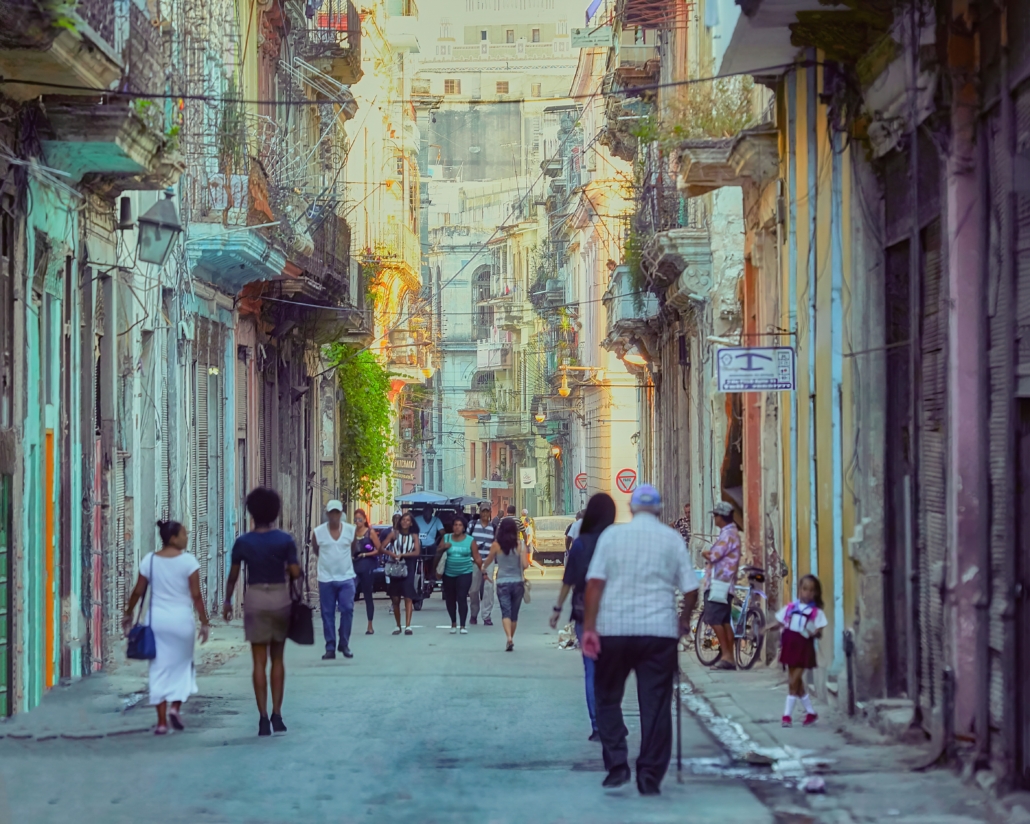 Back in the 1950s, Cuba had the third highest per capita income in the Americas. Now, Cuba represents the longest embargoed nation on the planet, with a dwindling economy and a myriad of humanitarian issues. An aggressive U.S. policy of prohibiting trade stifles the country’s attempts at domestic development.
Why Did Foreign Aid to Cuba Cease?
For 63 years, since 1963, the United States has enforced a commercial and economic embargo against Cuba. Far more than simply an attack on Cuban trade, the U.S. policy attempts to globally isolate the island. At its core, the embargo legally bans American investment in Cuba while utilizing extraterritorial sanctions and resulting fines to deter investments from U.S. allies.
Beyond this, the embargo prevents Cuba from selling its products in U.S. markets or to its allies. In return, it denies Cubans the ability to trade with their natural economic partner just 90 miles away, forcing them to source essential food and medicine from costly suppliers.
While the Obama and Biden administrations passed limited exemptions for travel, the foundational statutes of the embargo remain unaltered, leaving its restrictive core legally and politically intact. While the Obama and (although less) Biden administrations passed limited exemptions for travel, this was not a repeal of the statutes that brought the embargo into U.S. law and because of this the Trump administration had the ability to re-instate the full enforcement. Despite widespread criticism against the U.S., the nation is able to enforce the Embargo through its global-leading status and UN Veto.
Its Consequences
The consequences of the embargo permeate every facet of Cuban life. Though Cuba holds a strong domestic health care industry, the U.S. embargo has blocked access to new health-equipment and forced the country to rely on ‘intermediaries or substitutes, at exorbitant prices for inferior quality.’ As a result of the embargo, during the COVID-19 pandemic, the Cuban health industry lost $80 million – a loss that, should it persist, could lead to a breakdown of services. The U.S. Embargo also blocks Cuban farmers from accessing modern equipment and parts, leading to low-yield harvests and rationing. The nutritional deficiencies that the U.S. embargo caused have led to a rise in low birth weights and have triggered neuropathy epidemics in 50,000 Cuban adults.
Financially, U.S. law is prohibiting Cuban banks from processing dollar transactions, and foreign institutions can face billions in U.S. penalties for facilitating trade, rendering Cuba entirely isolated – such as the French bank BNP Paribas which faced an $8.9 billion fine in 2014 after engaging in Cuban transactions. This U.S. policy strangles Cuban entrepreneurs, who cannot affordably import supplies, access international credit or standard payment platforms like PayPal. The embargo also caused energy insecurities, which have led to frequent blackouts across Cuba, completely halting all activity. Consequently, the embargo forces many Cuban businesses into informality, reliant on black market cash-based deals, something that could only be ended if foreign aid to Cuba was re-initiated.
Paradoxically, although the United States created the embargo to pressure the Cuban government, it has only strengthened the regime by allowing its leaders to characterize themselves and their hardship as victims of aggressive U.S. foreign policy. Thus, the embargo continues a cycle of hardship without advancing its stated political goals, condemning the future of Cuban generations.
Solutions
Beyond the actions of the Cuban government or the remittances from the diaspora, the international community undertakes significant efforts to mitigate the humanitarian harm that the embargo caused. Multilateral organizations like the World Food Programme (WFP) lead these efforts, which in 2024, fed 1,320,867 people in Cuba, in addition to providing specialist malnutrition prevention schemes for 268,497 Cubans. The global community also navigates U.S. sanctions to support Cuba, such as the EU, which has allocated $125 million in cooperation funds since 2020, or China, which has regularly tried to develop Cuban industries, including an $1.8 billion credit line so that Cuban public transportation and the logistics involved could be improved. While effective, naturally, the support of these global actors wanes with the geopolitics that the U.S. pursues.
Complementing these governmental efforts, a network of international NGOs are working at the grassroots level to support the people of Cuba. One example is Oxfam, which works in rural and urban provinces to provide supplies and helps address the damage of natural disasters. Another critical NGO is Cuba Vive, which works yearly to raise more than £200,000, all of which goes back to Cuba as medical supplies/personnel.
What Needs to Be Done?
As The Washington Office on Latin America said, the embargo “no longer benefits any players in the game— not the United States and certainly not the Cuban people.” The United States-Cuba Trade Act bill would repeal the core embargo statutes (the Helms-Burton and Torricelli Acts) and restart the flow of foreign aid to Cuba, opening humanitarian channels, reuniting families and reintegrating the Island into the world.
As a 2023 UN General Assembly report concluded, the embargo continues “the adverse… on the Cuban people and on Cuban nationals living in other countries.” Cuba’s recovery hinges on the Embargo’s erasure and replacement by the UN and U.S. courts with a new paradigm of foreign engagement. One that replaces hostility with genuine economic partnership and brings foreign aid to Cuba again.
– Eli Thomson
Eli is based in Preston, UK and focuses on Politics for The Borgen Project.
Photo: Unsplash
