The Gender Wage Gap in Andorra
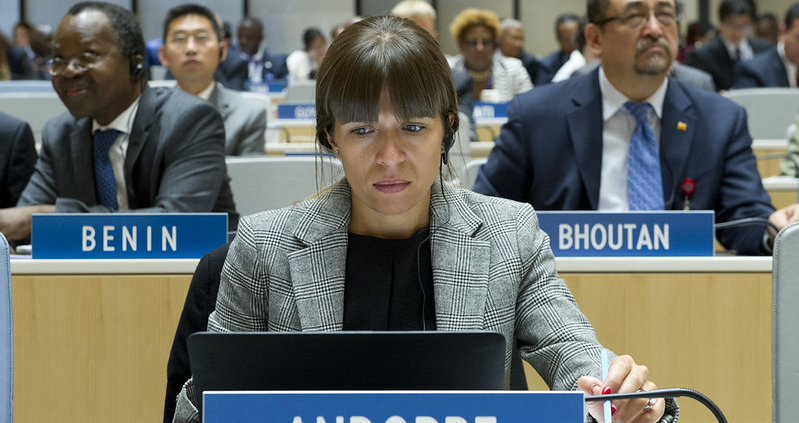 The small, independent country of Andorra is situated between France and Spain in the Pyrenees mountains. Due to its small size and minimal engagement in world politics, the news does not often discuss Andorra. However, the gender wage gap in Andorra remains a persistent issue. With tourism being a main source of income for the principality, its society is mainly urban. In January, the 2025 conclusions of the European Social Treaty were released and they found that Andorra was in non-conformity for several of the articles.
History of Workforce and Gendered Pay
The 2021 Chamber of Commerce Economic Report revealed that the average wage increased 1.8%, and for the sixth year in a row, Andorra raised the minimum wage by 3.5%. The report shows that the average wage for women was lower than that for men. It notes that the gender wage gap in Andorra actually widened in 2021 to 28.5% despite the commitment to the recommendations of the European Committee of Social Rights in 2020. Specifically in the financial sector of jobs, men’s wages were 80% higher than women’s. The report suggests that the reasoning for the gender wage gap is that there are more women working part-time jobs in lower paying sectors than men. Therefore, women are at more of a disadvantage for poverty rates due to lower income and limited childcare options.
In the executive summary of the Andorra 2022 Human Rights Report, it states that on March 31 of 2022, “parliament approved the country’s first gender equality law.” In 2022, women made up 48.6% of the workforce and the law prohibits unequal pay for equal work. There were no cases filed in 2022 of gender discrimination in terms of pay but the ADA did report cases of gender discrimination in regards to unequal salaries. Women did not file complaints or official cases for fear of repercussions from their employers. “The new gender equality law approved in March requests companies with more than 50 workers to implement gender equality plans.”
European Committee of Social Rights
The European Committee of Social Rights is the governing body of the European Social Charter which identifies European countries’ conformity to seven situations relating to social and economic justice. The 2025 report that came out in January 2026 found that Andorra was in nonconformity with six of the seven situations. The categories in which Andorra did not conform were:
- Article 2.1 – Measures to ensure reasonable working hours.
- Article 3.1 – No policies on new and emerging risks in the gig or platform economy and telework in regards to the right to safe and healthy working conditions.
- Article 3.2 – Self-employed and telework workers do not receive protection by occupational health and safety regulations in regards to the right to safe and healthy working conditions.
- Article 3.3 – Self-employed and domestic workers do not have a guarantee of the implementation of health and safety regulations in regards to the right to safe and healthy working conditions.
- Article 4.3 – There has been no measurable progress in reducing the gender wage gap in regards to the right to a fair remuneration.
- Article 5 – There has been no encouragement or efforts to strengthen the right to unionize among workers.
Article 4.3 is the crucial one regarding the gender wage gap in Andorra. With the law that companies with 50 or more workers must keep documentation of the gender pay gap in the workplace, reports have indicated that women earn 26% less than men. Considering the gender wage gap was 22.17% in 2018, Andorra has made no measurable progress to reduce the gender wage gap and is therefore in nonconformity with article 4.3 of the European Social Charter.
Current Efforts To Close the Wage Gap
Andorra’s compliance with Article 20 of the European Social Charter is in part because there has been measurable progress in promoting the participation of women in the labor market. Employers are offering equal opportunity for workplace advancement and the number of women in decision-making positions at companies is increasing. These three factors cause Andorra to be in conformity with article 20 because of the measurable progress it is making to close gender inequality in the workplace.
This translates over to the gender pay gap with the gender equality law that has now been enforced to better analyze the transparency of the gender wage gap in Andorra. In response to the backlash the Andorran government is receiving, it responded to say that it is taking the recommendations “as a constructive roadmap to continue advancing in the deployment of labor rights.” The gender equality law has been strengthened in the last year with regards to the registration of equality plans among individual companies. The 2025 European Social Charter report is a reminder that work to close the gender wage gap in Andorra cannot be stagnant. The government is taking this seriously and is already enacting new enforcers in parliament.
Looking Ahead
With the release of the 2025 European Social Treaty conclusions, Andorra must now address the stagnant issue of the gender wage gap. Its commitment to the European Social Committee in 2020 requires it to be accountable of actively solving problems of inequality. While it has made progress in the areas of women becoming more prominent in positions of power, the gender wage gap in Andorra still presents critical setbacks to women experiencing poverty. Without an equal playing field and equal pay, women are more put at higher risk for poverty than men. It is time to close the gender wage gap and help women rise up in success.
– Kaitlyn Crane
Kaitlyn is based in Rohnert Park, CA, USA and focuses on Politics for The Borgen Project.
Photo: Flickr
