Organizations Supporting Farmers in Pakistan
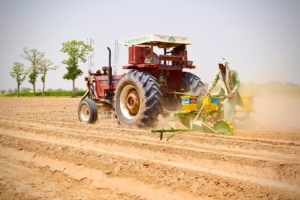 More than 54% of farmers in Pakistan live below the poverty line. According to the latest national census of agriculture in Pakistan, 97% of farmers own less than 12.5 acres and 26% own less than one acre. Meanwhile, the average farm size is now 5.1 acres. These figures suggest that farmers are not generating enough profit to save and are instead living from crop to crop.
Pakistan ranks among the world’s 10 most climate-vulnerable countries, with devastating monsoon rains, floods, droughts, landslides and earthquakes. These natural catastrophes destroy livelihoods, shove civilians into poverty and hit the agricultural industry the hardest. When the aftermath damages crop yields, farmers suffer.
There are more than 11 million farmers in Pakistan. When major climate shifts strike, the government cannot provide for such a large segment of the population. Thus, farmers have no economic security in the event of a natural disaster. On top of this, a recent sharp increase in the costs of fertilizers, diesel, pesticides, farming machinery and electricity in Pakistan makes it expensive for farmers to produce the few crops that survive amid unpredictable climate instability.
Crop costs have also fallen globally and this growing disparity leaves farmers at a loss. Fortunately, here are five organizations that uplift farmers and minimize poverty in Pakistan by providing rural farms with supportive resources.
Hidaya Trust
Hidaya Trust is a nongovernment organization that aims to help underprivileged persons in Pakistan “stand on their own feet”, including farmers. The organization runs various programs covering education, social welfare, health care, the environment and self-employment. Hidaya Trust supplies families in the farmer assistance program with fertilizers, seeds and equipment, as well as education on farming techniques.
For those in the animal farming program, the organization uses its donations to provide families with livestock to start a farm. For example, a $50 donation can buy five chickens and one rooster to start a poultry farm; it costs $70 for seven rabbits, $220 for a pair of goats and $500 for a cow.
Kissan Madadgar
Kissan Madadgar is a real-time farming advisory service that provides expert support and consultation through various channels to farmers at no cost. Farmers in Pakistan can access this service through its 24/7 helpline, mobile application or YouTube channel. Agricultural experts at Kissan Madadgar also visit farms in person to offer on-site support.
This involves teaching farmers more sustainable, productive and feasible solutions and techniques. The goal is to empower farmers, help them prosper and improve Pakistan’s agricultural ecosystem.
Chamber of Food and Agriculture
The Chamber of Food and Agriculture is an independent, nonprofit organization based in Pakistan, created by farmers, for farmers. Agricultural experts and rural development practitioners in Pakistan work with food producers and policymakers worldwide to empower farmers. Run by a people-first policy, the Chamber of Food and Agriculture directly provides training workshops and resources to rural farmers in Pakistan.
It also promotes climate-smart agriculture and technical agricultural innovation. Through this initiative, the organization aims to facilitate stable, accessible markets for farmers, support policy advocacy and increase women’s participation in the farming industry.
The World Bank Group
In 2022, the World Bank Group launched the Punjab Resilient and Inclusive Agriculture Transformation Project, with $200 million in funding. The ongoing project supplies small rural farms in Pakistan with climate-smart farming technology to increase agricultural productivity and farmers’ incomes. This includes training farmers in climate-smart techniques, facilitating efficient and equitable access to water and building resilience to extreme climate emergencies.
The World Bank Group’s project is expected to help 190,000 rural farmers and 1.4 million acres of land.
The Food and Agriculture Organization of the United Nations
In 2020, the Food and Agriculture Organization of the United Nations (FAO) established a livestock farmer field school in the Umerkot district of Pakistan to expand farmers’ knowledge beyond local practices. The organization also distributed 315 kilograms of animal compound feed to each farmer among more than 1,400 of the most vulnerable households to support them throughout the agricultural crisis. Additionally, with support from the World Bank Group, FAO worked with local governments to construct water storage tanks with underwater solar-powered water pumps in 25 rural villages in the Tharparkar district of Pakistan.
FAO provided the villages with water troughs for livestock and drip irrigation systems for kitchen gardens. These resources supported farmers by reducing the impact of the COVID-19 pandemic on their farms. The construction of the water systems also created temporary employment opportunities for those most affected in the region.
The Future for Farmers in Pakistan
In Pakistan, agriculture is the largest sector in the economy. Farming makes up 24% of the country’s total gross domestic product (GDP), employs half of the labor force and is the greatest source of international exports. Farmers also create food security in the country. However, the agricultural sector struggles with low productivity due to its vulnerability to climate change and volatile markets.
Farmers in Pakistan require support with modern technology that accounts for climate instability, as well as further education on proactive farming techniques to maximize crop yields and ultimately help farmers overcome poverty. Given their contribution to Pakistan’s economy, policymakers and government leaders must prioritize farms when allocating funding and resources.
– Umaymah Suhail
Umaymah is based in Karachi, Pakistan and focuses on Good News and Global Health for The Borgen Project.
Photo: Pexels
