Digital Farming in Ukraine: A Lifeline for Global Food Security
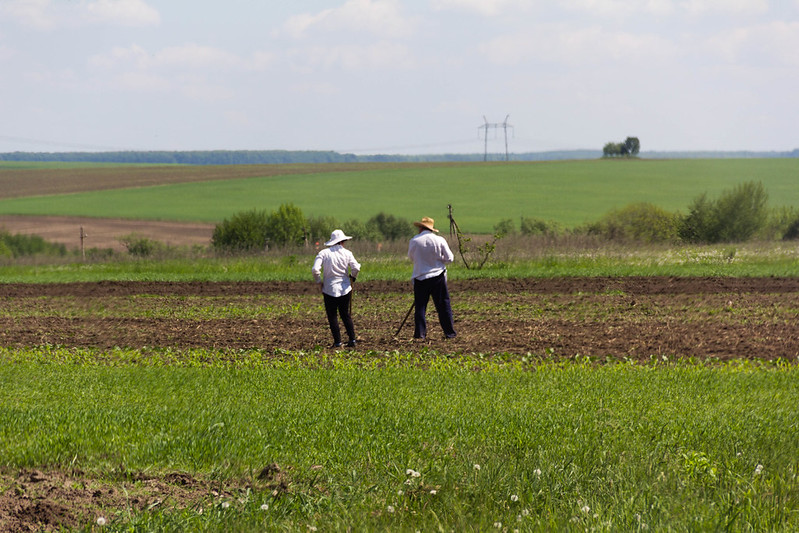 The United Nations’ SDG3 calls on nations to “ensure healthy lives and promote well-being for all at all ages.” In Ukraine, where fields once symbolized stability and nourishment, this goal now depends on resilience, innovation and survival.
Long known as the “breadbasket of Europe,” Ukraine’s vast chernozem, or black soil, has produced crops that feed hundreds of millions. Before Russia’s full-scale invasion in February 2022, Ukraine ranked among the world’s top exporters of wheat, corn, barley and sunflower oil—key exports supporting food security in Asia, Africa and the Middle East. Yet the war turned fertile farmland into danger zones and disrupted one of the world’s most essential supply chains.
A War Against Food Security
Russia’s invasion devastated Ukraine’s agricultural economy and left Ukraine facing the world’s largest contamination problem since the Second World War. Ports and grain silos were bombed, transport lines cut, and tractors shelled in open fields. By the end of 2024, mines and unexploded ordnance contaminated nearly 139,000 square kilometres—an area larger than Greece—and drove an estimated $83.9 billion in agricultural losses
Farmers now face a deadly paradox: the world needs Ukraine’s grain, yet farming can cost them their lives. “In this village, we can only feel safe in our own yard,” said a smallholder farmer from Kamianka. “When you go outside, there is danger waiting for you.”
These disruptions ripple far beyond Ukraine’s borders. Many low-income countries rely on Ukrainian imports to prevent hunger and stabilize food prices. When exports slowed in 2022 and 2023, food prices across Africa and the Middle East surged. Each lost harvest season deepened global food insecurity, an often overlooked casualty of the war.
Digital Farming: Safety and Survival
In response, farmers and their partners have embraced digital farming in the grain sector as a vital lifeline. Digital farming in Ukraine uses data and technology like satellite imagery, drones and remote sensors to monitor soil and crops when entering the field is unsafe. These tools provide real-time information about weather, soil moisture and damage from explosives.
Farmers now rely on digital mapping to plan where planting is feasible and where fields remain too dangerous. Drones and sensors capture crop data from above, helping identify safe areas for cultivation. Precision agriculture also maximizes yields on secure land, conserving scarce inputs like fertilizer and fuel.
Organizations such as the Food and Agriculture Organization (FAO) and the World Bank have supported these efforts. The FAO has enhanced the State Agrarian Registry and advanced digital mapping capabilities, while the World Bank’s Seeds of Hope project finances new technologies to restore production. Through these partnerships, Ukrainian farmers can continue working, feeding families and sustaining exports even in conflict conditions.
GRIT: Clearing the Way Forward
Digital farming in Ukraine extends beyond crop management. The new Geoinformation System for Demining (GRIT) platform is transforming how humanitarian teams clear land. GRIT integrates large data sets, maps and local reports to help identify, prioritize and monitor demining efforts.
By focusing first on high-impact agricultural zones, GRIT ensures land restoration aligns with food production needs. This evidence-based system accelerates clearance operations and coordinates national and international demining partners. As a result, fertile fields return to safe use faster, restoring livelihoods and preventing rural communities from collapsing under economic strain.
Demining also links directly to SDG 3. Clearing land reduces physical injury risks, supports income recovery, and strengthens food access, each a cornerstone of healthy living. Every hectare restored means safer work, lower food prices and renewed optimism.
Health and Well-Being Beyond Borders
Farming in conflict zones is not only an economic challenge; it’s a public-health crisis. Farmers risk severe injury from mines, exposure to toxic residues, and chronic stress. Whole families live with the psychological burden of displacement and uncertainty. Meanwhile, global nutrition suffers when Ukrainian exports falter, since wheat and corn from Ukraine form the base of diets in many developing countries.
Digital farming mitigates these threats. Satellite tools lower worker exposure, while precise land monitoring reduces contamination risks. Even a modest recovery in crop output helps stabilize local markets and global prices, keeping food affordable for households worldwide. Through this lens, technology becomes a critical health intervention.
Global Partnerships for Resilience
Ukraine’s struggle has also sparked a wave of international collaboration. Western governments, agricultural firms, and tech companies are sharing data infrastructure and tools. Private agritech firms contribute satellite services, while nonprofits distribute digital tablets and software to local cooperatives. The European Union has allocated €10 million to support access to digital solutions for rural farmers, ensuring that innovation reaches communities most affected by the conflict.
These partnerships demonstrate that resilience is not built alone. When the international community invests in digital recovery tools, it helps sustain agriculture as a global public good. Ukraine’s experience shows how supporting farmers in crisis zones protects both livelihoods and health outcomes worldwide.
Seeds of Recovery
Despite unimaginable hardship, Ukrainian farmers continue to plant, harvest and adapt. Grain exports, while reduced, have resumed through alternative routes via the Danube and land corridors to Europe. Digital farming in Ukraine allows them to make smart decisions, stretch limited resources and keep Ukraine on the global agricultural map.
As the world moves toward 2030, Ukraine stands as a testament that achieving good health and well-being requires more than clinics and vaccines. It requires protecting livelihoods that sustain life itself. Digital farming proves that in times of crisis, technology can be the bridge between survival and recovery, ensuring that the breadbasket of Europe continues to feed the world with resilience and courage.
– Lola Chambers
Lola is based in Vancouver, British Columbia, Canada and focuses on Technology and Politics for The Borgen Project.
Photo: Flickr
