Education in Andorra
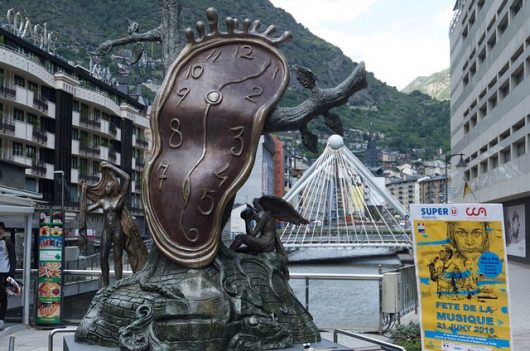 The Principality of Andorra is a tiny, landlocked state in southwestern Europe, between France and Spain in the Pyrenees mountains. Its population of 85,370 is a third Spanish, a third Andorran, 10% Portuguese, 5.6% French and 18% other. The population is unevenly distributed over seven urbanized valleys (87.8%).
Andorra is a high-GDP state, ranking 23rd out of 222 ($64,600 in 2023). Its primary industry is tourism (skiing). A nontax haven financial sector makes banking and finance other critical industries. It has a 100% literacy rate, despite ranking 187th out of 201 on GDP for education (1.9% GDP in 2023).
A Unique System of Education
Andorra’s free and compulsory (through age 16) educational system reflects its unique geographic location and its tripartite cultural diversity and comprises multiple systems. Primary age children (first 6 of 12 years) are approximately equally divided among Andorran-, French- and Spanish-medium schools. Facilities and Andorran-speaking teachers are provided by the government. Schools with Spanish- or French-speaking teachers provide their own. The core language in the Andorran schools is Catalan, with French, English and Spanish as secondary languages.
There are approximately 5,500 primary school children each year. There are three options for secondary school: a general program, a technical program and a special needs program, but less than half of those who wual go on to one of the programs.
School Skiing
A unique aspect of Andorran education is the ski school component, required as part of the physical education curriculum in first grade and optional after that. In 2003, the Andorran government formalized the skiing part of the public school curriculum and updated and amended it in 2012. The government supports oversight for ski school trips, monitors and companions, discounted lift passes for ski school participants and subsidized equipment for children on social assistance.
Tertiary Education in Andorra
Agora Andorra was founded in 1999 as the principality’s first private school. In 2017, it was renamed Agora Andorra International School, providing multilingual education, plus the official language of Andorra, Catalan. The most recent (2018) addition to the three systems is The British College of Andorra, offering early years (from age three), primary and secondary education, plus the International Baccalaureate Diploma Program (year 13).
At the college level, the University of Andorra has a small, primarily long-distance enrollment, or students may choose to attend college in France or in Spain. Ud’A offers in-person degree programs in business, humanities, law and nursing. Computing, communication and language programs are virtual programs in collaboration with other universities. There are also several master’s and other postgraduate programs.
A Changing Environment for Education?
A state with a high quality of life and low taxes, approximately 68% of Andorra’s residents are foreign-born (mostly from Spain). In addition, 2024 saw 9.6 million tourists. The country’s education system, therefore, reflects the reality of its economic environment, as well as its cultural diversity.
At the same time, Andorra is diversifying its tourism-focused economy with investments in digital infrastructure and technological services. Its capital, Andorra la Vella, has been defined as a “hotspot” for the growth of e-commerce. In addition to the challenge of creating a balance between tourism and the technological sector, it will be interesting to see whether and how such a change in the economic sector might affect the educational sector, at all levels.
– Staff Reports
Photo: Pixabay
