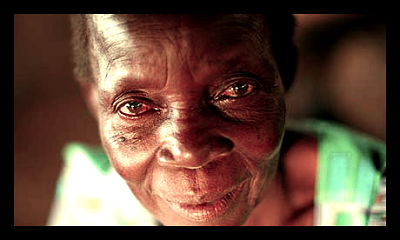
5. Afghanistan (50.11 years)
For the Afghani people, the prospect of living a long life has been a luxury afforded to very few. On the heels centuries of war, internal strife, and natural disasters, Afghanistan has faced many humanitarian crises. Due to its continued state of insecurity, true development has been perpetually stunted. As reported by UNICEF, Afghanistan currently possesses “450,000 internally displaced persons, 5.7 million refugees and at least 250,000 people affected by natural hazards or disasters every year.” With 43% of houses lacking improved water sources, soaring rates of child malnutrition, and severely lacking sanitation and immunization practices, the cumulative effect is a shortened lifespan.
4. Swaziland (50.01 years)
This 6,704 sq mile country of Swaziland is bordered by South Africa and Mozambique. Due to HIV/AIDS, Swaziland has seen its average life expectancy actually drop over the passed 10 years. According to UNICEF, “Two-thirds of Swazis live in poverty, most of them in rural areas. Nearly 40% are HIV-positive, giving Swaziland the highest HIV prevalence rate in the world.” With 27% living under the minimum level of dietary energy consumption and 50% lacking adequate iodized salt requirements, the basic health of the citizenry continues to be a source of humanitarian concern.
3. Guinea-Bissau (49.50 years)
Similar to other sub-Saharan countries, Guinea-Bissau faces many health issues. Unlike Swaziland and South Africa, however, Guinea-Bissau only faces a 1.8% HIV/AIDS infection rate. The major health concern, however, is malaria. Without adequate supplies of mosquito nets and medication, the disease has proven to be increasingly deadly. Contributing to this issue, Guinea-Bissau has seen a major drop-off in medical personnel. With approximately only five doctors per 100,000 persons, getting medical attention is a luxury very few are afforded.
2. South Africa (49.48 years)
It may come as a surprise to many that South Africa holds such a high place on this list, as it developed rapidly since the end of apartheid in 1994. However, South Africa still faces a continuing humanitarian crisis. For South Africa, the main concerns are disease rather than hunger. For travelers visiting the country, the Center for Disease Control recommends the following immunizations: measles-mumps-rubella, diphtheria-pertussis-tetanus, chickenpox, flu shot, hepatitis A, typhoid, hepatitis B, malaria, and rabies. In addition,. According to the South African Government, the total number of persons living with HIV in South Africa increased from an estimated 4.21 million in 2001 to 5.38 million by 2011. An estimated 10.6% of the total population is HIV positive and 17.30% of adults between the ages of 15 and 49 are infected.
1. Chad (49.07 years)
Topping off this list, according to 2013 estimates, Chad has the lowest life expectancy rate of the 223 nations surveyed. Among the issues facing Chad, concerns are only exacerbated by the massive refugee influx from neighboring Sudan. According to UN statistics, “In 2012 Chad hosted some 288,700 refugees from Sudan, 56,700 from the Central African Republic (CAR), 90,000 internally displaced persons (IDPs), 91,000 returned IDPs and 550 urban refugees and asylum-seekers.” With an estimated 2 million facing crippling malnutrition due to a volatile climate, compounded by poor health conditions in refugee camps, the overall health of Chad remains a dire humanitarian crisis.
– Thomas van der List
Sources: UNICEF, WHO, CDC, Statistics South Africa, UNHCR
Photo: The Guardian

What is AME-SADA?
The African Methodist Episcopal Church Service and Development Agency, or AME-SADA, is a part of the African Methodist Episcopal Church (AME). The organization provides humanitarian relief and supports development within Africa. Their primary goal is to improve the overall quality of life for those living in Africa, as well as those living in the Caribbean.
AME-SADA was created nearly 30 years ago by a few committed people within the African Methodist Episcopal Church, including Bishop Frederick C. James, Reverend Lonnie Johnson, Dr. Joseph McKinney, Bishop John Hurst Adams, and Bishop Donald G. K. Ming.
AME-SADA’s mission is, “Helping People Help Themselves.” This means that, rather than giving people food or shelter, they would rather provide them with sustainable practices so they can support themselves. It goes along with the famous saying, “Give a man a fish, feed him for a day; teach a man to fish, feed him for a lifetime.”
AME-SADA focuses on programs of education, health, and micro-credit, although they also provide emergency humanitarian aid in both Africa and Haiti. AME-SADA is supported by the African Methodist Episcopal Church, governments, foreign institutions and agencies, and their donors who wish to create a better world.
AME-SADA is currently working on a project to provide health care and other services to those living in Haiti, particularly in the western part of the country. As of now, they have provided healthcare for over 400,000 people. One healthcare program they have is to address child and maternal health by providing pre and post-natal care for women between the ages of 15 and 49. The program gives aid through newborn care, vaccinations to children under the age of 5, diarrhea treatment, nutritional aid to malnourished children, family planning, upper respiratory infection treatment, counseling to new families, and more. Currently, AME-SADA supports nine outpatient clinics, which provide services such as HIV and STD education, as well as treatment and counseling. Over 150,000 people benefit from this each year.
Two other programs are SADA-KREDI and a school health program. The SADA-KREDI program supports economic opportunities for those living in both rural and urban areas. It gives micro-loans to 2,500 people in order to stimulate growth in the economy and allow people to prosper on their own. In addition, the school health program helps 30,000 children at an elementary school level in the poorest neighborhoods of Haiti. It provides healthcare to children whose families cannot afford it.
Overall, those programs only represent part of what AME-SADA does. They support and fund many other programs in South Africa and Haiti in order to help the locals prosper and flourish. They promote sustainability in their programs, especially in the micro-loan programs to allow entrepreneurs in Haiti and South Africa to have a chance to implement their business plans, and create a source of income to support their family, and to stimulate the community.
– Corina Balsamo
Sources: AME-SADA, AME-CHURCH, Our Health Ministry
Photo: Digitation
MDG 3: Promote Gender Equality and Empower Women
This is the third in a series of posts discussing the UN’s Millennium Development Goals. These are set of 8 interconnected goals agreed upon by most countries around the world based on a shared commitment to improving the political, social, and economic lives of all people. They are to be achieved by 2015 and, two years out from this deadline, it is important to celebrate all the progress we have made and to recognize the work we have left.
The third of the MDGs is to promote gender equality and embolden women. Education is the primary mode of empowerment, so the UN’s stated goal is to eliminate the gender disparity in primary and secondary education by 2005 and in all levels of education by 2015. The gender disparity in education is judged by statistics such as the ratio of girls to boys in all levels of education, literacy in women as compared to men, women working outside the agricultural sector, and female governmental leaders worldwide.
The gender gap in primary school has decreased substantially in recent years. In 1999, there were 16 million more girls than boys out of primary school. Over the next ten years, this number dropped dramatically to just 4 million. However, this still leaves significantly more educated boys than girls, a phenomenon that perpetuates gender inequality later in life.
According to the World Bank, equal percentages of girls and boys complete primary school in Latin America and East Asia. However, in all other developing regions, this ideal has not yet been achieved.
The significant gender gap in youth literacy rates has been shrinking in recent years. However, girls are still considerably less likely to graduate from primary school with basic literacy skills than boys. This is a concerning trend that often leads to the disempowerment of women, and perpetuation of a discriminating patriarchal societal structure.
In many countries, women have less access to stable jobs, education, economic assets, and governmental participation. They may not be allowed to work outside the home, forcing them to rely on men for their family’s income. And even when they do enter the job market, they tend to hold lower-paying positions with less job security and benefits. This represents an unacceptable inequity that must be addressed seriously. Not only does it devalue women’s work, it also means that men tend to have more influence on how the family’s money is spend, consistently minimizing women’s authority. Through extensive work toward MDG 3, women’s role in the workplace is improving, with 40% of wage-earning jobs in the non-agricultural sector held by women as of 2011.
The number of women in government is also on the rise, thanks in part to quota systems that require a certain percentage of leaders to be female. Worldwide, just over 20% of parliament members were female as of January 2013. While this still reflects a heavy bias towards men, it also represents incredible progress. In 1995, women held a meager 10% of parliamentary seats. This percentage has been steadily increasing, and progress will continue to be made if girls’ education is made an international priority.
The education of girls affects every facet of society as children grow into adults. While we have made significant progress towards gender equality, we clearly have work to do when girls do not graduate with the same basic skills that boys do and are not consistently presented with the same opportunities in the workplace and government. Educated girls become educated women that are empowered in their personal, social, political, and work lives. They demand to be treated respectfully, and are not constrained by their gender. They are strong women that can be leaders just as well as they can be wives. They are the women this world needs.
– Katie Fullerton
Sources: UN, UNDP, World Bank, UN Stats
Sources: The Guardian
Five Countries with the Lowest Life Expectancy
5. Afghanistan (50.11 years)
For the Afghani people, the prospect of living a long life has been a luxury afforded to very few. On the heels centuries of war, internal strife, and natural disasters, Afghanistan has faced many humanitarian crises. Due to its continued state of insecurity, true development has been perpetually stunted. As reported by UNICEF, Afghanistan currently possesses “450,000 internally displaced persons, 5.7 million refugees and at least 250,000 people affected by natural hazards or disasters every year.” With 43% of houses lacking improved water sources, soaring rates of child malnutrition, and severely lacking sanitation and immunization practices, the cumulative effect is a shortened lifespan.
4. Swaziland (50.01 years)
This 6,704 sq mile country of Swaziland is bordered by South Africa and Mozambique. Due to HIV/AIDS, Swaziland has seen its average life expectancy actually drop over the passed 10 years. According to UNICEF, “Two-thirds of Swazis live in poverty, most of them in rural areas. Nearly 40% are HIV-positive, giving Swaziland the highest HIV prevalence rate in the world.” With 27% living under the minimum level of dietary energy consumption and 50% lacking adequate iodized salt requirements, the basic health of the citizenry continues to be a source of humanitarian concern.
3. Guinea-Bissau (49.50 years)
Similar to other sub-Saharan countries, Guinea-Bissau faces many health issues. Unlike Swaziland and South Africa, however, Guinea-Bissau only faces a 1.8% HIV/AIDS infection rate. The major health concern, however, is malaria. Without adequate supplies of mosquito nets and medication, the disease has proven to be increasingly deadly. Contributing to this issue, Guinea-Bissau has seen a major drop-off in medical personnel. With approximately only five doctors per 100,000 persons, getting medical attention is a luxury very few are afforded.
2. South Africa (49.48 years)
It may come as a surprise to many that South Africa holds such a high place on this list, as it developed rapidly since the end of apartheid in 1994. However, South Africa still faces a continuing humanitarian crisis. For South Africa, the main concerns are disease rather than hunger. For travelers visiting the country, the Center for Disease Control recommends the following immunizations: measles-mumps-rubella, diphtheria-pertussis-tetanus, chickenpox, flu shot, hepatitis A, typhoid, hepatitis B, malaria, and rabies. In addition,. According to the South African Government, the total number of persons living with HIV in South Africa increased from an estimated 4.21 million in 2001 to 5.38 million by 2011. An estimated 10.6% of the total population is HIV positive and 17.30% of adults between the ages of 15 and 49 are infected.
1. Chad (49.07 years)
Topping off this list, according to 2013 estimates, Chad has the lowest life expectancy rate of the 223 nations surveyed. Among the issues facing Chad, concerns are only exacerbated by the massive refugee influx from neighboring Sudan. According to UN statistics, “In 2012 Chad hosted some 288,700 refugees from Sudan, 56,700 from the Central African Republic (CAR), 90,000 internally displaced persons (IDPs), 91,000 returned IDPs and 550 urban refugees and asylum-seekers.” With an estimated 2 million facing crippling malnutrition due to a volatile climate, compounded by poor health conditions in refugee camps, the overall health of Chad remains a dire humanitarian crisis.
– Thomas van der List
Sources: UNICEF, WHO, CDC, Statistics South Africa, UNHCR
Photo: The Guardian
How Does the Community Care Fund Fight Poverty?
Community Care Fund in Hong Kong has decided to increase their poverty giveaways by helping those who are inadequately housed. They will be giving away more cash subsidies than ever before that will end up helping many people. Community Care Fund is a relatively new organization that was created in 2011. The organization is overseen by an “Executive Committee,” and there are four subcommittees that represent the topics and issues that the organization deals with each day – education, home affairs, medical issues, and welfare. The Community Care Fund works closely with the government’s Commission on Poverty (or the CoP). The Chinese government officially announced the creation of the CoP in the end of 2012. Since then, the Community Care fund and the Commission on Poverty have worked closely in their projects in order to do as much for the country as possible.
The Commission on Poverty has the primary objective of reducing poverty in Hong Kong, and for setting a poverty line for the city. Although poverty is the main goal, this is done in several ways – for instance, by supporting the underprivileged, stimulating social mobility, and promoting employment and education for all. The Commission works with the government, of course, and also works with NGOs, other businesses, and the community. The community at large is supported through the Societal Engagement Task force, which are also a part of the Commission. Attention will be paid to those with disabilities, minorities, and single parents. According to the Commission, they use the Community Care Fund in order to give relief immediately to those who are in dire need. They have also supported a Social Innovation and Entrepreneurship Development Fund.
The Community Care Fund was created under the Secretary for Home Affairs Incorporation Ordinance to help those with economic difficulties, especially the underprivileged that are not a part of the social safety net or who are facing special circumstances. Some of the examples of their subsidies are the following: Provision of Special Subsidy to Persons with Severe Physical Disabilities, Special Care Subsidy for the Severely Disabled, Subsidy for Elders who are on the Waiting List of Integrated Home Care Services, Training Subsidy for Children who are on the Waiting List of Subvented Pre-school, and so on and so forth. Basically, the Community Care Fund gives cash to those who are in desperate need and cannot get it in any other way.
Recently, the Community Care Fund has announced they will be adding another subsidy to help those who are “inadequately housed.” Primarily this will expand a previous subsidy that had only helped those living in subsidized housing – around 150,000 more people will qualify for the cash subsidies and have a good chance of being helped, and drawn out of poverty. This expanded subsidy was only one of four schemes that were announced by Chief Secretary Carrie Lam Cheng Yuet-ngor, the chairwoman of the Commission on Poverty (which, as mentioned before, works with the Community Care Fund in regards to immediate relief). Those living in premises deemed inadequate, such as squatter housing, will receive lump sums based on family sizes – thus far, 26,000 families have been helped by the subsidies.
Overall, just giving money to those in need is not the only or even best solution to reduce poverty, but it is definitely a start. The Community Care Fund allows immediate relief, and the Commission on Poverty keeps those families from falling back into poverty with other programs and initiatives. Basically, the Community Care Fund does as much as it can, and helps those who were previously “missed” by the system. Perhaps these two programs are helping contribute to the overall reduction of poverty in China.
– Corina Balsamo
Sources: SCMP, Community Care Fund, SWD
Photo: Amusing Planet
Poverty in Vietnam 101
Poverty in Vietnam still exists, but the country is a great success story. Since the beginning of political and economic reforms in 1986, Vietnam has transformed from being one of the poorest countries in the world to a lower middle-income nation. Per capita income grew from below $100 at the start of the reforms, to $1,130 by 2010. According to the World Bank, the proportion of the population in poverty has fallen from 58% in 1993 to 14.5% in 2008. Vietnam has so far attained five of its ten Millennium Development Goal targets and is working towards achieving two more by 2015.
The country has also made incredible progress in education. Primary and secondary school enrollments for the poor have reached more than 90 and 70% respectively. Rising levels of education and diversification into off-farm activities, such as working in factories, construction sites, or domestic housework have also contributed to poverty reduction.
Although Vietnam has made great progress, the country still faces challenges when tackling further poverty reduction. The prevailing poverty of the ethnic minority in Vietnam is of particular concern. Although Vietnam’s 53 ethnic minority groups make up less than 15% of the population, they accounted for almost 50% of the poor in 2010. Many continue to reside in less productive and more isolated upland regions of Vietnam.
Rising inequality in income and opportunities has also accompanied the recent economic growth and transformation. Some of the poor have limited access to high quality education, health services, and job opportunities, particularly those living in small cities or rural areas.
The Socio-Economic Development Strategy (SEDS) 2011-2012 focuses on structural reforms, social equity, environmental sustainability, and arising issues of macroeconomic stability. It defines three “breakthrough areas”: promoting human resources skills development (particularly for modern industry and innovation), improving market institutions, and infrastructure development. Vietnam aims to lay the foundations for a modern, industrialized society by 2020.
Maintaining the current pace of economic growth in Vietnam is crucial to continued poverty reduction. However, this growth must come with equity and will have to include all regions and groups in the country to become a modern, industrialized society.
– Ali Warlich
Sources: World Bank News, World Bank Data
Photo: Asia News
What is Poverty Reduction?
From hand-outs to hand-ups, nations, non-profits, and individual donors do a great deal towards poverty reduction efforts. These efforts see varying levels of success, as judged against many diverse standards. Though most people have a general idea of what it means to reduce poverty, the concept of poverty reduction as such seems to evade a static definition. On the contrary, “poverty reduction” continues to evolve and grow, alongside poverty reduction strategy innovations.
Many years ago, the United States Agency for International Development, or USAID, began to address global poverty by way of financial contributions to governments of poverty-stricken nations. Early relief initiatives also included donations of agricultural commodities, often dropped in shipments from airplanes and helicopters. The idea was simple: people are hungry, give them food. Since then, the concept of poverty reduction has become a much more complicated idea.
Traditionally, the term has been used as short hand for the kind of economic growth pursued in less-developed nations, by more-developed nations, to achieve a goal of lifting as many people above the poverty line as possible. As years have passed, there has been a shift from hand-outs (i.e. simple financial and agricultural donations) toward long-term poverty reduction, which includes extended relief programs and education programs focused on sustainability in target communities.
At least one paper from the Center for Global Development in Washington D.C. argues that the traditional definition of poverty reduction fails to encompass efforts to reduce poverty that, though not falling into a category of efforts to promote long-term growth in target communities, nonetheless contribute to an ethically tenable position in the fight against global poverty. In this paper, Owen Barder argues that poverty reduction has other dimensions, for example, in the trade-offs between tackling current and future poverty or dealing with the causes and symptoms of poverty.
The danger of ignoring the various dimensions of poverty relief, Barder suggests, lead to the adoption of poverty reduction strategies that fail to take a holistic view of poverty. As a result, relief and aid programs may be less efficient, while aid agencies may be operating on underdeveloped objectives and incentives. For a more in-depth discussion of poverty reduction as an evolving concept and the working paper on this topic, click here.
– Herman Watson
Sources: Center for Global Development,UNDP, UNFPA, USAID
Top 5 Water Crisis Solutions
What an individual considers a “valuable resource” reveals a lot about the economic standing. In developing nations, water is considered a valuable resource. It is access to clean water that separates those who live from those who die in the developing world. The following list gives credence to efforts at alleviating the global water crisis.
1. LifeStraw
According to the joint monitoring efforts of the World Health Organization and UNICEF, 884 million people live without access to adequate drinking water. In response to this staggering statistic, the folks at Vestergaard Frandsen Disease Control Textiles have created the LifeStraw. This cheap, reusable tool allows the user to drink available water without worrying about if it is contaminated. Without any replaceable parts or batteries, the device filters out 99.9999% of waterborne bacteria and 99.9% of waterborne protozoan particles. At under $10 US, the LifeStraw has a one year lifetime worth of clean water consumption. While the LifeStraw is considered nothing more than a short-term solution, it is worthy of adamant praise.
2. Slingshot
While the LifeStraw does a great service for those in immediate need of clean drinking water, it does not serve the benefit for more than just the user. To meet this problem, Dean Kamen, the famed inventor of the Segway, has invented the Slingshot. Using less energy than the average hair dryer, the Slingshot uses a vapor compression filtration system to produce up to 30 liters of purified water in under an hour. Teaming up with the Clinton Global initiative and Coca-Cola, Kamen aims at bringing this technology to regions and communities still lacking clean drinking water.
3. Solvaten
Swedish for ‘sun water’, the Solvaten water purifying system is spearheading the sustainable water purification market. With a capacity of up to ten liters, the device simply sits in the sun until a blinking light indicates purified water. Although it takes three to four hours to completely purify the water, the sustainability factor outweighs any inconvenience. The device is currently undergoing testing in South America with very positive results.
4. P&G Water Purification Packet
With the water purification packet, Procter&Gamble has joined the fight to end the global water crisis. Remarkably, the team of scientists behind the project has managed to condense the proprietary municipal water sanitation system into a simple packet. By adding the packet to contaminated water, stirring and sitting, the solution has been proven to remove 99.99999% of common waterborne bacteria, 99.99% of common waterborne viruses, and 99.9% of protozoa. To date, P&G can tout that over 5 billion liters of clean drinking water have been made using these packets.
5. Desalination “Water Chip”
It seems ironic that, despite being 2/3 covered by water, our planet faces a global water crisis. The painful truth, however, is that the vast abundance of water we seemingly have at our disposal is not suitable for human consumption. Anyone who has had the misfortune of ingesting a gulp of seawater understands exactly why. To meet this challenge, chemists at the University of Texas, Austin and Marburg, Germany, are developing a 21st century solution to a very old problem. The “water chip” they have developed applies a small voltage to a chip filled with salt water. While this nascent technology is currently only producing nanoliters of clean water at a rate of only 25%, the innovation will be one to keep an eye on in the near future.
– Thomas van der List
Sources: Life Straw, Slingshot, Solvaten, P&G Packet, Water Chip
Photo: PB Works
What Causes Child Poverty in Wealthy Nations?
Today, when most people think of poverty they do not think of nations like the United States and the United Kingdom. Nonetheless, these two countries face serious problems regarding child poverty. Up to 20% of children in the U.S. live in poverty, while the United Kingdom faces some of the world’s highest child poverty rates. In spite of being two of the world’s wealthiest nations, both nations are struggling to address the causes of child poverty.
Leading Causes of Child Poverty
Of the many root causes of child poverty, most sources point to an absence of one parent, particularly the father, as having the greatest impact on a child’s future. In the U.K., 23% of children in two parent families live in poverty, while over 40% of children in single parent households fall into the same category. As women generally earn less in the same professions as men, children in single parent households where the father is absent face an even higher rate of poverty.
Children living with only their mother are
Ethnicity has also been linked to higher child poverty rates in both the U.S. and the U.K. Part of the reason for the correlation between ethnicity and child poverty in the U.S. is due to the level of crime in minority communities. Not only are families in these communities more likely to be the victims of crime, but they are also more likely to have a parent, more often the father, incarcerated than families in areas with less crime. A child whose father has been incarcerated is five to seven times more likely to be incarcerated in their lifetime.
Although unemployment is a major contributor to child poverty, it is not the only problem. In any economy, poor adults often find they are forced to take dead-end jobs, without advancement opportunities, while middle management and other placements are given to college graduates whose families could afford higher education. In these situations, the wage-earning adult from a poor family is only offered part-time work or the position they currently occupy pays too low a salary and the family suffers.
Clearly, the issues related to child poverty are not limited only to less developed nations. Indeed, child poverty rates are surprisingly high in the world’s most developed nations, including the U.S. and the U.K. If we are unable to address these issues in our own countries, how are we to act as role models for the rest of the world?
– Herman Watson
Sources: Child Poverty Action Group, The Future of Children, Fight Poverty, The Guardian, Barnardo’s
New Agriculture Methods Utilized by Small Farmers
When this issue of global poverty and hunger is discussed, one topic is often central to the conversation is the impact of small-scale farmers. In the developing world, these farmers are essential not only for providing food for their communities, but also for creating jobs and improving the local economy. While many experts are adamant that encouraging small farmers to participate in the “global cash economy” – meaning that farmers operate primarily to sell crops for cash – is the most effective way to diminish global poverty, others are advocating for a new approach.
New Methods Aid Small Farmers
This new method focuses on “non-mentised agriculture” and acknowledges other factors besides the sales of surplus crops as a way to alleviate hunger and poverty. Another term for this new method is the concept of ‘value-chains,’ the link between “input suppliers, farmers and markets.” The Gates Foundation, the Alliance for a Green Revolution in Africa, USAID’s Feed the Future, and the G8’s New Alliance for Food Security and Nutrition support the utilization of value-chains and are confident in its ability to decrease global poverty.
Value-chains differ from the cash economy model by acknowledging that, although farmers need to earn money from their crops, not all of the crops will be sold on the market. One way farmers are doing this is by switching from growing cotton, which is strictly a cash crop and harmful to the environment, to other types of food crops (like rice, maize and soybeans in Ghana). Value-chains also call for more interaction between small farmers, markets, financiers, equipment services and other forms of agriculture training.
By working with these other groups, small-scale farmers will be able to better financially manage their farms and decrease production costs in order to increase surplus crops and earn a profit. With this method, financers also have the opportunity to invest in small farms. It is through improving agriculture strategies and creating business-minded farmers that profits will begin to increase not by farming primarily cash crops. However, because the chain-value method does not rely on many cash transactions, any economic improvements for farms go widely unreported. Once government officials develop a better tool for measuring such progress in the agriculture community, the impact of the chain-value will be better understood.
– Mary Penn
Sources: Al Jazeera, Vibe Ghana
Photo: Vocabulary
Vulture Capitalism Circles Argentina and Developing World
Long before the global recession, Argentina defaulted on a staggering $81 billion of national debt in 2001. The government was able to renegotiate with its bondholders in subsequent years—93 percent of them agreed to make do without the monetary sum previously owed by accepting exchange bonds with lower returns. The remaining holdouts, however, refused the offer—demanding that they be repaid in full despite the country’s continued economic plight.
Moreover, many of the indignant creditors swept in immediately after the default to buy the bonds under-priced. These vulture funds systematically buy up cheap credit from nations in crisis only to sue them later in order to profit. One of the major vulture funds behind Argentina’s ensuing litigation headache is NML Capital. Its owner, Paul Singer, is an American CEO with a net worth of $1.3 billion and is oft-credited as the father of vulture capitalism.
Historically, Singer’s cunning entrepreneurship has spared no mercy. In 1996, he purchased a bond from Peru for $11 million, sued, and received a return of $58 million. In subsequent years, he would go on to sue the Republic of Congo for a sum 40 times the original $10 million he paid and take nearly $40 million of the nation’s oil sales. Argentina, Singer’s latest victim, has likewise been struggling against his tactics.
As a prominent businessman, Singer not only has the financial support but also the political backing he needs to win these big cases. Not only has he made a name for himself as one of the leading contributors to Republican election campaigns, but he has also worked with Democrats to lobby against Argentina through the American Task Force Argentina—which claims to represent hardworking American taxpayers. This allegation, however, could not be any further from the truth. After all, NML Capital is strategically headquartered in the Cayman Islands for tax evasion purposes.
Argentina, on the other hand, has equally eminent supporters. The International Monetary Fund was amicus curiae to Argentina. As Eric LeCompte, Executive Director of Jubilee USA, states, “The IMF understands the ruling will go well beyond Argentina – it will have serious repercussions on poverty around the globe. If these hedge funds win it will harm legitimate investors and poor people.” The Obama administration has expressed similar sentiments and lent vocal support on behalf of Argentina’s national sovereignty.
Although the United States Court of Appeals for the Second Circuit recently upheld a lower court ruling in favor of NML Capital and its fellow hedge funds—ordering Argentina to pay $1.3 billion to the plaintiffs, no measures to enforce the ruling were established.
In the meantime, it remains to be seen whether the case will be granted certiorari by the United States Supreme Court, Argentina’s final platform of hope before President Cristina Fernandez de Kircher is forced to default on even the exchange bonds—which would only serve to further exacerbate the country’s financial quagmire.
If the Supreme Court justices choose to pick up the case and rule in favor of Argentina, they could establish precedent that benefits impoverished nations and legitimate creditors everywhere. Conversely, if the Court of Appeals ruling is upheld, vulture fund activity would go largely unchecked—creating conditions for a bleak world in which developing nations find themselves constantly indebted to unethical lenders and unable to escape from the cycle of poverty.
– Melrose Huang
Sources: Common Dreams, New York Times, IPS, The Guardian, FRANCE 24, Huffington Post