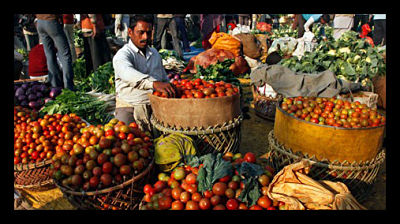
There really is no formula to defining global food insecurity. Still, many world health organizations use the term to point out deficiencies in global food security. To understand what something is, it sometimes helps to understand what it is not. This may just be the case with food insecurity. To understand food insecurity, that is, one must first define and understand food security and work backwards. If food security does not exist, then, by definition, you have food insecurity.
The World Food Summit of 1996 defined food security as existing “when all people at all times have access to sufficient, safe, nutritious food to maintain a healthy and active life.” This definition hinges on three qualifications: namely food availability, food access, and food use. Lacking one of these elements of food security, a population faces food insecurity, which can and does arise in an endless permutation of manners.
Global Food Insecurity: Failing Food Security Criteria
To establish food security, say, in a developing nation, food must first be available on a consistent basis. Some will argue that there is currently enough food in the world to feed everyone in the world. Nonetheless, people go hungry due to inconsistency in their daily intake of food. For example, one may go days without a meal. In this situation, a cornucopia of food, arriving two weeks later, does nothing to alleviate that person’s current hunger. As such, food security depends on food availability.
Second, the nation’s population must have access to the right kinds of food to sustain a healthy diet. Not only must a person have food available, that is, it must be the right kind of food. For example, a human cannot survive on rice alone. We need all different kinds of food to live healthy lives. The definition of healthy diet here also includes accommodations to particular dietary needs, such as avoiding certain foods or increasing intake of others.
Finally, food security requires appropriate use of food based on adequate knowledge of basic nutrition and care. In order to maintain a healthy diet, one must know how to eat the food that is available to him or her and portion that food out in a way that best serves the needs of his or her body. When USAID drops bags of food over Africa, for example, it will be helpful to also teach those receiving the aid how to ration the food. Basic sanitation and access to water are included in appropriate use to complete the qualifications of food security.
If even one of these three elements or qualifications is not met, it is easy to see how even a full plate of food, three times a day, may not be enough to maintain a healthy diet. Food security requires that the food is enough to satisfy the short, mid, and long-term needs of the human body and that the person consuming the food does so in an appropriate manner to maintain him or herself. Global food insecurity, or deficient food security from a worldwide perspective, exists in a world where even one person goes hungry.
Though great strides have been made in alleviating global hunger, the current level of food insecurity is unacceptable. Even in the United States, 1 out of 10 households were food insecure, hence the importance of food provision and education programs, like, local food banks. To learn more about food (in)security in the U.S., you can visit this site.
– Herman Watson
Sources: U.S. Food Aid and Security, World Health Organization, World Food Programme, Food and Agriculture Organization
Photo: Security and Sustainability Forum

Who is Elsie Kanza?
As one of Forbe’s 20 Youngest Power Women in Africa, Elsie Kanza is not to be overlooked. Born in Kenya to Tanzanian parents, she obtained an education in the United States and in Kenya. She received her BA in International Business Administration from the United States International University – Africa, her Masters of Science in Finance from the University of Strathclyde and her Masters of Arts in Development Economics from Williams College.
Kanza then went on to become an Archbishop Desmond Tutu Leadership Fellow in 2008 and a World Economic Forum World Leader in 2011. Until recently, Kanza served as a personal assistant and economic advisor to the Republic of Tanzania president, Jakaya Mrisho Kikwete, making her an extremely influential political figure in Africa. Now, she serves as perhaps her most important role yet: director for Africa at the World Economic Forum. The World Economic Forum is a Geneva-based non-profit organization that works to convene global leaders in business, academics, and politics to engage in shaping global agendas.
Through this position, Kanza’s team has been focusing on addressing important issues in Africa including climate change, food security, infrastructure development, and resources management. Kanza works specifically on connecting senior government officials in sub-Saharan Africa with leasers at the World Economic Forum to facilitate collaboration. In an interview with In2EastAfrica, Kanza said that the new job is essentially an extension of her last job as an advisor because she is working so closely with government officials. She develops partnerships that will help her team achieve their broader development goals.
This year’s World Economic Forum conference on Africa was held in May in Cape Town, South Africa. Over 1,000 people participated from 80 different countries. The conference focused heavily on economic grown and competitiveness in Africa as well as infrastructure development. In an interview with Forbes, Kanza said, “There’s a real optimism in Africa at the moment, but also caution: Africa’s leaders know that although they have a unique development opportunity, growth is by no means guaranteed. We dedicated a number of sessions to discussing how Africa can diversify its economic base, create more and better jobs and improve competitiveness through further reform.”
As a powerful young leader, Kanza is also dedicated to promoting youth leadership in Africa as well. She particularly focuses on helping the World Economic Forum’s “Shapers” community which consists of 20-30 year olds working on development projects across Africa.
– Emma McKay
Sources: Forbes
Photo: Youtube
The Solution to Food Security: Eat More Bugs?
Insects have been eaten by humans for centuries. Little do most people know that pound for pound, insects pack more protein than regular beef or chicken. Today, one start up company plans to reclaim bugs as a source protein to improve food security and protect the environment.
Exo is a new company started by Brown University graduates Greg Sewitz and Gabi Lewis. Exo produces protein bars that are made with a very special ingredient: cricket flour. The crickets are slow roasted and milled into a fine powder. The cricket flour is then combined with organic ingredients such as raw cacao, dates, almond butter, and coconut. The result is a high protein, low sugar, nutritionally packed protein bar. The bar boasts a high content of omega 3 fatty acids, iron, and calcium. The bars are also gluten free, dairy free, soy free, and have no artificial preserves or processed ingredients.
Why eat crickets? Crickets are extremely nutritious. They are made up of a majority of protein by dry weight. They also contain all the essential amino acids. Compared to beef, 100 grams of cricket powder contains 69% protein while 100 grams of dried beef contains only 45% protein. Sirloin steak has even less at 29% per 100 grams. Cricket powder also contains nearly as much calcium as cow’s milk.
Cricket protein presents a solution to the global food and environmental crisis. Crickets need 12 times less feed than cattle and 4 times less than sheep. They require very little water and very little space. High densities of crickets also require significantly less space for storage and transportation, making this insect protein highly sustainable. Furthermore, harvesting insects such as crickets is far less environmentally destructive as raising traditional livestock. The average cow produces 132 pounds of methane that is released into the atmosphere. Crickets produce 80 times less.
By creating these protein bars, Exo hopes to convert the world’s food eating patterns into more sustainable ones. Despite the many benefits of consuming insects, most people are still hesitant to do so, especially in the United States. However in reality, 80% of the world already does so. Additionally, Exo has worked with expert chefs and conducted taste tests to produce a protein bar that is both wholesome and enjoyable.
Both Gabi and Greg of Exo hope to see their company expand to include a variety of insect based foods. Ultimately their goal is to “feed the world without destroying the planet.” By tapping into insects as a source of protein, Exo stands to make a real difference in the food industry.
– Grace Zhao
Sources: Forbes, Kickstarter
Photo: The World
How Fruits and Veggies Can Make Safe Drinking Water
Access to clean drinking water is a worldwide problem. One billion people, or roughly 1 in 7 persons across the globe, lack access to safe water. Without potable water, these millions of people are exposed to waterborne pathogens that can cause sickness and death. Each year, waterborne pathogens make tens of millions of people sick and lead to 1.8 million deaths. And all of these are preventable.
Researchers are working on cheap and practical ways to provide safe drinking water across the globe. Ramakrishna Mallampati, an investigator at the National University of Singapore, has devised a new way to purify dirty water. By using the peels of fruits and vegetables, Mallampati believes that he can effectively and economically filter out impurities from water to make it safe to drink.
The fruits and vegetables are used to purify dirty water by drawing out toxic ions and organic pollutants from liquid. Tomato peels effectively remove “dissolved organic and inorganic chemicals, dyes and pesticides, and…can also be used in large scare applications.” Tomatoes are the second most consumed vegetable in the world. With the vegetable’s widespread availability, using tomato peels to purify water could prove to be a convenient, easy, and cheap way to purify drinking water.
Like tomato peels, apple peels are also able to draw out a number of pollutants from dirty water. The peels can extract anions such as “phosphate, arsenate, arsenite, and chromate ions from aqueous solutions.” While the apple peels must first be treated with a zirconium oxide before they can effectively remove impurities from water, the wide prevalence of the fruit throughout the world means that it could also be used to treat drinking water on a large scale.
The newly designed water purification methods could prove revolutionary in the developing world. Many large scale treatment processes used in developed nations are simply inaccessible to the impoverished across the globe due to a lack of the financial capital needed to implement them. The process of purifying water by using tomato and apple peels mitigates the financial obstacle that prevents many in the developed world from having clean drinking water. Ramakrishna Mallampati hopes that by using his new purification process, those living in developing areas will be able to live healthier and more productive lives.
– Jordan Kline
Sources: ScienceDaily, Care2, National Academy of Sciences
Photo: She Knows
MAC Viva Glam Makes Over More than Just Faces
While Canadian cosmetic company MAC has developed a cult following for its make up products, it has made over the lives of millions without make up since the company established the MAC AIDS Foundation (MAF) in 1994. Throughout the course of nearly 2 decades, MAC has raised $270 million for HIV/AIDS prevention, education, treatment and support by contributing 100 percent of proceeds from Viva Glam sales to MAF.
In 2010, MAC Viva Glam enlisted songbirds Lady Gaga and Cyndi Lauper to represent its From Our Lips campaign, which worked to raise awareness about the prevalence of HIV/AIDS infections among females – which is especially disproportionate in developing nations. In sub-Saharan Africa, women comprised nearly 60% of those living with HIV/AIDS. Conversely, it has been estimated that 75% of all women with HIV/AIDS live in the region.
A number of reasons factor into this unequal distribution. Studies have shown that women are twice as likely to contract HIV from unprotected intercourse as men, suggesting that women have a greater susceptibility to the virus. Widespread instances of gender based violence and rape in sub-Saharan Africa further compound the prevalence rate. Armed conflict and patriarchy make for a lethal combination because many women who are coerced or forced into sexual acts are not given a choice on whether or not to use a condom.
Infected mothers, moreover, can potentially pass on the virus to their offspring – thereby perpetuating the cycle of HIV/AIDS and the havoc it wreaks upon lives. MAF seeks to address these issues by working with partner organizations to prevent sexual assault closely linked with HIV/AIDS epidemics. Through From Our Lips, MAF provided the National Network to End Domestic Violence with a $100,000 grant to educate advocates on the correlation between sexual violence and the spread of HIV/AIDS.
Through Viva Glam and MAF, MAC and its celebrity endorsers have transcended superficiality to put a spotlight on the inner beauty of compassion – emphasizing everyone’s right to lead a happy and healthy life, regardless of gender or health.
– Melrose Huang
Sources: MAC Aids Fund, NNEDV, AVERT, Forbes, MTV
Photo: LadyLux
UNICEF Delivers Aid to Central African Republic
In March of 2013 a crisis was declared in Central African Republic (CAR) after rebels seized power. The coup forced almost all humanitarian groups out of the country, leaving most of the country’s population without aid. Due to the crisis most of the citizens of CAR do not have access to basic medical services. The rebel coalition has ransacked schools, health clinics and hospitals. Many are afraid to leave their homes because of the violent rebel presence.
“The attacks have deprived an already vulnerable population – 4.4 million people spread across a country bigger than France – of access to even basic medical treatment,” said Doctors Without Borders in a recent report released about the crisis in CAR. “In a country which already had the second-lowest life expectancy in the world, at just 48 years, the people are now even more at risk.”
UNICEF has just delivered its third shipment of aid to Central African Republic filled with life-saving humanitarian supplies. The shipment weighed the equivalent of six large truck-loads. The shipment includes medicines and health supplies to treat over 20,000 people, tarpaulins to provide emergency shelter for 1,000 families, 400 boxes of therapeutic milk to treat severely malnourished children, and health and nutrition equipment to benefit children and women most affected bot the violent crisis. The shipment is aimed to reach those in the interior of the country who have little access to humanitarian aid and are in the greatest need.
“This is the largest shipment of supplies we have received since the crisis began. These life-saving supplies will be delivered immediately to affected communities across the Central African Republic,” said UNICEF representative Souleymane Diabate. “This month, through the work of mobile teams, we re-established a presence in the interior of the country and the supplies will be used to ensure that the health and nutritional needs of the most vulnerable women and children are met.”
Since the crisis, UNICEF has managed to organize a humanitarian response that has impaced the lives of 223,000 people. These people now have access to basic health services and medicines thanks to UNICEF. They have also treated 10,035 children with severe acute malnutrition and seen improvement in the children’s health. UNICEF has also vaccinated 123,000 children against measles and hopes to vaccinate the rest of the country before the end of September.
UNICEF hopes to expand its emergency response initiative in CAR and has currently raised US$8 million from donations. They hope to raise US $24 million to scale-up efforts.
– Catherine Ulirch
Sources: UNICEF, AllAfrica
The Borgen Project Advocates for Foreign Aid
Today, The Borgen Project team paid a visit to Congressman McDermott’s district office in Seattle. They advocated for a stronger international affairs budget, passing the Food Aid Reform Act and the Electrify Africa Act, and other issues related to global poverty.
Laurie Goodman, a PR Intern, said, “This was my first time lobbying in a congressional office and it was a great experience. I definitely suggest that others to contact their local leaders.”
The Borgen Project encourages everyone to schedule a meeting with their local congressional offices and advocate for eradicating poverty.
– Abby Stewart
What Is Global Food Insecurity?
There really is no formula to defining global food insecurity. Still, many world health organizations use the term to point out deficiencies in global food security. To understand what something is, it sometimes helps to understand what it is not. This may just be the case with food insecurity. To understand food insecurity, that is, one must first define and understand food security and work backwards. If food security does not exist, then, by definition, you have food insecurity.
The World Food Summit of 1996 defined food security as existing “when all people at all times have access to sufficient, safe, nutritious food to maintain a healthy and active life.” This definition hinges on three qualifications: namely food availability, food access, and food use. Lacking one of these elements of food security, a population faces food insecurity, which can and does arise in an endless permutation of manners.
Global Food Insecurity: Failing Food Security Criteria
To establish food security, say, in a developing nation, food must first be available on a consistent basis. Some will argue that there is currently enough food in the world to feed everyone in the world. Nonetheless, people go hungry due to inconsistency in their daily intake of food. For example, one may go days without a meal. In this situation, a cornucopia of food, arriving two weeks later, does nothing to alleviate that person’s current hunger. As such, food security depends on food availability.
Second, the nation’s population must have access to the right kinds of food to sustain a healthy diet. Not only must a person have food available, that is, it must be the right kind of food. For example, a human cannot survive on rice alone. We need all different kinds of food to live healthy lives. The definition of healthy diet here also includes accommodations to particular dietary needs, such as avoiding certain foods or increasing intake of others.
Finally, food security requires appropriate use of food based on adequate knowledge of basic nutrition and care. In order to maintain a healthy diet, one must know how to eat the food that is available to him or her and portion that food out in a way that best serves the needs of his or her body. When USAID drops bags of food over Africa, for example, it will be helpful to also teach those receiving the aid how to ration the food. Basic sanitation and access to water are included in appropriate use to complete the qualifications of food security.
If even one of these three elements or qualifications is not met, it is easy to see how even a full plate of food, three times a day, may not be enough to maintain a healthy diet. Food security requires that the food is enough to satisfy the short, mid, and long-term needs of the human body and that the person consuming the food does so in an appropriate manner to maintain him or herself. Global food insecurity, or deficient food security from a worldwide perspective, exists in a world where even one person goes hungry.
Though great strides have been made in alleviating global hunger, the current level of food insecurity is unacceptable. Even in the United States, 1 out of 10 households were food insecure, hence the importance of food provision and education programs, like, local food banks. To learn more about food (in)security in the U.S., you can visit this site.
– Herman Watson
Sources: U.S. Food Aid and Security, World Health Organization, World Food Programme, Food and Agriculture Organization
Photo: Security and Sustainability Forum
WoundCure Chip Assesses Chronic Wounds
Dr. Manuela Martins-Green and PhD candidate Sandeep Dhall have started a project to develop a diagnostic tool called a “gene chip.” The chip would provide accurate diagnostic tests for chronic “non-healing” wounds. The gene chip can predict how a patient’s chronic wound should be treated in order to increase the chance of healing. If the WoundCure chip project is successful, it could potentially treat millions of people who are affected with bed sores, skin ulcers, diabetic foot ulcers and other related chronic wounds.
Martins-Green and Dhall say that chronic wounds affect an average of 6.5M people and cost roughly $25 billion a year in the U.S. The WoundCure chip data could steer doctors toward effective treatment plans so that wounds can heal properly. Many times, the solution to chronic wounds is to amputate the affected limbs. Open sores are also more prone to infection, which can potentially spread throughout the body.
The WoundCure chip data will be an excellent tool that will allow doctors to quickly determine which wounds require aggressive treatment. The chip will identify which genes have been altered, thus providing quick diagnosis and proper treatment. In an interview with Dr. Martins-Green, she goes more in detail about how the chip works. She explains that, “If the expression of the gene is elevated, it will show red. If it’s not regulated, it will show green. If you use the chip with a wound, the prediction is that the more red the more serious the wound will be.”
The researchers behind this innovative tool are hopeful that it will be a positive impact on tens of millions of people affected by chronic wounds. For the WoundCure chip to actually happen, Martins-Green and Dhall will need to reach their funding target for this project. Those interested in learning more and supporting their research can visit their crowd funding page.
– Daphne Jeon
Sources: Microryza, Motherboard
Photo: Motherboard
Top 5 Poverty Prevention Tactics
Global poverty can seem to many to be an insurmountable task. However, much progress has already been made to lift people out of poverty. According to The Global Citizen organization, global poverty has effected 1.3 billion individuals, a number which is actually 52% lower than statistics in the 1980s.
Development practitioners recognize that global poverty can be minimized by addressing other areas including reproductive health, HIV prevention, education, women’s empowerment, and gender equality. UNFPA states that poverty is a multidimensional issue that deprives people of education, resources, services, opportunities, and economic opportunities. UNFPA states that investments to address global poverty should “…[empower] individual women and men with education, equal opportunities and the means to determine the number, timing and spacing of their children – [which] could create the conditions to allow the poor to break out of the poverty trap.”
Reproductive health and HIV prevention can both act as poverty prevention tactics. Reproductive health education, family planning resources, and widely accessible contraception can decrease fertility rates by providing families with the knowledge and tools to space out pregnancies. Furthermore, improved healthcare can reduce population growth because families recognize that they do not need to have as many children to ensure that at least 2 of them survive to adulthood.
HIV prevention is also an important poverty prevention tool because helpful for when men and women know the dangers of HIV, they are able to use protection and are able to prevent the spread of the disease not only from partner to partner, but also from partners to undesired pregnancies and children. By learning how to protect oneself from HIV, individuals are able to prevent untimely deaths as well as preventing the disease to spread within a community, states The ONE organization. By lowering fertility rates through an education in reproductive health and by preventing the spread of HIV through an education in HIV prevention, communities will thrive due to a lower healthier population level.
The third poverty prevention tactic is education. Education is a very important factor in preventing global poverty, for providing an education to young boys and girls will help prevent undesired child marriage as well as early teen pregnancies which can lead to maternal death. An education helps boys and girls obtain the proper knowledge to keep themselves safe, healthy, and helps to plant the seeds of inspiration. Once obtaining an education, these individuals can create sustaining businesses which produce and return economic gains into their communities. By providing an education, individuals are able to thrive and break through the barriers of global poverty by creating strong businesses which will help the economy thrive and will lead to a stable community environment.
The fourth and fifth poverty prevention tactics are women empowerment and gender equality. Women empowerment is a positive prevention tactic because women who are encouraged to attend school and receive an education are more likely to defeat child marriage, are able to marry latter in life, and are able to have less children which lowers population rates. Women who have an education are more likely to work after receiving an education, which boosts the economy and provides a sustainable household for a family. Gender equality offers similar benefits, for if women are able to obtain an education and receive equal pay in employment, both the man and women are able to create a sustainable home for their children. By providing a sustainable environment, the child is able to attend school and is able to receive employment opportunities, continuing this positive cycle.
Through these five poverty prevention tactics, developing countries are able to defeat global poverty and are able to create sustainable economies, healthy environments, and equal opportunities.
– Grace Beal
Sources: Global Citizen, UN FPA, ONE Campaign
Photo: Ambergris Today
3 Key Responsibilities to Fight Poverty
Poverty. Can you define this seven letter word? Many individuals can define it, and most would say that poverty is the state of being extremely poor. Yet, how many of these individuals would know the facts behind global poverty and would know what it took to prevent or fight against such a global epidemic? Many individuals are so focused on their own personal lives that they do not notice what lies beyond their own every day life. Yet, global poverty effects everyone and reducing this epidemic could benefit everyone as well.
A dollar and twenty five cents. This is the amount of money in which 1.3 billion individuals live off of every day and possibly even less than this amount, states The World Bank. This is a staggering amount of people living off of less than a dollar a day! Yet as The Global Citizen organization has stated “ In the last 30 years, the proportion of the world’s population that live below this line has halved-from 52% in 1980, to 25% today. That’s a decline from 1.9 billion people down to 1.3 billion people”. There is a notable difference seen today with this decline in global poverty, yet if individuals do not keep putting their efforts towards this cause, the percentage could once again rise to staggering levels.
So how can an individual make a difference, one may question. There are three key responsibilities to help fight against global poverty. The first is through charitable donations. A single individual can make a large difference on numerous lives through charitable donations, states Columbia University. By donating funds towards global poverty, The Millennium Promise explains, an individual can help numerous others obtain food, clean water and power, a healthy living environment, technology and the seeds for innovation, education, gender equality, the proper health care for women and their children, and finally can help plant the seeds for businesses and entrepreneurship to create future stability. These may seem easy to obtain, but without help from numerous donors, it would not be nearly impossible to accomplish these goals.
The second key responsibility to help prevent global poverty is to follow through on the government’s promise to help aid millions who are suffering from global poverty. By following through on their existing commitments to help aid these struggling individuals, it proves that there are individuals who care about fighting to eliminate global poverty, states The Borgen Project. There are many ways in which to contact your government leaders such as writing to your political leaders, organizing letter writing campaigns, writing to your local newspapers and magazines, by calling your political representatives stating your wish in that they support the fight against global poverty, and finally by joining existing networks such as The Borgen Project, The Millennium Campaign, or The Global Citizens Organization.
Finally the third key responsibility is education. By educating yourself on the subject of Global Poverty, you can also educate others. Educating the public may seen like a difficult task, yet it has proven to be a highly successful global poverty prevention tactic. By educating the public, you can help spread the word of prevention and can help lead the fight against global poverty. By educating others, you can help lead to numerous donations against the spread of global poverty, and can also help spread the word of prevention even further. When you educate an individual on this topic, another individual can continue to spread the word, and it leads to the creation of a chain reaction. By doing so, you can lead numerous individuals to make donations, contact their leaders, and to continue the chain of educating others on this crucial subject.
Overall, by making donations to global poverty prevention organizations, contacting your political leaders, and by educating others, you are helping to end poverty. By taking on these three key responsibilities, an individual has started their own personal fight against global poverty and has joined in the movement with numerous others to end this global epidemic.
– Grace Beal
Sources: World Bank, Global Citizen, Columbia University, The Borgen Project
Photo: The Guardian