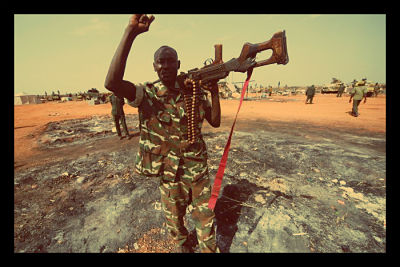
In order to understand the conflict between Sudan and South Sudan, it is necessary to understand the colonial history of Sudan. Sudan consisted of kingdoms and tribal communities until the Turko-Egyptian invasion of 1821. The Turko-Egyptian invasion was motivated by the expansionist ambitions of the Ottoman empire and its interest in commodities, such as slaves, ivory, gold, and timber. The Turko-Egyptian and North Sudanese collaborated against those of South Sudan and exploited them into slavery. Turko-Egyptian rule lasted for sixty years, but during this time, South Sudan was not fully incorporated under the new administration. The Mahdist administration, 1883-1989, also struggled to maintain control over South Sudan.
During this time, Belgium and France both attempted to maintain some control over Sudanese territory. However, after the French attempted to annex South Sudan to the French territories in West Africa, a conflict developed between the British and French over South Sudan known as the Fashoda incident. In 1898, Egyptian and British forces teamed up to reconquer Sudan. This incident resulted in the signing of the Condominium Agreement, which established Sudan’s current borders. France and Belgium eventually receded from Sudan, giving Britain-Egyptian forces full control over the country. During this time, Britain created separate administrative policies for South and North Sudan. These policies, which included immigration and trade laws, coupled with differing official languages, treated North and South Sudan as two separate entities.
British forces established an Advisory Council for North Sudan, in which all six provinces of North Sudan were represented and the council had the power to decide what was administered where. However, no such council was established in South Sudan. Rather, in 1946, British forces suggested that the North colonize the South. Since the South was not represented in the Council, the choice to colonize South Sudan was made without consulting anyone from the South and the South was betrayed by the British.
When Sudan achieved independence from British-Egyptian forces in 1956, independence was seldom felt in the South as the North assumed full control over the colonial state. The parliamentary republic, which was established at the onset of independence, failed to incorporate the South and this has led to years of civil unrest. Since achieving independence, the South has been politically marginalized, socio-economically ignored, if not retarded, and culturally subjugated by the North. The South, which is predominantly Christian and Animist, is culturally different from the Arab Muslim North. Yet, the North has used Islam as a weapon by denying basic rights to those who do not convert to Islam. In addition, the North has forced Islam and Arabization onto the Southern populations through educational systems which aim to kill indigenous languages and culture.
The military-led government of President Jaafar Numeiri agreed to autonomy for the South in 1972, but this Peace Treaty was undermined in 1979 when oil was discovered in South Sudan. After the discovery, the Numeiri government attempted to deny the South ownership of the resource by redrawing the southern boundaries to include the oil reserves. The new boundaries, however, violated the Addis Ababa Agreement which accepted the boundaries from colonial rule. Rather than improving the living standards of the Sudanese, it led to further conflict between the North and South. Civil war broke out in 1983 when Numeiri divided South Sudan into three regions, each with a governor appointed by himself, and declared Arabic the official language. To make matters worse, Numeiri imposed Shari’a law on all of Sudan. Since then, the government has waged war on South Sudan, whose forces are known as Sudan People’s Liberation Army (SPLA).
Throughout the 22 year conflict, Southern villages were ransacked and destroyed. Numeiri was eventually removed from power and replaced by Al-Bashir, who is supported by the Nationalist Islamic Front (NIF). Al-Bashir was able to maintain control until 1999, when SPLA forces began to gain control over large areas outside of more populated cities. In addition, SPLA forces made huge gains by attacking transportation lines and government forces. But by 2000, the South was hit with a widespread famine and the government did nothing to help its people. With the help of the United Nations and the United States, Operation Lifeline Sudan began to deploy food and supplies to areas affected by the conflict. By 2002, 2 million lives had been lost due to the genocide by the Bashir government. Throughout 2003 and 2004, the international community pressured the Sudanese government and the conflict began to die down.
In 2005, Sudan and South Sudan ended the 22 year conflict. The Comprehensive Peace Agreement (CPA) was underpinned by an agreement to 6 years of Southern autonomy, with a vote on succession at its end, split revenues from southern oil evenly between north and south sudan, islamic law in the north but to be voted on in the South, and if the succession vote was negative, the north and south were to combine forces. Six years later, in July of 2011, a vote for succession was held in Sudan and South Sudan gained independence from Sudan. Since then, South Sudan has been recognized by the international community after being accepted into the United Nations.
– Kelsey Ziomek
Sources: Global Witness, University of Pennsylvania, Pulitzer Center, University of Massachusetts
Photo: ABC

Tensions Rise in Colombia over Land Disputes
Escalating tensions over the issue of land rights gave rise to protests, which turned violent after security forces shot and killed four unarmed peasants on June 22 and 25 in Catatumbo, Colombia, as reported by Amnesty International. They are only the most recent casualties in the ongoing battle over land in Colombia.
Land is becoming ever more scarce for farmers throughout Colombia, as big businesses and mining companies have been consolidating their ownership over land for years. Rural farmers are struggling to earn a living, and growing enough food to feed their families is becoming increasingly difficult as land is disappearing from beneath their feet. Colombia is home to the world’s largest internally displaced population. Farmers are continuously forced to leave their homes and farms as more and more land is granted to wealthy companies. While the government has recently passed the land restitution law, no landholding entity has yet returned land to displaced peasants. Over 16,000 people involved in land disputes have simply “disappeared,” according to Catalina Ballesteros Rodriguez, Program Officer for Christian Aid.
The 14,000 strong protest this past June was organized by the Peasant Farmer Association of Catatumbo, with support from the Luis Carlos Pérez Lawyers’ Collective. CALCP is an all-female organization of lawyers, who offer legal advice and provide training to support grassroots organizations and displaced communities. Judith Maldonado, director of CALCP and winner of the German ‘Shalom Award’ for her human rights work, says “we seek to bring the rule of law to the communities… so that it can be a tool for the defense, protection and promotion of human rights, and for the transformation of their communal, social, political and cultural realities.” Their operations are based in northeastern Colombia, a place so rich in natural resources that it is a curse rather than a blessing for indigenous and small scale farming communities, who are forced off their land in large scale extractive projects to make way for big money-making business interests. They also advocate on an international level, to raise awareness about the violent removal of peasant farmers and land rights issues. Their work is done at great personal risk, and human rights lawyers have often been threatened, repressed, even “disappeared” or killed. Judith Maldonado has personally faced threats from armed groups, and illegal surveillance by the state. CALCP is supported by Peace Brigades International, a UK based group that provides support and protection to human rights defenders all over the world who are subject to repression.
– Jennifer Bills
Sources: The Guardian, Peace Brigades International
Rising Obesity Rates in Developing Countries
As developing countries’ economies improve they are increasingly at risk of the obesity pandemic. As income levels rise and physical labor decreases, these populations become susceptible to the same unhealthy weight gain that has swept through the United States and Europe.
The World Health Organization (WHO) defines “obese” as having a body mass index of thirty or above. A recent report by the Organization for Economic Cooperation and Development (OECD) states 500 million people worldwide qualify as obese, or 1 out of every 10 people.
Already obesity rates in Brazil and South Africa exceed OECD countries’ average. However, in order to slow these growing rates, developing nations must get ahead of the trend. The OECD report recommends these countries utilize media campaigns, subsidy programs, and taxes to promote healthier diets. However, these actions present a bill that developing nations are reluctant or unable to pay. The OECD states the agenda would be cost-effective down the road by preventing staggering health care expenses. Taxes on sugary and fatty foods have proven to slow obesity rates in developing countries.
Increased economic potential in developing countries opens them up to alternative food sources. These sources may include “westernized” diets of sugary and fatty foods. As rural populations become urbanized they are put at risk of developing health problems including rising obesity rates. While rural populations rely on traditional diets consisting of self-grown fruits, vegetables, and grains urban populations obtain their food from outside sources. These are often cheaper, processed foods.
In a study published in the Oxford International Journal of Epidemiology the authors, conducting studies in Gambia, state their belief that the remittance economy may affect diets in villages. With the increase in remittances (money sent home from family members working abroad) local villagers have increased access to imported food items, often high in fat and oils.
Under-nutrition in early life may predispose an individual to obesity later. Some research has shown that “nutritional stunting” or under-weight children may later be more susceptible to extreme weight gain. This susceptibility presents a targeted risk for developing countries.
A significant concern for developing countries are the health problems that are associated with obesity. Obese individuals often suffer from heart disease, diabetes, and cancer. However, health systems in developing nations are ill-equipped to deal with these diseases or even patient increases. In many of these nations the health care industry and health aid must still address malnutrition, malaria, TB, and HIV/AIDS.
– Callie D. Coleman
Sources: FAO, Oxford Journals, WHO, BBC, Huffington Post
Photo: ABC
5 Interesting Facts from Twiplomacy
More than three-quarters of the 193 UN member countries are represented on Twitter, making the site a valuable communication tool with which leaders can succinctly speak to millions of citizens. Though it is clear that Twitter has become an increasingly important political medium, there has been little analysis of their Twitter activity. Twiplomacy is a global study of world leaders’ Twitter activity that seeks to examine how the site is utilized as a diplomatic tool. Listed below are five interesting facts from Twiplomacy that shed light on the Twitter usage of world leaders.
Follow @Twiplomacy on Twitter to learn more about how world leaders connect on Twitter.
– Katie Bandera
Sources: Twiplomacy, Twitter
Photo: The Economist
Poverty in Guyana
Poverty in Guyana remains a problem. Guyana is a small country located in Northern South America that borders Venezuela, Brazil, and Suriname. Initially a Dutch colony in the 17th century, Guyana came under British control in 1815. The British first used African slave labor to man their sugar plantations, but slavery was finally abolished in 1834. The abolition of slavery in Guyana led former slaveholders to import indentured servants from India, maintaining ethnic and socioeconomic divisions in the colony. Though Guyana achieved independence from the U.K. in 1966, the country is still experiencing the aftereffects of its colonial background.
Societal Divisions in Guyana
Today, approximately three quarters of Guyana’s population descends from slave or indentured servant populations. 43.5% of Guyana’s population is of East Indian descent, and 30.2% is of African descent. These dominant ethnic groups frequently clash, backing ethnically based political parties and voting almost entirely along ethnic lines. Roughly 43% of Guyana’s population lives below the poverty line, with indigenous people comprising the biggest fraction of those affected.
Education and Economy
Though Guyana reports a literacy rate of 91.8%, the poor quality of education and teacher training combined with its suffering infrastructure contribute to a much lower level of functional literacy for most of the population.
Guyana’s emigration rate is also one of the highest in the world, with 55% of its citizens living abroad. The country is one of the largest recipients of remittances relative to GDP out of Latin American and Caribbean countries. 80% of Guyanese citizens with tertiary degrees have left the country, depriving those living in Guyana of invaluable services, including healthcare.
The Guyanese government owned more than 80% of industries until the 1990’s, but mismanagement combined with falling commodity prices and high fuel costs caused the standard of living to fall drastically. The government has since divested itself of many industries, but problems such as deforestation, violent crime and widespread poverty continue to threaten the economy.
Poverty Statistics
Roughly two-thirds of Guyanese citizens living in poverty, or 29% of the population, can be classified as being extremely poor. Most of the poor live in rural areas and work as agricultural laborers. Though Guyana’s farmers have access to adequate land resources, their productivity is extremely low.
Guyana has one of the highest maternal mortality rates in Latin America, with 280 deaths per 100,000 live births. Its infant mortality rate is the 66th highest in the world, with 34.45 deaths per 1,000 live births. These grave statistics can be attributed in part to the low density of physicians, with just .59 doctors per 1,000 people. 1.2 percent of Guyana’s population is living with HIV/AIDS, a rate higher than that of most other Latin American countries.
Solutions to Poverty in Guyana
The World Bank is currently working in Guyana to refocus public expenditures to improve the infrastructure and the quality of health, education, and water services. Advocating for the privatization of most industries, the World Bank hopes to increase opportunities for investment and conserve government resources.
The United Nations Development Programme is also working to empower vulnerable people in Guyana by improving the economic status of indigenous groups and establishing community livelihood projects that will create jobs.
Though Guyana ranks 117th out of 187 countries on the UN’s Human Development Index, continued aid and humanitarian assistance will ensure that its citizens can overcome past subjugation and establish a strong infrastructure.
– Katie Bandera
Sources: CIA, World Bank, UNDP, BBC
Photo: California Historical Society
Google Earth Shines Spotlight on Slums
Government officials in India are notorious for ignoring the millions of people who live in the slums near big cities. Sangli is one such city. Over 3,900 families occupy makeshift huts in Sangli and, for the first time, Good Earth is documenting their existence. International Aid Organizations are thrilled that these images will put a face, so to speak, to the thousands of people living in these slums. Now that the unbelievable conditions of the slums are documented for the world to see, Sangli officials are being held to a higher accountability and progress is being made towards providing real homes for those living in the slums.
These images make public the sanitation issues inherent in the slums, as occupants of the slum exist without access to toilets or faucets. When and if new buildings are constructed for those living in the slum, sanitation is one of the first problems that will be addressed.
Even though it would be easier to build a new community in the suburbs of Sangli, research shows that most people cannot afford to commute into the city every day for work. Those who previously moved to the suburbs to escape the slums actually ended up moving back within a short period of time. Shelter Associates, a nonprofit geared toward improving the lives of those living in slum conditions, plans to create living spaces that will mimic the communal environment slum occupants have grown accustomed to.
The reason why Shelter Associates is having difficulties following through with the new building plans is because the local government continues offer limited concern and attention to slum dwellers. For the most part, the Sangli government has acted as if these people do not exist. Now, with the images provided by Google Earth, Shelter Associates is hopeful that the government can no longer continue its negligence policies.
The slums in Sangli are not the only slum communities being exposed by Google Earth. Slums in Altos de Cazuca, Colombia (50,000 people), Comuna 13, Columbia (135,000 people), Kamagasaki, Japan (30,000 people per every 200 meter radius), Ashaiman, Ghana (200,000 people), Kibera, Kenya (170,000 – 250,000 people), Rocinha, Brazil (250,000 people), Sultanbeyli, Turkey (250,000 people), Petare, Venezuela (600,000 – 1 million people), Dharavi, India (1 million people), Sadr City, Iraq (2 million people), Orangi town, Pakistan (700,000 – 2.5 million people) and Neza-Chalco-Itza barrio, Mexico (4 million people) are now all shown on Google Earth.
Without these images, international aid organizations sometimes struggle to verbally describe the horrific conditions in the slums. Hopefully, Google Earth will be able to erase apathy towards those who live in these slums and support for aid efforts will grow.
– Mary Penn
Sources: Time, Business Insider
Homework, Not Housework
Malala Yousafzai’s speech at the UN called for “free, compulsory education all over the world for every child.” Her speech was a reminder that back in her home country of Pakistan several million children are unable to attend school, exploited for their labor, and abused.
The most recent annual State of Pakistan’s Children report—published by the Islamabad-based NGO Society for the Protect and Rights of the Child (SPARC)—found that, out of 120 countries, Pakistan has the second largest number of children not attending school. 5.1 million Pakistani children ages 5 through 9 are not attending an educational institution. A large portion of these children end up in the workplace.
Child labor is a widely accepted social norm in Pakistan for both boys and girls. These children are denied their rights to education, protection, health, and development, and are also highly susceptible to abuse and exploitation. Figures on the exact number of child laborers in Pakistan are somewhat unreliable, with estimates ranging from 3.3 million to 12 million.
According to an estimate from The International Labor Organization, one quarter of these children are involved in the worst forms of child labor—slavery, commercial sexual exploitation, the use of children for committing crimes, and work that is harmful to the health and safety of children. The Pakistan Bureau of Statistics 2010-11 Labor Force Survey estimates the number of child workers to be around 4.29% of the country’s children ages 10 through 14.
The only major law relating to child labor is the Employment of Children Act 1991, which regulates child labor for children under 14 years of age and prohibits it in specific occupations. However, the law is rarely enforced, especially in the area of domestic labor.
Earlier this month an incident was reported in which a wealthy employer had beaten her 13-year-old servant to death after he dropped a jug. The incident was widely covered by the media and confirmed by the police in the area. Such stories are not unusual. According to SahibaIrfan Khan, the program officer at SPARC, thousands of children working as domestic servants are deprived of their basic right to education and are often subjected to abuse and violence.
Other data compiled by the organization shows at least 18 confirmed cases of severe torture and abuse of child domestic laborers. 13 of these children died as a direct result of the violence inflicted upon them at the hands of their employers.
– Scarlet Shelton
Sources: IRIN, Pakistan Bureau of Statistics
Photo: Dawn
5 Ways to Conserve Water
According to the UN’s Millennium Development Goals Report in 2012, 11 percent of the world’s population, 783 million people, do not have access to clean drinking water. The United Nations and many other humanitarian organizations have been working for decades to address this global water crisis. The conservation of water is important for many systems in poorer, rural countries, like septic systems and drinking wells. Insufficient water supplies stifle industry and agriculture in developing countries, and, most importantly, fail to meet basic human needs.
The United Nations General Assembly affirmed that access to clean water is not a privilege, but a right delegated to all human beings. Water should be affordable, accessible, and safe for consumption and use. With the world population growing and freshwater sources being threatened by pollution, it is more important than ever for the world to engage in water sustainability projects and for individuals to conserve water.
While water is considered a renewable resource, this does not matter if water is being consumed faster than it can replenish itself. If more people do not take to examining their water consumption, massive problems will arise as the world population grows and more people in the developing world crave clean, fresh, usable water.
Here are 5 ways that people can conserve water:
1. Check for leaks.
A lot of water is lost per day due to leaks in things like faucets and toilets. One of the most effective ways to save, water – 10 gallons a day per person on average – is to repair leaky pipes and sinks.
2. Upgrade to water-efficient fixtures.
Instead of just fixing fixtures for leaks, installing water-efficient fixtures like low-flow showerheads, faucets, and toilets is one of the best ways to conserve water. In fact, in 1994, the US government mandated these low-flow efficient fixtures. Front-loading washing machines are water-efficient as well, compared to their top-load counterparts.
3. Do not leave the water on unnecessarily.
Water is going to be needed for many daily tasks such as shaving and hand washing, but try to minimize the time the faucet stays on. When shaving or washing the dishes by hand, do not leave the faucet running. Every minute of water conserved saves many gallons daily. By shortening a shower by a few minutes each month, hundreds of gallons can be saved.
4. Use water-consuming machines to their maximum capacities.
Use the washing machine or dishwasher when loads are full. Operating these machines with smaller loads on full cycles wastes massive amounts of water. If smaller loads are necessary, optimize the settings of the wash so that the least amount of water possible is used.
5. Recycle.
This may not seem like a way to conserve water, but nearly 5% of US water consumption is centered on powering industries that create consumables. Recycling a pound of paper saves around 3.5 gallons of water. So, buy only what is necessary and try to buy recycled goods.
– Rahul Shah
Sources: UN, National Geographic
Photo: What Gives
Education in Honduras
Many people in developed countries take for granted their easy access to quality education, but there are millions of children who struggle daily to find someone to teach them.
One country that has had their education crippled by poverty, crime and lack of government is Honduras. Located in Central America, just east of Guatemala, Honduras is about the size of the state of Virginia and has an average population just over eight million. Of those eight million, 65 percent of them live below the poverty line, earning an average salary of $1,200 in American currency. With many families struggling to get by, almost 100,000 children drop out of school each year and are forced into the workplace to help their families make ends meet.
For the students who do stay in school, the experience is frustrating. The average time it takes a student to finish first through sixth grade is over 9 years. According to the Global Exchange, over 30 percent of students don’t finish primary school without repeating grades.
The educational system in Honduras only covers about 87 percent of school-age children, while the remaining 13 percent have no access to education at all, leaving them unable to find the education they need to move forward in life. Because Honduras limits their access to free education to the sixth grade, poor families can’t send their children to school beyond that. Only 30 percent of students even attend high school and many are unable to finish. The students who are able to continue their education do so without high equality educators. Nearly 40 percent of the teachers in Honduras only receive basic training, leaving them unable to get the maximum out of each child’s potential.
A good, solid education is what molds the minds of children and puts them on a path to success for the rest of their lives. Poverty and lack of education go hand and hand, and if other countries recognize this and invest in education, it will benefit both the children and the world they grow into.
– Taylor Schaefer
Sources: OYE Honduras, Global Exchange, Bless the children
Photo: The Central Honduras Education Fund
The Good News About the Kenyan Economy
Kenya, one of the world’s leading developing countries in East Africa, is on its way to becoming a more stable economy. The country experienced an economic growth of 4.2% in 2012 and is expected to grow by 4.5% in 2013 and as much as 5.2% in 2014.
However, Kenya is not growing as rapidly as expected because, while agriculture is the staple of the Kenyan economy, the demand in Europe for Kenyan horticultural exports was lower than projected. While overall, the Kenyan economy is growing, there is still a very wide range of economic activity going on in Kenya.
In an interview for The Borgen Project, Andre Sanchez-Montoya, a student at American University, talks about his five months studying and living in Nairobi. He draws on his experiences to come to conclusions about the work ethic of Kenyans and what is most important to Kenyan socioeconomic culture.
“Kenya’s visible economic activity ranges from informal economic actors like street vendors an open air markets to some of the nicest and largest malls I’ve ever seen,” Sanchez-Montoya said. “In urban development areas like the neighborhood on Kangame, there are dozens of [stands] selling fresh vegetables from the countryside and mangos from the coast, along with almost anything else you could want.”
The makeshift markets that Sanchez-Montoya talks about drive the domestic economy. While local economic support is seen as very positive in America because it drives funds away from big corporations and encourage small businesses to grow, in Kenya, it reflects something else.
“The emergence and longevity of the open air markets are a direct result of the uneven economic development in the country,” he suggests. “These markets exist to meet the needs of the people who live in neighborhoods such as Kangame, because whatever can be found in the ‘slums’ can be found in the city centre, but for a higher price.”
Despite the work that still needs to be done in Kenya, the recent economic growth in a positive sign not only for international trading but for Kenyans on a more individualized level. Kenyans are excited about the opportunity to make things more financially stable in their country.
Reflects Sanchez Montoya, “The 2013 elections made Kenyans want to engage in talks about politicians, the domestic and international economy, and what the future of Kenya looked like to them. Kenyans are definitely aware of where their country is on the development spectrum, but the conversations I had with many of my friends indicated that they know change comes slowly and they are excited to be an active citizen in the cultivation of their country.”
Kenya’s high rate of economic success is also in part due to funding by the USAID. It is one of the top ten recipients of USAID sypport, having received just over $296 billion for all six of USAID’s incentives: democracy and governance, economic development, education and social services, environment, health, and peace and security. However, there have only been tangible results in two of the six incentives.
Regardless of the politics, Sanchez-Montoya finished the interview with a positive reflection on the cultural difference between Kenyans and Americans:
“There is very much a divide between what Kenyans consider ‘success’ and ‘joy.’ Americans tend to think that those things are intertwined, that success and wealth bring happiness. But Kenyans, whatever their situation is, find joy in friends, family, food, and faith.”
– Lindsey Rubinstein
Sources: All Africa, USAID, USODA, UN, AfDB
Photo: My Daily News,
The Sudan and South Sudan Conflict 101
In order to understand the conflict between Sudan and South Sudan, it is necessary to understand the colonial history of Sudan. Sudan consisted of kingdoms and tribal communities until the Turko-Egyptian invasion of 1821. The Turko-Egyptian invasion was motivated by the expansionist ambitions of the Ottoman empire and its interest in commodities, such as slaves, ivory, gold, and timber. The Turko-Egyptian and North Sudanese collaborated against those of South Sudan and exploited them into slavery. Turko-Egyptian rule lasted for sixty years, but during this time, South Sudan was not fully incorporated under the new administration. The Mahdist administration, 1883-1989, also struggled to maintain control over South Sudan.
During this time, Belgium and France both attempted to maintain some control over Sudanese territory. However, after the French attempted to annex South Sudan to the French territories in West Africa, a conflict developed between the British and French over South Sudan known as the Fashoda incident. In 1898, Egyptian and British forces teamed up to reconquer Sudan. This incident resulted in the signing of the Condominium Agreement, which established Sudan’s current borders. France and Belgium eventually receded from Sudan, giving Britain-Egyptian forces full control over the country. During this time, Britain created separate administrative policies for South and North Sudan. These policies, which included immigration and trade laws, coupled with differing official languages, treated North and South Sudan as two separate entities.
British forces established an Advisory Council for North Sudan, in which all six provinces of North Sudan were represented and the council had the power to decide what was administered where. However, no such council was established in South Sudan. Rather, in 1946, British forces suggested that the North colonize the South. Since the South was not represented in the Council, the choice to colonize South Sudan was made without consulting anyone from the South and the South was betrayed by the British.
When Sudan achieved independence from British-Egyptian forces in 1956, independence was seldom felt in the South as the North assumed full control over the colonial state. The parliamentary republic, which was established at the onset of independence, failed to incorporate the South and this has led to years of civil unrest. Since achieving independence, the South has been politically marginalized, socio-economically ignored, if not retarded, and culturally subjugated by the North. The South, which is predominantly Christian and Animist, is culturally different from the Arab Muslim North. Yet, the North has used Islam as a weapon by denying basic rights to those who do not convert to Islam. In addition, the North has forced Islam and Arabization onto the Southern populations through educational systems which aim to kill indigenous languages and culture.
The military-led government of President Jaafar Numeiri agreed to autonomy for the South in 1972, but this Peace Treaty was undermined in 1979 when oil was discovered in South Sudan. After the discovery, the Numeiri government attempted to deny the South ownership of the resource by redrawing the southern boundaries to include the oil reserves. The new boundaries, however, violated the Addis Ababa Agreement which accepted the boundaries from colonial rule. Rather than improving the living standards of the Sudanese, it led to further conflict between the North and South. Civil war broke out in 1983 when Numeiri divided South Sudan into three regions, each with a governor appointed by himself, and declared Arabic the official language. To make matters worse, Numeiri imposed Shari’a law on all of Sudan. Since then, the government has waged war on South Sudan, whose forces are known as Sudan People’s Liberation Army (SPLA).
Throughout the 22 year conflict, Southern villages were ransacked and destroyed. Numeiri was eventually removed from power and replaced by Al-Bashir, who is supported by the Nationalist Islamic Front (NIF). Al-Bashir was able to maintain control until 1999, when SPLA forces began to gain control over large areas outside of more populated cities. In addition, SPLA forces made huge gains by attacking transportation lines and government forces. But by 2000, the South was hit with a widespread famine and the government did nothing to help its people. With the help of the United Nations and the United States, Operation Lifeline Sudan began to deploy food and supplies to areas affected by the conflict. By 2002, 2 million lives had been lost due to the genocide by the Bashir government. Throughout 2003 and 2004, the international community pressured the Sudanese government and the conflict began to die down.
In 2005, Sudan and South Sudan ended the 22 year conflict. The Comprehensive Peace Agreement (CPA) was underpinned by an agreement to 6 years of Southern autonomy, with a vote on succession at its end, split revenues from southern oil evenly between north and south sudan, islamic law in the north but to be voted on in the South, and if the succession vote was negative, the north and south were to combine forces. Six years later, in July of 2011, a vote for succession was held in Sudan and South Sudan gained independence from Sudan. Since then, South Sudan has been recognized by the international community after being accepted into the United Nations.
– Kelsey Ziomek
Sources: Global Witness, University of Pennsylvania, Pulitzer Center, University of Massachusetts
Photo: ABC