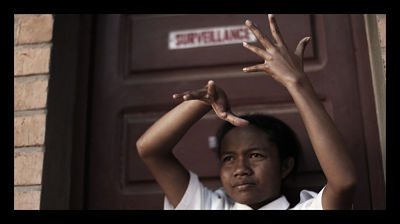
The Deaf in sub-Saharan Africa face a unique set of challenges. They tend to be isolated from society in ways that people with hearing struggle to understand, and they are often seen as burdensome or even as a bad omen for their families. Education for the Deaf in sub-Saharan Africa is severely lacking, and they are often denied the opportunity to live independent and fulfilling lives. The concept of Deaf culture, in which deafness can be seen as a neutral or even positive trait, has yet to take root in most African societies. However, in some countries, exciting progress is being made.
Andrew Foster (1927-1987) is often considered the father of deaf education in Africa. After becoming the first African American to graduate from Gallaudet College, the preeminent school for the deaf, Foster founded the Christian Mission for Deaf Africans in the United States in 1956. A visit to Accra, Ghana the following year inspired him to found a school for the deaf in Ghana. Foster highly emphasized the importance of sign language, rather than forcing deaf children to communicate using only oral speech, as theory known as Foster’s Total Communication philosophy.
Throughout his adult life he founded 31 schools in 17 African countries where deaf children could be educated and empowered. Many of these students returned to their home villages and educated other deaf children, spreading the message that deaf children can and should be educated.
Today, education for the Deaf in most sub-Saharan African countries is sub-par at best. In societies where primary education is not yet universal, priority is given to general education that benefits more children. Programs are usually run by non-governmental organizations, often resulting in a lack of oversight and regulation. Teachers are usually not deaf and often lack the skills necessary to teach deaf children. Funds are often low, so textbooks and other school supplies are often in short supply. Perhaps most problematically, there is generally no expectation that deaf children will continue past primary school.
No sub-Saharan African country has reliable data concerning its deaf population. Instead, they often end up disappearing from school systems, workplaces, and society in general simply because they cannot hear.
Lack of skilled medical care exacerbates the problem, resulting in a lack of early identification and investigation. It is also generally assumed that deafness rates in developing countries are higher due to limited treatment options, malnutrition, and chronic illnesses that affect hearing. It should also be noted that in more affluent societies there are many hard of hearing children who can function as fairly easily. These children are usually provided with hearing aids, but most families in the developing world cannot afford them.
Cultural attitudes also contribute to the lack of urgency when it comes to deaf children’s education. While sub-Saharan Africa is incredibly diverse and there are clearly exceptions for every trend, there are some harmful stereotypes about the Deaf that are common in many countries. Some see deafness as an act of fate or a sign of God’s punishment. Deaf children are often hidden because they are considered a source of familial shame. They may also be pitied and seen as burdensome and helpless, which can result in abuse such as sexual violence towards deaf women.
These negative attitudes generally increase the isolation of deaf children and feed into the stigmatization of deafness. Governmental policies that fail to protect the Deaf from discrimination, as well as derogatory language similar to the English phrase “deaf and dumb”, are manifestations of this stigmatization.
In the face of the clear inequity suffered by the Deaf in sub-Saharan Africa, it is encouraging to recognize the progress being made. Four sub-Saharan African countries (Zimbabwe, Botswana, South Africa, and Uganda) have prohibited discrimination against people with disabilities. Additionally, Deaf culture is gaining headway. Uganda is one of just a few countries worldwide to have officially recognized a sign language in its constitution and there are currently two journals focusing on Africans with disabilities. Deaf Link Uganda, a non-profit founded in 2007, is currently working to empower deaf individuals in Uganda by creating Deaf communities and providing education and job training, as well as work opportunities. Educational opportunities for the Deaf, including primary schools and beyond, are increasing, especially in Nigeria.
These positive developments reflect a changing culture. Deafness in sub-Saharan Africa is becoming more accepted and supported. Such progress is sorely and urgently needed, making it all the more exciting to witness.
– Katie Fullerton
Sources: Project Muse, Deaf Link Uganda
Photo: Commission Stories

Red Nose Day – What is it?
For celebrities and average Joes alike, Red Nose Day is a great chance to make a complete fool of yourself. The idea, originating in the U.K. and supported by the BBC, is to take one day every other year to donate some of your time, humor, and your nose to help change lives across the U.K. and Africa. Wearing red noses, thousands of people across the United Kingdom take to “comic relief” (also the name of the organization behind Red Nose Day) as a way to raise money for households in need.
The U.K. audience is no stranger to those laying it all on the line for a laugh. So, it’s no surprise when even the more serious celebrities, including David and Victoria Beckham, take to donning red “badges” of courage and let themselves be the butt of a little sporting humor. The famous couple was interviewed by Ali G, or Sacha Baron Cohen, to raise a few bucks for the cause and hilarity ensued.
But the day is not reserved for the wealthy or famous. Young and old people across the U.K. get together to raise money by hamming it up on and off the stage. From schools and grocery stores, to a live comedic set on the BBC Red Nose night, few public spaces and TVs are safe from the do-gooders and their jokes. This year, the day saw contributions accumulating to well over 100 million pounds.
Although Comic Relief and Red Nose Day donations go to fund projects worldwide, the vast majority of money is centered on projects in the U.K. and Africa. Generally, the issues addressed by these projects concern poverty and social justice, but also include mental health and asylum causes, among others. Every four years, the funding structure and program investments are reevaluated to accommodate change in the world and the local communities in which these projects take place.
On a rolling basis starting September of this year, Comic Relief accepts grant applications to receive funding for potential projects. The 2009-2012 funding cycle just ending, so now is the time for organizations to apply for these grants. So, if you have an idea that you would like to pursue, check out the application process here.
– Herman Watson
Sources: BBC, Red Nose Day, Comic Relief
Photo: Chronicle Live
Landfill Harmonic: A Recycled Orchestra
‘The world sends us garbage. We send back music,” said Favio Chávez, the conductor of the Landfill Harmonic Orchestra.
The Cateura Dump, in the Bañado Sur area along the Paraguay River, is surrounded by seven neighborhoods. 2,500 families live in these neighborhoods, and the majority rely on the landfill to survive, sorting through the 1,500 tons of waste delivered daily and reusing whatever can be found. Poverty has forced many children to work with their families instead of attending school, resulting in inadequate education and a low level of literacy. The area also faces frequent flooding, as well as problems with sanitation and clean drinking water. It is from these troubled beginnings that the Landfill Harmonic originated.
Whilst working in the area, Favio Chávez, an ecological technician decided to teach music to some of the children. Chávez had previously trained as a musician and initially used his own instruments to give lessons. But he soon had too many students and not enough instruments. It was then that the idea to create instruments from recycled materials first struck him. The result was “Los Reciclados” (the Recycled Orchestra) was born using oil cans and scavenged wood, forks and kitchen utensils to create orchestral instruments.
Since its beginnings, the Recycled Orchestra has toured the world, performing in Argentina, Brazil, and Germany, and will be the subject of an upcoming documentary, “Landfill Harmonic.” And while the orchestra may have been created to “educate the world and raise awareness,” as Chávez says, the profound impact on individual lives is very apparent. Chavez continues, “…even though these students are in extreme poverty, they can also contribute to society. They deserve an opportunity.”
One of the orchestral members stated, “My life would be worthless without music.” For children living in poverty, and in an environment where the potential for education and advancement is slim, being given the opportunity to study music and travel the world can be invaluable.
“People realize that we shouldn’t throw away trash carelessly,” Chávez says. “Well, we shouldn’t throw away people either.”
– David Wilson
Sources: Time, Notes on the Road, UNICEF
Photo: MSNBC Media
South Sudan Focuses on Reducing Youth Poverty
The issue of poverty in South Sudan is very complex, however, the organization Plan International is adamant that a key component to poverty reduction is concentrating on decreasing poverty among young people in the country. A 2009 Southern Sudan Household Survey disclosed that 50.6% of the population survives on less than $2 a day. In addition to income limitations, poverty also brings a lack of healthcare, food, sanitation, and clean water.
In order to improve these conditions, Nigal Champman, the Chief Executive Director of Plan International, suggests focusing on children as a financially small investment. He explained, “We all know that young people can play an important role in national development if provided with the right tools, the learning and capacity to employ those tools, and a supportive environment in which to use them.” However, these children can just as easily continue to live in the poverty cycle if they are not provided with education, healthcare or proper nutrition.
The organization has invested $30 million in South Sudan since 2006 and is planning on providing another $30 million in the next three years. Plan International will utilize this money by working with government officials to implement policies meant to keep children in school. Other ways Plan International contributes to the reduction of poverty in South Sudan is through food and clean water distribution, supporting agricultural developments, peacekeeping programs, and providing access to health services.
In a country where 50% of the population is young children or adolescents, about 60% of the poor belong to this demographic. In addition to the previously mentioned disadvantages, these young people also struggle because many are orphans of parents who have AIDS or victims of conflict or child labor. While South Sudan may be a convoluted situation, organizations like Plan International are working to ensure that poverty is a thing of the past by investing in children, who are our future.
– Mary Penn
Sources: All Africa, Youth Policy
Photo: Doctors without Borders
5 Ways to End Global Poverty
The end of global poverty is in sight. While this may seem like a difficult, if not impossible feat, in fact, the opposite is true. By adhering to these concepts, the United Nations states that poverty can be ended in the near future.
Although this is a simplified list, these big ideas are vital for finally ending world poverty. Once poverty is reduced, hunger, war, and illicit operations common to developing countries will no longer be prevalent because people will no longer be imprisoned by extreme poverty. The U.N. is on track for meeting its Millennium Development Goals and hopes to see the end of world poverty by 2030.
– Mary Penn
Sources: Plan Canada, Government of the United Kingdom
Photo: The Guardian
World Bank & Energy Efficiency
20% of the world’s population lives without access to electricity and nearly 40% depend on wood and other biomass for household fuel. Energy is essential for growing an economy and reducing poverty. The recent global initiative, Sustainable Energy for All, recognizes the importance of providing energy in developing countries. Energy is needed for business development, job creation, and income generation.
Over the last decade, the World Bank has committed more than $3 billion to Europe and Central Asia (ECA) to countries who face a potential energy crisis. This region is one of the most energy intensive regions in the world. Poorly constructed buildings throughout that provide low heating which increases energy consumption. The region accounts for 12% of global greenhouse gas (GHG) emissions, which is twice the amount is should contribute given its output.
The World Bank has already helped countries such as Belarus reduce its energy intensity by 60% and has saved Uzbekistan 50,000 MWhs of energy that would have otherwise been lost to inefficiency. The energy efficiency projects in the region over the past ten years have already saved an amount equal to the power generated in New Zealand in 2010.
Going forward countries will need to invest about $3.3 trillion over the next 20 years. While it may seem like a large amount, these energy efficiency projects pay off in the end. Cutting energy subsidies, protecting the poor and investing in energy efficiency could mean that nearly half the countries in ECA would gain more than 1 percent of its GDP back.
Over the next 20 years the World Bank along with ECA will focus on adopting more efficient technologies, increasing the energy efficiency of existing infrastructure, moderating demand for energy, and making cities more energy efficient. These initiatives will help the region by increasing their energy security, enhancing economic growth, and reducing the environmental and social impacts of the energy sector.
– Catherine Ulrich
Sources: World Bank, European Commission
Diplomacy by Gastronomy
Chefs of world leaders are teaming up to feed New York City’s hungry this year. These professional chefs are members of Le Club des Chefs de Chefs, the organization of chefs for the world’s leaders. They will be teaming up with InterContinental Hotels & Resorts to serve high quality food to more than 200 individuals in New York’s Xavier Mission. The 20 chefs involved will create food “fit for a king” and will use this special luncheon event as a way to highlight world hunger.
Some of the participating chefs include Chef Cristeta Pasia Comerford, Chef to President Obama, and Chef Christian Garcia, president of the club and personal chef to Prince Albert II of Monaco. Other participating chefs hail from Canada, India, Denmark, France, and Italy, amongst several other nations.
On Saturday July 27, the chefs provided a variety of home-style cooking at Xavier Mission. 10 special dishes were featured and available to the residents of the mission. The next week, 16 restaurants of InterContinental will feature the dishes as part of their “Fit for Royalty” Menu. The proceeds from these menu items will be donated to local food banks. The menu will allow guests of the restaurants to sample what world dignitaries eat and, at the same time, draw attention to the world hunger.
Most importantly, these chefs are engaging in a new type of diplomacy by gastronomy. The world’s food issues are a topic that needs to be addressed everywhere. By combining their experience and collaborating on ideas, today’s chefs can urge world leaders to tackle global hunger. Moreover, as food experts, chefs can be leaders in the discussion on food and hunger.
In a compelling article on CNN’s Eatocracy, Chef José Andrés outlines why he believes that chefs should be involved in the fight against hunger. He suggests that food promotes a sense of fellowship that extends beyond borders. As experts of food, chefs can bridge the gap between world leaders using food as common ground.
Even Secretary of State Hillary Clinton herself has said, “Better and more effective diplomacy can happen around a dining table than at a conference table.” Diplomacy by gastronomy has the ability to be a powerful tool in mobilizing the fight against world hunger. By sharing their recipes, 20 world leader’s chefs will be able to both feed the hungry and mobilize action against food insecurity.
– Grace Zhao
Sources: CNN Eatocracy
Sources: New York Times
FAO Perennial Crops for Food Security
The UN Food and Agriculture Organization (FAO) will hold a workshop on Perennial Crops for Food Security later this month to highlight the development of a perennial wheat variety by NSW Department of Primary Industries (DPI), CSIRO and Charles Sturt University.
DPI was recently successful in growing a perennial wheat variety in the Cowra district in Australia. Perennial crops offer significant benefits in sustainability that support efforts to address food security. The wheat variety will produce for three consecutive years compared to other wheat varieties produce only one year. DPI is also pursuing research in inter-cropping of perennials in Cowra. Their work involves planting perennial grain and legumes side by side to boost soil nutrition.
In addition to discussing developing new perennial crops the workshop will focus on increasing perennial crop yields and integrating these crops in production cycles. Perennial crops are more sustainable as they are able to be harvested without killing the plant. This ensures that the plant continues to grow and produce. The perennial crops are also heartier and able to survive temperature changes and extremes. However, annual plants have received the vast amount of technological attention (i.e. corn).
However, there are several barriers to encouraging farmers to adopt these crops. In regions where land tenure or ownership rights are tenuous, investing in perennials crops does not appeal to farmers who do not need investment security of perennials. Many of these crops take several years to establish and produce a crop and it can be difficult to convince farmers that this investment is worth the wait. The specialized equipment and the new techniques required do not make conversion any easier and often involve a high price tag.
The FAO expert workshop will include speakers from several countries. These experts will discuss trends and the status of various perennial crop developments. The gaps and opportunities for integrating these crops in the production chain will also be addressed by presenters. Speakers and participants also come from diverse public and private backgrounds.
Perennial crops will be a long term solution for food security, as demonstrated by the various barriers that must be overcome. However, the many benefits that they present make it an important endeavor. If food security is to be achieved and 9 billion people fed by 2050, scientists and international development specialists must pursue a variety of options.
– Callie D. Coleman
Sources: Cowra Guardian, FAO, Perennial Solutions
Photo: Perennial Solutions
WASH Advocates Bring a Clean Water Initiative
For many people in the third world, getting access to clean drinking water is an every day struggle. WASH Advocates is trying to change this reality. The organization works in Asia, Africa and Latin America to bring awareness and solutions to impoverished areas of the world.
Although one of the main goals of WASH Advocates is to spread awareness of the consequences of ingesting unsanitary water, the group does not stop there. The organization improves communication and connections between other groups, like corporations, religious associations, schools and nonprofits, to maximize each group’s efforts to help as many people as possible. Another aspect of WASH Advocates is collaborating with USAID and the State Department to engage the United States in providing clean water in developing countries.
Some of the methods WASH Advocates endorse are Rotary International clubs that install wells, curriculum programs that offer opportunities for students to learn about clean water and sanitation, Engineers Without Borders which creates water filtration systems, church programs that raise funds for clean water initiatives, and students and universities. According to WASH Advocates, over 1,500 students participated in a challenge to drink only water and then donate the money that would have gone towards other drinks to helping Rwanda develop systems for clean water.
Given that 780 million people are currently lacking sanitized drinking water and 2.5 billion do not have basic sanitation, the work WASH Advocates is carrying out is critical for a healthy and safe lifestyle for millions of people. The organization reiterates that investment in clean water technology and techniques offer huge payoffs in productivity levels in that community.
– Mary Penn
Sources: Wash Advocates, Bright Funds
Deafness in Sub-Saharan Africa
The Deaf in sub-Saharan Africa face a unique set of challenges. They tend to be isolated from society in ways that people with hearing struggle to understand, and they are often seen as burdensome or even as a bad omen for their families. Education for the Deaf in sub-Saharan Africa is severely lacking, and they are often denied the opportunity to live independent and fulfilling lives. The concept of Deaf culture, in which deafness can be seen as a neutral or even positive trait, has yet to take root in most African societies. However, in some countries, exciting progress is being made.
Andrew Foster (1927-1987) is often considered the father of deaf education in Africa. After becoming the first African American to graduate from Gallaudet College, the preeminent school for the deaf, Foster founded the Christian Mission for Deaf Africans in the United States in 1956. A visit to Accra, Ghana the following year inspired him to found a school for the deaf in Ghana. Foster highly emphasized the importance of sign language, rather than forcing deaf children to communicate using only oral speech, as theory known as Foster’s Total Communication philosophy.
Throughout his adult life he founded 31 schools in 17 African countries where deaf children could be educated and empowered. Many of these students returned to their home villages and educated other deaf children, spreading the message that deaf children can and should be educated.
Today, education for the Deaf in most sub-Saharan African countries is sub-par at best. In societies where primary education is not yet universal, priority is given to general education that benefits more children. Programs are usually run by non-governmental organizations, often resulting in a lack of oversight and regulation. Teachers are usually not deaf and often lack the skills necessary to teach deaf children. Funds are often low, so textbooks and other school supplies are often in short supply. Perhaps most problematically, there is generally no expectation that deaf children will continue past primary school.
No sub-Saharan African country has reliable data concerning its deaf population. Instead, they often end up disappearing from school systems, workplaces, and society in general simply because they cannot hear.
Lack of skilled medical care exacerbates the problem, resulting in a lack of early identification and investigation. It is also generally assumed that deafness rates in developing countries are higher due to limited treatment options, malnutrition, and chronic illnesses that affect hearing. It should also be noted that in more affluent societies there are many hard of hearing children who can function as fairly easily. These children are usually provided with hearing aids, but most families in the developing world cannot afford them.
Cultural attitudes also contribute to the lack of urgency when it comes to deaf children’s education. While sub-Saharan Africa is incredibly diverse and there are clearly exceptions for every trend, there are some harmful stereotypes about the Deaf that are common in many countries. Some see deafness as an act of fate or a sign of God’s punishment. Deaf children are often hidden because they are considered a source of familial shame. They may also be pitied and seen as burdensome and helpless, which can result in abuse such as sexual violence towards deaf women.
These negative attitudes generally increase the isolation of deaf children and feed into the stigmatization of deafness. Governmental policies that fail to protect the Deaf from discrimination, as well as derogatory language similar to the English phrase “deaf and dumb”, are manifestations of this stigmatization.
In the face of the clear inequity suffered by the Deaf in sub-Saharan Africa, it is encouraging to recognize the progress being made. Four sub-Saharan African countries (Zimbabwe, Botswana, South Africa, and Uganda) have prohibited discrimination against people with disabilities. Additionally, Deaf culture is gaining headway. Uganda is one of just a few countries worldwide to have officially recognized a sign language in its constitution and there are currently two journals focusing on Africans with disabilities. Deaf Link Uganda, a non-profit founded in 2007, is currently working to empower deaf individuals in Uganda by creating Deaf communities and providing education and job training, as well as work opportunities. Educational opportunities for the Deaf, including primary schools and beyond, are increasing, especially in Nigeria.
These positive developments reflect a changing culture. Deafness in sub-Saharan Africa is becoming more accepted and supported. Such progress is sorely and urgently needed, making it all the more exciting to witness.
– Katie Fullerton
Sources: Project Muse, Deaf Link Uganda
Photo: Commission Stories
Is Most Recent Data on Poverty in India Accurate?
Discussions of poverty in India are not new to the global conscious. With Slumdog Millionaire’s popularity in 2008 came an important public conversation about slums and poverty, but did the conversation go far enough?
India is home to over 1.2 billion people. Between 2004 and 2005, almost 38 percent of people in India were living below the poverty line. Recently, India’s Planning Commission released the newest set of numbers regarding the country’s poverty statistics. Between 2011 and 2012, the number of Indians living in poverty dropped to 22 percent. Strictly addressing these numbers, a celebration would appear to be in order. These numbers conveniently do not mention that even with these improvements, one in five Indians is still living in poverty.
These new statistics were met with a number of concerns from numerous places. Why? Most have argued that the standard by which the commission measures poverty is highly unrealistic. The commission disagrees. Data analysts would have people believe that the numbers never lie, so what is the problem? The problem here is the method.
According to the Suresh Tendulkar method, in cities, people living on the equivalent of 55 cents or less per day are considered at or below the poverty line.
Those living in rural areas, where a majority of the nation’s poverty is found, are considered poor if they are living on 45 cents or less per day.
In 2011, Tushar Vashisht and Mathew Cherian conducted an experiment in Bangalore, India. Though their rent was covered, they spent three weeks living on 100 rupees per day, or around $2 per day. 68 percent of India’s population lives on or below this amount. During their experiment, both lost weight and experienced lethargy due to lack of proper nutrition. The duo found that while living on the equivalent of 54 cents a day, they were unable to attain sufficient nutrition. They did not have access to a reliable means of communication and their range of mobility was severely limited to a distance of three miles. While they were able to fill their caloric needs during a majority of the experiment, they noted that they were unable to afford enough healthy food to fill themselves. They noted that access to internet was impossible on their budget and transportation ate dangerously into their budget.
While this experiment could not be an exact replica of life at $2 per day, it is eye opening. Imagine having to support an entire family on this budget. When broken down this way, it is easy to understand why 44 percent of Indian children are underweight.
This news is not all bad, however. Though it is speculated that the poverty rate has declined as much as the India Planning Commission would like to portray, there has been progress made in poverty reduction. This is seen in the overall economic growth of the country, specifically an increase in farm growth and more jobs available.
The revelation of this new data creates a new conversation regarding an old, but prevalent problem the people of India face. While the method for measuring poverty in India has been updated to reflect new developments in the fight against extreme poverty, it appears that there is a need for a new method.
-Jordan Bradley
Sources: BBC News, Rural Poverty Portal, NPR, Rs100/Day Report
Photo: The Guardian