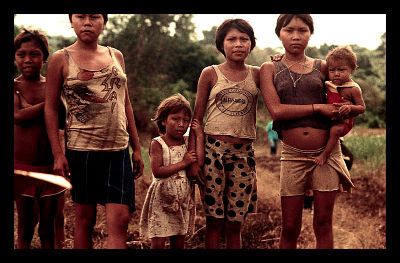
In the vaguest sense of the word, Merriam-Webster will tell you that general poverty is “the state of one who lacks a usual or socially acceptable amount of money or material possessions.” This is just about as much as anyone with a context clue for the word poverty could define it as. But what is it really? What does it mean to live in poverty? There are different types and levels, in a sense, of poverty. Each country tends to have different cut off points that determine whether they are truly impoverished or not. But it is generally accepted that those living in such a way that it is difficult to make ends meet, are impoverished. So what are the different levels?
There are several million people living at or nearby the poverty line just in the United States, but even our poverty line is higher than that of the world’s poorest countries. A person living alone and unmarried is allotted just over $11,000 or less to meet the poverty requirements set by the government. And while survival in our country would be absolutely difficult on this meager income, many people are living on even less. In fact, there are 2.4 billion people living at the poverty line of $2 a day, this comes to less than $3,000 income in an entire year. That is two dollars every day to feed themselves and their families. All that money to have a place to live and water to drink and clothes to wear. Defining poverty means looking at the fact that people are going without the full education or access to good jobs that they so desperately need to pull themselves out of this way of life. People living this way often have to choose one necessity over another in order to make sure that at least some of the needs are met and taking any government assistance when possible, like food stamps and welfare. And it gets even worse than that.
What about extreme poverty? This is recognized as living on less that $1.25 a day as defined by the World bank in 2008 and there are over 1 billion people living in this state. This level is decided by a lack of clean water, housing, food, health care and education. Some of the countries most beset by this issue include Africa, Afghanistan, and Haiti. Most things that other people take for granted, those living in extreme poverty must go without. People living in extreme poverty suffer much higher rates of infant and maternal mortality. 22,000 children around the world die every day in the poorest countries due to unchecked illness and succumbing to malnourishment. In fact 1 billion out of 2.2 billion children in the world are living in poverty conditions such as these. At this point every aspect of survival becomes a struggle. It is not simply a matter of going without health care to ensure that there is enough food in the house. It is instead going without reasonable amounts of anything at all and living a day by day existence.
What about social poverty, or social exclusion? Poverty is not only defined in a monetary fashion. Income poverty is the most commonly looked at, but there is such a thing as social poverty. This is defined as lacking cultural inclusion due to the inability to conform to society’s ideal norms due to a lack of education, skills, money, health care, child care, and a certain type of living condition. This multidimensional measurement of poverty brings all these into consideration to define itself as the inability to participate in the community socially whether on that national, local, or even familial level. While it is much more difficult to measure than what is called absolute poverty, it is still considered to be an important aspect of poverty by many in the world. It is thought that a quality of life should also be applied to standards of living.
All in all, while poverty is defined much in the same way that any word is, it is a constantly adjusting thing as it is an active part of life itself. It fluctuates regularly and changes to meet the times. Hopefully, with the right amount of work and education, it will also become a part of our past as opposed an all too realistic part of our present.
– Chelsea Evans
Sources: Merriam-Webster, Families USA, Global Issues, UNESCO, One Day’s Wages
Photo: Photo Brazil

Remembering Kosovo Genocide
Ermira Babamusta, Ph.D is a guest writer and a Regional Director for The Borgen Project.
World Humanitarian Day is an opportunity to recognize those people around the world often in dangerous and difficult circumstances. This year I would like to pause and remember the tragic events in Kosovo and the humanitarian catastrophe of ethnic Albanians being killed, expelled and persecuted in their own land. The ethnic cleaning campaigns led by Slobodan Milosevic and the Yugoslav and Serb forces against Albanian civilians shall forever be recorded as dark years in the history of Albania and Kosova.
This August 19, 2013 as the world commemorates the fight against genocide, it is important to reflect on the historical aspects of genocide against ethnic Albanians. I dedicate this day to the Families of those who were harmed during the Kosovo Genocide.
As I witnessed the injustice being inflicted on the Kosovar refugees in 2007 and on the genocide survivors in 2012, I was reminded of their struggle to hang on and lead a normal life despite the horrible trauma they experienced. Today, I think about those who are still missing and their families who have no answers.
We have a great opportunity to learn from the past, become united and encourage leaders to build a better future. It is essential to peace, diplomacy and prosperity to ground our efforts on the four pillars of democracy: justice, good governance, economic development and social welfare.
I applaud America for leading the way in this effort of peace and democracy building. I had the chance to visit and meet with great leaders and US Congress members like Senator Harry Reid, Senator Tom Harkin, former US Secretary Colin Powel, UN Secretary General Kofi Annan, all of who share my commitment to peace, human rights and democracy. I applaud the brave actions and the extraordinary efforts of President Bill Clinton, former US Secretary Hillary Clinton, President Obama, Vice President Joe Biden, US Secretary of State John Kerry, Dr. Jill Biden and First Lady Michelle Obama for staying at the forefront of building and strengthening democracy in US and around the world and promoting human rights.
As J. F. Kennedy stated, “the world is very different now, for man holds in his mortal hands the power to abolish all forms of human poverty, and all forms of human life.” This is the time to start the movement for global equality, promote human rights, improve governance and deliver justice around the world. I am proud that Albania and Kosovo are great successful models of such moral and democratic principles.
Ermira Babamusta, Ph.D
African Growth and Opportunity Act’s Importance
The Economist once labeled Africa “The Hopeless Continent.” The magazine determined that the widespread effects of disease, poverty, conflict and corruption rendered the continent economically unfavorable. That was in 2000, the same year that President Clinton signed into law the African Growth and Opportunity Act (“AGOA”). Today, the continent—and particularly sub-Saharan Africa—is home to several of the world’s fastest growing economies. In 2011, The Economist revised its moniker, referring to Africa as the “The Rising Continent.”
Many economists view AGOA as an integral element of growth in sub-Saharan Africa. The primary objective of AGOA is to expand the volume and variety of trade and investment between the United States and sub-Saharan Africa. According to government sources, AGOA’s trade provisions are responsible for 350,000 direct and 1 million indirect jobs in Africa as well as 100,000 jobs in the United States. Since the program’s inception, exports from AGOA nations to the U.S. have risen more than 300 percent.
AGOA is scheduled to expire in 2015, but President Obama has initiated an early campaign to extend the trade agreement. While praising the success of the program the President explained that, “The economies of sub-Saharan Africa are among the world’s fastest-growing, and this economic expansion, partly a result of our long-standing investment in Africa, provides an opportunity to lift millions out of poverty and foster long-term stability.”
Though oil and gas exports comprise more than 90 percent of African exports under the program, leaders hope to expand investment in other industries such as textile and apparel exports. Economists have stressed the importance of diversifying exports in trying to achieve long-term development and sustainable growth.
This month, leaders from the United States and participating African nations will meet in Ethiopia for the AGOA Forum. The theme of the event is Sustainable Transformation Through Trade and Technology. African representatives are hoping for a long-term extension of the trade agreement. Jas Bedi, chairman of the African Cotton and Textile Industries Federation, explained it simply, “You can’t do a $200 million deal if you don’t know what’s going to happen in three year’s time.”
Renewal of AGOA is crucial if the United States hopes to keep pace with China, which has recently overtaken the United States as sub-Saharan Africa’s largest trading partner. A recent report from the Brookings Institute criticizes the American business community for failing to capitalize on the continent’s emerging markets. As the region continues to grow, the United States hopes to accelerate trade and investment with its African partners. The renewal of AGOA will certainly be a good start.
– Daniel Bonasso
Sources: Financial Times, AGOA, Brookings Institute
Photo: It News Africa
LandWise: Empowering Women
Landesa Center for Women’s Land Rights, a capacity building organization, has recently launched LandWise, a free online searchable database and tool. LandWise provides important information and practical applications that may be used for capacity building and technological assistance for strengthening women’s land rights across the globe.
In many places across the world, women’s land tenure is not recognized or is consistently undermined. Without rights to their land, women lack the ability to use, control, and transfer this asset. In some areas, men may have sole control of land that is owned by their wife. The absence of legal land ownership by women is recognized as a constraint for overcoming rural poverty. Without legal ownership of this valuable asset, women are placed in a precarious position where they may lose their family’s only form of income.
There are many facets to women’s rights to land that must be addressed. The country’s legal codes, cultural norms, and administration all play a part in this problem, since these factors can often be very complex and difficult to determine. Landesa’s LandWise seeks to organize this information in an easily searchable database that practitioners may access. While LandWise is not intended to take the place of field work, it will help with the initial research, since the legal codes that govern land rights are often difficult to uncover. The issue of land rights is often bound up with family and marriage law as well as property law. LandWise organizes these laws in an easily searchable database.
Sometimes, rural women are unaware of the rights they have under law. In these cases, practitioners can use the research gathered to engage women in clinics or information sessions. In areas where women’s land rights are not legally codified practitioners may use advocacy to engage civil society and government officials and promote policy recommendations.
LandWise also provides Practice Guides. The Practice Guides help practitioners use the information provided on the database. The Guides include checklists that help analyze the issues that may affect women and men differently in regards to property rights. In addition to the legal codes provided on LandWise, users also receive information regarding how the law is in fact carried out and cultural norms that may affect its implementation.
LandWise is overseen by a full-time librarian. Practitioners in the field are encouraged to submit information that they may come across to LandWise in order to help expand its database.
– Callie D. Coleman
Sources: IFAD, LandWise, Landesa Center for Women’s Land Rights
Photo: Landesa
Project Concern International
Project Concern International (PCI) is an organization which seeks to to prevent disease, improve community health, and promote sustainable development worldwide. PCI was founded in 1961 by Dr. James Turpin after saving the lives of two children suffering from pneumonia while working in a Tijuana clinic. This experience inspired the young doctor to go on and forever change the lives of millions. PCI envisions a world in which resources are abundant and shared, communities are capable of providing for the basic health and well-being of its members, and children and families can achieve lives of hope, good health and self-sufficiency. PCI conducts its work through field offices in host countries where directors can live in the area and get an intimate understanding of local needs.
Working in 16 countries, PCI hopes to reach at least 5 million people per year with its services. Overtime, PCI has expanded its reach through increased funding: from the Bill and Melinda Gates Foundation to government grants to the Starbucks foundation, PCI has a well rounded list of supporters. PCI’s ultimate goals include addressing the root causes of poverty and poor health; working with the community to leverage their assets, capabilities and goals to create community-inclusive solutions; implementing holistic solutions; cultivating long-standing relationships with community leaders, investors, and stakeholders to catalyze the impact of aid spent; and developing tools which measure the long-term success of such programs. PCI addresses poverty through programs focused on women’s empowerment & poverty, children’s health, disease prevention, food & water programs, and disaster relief & recovery. Between 2013-2016, PCI hopes to reach over 10 million people worldwide and become a leader in building community capacity, resilience and self-sufficiency.
In addition to its programs worldwide, PCI also has a series of initiatives to further promote its goals. These intiatives include: Women Empowered, Legacy, Who Cares? and SHE.
To learn more about PCI’s work, explore PCIglobal.org for more info.
– Kelsey Ziomek
Sources: PCI Global, The San Diego Foundation, Washington Global Health Alliance, Coronado Eagle
AmericasRelief Team
Although there are many international aid organizations, few exist that focuses all their resources on one specific region of the world. AmericasRelief Team is one of the exceptions. This organization is devoted to providing immediate, as well as sustainable, humanitarian and educational aid for people in the Americas experiencing some form of disaster.
The group works to provide such assistance by creating a three-part process: disaster preparedness, disaster response and aid and humanitarian assistance. However, like any effective international organization, AmericasRelief Team does not work alone. It partners with other international groups, local groups, nonprofits, emergency centers, corporate donors, the U.N. Office for the Coordination of Humanitarian Affairs and other independent experts to ensure that it is able to help as many people as possible.
AmericasRelief Team has many success stories to solidify its position as a key source of aid to the Americas during disasters. In 2005, the AmericasRelief Teams provided vital assistance to the Florida State Government after Tropical Storm Jeanne devastated the Caribbean region. More recently, in 2010, the group organized the distribution and utilized of 20 million pounds in humanitarian aid money and worked with the United Nations to quickly respond to the earthquake in Haiti.
In addition to monetary aid, the AmericasRelief Team provides clothing, household items and transportation for victims of disasters. Also, the group works with local news and media teams to spread information about the disaster and ways to avoid further complications. Overall, the group is one of the first responders to disasters in the Americas and one of the most effective organizations to provide vital services to those affected by any tragedies.
– Mary Penn
Sources: AmericasRelief Team, InterAction
Definition of Poverty: What Is It, Exactly?
In the vaguest sense of the word, Merriam-Webster will tell you that general poverty is “the state of one who lacks a usual or socially acceptable amount of money or material possessions.” This is just about as much as anyone with a context clue for the word poverty could define it as. But what is it really? What does it mean to live in poverty? There are different types and levels, in a sense, of poverty. Each country tends to have different cut off points that determine whether they are truly impoverished or not. But it is generally accepted that those living in such a way that it is difficult to make ends meet, are impoverished. So what are the different levels?
There are several million people living at or nearby the poverty line just in the United States, but even our poverty line is higher than that of the world’s poorest countries. A person living alone and unmarried is allotted just over $11,000 or less to meet the poverty requirements set by the government. And while survival in our country would be absolutely difficult on this meager income, many people are living on even less. In fact, there are 2.4 billion people living at the poverty line of $2 a day, this comes to less than $3,000 income in an entire year. That is two dollars every day to feed themselves and their families. All that money to have a place to live and water to drink and clothes to wear. Defining poverty means looking at the fact that people are going without the full education or access to good jobs that they so desperately need to pull themselves out of this way of life. People living this way often have to choose one necessity over another in order to make sure that at least some of the needs are met and taking any government assistance when possible, like food stamps and welfare. And it gets even worse than that.
What about extreme poverty? This is recognized as living on less that $1.25 a day as defined by the World bank in 2008 and there are over 1 billion people living in this state. This level is decided by a lack of clean water, housing, food, health care and education. Some of the countries most beset by this issue include Africa, Afghanistan, and Haiti. Most things that other people take for granted, those living in extreme poverty must go without. People living in extreme poverty suffer much higher rates of infant and maternal mortality. 22,000 children around the world die every day in the poorest countries due to unchecked illness and succumbing to malnourishment. In fact 1 billion out of 2.2 billion children in the world are living in poverty conditions such as these. At this point every aspect of survival becomes a struggle. It is not simply a matter of going without health care to ensure that there is enough food in the house. It is instead going without reasonable amounts of anything at all and living a day by day existence.
What about social poverty, or social exclusion? Poverty is not only defined in a monetary fashion. Income poverty is the most commonly looked at, but there is such a thing as social poverty. This is defined as lacking cultural inclusion due to the inability to conform to society’s ideal norms due to a lack of education, skills, money, health care, child care, and a certain type of living condition. This multidimensional measurement of poverty brings all these into consideration to define itself as the inability to participate in the community socially whether on that national, local, or even familial level. While it is much more difficult to measure than what is called absolute poverty, it is still considered to be an important aspect of poverty by many in the world. It is thought that a quality of life should also be applied to standards of living.
All in all, while poverty is defined much in the same way that any word is, it is a constantly adjusting thing as it is an active part of life itself. It fluctuates regularly and changes to meet the times. Hopefully, with the right amount of work and education, it will also become a part of our past as opposed an all too realistic part of our present.
– Chelsea Evans
Sources: Merriam-Webster, Families USA, Global Issues, UNESCO, One Day’s Wages
Photo: Photo Brazil
Torture Camps in the Sinai Desert
Various Bedouin tribes have turned the Sinai Triangular Peninsula into a nightmare for Africa with their torture and human trafficking. The tribes profit through their kidnapping regime and ransom strategies, making millions of dollars in the process.
This kidnapping racket has existed for many years. Bedouin tribes snatch refugees during their flight from their home countries or while they are in refugee camps. Have left their homes to build a better life, the kidnapped victims largely originate from Eritrea, Somalia, Ethiopia, and Sudan, often on their way to Europe or Israel. There have been reports of bribed border-patrolmen who enable the kidnappings. The victims are next transported to Sinai, where they are tortured and held for ransom. Oftentimes, they are sold multiple times, passed from trader to trader with new ransoms each time. The ransom fees reach up to $50,000, an impossible amount for most African refugee families.
While held in the camps, sickening acts of torture take place. Various forms of physical torture, sexual torture, and starvation are among the most common. One means of transport involves placing the victims in metal shipping containers without ventilation or toilets. The Physicians for Human Rights director, Shahar Shoham, has reported over 1,300 individual incidents of torture in Sinai alone. However, Shoham reports the majority of torture cases go undocumented. Known torture methods include upside-down hanging, electric shocks, and pouring liquid plastic on them, sometimes while on the phone with their families in an attempt to scare their relatives into providing the ransom money.
According to the New York Times, abductors have captured over 7,000 refugees, with 4,000 of their victims dying durring imprisonment. Even if captives manage to escape or be released due to a paid ransom, their situation remains bleak. They are left to wander around the Israeli border and attempt to make the dangerous border-crossing. They must also avoid Israeli and Egyptian police, or risk being arrested or deported back to the countries they originally fled.
Even with all this information available, little is being done to address the problem. In fact, the problem is reported to be worsening. Friendly Bedouin tribes offer assistance to escaped torture camp victims, but do not have the political clout necessary to make any real change. Opponents of the torture camps fear a massive bloodshed if any attempts are made to stop the kidnapping heists. The Egyptian government has essentially turned a blind eye on this deadly region as well, leaving these victims on their own to fight for their rights.
– Allison Meade
Sources: CBN, Canada Free Press
Photo: Blogspot
Malnutrition in India – An Unspoken Diagnosis
Health reporter Harman Boparai recently travelled to India where he once practiced as a physician to learn more about child health in the country. In the pediatric ward at Panna District Hospital, Bopari reported that the children, who suffered from different illnesses and came from different villages, were all extremely undernourished. Nutrition has increasingly been recognized as a basic but crucial contributor for social and economic development.
According to the World Health Organization, 165 million children under 5 years of age suffered from stunted growth in 2011.This means that one in four of the world’s children did not get the right nutrients or food to grow. Of the total number of malnourished children in the world, one in every three lives in India. Adequate nutrition is essential in early childhood to ensure healthy growth, a strong immune system, proper organ formation and function, and neurological and cognitive development.
Economic growth and development also require well-nourished populations who have the capablity to learn new skills, think critically, and contribute to their communities. Boparai later traveled to New Delhi where he talked with individuals working on the issues. At Save the Children India, Shireen Miller, the nonprofit’s director for advocacy, explained that the implementation of government food security programs was essential to the survival of children in the country. “Malnutrition is a critical factor in child survival,” she said. “When we say that a child dies of illnesses like diarrhea and pneumonia, it is because of the fact that they’re malnourished which has reduced their ability to withstand that illness.”
According to UNICEF, in India, around 46 percent of all children under 3 are too small for their age, and 47 percent are underweight. The severity of the issue of malnutrition varies across states, with Kerala among the lowest rates at 27 percent, and Madhya Pradesh at the highest rate of 55 percent. To reverse the current trend, the Government of India started a program under the Integrated Child Development Services (ICDS), which works to provide poor Indian children with the nutrients needed to grow and end malnutrition in India. The program not only provides immunization and supplementary nutrition, but also educates pregnant women and mothers of young children on health and nutrition.
ICDS in India is the world’s largest integrated early childhood program, with over 40,000 offices nationwide. The program today covers over 4.8 million expectant and nursing mothers and over 23 million children under the age of six. Of these children, approximately half participate in early learning activities. Across the developing world, 66 million children go to primary school hungry. This lack of nutrition means these children are less likely to perform at their full potential in school. The World Food Programme estimates that $3.2 billion is needed annually to reach all 66 million hungry school-aged children, or less than 0.2 percent of the world’s military spending.
– Ali Warlich
Sources: Global Post, WHO, UNICEF, Global Issues
What is Comic Relief?
Laughter is fr universal language, and comedy is a much broader medium, than given credit for. Laughing is disarming, warm, enjoyable, and can help unite people. It isn’t a stretch to imagine that comedy can also connect and rally people to fight intractable problems. Humor can indeed be a powerful weapon against the scourge of something like global poverty and the absences of technology and education in communities. This is the very idea behind Comic Relief, an organization operating in the United Kingdom and abroad that stands up to poverty.
Existing officially as both a company and charity in the UK, Comic Relief began in 1985 during Christmas season at a Sudanese refugee camp. Renowned and well-meaning British comedians hoped to raise awareness of the Sudanese plight and the Ethiopian famine going on. The success of that first event spawned more live comedic appearances in Sudan and gave way to Red Nose Day in 1988, which brought much needed attention and money to the region that went directly to relief. Since that time, Comic Relief has grown in size and scope, spreading laughter and awareness of numerous other initiatives.
One of those other initiatives is Send My Friend to School (https://www.sendmyfriend.org/)
A very personal and striking account of Comic Relief in action is the story of teen sisters Hazel and Hiayisani in Tembisa, South Africa. Orphaned after their mother’s sudden illness and death, older sister Hazel was now in the position of caring for herself and her sister. Poor and completely exposed to the worst of society, they were at risk of being split up by Social Services, falling into a life of crime or the world of sexual slavery. However, after finding the Bishop Simeon Trust, a Comic Relief partner in Tembisa, the girls were able to join other orphans. They now receive a stipend and care packages from the trust to live on, free education, and enjoy time at the Bishop Simeon facility with other teenagers.
Comic Relief is best known for its initial and ongoing fundraiser, Red Nose Day. Happening every few years, this international event is celebrated mainly in the UK and Africa. For those who participate, the objective is to put on a red nose and be ridiculous. Proceeds from the event go directly to initiatives like the ones mentioned above, aimed at education and the changing of negative international typecasts.
Comic Relief has shown that maybe laughter is the best medicine for social ails.
– David Smith
Sources: Comic Relief –History, Send My Friend –About, West African Art Pops Up in London, Comic Relief –Hazel and Hiayisani, Africa, Red Nose Day –What Is It?
Photo: BBC
How to Prevent Poverty
Understanding how to prevent poverty has been an issue of great concern both in the United States and across the globe. Countries like the U.S., in a position to prevent poverty in less developed nations, are particularly interested in determining the causes of poverty in order to effectively alleviate poverty at home and abroad. By understanding what it is that leads to impoverishment in specific communities and countries, poverty reduction efforts are more likely to prevent poverty all over the world.
Though poverty and extreme poverty, as terms, have been defined as living under a certain dollar amount per day, what causes poverty is often much more complicated. The World Bank defines global poverty as a pronounced and multidimensional deprivation in wellbeing. That is, what it is to be considered poor or impoverished depends on a number of different conditions and factors that vary from community to community. For example, one family may have the dollar amount sufficient to feed itself but lack adequate access to education or water.
Because poverty represents such a wide variety of conditions, how to prevent poverty is an issue that requires a complex understanding of the circumstances in which one is working. Not only that, effective poverty prevention and reduction strategies will necessarily include either a multidimensional approach or take place in a network of projects that strive to prevent or reduce poverty on various levels. For instance, Plan Canada, a Canadian-based charity organization founded in 1937, takes a five-step approach in its strategy to prevent poverty worldwide.
Plan Canada’s Tools for How to Prevent Poverty
The United Nations Population Fund (UNFPA) reports that slower population growth and investments in reproductive health and HIV prevention, as well as women’s empowerment and gender equality are also important steps toward preventing poverty. In fact, the UNFPA considers universal access to reproductive health information and services to be an “essential” condition to achieve the U.N. Millennium Development Goals by 2015.
How to end poverty is a complicated question, but significant research like that taken to synthesize the reports discussed above suggests that it is not an impossible question to answer. Quite the contrary, there are thousands of organizations across the globe working on just that question every day. Collaborative and coordinated efforts, in recognition of the diverse causes of poverty, will no doubt win the day. In the meantime, these strategies continue to develop in scope and sophistication.
– Herman Watson
Sources: The Borgen Project, Plan Canada, United Nations Development Programme, United Nations Population Fund
Photo: Soda Head