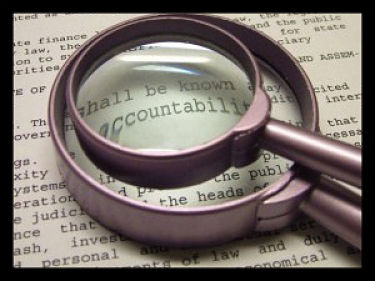
Charity Navigator is a preeminent non-profit watchdog organization well-known for its consistent and easily understood ratings. With the impending rollout of Charity Navigator 3.0, the organization aims to set the bar even higher by adding new criteria to their formulas.
Charity Navigator focuses on the heavyweights of US-based philanthropy. The charities they evaluate must receive at least $500,000 from the public annually, and their total annual revenue must be over $1 million. They must be public institutions that are tax-exempt and file a Form 990, from which Charity Navigator gathers significant information.
Currently, Charity Navigator uses two primary criteria to generate their ratings: financial health, and accountability and transparency.
Financial health is evaluated based on financial efficiency and capacity. Measures of financial efficiency judge a charity’s management of expenses throughout the year. These measure include fundraising efficiency, or the cost of generating $1 in donations, as well as percentages of total functional expenses spent on programs, administration, and fundraising. Expected percentages vary based on the type of charity. For example, museums are expected to spend more on overhead expenses and less on programs than most non-profits.
Meanwhile, financial capacity is a measure of the charity’s ability to maintain its work even when faced with difficult times. Indicators of strong financial capacity include consistent growth in revenue and programs, and a high working capital ratio. Growth of both revenue and programs is necessary for a charity to effect long-term, systematic change. Consistent development in both areas also instills confidence in givers by sustaining public support for charities’ work.
Charity Navigator calculates growth in revenue and program expenses using data from the four most recent fiscal years. Working capital ratio refers to the length of time a charity could survive financially in the absence of new revenue. This is a reflection of the charity’s preparedness for downward economic trends.
The second primary criterion currently used by Charity Navigator is accountability and transparency. Accountability refers to an agency’s willingness to explain its actions, especially financial ones, to its stakeholders. Meanwhile, transparency refers to an agency’s willingness to ensure the availability of critical data concerning the organization. Charity Navigator gains information for this criterion from two sources: the charity’s Form 990 and their website.
The Form 990 includes data points such as the presence or absence of an independent board, misappropriation of assets, independently audited financial statements, and payments to CEOs and board members. Charity Navigator expects organizations’ websites to list key staff and board members, publish audited financial statements and their Form 990, and have a clear and easily accessible donor privacy policy.
Charity Navigator is in the process of creating a third criterion: results reporting. This new step is meant to emphasize the need for results-driven work. The additional facet of evaluation would focus primarily on “the way charities come to know, use and share their results with stakeholders including donors.”
Specifically, Charity Navigator aspires to examine five elements of results reporting: consistency of spending with stated mission, reasonability of charities’ goals and their intent to measure their progress, validation from outside organizations, feedback from beneficiaries, and regularly published evaluation reports. By adding these criteria to their formula, Charity Navigator aims to encourage charities to demonstrate their efficacy by collecting more data and making that data readily available to the public.
To ensure fairness and consistency, Charity Navigator will not use this data in their evaluations until the necessary information has been gathered for every charity currently in their databases. Given crucial funding and other resources, Charity Navigator expects this effort to be completed in 2016.
– Katie Fullerton
Sources: Non-Profit Quarterly, Charity Navigator

FLOW-AID – Maximizing ‘Crop Per Drop’
As the world population continues to shoot upwards, pressure increases on the environment and farmers across the globe to provide enough food and water to support the growing population. With droughts becoming more common, efficient methods of utilizing water in agriculture could make a significant impact in the access to food and water for the world.
The Farm Level Optimal Water Management Assistant for Irrigation Under Deficit, or FLOW-AID, brings researchers, engineers, and scientists together together to develop innovative new technologies to improve irrigation methods with the purpose of saving water. Their latest project maximizes water usage by decreasing the need for water use by up to 60 percent and simultaneously lessening fertilizer usage up to 30 percent.
FLOW-AID provides water-saving technology, which uses inexpensive wireless detectors that run on solar energy and give data to farmers about which areas of the crops need more or less water. This practice not only maximizes the efficiency of irrigation, but also improves plant health by producing the exact amount of water needed.
Farmers in Lebanon, Jordan, Turkey, Italy, Spain, and the Netherlands currently utilize FLOW-AID technology. These test countries were chosen partially based off the varying natures of their climates, to determine how to adapt FLOW-AID to meet the different environmental needs of varying regions. Developers of FLOW-AID state that the technology is prepared to handle even the dryer climate of many nations in Africa. They have also pledged to keep the cost of the technology low enough for developing countries to adopt.
According to the United Nations, over 780 million people exist without any access to clean water, and 2.5 billion lack properly sanitized water. The number or people suffering from hunger and undernourishment falls around 870 million people based off the United Nation’s data, mirror the number of people without access to water. With creative technology, such as FLOW-AID, the world could maximize its resources and gain access to more food and water, working to reduce the strains on society from the world’s burgeoning population.
– Allison Meade
Sources: Treehugger, Cespevi, United Nations
Photo: Gizmag
New Hope for the Deaf and the Blind in Kenya
This year, Sense International, an organization targeting sensory disabilities in developing nations, launched its first deaf-blind curriculum in Kenya. The program will formalize education and promote specialized home care for over 17,000 deaf and blind children in a country with no precedent for disability education.
Sense International Kenya has been at work since 2005, when teachers began protesting in earnest to the Kenyan Institute of Education about the lack of programs and metrics to guide and measure deaf-blind education.
Kenya currently has 10 centers of education for the deaf-blind—in a country with a population of 42 million. The great demand for specialized care coupled with a total lack of curriculum has left many classrooms in chaos. Teachers with the best intentions, but no tools, have no recourse.
But the problems have roots far deeper than a lack of curriculum. For many families, the distance is just too great or boarding fees too expensive to enroll their children in the few special learning centers.
Without care or intervention, struggling families often can’t help but marginalize their deaf-blind children. Thousands of disabled people live shuttered, lonely lives due to a lack of education.
Sense International addresses these problems on several fronts. First, it recently pioneered a deaf-blind education program in Kenya, fully equipped with material and performance gauges on every academic level. It built the curriculum based on studiously researched input from parents and teachers of the deaf-blind, as well as established practices from its operations around the world in countries like Romania, Peru, India, and Uganda.
Sense also works with community organizations to ramp up specialized care for children with severe disabilities. They provide home-based education and therapy, train parents to care for their disabled children, and connect families with experts and organizations that offer advanced support.
Yet, perhaps most important of all, Sense advocates for policy geared toward the deaf-blind. For example, Tanzania, one of its countries of operation, currently subsidizes transport costs for disabled children to and from special learning centers. Sense is pressuring Kenya to adopt similar practices.
The notoriously bureaucratic Kenyan government presents another problem in itself. To combat this, Sense is cutting away at the red tape prohibiting reform by maintaining constant contact with leaders on sensitive issues.
“This project has shown just what can be achieved with political will and the expertise of organizations such as ourselves,” reports Edwin Osundwa, the country representative of Sense International Kenya. “We are proud of what has been achieved and are now keen to repeat the process for home-based education.”
– John Mahon
Sources: Sense International, The Guardian
Photo: The Guardian
Charity Navigator 3.0
Charity Navigator is a preeminent non-profit watchdog organization well-known for its consistent and easily understood ratings. With the impending rollout of Charity Navigator 3.0, the organization aims to set the bar even higher by adding new criteria to their formulas.
Charity Navigator focuses on the heavyweights of US-based philanthropy. The charities they evaluate must receive at least $500,000 from the public annually, and their total annual revenue must be over $1 million. They must be public institutions that are tax-exempt and file a Form 990, from which Charity Navigator gathers significant information.
Currently, Charity Navigator uses two primary criteria to generate their ratings: financial health, and accountability and transparency.
Financial health is evaluated based on financial efficiency and capacity. Measures of financial efficiency judge a charity’s management of expenses throughout the year. These measure include fundraising efficiency, or the cost of generating $1 in donations, as well as percentages of total functional expenses spent on programs, administration, and fundraising. Expected percentages vary based on the type of charity. For example, museums are expected to spend more on overhead expenses and less on programs than most non-profits.
Meanwhile, financial capacity is a measure of the charity’s ability to maintain its work even when faced with difficult times. Indicators of strong financial capacity include consistent growth in revenue and programs, and a high working capital ratio. Growth of both revenue and programs is necessary for a charity to effect long-term, systematic change. Consistent development in both areas also instills confidence in givers by sustaining public support for charities’ work.
Charity Navigator calculates growth in revenue and program expenses using data from the four most recent fiscal years. Working capital ratio refers to the length of time a charity could survive financially in the absence of new revenue. This is a reflection of the charity’s preparedness for downward economic trends.
The second primary criterion currently used by Charity Navigator is accountability and transparency. Accountability refers to an agency’s willingness to explain its actions, especially financial ones, to its stakeholders. Meanwhile, transparency refers to an agency’s willingness to ensure the availability of critical data concerning the organization. Charity Navigator gains information for this criterion from two sources: the charity’s Form 990 and their website.
The Form 990 includes data points such as the presence or absence of an independent board, misappropriation of assets, independently audited financial statements, and payments to CEOs and board members. Charity Navigator expects organizations’ websites to list key staff and board members, publish audited financial statements and their Form 990, and have a clear and easily accessible donor privacy policy.
Charity Navigator is in the process of creating a third criterion: results reporting. This new step is meant to emphasize the need for results-driven work. The additional facet of evaluation would focus primarily on “the way charities come to know, use and share their results with stakeholders including donors.”
Specifically, Charity Navigator aspires to examine five elements of results reporting: consistency of spending with stated mission, reasonability of charities’ goals and their intent to measure their progress, validation from outside organizations, feedback from beneficiaries, and regularly published evaluation reports. By adding these criteria to their formula, Charity Navigator aims to encourage charities to demonstrate their efficacy by collecting more data and making that data readily available to the public.
To ensure fairness and consistency, Charity Navigator will not use this data in their evaluations until the necessary information has been gathered for every charity currently in their databases. Given crucial funding and other resources, Charity Navigator expects this effort to be completed in 2016.
– Katie Fullerton
Sources: Non-Profit Quarterly, Charity Navigator
What is Poverty Alleviation?
Poverty alleviation aims to improve the quality of life for those people currently living in poverty. Another term that is often used is poverty reduction.
Innovation Leads Poverty Alleviation
Rudy De Waele, CEO of Nyota Media, a growth agency for entrepreneurs and start-ups in Africa, recently gave a speech at the Mobile Innovations at the OCE Discovery event in Toronto, Canada. His speech, “How Mobile Technology is Transforming Africa” discussed the WOW Generation, mobile energy solutions and 3D printing, among other successful innovations happening on the continent of Africa. He spoke of how the WOW Generation is a new generation of young, talented and driven social entrepreneurs who are not only in it for the money, but who are taking into account a positive return to society as well. WOWers have already helped thousands by working with local entrepreneurs to solve local problems with low-tech solutions.
De Waele also covered a number of mobile energy solutions currently in effect. Angaza Design is a company based in Palo Alto that is currently working in Tanzania, Kenya and Zambia. Using solar panels, Angaza Design has developed pay-as-you-go technology to provide energy that will charge mobile phones in rural areas.
Another project De Waele mentioned does not necessarily alleviate poverty, but does improve the daily lives of people living with a particularly harsh disease in Kenya. The Happy Feet project uses 3D printing to create customizable shoes in an attempt to solve the jigger problem. A jigger, also known as a sand flea, is a small insect that bites and feeds on humans, cats, dogs and domesticated livestock. Though a single bite is not likely to cause damage, complications can arise when a female jigger burrows into the foot of a person. Due to the pain, victims of the sand flea are unable to walk, which means they are also unable to work. In cases of serious infestation, it is possible to lose a nail, in the best case, or whole digits from the hands and feet in the worst case. The worst cases appear in places of poverty.
By creating and using new and inexpensive mobile technologies, there is potential for increased economic growth in developing countries. Not only is there growth, but the positive changes are impacting those living in the worst conditions. While 3D printed, customized shoes will certainly help with jiggers and their detrimental impact on those living in Kenya, projects like Angaza Design?s mobile phone charger will give independence to those living in poverty.
However, like most things, poverty alleviation is not a simple act. The United Nations Development Programme states that simple economic growth will not reduce or alleviate poverty, improve equality or produce jobs, unless said growth is inclusive of all individuals in the economy.
For example, a recent study by the African Economic Outlook showed that economic growth in Nigeria has not resulted in poverty alleviation or the creation of jobs. Despite policies for inclusive growth and employment generation, the report showed a 3 percent increase in unemployment between 2010 and 2011. The report explained that this was because the oil and gas sectors, the areas increasing economic growth, do not have much potential to create jobs.
Though Nigeria projects a 6.7 percent growth in 2013 and a 7.3 percent growth in 2014, there are potential problems. Security problems arising from religious conflicts in certain states, as well as the continued cost of flooding, all constitute potential drags on projected economic growth. The report also said that current reforms that have resulted in price and exchange rate stability should be increased by the Nigerian government to see continued progress in economic growth, a key component of poverty alleviation.
– Jordan Bradley
Sources: The Next Web, UNDP, Camps International
Photo: OxFam
What Is Management Sciences for Health?
Management Sciences for Health (MSH) has one mission: to save lives and improve health of the world’s poorest and most vulnerable by closing the gap between knowledge and action in public health. This global health non-profit organization uses proven approaches to help leaders, health managers, and communities in developing countries create stronger health systems for a greater health impact. Since its founding in 1971, MSH has left its mark in over 150 countries working with policy makers, health care consumers, and health professionals to improve the overall availability, affordability and quality of health services.
The work of MSH is centered on four core beliefs and values: effective local leaders and local institutions are key to creating lasting health impact; health is a basic human right, realized through healthy living conditions and access to health care for all; healthy people and communities are more able to contribute to economic growth and political stability; and better evidence to scale up current methods and technologies will fuel widespread health impact.
Since it’s founding, MSH’s operations have been based on the 3,500 year old Tao (Way) of Leadership, working shoulder-to-shoulder with local partners and colleagues and empowering them to succeed. In the 1960s, MSH’s founder Dr. Ron O’Connor, was taught the principles of the Tao of Leadership by Dr. Noobora Iwamura, a mentor and friend. Dr. Iwamura, as the only survivor of his high school class in the Hiroshima bombing, decided to lead a life of service in the remote, rural areas of Nepal. Through his work he discovered that creating sustainable changes meant much more than medical care on its own: it meant engaging communities actively in their own health needs.
The mission and work of MSH is based on Dr. Iwamura’s concern that communities be empowered with the knowledge of solutions to basic health problems and challenged to take control of their own health. These values are resonated today in MSH’s staff of over 2,400 based in over 65 countries. MSH focuses its efforts on strengthening health systems in the priority health areas: HIV & AIDS; tuberculosis; family planning and reproductive health; maternal, newborn, and child health; malaria and other communicable diseases; and chronic diseases.
In the organizations’ 2012 Annual Report, MSH outlined universal health coverage (UHC) as the framework for maximizing health impact. More than 50 countries have achieved universal health coverage, with an additional 50 countries working towards the same goal. MSH is contributing to this UHC movement through its coordination with local communities to develop health system innovations, such as the scaling up of community health shops, and by directly building local ability to deliver health services through training health workers and staff. There is much work to be done, but MSH is pushing to make effective healthcare available to anyone in need.
– Ali Warlich
Sources: MSH,WHO
Rise of Photojournalism in Afghanistan
American directors Mo Scarpelli and Alexandria Bombach are working on a new documentary about photojournalism in Afghanistan called Frame by Frame. The directors joined Afghan war photographer and Pulitzer Prize winner, Massoud Hossaini, in his home country to document the rise of journalism in a place where taking a photo was once a crime.
A new culture of Afghan reporters and photojournalists has been growing ever since the ban on photography was overturned just over a decade ago. The documentary features the stories of four photographers, including Farzana Wahidy, whose work is uncommon for her gender in Afghanistan.
These four photojournalists and more have made great strides in the documentation of life in Afghanistan, the war, and the issues that are important to them. The necessity of journalism from the source is “to build democracy and independence, to check and limit those in power, to drive social and political change,” according to filmmaker Mo Scarpelli.
Local reporters have access to places and people which rarely welcome international reporters. Freedom of the press has improved since the people have gained the right to take photos and share the realities of day-to-day life with the world, but some are concerned about the future of such freedoms. With international forces leaving the country over the next year, international press will also be exiting. Defense, governance, and journalism will all be exclusively in the hands of the Afghan people, who face the threat of the Taliban reverting the country back to the time when snapping a photo was a crime.
The project was started in 2012, which was funded completely by the filmmakers themselves, one of whom drained her bank account entirely and even sold her car to make it all the way to Afghanistan. Frame by Frame is unfinished as of now, and the directors are relying on donations through Kickstarter to raise the funds needed to send them back to Afghanistan to fill-out footage for the film. Backers who want to see the film to completion have until August 28th to make a a pledge.
– Jennifer Bills
Sources: Humanosphere, Kickstarter, Frame by Frame
Photo: Boston
Global Poverty and US Foreign Policy
Defense, Diplomacy, and Development. These are the “three D’s” that the United States employs while dealing with other countries. While each brings a number of strengths and weaknesses, one must be the central focus of American foreign policy. This approach is development. By improving standards of living abroad, Americans not only improve the lives of others, but they improve their own lives. Through actions that work to increase development in foreign nations, the United States improves its national security, enhances its economy, improves the environment, and fulfills an ethical responsibility in working to eliminate poverty completely.
By ending global poverty, the United States enhances its national security. According to national security strategy documents employed by both the Bush and Obama administrations, the largest threats that the United States will be facing over the next two decades come “less from conquering states than from failing ones.” It is the failing states that likely lack the financial capital to construct sovereign governments or build strong economies. It is also within these fragile states that corruption and extremism can take hold due to a lack of effective governance. If left unchecked, these states can develop into a threat for other nations. By developing failed states into nations that can effectively rule over their own population and help foster construction of functional economies, the United States reduces the likelihood of having to deal with a conflict that emerged from a failed state’s internal disorder.
In addition to improving national security, ending global poverty improves the American economy. The United States has $500 billion invested in developing countries. Working to increase economic output in developing nations allows for higher returns on those investments while improving the standard of living for those who reside within those nations. As more people in the world earn higher wages, they can then afford to buy more expensive American goods. Ending global poverty, therefore, not only improves the lives of those abroad, but it also improves the lives of Americans.
Yet another advantage of ending global poverty is reducing the toll that humans put on the environment. In many impoverished areas, access to clean and green technologies is not economically feasible. Ending global poverty allows for improved access to these ecologically-friendly technologies. By enhancing standards of living, those living in developing nations are able to use cleaner technologies to fulfill their energy needs. These cleaner technologies can help reduce carbon emissions from developing nations, which improves the lives of everyone worldwide.
Finally, ending global poverty is an ethical action that the United States has the capability to accomplish. The United Nations has stated that extreme poverty can be eliminated completely by the year 2030. The United States, as the largest economic power in the world, can help contribute to this cause by aiding in the development process that needs to take place. By continuing to provide funds to developing nations, and by supporting economic growth in these areas, the United States can help make poverty history.
Ultimately, the goal of ending global poverty should be the primary focus of United States foreign policy. Working to end global poverty improves American national security by creating stability in foreign nations. It also improves the American economy by increasing the purchasing power of people abroad, providing them with the capability purchase American goods. Additionally, improved purchasing power provides people in foreign countries with improved access to cleaner technologies, which will help reduce the global impact of humans on the environment. And finally, working to end global poverty is an ethical action that the United States has the power to carry out. Improving standards of living abroad not only benefits Americans, but it benefits the entire globe. By working to end global hunger, the United States will help make poverty a thing of the past.
– Jordan Kline
Sources: Wilson Center, US News and World Report, The Guardian
Photo: Foreign Policy
InterAction 101
InterAction is an alliance of 180 U.S.-based international organizations, predominantly NGOs, which work around the world to aid the poor. InterAction brings these organizations together to capitalize on their collective resources, mobilize members, and serve as the premiere thought leader in the NGO community. InterAction’s mission is to eliminate extreme poverty, uphold human rights, safeguard a sustainable planet, and ensure human dignity for poor and vulnerable populations.
InterAction is the largest coalition of NGOs in the United States. Through collaboration and transparency, InterAction partners support one another. According to Samuel Worthington, president and CEO of InterAction, “As development shifts toward multi-stakeholder partnerships, U.S. international NGOs are an important ally to reduce suffering and combat global poverty. The many participants in development aid bring different perspectives to the table and use varying means to achieve their goals. Many of these approaches complement each other; but to ensure efficient and flexible development programs, governments, NGOs, and the private sector must build effective partnerships.” In addition, InterAction holds their partners accountable, not only to donors, but also to the general public. Upon membership with InterAction, partner organization are held to high standards of accountability and compliance with international aid effectiveness.
InterAction’s programs focus on international development, accountability, humanitarian action, and policy and action.
International Development: Programs related to international development are intended to uphold the standards of the Millennium Development Goals (MDGs) and aid effectiveness principles. Such programs require participation from the private sector, governments, and citizens. One program, Post-2015, has studied the effectiveness of the MDGs and offered suggestions to the United Nations as to what should be done after 2015 to address extreme poverty.
Accountability & Learning: Programs related to Accountability and Learning empower citizens, governments and NGOs with up-to-date data related to program effectiveness and scope. InterAction believes that, by empowering citizens and NGOs with transparent and easily-accessible data, they can improve NGO programs and ultimately make them more efficient. Such programs include NGO mapping, PVO standards, and regular monitoring & evaluation.
Humanitarian Action: InterAction’s Humanitarian Action programs are guided by the principles of human dignity, neutrality, independence and impartiality. Without taking into account race, gender, ethnicity or political affiliation, humanitarian efforts can save lives and alleviate poverty. InterAction supports NGO humanitarian work by offering a framework for consultation, coordination and advocacy in such situations. In the past, InterAction partners have responded to crises on the Ivory Coast, Liberia, and the Horn of Africa. In June, InterAction pledged to invest $750 million in nutrition programs over the next five years. The program focuses on the critical first 1,000 days of a child’s life in which they are most vulnerable from malnutrition. InterAction estimates that for every dollar invested, $138 will be generated from improved health and increased productivity.
Policy & Advocacy: In addition, InterAction supports the policy and advocacy efforts of their partner NGOs by encouraging substantial US government investment in humanitarian aid. InterAction’s lobbyists and policy experts advocate for Budget and Appropriations, Foreign Assistance Reform, Development Policy and G8/G20. One such campaign, known as Not Just Numbers, seeks to counter the recent budget cuts to the State, Foreign Operations (SFOPs) bill. The bill, which was recently unveiled in the House of Representatives, cuts Foreign Aid by 15% from 40.1% to only 34.1%. The social media campaign, which can be found at #NotJustNumbers, seeks to get the Senate foreign aid fund allocation higher than it has been proposed in the House.
– Kelsey Ziomek
Sources: InterAction ThousandDays.org Post2015hlp.org
Sanitation Revolution In Nigeria
Betty Torkwase Ikyaator is a water and hygiene consultant for UNICEF Nigeria. Over the last few years, Ms. Torkwase Ikyaator has transformed the hygiene and sanitation standards across Nigeria. In 2008, only 15 communities were open defecation free. Now, more than 4,500 communities are open defecation free.
In a small village of 45 households, Betty Torkwase Ikyaator asks the children for a tour. Ms. Ikyaator asked them where they used the toilet. The children point to an open field, spewing with a disgusting stench, and giggle. Ms. Ikyaator and her team of eight take the children back into the village and gather a group of villagers for a simple presentation. She puts a plate of food, an open water pitcher and pile of excrement next to one another. The villagers watch as files move from the excrement to the pitcher and back again. A simple demonstration such as this makes evident the dangers of contamination, but more importantly, the importance of sanitation.
Shortly afterwards, she led a discussion with community leaders about hygiene and the importance of proper waste disposal systems. A committee of villagers is formed which commits itself to providing each household with a toilet of its own. Ms. Ikyaator leads these discussions to enlighten villagers in the most remote areas of Nigeria about the importance of sanitation. This is no easy task, but by showing villagers the dangers of improper sanitation, Ms. Ikyaator believes that she can empower these communities with the knowledge and desire to change their current living situations for the better.
According to Ms. Ikyaator, follow-up is important. “We keep coming back to the community, checking in on them, giving them encouragement and supporting the procress. But once they realize the benefit, especially in keeping their children healthy, it becomes part of their way of life.”
Ikyaator’s community-led program could prove beneficial to more than just Nigeria. In Africa, 62% of all people do not have access to a toilet. For every $1 spent on improvements to sanitation, $9 USD is typically yielded in reduced health costs, increasing returns on education and safeguarding water resources. Poor sanitation is linked to cholera, schistosomiasis, trachoma and diarrhea, the second largest killer of children in developing countries. Improved sanitation has a serious impact on health and social development. Conversely, sanitation is the most cost-effective major public health intervention to reduce childhood mortality. In addition, access to proper toilets creates physical environments which promote self-respect, dignity, and enhanced safety for women and children, many of whom suffer from sexual harassment and assault when defecating at night or in remote areas.
As of right now, the world is not on track to the meet MDG 10 to halve the proportion of the population without access to safe drinking water and sanitation. From 1990-2004, the WHO and UNICEF worked together to provide 1.2 billion more people with access to improved sanitation. But, the UN is 700 million people short of missing the MDG. And without proper sanitation and clean drinking water, poverty eradication and disease control are impossible.
– Kelsey Ziomek
Sources: UNICEF, Connect Nigeria, WHO, Global Poverty Project
Photo: The Guardian
4 Questions About LINGOs Answered
What is Learning in NGOs? Formed in 2005, Learning in NGOs (LINGOs) is a nonprofit, online educational community that brings together humanitarian organizations to learn new skills and share resources with each other. LINGOs uses a variety of technology including eLearning classrooms, virtual meeting space, online libraries, and project management tools in order to create a comprehensive educational environment for professionals.
Who uses this community? LINGOs is utilized by many large nonprofit organizations who want to increase the knowledge and performance of their employees and connect them to an expansive network of colleagues. To be eligible, NGOs must be working in more than 3 countries and be focused on humanitarian issues such as social justice, crisis relief, or development. Major organizations currently using LINGOs include Habitat for Humanity, International Justice Mission, and World Wildlife Fund.
What skills can you learn through LINGOs? Through partnership with many course providers, such as eCornell and Harvard Management Mentor Program, LINGOs supplies about 40 interactive learning programs to its NGO members. Educational topics to choose from include dealing with traumatic stress in humanitarian situations, project management skills, microfinance, and human rights protection. In addition, members may choose to participate in well-known certificate programs. Some courses require much more time and focus on homework than others, but all of them are designed to provide NGO employees with greater skills.
What are the other benefits of this service? LINGOs believes that using their eLearning platform saves nonprofit employees time and money to invest in what really matters to the organization. In addition to many networking opportunities, there are no transportation costs, and employees can learn virtually whenever they want and from wherever they are in the world. LINGOs estimates that organizations gain over $50,000 in value from their membership. Better skills and increased performance at non-governmental organizations means that they will be able to do even more good in the world of humanitarian aid.
– Caylee Pugh
Sources: LINGOs, NGO Learning
Photo: Lingofeeds,