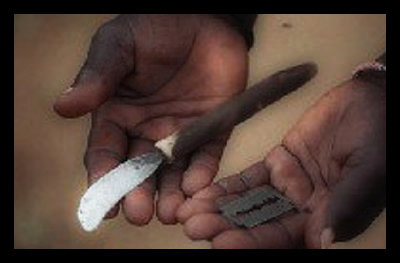
Female Genital Mutilation (FGM) ruins countless lives every day. FGM is a humiliating torturous cutting of the female genitalia carried out by various groups of the community, including health practitioners, elderly people and female relatives. According to the World Health Organization (WHO,) four types of FGM procedures exist:
Clitoridectomy
The partial or complete removal of the clitoris.
Excision
Involves removal or partial removal of clitoris, as well as labia.
Infibulation
Narrowing of the vaginal opening.
Other
This includes other forms of FGM not classified above, such as, burning, piercing or scraping. Any one of these types of FGMs is carried out on a female at any time in her life.
Millions of cases of FGM are reported each year. According to the WHO, over 100 million women and girls have had their human rights violated.
FGM is considered a human rights violation because it inflicts unnecessary pain and harm to unwilling women and girls. Laws against FGM practices have been created in 18 African countries. If caught sentences from three months up to life in prison are given.
There are also 12 industrialized nations that have passed laws criminalizing FGM.
An 8-year-old girl from Djibouti died from the effects of FGM. She was held down by friends and neighbors while a “practitioner” subjected her to FGM. Her clitoris, labia minora and labia majora, all external genitalia, was cut away causing uncontrollable bleeding.
After the procedure was done the girl’s legs were tied shut to promote “healing” and she was refused water because the need to pass urine was thought to introduce bacteria to the wounds. The young helpless girl continued to bleed throughout the evening and sob uncontrollably due to pain.
Eventually the girl was taken to the hospital and given a blood transfusion. Sadly, it was too late to save her life.
FGM has been reported in 28 African countries and various Asian countries.
According to data from the WHO, seven countries: Djibouti, Egypt, Eritrea, Guinea, Mali, Somalia and Sudan have a FGM prevalence rate affecting 85 percent or more women. Other African countries have only slightly lower prevalence rates; a large portion of the African continent has not received FGM rates.
FGM is most likely performed in lower class poverty-stricken communities. This is due in part to the fact women and girls do not know FGM is against the law. Most believe that it is there duty as a woman to have FGM performed and if they refuse, they will be harshly criticized and shamed. These are the ones who are not held down and forced against their will.
Several campaigns to eradicate FGM from the world are underway. One government organization, the United Nations, has been tackling it as one of the world’s Millennium Development Goals. Also, Women against Female Genital Mutilation leads campaigns to increase awareness of FGM laws and harmful health and psychological effects of FGM on females.
The continuation of advocacy for women and girls suffering from Female Genital Mutilation needs to last until FGM prevalence is zero. People should continue to call their congressmen, write their legislature, and advocate for worlds helpless.
Hopefully, through the increased awareness, global campaigns, and laws FGM will become a thing of the past and no female will have to endure torturous inhumane pain ever again.
– Amy Robinson
Sources: World Health Organization, All Africa, WHO, UNICEF, Center for Reproductive Rights
Photo: International Business Times

Extensive Human Rights Violations in Eritrea
Resting at the horn of Africa, the nation of Eritrea lies between the developing nations of Ethiopia and Sudan. It is home to some of the world’s worst longstanding and ongoing cases of human rights atrocities. The violations have ranged from arbitrary detainment and torture, forced labor and popular oppression on multiple fronts.
Eritrea’s current system of governance is labeled as a transitional government with the People’s Front for Democracy and Justice (PFDJ) as the only political party. The PFDJ party gained incumbency during the elections of June 1993; there have been no elections since then.
President Isaias Afewerki is in control of the PFDJ party and is presently the head of state and government. Moreover, PFDJ under the Afewerki regime holds authoritative control over all national, regional and local political offices.
Although there has been extensive documentation of human rights violations in Eritrea, there has been no participation in the Universal Periodic Review, a process in which each member state of the United Nations undergoes a human rights review every four and a half years. Unfortunately, Eritrea has not allowed access for the United Nations Special Rapporteur to conduct the review.
According to a 2013 annual report carried out by Amnesty International, just a few of the many human rights violations in Eritrea include compulsory military training and forced labor for children. The Afewerki regime has also arbitrarily detained and tortured thousands of civilians. There are no opposition parties, independent media or civil society organizations, as the government does not permit them.
The degree of oppression is quite appalling and has resulted with up to 3,000 refugees on a monthly basis, most of which are children. Last year, over 300,000 refugees fled from Eritrea to neighboring countries and have placed economic burdens upon them as a result.
After intensive analysis on the human rights paradigm, Sheila Keetharuth, the U.N. Special Rapporteur on Eritrea, spoke before the United Nations General Assembly in October 2013. She urged the international community to focus their efforts on Eritrea by stating, “The current human rights picture is desperately bleak. People feel trapped in a long hopeless situation as they see no end to it to the point that they take the irreversible decision to flee, forcing them on the road to exile.”
It has been over two decades since the “transitional” Afewerki regime under the PFDJ party has come into power. With the authoritative oppression that the people of Eritrea are subject to, it has become clear they have no power to control their own circumstances. Thus, the human rights tragedy can only be addressed with international intervention.
– Jugal Patel
Sources: HRC, Amnesty USA
Photo: Ethiopian News Forum
Muslim Exodus in CAR: Economic Consequences
One of the poorest nations in the world, the Central African Republic (CAR,) sees 90 percent of its citizens survive on just one meal per day. Sectarian and religious violence, primarily targeting the minority Muslim population, only makes matters worse.
Most food trade in the capital city of Bangui is reliant on the imports of wholesale vendors, which are resold by small traders in the marketplace. Muslims, however, own and control these wholesalers, in addition to a large proportion of the agricultural sector as well. And the Muslims are fleeing.
About 40 large wholesalers participated in the market before Muslim leader Michel Djotodia seized power in a coup in March 2013. Less than a year later, only 10 remain. It should not be terribly shocking that Muslims, who live in constant fear for their lives amid ever-increasing violence, are embarking on a massive exodus out of the CAR and into neighboring countries such as Chad and Cameroon.
According to the International Organization for Migration (IOM,) over 60,000 people have already fled since December 5, 2013, when Christian militias and soldiers exploded into violence.
The Muslim exodus has left farmers without access to seeds, prevented food trucks from crossing the border due to fear of attack and risks an incredible rise in prices as food supplies dry up. If security does not improve soon, the 10 remaining wholesalers claim they will leave as well. Even if they were to stay, profits would be minimal. Over the past two months, sales dropped 90 percent among wholesalers because people can no longer afford to buy the food they need.
Philippe Conraud, Oxfam country director, argues that the combination of people being forced out of the country and the inability for food to come in risks turning the situation into something analogous to a siege. French and African troops, sent to the CAR by the United Nations Security Council, have proven unable to halt the atrocious violence thus far.
In addition to the tumultuous effects fleeing traders have on the country of their origin, neighboring countries must prepare for the economic outcomes of the present circumstances. With at least 30,000 refugees in Chad and 10,000 so far in Cameroon, these neighboring countries have their hands full with the conflict’s humanitarian crisis.
Giovanni Cassani, emergency coordinator for the IOM, touches on the enormity of the problem. 50,000 people can make up a small town. Unless the situation in the CAR improves soon, neighboring countries will have to deal with the long-term economic transformations of a Muslim exodus.
– Jaclyn Stutz
Sources: BBC, Global Post, Washington Post
Photo: Oxfam International
Poverty in Italy: An Overview
The number of people who are living in poverty in Italy has doubled since 2012. Over a million Italians are unable to afford to eat meat or pay for basic necessities such as heating for their houses. It is estimated that poverty in Italy is higher than it has ever been within the last 16 years.
Relative poverty is considered a family of two members living on a monthly salary of 991 euros or less. Approximately, 12.7 percent of families are living at relative poverty standards.
About eight percent of the Italian population is living in total poverty and unable to meet the minimum acceptable standard of living, according to the National Institute for Statistics (ISTAT).
“It is a reminder, if one were needed, of the severity and scale of Italy’s recession, the longest since the Second World War. Italy maybe the comeback kid of the global sovereign debt markets, but its economy does not look as though it will ever come back – and it was not even strong to start,” said Nicholas Spiro, head of Spiro Sovereign Strategy about ISTAT’s report.
The recession is taking a massive toll, currently plunging approximately 40 percent of Italian youth into unemployment.
Currently, Italy’s rate of unemployment and the amount of young people without education is the highest in Europe since the 1970s, totaling 23.9 percent. This means that one third of people ages 15-29 are either without education or without a job.
Only 58 percent of those who have graduated from college are able to find jobs out of school, which is below the average number of 77.2 percent in European countries.
The number of families living without adequate necessities, such as heating, has reached a staggering 8.6 million, or one family out of five. Unfortunately, it is not uncommon for those same families to not be able to afford a healthy meal consisting of meat once every 2 days, meaning 16.6 percent of families living in poverty in Italy are not receiving an appropriate amount of nutrients.
Poverty in Southern Italy has increased by a whopping 90% over the past five years, a clear indicator of the economic gap between Northern Italy and Southern.
The recession is also affecting the ability of Italian employees to take a holiday break. 50 percent of Italians are not able to enjoy a holiday week off and, in Southern Italy, approximately 69 percent of Italians are unable to enjoy a holiday off. Employee wages are being cut and full-time employment is at record lows.
– Rebecca Felcon
Sources: Reuters, UK Reuters, The Local, CNBC, Global Post
Photo:
Education in the Philippines
According to the Department of Budget and Management, The Department of Education in the Philippines (DepED) has recently been granted the primary sum of the Philippines’ social services budget for 2014. The Philippines is facing huge concerns with a lack of teachers, textbooks, classrooms; it also faces an exceptionally high dropout rate.
Low budgets have made it difficult to extend an education in the Philippines to an increasingly high population of children. A total of 309.43 billion Philippine pesos ($18.6 billion,) or 37 percent, has been allotted to DepED after the country determined the issues with their public education system.
A large portion of the DepED money will now be focused on incorporating technology and alternative learning systems in the classroom in hopes of integrating out-of-school children; the initiative is called the Enhanced Instructional Management for Parents, Community and Teachers (e-IMPACT,) originally established in the fiscal year 2007-2008.
The fund is also comprised of 44.6 billion Philippine pesos ($1.00316 billion) for repairing and constructing new school buildings. The DepED will be building 43,183 new classrooms, fixing 9,502 of the existing classrooms and constructing 1.59 million new schoolroom seats for the Kindergarten through 12th grade programs.
The plan will add 10 new libraries will be added to the 213 current centers; each will be supplied with new books. In hopes of reaching the goal of 1:1 student to textbook ratio, the Department of Education in the Philippines hopes to attain “42 million more textbooks and workbooks.”
e-IMPACT is a technology based alternative method of learning that is fueled by student interactions. Every student is given access to online modules and online guides to learning materials. The modules will open a window into how children are able to learn and communicate with each other and will allow parents and school faculty to become increasingly involved in ensuring that the e-IMPACT positively transforms the community. Everyone in the community will be engaged and learning with the students.
By incorporating e-IMPACT and repairing classrooms, DepED hopes to promote global mainstreaming and expansion of primary education, part of the second Millennium Development Goals. e-IMPACT will attempt to incorporate children who have dropped out of school and seeks to keep children in school who are at risk of dropping out.
– Rebecca Felcon
Photo: Josh Weinstein
Sources: Asia Pacific Future Gov, TaosPuso Foundation, Manila Bulliten
Clean Cookstoves in Kenya Save Millions of Lives
More than seven billion people live in this world. Yet, according to the World Health Organization, more than 3 billion risk experiencing serious respiratory infections and early death simply by cooking food and heating their homes using traditional wood stoves and solid fuels instead of clean biogas cookstoves.
The National Clean Cookstoves and Fuels Conference at Nairobi, Kenya in February was sponsored by the Global Alliance For Clean Cookstoves (GACC). The conference drew attention to a simple fact: “Cooking is essential and should not kill,” noted Radha Muthiah, the executive director of GACC.
In Kenya alone, illnesses linked to cookstove smoke claim 15, 700 lives a year. Yet 84 percent of the country continues to uses solid fuels for cooking.
Naturally, the most affected group are mothers – responsible for the bulk of the cooking – and children. Muthiah shared this tragic figure: 8,300 Kenyan children die annually due to respiratory infections attributed to this indoor air pollution.
The solution, though clear, poses a high cost.
Isaac Kalua, chairperson of the Kenya-based Green Africa Foundation, asserted, “We are losing people because of indoor [air] pollution and we therefore need urgent transition from traditional methods of cooking to modern technologies.” He continued by observing that the “affordability of the new technologies is a main challenge to providing clean fuels for all.” Such technologies include reliable, safe biogas cooking stoves, used in conjunction with biogas digesters.
Despite the cost, a number of donors in place who recognize the needless loss of life and are committed to helping Sub-Saharan Africa address this issue. During the February GACC conference, several organizations pledged their continuing financial support. Benefactors include the UN Foundation, which has invested $3 million this year. GACC aims to provide reliable cookstoves and clean fuels globally.
The U.S. government awarded $1 million to three Kenyan organizations. This recent donation continues a lengthy history of support: since 2010, the US has contributed $125 million to GACC.
Though financial support is critical, outreach to those at risk equally addresses the harms of indoor pollution. These education efforts extend to women, as well as farmers. As the popularity of diary farmer grows in Sub-Saharan Africa, sources for biogas are expanding, According to SciDiv.Net, biogas “is a system that converts organic waste from livestock manure into energy for cooking” and heating. This system burns cleanly, because the biogas fuel does not release toxic emissions.
Consequently, biogas offers the opportunity to circumvent the health risks associated with traditional wood burning stoves.
Tradition, however, is formidable opponent. Mary Njoki, a rural Kenyan mother of five, shared this observation: “Biogas is good because it cooks fast but I still use wood fuel when it is the cold season to warm the house and cook food, since during this period, the heat produced by biogas is not sufficient.” Organizations world wide are committed to changing not only Mary Njoki’s mind – but the habits of millions of families heating their homes and cooking food for their children.
As Radha Muthiah observes, “using clean, efficient, and safe cookstoves” reduces fuel consumption, exposure to toxins and deforestation. And, most importantly, save millions of lives.
– Ellery Spahr
Sources: SciDevNet, Sci Dev Net, Global Alliance for Clean Cookstoves
Photo: Burn Design Lab
Hunger in South Africa
South Africa is one of the few countries able to provide its entire population with food. Each individual is able to receive approximately 600 grams of starch, 300 grams of fruit and vegetables, and 150 grams of meat or fish, according to the Food and Agriculture Organization of the United Nations. However, hunger in South Africa continues to be a prevalent issue.
Causes of Hunger in South Africa
Thus, 11 million South Africans are unsure where their next meal will come from, a concept known as “food insecure.” A quarter of the South African population is currently struggling from malnourishment and hunger. The rural areas are where hunger hits the hardest, and the majority of South Africa’s poor are living in the rural parts of the country.
The reasoning for this is because natural resources are being wasted and are not being put to appropriate use. The cost of food is rising, and many South Africans are finding it increasingly difficult to afford or access nutrient dense foods at an affordable price.
Dr. Gerhard Backebery, Executive Manager of the South African Water Research Commission states, “Although not conclusive, it seems that most poor people are buying and not growing the food that they are eating. At the same time it is of major concern that available natural resources (such as water, soil and plants) are under-utilized.”
Devastating Health Outcomes of Hunger in South Africa
People are not merely dying of hunger in South Africa, but more specifically, they are dying from the side effects of lacking proper nutrients. What people are able to eat is directly stemmed from what they are able to afford. Children, in particular, are suffering from undernourishment and malnourishment; a study in the Eastern Cape shows that some children are only ingesting meat one time per month, therefore they are severely lacking in minerals such as zinc and iron.
One in five children are reportedly stunted from lack of necessary nutrients and minerals. Their nutrient deficiencies can have a lasting effect on their growth process, causing significant impairment to their physical health and mental development.
For example, iron deficiencies can cause poor attention spans and fatigue, making brain activity slower and learning more difficult.
Food fortification is one of the main methods to help reduce malnutrition and deprivation of nutrients.
Wheat flour, sugar, and maize flour now include essential vitamins and minerals. The addition of fortification in food has led to a reduction in birth defects. Children who are not breastfed, or who have been improperly breastfed, present elevated levels of malnourishment, growth defects, diarrhea, and are at greater risk of HIV and AIDS.
Other factors such as access to clean water, sanitization and health care can have a large impact on resolving hunger in South Africa. They influence health and can lead to maintaining essential nutrients that may otherwise be lost due to diarrhea and dehydration.
– Rebecca Felcon
Sources: UNICEF, Food Bank, Mail and Guardian
Photo: Telegraph
Female Genital Mutilation and Poverty
Female Genital Mutilation (FGM) ruins countless lives every day. FGM is a humiliating torturous cutting of the female genitalia carried out by various groups of the community, including health practitioners, elderly people and female relatives. According to the World Health Organization (WHO,) four types of FGM procedures exist:
Clitoridectomy
The partial or complete removal of the clitoris.
Excision
Involves removal or partial removal of clitoris, as well as labia.
Infibulation
Narrowing of the vaginal opening.
Other
This includes other forms of FGM not classified above, such as, burning, piercing or scraping. Any one of these types of FGMs is carried out on a female at any time in her life.
Millions of cases of FGM are reported each year. According to the WHO, over 100 million women and girls have had their human rights violated.
FGM is considered a human rights violation because it inflicts unnecessary pain and harm to unwilling women and girls. Laws against FGM practices have been created in 18 African countries. If caught sentences from three months up to life in prison are given.
There are also 12 industrialized nations that have passed laws criminalizing FGM.
An 8-year-old girl from Djibouti died from the effects of FGM. She was held down by friends and neighbors while a “practitioner” subjected her to FGM. Her clitoris, labia minora and labia majora, all external genitalia, was cut away causing uncontrollable bleeding.
After the procedure was done the girl’s legs were tied shut to promote “healing” and she was refused water because the need to pass urine was thought to introduce bacteria to the wounds. The young helpless girl continued to bleed throughout the evening and sob uncontrollably due to pain.
Eventually the girl was taken to the hospital and given a blood transfusion. Sadly, it was too late to save her life.
FGM has been reported in 28 African countries and various Asian countries.
According to data from the WHO, seven countries: Djibouti, Egypt, Eritrea, Guinea, Mali, Somalia and Sudan have a FGM prevalence rate affecting 85 percent or more women. Other African countries have only slightly lower prevalence rates; a large portion of the African continent has not received FGM rates.
FGM is most likely performed in lower class poverty-stricken communities. This is due in part to the fact women and girls do not know FGM is against the law. Most believe that it is there duty as a woman to have FGM performed and if they refuse, they will be harshly criticized and shamed. These are the ones who are not held down and forced against their will.
Several campaigns to eradicate FGM from the world are underway. One government organization, the United Nations, has been tackling it as one of the world’s Millennium Development Goals. Also, Women against Female Genital Mutilation leads campaigns to increase awareness of FGM laws and harmful health and psychological effects of FGM on females.
The continuation of advocacy for women and girls suffering from Female Genital Mutilation needs to last until FGM prevalence is zero. People should continue to call their congressmen, write their legislature, and advocate for worlds helpless.
Hopefully, through the increased awareness, global campaigns, and laws FGM will become a thing of the past and no female will have to endure torturous inhumane pain ever again.
– Amy Robinson
Sources: World Health Organization, All Africa, WHO, UNICEF, Center for Reproductive Rights
Photo: International Business Times
Is Global Governance Undermining Global Health?
On February 11, The Lancet and the University of Oslo issued a joint commission calling for a political commitment to reform the current system of global governance in favor of one that prioritizes human health over wealth. The Commission of Global Governance for Health brought together 18 leaders of research and policy-making, drawn from a number of different backgrounds, to draft the report.
Data was gathered for two years on how socioeconomic inequality between nations is exacerbated by a system of global governance run by a handful of the wealthiest nations. This imbalance of political power between nations is exactly what the commission is trying to fight.
The main agenda it promotes is that health equity should be a top priority of all political, economic and social sectors.
Richard Horton, editor-in-chief of The Lancet, notes, “Economic growth alone will not deliver good health to the most vulnerable sectors of society without addressing the intertwined global factors that challenge or destroy health lives.”
The commission identifies seven areas where political and economic injustice affects population health:
Within these areas, there are five key “dysfunctions” that are preventing improvements in health outcomes. They are:
So where does this leave people?
The Commission makes it quite clear that all of these challenges can only be addressed by moving beyond the health sector. In order to promote human health and address global inequities, they argue that people need to reform their current system of global governance in a number of ways:
1. Create a multi-stakeholder platform on governance for health (“a place for deliberation and debate to strengthen accountability for health”)
2. Form an independent scientific monitoring panel (“to measure and track progress in overcoming the political, economic, and social determinants of adverse health outcomes”)
3. Organize health equity impact assessments of all policies and practices
4. Strengthen existing mechanisms to protect health and build commitment to global solidarity and shared responsibility
It is the hope of the Commission of Global Governance for Health that this report will bring health inequities between nations to the forefront of global policy.
– Mollie O’Brien
Sources: Medical News Today, The Hindu
Photo: Masafumi Matsumoto
Become a Volunteer for an NGO
Becoming a volunteer for an NGO is enticing for many reasons.
It is a way to give back to your community or support a cause you care about. It is also a great way to meet new people, learn new skills or gain experience in a field you might like to work in. For people interested in a career in global health, international development or humanitarian aid, becoming a volunteer for an NGO is especially attractive.
Many jobs and graduate programs in these fields require previous work experience and volunteering is a great way to gain this knowledge and see whether the field is a good fit for your. Here are some tips for becoming a volunteer for an NGO.
Do your research
What kind of organization you want to work for- a large national or international NGO or a small non-profit? Do you want to work in the field or in an office? Volunteer positions vary greatly and some may require going to live for a year or more in a developing country, while others may require you to work at an office headquarters in a major US city.
Know what kind of work you want to do. Do you want help with marketing or fundraising for do you want to build houses?
Be competitive
Many people assume that finding a volunteer position will be easy but in fact it is a very competitive market. Be prepared to be up against a lot of experienced and highly educated applicants.
Many organizations prefer applications to be graduates from international development, medical, environmental science and social work programs. Prepare a strong application with a resume and a cover letter stating why you want to work for the organization. You need to demonstrate your passion and your ability to work under pressure and tough working conditions.
Be realistic
Volunteer positions are unpaid. Some organizations (such as the United Nations) may cover living expenses, but most do not. Consider how much time you can afford to volunteer. The United Nations Volunteer program requires that participants commit for one year or longer.
Are you emotionally and physically prepared for the commitment? Many volunteers are not prepared for the amount of work they will be doing and how different the culture and living environment will be from their own.
While volunteering is a good stepping-stone to a career with an NGO, do not expect to be hired by the organization you are working for. It is not a fast track to a career. You need patience, expect to volunteer for 1-2 years before looking for paid positions.
Where to look
Here are some useful links to begin your search:
https://borgenproject.org/volunteer-opportunities/
https://www.unv.org/
https://www.idealist.org/
https://www.hrw.org/about/
https://www.redcross.org/
https://www.ngojobsonline.com/
Any large NGO should have a section on their website about whether they take volunteers, the application process, and any prerequisites. There are also websites that list volunteer and job opportunities in the non-profit sector.
– Elizabeth Brown
Sources: InterNations, Idealist, United Nations
PhotoCareer Resources and Information Central
What the F-35 Lightning II Budget Could do for the Poor
The F-35 Lightning II is one of the most expensive weapons programs the United States Military has ever conceived. The Lightning is a nearly $400 billion program and is the subject of much controversy in Washington. It is years behind schedule and 70 percent over budget, according to the Washington Post. There are a myriad of other issues present with the plane as well. The producers of the plane Lockheed Martin spread the development over 45 states, making the reduction of its budget almost impossible.
The amount of that is being spent on the project that is being primarily created to match up against potential enemies such as Iran, China and host of others who may possess anti-aircraft defense capabilities. According to the Washington Post, the country’s 2013 military budget is expected to be around $716 billion; due to budget cuts, that is down from $729 billion.
In contrast, the U.S. foreign aid budget was around $53.3 billion in 2012, according to Reuters. This is an astronomically small number in comparison to the budget for the F-35. A United Nations report from 2008 indicates that solving the problem of world hunger would cost around $30 billion per year, given that the budget for the F-35 Lightning could pay for the world’s hunger problem for over 30 years.
Oxfam recently put out a statement indicating the world’s richest 100 billionaire’s net income of $240 billion could end world poverty four times over. That means the cost of ending global poverty is about $60 billion. Given this startling and hopeful statistic, the cost of the F-35 Lightning II could end world poverty almost seven times over.
The F-35 program is also not being utilized in any current conflict around the world; it is being designed for potential enemies and conflicts. The fight against world hunger and poverty is just as important and has been noted as such by Robert Gates and a host of other defense officials.
The F-35 is a startling technical achievement and is going to be another price of America’s vast arsenal of weapons that perhaps may never be utilized in actual combat. The amount of money that the U.S. government is paying to create this astounding plane however has a host of other and immediate uses that could also make the world a startlingly better place in a very short amount of time.
The Admiral of the Joint Chiefs of Staff Admiral Mike Mullen said he would be happy to hand over part of his budget to the State Department, “U.S. foreign policy is still too dominated by the military, too dependent on the generals and admirals who lead our major overseas commands and not enough on the State Department.” Admiral Mullen makes a fantastic point and one can only hope that those in Washington here him.
– Arthur Fuller
Sources: Al Jazeera, Reuters, Washington Post, Washington Post, The Borgen Project, CBS News, New York Times
Photo: Wikimedia