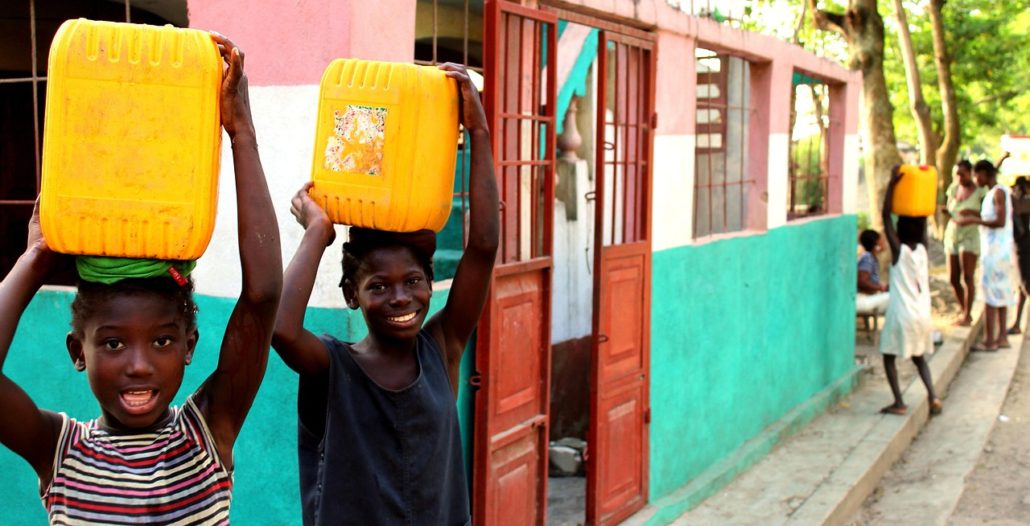
 Sustainable Development Goal 1 (SDG 1), which sets benchmarks and measures the progress of the fight to eradicate poverty, remains a critical focus for Haiti. According to the Sustainable Development Report 2024, Haiti ranks 151st out of 166 countries on the SDG Index, with a score of 52.68. Despite significant obstacles, including political instability and natural disasters, Haiti has made some progress toward achieving SDG 1 in Haiti.
The World Bank reports that as of 2024, approximately 36.6% of Haitians live in extreme poverty, which is defined as living on less than $2.15 per day. This marks an increase from 29.9% in 2020, reflecting worsening living conditions due to economic hardship, political instability and frequent natural disasters hindering progress on SDG 1 in Haiti.
Haiti’s Economic Decline and Poverty Rates
Haiti’s economy has experienced a prolonged and severe decline due to ongoing crises. The country’s gross domestic product (GDP) contracted by 4.2% in 2023, following a 1.9% decline in 2022. Political instability, gang violence and frequent natural disasters have deterred foreign investments and severely disrupted economic activity.
The Multidimensional Poverty Index (MPI), which measures poverty beyond income, indicates that 41.3% of Haiti’s population, approximately 4.7 million people, experience multidimensional poverty, while 21.8% remain vulnerable to falling into multidimensional poverty.
How Multidimensional Poverty Impacts Life in Haiti
The effects of multidimensional poverty in Haiti extend beyond just income, influencing education, health care and food security. The high cost of education services, averaging $140 per child per year, forces many families to keep their children out of school. More than 250,000 children (ages 6–11) and 65,000 youth (ages 12–14) are not enrolled in school. Although most students attend school for 11.4 years, this equates to only 6.3 years of effective education due to low-quality learning outcomes.
Haiti is also facing one of the worst hunger crises in the Western Hemisphere. More than 4.9 million Haitians, nearly half the population, are in urgent need of food assistance due to economic hardship and supply chain disruptions due to gang violence and political instability.
Despite these immense challenges, there are a variety of initiatives sponsored by organizations and programs which are actively working towards poverty reduction in Haiti. These initiatives range from international aid efforts to locally driven solutions aimed at improving economic stability, food security and education access for thousands of Haitians
Local Organizations and Agricultural Programs
The Peasant Movement of Papaye (MPP) in Haiti along with organizations like Grassroots International, empower Haitian farmers by promoting agroecology, sustainable farming practices and land rights advocacy. Through initiatives such as reforestation efforts, cooperative farming and education programs, the movement has helped thousands of peasants gain independence and escape poverty that exploitative agricultural systems caused.
Fonkoze, Haiti’s largest microfinance institution, plays a crucial role in empowering local entrepreneurs, particularly women, through a combination of financial services and education. By providing small loans, financial literacy training and business development programs, Fonkoze helps Haitians build sustainable livelihoods and break the cycle of extreme poverty. In 2021 alone, Fonkoze disbursed $5 million in micro-loans, empowering thousands of entrepreneurs to expand their operations and increase their income. The organization served 158,080 Hatians by providing financial education and encouraging a culture of saving and financial planning among Haiti’s most vulnerable populations. Additionally, it disbursed 10,807 loans to support small business growth, while the total number of Empowered Lending clients reached an impressive 58,000. These initiatives not only contribute to individual financial independence but continue to contribute to the future success of SDG 1 in Haiti.
International Aid and Food Security Programs
The World Food Programme (WFP) plays a vital role in addressing SDG 1 in Haiti. Through emergency food assistance, school meal programs and community-based nutrition projects, WFP combats malnutrition and strengthens resilience against food insecurity.
The World Bank also funds many projects and initiatives in order to provide relief to thousands of Haitians through infrastructure development, educational and employment opportunities. Currently, the World Bank has or is in the process of funding 181 Haitian projects.
Additionally, the World Bank has approved $20 million of additional financing which is slated to up-scale renewable energy investments providing solar grids, micro grids, energy storage systems and stand alone systems providing an expected 5-12 megawatts of renewable energy.
The Future of SDG 1 in Haiti
SDG 1 in Haiti remains hindered by economic instability, political unrest, and frequent natural disasters. However, with sustained efforts from the Haitian government, international organizations, and local communities, meaningful and lasting change is possible.
Long-term investments in education, economic growth, and food security are essential to breaking the cycle of poverty in Haiti. By expanding access to quality education, health care and job opportunities, Haiti can move closer to achieving Sustainable Development Goal 1 and ensuring a more stable future for its people.
– Gregory Brychta
Gregory is based in Seattle, WA, USA and focuses on Good News and Technology for The Borgen Project.
Photo: Pixabay

Women’s Foundation Nepal: Empowering Women
Key Objectives of WFN
Safe Shelter and Essential Services
WFN operates three shelter homes in Kathmandu, providing refuge for more than 120 children and 30 women escaping violence, abuse or extreme poverty. These shelters ensure that women and children receive medical care, psychological support and legal aid, helping them recover from traumatic experiences and regain stability. Beyond providing a safe environment, the shelters also serve as a foundation for rebuilding lives by offering vocational training and job placement opportunities. Through these programs, residents gain essential skills and resources that enable them to achieve independence and long-term security.
Expanding Access to Education in Nepal
WFN ensures that survivors of violence receive educational opportunities and skills training to secure a better future. Programs include:
Through these ongoing efforts, WFN equips women and children with the education and skills needed for long-term success.
Advocating for Equal Rights in Nepal
WFN actively fights against gender discrimination in legal frameworks and works to increase women’s representation in government and leadership roles. By lobbying for policy changes and providing free legal aid, WFN helps women secure their rights and escape oppressive situations. The foundation assists between five and seven women at its legal offices daily, offering guidance and support.
In 2019, Women’s Foundation Nepal won 62 cases related to divorce, violence and property rights, ensuring that women in vulnerable situations had access to justice. For cases that escalate to higher courts, WFN continues to provide legal aid and representation. By covering court fees and providing financial assistance, WFN has helped thousands of women and girls gain legal protection and secure their rights.
Economic Empowerment Through Self-Sustaining Businesses
WFN promotes economic independence by supporting micro-credit initiatives and women-led businesses. The Maheela Cooperative, a fair-trade organization launched in 2000, provides employment and training to women escaping poverty and violence. Currently, more than 80 women receive training and employment in textiles, handicrafts and jewelry production. These opportunities allow them to develop essential skills and achieve financial stability.
The cooperative reinvests 60% of its profits into WFN’s social programs, ensuring the sustainability of its initiatives. Fair wages and safe working conditions remain a priority, empowering women with stable incomes. Products created by the Maheela Cooperative, including scarves, textiles and handmade jewelry, are sold in Europe, the United States (U.S.) and Canada. This not only helps fund WFN’s projects but also creates a sustainable income source for the women involved, fostering long-term economic growth.
Scholarships and Sponsorships in Nepal
WFN supports more than 1,000 children from underprivileged backgrounds through scholarships and sponsorships, ensuring they have access to education. Sponsorships cover essential living expenses, including health care, food and clothing, for children in WFN’s shelter homes. The foundation also offers scholarships that provide tuition fees, school supplies and uniforms, enabling children to stay in school and complete their education.
By investing in education, WFN helps break the cycle of poverty, giving children the opportunity to build brighter futures and become self-sufficient. The organization also extends its support to higher education, funding university studies for children who achieve strong academic results in their 10th-grade exams. Through these programs, WFN empowers the next generation, equipping them with the knowledge and skills needed to create lasting change in their communities.
A Commitment to Ethical Practices
WFN and Maheela Cooperative prioritize fair wages, ethical labor practices and nondiscrimination policies. They actively oppose child labor and forced labor, ensuring a safe and inclusive work environment for all employees. The organization does not discriminate based on caste, nationality, religion, gender, disability or political beliefs, making it a model for inclusive social development in Nepal.
A Legacy of Empowerment
The Women’s Foundation Nepal was founded by a group of young women who helped rescue a missing girl forced into labor. Its advocacy grew into a thriving organization that now impacts thousands across Nepal. Results are achieved through shelter, legal aid, education and economic empowerment. Through its multifaceted approach, WFN continues to fight for a future where women and children in Nepal live free from violence, poverty and discrimination. With continued support, WFN can potentially expand its life-changing programs and uplift even more women and children across Nepal.
– Nalini Vijayakumar
Photo: Flickr
Senior Taliban Official Backs Afghan Women’s Right to Education
What Is Life Like for Women and Girls in Afghanistan?
The United Nations Assistance Mission in Afghanistan (UNAMA) released a statement on the International Day of Education, Jan. 24, 2025, noting that it has been four years since Afghanistan became “the only country in the world that explicitly bars women and girls [above the age of 12] from all levels of education.” It is not only Afghan women’s and girls’ right to education that is being violated. A series of other gender discrimination laws have been passed targeting women’s rights. The laws include the right to work, appear on TV, recite poetry or sing in public, go to the park and travel without a male relative.
The situation worsened when the Ministry of Economy shared a letter on the social media platform X on Dec. 29, 2024, threatening to shut down the activities of all nongovernmental organizations (NGOs) with women employees. Data collected by UNAMA revealed that 64% of Afghan women surveyed felt unsafe going out alone. This anxiety largely stems from “targeted harassment, threats and violence” from the Taliban and the wider community.
Men have also expressed feeling safer going out alone than with a female relative in public. Accompanying a woman draws more attention from the authorities. UNAMA notes that this has led to increased conservatism and control within families as men risk being targeted for violating the limitations placed on women and girls. Many Afghan women and girls protested the Taliban’s rise to power in 2021.
However, the Taliban responded with violence, killings and arbitrary arrests. UNAMA’s report further highlights the barriers Afghan women face when communicating with local authorities. This disconnect further removes women’s voices from public life. It increases their reliance on men in their family and community to advocate for them.
Who Are the Taliban and Stanikzai?
The Taliban is a Sunni Islamist group founded in 1994 which previously ruled Afghanistan between 1996 and 2001, implementing similar gender discrimination laws as are enforced by its regime today. Many of its members are former Afghan Mujahideen – armed Islamist groups involved in the First Afghan Civil War (1989-1992).
The first Taliban government fell after the U.S. invasion of Afghanistan in 2001, but the group regained control in 2021 after U.S troops withdrew. With the rights of women and girls deteriorating rapidly, in 2022, the deputy foreign minister condemned the closure of schools for girls. During a gathering of Taliban officials in Kabul, the country’s capital, Stanikzai urged the regime that “Women must get an education; there is no Islamic prohibition for girls’ education.”
This time around, Stanikzai directly asked the Taliban leader to reconsider the regime’s policies. He argued that there was no reason to deny education to women and girls, “just as there was no justification for it in the past and there shouldn’t be one at all.” The Guardian reported that Stanikzai is allegedly facing arrest for his comments and has fled to Dubai, though the minister has said he left for “health reasons.”
The Past
Restrictions on women’s rights have not always been the norm. The country has experienced fluctuating periods of equality and gender disparities in the past century.
For example, women’s suffrage in Afghanistan was achieved in 1919, a year before women in the U.S. were granted the right to vote. During this same period, the Queen Consort of Afghanistan, Soraya Tarzi, advocated for Afghan women’s and girls’ right to education and facilitated the opening of the country’s first school for girls in 1921. Since then, various regimes have advanced or rolled back on women’s rights.
How Has the International Community Been Responding?
Despite having been the de facto authorities for four years, the Taliban has yet to receive international recognition. The growing exclusion of women and girls from the public space has led to the U.N. labeling the Taliban’s policies as “gender apartheid.” Similarly, the International Criminal Court (ICC) issued applications for arrest warrants against two Taliban officials: the leader of the Taliban, Haibatullah Akhundzada and the Chief of Justice, Abdul Hakim Haqqani. They are charged “for the crime against humanity of persecution on gender grounds.” The ICC prosecutor, Karim Khan, also announced that other senior Taliban officials will soon face similar consequences.
With the clampdown on NGOs in the country, courses for action on the ground are becoming increasingly limited. UNAMA has been collaborating with the United Nations Entity for Women and Gender Equality (U.N. Women) and the International Organization for Migration (IOM) since August 2022 to reach out to Afghan women nationwide and gather insights about their living conditions. Their latest report revealed that 45% of women and 41% of men consulted in April 2024 believe the international community should facilitate communication between Afghan women and the Taliban. They believe centering women’s voices is crucial to advancing their rights.
– Nesreen Yousfi
Photo: Flickr
Mental Health in Cabo Verde
Mental Health Rate in Cabo Verde
Cabo Verde has made significant progress in all areas since gaining its freedom. The mental health of its people has been no exception. In 2017, there were no reported mental health professionals. Three years later, 11 total psychiatrists, 40 psychologists, 23 social workers, one mental health nurse and one occupational therapist were reported, demonstrating the country’s effort at combating mental health.
Suicide rates have also steadily declined, dropping from 17.46 per 100,000 people in 2013 to 15.23 in 2019. However, nearly 5% of people living in Cabo Verde still experience depression. To combat this, the Cabo Verde government has expanded mental health resources. In addition, it has launched initiatives such as educational conferences to reduce the stigma surrounding mental health.
Reducing Stigma
World Health Day is observed annually on April 7. In 2017, the World Health Organization (WHO) partnered with Cabo Verde’s Ministry of Health and Social Security (MSSS) to organize a conference focused on depression. The conference aimed to tackle the issue without stigma or bias. Under the theme “Depression: Let’s Talk,” the event occurred in the nation’s capital and welcomed everyone to participate. Before the conference, the WHO held press briefings to discuss topics such as stigma, strategies for raising awareness about depression, its impact on those affected and the available resources for support.
A series of events also took place across Cabo Verde on the same date. At the University of Cabo Verde, a roundtable discussion was held with several doctors from the WHO and MSSS, focusing on discrimination in mental health. At the Agostino Neto Hospital Central Hospital in Praia, a “Conversation morning,” was held. Pregnant and new mothers were invited to participate in an open discussion about postpartum depression. Led by the clinical director from the hospital alongside doctors from the WHO, patients were educated on signs of postpartum depression and how to navigate it.
Government Support
The day concluded with a forum on depression at the Government Palace. During the event, the forum’s chairman, Dr. Arlindo do Rosário, emphasized that the work of the WHO and MSSS “further highlight the government’s firm commitment to actually include mental health in our work.”
Recently, Dr. Angel Olider Rojas Vistorte hosted a conference on mental disorders and social media usage in Praia. The event, held in June 2024, was organized by the Jean Piaget University of Cape Verde, the Ibero-American University Foundation and the European University of the Atlantic, where Vistorte is affiliated. The conference aimed to create a safe space for discussing mental health and promoting healthy dialogue about mental health issues. In his lecture, Vistorte went beyond depression, addressing anxiety and eating disorders as potential consequences of excessive social media usage.
Conclusion
Cabo Verde has made notable progress in improving mental health care, reducing stigma and increasing access to mental health professionals. Despite challenges such as poverty and limited resources, the country has seen a decline in mental health disorders and suicide rates. Educational initiatives and open discussions have further supported awareness and progress. These positive strides reflect Cabo Verde’s commitment to better mental health for its people.
– Hannah Pacheco
Photo: Pixabay
Expanding Renewable Energy in the Soloman Islands
Current Renewable Energy Landscape
The Solomon Islands relies heavily on diesel generators, with approximately 80% of its electricity coming from fossil fuels. Hydropower has played a role in the country’s renewable energy sector, with the Lungga Hydropower Station near the capital, Honiara, serving as the primary source of renewable electricity. However, the country seeks to diversify its energy mix to reduce costs, increase sustainability and enhance energy security.
Future Renewable Energy Potential
The Solomon Islands government aims to increase the share of renewable energy in its national energy mix to a target of 100% by 2030. Solar power presents one of the most promising opportunities, given the country’s tropical climate and consistent year-round sunlight. Additionally, the newly launched Tina River Hydropower Project is expected to cut greenhouse gas emissions by 49,500 tons annually, significantly reducing the country’s reliance on fossil fuels. The government is also promoting community-based biomass projects to meet energy needs while encouraging sustainable land use practices.
The Role of Coconut Oil in Energy Production
In a unique renewable energy initiative, the Asian Development Bank (ADB) partnered with Solomon Power to explore coconut oil as an alternative to diesel fuel. The trial involved running a generator on locally produced coconut oil, with a contract supplying 1,000 liters per week. This not only provided a steady income for coconut farmers but also demonstrated the potential for coconut oil to become a viable renewable energy source. Expanding this initiative could enhance energy security while creating new economic opportunities in the agricultural sector.
Challenges and Opportunities
Despite progress, the Solomon Islands faces challenges in expanding its renewable energy sector. The geographical dispersion of islands makes energy infrastructure development costly and logistically complex. Additionally, securing financing for large-scale projects remains a hurdle for the nation and the country currently has some of the highest electricity costs in the world. Additionally, if coconut oil emerges as a major fuel source, it will require substantial investments in coconut farming, including replanting initiatives and enhanced quality control measures. The Solomon Islands needs to focus on a transition to reduce its dependence on fossil fuels to advance its energy goals and contribute to global sustainability efforts.
Renewable energy in the Soloman Islands stands at a pivotal moment in its transition. Expanding renewable energy sources could reduce dependence on fossil fuels, lower energy costs and contribute to global sustainability goals. With ongoing investments in hydropower, solar energy and innovative biofuel solutions, the country is positioning itself as a leader in sustainable energy development in the Pacific region.
– Avery Hazard
Photo: Flickr
Pashtun Poverty in Central Asia
FATA
Pashtun poverty is directly tied to destabilization and ethnic violence in Central Asia. Previously called “the most dangerous place in the world,” the Federally Administered Tribal Area (FATA) of Pakistan was home to 20% of the world’s Pashtuns. Although absorbed in 2018, FATA was home to blatant and widespread poverty, with 60% of people living below the poverty line.
This area was described as a “legal vacuum” because no neighboring country would assume administrative control. This led to a 33% literacy rate and plagued the area with intense ethnic and religious violence. In 2018, Pakistan merged the areas into Khyber Pakhtunkhwa in the hopes of improving conditions. Most terror attacks occurred in Pashtun areas in 2022, which points to continuing destabilization and a failure to address the conditions.
Drug Trafficking in Afghanistan
Over the border in Afghanistan, the Pashtuns have additionally dealt with decades of conflict and now Taliban rule. Although Pashtun’s relationship with the Taliban is complicated, the Taliban’s ban on narcotic production has disrupted a significant source of income for Pashtun communities. The U.N. estimated that it had affected the lives of nearly 7 million people who relied on growing opium for income.
Farmers were believed to have lost $1.3 billion in 2023 due to the halt in production, while landowners sold their stockpiles at a hiked price. While the production of narcotics is a complex issue, it is an industry upon which millions depend for their livelihoods. Its cessation has likely pushed many into poverty. Many farmers have continued to defy the ban as it’s their only way to avoid hunger and provide for their families.
Education in Pakistan
Although the situation for Pashtuns seems quite dire, great strides have been made for the education of the next generation. The village of Khanozai, in Balochistan, has a successful education scheme with an estimated 98% literacy rate. Although many Pashtun families must face the dilemma between having their children work or attend school, this village has insisted on the education of the next generation.
The Pakistani education activist Malala Yousafzai is actually Pashtun. In 2012, she spoke out against the Taliban in favor of education for girls. This led to an attack on her life. She survived and has become a global face of the movement for the right for a girl to learn. She is the only Pashtun and youngest ever person to win a Nobel Prize laureate.
The Pashtun Trust
The Pashtun Trust is an England-based charity that works to support both the local community and those in Central Asia. The nonprofit’s Khyber Pukhtunkhwa Projects work to alleviate poverty and provide education to people in Pakistan and Afghanistan. In 2019, the Trust managed to build 50 water wells throughout the region to tackle dehydration.
Pashtun poverty in Central Asia is an ongoing issue. However, nonprofit organizations like the Pashtun Trust are committed to improving the conditions of Pashtuns.
– Charley Dennis
Photo: Flickr
The Use of Child Soldiers in Iraqi Kurdistan
The History of Child Soldiers in Iraqi Kurdistan
During Saddam Hussein’s reign, vulnerable children often became targets of informal militias, with the PKK recruiting aggressively since its formation. In 1994, reports filed by the UN Refugee Agency documented the PKK’s “systematic increase in child recruitment” and even the creation of “child regiments.” A battalion called Tabura Zaroken Sehit Agit, for instance, operated with “a committee of five children aged between 8 and 12.” A year later, sources from the Kurdish Democratic Party (KDP) verified these reports after the loss of 1,000 PKK guerrillas—many of them young boys and girls—during an attack on the Kurdish Democratic Party. Yet, instead of being deterred by heavy casualties, the PKK intensified its recruitment efforts, adding 3,000 more children to its ranks by 1998.
About 13 years after Saddam Hussein’s deposition, the practice had not subsided. Human Rights Watch documented 29 cases of the use of child soldiers in 2016 – all tied to the PKK. Additionally, of these cases, the children concerned routinely admitted to “participating in fighting,” staffing checkpoints throughout the PKK occupied Qandil Mountains, and cleaning or preparing weapons. The latter occupations, although far from the frontlines, still carrying significant risks. Due to Iraqi Kurdistan’s neighboring proximity to Turkey, Turkish airstrikes can kill child soldiers without the children witnessing the horrors of close combat.
The Influence of Poverty
Chiefly, the depths of Iraqi poverty bear the foremost reason why these children fall into recruitment traps that militias created. Deprived of money and education, children fall susceptible to armed groups offering financial incentives. As of 2016, UNICEF reported that more than a half a million Iraqi children were engaged in labor due to declining family incomes, violence and displacement. With a further “5 million children in need of urgent humanitarian assistance.” Furthermore, long-term political instability, corruption or weak governance in Iraq has exacerbated poverty. Limited economic opportunities and displacement due to armed conflict coupled with societal pressures to achieve rite of passage or honor in protection of one’s family makes children increasingly vulnerable to militant influence.
As such, important NGOs like the International Rescue Committee (IRC), which began operating in Iraq in 2003, and the Iraq Child Rights Network which began working in Iraq in 2011, are continuously offering community-based child protection systems and implementing protective policies. In 2022, the IRC’s child and youth protection and development services supported 18,200 people, providing conflict-affected children with access to sustainable, specialized, holistic and nurturing protective services. Likewise, the ICRN has contributed its support to the National Child Protection Policy (NCPP), a policy which aims to provide a comprehensive framework to protect children from violence, exploitation and abuse, including preventing the recruitment of children into armed forces and armed groups.
Positive Changes
However, among all progress, the Kurdistan Regional Government (KRG) is driving the greatest changes. In August 2024, a conference occurred titled Promoting the Rights of Internally Displaced Persons in Accordance with International Standards. At this conference, Kurdistan’s Coordinator for International Advocacy, Dinadr Zebari, highlighted the KRG’s aims—specifically its 2021–2025 Regional Human Rights Action Plan—to raise Iraqi Kurdistan’s international reputation through “commitments to human rights.”
He stated the KRG has already implemented several human rights recommendations upon refugees, of whom are the primary source of child soldiers. These recommendations include “reception, accommodation, and essential services.” In fact, the KRG is now responsible for 80% of services for refugees, having allocated 138 schools and 54 mainstream schools throughout the region. This is monumental achievement, because 40,410 refugee students now receive formal education and there is hope that more refugees will enroll in mainstream schools since the Ministry of Education’s granting approval in 2021.
Looking Ahead
While the future looks promising for Iraq and its educational developments, there can be no complete celebration until every child is safe from militancy. About 327,000 refugees still reside in Iraq, with 41% estimated to be children under 18. Of these, 90% live specifically in the Kurdistan region. This means that potentially 93,000 child refugees still require aid and education after subtracting those already enrolled in schools.
– Leighton Webber
Photo: Flickr
Initiatives Ensuring Access to Clean Water in Ethiopia
WaterAid’s Deliver Life Project
WaterAid works from a bottom-up approach to alleviate water contamination in Ethiopia through the “Deliver Life” project. WaterAid has shared this project with 128,259 people from 177 communities to help relieve water contamination and related illnesses. This initiative focuses on tackling dirty water, creating sanitary toilets and teaching good hygiene practices.
WaterAid’s project successfully provided 10 Ethiopian schools access and resources to address water contamination. This was achieved through the distribution of water points, water supply systems, gender-separated toilets and teachings on hygiene and menstrual hygiene. WaterAid also taught eight small businesses how to manage liquid and solid waste. Furthermore, they provided waste vehicles to help reduce the likelihood of water contamination from poor sanitation.
UNICEF and ONEWASH
The United Nations Children’s Fund (UNICEF) works with the Ethiopian government on the ONEWASH National Programme, a widespread national appeal to follow water, sanitation and hygiene (WASH). This collaboration targets water contamination by producing specific fecal and chemical contamination standards, sharing resources on hygiene practices and building water systems that prioritize cleanliness.
UNICEF and ONEWASH help prevent water contamination by improving hygiene standards and water cleanliness, reducing water-related disease and infection.
Water4Ethiopia
Water4Ethiopia fundraises to supply clean water sites in Ethiopia. Following funding, volunteers work with nonprofit organizations to find a clean-water site. The nonprofit organizations oversee the building and construction of springs or wells and ensure that local people are involved in the process from start to finish.
The wells and springs ensure that the local community has continuous access to clean water despite infectious diseases in the area. Water4Ethiopia has benefited more than 5,000 people to date.
City-Wide Inclusive Sanitation
The City-Wide Inclusive Sanitation (CWIS) project in Ethiopia strives to address water contamination and improve sanitation in four towns in Ethiopia: Sheno, Welenchiti, Maksegnit and Kebridehar. This approach ensures that all locals, even those from low-income backgrounds within these towns, can get clean water.
This is achieved through initiatives that tailor solutions to specific areas, such as analyzing which technologies will improve certain areas. For example, in smaller, rural settlements, CWIS implements on-site sanitation, whereas in cities, CWIS provides sewers. This program ensures that clean water is accessible for everyone, regardless of background, helping to reduce water contamination by improving access to a clean, fresh supply.
Rainwater Harvesting
The Ethiopian Ministry of Water and Energy has developed a method for collecting clean water using rainwater. Ethiopia’s lack of sanitary water sources means many people turn to ponds or rivers. These sources are often contaminated and cause illness. The rainwater harvesting approach is active nationally, reaching nearly 70% of the population.
It utilizes roof water, which is generally of decent to good quality, making it potable and much less likely to cause disease or illness than water from rift valleys. Approximately 4 million people now have access to clean water through rainwater harvesting. This brings the total number of Ethiopians with access to clean drinking water to just less than 75 million.
Conclusion
Ethiopia’s ongoing battle against water contamination is being addressed through various initiatives that improve access to clean water, sanitation, and hygiene education. Indeed, projects like WaterAid’s Deliver Life, UNICEF’s ONEWASH, and rainwater harvesting have benefited millions. Sustained efforts and collaboration will be essential in expanding these successes and ensuring safe water for all Ethiopians.
– Ella Dorman
Photo: Flickr
SDG 1 in Haiti: Progress and Challenges in Eradicating Poverty
The World Bank reports that as of 2024, approximately 36.6% of Haitians live in extreme poverty, which is defined as living on less than $2.15 per day. This marks an increase from 29.9% in 2020, reflecting worsening living conditions due to economic hardship, political instability and frequent natural disasters hindering progress on SDG 1 in Haiti.
Haiti’s Economic Decline and Poverty Rates
Haiti’s economy has experienced a prolonged and severe decline due to ongoing crises. The country’s gross domestic product (GDP) contracted by 4.2% in 2023, following a 1.9% decline in 2022. Political instability, gang violence and frequent natural disasters have deterred foreign investments and severely disrupted economic activity.
The Multidimensional Poverty Index (MPI), which measures poverty beyond income, indicates that 41.3% of Haiti’s population, approximately 4.7 million people, experience multidimensional poverty, while 21.8% remain vulnerable to falling into multidimensional poverty.
How Multidimensional Poverty Impacts Life in Haiti
The effects of multidimensional poverty in Haiti extend beyond just income, influencing education, health care and food security. The high cost of education services, averaging $140 per child per year, forces many families to keep their children out of school. More than 250,000 children (ages 6–11) and 65,000 youth (ages 12–14) are not enrolled in school. Although most students attend school for 11.4 years, this equates to only 6.3 years of effective education due to low-quality learning outcomes.
Haiti is also facing one of the worst hunger crises in the Western Hemisphere. More than 4.9 million Haitians, nearly half the population, are in urgent need of food assistance due to economic hardship and supply chain disruptions due to gang violence and political instability.
Despite these immense challenges, there are a variety of initiatives sponsored by organizations and programs which are actively working towards poverty reduction in Haiti. These initiatives range from international aid efforts to locally driven solutions aimed at improving economic stability, food security and education access for thousands of Haitians
Local Organizations and Agricultural Programs
The Peasant Movement of Papaye (MPP) in Haiti along with organizations like Grassroots International, empower Haitian farmers by promoting agroecology, sustainable farming practices and land rights advocacy. Through initiatives such as reforestation efforts, cooperative farming and education programs, the movement has helped thousands of peasants gain independence and escape poverty that exploitative agricultural systems caused.
Fonkoze, Haiti’s largest microfinance institution, plays a crucial role in empowering local entrepreneurs, particularly women, through a combination of financial services and education. By providing small loans, financial literacy training and business development programs, Fonkoze helps Haitians build sustainable livelihoods and break the cycle of extreme poverty. In 2021 alone, Fonkoze disbursed $5 million in micro-loans, empowering thousands of entrepreneurs to expand their operations and increase their income. The organization served 158,080 Hatians by providing financial education and encouraging a culture of saving and financial planning among Haiti’s most vulnerable populations. Additionally, it disbursed 10,807 loans to support small business growth, while the total number of Empowered Lending clients reached an impressive 58,000. These initiatives not only contribute to individual financial independence but continue to contribute to the future success of SDG 1 in Haiti.
International Aid and Food Security Programs
The World Food Programme (WFP) plays a vital role in addressing SDG 1 in Haiti. Through emergency food assistance, school meal programs and community-based nutrition projects, WFP combats malnutrition and strengthens resilience against food insecurity.
The World Bank also funds many projects and initiatives in order to provide relief to thousands of Haitians through infrastructure development, educational and employment opportunities. Currently, the World Bank has or is in the process of funding 181 Haitian projects.
Additionally, the World Bank has approved $20 million of additional financing which is slated to up-scale renewable energy investments providing solar grids, micro grids, energy storage systems and stand alone systems providing an expected 5-12 megawatts of renewable energy.
The Future of SDG 1 in Haiti
SDG 1 in Haiti remains hindered by economic instability, political unrest, and frequent natural disasters. However, with sustained efforts from the Haitian government, international organizations, and local communities, meaningful and lasting change is possible.
Long-term investments in education, economic growth, and food security are essential to breaking the cycle of poverty in Haiti. By expanding access to quality education, health care and job opportunities, Haiti can move closer to achieving Sustainable Development Goal 1 and ensuring a more stable future for its people.
– Gregory Brychta
Photo: Pixabay
Bridging Gaps: Education In Kenya
Just Be a Child: Libraries and Learning Centers
Since its founding in 2013, Just Be a Child (JBAC) has re-homed nearly 500,000 books from the United Kingdom (U.K.), giving more than 2 million children the opportunity to read. The organization has constructed eight shipping container libraries, which serve as community-led learning centers. These libraries, operated by volunteers, provide free access to books and foster peer-to-peer learning through programs like arts and crafts sessions and Yong Writer Competitions. The impact has been transformative. Children using these libraries have shown significant improvements in school performance, better retention rates and an increased likelihood of qualifying for university. JBAC has also empowered more than 300 volunteers, with 10 starting their businesses, demonstrating how education initiatives in Kenya can spark economic development.
CHinK: Holistic Support for Marginalized Children
Founded in 2007, Children in Kenya (CHinK) provides comprehensive support for 206 children at its CHinK Academy. For £20 a month, sponsors help provide children with essentials such as two meals a day, school supplies, uniforms and medical care. The organization also emphasizes extracurricular activities, such as field trips and graduation ceremonies, to create a well-rounded educational experience. This nurturing environment has helped children from extremely poor backgrounds stay in school and achieve academic success, breaking cycles of poverty in their families.
The Teso Education Fund: A Beacon of Hope
The Teso Education Fund (TEF) focuses on empowering underprivileged children in Kenya’s Teso region. By providing scholarships, school supplies and mentorship programs, TEF helps students from low-income families stay in school and access quality education. Beyond financial aid, the fund’s mentorship programs instill confidence and leadership skills, inspiring students to dream big and contribute to their communities. This initiative has a ripple effect, uplifting not just individual students but entire families and fostering long-term development in the region.
A Brighter Future Through Education
These organizations—JBAC, CHinK and the TEF demonstrate how community-driven education initiatives in Kenya can tackle systemic barriers to education. Indeed, by combining accessible resources, mentorship and holistic care, they are not only improving literacy rates but also creating pathways for personal and community development. Kenya’s youth represent a vast reservoir of potential. With continued support from these organizations, young Kenyans can potentially grow into the leaders and innovators their country needs. Expanding access to education is not just an investment in individuals—it’s a step toward a more equitable and prosperous future for Kenya.
– Mmanoko Faith Molobetsi
Photo: Flickr
Politicized Infrastructure in Sub-Saharan Africa
Transforming Rural Access: The Role of Roads
Transportation infrastructure facilitates access to essential services including health care, markets and education. The World Bank’s Sub-Saharan Africa Transport Policy Program, while aiming to lower transportation costs and improve market access, often navigates complex political landscapes.
In 2008, the World Bank introduced a mass bus transit system in Lagos, Nigeria, offering affordable and reliable public transport. This project exceeded expected usage by 100% the following year, demonstrating its success. It also functioned as a political statement, showcasing the government’s commitment to urban development.
A more recent initiative, announced in March 2024, focuses on enhancing connectivity in Ethiopia by providing and strengthening all-weather road access to improve climate resilience and food insecurity in rural communities. The strategic placement of this project enables the political leaders to align with political priorities and development goals. While politicized infrastructure in sub-Saharan Africa may distort resource allocation, strategic investments that boost rural connectivity have demonstrated significant poverty reduction by improving access to services. The World Bank’s approach ensures that projects are strategically placed to boost regional trade and economic integration.
Water and Sanitation: A Foundation for Development
More than 2 billion people worldwide still lack access to clean water and sanitation, with sub-Saharan Africa disproportionately affected. Decisions about water infrastructure allocation often carry political weight. However, organizations in collaboration with the World Bank have significantly improved access by supporting community-driven efforts to build and maintain water wells and filtration systems.
The United States (U.S.) Development Finance Corporation supports local entrepreneurs’ programs across sub-Saharan Africa to empower communities to maintain and expand water infrastructure and purification services. These ongoing efforts act as soft power tools, extending political influence through development assistance. While perhaps politically motivated, projects not only reduce the time spent collecting water but have improved health and enabled children, particularly girls, to attend school, breaking the cycle of poverty and empowering communities.
Education Infrastructure: Building Futures
Organizations such as UNICEF and the United Nations Development Programme (UNDP) have worked to improve access to education and build schools. Over the past two decades, the out-of-school population in the region has dropped from 44% in 2000 to 29% in 2020. However, the politicization of infrastructure requires navigating competing priorities and political agendas to provide education to the 98 million children in sub-Saharan Africa who still lack access to formal, quality education.
Education infrastructure projects are sometimes influenced by soft power strategies, such as initiatives by the French Government and the British Commonwealth Grants Programme in their former colonies, with projects established in attempts to maintain influence. Despite the politicization of infrastructure, aligning investments with local needs has far-reaching effects, improving school attendance and increasing employment opportunities for graduates, acting as a catalyst for long-term poverty alleviation.
Mobile Health Care and Rwanda’s Transformation
Investments in sustainable health care infrastructure can be transformative for improving quality of life and alleviating poverty in sub-Saharan Africa, where accessing health care and medical services remains a major challenge for many communities. Rwanda’s health care transformation is a visible advantage of how politicized infrastructure in sub-Saharan Africa can have positive outcomes when strategic investments are aligned with national development needs. After the 1994 genocide, the country faced serious health problems, with the life expectancy dropping to 29 years. Through targeted policies to improve health care, the life expectancy reached 67 years in 2024, more than double the 1994 average. By addressing geographic and economic barriers to health care access, investments in health care support broader development goals of reducing poverty and improving education outcomes.
Infrastructure as a Catalyst for Change
Politicized infrastructure in sub-Saharan Africa presents both challenges and opportunities. While infrastructure investments fuel economic growth, political agendas can potentially distort priorities and deepen inequalities. However, aligning projects with local needs, transparency and sustainable development goals can transform infrastructure into a catalyst for long-term poverty alleviation. By investing in strategic transportation, water, education and health care systems, nations in the region can break cycles of poverty, improve resilience and foster economic stability.
– Isobel Hurst
Photo: Flickr