Taliban Refusing Women NGO Workers: What is Being Done
 On August 15, 2021, the Taliban seized control of Kabul, the capital of Afghanistan, following the earlier withdrawal of United States military forces. U.S.-backed President Ashraf Ghani fled the capital while the Afghan security force crumbled, leaving Kabul and all of Afghanistan under Taliban control. More than two years since the resurgence of the Taliban, conditions in Afghanistan have worsened, particularly affecting the most vulnerable members of Afghan society. One of the groups experiencing the greatest hardships under Taliban rule is women.
Afghanistan girls as young as 12 years old have been largely forbidden to attend classes. These policies have made it harder for Western governments to acknowledge the Taliban as the legitimate governing body in Afghanistan. More recently, on December 22, 2022, the Taliban began refusing aid from women working with Nongovernmental Organizations (NGOs), essentially cutting the staff of aid workers in Afghanistan by a third.
Refusing Women NGO Workers
The Taliban’s refusal to allow women to work for NGOs extends beyond nonprofit organizations and charities to also include their participation in U.N. initiatives. According to the National Public Radio (NPR), this move by the Taliban is the latest in a line of maneuvers to cut off aid during what is being labeled as “the world’s largest humanitarian crisis” by U.N. Deputy Special Representative for Afghanistan Ramiz Alabaro.
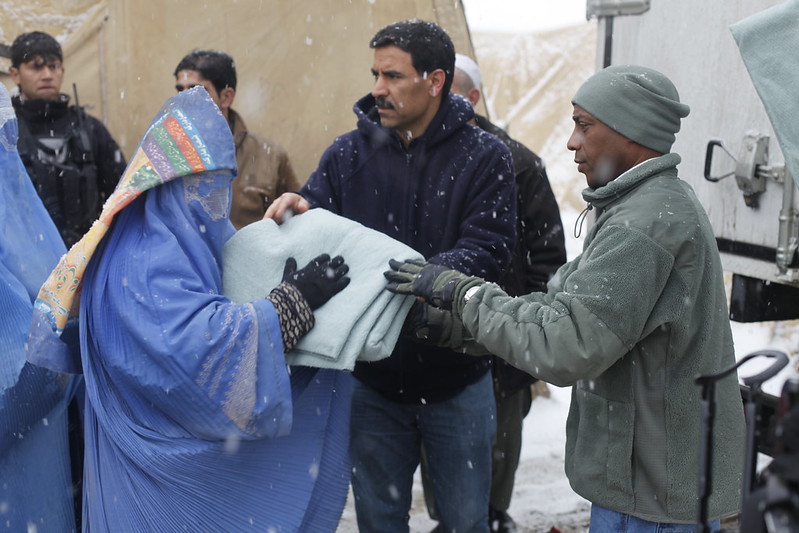
The ban on female NGO workers comes at a time when Afghanistan desperately needs humanitarian aid. According to the Integrated Food Security Phase Classification (IPC), as many as 19.9 million people in the country faced acute food insecurity in the winter of 2022-2023. The winter also saw the deaths of more than 200 people and 200,000 livestock. With so many humanitarian issues arising in Afghanistan, NGOs are faced with a difficult choice as the Taliban refusing women NGO workers strikes at their principles while rescinding aid leaves those in need vulnerable.
Organizations Finding Solutions
Despite the increasingly challenging conditions in Afghanistan, organizations are actively seeking alternative approaches to ensure the continued delivery of aid to those in need. The New Humanitarian reports that it has interviewed numerous women employed by NGOs in Afghanistan who, despite the sensitive nature of the situation, have managed to come to agreements with the Taliban to continue their work. Although they have requested to remain anonymous due to the volatile nature of the issue, these women have been able to come to some level of understanding with the Taliban and continue their work.
Many women heading local NGOs in Afghanistan have met and confirmed that they have been able to maintain their operations in five provinces by making concessions with the Taliban. The New Humanitarian reports that while the Taliban have banned most women from office buildings, they are permitted to leave their homes to distribution centers/sites. Other groups headed by women have reported appointing male proxies to handle matters that require a physical presence to oversee administrative and/or financial matters.
Wrap up
The Taliban’s refusal to allow women NGO workers to participate in humanitarian operations has significantly complicated the execution of aid efforts. As reported by PBS Frontline, this ban has made it more difficult to get fundraising approval as only 5.5% of the U.N. ‘s requested $4.6 billion aid for Afghanistan has been fulfilled. As organizations continue to make their best efforts to provide aid while fighting to keep their female workers involved, time will tell if circumstances improve for the better.
– Beau Sansom
Photo: Flickr
