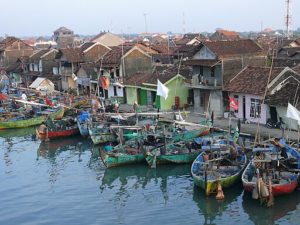
 Indonesia suffers from a triple burden of malnutrition (TBM) problem. TBM refers to a population at threat of undernutrition, micronutrient deficiencies and overnutrition. Other problems in the country, such as poverty, low education levels, gender inequities and poor infrastructure, alongside frequent natural disasters and environmental and climate-related factors, further aggravate these deprivations.
Stunting and Wasting
A 2022 survey conducted by the Ministry of Health reveals that, in Indonesia, one in 12 children aged less than 5 five is wasted. Additionally, one in five is stunted. Stunting and wasting are two major nutritional problems Indonesian children face that need to be detected and treated.
Wasted children have skinny appearances, are low in weight and have small upper arm circumference. It stems from poor nutritional intake, low food quality and frequent illness in children. Out of all problems with malnutrition, wasting has the highest risk of death. The mortality risk for wasted children is 12 times more likely than for children with adequate nutrition.
Stunting, on the other hand, develops in a short period and is often a sign of chronic malnutrition. Stunted children are relatively shorter than those around them. A child becomes at risk of stunting when they are malnourished from pregnancy until the child is 2 years old or has lived 1,000 days of life.
Wasting and stunting often correlate, with both problems having the same risk factors and one condition making the other worse. When left untreated, wasted children are three times more likely to develop stunting and stunted children are 1.5 times more likely to become wasted. Child mortality rates also increase when they experience both stunting and wasting at the same time, which many children in Indonesia do.
The first two years of a child’s life are the best time to prevent both problems; however, if preventative measures fail, health workers must give immediate care and treatment to ensure the child’s survival.
Maternal Nutrition
Maternal nutrition also contributes to malnutrition, as many micronutrient deficiencies start with the mother. It begins from preconception and continues to adolescence. Indonesia has a high rate of maternal malnutrition alongside high rates of maternal and neonatal mortality. According to a malnutrition report published by UNICEF in 2018, one in two pregnant women is anemic, one in six is thin and one in three is short stature.
Indonesia’s government has been working hard to implement programs to combat malnutrition. Programs include postpartum vitamin A supplementation, supplementary feeding for undernourished pregnant women, nutrition education and counseling.
Obesity
The final major malnutrition problem faced by Indonesia is obesity. According to the Indonesia Health survey and the Family Life survey, the number of overweight adults in Indonesia has doubled in the past two decades. One in five school-age children is affected by obesity and overweight and obesity are among the top five death risk factors.
Genetics play a role; however, unhealthy diets and insufficient exercise are the primary causes. Individuals consume more calories than required and their bodies store them as excess fat. The high availability of unhealthy foods in schools and a sedentary lifestyle using phones and TV do not mix well regarding health.
Free Meals
Although combating malnutrition may seem challenging, Indonesia has made much progress. On Jan. 6, Indonesia’s President, Prabowo Subianto, launched a multibillion-dollar program to provide free meals to more than a quarter of Indonesian citizens, feeding around 570,000 on its opening day. This ambitious free meal program was the center of Subianto’s election campaign. However, it had no official launch date. The program initially involved only 190 kitchens that prepped meals for school children and pregnant women in no more than 20 provinces.
Subianto has big targets for the program and hopes that by 2029, 82.9 million of the country’s total 280 million will be reached and helped. The government and military will help prepare and distribute meals and the number of meal recipients hopes to increase to 3 million by March of this year, according to Dedek Prayudi, a spokesperson for the President’s office.
Spokespeople from the Office of the President have said that President Prabowo Subianto is considering ways to reach nearly 83 million of Indonesia’s population by the end of 2025, much earlier than the initial target of 2029. Subianto also stated that the program aims to fight the stunting of growth that afflicts 21.5% of Indonesian children younger than 5 and would raise farmers’ income. He hopes to develop the nation’s human resources so that they can achieve a “Golden Indonesia” by 2045.
Slow Progress
The government aims to reach 19.5 million schoolchildren and pregnant women in 2025. The budget is set at $4.3 billion to keep the annual deficit under a legislated ceiling of 3% of GDP. According to the 2023 Indonesian Health Survey, the national stunting prevalence was 21.5%, down around 0.8% from the previous year. Although some progress has been made, it is still slow. The Indonesian government hopes this program will speed up the success rate in lowering the rate of malnourishment. So far, feedback has been positive.
Catharina Yenny Indratno, the principal of an elementary school in East Jakarta, said there had been a positive response from families and students. “Our children don’t really bring their own food from home. Their parents come from mid-low income, so their pocket money is small,” she said. She said, “With this program, it’s very good because they’ll have enough nutrients.” Parents also welcomed the program, as it helps reduce their daily burdens. One parent in West Jakarta stated: “Thank God, this helps us.”
MUFPP Community
Indonesia has also implemented other policies to combat malnutrition, including active participation in the Milan Urban Food Policy Pact (MUFPP) community. The MUFPP has collaborated with 15 cities in Indonesia to support the implementation of school meal programs. The Milan Pact is firmly committed to supporting the Indonesian government’s mission of implementing school meal programs via advocacy and facilitating learning exchange sharing. This is done with ASEAN, the Italian Ministry of Foreign Affairs and International Cooperation and the Italian Agency for Development Cooperation.
Indonesia still has a long way to go regarding combating malnutrition. However, developing this new program, alongside other policies the government is undertaking, will help reduce the problem massively.
– Ayat Aslam
Ayat is based in London, UK and focuses on Good News, Global Health for The Borgen Project.
Photo: Wikimedia Commons

A Short Guide to Higher Education in Bosnia and Herzegovina
Bosnia and Herzegovina (BIH), also referred to as the ‘Heart Shaped Country,’ is known for its natural beauty, diverse culture and kind-hearted people. However, its higher education system continues to face challenges due to the country’s complex political and economic history.
As of 2023, 45% of students who complete secondary education in Bosnia and Herzegovina enroll into tertiary education institutions. However, a decrease in enrollment has been a consistent trend over the past decade, with the current number of students being about 35,000 fewer than 10 years ago. This decrease is primarily due to young people leaving the country in order to seek out a better future, correlating with the fact that BIH had the second largest diaspora in 2020 as well as other issues that will be explored within this article. Here is information about the current issues with higher education in Bosnia and Herzegovina.
Fragmented Education System
Following the war in the 1900s, the Federation of Bosnia and Herzegovina (fBIH), Republika Srpska (RS) and the Brčko District divided BIH into separate regions. There are also 10 cantons within fBIH, each with its own Ministry of Education, that independently implements its own curriculum. Because of this, there is a very decentralized higher education system in Bosnia and Herzegovina, including languages like Cyrillic and Latin, and history like Serbian history in RS and and Bosniak-Croat history in fBIH.
Foreign Countries Not Recognizing Diplomas
European nations often do not recognize degrees in BIH, which makes it difficult for students to secure jobs or continue postgraduate studies worldwide. One of the reasons for this is that many universities in BIH include the word ‘international’ in their names, but they lack international accreditation, hence students are urged to conduct research before embarking upon higher educational journeys in BIH. The problem of the fragmented education system undermines Bosnian diplomas because it raises doubts whether they meet uniform quality standards.
There are also weak quality assurance mechanisms. According to Eurydice, the accreditation process begins when Higher Education Institutions (HEI) prepare a self-evaluation report and submit it to the relevant authority. Then, an expert panel visits the site and conducts an assessment. The authority grants accreditation based on the panel’s recommendation and lists the HEI in the National Registry, which the Agency for Development of Higher Education and Quality Assurance manages. Unfortunately, due to the fragmented system, corrupt political involvement and capacity issues, these guidelines are not fully met, therefore raising questions about the validity of Bosnian diplomas.
Limited Funding
Higher education institutions receive financing through different budgets depending on the region. In RS, the entity budget, which the Ministry of Education and Culture RS manages, funds higher education. Meanwhile, in fBIH, there are cantonal budgets that cantonal ministries of culture manage which fund higher education. There is no state- level funding for higher education, resulting in 13 separate budgets across the country. Furthermore, there is a lack of strategic planning of how to spend the budget, alongside no accountability – funds therefore do not need to be allocated effectively and higher education institutions are not legally required to justify their spending.
Another issue with higher education in Bosnia and Herzegovina along the lines of finance is the effect that poverty has on those who wish to pursue university studies. According to Study Abroad Aide, tuition fees in BIH can range from as little as 440 BAM (approx. £200 or $250) to 18,400 BAM (approx. £9,200 or $11,360). While this is significantly cheaper than tuition fees in the U.K. or the U.S., for citizens living there, this can unfortunately be an unrealistic amount. For example, almost a third of children between the ages of 5 and 15 in BIH are at risk of poverty due to the inadequate implementation of the 2015-2018 Action Plan for Children.
Furthermore, the COVID- 19 crisis had a detrimental impact on poverty levels in BIH. It was estimated that poverty would rise from 11.8% to as high as 14.6% from 2019 to 2020. These factors affect higher education in Bosnia and Herzegovina in that students may simply not be able to afford tuition fees, preventing them from following the path of university and higher education. Here are some progressions that higher education in Bosnia and Herzegovina has made.
Financial Support
While most students are required to attend university on a self financed basis, The Ministry of Education and Culture in RS and the cantonal ministries of education in FBiH provide scholarships for those who meet the qualifications. This does not take into account students’ background or social status, allowing anyone to qualify, given that they pass the entry exam. Furthermore, BIH also offers fully-funded scholarships to international students to excellent universities, such as the University of Banja Luka and the University of Sarajevo, if students are able to demonstrate excellent academic achievement and financial needs.
Not only does this open up opportunities for students to explore the rich history and indulge in the flavorful culture of, but it also tackles the issue of ‘brain drain.’ ‘Brain drain’ describes young talent leaving BIH due to the futile future they will have if they remain. Welcoming more international students allows talented young people to find opportunities within Bosnia, hence tackling the problem of brain drain.
The Bologna Process
The Bologna Process is a European higher education reform initiative aimed at creating a cohesive and compatible system of higher education across Europe, which BIH has been a member of since 2003. Because the Bologna Process aims to create an education system within Europe that everyone adheres to, this means that it will increase the validity that Bosnian degrees have across Europe. It has specifically introduced the three-cycle degree structure and established quality assurance mechanisms, but any positive outcomes of the Bologna Project have been overshadowed by how the students affected feel about it.
A study conducted with 81 students from the English Literature and Language departments in the universities of Tuzla and Banja Luka claimed that the students did not perceive it that way. About 40% of students claimed that they believed the Bologna Process was “forcing them to study constantly” with 62% of students saying they felt it was incomplete or misapplied. This can unfortunately be deemed as true due to the underfunding of higher education. The simplest things, such as old classrooms and outdated technology, can prevent higher education in Bosnia and Herzegovina and the Bologna Project from reaching their full potential.
Recommended Changes
While there has been no news of significant changes that the Bosnian government is bringing about to higher education, the Swiss Agency for Development and Cooperation has presented recommended action. These include:
To summarize, decentralized education, limited funding and unrecognized diplomas are the main causes of the pitfalls in higher education in Bosnia and Herzegovina. However, there has been progress with the implementation of scholarships and elements of the Bologna Project, although there is still a way to go to further improve access to higher education in Bosnia and Herzegovina.
– Emina Bolic
Photo: Flickr
Learning Poverty Among the Bidoon in Kuwait
Kuwait is known as one of the world’s richest countries, though more than half of children over the age of 10 are not reading proficiently. This phenomenon called learning poverty is unfairly affecting the children of Kuwait, highlighting the gaps in education equity and quality. In particular, learning poverty is affecting Bidoon children, a marginalized group in Kuwait. Here is more information about learning poverty among the Bidoon in Kuwait.
Elements of Child Poverty in Kuwait
Child poverty and overall poverty levels in Kuwait are reportedly just above 0%, according to the Nations Encyclopedia. Though experiencing levels of economic abundance, that has proved inefficient when addressing education poverty. Learning poverty runs through Kuwait’s youth, especially hurting marginalized groups like the Bidoon.
The Bidoon (short for “bidoon jinsiya”) in Kuwait are descendants of undocumented individuals who did not gain Iraqi citizenship at the state’s founding. Despite living in a wealthy region like Kuwait, they face high poverty rates and limited accessibility to resources as stateless individuals.
Kuwait ranks above average among the Middle East and North Africa (MNA) countries when measuring child learning poverty. The World Bank April 2024 Kuwait Learning Poverty Brief shows that 51% of late primary age children in Kuwait are not proficient in reading. Kuwait measures 2% less than the MNA average of children in learning poverty.
Although this is statistically above average, stable education is what children in Kuwait need to improve overall health and prosperity. Ensuring children are in school relates directly to social challenges facing Kuwait families such as early marriage, mental health and child nutrition, according to the World Bank’s “From Learning Recovery to Education Transformation” executive summary.
What is Learning Poverty?
Learning poverty is the inability to read and understand proficiently by the age of 10. The World Bank measures learning poverty through assessments and enrollment data, concluding that 53% of the MNA faces learning poverty.
Factors that also contribute to learning poverty are learning deprivation and school deprivation. Learning deprivation is the share of students reading below the minimum proficiency level, which exposes the inequality and disadvantage that the poor in Kuwait face. School deprivation represents children who are not enrolled in any schooling.
Learning and school deprivation pose a threat to achieving the Sustainable Development Goals (SDGs) which the United Nations set in place in 2015 to unite the globe in successfully attaining prosperity for all by 2030. The fourth goal is for inclusive and quality education for all.
In Kuwait’s case, learning deprivation for April 2024 was measured at 49% and school deprivation was 3%. In order to ensure education is a priority, each child needs the opportunity.
How are Bidoon Children Facing Disadvantages?
An article by Aisha Elgayar for Arij emphasized the difficult lifestyle of the Bidoon children, described as “living in the shadows” of a lavish country surrounding them. Inherited restrictions put on them keep them from receiving basic rights like education, general employment and birth/marriage certificates.
Along with restricted access to economic freedom and political rights, the Bidoon also face health concerns due to limited supply of fresh water and electricity. The lack of data regarding the Bidoon community also reflects in the lack of aid they receive.
One can see child poverty in Kuwait through the Bidoon population, which was between 83,000 and 120,000 as of August 2024. The continued negligence to these undocumented children indicate ill-equipped schools and unequal circumstances.
Solutions
UNICEF, UNESCO and the World Bank created the RAPID strategy in response to COVID-19 to solve learning issues at the source for each child. This framework represents mending the five parts of education reconstruction; Reach, Access, Prioritize, Increase and Develop. Before COVID-19, findings showed that learning at an accelerated rate was possible in the Middle East. The steps from this program ensure that each student is practicing foundational skills.
RAPID prioritizes reaching every child, assessing learning levels regularly, focusing on teaching the fundamentals, increasing efficiency of instruction and developing psychosocial health.
In regards to marginalized and stateless groups such as the Bidoon population, the RAPID strategy works to transform the way these children learn and breaks down barriers that hold them back from accessing education. The World Bank and UNICEF support a “reach-all” initiative, entailing multiple modes of learning and flexible learning programs. UNICEF’s RAPID’s 2024 findings show that the RAPID framework has been established in Kuwait.
After Kuwait shut the Bidoon out of public education in 1992, efforts have been made to advance their right to education. For example, in 2014, the Katateeb Al-Bidoon Initiative, which Yusuf al-Bishiq led, created an after-school program for Bidoon children for one short semester, but its lifespan provides insight into how a transformative future is possible. Katabeeb al-Bidoon embraces a practical system that could be successful if implemented in the future.
Looking Ahead
While statistically, Kuwait is one of the leading countries in the Middle East in wealth and income, learning poverty highly impacts Bidoon children. Hopefully, UNICEF’s RAPID strategy will eliminate learning poverty among the Bidoon in Kuwait moving forward.
– Rachael Wexler
Photo: Flickr
Exploring the Economic Impact of Renewable Energy in Mali
Many citizens in Mali, a Sub-Saharan desert country in Africa with a population of almost 24.5 million, struggle to afford energy, and simmer in poverty. In 2022, poverty rates hit 19.1%, meaning almost 20% of their population makes less than $2.15 a day. With their growing impoverishment, their government has decided to take initiative and implement renewable energy in Mali. Not only does renewable energy create a cheaper alternative for those who cannot otherwise afford it, but it also creates jobs for those who need them. A staggering 52% of the population has access to electricity, less than 5% have access to clean cooking, and as of 2023, the unemployment rate sits at 3.01%.
What is Renewable Energy?
In general terms, renewable energy is harnessed power that is derived from a continuously and naturally replenishable source, and is often a carbon-free source. Renewable energy sources include:
All of these create a form of electricity.
Today, electricity greatly enhances people’s lives, which they use for everything from evening illumination to laundry, food preparation, factory operation and even things like international communication. It is essential for raising living standards, promoting economic growth and reducing poverty.
How Does Renewable Energy Affect Mali?
Currently in Mali, the average lifespan is only 59 years. On average, 97 newborns out of 1,000 pass away before they turn five. About 80% of Malians lack proper sanitation, and many do not have access to safe drinking water. The population is growing at a pace of 3.2% each year, and 47% of Malians are under the age of 15.
In 2006, Mali’s government implemented the National Energy Policy, which is supported by its five main objectives:
These objectives aid in getting more electricity access across the continent, and also has the potential to create employment opportunities across the globe. According to the International Renewable Energy Agency (IRENA), transitioning to renewable energy in Mali is expected to “create 40 million additional jobs in the energy sector by 2050, with 18 million more jobs globally in renewables alone.”
Actions That Mali is Taking
Mali already has many jobs created for its citizens from these renewable energy projects. For example, in 2019, “ECREEE supported the Government of Mali in 2015 to develop a BOOT model tender for the development of grid-connected renewable energy projects.” From this BOOT (Build, Own, Operate, Transfer) model, a whopping 450 jobs emerged in Mali across the duration of the project.
The imminent arrival of these jobs can provide skills to allow workers to obtain future employment once it becomes available. However, in order for this initiative to work, there are several things being prioritized starting at early ages. With aid and funding from the U.S. Agency for International Development (USAID), the Education Development Center (EDC) has been able to provide a lot of help to the youthful Malians through the PAJE-Nièta— the Mali Out-of-School Youth project. These are the main pursuits of the project:
Looking Ahead
In order to produce employees for future jobs, once renewable energy projects reach completion, creating skilled workers from the inexperienced youth is key to furthering the continent’s progression. Renewable projects in Mali will likely develop the country’s economy, improving the conditions its citizens live in.
– Taylor Naquin
Photo: Flickr
The Reality of Women’s Rights in Saint Vincent and the Grenadines
Saint Vincent and the Grenadines, an island country located in the eastern Caribbean Sea, consists of the island of Saint Vincent and the Grenadine Islands. Throughout the past several decades, women’s rights in Saint Vincent and the Grenadines has made progress. With still more work being necessary, Saint Vincent and the Grenadine Islands have made an immense amount of strides to combat women’s rights issues.
Improving Women’s Rights
When it comes to gender equality, Saint Vincent and the Grenadines performs well on the gender scorecard. The country has made several improvements to combat gender inequality, which spans over the past two decades. Looking at women’s rights in Saint Vincent and the Grenadines, economic opportunities, human endowments and voice and agency are among the improvements that this country has made to build on the issue. The economy ranks at 59.8, which means this country has a moderately free economy.
Poverty in Saint Vincent and the Grenadines
Poverty in islands such as Saint Vincent and the Grenadines is prevalent. Based on UNICEF data, in 2016, 30% of individuals living in Saint Vincent and the Grenadines suffered from poverty. The poverty rate in the country is higher than that of other surrounding countries. About 41% of people were more likely to suffer from poverty in female headed households as compared to 31% of male headed households. The COVID-19 pandemic impacted Saint Vincent and the Grenadines and made poverty rates go up, specifically with children. Child poverty rates in Saint Vincent and the Grenadines are projected to increase from 4% to 18% post pandemic.
The Maternal Health Access For Women
In Saint Vincent and the Grenadines, women have prominent access to maternal health care services, leading to 98.6% of births being attended by a health care professional in 2016. This country has tried to reduce the adolescent birth rate and has made progress doing so. The adolescent birth rate is 1.8 per 1,000 women from ages 15-19 as of 2021. Comparing these numbers to 2020, it was 53.58 per 1,000. Through the changes made, it impacts the life expectancy of the population there. The life expectancy at birth in Saint Vincent and the Grenadines has improved from 71.7 years in 2000 to 72.6 years as of 2021. This is a 0.895 increase when comparing the data of life expectancy at birth.
Political Progress
As of February 2024, women occupied only 18.2% of parliament seats. Meanwhile, in 2010, women held only 14.3%. These numbers are low in comparison to its surrounding country, Trinidad and Tobago. As of 2023, 28.6% of women hold the parliament seats in Trinidad and Tobago. Although the numbers vary, the number of women in parliament seats in Saint Vincent and the Grenadines will continue to climb.
Violence Against Women
In Saint Vincent and the Grenadines, gender-based violence has improved through anti-violence campaigns and government initiatives. The 16 Days of Activism against Gender-Based Violence is a campaign that runs from November 25 to December 10. Saint Vincent and the Grenadines participate in this campaign and information is brought to schools to make people aware of why this campaign is important.
A strategy called The Montevideo Strategy is implementing public policies, known as the Regional Gender Agenda, by 2030 to ensure gender equality in the Caribbean. A government initiative called The Gender Affairs Division of Saint Vincent and the Grenadines (GAD), first created in 2001, works to tackle gender-based violence. The GAD consists of a woman coordinator and promotes counseling and contact with other agencies as a way of support and prevention of violence against women. Through GAD, the government built a crisis center for victims of domestic violence in 2012. The center runs a 24/7 hotline as well as houses 10 people for 3 months.
Going Forward
Although women’s rights in Saint Vincent and the Grenadines have made significant progress over the past decades, progress is still continuing to be made. Through economic opportunities, women’s role in government and health care, this country will continue to showcase their value in women’s rights. The government of Saint Vincent and the Grenadines is working to implement legislature to help protect women’s rights in the country. According to 2023 Human Rights Report data, the government put in place anti-violence campaigns in schools and communities as a way to end gender-based violence based on their 16 days of activism campaign. It will not be easy to gain full equality but by these small efforts change is already closer than it appears.
– Kayla Barnak
Photo: Flickr
Jordan Becomes the First Leprosy-Free Country
Jordan: First Leprosy-Free Country
In September 2024, the World Health Organisation (WHO) awarded Jordan with a verification of becoming Leprosy-free. Jordan has not reported any Leprosy infections from within its borders in more than two decades and became the first country in the world to receive this verification by the WHO.
This success is in line with the WHO’s mission to eradicate leprosy. The WHO has launched the Towards zero leprosy Strategy 2021–2030, which works together with countries to achieve zero leprosy in the World. The WHO is working towards “zero infection and disease, zero disability, zero stigma and discrimination and the elimination of leprosy,”
There are still more than 200,000 new infections recorded worldwide, with more than half recorded in India. Leprosy is an infectious chronic disease caused by the Mycobacterium leprae. It is spread through droplets in the mouth and nose. Leprosy is transmitted by prolonged close contact with the infected. Once treatment is started people living with leprosy are no longer infectious. Left untreated, leprosy affects the skin, upper respiratory tract, and eyes and can lead to physical deformity. Leprosy is curable and treatable, and if treated early physical deformities can be avoided entirely. The treatment is a combination of three different antibiotics, namely dapsone, rifampicin and clofazimine.
Stigma
Unfortunately, those affected by the disease not only suffer from the physical effects of leprosy but regularly suffer from stigmatization. These range from social isolation to financial hardship, as people who have visible deformations are often rejected by the job market. In some parts of the world, leprosy is regarded as divine punishment. It can also be used as grounds for a divorce.
WHO Regional Director for South-East Asia Saima Wazed congratulated Jordan for this major public health achievement: “Jordan’s elimination of this age-old disease is a historic milestone in public health and a huge success for efforts to eliminate leprosy globally. The fight against leprosy around the world is more than a fight against a disease. It is also a fight against stigma and a fight against psychological and socio-economic harm. I congratulate Jordan on its achievement.”
Jordan’s historic achievement highlights how closely collaborating with the WHO and following the guidelines as outlined by the WHO’s Towards Zero Leprosy strategy is the key to success in the fight against Leprosy. Such news inspires hope that other countries still affected by leprosy can have similar success.
– Salome von Stolzmann
Photo: Flickr
Mission 300: Push for Clean Energy Access in Africa
Ambitious Project
Mission 300 aims to deliver clean and affordable energy to nearly 300 million people. To achieve this goal, the World Bank and the African Development Bank will collaborate with governments, philanthropies, the private sector and multilateral. The success of this initiative depends on working with different governments and addressing the unique energy needs of each country, guided by local leaders. Negotiations with the private sector will also play a crucial role in managing transmission and distribution networks. Additionally, donors, philanthropists and other partners will contribute vital investments to ensure the project’s financial success and help attract public funding.
Different from Past Efforts
Previous efforts have tried to address the electricity crisis, but Mission 300 offers a new approach. First, it is African-led, allowing leaders to implement country-specific reforms tailored to their populations. Moreover, the initiative has already made progress by helping 12 million Africans gain access to electricity. Significant financial backing supports this effort, with $20 billion in funding from the International Development Association and additional support from donors and partners like the Rockefeller Foundation.
New contributors continue to join the project. Agencies from the United States (U.S.), the United Kingdom (U.K.) and Germany have expressed interest in assisting. In comparison to earlier initiatives such as the World Bank’s 2007 Lighting Africa project, which struggled to reach its goals or the African Development Bank’s 2016 ‘New Deal on Energy for Africa,’ which experienced delays due to funding gaps and logistical hurdles, Mission 300 builds on lessons from those experiences. By integrating new resources and innovative methods, this initiative aims to succeed where previous efforts fell short.
Finding Clean Energy Solutions
Mission 300 prioritizes green energy solutions like solar, wind and hydropower to limit the environmental impact of increased energy access. Mini-grids and off-grid systems will bring electricity to rural areas without relying on carbon-emitting infrastructure. Additionally, the project promotes energy efficiency measures that reduce environmental harm while eliminating reliance on kerosene and diesel fuels.
Looking to the Future
Mission 300 continues to expand, with 12 million people already connected and 90 million ongoing projects in progress. This initiative offers unprecedented clean energy access in Africa. Staying informed about Mission 300 is crucial, as the project continues its efforts to provide sustainable energy solutions for millions across sub-Saharan Africa.
– Michael Messina
Photo: Flickr
5 Things to Know about Renewable Energy in Brazil
Renewable Energy Efforts
A Booming Industry
Renewable energy in Brazil is a booming industry. It provides thousands of jobs and access to clean, reliable energy to those in need. Brazil utilizes several renewable energy sources, including hydroelectric, solar and wind power. There are also many organizations working to make renewable energy available to everyone, such as ABSOLAR, Litro de Luz, and the Brazilian Wind Power Association. Renewable energy is helping to make electricity access affordable, reliable, and clean around the world. Brazil is steadily growing as a leader in this mission.
– Lizzie Mazzola
Photo: Flickr
Combating Malnutrition in Indonesia: New Free Meals Program
Stunting and Wasting
A 2022 survey conducted by the Ministry of Health reveals that, in Indonesia, one in 12 children aged less than 5 five is wasted. Additionally, one in five is stunted. Stunting and wasting are two major nutritional problems Indonesian children face that need to be detected and treated.
Wasted children have skinny appearances, are low in weight and have small upper arm circumference. It stems from poor nutritional intake, low food quality and frequent illness in children. Out of all problems with malnutrition, wasting has the highest risk of death. The mortality risk for wasted children is 12 times more likely than for children with adequate nutrition.
Stunting, on the other hand, develops in a short period and is often a sign of chronic malnutrition. Stunted children are relatively shorter than those around them. A child becomes at risk of stunting when they are malnourished from pregnancy until the child is 2 years old or has lived 1,000 days of life.
Wasting and stunting often correlate, with both problems having the same risk factors and one condition making the other worse. When left untreated, wasted children are three times more likely to develop stunting and stunted children are 1.5 times more likely to become wasted. Child mortality rates also increase when they experience both stunting and wasting at the same time, which many children in Indonesia do.
The first two years of a child’s life are the best time to prevent both problems; however, if preventative measures fail, health workers must give immediate care and treatment to ensure the child’s survival.
Maternal Nutrition
Maternal nutrition also contributes to malnutrition, as many micronutrient deficiencies start with the mother. It begins from preconception and continues to adolescence. Indonesia has a high rate of maternal malnutrition alongside high rates of maternal and neonatal mortality. According to a malnutrition report published by UNICEF in 2018, one in two pregnant women is anemic, one in six is thin and one in three is short stature.
Indonesia’s government has been working hard to implement programs to combat malnutrition. Programs include postpartum vitamin A supplementation, supplementary feeding for undernourished pregnant women, nutrition education and counseling.
Obesity
The final major malnutrition problem faced by Indonesia is obesity. According to the Indonesia Health survey and the Family Life survey, the number of overweight adults in Indonesia has doubled in the past two decades. One in five school-age children is affected by obesity and overweight and obesity are among the top five death risk factors.
Genetics play a role; however, unhealthy diets and insufficient exercise are the primary causes. Individuals consume more calories than required and their bodies store them as excess fat. The high availability of unhealthy foods in schools and a sedentary lifestyle using phones and TV do not mix well regarding health.
Free Meals
Although combating malnutrition may seem challenging, Indonesia has made much progress. On Jan. 6, Indonesia’s President, Prabowo Subianto, launched a multibillion-dollar program to provide free meals to more than a quarter of Indonesian citizens, feeding around 570,000 on its opening day. This ambitious free meal program was the center of Subianto’s election campaign. However, it had no official launch date. The program initially involved only 190 kitchens that prepped meals for school children and pregnant women in no more than 20 provinces.
Subianto has big targets for the program and hopes that by 2029, 82.9 million of the country’s total 280 million will be reached and helped. The government and military will help prepare and distribute meals and the number of meal recipients hopes to increase to 3 million by March of this year, according to Dedek Prayudi, a spokesperson for the President’s office.
Spokespeople from the Office of the President have said that President Prabowo Subianto is considering ways to reach nearly 83 million of Indonesia’s population by the end of 2025, much earlier than the initial target of 2029. Subianto also stated that the program aims to fight the stunting of growth that afflicts 21.5% of Indonesian children younger than 5 and would raise farmers’ income. He hopes to develop the nation’s human resources so that they can achieve a “Golden Indonesia” by 2045.
Slow Progress
The government aims to reach 19.5 million schoolchildren and pregnant women in 2025. The budget is set at $4.3 billion to keep the annual deficit under a legislated ceiling of 3% of GDP. According to the 2023 Indonesian Health Survey, the national stunting prevalence was 21.5%, down around 0.8% from the previous year. Although some progress has been made, it is still slow. The Indonesian government hopes this program will speed up the success rate in lowering the rate of malnourishment. So far, feedback has been positive.
Catharina Yenny Indratno, the principal of an elementary school in East Jakarta, said there had been a positive response from families and students. “Our children don’t really bring their own food from home. Their parents come from mid-low income, so their pocket money is small,” she said. She said, “With this program, it’s very good because they’ll have enough nutrients.” Parents also welcomed the program, as it helps reduce their daily burdens. One parent in West Jakarta stated: “Thank God, this helps us.”
MUFPP Community
Indonesia has also implemented other policies to combat malnutrition, including active participation in the Milan Urban Food Policy Pact (MUFPP) community. The MUFPP has collaborated with 15 cities in Indonesia to support the implementation of school meal programs. The Milan Pact is firmly committed to supporting the Indonesian government’s mission of implementing school meal programs via advocacy and facilitating learning exchange sharing. This is done with ASEAN, the Italian Ministry of Foreign Affairs and International Cooperation and the Italian Agency for Development Cooperation.
Indonesia still has a long way to go regarding combating malnutrition. However, developing this new program, alongside other policies the government is undertaking, will help reduce the problem massively.
– Ayat Aslam
Photo: Wikimedia Commons
Malnutrition in South Sudan
About Malnutrition
Malnutrition is a serious issue directly correlated to extreme poverty, making access to basic necessities like food essential when supporting developing nations. Tremendous steps have been taken in the global fight against malnutrition, largely driven by foreign aid. Foreign aid enables developing countries to invest in sustainable agriculture, ensuring food security until they can establish self-sustaining systems.
Efforts to combat malnutrition often start with direct food assistance, followed by investments in sustainable agriculture. While this approach is generally effective, some countries face external challenges that hinder progress, such as natural disasters and conflicts, which disrupt food production and distribution.
What Makes South Sudan’s Situation Different
South Sudan faces external challenges that complicate the fight against malnutrition, with one of the primary issues being widespread flooding. The region has endured severe flooding for several years, resulting in extensive damage. Areas affected by these floods often experience high levels of malnutrition.
The flooding hampers foreign aid efforts by preventing resources from reaching certain areas. For malnutrition, the issue lies in the inability of crops to produce sufficient yields. The combination of these problems makes the whole situation much harder to control. Another thing making things harder for South Sudan is the recent war. War has displaced millions of people in South Sudan, making the problem harder to track and keep control over.
Organizations Helping
The combined efforts of major organizations such as the World Food Programme (WFP) and the United Nations Children’s Fund (UNICEF) have helped with damage control. WFP has supported more than 600,000 people in South Sudan with fortified biscuits, cash transfers and nutrition support for children and mothers.
Similarly, UNICEF has responded to the needs of people affected and displaced by floods by providing them with basic supplies, such as soap, drugs and education materials. The organization has also strengthened local communities’ flood resilience and preparedness efforts, “including pre-positioning supplies during the dry season when roads are still accessible.”
Conclusion
Addressing malnutrition in South Sudan requires sustained international support and innovative solutions to overcome the country’s unique challenges. While foreign aid and humanitarian organizations have played a crucial role in providing immediate relief, long-term strategies such as improving flood resilience, strengthening food security and restoring stability remain essential. As South Sudan continues to face the highest malnutrition rates in its history, ongoing global efforts will be vital in ensuring that vulnerable populations receive the necessary resources to survive and build a more sustainable future.
– Kaleb Monteith
Photo: Flickr
How The Coup in Gabon Could Lead to Poverty Reduction
Background
The previous president of Gabon had been in power for about 14 years following a time when his father had been in power. Citizens of Gabon had doubts about the legitimacy of his presidency and the fairness of their elections, so living in poverty only created higher tensions and a stronger feeling of injustice.
Gabon is known to have an abundance of natural resources that give it “the second highest per-capita GDP in mainland sub-Saharan Africa,” according to the United States Institute of Peace (USIP). The coup in Gabon was spurred on by this knowledge, as impoverished people laid blame on their government and felt unrecognized by those in power. This is why the military’s intervention in the government has been supported by the people and is seen as an act of justice.
Based on the wealth of the country from its oil industry, Gabon has one of the region’s highest yearly incomes. This creates questions on how such a large proportion of the country lives in poverty. The reason is said to be corruption of the government through the fact that “most of the country’s oil wealth goes into the pockets of a small amount of people,” BBC reports. Blatant corruption and discrepancies between the wealthy and impoverished encouraged the coup in Gabon.
Could the Coup Reduce Poverty?
Following the coup in Gabon, there have been a multitude of initiatives aimed at strengthening the stability of the country and bettering the quality of life. The government has a goal to diversify the economy, improve infrastructure, reduce poverty and improve the stability of governance through its “Emerging Gabon 2025” plan.
It seems the new government is attempting to learn from the mistakes of the past administration by implementing a variety of initiatives to improve quality of life and maintain public opinion. It has gained validity from international institutions, like the EU, which attempts to support Gabon “to ensure transparency in the electoral process,” according to the European Commission. External approval from other countries and institutions will only strengthen the legitimacy of Gabon’s new government.
Social Policy
To lift the community, the new government following the coup in Gabon will instate a revised social policy. This policy includes ways to help marginalized and impoverished groups through social programs, income-generating activities and access to public services. With the installation of these new services and continued efforts to address the needs of the country, there are long-term, institutional changes being made to reduce the number of people in poverty.
The World Bank is currently beginning a partnership with Gabon to help them reach these goals. It is striving for lasting change by targeting specific sectors and want results specifically in “greater household resilience and job creation in the non-oil private sector.” Less government corruption, more job opportunities and investment in the public sector are efforts being made to reduce poverty and stop the generational cycle of disparity.
The Future
The coup in Gabon was caused by a multitude of factors, with the unaddressed issue of poverty being one of them. However, the new government has been supported by the people as it attempts to learn from those mistakes and institutionally improve the quality of life. Combined international and domestic efforts will hopefully lead to the reduction of poverty in Gabon.
– Sydney Morrow
Photo: Flickr