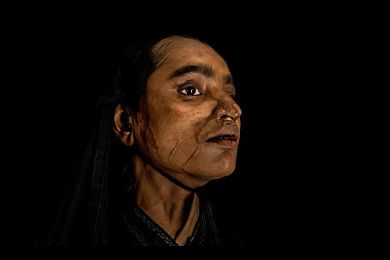
Around the world, acid attacks affect the futures of around 1,500 people every year. The majority of these crimes take place in India, Cambodia, Bangladesh, Pakistan, Nepal and Uganda.
The attacks are mostly used as punishments or revenge for slights against the perpetrator. Some women are attacked because of their beauty, particularly if their beauty draws unwanted glances. One-third of women do not even know why their attacks occur.
Children are often second-hand victims to attacks on their mothers. One woman was attacked while breastfeeding her infant and both suffered severe burns.
Men are also victims. In Uganda, 45 percent of the attacks are against men.
Administrations typically downplay these attacks. Many countries have passed new laws to increase punishments, but these are not always enforced. In Cambodia, acid attacks are punishable by up to 10 years in prison and a $5,000 fine.
There are also laws regulating the sale of acid, which is currently available in many places for a few cents per bottle. After the regulation was passed, there were fewer attacks, but it is hard to completely regulate the intent for the purchases.
Most perpetrators are never prosecuted for their crimes.
Their victims suffer from gruesome deformities. Acid destroys skin, clothing, and hair, and in high concentrations, it can melt bone. In some cases, victims are tricked into drinking acid and suffer from internal damage. Victims must deal with perpetual health issues, even after the attacks.
Recovery is elaborate and expensive. The multitude of surgeries is often unaffordable for victims.
The physical and mental suffering attached to these crimes prevents many victims from living their lives. Many end up blaming themselves. One mother lamented how her appearance scared her own children.
Even if they are willing to go back into society, victims are often ostracized. One mother said that her in-laws show pictures of her to her children and tell them she has turned into a monster. Her husband was her attacker.
The combined lack of self-worth and societal support makes it difficult for these victims to find employment after their attacks. Many attacks are perpetrated by men against their wives, and when they cast them out, these women often have no source of income.
Most places will not hire victims with their deformities and it is often foreign charities that provide any work at all. Many women attempt to cover their scars with burkas, but this often does not hide the crime.
Some victims do work to rise from their past. This is often done with encouragement from supportive family or friends. One woman is pursuing a degree in finance after her husband attacked her.
Recently, a group of female victims were given the opportunity to act as models for Rupa Designs. They were wearing designer clothes, and it provided a way for them to still feel wanted by society. The goal of the photo shoot was to motivate women to move past their attacks and recognize that they can still realize their dreams. The shoot was organized by Stop Acid Attacks, an organization that works with survivors.
Other organizations, like the Cambodian Acid Survivors Charity and the Acid Survivors Foundation also offer services for victims. Some groups offer free surgical care, physiotherapy, counseling and financial support to survivors. They also educate communities about the realities of acid attacks and the needs of victims afterwards.
The lives of both men and women are affected by these attacks, and it causes irreparable damage to their lives. Countries and organizations are working to end the violence, but there is still work to be done.
– Monica Roth
Sources: New York Daily News, Post Magazine, Daily Mail, DW, Huffington Post
Photo: flickr

GlobeIn: Helping Artists in Developing Countries
Qiyas Ergashev, a carpenter in Arslanbob, Kyrgyzstan, builds houses for a living. In his spare time, he crafts wooden gifts—nut crackers, containers, cups, etc.—for foreigners who visit his city. He aspires to make more money from his woodcraft, but he lacks the means to market his products to a larger audience.
A San Francisco startup called GlobeIn has solved Qiyas’s problem.
GlobeIn is an online marketplace that allows users to buy goods that were handmade by people in remote parts of the world. Chief Executive Vladimir Ermakov has said that his business aims to “bring local artisans to the global market.” GlobeIn’s website has been described as “Etsy with a decidedly international feel to it.”
Site users can search for artisans by region, country or craft medium. Artists from over forty countries are represented on the site, selling a panoply of items that range from musical instruments to jewelry to furniture and more.
GlobeIn’s method is simple but effective. The company employs “Artisan Helpers” who travel to the artisans’ locations. During their meeting with a helper, an artistan gets their photograph taken, tells the helper about him or herself (for marketing purposes) and learns how to use any required technologies.
Afterward, the artisan’s work is posted on the website, immediately introducing him or her into the global marketplace. GlobeIn profits by marking prices up anywhere from 5 percent to 25 percent—a form of commission.
In 2013, the company raised more than $1 million in order to develop new platforms, like its newly launched iOS app, which allows users to quickly search for and purchase crafts from around the world.
Investors included former IBM executive Doug Maine, as well as renowned author and physician Deepak Chopra. This latter investor also convinced Ermakov to shift his company’s marketing strategy away from a more traditional approach toward a storytelling approach. Now, each artisan’s website profile includes both his or her work and a short biography.
Chopra said he chose to invest in GlobeIn partly because of the company’s potential to “eradicate poverty.”
Indeed, GlobeIn seems uniquely capable of improving the standard of living for a traditionally impoverished group in developing countries—the craftspeople.
For example, the poorest denizens of the Indian state of Bihar rely on their “traditional cultural industries” for their livelihood. If these people could access the resources needed to market their cultural products to a global audience, their income could increase substantially. GlobeIn is actively providing these sorts of populations with the requisite resources.
Thus, as GlobeIn’s website suggests, the world is now open for business.
– Ryan Yanke
Sources: GlobeIn, A G & CO, Tech Crunch, Forbes , World Bank
Photo: Barjeel Art Foundation
Food Insecurity Among Syrian Refugees
The United Nations High Commission for Refugees recently reported that around 74 percent of Syrian families who have fled into Lebanon face food insecurity. With the refugee population in Lebanon expected to increase about 36 percent by next January, aid organizations are moving quickly to secure enough food for each Syrian family.
Conflict in Syria is the problem’s driving force. Heavy bombardments in Syria force refugees into Lebanon out of fear for their safety.
The influx of refugees strains Lebanese host communities, many of which lacked educational and economic resources even prior to the sudden population increase. Since the onset of the Syrian Civil War in 2011, Lebanon’s CPI has increased from values in the sixties to the current level of 100.61 Index Points—a reflection of the strain placed on Lebanese consumers. The influx creates challenges for farmers in Lebanon as well, as demonstrated by 2012‘s shortfall of 55,000 mt of cereal.
Despite all of this, the Lebanese government has not broken its commitment to 1951’s Geneva Convention: its borders have remained open. In Lebanon, Syrians can access education and health services, and 70 percent of those families who register with the UNHCR can obtain food vouchers regularly.
But assistance has on the whole been inadequate to ensure Syrians meet their physical needs. Syrians have struggled to make up the difference themselves. Nearly 20 percent of refugees lack jobs, and the average daily income of families has hovered around U.S. $15 per day. It has been estimated that families need $300 a week to meet their needs, so average incomes are far from sufficient at this point.
Food vouchers provide some relief, but rising food prices have reduced their efficacy.
However, even though the food security situation in Lebanon needs improvement, one must recognize the even worse situation in Syria. Speaking of her life in Syria, one woman from Yabroud said, “We couldn’t afford to buy anything, my children were living on bread.” She added, “They used to cry a lot from hunger.”
With such a powerful driving force as hunger, refugees will surely continue to pour into Lebanon from Syria. Since Syrians will rely primarily on organizations other than the Lebanese government for aid relief, now is perhaps an especially effective time to donate to aid organizations working in Lebanon. Organizations to consider are Doctors Without Borders, World Vision, CARE, the UNHCR and UNICEF—along with many others.
– Ryan Yanke
Sources: Trading Economics, World Food Programme, ShanghaiDaily, UNHCR, CNN
Photo: flickr
Combining Vaccines May Boost Polio Immunity
New research has shown that the use of two vaccines in conjunction may dramatically increase polio immunity. Children who receive a vaccine shot after taking an oral vaccine show greater resistance to the disease than those who receive no follow-up shot, and even those who take a double dose of oral medication.
The World Health Organization announced that combining vaccines is starting to be used for mass vaccination campaigns in heavily affected regions, as well as for routine immunizations is developing countries. The double-vaccine method is currently being used in Nigeria and will soon be launched in Pakistan.
The fight against polio has been relatively successful. Within the last 26 years, the number of countries regularly affected by polio has dropped from 125 to three. The number of cases has fallen by 99 percent. But with increased international travel, the threat of polio is resurfacing in countries previously deemed free of the virus. In May, the WHO declared an international public emergency, reporting polio outbreaks in at least 10 countries.
Until now, researchers were unable to determine a vaccination programs that provided optimal results. But trials in India have established that two vaccines used together yielded the lowest amount of virus in subjects’ feces, one of the major ways the virus is spread.
Oral Poliovirus (OPV), the oral polio vaccine, consists of a two-drop dose of weakened polio virus. It induces immunity within the digestive tract, so it has long been used to disrupt person-to-person transmission of the disease. However, this type of immunity diminishes with time, and in certain cases OPV can actually trigger a vaccine-caused case of polio. This is why inactivated poliovirus (IPV), the vaccine shot, has been added to the procedure. IPV provides immunity stronger and more extensive immunity by traveling through the bloodstream, and also protects against potential infections caused by OPV.
“The results that clearly demonstrate that IPV substantially boosts both [intestinal] and [bloodstream] immunity in children previously vaccinated with OPV are historic and have major operational implications for the global polio eradication effort,” said Dr. Hamid Jafari, WHO’s director of polio operations. He added, “It could play a major role in completing the job of polio eradication once and for all.”
Developing countries still favor oral vaccination because it is less expensive and easier to administer. But OPV’s temporary effectiveness makes it necessary for children to receive repeated doses. The injected vaccine is more expensive, but it is deemed by experts to be worth the investment because only one dose is necessary and it eliminates polio in infected areas more rapidly.
Using the combination strategy is also effective when fighting endemic polio in remote and war-torn areas where oral vaccines may not always be safely or routinely delivered. “We want to take maximum advantage of each contact with a child, said CDC vaccine expert Dr. Steve Cochi. “It’s the start of the last stand for wild polio virus, and we’re trying to hit it with both vaccines.”
– Mari LeGagnoux
Sources: Yahoo, Tech Times, Medscape
Photo: flickr
Sanitation in Developing Countries
According to joint WHO and UNICEF data, 36 percent of the world’s population lack access to basic sanitation facilities, and 768 million people regularly go without clean drinking water. Sanitation refers to the provision of safe facilities and services for human waste disposal. In other words, toilets or basic latrines.
Inadequate access to sanitation and clean water kills 4,000 vulnerable children each day. This contributes to the cycle of poverty for families and communities in developing countries. Without water, sanitation and hygiene, efficient and sustainable development is unattainable.
But the problem doesn’t end there. Lacking access to clean water and facilities means constant weakness through diarrhea, choosing whether to buy water or medicine, fewer resources to grow crops—in essence not being able to support one’s own livelihood. For girls, an absence of sanitation facilities in schools can deny them a chance at education.
“Too many people still lack a basic level of drinking water and sanitation. The challenge now is to take concrete steps to accelerate access to disadvantaged groups,” said Dr. Maria Neira, WHO Director for Public Health, Environmental and Social Determinants of Health. “An essential first step is to track better who, when and how people access improved sanitation and drinking water, so we can focus on those who don’t yet have access to these basic facilities.” She added that those who suffer most tend to be poverty-stricken people living in rural areas.
Sanitation is a crucial element to global health, yet it often suffers from political neglect. The stigma attached to human waste hampers high-profile discussion. This must change if the pattern of ill-health and poverty and sanitation in developing countries is to be broken. Improved sanitation yields approximately $9 worth of economic benefit for every $1 spent. The advantages include saving time, reducing medicine and health costs, improving quality and amount education for girls and protecting water resources.
Sanitation may seem like a nebulous problem, but it can be drastically improved with low-cost infrastructure improvements. Building pipes and pumps around villages can deliver clean water, while building toilets and sewage systems can eliminate unhygienic practices like open defecation. Both physical improvements and more widespread hygiene education can reduce the number of human waste-related deaths caused by cholera, typhoid, infectious hepatitis, polio, rotavirus and others.
Several international agencies and organizations work to ameliorate the problem of poor sanitation. UNICEF is active in more than 100 countries, developing programs to improve water and sanitation facilities in schools and poor communities. The organization also works to spread awareness about safe hygiene practices. “When we fail to provide equal access to improved water sources and sanitation we are failing the poorest and the most vulnerable children and their families,” said Sanjay Wijesekera, UNICEF Chief of Water, Sanitation and Hygiene. “If we hope to see children healthier and better educated, there must be more equitable and fairer access to improved water and sanitation.”
Both UNICEF and the WHO are major proponents of the United Nations Millennium Goals for water and sanitation; that is, to halve the proportion of people without dependable access to water and sanitation by 2015. Although the water target has been achieved, the sanitation target lags behind.
– Mari LeGagnoux
Sources: UNICEF, WHO 1, WHO 2, Government of the United Kingdom
Photo: flickr
Food Shortages and Smuggling in Venezuela
Venezuela’s government continues to battle a food hoarding and smuggling epidemic. It accuses food smugglers of causing national food shortages in the country. The government states that food smugglers hoard goods to resell for profit and smuggle such items into Venezuela’s neighboring countries.
Due to currency controls and a lack of U.S. dollars, Venezuela has found it to be increasingly difficult to import foreign food products from other countries. One of the most popular countries for food smuggling is Colombia, which borders Venezuela. Venezuelan president Nicolas Maduro and Colombian president Juan Manuel Santos have both acknowledged the problem.
Earlier this month, Maduro stated that smuggling seizure efforts in Colombia have recovered close to $400 million U.S. dollars worth of goods. Due to these smuggling incidents, the Venezuelan government intends to introduce a biometric tracking system that will limit citizens’ food purchases via a fingerprint scanning.
A military spokesperson for the government told El Universal newspaper that the quantity of goods smuggled to Colombia “would be enough to load the shelves of our supermarkets.”
This July, the government seized more than 11 tons worth of fish, chicken and beef.
Last month, Venezuela began to close its border to Colombia at night and deploy thousands of troops in an effort to stop the smuggling in Venezuela from taking place. However, opposition to the plan suggests that the policy will treat Venezuelan citizens as criminals and even breach individual privacy. Many have suggested that the policy leans toward food rationing.
Some watchdog groups have even predicted that those without the biometric cards may not be able to shop at state supermarkets. The Venezuelan government believes up to 40 percent of items purchased within the country are smuggled out of the country. This includes medicines and basic foodstuff.
Even though the government has stated that those who make use of the biometric cards may receive various discounts and other benefits, those against the plan suggest otherwise. Nevertheless, the country has seen inflation rates top 60 percent this year due to food smuggling, which indicates that something must be done.
– Ethan Safran
Sources: The Guardian, BBC, Latin Post, The Guardian
Photo: The London Fog
RESULTS: Advocates for the World’s Poor
RESULTS is a U.S.-based charity that advocates for the world’s poor. RESULTS uses advocacy to bring the world’s wealthiest governments together to do more to help end extreme poverty.
It relies heavily on volunteers and has partner organizations in four other countries—Canada, Australia, Japan and the U.K.
Thirty years ago, a teacher named Sam Daley-Harris, was inspired by a report from the National Academy of Sciences which stated that ending poverty was possible through strong political will. This led to the creation of RESULTS.
Each national organization has its own campaigns. Canada’s campaigns are nutrition, education, water and sanitation and microfinance. In the U.K., RESULTS is working on campaigns for basic education, child health and tuberculosis.
In the U.S., RESULTS has four main campaigns. The first is appropriation, which works to ensure that Congress continues to fund foreign assistance programs, specifically the ones that are the most effective.
The next campaign works to expand economic opportunities like increasing micro finance and “changing the policies of international financial institutions that hinder development.”
The final two campaigns are ensuring that all children have access to basic education and basic healthcare.
These campaigns are meant to educate communities and individuals as well as congress and the media on global poverty and hunger.
RESULTS U.S. has worked within Congress in support of important legislation like the Education for All Act as well as convincing congressmen to support crucial organizations like the Global Fund to Fight AIDS.
A clear definitive example of how RESULTS operates and achieves results is their written letter to the president in 2010. The letter was co-written with Rep. Barbara Lee (D-CA) and asked the president to pledge $6 billion from 2012-2014 to the Global Fund to Fight AIDS.
An additional 101 members of congress signed the letter and the result was a $4 billion pledge which was a “38 percent increase over the preceding three-year period.”
There are many more examples of successes like this on their website—examples of how advocacy really made a difference.
Charity Navigator has only reviewed the U.S. based RESULTS organization. According to their website RESULTS has complete transparency and accountability with a 4 star rating and a score of 99 out of a 100.
It shows that 90 percent of their budget goes towards the programs they support. This is legitimate charity that anyone could feel confident donating too.
On the U.S. website they use a fitting quote that expresses how advocacy and education about poverty is the best way to end it.
Nobel Peace Prize winner Muhammad Yunus said during his acceptance speech, “I firmly believe that we can create a poverty-free world if we collectively believe in it. In a poverty-free world, the only place you would be able to see poverty is in the poverty museums.”
– Eleni Marino
Sources: RESULTS UK, RESULTS Canada, RESULTS USA, Charity Navigator
Photo: Newsday
Vaccine-Resistant Polio: the 2010 Congo Outbreak
On August 18, a study published in the Proceedings of the National Academy of Sciences discovered the cause of the particularly deadly 2010 polio outbreak in Congo: a mutated strain that is resistant to vaccination.
Of the 445 infected, almost half of them succumbed to the virus. The outbreak’s high death rate of 47 percent was originally attributed to low immunization coverage but is now thought to be caused by a mutated strain originating from Southeast Asia. The vaccine-resistant polio strain featured a combination of two mutations that both affected the proteins of the strain’s coat, effectively making it more difficult for the antibodies to recognize and stick on the virus.
The research team tested blood samples from Gabon and from German medical students that had been vaccinated. They found that their antibodies were less effective against the Congo variant and that approximately 15 to 29 percent of the students would have been unprotected from the Congo version.
The vaccine used in Congo and in most developing countries is a weaker, dead serum and was not sufficient in providing protection. In contrast, individuals that receive the live, oral polio vaccine are provided with the strongest immunity and are protected from this polio variant.
The spread in the Congo was stopped by the administration of oral vaccine to the entire population of the surrounding areas.
While the disease is only widespread in three countries, Nigeria, Afghanistan and Pakistan, the larger concern is that similar outbreaks will appear as the world is on the cusp of completely eradicating polio. Areas where dominant strains have been eradicated but vaccine coverage is low are at risk of mutated strains in particular.
However, there are a number of promising methods for prevention and the eventual eradication of polio.
By simply increasing vaccine coverage and surveillance, outbreaks can be detected earlier or completely prevented with high vaccine implementation.
In addition, double vaccination has also proved effective in boosting immunity. By combining the oral vaccine with an additional injection of the inactivated virus, the provided immunity is much more effective than the typical application of two drops of the oral vaccine.
On the other hand, there are still many barriers impeding efforts to eliminate polio.
Delays with updating the public database with the most recent poliovirus sequences have been impeding research among the wider scientific community.
Moreover, security issues in high-conflict regions where vaccination is used as a political tool prevent successful vaccination coverage. The effectiveness of the double vaccination approach is especially promising due to its efficiency under limited access. With a brief period of time, the double vaccination method achieves much more than with the oral vaccination method.
While much has been done to almost eradicate polio, there must still be efforts to achieve the complete annihilation of the virus.
– William Ying
Sources: Proceedings of the National Academy of Sciences of the United States of America, Nature, Yahoo News, Live Science, BBC
Photo: flickr
Lasting Effects of Acid Attacks
Around the world, acid attacks affect the futures of around 1,500 people every year. The majority of these crimes take place in India, Cambodia, Bangladesh, Pakistan, Nepal and Uganda.
The attacks are mostly used as punishments or revenge for slights against the perpetrator. Some women are attacked because of their beauty, particularly if their beauty draws unwanted glances. One-third of women do not even know why their attacks occur.
Children are often second-hand victims to attacks on their mothers. One woman was attacked while breastfeeding her infant and both suffered severe burns.
Men are also victims. In Uganda, 45 percent of the attacks are against men.
Administrations typically downplay these attacks. Many countries have passed new laws to increase punishments, but these are not always enforced. In Cambodia, acid attacks are punishable by up to 10 years in prison and a $5,000 fine.
There are also laws regulating the sale of acid, which is currently available in many places for a few cents per bottle. After the regulation was passed, there were fewer attacks, but it is hard to completely regulate the intent for the purchases.
Most perpetrators are never prosecuted for their crimes.
Their victims suffer from gruesome deformities. Acid destroys skin, clothing, and hair, and in high concentrations, it can melt bone. In some cases, victims are tricked into drinking acid and suffer from internal damage. Victims must deal with perpetual health issues, even after the attacks.
Recovery is elaborate and expensive. The multitude of surgeries is often unaffordable for victims.
The physical and mental suffering attached to these crimes prevents many victims from living their lives. Many end up blaming themselves. One mother lamented how her appearance scared her own children.
Even if they are willing to go back into society, victims are often ostracized. One mother said that her in-laws show pictures of her to her children and tell them she has turned into a monster. Her husband was her attacker.
The combined lack of self-worth and societal support makes it difficult for these victims to find employment after their attacks. Many attacks are perpetrated by men against their wives, and when they cast them out, these women often have no source of income.
Most places will not hire victims with their deformities and it is often foreign charities that provide any work at all. Many women attempt to cover their scars with burkas, but this often does not hide the crime.
Some victims do work to rise from their past. This is often done with encouragement from supportive family or friends. One woman is pursuing a degree in finance after her husband attacked her.
Recently, a group of female victims were given the opportunity to act as models for Rupa Designs. They were wearing designer clothes, and it provided a way for them to still feel wanted by society. The goal of the photo shoot was to motivate women to move past their attacks and recognize that they can still realize their dreams. The shoot was organized by Stop Acid Attacks, an organization that works with survivors.
Other organizations, like the Cambodian Acid Survivors Charity and the Acid Survivors Foundation also offer services for victims. Some groups offer free surgical care, physiotherapy, counseling and financial support to survivors. They also educate communities about the realities of acid attacks and the needs of victims afterwards.
The lives of both men and women are affected by these attacks, and it causes irreparable damage to their lives. Countries and organizations are working to end the violence, but there is still work to be done.
– Monica Roth
Sources: New York Daily News, Post Magazine, Daily Mail, DW, Huffington Post
Photo: flickr
Inner Mongolia: Changing China’s Views on Women
In the northern Chinese province of Inner Mongolia, a recent conference was held by the Inner Mongolia Women’s Federation in the provincial capital. The topic of conversation was the role of women in the family and maintaining harmonious ties.
With the discussion taking place at a psychology center, psychologists provided an open dialogue about household relationships and engaged the women to openly discuss some problems and provide insight.
Though there are many who are considered homemaking women, the goal of the meeting was to provide insight, assistance and discussion around topics that previously had not been adequately discussed.
In recent months, Inner Mongolia has been in the forefront of equalizing opportunities for women. Along with having open dialogues about women’s interests in the capital, other events have focused on the professional development of women.
Though much of the Chinese agricultural business is dominated by men, women are becoming farming agents and spreading their professional wisdom with others. By including women in the conversation, the Chinese government is hoping to expand the potential of the agricultural business by accessing a greater population.
Though many of these local conferences are supported by women’s interest groups in the region, to improve domestic and professional conditions for women, Inner Mongolia is not alone. The dialogue in Inner Mongolia is reflective of a greater conversation in China as more women are entering the workforce and developing professional careers
With more conferences happening in large cities across China including Beijing, the recognition of women as resources for growth and development has influenced the way they are being acknowledged. While the dichotomy of women working professionally or staying home is still strong other ventures are emphasizing both roles.
These women’s interest groups are maximizing the opportunities of every day women both in Inner Mongolia and the rest of China. The projected goal of these endeavors is to help better economic conditions for women and enable greater social equality both in the home and in their professions.
– Kristin Ronzi
Sources: Women of China, Catalyst
Photo: Little Star
ARAHA: Alleviating Suffering in the Horn of Africa
The Horn of Africa is considered to be one of the poorest regions in the world. The United Nations recently estimated that nearly 16 million people in this area are in urgent need of food and other assistance. The American Relief Agency for the Horn of Africa (ARAHA) is an organization working to alleviate suffering from hunger, illiteracy, diseases and poverty—targeting this troubled region.
The region known as the Horn of Africa makes up the eastern part of the continent. The countries of focus include Sudan, Eritrea, Ethiopia, Somalia and Kenya. In order to accomplish their goals the ARAHA divides up their work into the following categories: food, water, disaster relief, education, self-reliance, orphans and repatriation.
The Horn of Africa faces a number of challenges that contribute to and exacerbate the extreme poverty, malnutrition and disease in the region. Drought continues to affect the region’s ability to successfully grow crops and obtain clean water. High levels of famine are a result of drought within the region, claiming hundreds of thousands of lives.
Somalia experienced a famine between the years 2010-2012 that claimed 260,000 lives—half of these deaths were children under the age of five. Since August of this year, there has been yet another famine that is creeping its way through the country.
Long wars and ethnic conflicts make it difficult for countries to progress and for economies to grow. In conflict areas within the Horn, 1.1 million people are currently internally displaced.
ARAHA works to track situations such as the current famine in Somalia. More than 500 families have received food baskets due to the efforts of the ARAHA. The organization builds hand-dug water wells. Emergency water distributions and water harvesting systems are also implemented in areas of need. Water wells are important in that they provide an opportunity for individuals to seek employment – fetching clean water can take the entire day.
With a donation of $500, the ARAHA is able to grant a dairy cow to a family in need. The purpose of this project is to provide the family a source of income by selling and drinking the milk. A family can expect an average income to be $100 a month with this new pet.
In addition to providing food and access to water, ARAHA provides tools to the struggling region in order to promote sustainable assistance. For example, the solar stove cooks virtually any food using natural light as its source of power. ARAHA has partnered with Shajee Solar International in order to send 200 of these stoves to Sudan.
One of ARAHA’s longest-running programs is the Orphan Sponsorship Program. A $40 sponsorship every month covers the basic needs of orphans such as school fees, basic healthcare and food.
Headquartered in Minneapolis, ARAHA is implementing newer strategies to downsize hunger, poverty, disease and illiteracy–while creating sustainable practices while doing so.
– Caroline Logan
Sources: American Relief Agency for the Horn of Africa, Razoo, Faqs
Photo: flickr