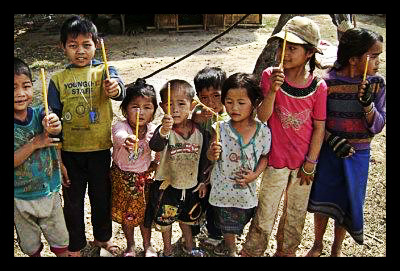
Pencils of Promise’s programs have impacted more than 300,000 lives. Its schools have served more than 31,240 students and its scholarship recipients are two times more likely to progress to secondary school than the regional average.
Founder Adam Braun was a college student backpacking across the globe when he asked a small boy begging on the streets of India what he wanted most in the world—the answer? A pencil. Braun reached in his backpack and handed him his pencil as ‘a wave of possibility washed over him.’ Over the next five years, Braun backpacked through more than 50 countries handing out thousands of pens and pencils across six continents.
These pencils led to powerful conversations with local parents and children across numerous cultures and languages. In October 2008, PoP was founded. What began with a mere $25 deposit has now built more than 200 schools, breaking ground on a new school every 90 hours.
“We’ve learned that education is a living, breathing entity that with the right nurturing, evolves into something spectacular,” Braun writes on the website.
“We’ve learned that every piece of its growth is a challenge and that each pencil, each dollar, each supporter is essential. Pencils of Promise is now a global movement of passionate individuals, many of which are the most dynamic and impactful leaders we have ever seen. They are committed to supporting a world with greater educational opportunity for all. Thousands have joined us, making contributions through acts both large and small.”
There are three main things that set PoP apart from other organizations. PoP is 100 percent for-purpose, 100 percent direct giving and has a 100 percent success rate. It is a unique organization because it blends the head of a for-profit business with the heart of a humanitarian nonprofit— by covering operational costs through private donors, events and companies, 100 percent of every dollar donated online goes directly into its programs to educate more children. Furthermore, it does not just “build a school and move on.” PoP monitors and evaluates every project it undertakes— ensuring that every school it opens is fully operational and educating students daily.
On its website, one can donate various amounts of money, each detailing exactly how much of an impact it would make— $100 to keep children healthy, $250 to educate a child, $500 to train a teacher and $25,000 to build a school.
Pencils of Promise is true to its word in terms of a functioning education system. PoP’s students score three times higher on language literacy tests than their peers and the teachers enrolled in PoP’s teacher training program attend school with 97 percent frequency. Additionally, 85 percent of PoP’s teachers report student literacy increases, 88 percent of the teachers report student numeracy increases and an astonishing 90 percent of the teachers report increases in student engagement due to its programs.
PoP can also be credited with being extraordinarily innovative. PoP works to provide schools with smartphones, e-readers, long-range radio and creative materials in order to reach the most under-served communities in the countries where PoP works. One e-reader provides a student with 50 books in both English and the local language. Smartphones deliver interactive audio lessons to provide expanded access to learning and a mobile learning kit contains books, phonic games and creative educational tools for teachers.
This organization not only trains teachers, but also teaches and trains students about WASH (water, sanitation and hygiene). Students miss 272 million school days due to preventable illness and the international WASH program has allowed PoP to train more than 5,040 students since 2009. Pop does this via a three-step approach: building bathrooms and hand washing stations, teaching students and tracking behavior change.
The Huffington Post reported that the program has brought hope to children around the world in the form of 10 million hours of education as of March 2014.
As Braun writes in his book, “Take the first small step, and chase the footprints you aspire to leave behind.” To take this first small step, visit https://pencilsofpromise.org/.
– Eastin Shipman
Sources: Pencils of Promise 1, Pencils of Promise 2, Pencils of Promise 3, Pencils of Promise 4, Huffington Post,
Photo: Pac For Kids

Namibia as a Successful Peace Operation
It has been argued the Security Council embraced an innovative character throughout the late 1980’s and early 1990’s. A large contribution to this was the extension of “threats to peace” after the Cold War to include widespread violations of international humanitarian law and the massive flow of refugees. Since the 1990’s, the Security Council has acted past its authorized powers by means of flexible interpretation of the charter, but mostly expressed consent.There have been numerous peace operations, specifically during after the 1990’s, and many of these operations have taken place in civil war conflict areas. While there are various debates on the efficacy of peace operations, the mission is Namibia provides a case of a successful and sustainable peace.
Namibia is a country that was colonized by the Germans until a defeat by South Africa in 1915. South Africa ruled colonized Namibia until the Security Council confirmed the illegality of South Africa’s presence in the Territory in 1970, and later declared the necessity to hold free elections in Namibia as to ameliorate the oppressive presence of the South African Administration on the Namibian peoples. The United Nations adopted Resolution 435 in 1978 for U.N. supervision over Namibia’s independence, the mission was titled United Nations Transition Assistance Group, also referred to as UNTAG.According to the U.N. Mandate, the mission aimed to “Assist the Special Representative of the Secretary-General to ensure the early independence of Namibia through free and fair elections under the supervision and control of the United Nations. UNTAG was also to help the Special Representative to ensure that: “All hostile acts were ended; troops were confined to base, and, in the case of the South Africans, ultimately withdrawn from Namibia; all discriminatory laws were repealed, political prisoners were released, Namibian refugees were permitted to return, intimidation of any kind was prevented, law and order were impartially maintained.”
UNTAG proved to be different from previous peace operations, for its goals were focused on political rather than military goals. The success of the mission in Namibia had many ingredients. Not only was the timing appropriate due to the regional desire for peace, but UNTAG involved a great deal of civilian involvement. This is a critical component, for civilian input is invaluable when a society is being constructed into a democratic entity. Since the United Nations had been involved in Namibia for a substantial amount of time, the personnel and senior offices were very familiar with the situation. This is significant, for outside parties need dense insight into the conflict of which they are intervening. The wide mandate of the UN, combined with the sense of legitimacy by the Namibian people was necessary for the lasting peace in the region. Namibia gained independence in March 1990 and joined the United Nations as an independent country in April 1990.
– Neti Gupta
Sources: Taylor & Francis Online, University of Colorado, United Nations 1, United Nations 2
Photo: Fotolibra
History of World Hunger
A myriad of non-governmental actors exist today to combat world hunger, including the World Food Program, Action Against Hunger, Doctors Without Borders and the United Nations High Commissioner of Refugees. While these international mechanisms have developed to meet recent needs, world hunger has existed throughout the course of human history.
World Hunger: Tale as Old as Time
There have been a variety of food systems over time. For a large portion of history, humans hunted or grew food for their own consumption, and food traveled only short distances from source to stomach. This does not mean, however, that long distance food exchanges were not present. From spice trades to acquiring “exotic” foods from colonies, a “mercantile food system” was present from 1500-1750. This was replaced by the “settler-colonial” regime during the nineteenth century in which white settler colonies traded luxury and basic foods and goods in return for European manufactured goods. The “productivist” food regime emerged after World War II which was characterized by food industries and the re-emergence of European and American agricultural protectionism. The idea that the entire world can experience a “food crisis” was coupled with the idea that one can foment a world free from hunger.
A neoliberal food regime has developed since the 1980s. Characterized by multinational and corporate power, this system has promoted a “global diet” that is high in sugars and fats at the expense of traditional or local diets. This trend in food is caused in part by globalization, and creates an intricate relationship between the individual and multinational corporations, local and distant farms and the environment.
Chronic hunger and food security are inherently connected. Citizens of the most industrial places on the planet still experience hunger on a massive scale. According to the vice president of the Poverty and Prosperity Program of the Center for American Progress: “people making trade-offs between food that’s filling but not nutritious…(this) may actually contribute to obesity.” Regarding larger scale suffering, extreme causes of world hunger include poverty, powerlessness, armed conflict, environmental overload and discrimination.
While hunger is understood differently across time, space and culture, it is important to alleviate this problem of chronic hunger. One must investigate sustainable solutions to the root causes of the problem, and these long-term solutions should be implemented by local peoples.
– Neti Gupta
Sources: Freedom from Hunger, National Geographic, Ohio State University
Photo: Flickr
Benefits of a Universal Basic Income
Switzerland citizens have been fighting for this movement and have sparked a public referendum to push the movement forward. The country has seen the possible benefits of what a UBI can accomplish. Families can have food security, income inequality would decrease, and if countries adopt the idea with success may influence other countries to do the same. In the 1970’s Canada experimented with the implementation of a UBI, and according to the New York Times “poverty disappeared…High-school completion rates went up; hospitalization rates went down.”
Another reason this topic is so vital in today’s world is the advancement of technology. The Guardian has found “Oxford academics Carl Benedikt Frey and Michael A Osborne have predicted computerisation could make nearly half of jobs redundant within 10 to 20 years.” Thus, the more technology grows, the less jobs will be available to the public.
However, the chance of having a UBI gives citizens a way to achieve their professional dreams. Instead of people working a job they need to survive, with a monthly check from the government they can focus on what they really want to do. The economist has studied “Philippe Van Parijs, a Belgian philosopher, who believes a UBI provides ‘the real freedom to pursue the realization of one’s conception of the good life’” Therefore, a family living in poverty will lose the stress of worrying about their next meal and children can focus on education.
If this concept seems so beneficial why hasn’t it been done? One of the main concerns of creating a UBI is the downfall in work ethic; there is a possibility of laziness if people receive checks for simply being alive. Another drawback is the raise in taxes, BBC has stated “income tax would not necessarily rise, but value added tax – on what people buy rather than what they earn – could rise to 20% or even 30%.”
Despite some negativities in a UBI, it is an idea that may soon be adopted by a majority of the world. With its recent conversation in many governments there seems to be a positive outlook on this concept. A universal income may sound outlandish but so does ending world poverty; yet, both are achievable in the near future.
Sources: BBC, The Guardian, The Huffington Post, The New York Times
Photo: PBS
How USAID Helps the World’s Poor
USAID has funded $62 million on Tetra Tech, a company focused on engineering and program management. Tetra Tech will focus on helping to develop the government system in Afghanistan. According to Business Wire, the company will “strengthen the linkages between the central government and provincial levels for strategic planning, budgeting and service delivery.” With this investment, the state will better develop communication to help citizens.
In Nigeria, USAID is helping farmers increase cocoa production to compensate for the fall in oil prices. Cocoa is a key export for Nigeria, and with the education to grow more effectively, it will support and diversify the economy. AllAfrica has recognized Mathew Burton, Director of Economic Growth and Environment for USAID, who believes “there are obviously opportunities for Nigeria to explore in the development of her cocoa sector.” With the search for investors to further help boost production, this can be a tremendous help for Nigeria’s economy and development.
After the multiple natural disasters the Philippines has endured, USAID has announced a partnership with the “Education Governance Effectiveness Project, which will help elementary public schools in the target provinces get back on track towards improving learning outcomes.” The mission is focused on helping students in grade school to help implement a solid learning foundation for their future education. Since education correlates to the rate of poverty, this will be a stepping stone for the country’s further development.
Feed the Future is the U.S. government’s initiative to end world hunger. USAID is assisting in helping farmers in Mozambique use “more productive agriculture technologies, improving nutrition and health, and connecting farmers to markets.” This initiative not only helps decrease starvation, but also increase the economy by selling goods in markets. USAID has educated farmers on proper agricultural techniques and partnered with the Government of Mozambique.
The progress USAID has made gives more reason to why they deserve better funding from the government. With consistent efforts to make better living conditions for the world’s poor, they are a beacon of hope to ending world poverty. The more USAID works to create plans across the globe, the less we will see famine and disease in poor countries.
– Kimberly Quitzon
Sources: USAID 1, USAID 2, Business Wire, All Africa, Feed The Future
Photo: Flickr
USAID’s Water Fund
USAID was one of many organizations to celebrate World Water Day on March 22. USAID’s Water and Development Strategy focuses on using water programs in developing countries to improve health and fight poverty.
In 2014, Senator Paul Simon created the Senator Paul Simon Water for the World Act, which passed unanimously in the House and Senate, and was signed into law by President Obama. The Act supports more targeted, effective and sustainable investments in water, sanitation and hygiene, known as WASH programs.
Both the Act and Water Strategy recognize that WASH programs need to be sustainable, designed to have lasting impact over time in order to better the lives of future generations. They also need to build stronger foundations for those countries.
Approximately 2.5 billion people live without access to sanitation every day, and another 748 million live without safe drinking water. Unsanitary environments and infected water increase the chances of lifelong illnesses, low incomes, malnourishment and fatalities. In fact, an estimated 622,000 children die each year from diarrheal diseases, which is most often water-related. Every minute, a child dies from a water-related disease.
For many, the closest access to a water source is miles away, requiring hours of walking in the hot sun. Water.org conducted a survey of 45 African countries, the majority answering that women and children bear the primary responsibility for water collection in the majority of households.
If every gallon of water was supplied, women and children would have more time to take care of their homes, loved ones, attend school and earn money. For every safe sanitation facility, another girl could spend more time in school during her menstruation, avoiding the risk of sexual assault when she does not have access to a facility.
The work to increase access to water and sanitation will reduce enormous suffering. In the 2013 Fiscal Year alone, USAID’s worldwide programs helped make sanitation facilities available to nearly 1.3 million people and improved access to drinking water for more than 3.5 million people.
– Alaina Grote
Sources: Water.org, USAID 1, USAID 2
Photo: USAID
Chad: Highest Rates of Malnutrition in West Africa
Those who suffer from undernourishment are more vulnerable to infections and diseases like malaria. Due to the country Chad’s lack of health care, frequent droughts and lack of access to safe drinking water, 790,000 citizens need emergency food assistance, while three million are in need of humanitarian assistance in general. The country is believed to have the highest rate of malnutrition in West Africa compared to its other impoverished countries.
According to a SMART nutrition survey, the child malnutrition rates in 2014 were between 6.8 and 13.3 percent. Those living in the Sahelian area of Chad experienced the worst: five regions in that area exceeded a 10 percent rate, and six regions exceeded a 15 percent rate of malnutrition. Fifteen percent is considered the minimal rate needed to declare a hunger emergency. It should be noted that contributing to these malnutrition rates are refugees from the Central African Republic and Sudan. There are up to 450,000 who have pursued safety in Chad, and while there has been no official survey conducted yet, up to 14 percent of child refugees at just a few refugee sites have been screened as “acutely malnourished.”
Chad’s traditional health services are underwhelming, with less than one qualified person who can provide medical aid for every 1,000 people. The government allocates a mere three percent of its budget toward health initiatives. This has prompted outside help to intervene in this dire situation.
While there are a few programs to provide medical aid to those suffering in hunger, the problem will not be solved until the core issue of poverty is looked at. According to Richard Currie of Médecins Sans Frontières, or MSF, five percent of children die in their care—and those are the ones receiving treatment.
“It is tremendously rewarding to discharge a previously critically ill child from our program as ‘cured,’ but in the absence of adequate nutrition in the home and an improved food security situation in the community, the child remains at risk of falling back into illness later and eventually re-entering the program,” Currie explained.
Other organizations lending a hand are UNICEF and the U.N. World Food Programme, which are trying to distribute food and introduce programs that will help citizens before emergency medical treatment is required. WFP claims to have targeted 1.3 million citizens in 2014. Nourishment rates in 2014 showed improvement compared to previous years, and hopefully the intervention of all these organizations will improve the rates even more for 2015.
– Melissa Binns
Sources: Irin News, World Food Programme
Photo: UNICEF
Poverty in Indonesia
The economy of Indonesia has been steadily growing in recent years, causing the poverty rate to decline from 17 percent in 2004 to 12.5 percent in 2011. However, due to the financial crisis of 1997, poverty still dominates regions of Indonesia and separates the city of Jakarta into upper and lower classes. As the gap between the rich and the poor widens, many find it difficult to escape the harsh reality of poverty in Indonesia.
In order to recover from the economic crisis of 1997, a variety of urban alleviation programs were implemented, including social safety net programs. These programs have been able to reduce the number of poor people in Indonesia, particularly for those in urban areas.
It is a different story for those living in rural areas. Approximately 70 percent of the population lives in rural areas, where agriculture is the main source of income. Poverty tends to be higher in these areas; 16.6 per cent of rural people are poor compared with 9.9 percent of urban populations. Millions of small farmers, farm workers and fishermen are materially and financially unable to take advantage of the opportunities offered by the economic growth. They are often geographically isolated and lack access to agricultural extension services, markets and financial services.
According to the World Bank, approximately 65 million people in Indonesia live just above the poverty line, making them vulnerable to falling into poverty. Millions lack basic human needs, such as food, clean water, shelter, sanitary environments and education. In fact, few families living in poverty have their own bathrooms. Most communities share a communal bathing facility, often located miles from villages. Many of the poorest people cannot read or write.
Indonesian women in particular are vulnerable to poverty; they have less access to education, they earn less than men, and are subject to discrimination and exclusion. Many children are forced to stay home from school to tend to household duties or work at the family business.
The Indonesian government is working hard to reduce poverty and meet the United Nations’ Millennium Development Goals, which aim to cut the proportion of people living on less than one U.S. dollar a day by half by the end of 2015.
Kecuk Suhariyanto, the Director of Analysis and Statistic Development at Indonesia’s Central Bureau of Statistics, said that Indonesia’s poverty figure last year was a “significant improvement from the 39.3 million recorded in 2006, although the country has a different definition for poverty from most international agencies.”
– Alaina Grote
Sources: World Bank, Xinhuanet, Rural Poverty Portal
Photo: Flickr
Pencils of Promise
Pencils of Promise’s programs have impacted more than 300,000 lives. Its schools have served more than 31,240 students and its scholarship recipients are two times more likely to progress to secondary school than the regional average.
Founder Adam Braun was a college student backpacking across the globe when he asked a small boy begging on the streets of India what he wanted most in the world—the answer? A pencil. Braun reached in his backpack and handed him his pencil as ‘a wave of possibility washed over him.’ Over the next five years, Braun backpacked through more than 50 countries handing out thousands of pens and pencils across six continents.
These pencils led to powerful conversations with local parents and children across numerous cultures and languages. In October 2008, PoP was founded. What began with a mere $25 deposit has now built more than 200 schools, breaking ground on a new school every 90 hours.
“We’ve learned that education is a living, breathing entity that with the right nurturing, evolves into something spectacular,” Braun writes on the website.
“We’ve learned that every piece of its growth is a challenge and that each pencil, each dollar, each supporter is essential. Pencils of Promise is now a global movement of passionate individuals, many of which are the most dynamic and impactful leaders we have ever seen. They are committed to supporting a world with greater educational opportunity for all. Thousands have joined us, making contributions through acts both large and small.”
There are three main things that set PoP apart from other organizations. PoP is 100 percent for-purpose, 100 percent direct giving and has a 100 percent success rate. It is a unique organization because it blends the head of a for-profit business with the heart of a humanitarian nonprofit— by covering operational costs through private donors, events and companies, 100 percent of every dollar donated online goes directly into its programs to educate more children. Furthermore, it does not just “build a school and move on.” PoP monitors and evaluates every project it undertakes— ensuring that every school it opens is fully operational and educating students daily.
On its website, one can donate various amounts of money, each detailing exactly how much of an impact it would make— $100 to keep children healthy, $250 to educate a child, $500 to train a teacher and $25,000 to build a school.
Pencils of Promise is true to its word in terms of a functioning education system. PoP’s students score three times higher on language literacy tests than their peers and the teachers enrolled in PoP’s teacher training program attend school with 97 percent frequency. Additionally, 85 percent of PoP’s teachers report student literacy increases, 88 percent of the teachers report student numeracy increases and an astonishing 90 percent of the teachers report increases in student engagement due to its programs.
PoP can also be credited with being extraordinarily innovative. PoP works to provide schools with smartphones, e-readers, long-range radio and creative materials in order to reach the most under-served communities in the countries where PoP works. One e-reader provides a student with 50 books in both English and the local language. Smartphones deliver interactive audio lessons to provide expanded access to learning and a mobile learning kit contains books, phonic games and creative educational tools for teachers.
This organization not only trains teachers, but also teaches and trains students about WASH (water, sanitation and hygiene). Students miss 272 million school days due to preventable illness and the international WASH program has allowed PoP to train more than 5,040 students since 2009. Pop does this via a three-step approach: building bathrooms and hand washing stations, teaching students and tracking behavior change.
The Huffington Post reported that the program has brought hope to children around the world in the form of 10 million hours of education as of March 2014.
As Braun writes in his book, “Take the first small step, and chase the footprints you aspire to leave behind.” To take this first small step, visit https://pencilsofpromise.org/.
– Eastin Shipman
Sources: Pencils of Promise 1, Pencils of Promise 2, Pencils of Promise 3, Pencils of Promise 4, Huffington Post,
Photo: Pac For Kids
Correlation Between Gender and Poverty
As the United States grapples with the gender gap, countries abroad deal with an even larger one. Women abroad face economic, political, social and structural barriers that prevent them from succeeding in a competitive market, revealing a correlation between gender and poverty.
ONE, an international campaign and advocacy organization, has addressed an open letter to German Chancellor Angela Merkel and African Union Commission Chairperson Nkosazana Dlamini-Zuma. Both leading women will hold meetings at the upcoming G7 Summit in Germany and African Union Summit in South Africa. In both meetings, there will be one agenda: women’s empowerment.
This year, a blueprint will be drawn up for the new global goals, which will influence investments for the next 15 years. Known as the Sustainable Development Goals, the plan aims to target its efforts on eradicating global poverty by 2030. With this in mind, ONE’s goal to address gender and poverty is crucial. The letter addresses the critical need to raise awareness for women’s rights in regards to global poverty, especially in African governments.
“The poorest women are often barred from owning and inheriting land and other property, opening a bank account, or accessing education. Women in the developing world are far more likely to die giving birth, become child brides (and suffer abuse from their husbands), or suffer from chronic health problems,” ONE reports.
These issues also extend to women’s opportunities in agriculture, which has been reported to be the most effective at reducing poverty. According to the “Poverty is Sexist” report, agricultural productivity for females is 23 to 66 percent lower than males. With the lack of access to labor, tools, extension services and financing, these problems persist. However, if efforts were refocused on women and poverty, it is projected that agriculture could increase by 20 to 30 percent, feeding 100 to 150 million additional people.
How can efforts be refocused on this gender-sensitive subject? When women are placed at the forefront of the new development agenda, better targeted investments are made in health, education and economic empowerment. These investments have specific challenges and opportunities; however, by reducing the gender gap in poorer countries, strides can be made.
“Reducing differences in the employment rate between men and women by 2017 could generate an additional $1.6 trillion in global output,” says ONE.
In addition, stronger health systems that benefit women could decrease maternal and child deaths; reliable energy could allow women and girls to spend less time collecting fuel (increasing time for economic pursuits); and quality education could create an economic and social benefit for the entire world.
Influential women around the world have already signed ONE’s petition to raise awareness for women in poverty—including Beyoncé, Lady Gaga and Meryl Streep. The petition can be signed here.
– Briana Galbraith
Sources: Billboard, ONE 1, ONE 2, ONE 3
Photo: Miami Agent Magazine
How Discrimination Affects Global Poverty
Discrimination affects global poverty by breeding an environment of inequality that limits one’s access to fundamental rights and basic needs.
Discrimination against people or groups based on race, religion, ethnicity or other factors can foster segregation, which impoverishes the particular population who cannot obtain access to fundamental needs for basic living.
The groups discriminated against include minorities, indigenous people and migrants. Discrimination against these groups and poverty are connected in more ways than one. Being discriminated based on race or gender has a direct impact on one’s economic opportunity and makes it increasingly difficult to navigate familial, social and economic institutions. Additionally, one’s low economic status can be a target for discrimination causing a cyclical pattern between discrimination and poverty.
The link between discrimination and poverty is largely based on inequality in opportunity. In Burma, for example, widespread discrimination against minority groups such as Muslim minority groups has influenced the way in which that specific group lives. The marginalized minority group has been denied rights to citizenship, which restricts their access to employment, education, opportunity and fundamental living in general. Government forces also play an important role in the group’s limited access to equality, partly due to unfair, violent and sometimes abusive treatments of the group solely based on religion and ethnicity. The discrimination observed in Burma has pushed the minority group into poverty due to restricted social and economic rights.
Furthermore, discrimination hinders one’s ability to partake in government policies, especially policies centered on the development of strategies for poverty reduction. Limited justice then becomes more than an issue of inequality, but also an issue of poverty.
Discrimination can be a result of poverty and also an obstacle for ending global poverty. According to Human Rights Watch, two thirds of those living in poverty in low income nations reside in households led by an ethnic minority group specific to that country.
Lack of basic access to education due to discrimination, for example, serves as an important contributor and obstacle standing in the way of alleviating global poverty. According to Social Watch, a report revealed that among those who are illiterate, a vast majority belong to ethnic, religious or racial minority groups. Additionally, due to economic and social inequalities, minority groups are more likely to become exposed to health issues such as infectious disease.
The link between discrimination and poverty suggests that in order to completely eradicate global poverty, inequalities due to discrimination need to be addressed. Protecting minority groups from discrimination can help alleviate the number of people who fall or get trapped into poverty solely because of race, gender, ethnicity, religion or any other characteristic. Amending laws that pose a threat to minority groups as well as enacting laws that fight discriminatory policies can be a means of reducing discrimination, which will ultimately alleviate poverty.
– Nada Sewidan
Photo: Burma Times
Sources: Human Rights Watch, Social Watch