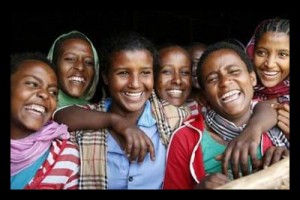
 According to the Human Development Index, most of the world’s developed countries are located in Europe and North America while large swaths of Africa and Asia remain underdeveloped (South America falls somewhere in the middle). In addition to population size problems, these developing nations have to deal with political pressure revolving around the use of environmentally sustainable measures of growth—pressures that did not exist when currently developed nations were in their growth spurts. Discussed below are five easy steps to help develop a country and guide the growth of future international trading partners.
Five Easy Steps to Develop a Country
1. Share resources
Obviously, the fewer resources an average family uses, the lower the nation’s ecological footprint. Developing countries may not be able to afford electric or semi-electric cars, but their people can conserve both money and oxygen by carpooling, riding bikes and reusing grocery bags.
At the level of foreign advocacy, there are already influential notables arguing for the synergy between alleviating poverty and quelling climate change. Lord Nicholas Stern, chairman of the Grantham Research Institute on Climate Change and the Environment, warned against resorting to high-carbon-intensive resources to help impoverished countries. “The world is underinvesting in infrastructure, especially in developing countries where there are the largest unmet needs,” he wrote recently. For this reason, he encouraged governments not to separate climate and environmental funds from foreign aid, arguing that the two had to go hand-in-hand in order to produce long-term benefits.
2. Promote education
All levels of education are important stepping-stones to development, from the fundamentals of kindergarten, to the advanced quantum physics courses at the university. Each class ought to be taught with the overarching goals of quality of life and economic improvement in mind. Education stops terrorist groups from gaining strength and trains doctors and scientists to research and cure diseases. It is one of the primary movers that help impoverished nations to help themselves. Studies have shown that the greater number of mean years children attend school, the healthier that nation’s economy becomes.
3. Empower women
Education is most valuable to a developing country’s most vulnerable groups. The most common demographic among all of these populations—farmers, small-scale producers, victims of epidemics and terrorist groups—are women. Children of both genders are vulnerable as well, but the impoverished boys who do not die prematurely or join the terrorists are more likely to have enough social mobility to get educated and leave than girls. In the least educated African countries—Somalia, Niger, Liberia, Mali and Burkina Faso—over 70 percent of girls between seven and 16 have never attended school.
By empowering women and equalizing academic opportunity, countries can increase incomes by an average of 23 percent. They can do this by investing in schools closer to rural areas so that the children of farmers do not have to walk hours each day to get to and from school, straining their parents’ time and resources in the process. That way, neither parents nor children would feel pressure to force a decision between farm work and schoolwork and the poorest populations could begin to make progress.
4. Negotiate strategic political relations
Americans have seen firsthand what happens when big businesses and lobbyists become too deeply involved with politicians. When it happens in third-world countries, their poorest, most disadvantaged citizens are the ones who suffer. This often leads to violent uprisings with scads of victims on both sides. There’s a reason why college majors such as international relations and politics are practically universal. Aligning with people who have considerable political power and pathetically few scruples seldom benefits the poorer country. For that reason it is imperative that the educated learn to choose their political allies carefully in order to make the greatest leaps in ecological, economic and humanitarian development.
5. Reform the systems of food and aid distribution
So many millions of people still suffer from world hunger each day. Their problem springs less from stinginess among foreign taxpayers, but from inefficient systems of distribution. As Senegalese entrepreneur Magatte Wade recently explained, the bulk of taxpayer money filtering in from more affluent countries does not actually pay for African or Asian aid partly due to deep flaws in the regulations and in large part because of theft. “Look no further than the people who make most of that money,” she advised. “That’s where the money ends up.”
Here again, the rally call ought to be to support Africans rather than the inexperienced, inadvertently patronizing, members of the aid business. Instead of pouring money into resources, shipping and energy costs, she says, developed countries ought to invest in local African businesses so that the people can more effectively improve their own circumstances without having to resort to the whims of potentially corrupt and incompetent leaders.
– Leah Zazofsky
Sources: Business Green, World Education Blog 1, World Education Blog 2, The Guardian, American Thinker
Photo: International Development Research Centre

ADRA Addresses Community Development
The Adventist Development and Relief Agency (ADRA) is an organization set out to identify and address social distortions and deprivation in developing countries. ADRA focuses its energy on community development through six sectors: Protecting the Vulnerable, Supporting Families, Promoting Health, Providing Food and Water, Establishing Livelihoods and Responding to Emergencies.
Protecting the Vulnerable
ADRA aims to protect children who are sold as sex workers, advocate for women who must fight for the opportunity to learn to read and defend the millions of minorities and others around the world who suffer injustice.
Supporting Families
Families in poverty are the focus on this program. Orphans who are without food or shelter are cared for and looked after. ADRA also provides children with education.
Promoting Health and Providing Food and Water
ADRA wants to reduce the incidences of diseases by encouraging health and wellness. Coupled with improvements in sanitation and access to clean water, the basics of health and wellness can be achieved.
Establishing Livelihoods
By providing microloans and training, ADRA gives men and women the ability to support themselves and their families. This is one of the best ways to help someone escape poverty; with these opportunities, men and women can get back up on their feet and stay there.
Responding to Emergencies
We often see that countries that are in need are also often affected by unforeseen disasters. The ADRA is there to respond to those emergencies. By providing the basic necessities, the short term needs of disaster refugees are
ADRA deals with millions of funds in order to provide these programs. In 2012, $74,330,388 was spent on the functional expenses of the organization. Ninety-three percent of their funding goes toward their programs in the six sectors, while the rest of the seven percent is split between administrative funding and fundraising.
The many programs provided by the ADRA look to apply aid liberally by addressing many different issues involving those in need.
– Erik Nelson
Sources: ADRA, Charity Navigator
Photo: Adventist
Buying Food, a Struggle in the Solomon Islands
A child’s diet for the first 1,000 days of their life is crucial to developing both mentally and physically. Unfortunately, one-third of children under the age of five in the Solomon Islands are considered stunted—too small for their age due to malnutrition. Children who are stunted are often more susceptible to infections and diseases.
The Solomon Islands are not short on food resources. There is a plethora of fish and sea food available; however, it is common for families to not have the funds required to purchase fresh fish or even canned tuna. Of the citizens who live in rural areas, 60 percent rely on food that they grow themselves. The Solomon Islands have ideal conditions for agriculture; however, those living in urban areas do not have access to land and are forced to purchase overpriced food that they simply cannot afford.
According to the Solomon Islands National Statistical Office, many people suffer from “hidden hunger,” meaning while things might not look physically dire, they are actually desperately lacking the proper nutrition to live long, healthy lives.
Solomon Island communities try to look out for each other and share food. Not only do the citizens highly value their family and friends, they also have their own “wantok”—their neighbors and extended family—who they share cheap food with. The cheapest foods can be bought in bulk like rice and noodles, but it can be very dangerous to live off these foods alone. The people of the Solomon Islands experience high rates of anemia and diarrhea from their lack of proper nutrition.
Also contributing to the lack of proper nutrients is overpopulation; the population of the Solomon Islands grows by 2.8 percent each year. More and more people are in need of food, with less and less of it being available due to the small income the islanders receive. Addressing this problem will involve taking a hard look at the economy and finding a way for citizens to receive an adequate income capable of consistently sustaining them.
– Melissa Binns
Sources: CGIRA, SPREP
Photo: Flickr
American Friends Service Committee Brings Peace
The American Friends Service Committee has a specific way to address poverty: striving for peace. The organization was created in 1917 by young adults who wanted to help bring peace during wartime. The committee’s first project was conducted in France, where they helped care for World War I refugees and built homes and hospitals. Since then, the organization has traveled all over the world visiting war-torn areas to provide aid.
The American Friends Service Committee has fought famine in Russia, built orphanages in Poland and Serbia and fed the hungry in Germany and Austria. They not only helped victims on both sides of the Spanish-American War, they also helped people escape Germany in World War II. In 1947, the organization was awarded the Nobel Peace Prize for their commitment to aid.
Now, The American Friends Service Committee has developed even more ways to help. They not only attend to victims of war, but fight for the rights of immigrants, address high prison rates and criminal justice and challenge discrimination. They believe that every human life has value and try to speak up for those who may be voiceless in their communities. They also give speeches around the United States to inform other Americans about their cause and to advocate for peace.
The American Friends Service Committee states that they envision “a world in which lasting peace with justice is achieved through active nonviolence and the transforming power of love.”
“From our experience, we know that peacemaking requires more than merely advocating against one war or another,” says the American Friends Service Committee. “Real peace is more than the absence of war. Rather, we need to change the culture, situations, and systems that lead to violence. When people understand the terrible consequences of violence and witness realistic alternatives, they come together as a powerful force to address the underlying causes and lay the foundation for lasting peace.”
By spending $10.3 million dollars on international aid, this organization is well on their way to having their dream realized.
– Melissa Binns
Sources: American Friends Service Committee, Nobelprize.org
Photo: Flickr
Guatemala’s Fight Against Child Malnutrition
Guatemala has one of the highest rates of child malnutrition in the Western Hemisphere and the sixth highest in the world. Half of all children under five are considered severely malnourished. Malnutrition is highest among the indigenous population and nearly two-thirds of indigenous children do not get enough to eat. In some of the poorest villages that number rises to 90 percent.
This is significantly higher than nearby Honduras and Nicaragua, both of which are significantly poorer than Guatemala. Haiti is the poorest country in the Western Hemisphere and the average Guatemalan earns four times more than the average Haitian, but Guatemala’s childhood malnutrition rates are twice as high as Haiti’s.
The reason child malnutrition rates are so high is largely the result of high levels of income inequality, some of the greatest in the world. Another primary factor is neglect toward indigenous communities on the part of the central government.
In recent years the situation has become worse due to a prolonged drought in many parts of the country resulting in lower crop outputs. This has led to food shortages and higher prices for those who are already too poor to put enough food on their tables.
Child malnutrition is both the result of and a primary cause of extreme poverty, it creates a sort of poverty trap. When children grow up malnourished, their education suffers and they are more likely to drop out of school and have trouble finding employment. They are also more likely to suffer from psychological and physical health defects.
Studies show that high levels of child malnutrition have stunted the growth of Guatemala’s indigenous population. Indigenous Guatemalans are on average several inches shorter than indigenous people in southern Mexico who belong to the same indigenous group and share similar physical and genetic features. The difference is that Mexico has much lower levels of malnutrition.
Due to low rates of tax collection and entrenched corruption, it has been difficult for the Guatemalan government to come up with the resources to tackle the problem. But it has begun to address it and work towards a solution.
Partnering with foreign donors, the Guatemalan government has instituted a program aimed at providing food supplements to some of the country’s poorest villages. The EU has provided 186 million euros (about $200 million) in development aid to Guatemala. Progress is being made and several villages are benefitting, but corruption is hampering the program. Many Guatemalans accuse the government of embezzling much of the money for personal use.
USAID is funding farming cooperatives aimed at boosting income and food security. Several villages that have benefitted from the programs report better crop yields, higher levels of income and reduced levels of malnutrition.
But despite these important victories, there is still a long way to go. Most villages continue to struggle and have yet to benefit from any assistance. But progress is being made and things are moving in the right direction.
– Matt Lesso
Sources: DW, The Economist, USAID
Photo: Flickr
World Social Forum: The Alternative Way to Tackle Poverty
Despite the Bardo Museum attacks in Tunis, Tunisia, the World Social Forum proceeded to convene from March 24 to March 28, 2015. Not only did the forum continue, but also a march was held to demonstrate solidarity for peace in Tunisian society.
Approximately 80,000 people who make some of the world’s top leaders in social justice, economic reform, and poverty eradication came together for the World Social Forum. Some attendees include ActionAid and Oxfam International. They come together to discuss the alternative to capitalism and methods for creating a peaceful, fair, and green society.
WSF was founded in 2001 as the alternative to the World Economic Forum under the belief that another world is possible. The first forum was held in 2002 in Porto Alegre, Brazil. This conference primarily focuses on the one percent group that holds most of the global wealth and political power. In preparation for the event, ActionAid declares that “A more equal society that values everyone depends on citizens holding the powerful to account…We will together champion international cooperation to avoid a race to the bottom.”
The forum typically convenes in the global south to ensure inclusivity and diverse global leaders. The outcome of the initial global civil society meeting resulted in international attention—positive and negative. WSF has received critical attention primarily because some attendees have strong opinions that have resulted in distracting from the main concerns of the forum. In 2003, former UN Secretary General Kofi Annan sent a humbling message that expressed a concern for building relations between governments, businesses, and non-profit non-governmental organizations.
This year’s forum is expected to focus particularly on wealth distribution and poverty. The forum has grown in popularity. Their efforts combined demonstrate a reluctance to remain silent on issues that affect a large portion of the global population. It is unclear what may come out of this gathering, but one must stay attuned to their voices. As a global force that challenges the status quo, their popularity demonstrates a positive global development that says peace and anti-poverty efforts should not be ideas, but rather actions.
– Courteney Leinonen
Sources: ActionAid, Al Jazeera, Global Policy, Thomson Reuters Foundation
Photo: SCN
Baby Renting and Other Trends in Child Trafficking
Last November, NBC New York investigated a group of women who appeared to be working in syndicate using children to panhandle on the streets of New York. Though they turned out not to be homeless, they were still using toddler-aged children to appeal to strangers for money. When offered food and shelter by well-meaning individuals, they would turn them down.
While panhandling with children is termed a misdemeanor in the state of New York, there are plenty of people in urban areas who are all too willing to exploit children in similar, yet far more sinister ways.
In broken English, an anonymous writer explained that there are actually networks of women who are controlled by crime rings. They sit on the street with unknown infants that have been drugged into unconsciousness with vodka or heroin to make them sleep. Said children are either ‘borrowed’ from unfit parents or outright kidnapped.
The most repulsive aspect of this story, if it is to be believed, is that children often die from overdoses. In these cases the street ‘mothers’ have to hold the corpse all day in order to collect money on the streets of the unnamed city until the end of their shifts.
An anonymous commenter on the story claims to have seen this phenomenon in action in Uganda, while another corroborates it with accounts of trafficked infants and children in China.
According to Polaris, human trafficking takes on many other forms besides panhandling. It happens both in third world countries and in the United States and often disguises itself under the façades of spas, restaurants, carnivals and other small businesses.
Approximately 20.9 million people have been trafficked both domestically and abroad. Among the most vulnerable groups are children, migrants, troubled minors and victims of social stigmatization, sexual assault, domestic violence or war.
The traffickers recruit by promising victims lucrative jobs, novel opportunities and even romantic relationships. Once they are firmly in hand, the perpetrators flip the switch, employing psychologically coercive and damaging tactics such as threats, lies, physical force and emotional manipulation.
Children in particular are prone to the tactics employed by traffickers because their frontal lobes do not fully mature until around the age of 25. The frontal lobe is responsible for conscious reasoning and decision making.
They become especially vulnerable when they run away from home and are exploring unfamiliar territory. Under these circumstances, minors are more likely to rely on the kindness of strangers, in these instances to their grave detriment.
In the worst case scenarios, the traffickers turn out to be pimps who force their female victims into prostitution. Often, they wait near truck stops and gas stations for their next clients to drive up before knocking on their doors.
Despicable as the pimps may be, however, they are working off what is ultimately a profitable business model. It is profitable because the people who pay for the sexual favors and services of slaves are either ignorant or choosing to rationalize their decisions. It’s time to stop being part of the epidemic of human rights violations. Wake up, read up, call up and stop the spread of evil.
– Leah Zazofsky
Sources: CNN, Opposing Views, Polaris
Photo: Smug Mug
Five Easy Steps to Develop a Country Sustainably
Five Easy Steps to Develop a Country
1. Share resources
Obviously, the fewer resources an average family uses, the lower the nation’s ecological footprint. Developing countries may not be able to afford electric or semi-electric cars, but their people can conserve both money and oxygen by carpooling, riding bikes and reusing grocery bags.
At the level of foreign advocacy, there are already influential notables arguing for the synergy between alleviating poverty and quelling climate change. Lord Nicholas Stern, chairman of the Grantham Research Institute on Climate Change and the Environment, warned against resorting to high-carbon-intensive resources to help impoverished countries. “The world is underinvesting in infrastructure, especially in developing countries where there are the largest unmet needs,” he wrote recently. For this reason, he encouraged governments not to separate climate and environmental funds from foreign aid, arguing that the two had to go hand-in-hand in order to produce long-term benefits.
2. Promote education
All levels of education are important stepping-stones to development, from the fundamentals of kindergarten, to the advanced quantum physics courses at the university. Each class ought to be taught with the overarching goals of quality of life and economic improvement in mind. Education stops terrorist groups from gaining strength and trains doctors and scientists to research and cure diseases. It is one of the primary movers that help impoverished nations to help themselves. Studies have shown that the greater number of mean years children attend school, the healthier that nation’s economy becomes.
3. Empower women
Education is most valuable to a developing country’s most vulnerable groups. The most common demographic among all of these populations—farmers, small-scale producers, victims of epidemics and terrorist groups—are women. Children of both genders are vulnerable as well, but the impoverished boys who do not die prematurely or join the terrorists are more likely to have enough social mobility to get educated and leave than girls. In the least educated African countries—Somalia, Niger, Liberia, Mali and Burkina Faso—over 70 percent of girls between seven and 16 have never attended school.
By empowering women and equalizing academic opportunity, countries can increase incomes by an average of 23 percent. They can do this by investing in schools closer to rural areas so that the children of farmers do not have to walk hours each day to get to and from school, straining their parents’ time and resources in the process. That way, neither parents nor children would feel pressure to force a decision between farm work and schoolwork and the poorest populations could begin to make progress.
4. Negotiate strategic political relations
Americans have seen firsthand what happens when big businesses and lobbyists become too deeply involved with politicians. When it happens in third-world countries, their poorest, most disadvantaged citizens are the ones who suffer. This often leads to violent uprisings with scads of victims on both sides. There’s a reason why college majors such as international relations and politics are practically universal. Aligning with people who have considerable political power and pathetically few scruples seldom benefits the poorer country. For that reason it is imperative that the educated learn to choose their political allies carefully in order to make the greatest leaps in ecological, economic and humanitarian development.
5. Reform the systems of food and aid distribution
So many millions of people still suffer from world hunger each day. Their problem springs less from stinginess among foreign taxpayers, but from inefficient systems of distribution. As Senegalese entrepreneur Magatte Wade recently explained, the bulk of taxpayer money filtering in from more affluent countries does not actually pay for African or Asian aid partly due to deep flaws in the regulations and in large part because of theft. “Look no further than the people who make most of that money,” she advised. “That’s where the money ends up.”
Here again, the rally call ought to be to support Africans rather than the inexperienced, inadvertently patronizing, members of the aid business. Instead of pouring money into resources, shipping and energy costs, she says, developed countries ought to invest in local African businesses so that the people can more effectively improve their own circumstances without having to resort to the whims of potentially corrupt and incompetent leaders.
– Leah Zazofsky
Sources: Business Green, World Education Blog 1, World Education Blog 2, The Guardian, American Thinker
Photo: International Development Research Centre
Climate Change Impacts Developing Nations
Climate change is defined as a shift in global weather patterns, largely due to man-made influences on the environment. According to a U.N. report, the average land and sea temperatures are expected to rise an additional four degrees Celsius; meaning, future temperatures can become warm enough to ruin agricultural sectors and impact ways of living. When land as well as sea temperatures warm, a spike in rainfall occurs, causing heavier storms with stronger monsoons and cyclones. Additionally, warming oceans result in melting glaciers and polar ice caps which cause rising sea-levels and coastal flooding.
Global Warming
In the past 50 years global temperatures have risen faster than any other time in history. Severe heat waves and droughts, due to warming, impact not only water and food sources but individual health as well. If exposed to heat waves for an extended amount of time, illness and death become likely. Diseases transmitted through food and water also increase since bacteria rapidly multiply when exposed to heat for a long period of time.
Additionally, poor crop yield due to droughts can cause increased hunger and famine. Droughts also cause a scarcity in water supplies that also contribute to poor health and hunger.
Stronger Storms
Storms such as cyclones and monsoons are being amplified as a result of climate change.
Developing nations such as the islands of Vanuatu are at an increased risk of such storms. Vanuatu has recently experienced its strongest cyclone yet. The storm caused coastal flooding due to rising sea-levels and has affected food supplies and destroyed around 90 percent of buildings in its country’s capital of Port Vila, according to The Guardian. The storm has affected business and employment as well, leaving many without jobs or homes.
Rising Sea-Levels
According to National Geographic, since the 1990s, sea levels have been rising 0.14 inches per year. As sea levels rise each year, islands of developing nations are at risk of losing land to the sea.
For example, the island of Kiribati faces being the first country to become a refugee of climate change. Rising sea levels not only invade the land of Kiribati, but also drive its people into deeper poverty. The salt water that seeps into the land contaminates fresh water sources and kills crops that are needed for survival.
Countries like Kiribati along with other developing nations are at a higher risk because of unavailable funds to combat the consequences of climate change. Poor countries cannot afford to counter the effects the climate has on its environment, causing developing nations to be more susceptible. Global warming and droughts, storms such as cyclones and monsoons along with rising sea-levels require a degree of funding in order to combat its effects. Without it, developing nations will continue to be hit the hardest as climate change progresses.
– Nada Sewidan
Sources: The Guardian 1, The Guardian 2, The Guardian 3, Natural Resources Defense Council, The World Bank
Photo: National Geographic
Israel Ends Tax Transfer Freeze on Palestinian Authority
Israeli Prime Minister Benjamin Netanyahu has agreed to end a tax transfer freeze on the Palestinian Authority (PA). The Israeli government collects and transfers about $125 million each month to the PA, but cut them off last December after the PA was accepted into the International Criminal Court. Israel now plans to release the several months’ worth of revenue that it had previously withheld.
The freeze in tax transfers hit the Palestinian Territories hard. The economy was already in a recession, with unemployment at 25 percent and a budget deficit of 15 percent of GDP. The PA was then forced to cut public sector wages by 40 percent. Tax transfers account for 70 percent of the Palestinian Authority’s revenue and the freeze pushed the region to the brink of collapse.
Palestine’s stock market has contracted by 10 percent since this time last year. The Palestinian Central Bank had warned there was an imminent risk of a major financial crash. Hospitals reported a shortage of medicine and equipment.
The Israeli government cited the humanitarian crisis and the threat of increased instability in the West Bank as its primary reasons for resuming tax transfers. The Palestinian Authority had warned it was unlikely to survive for much longer without tax revenue. Israeli military officials had also warned that the Palestinian Authority was at risk of collapsing and disbanding.
The Israeli military also warned that the freeze was fueling instability and extremism and was a threat to Israel’s national security. Officials had previously recommended that the government end the freeze to prevent the spread of instability in the already unstable region.
This is good news for the West Bank, which has long struggled with high rates of poverty. The resumption of tax revenue will help to alleviate this and lesson the effects of the ongoing economic crisis. But since the Palestinian Authority is set to officially join the ICC on April 1, relations with Israel will remain strained and the threat of a future transfer freeze still remains.
– Matt Lesso
Sources: BBC, The New York Times, The Wall Street Journal
Photo: Wall Street Journal
Malnutrition in the Maldives
The Maldives, with its sun kissed beaches, warm seas and clear blue waters, is a popular tourist destination and an oasis for honeymooners. In 2013, more than a billion tourists visited Maldives. It is no wonder that tourism is one of the major industries of these islands. The dark side of the sunny islands is the malnutrition in the Maldives that its children endure. 19 percent of children in Maldives suffer from stunting, or low height-to-age ratio. According to UNICEF, nearly 17 percent of children are underweight.
Infection, inadequate breast feeding, lack of access or awareness of nutritious foods all contribute to malnutrition. Although exclusive breast feeding is recommended for children up to six months of age, UNICEF reports that less than 50 percent of children are exclusively breast fed for the full 6 months. Maldives has met five of the Millennium Development Goals set forth by the UNDP and is on track to achieve the others, yet it has a long way to go to make its child population healthy. However, its progress relative to other south Asian countries is impressive and there is full hope that malnutrition can be curbed as well.
Maldives has recently achieved middle-income status yet 51 percent of its population live in poverty. A World Bank report states that although scaling up micronutrient interventions would cost 720,000 dollars a year, this should not be a roadblock for the Maldives as income alone is not an indicator of malnutrition. Development of public health systems and counseling for mothers could go far in bridging this gap.
Micronutrient fortification has had demonstrated success in helping children get to a healthy nourishment level. The Micronutrient Initiative has a special guide for the fortification of staple like wheat flour and maize meal. Flour fortification with folic acid and other B vitamins as well as iron and calcium among other minerals are well established procedures. Rice can also be fortified in a similar manner. The people of Maldives use both rice and wheat flour as staples in their diet, and can incorporate the food fortification initiative into their public health programs.
Twenty-one civil society organizations won grants from the World Bank in 2009 for innovative solutions to the malnutrition problems. The winning projects give an idea of the scope of creativity in finding solutions to these difficult situations. Many of the projects focus on improving maternal health during pregnancy and breast feeding practices through community programs and combining breast feeding awareness and behavioral change communication during routine or emergency health care visits for other health concerns. All are ideas that could create real impact in Maldives.
Maldives has come so far in their progress. Being a small island developing country, they have managed to reduce abject poverty, achieve gender equality and increase their per capita GDP faster than many of their South Asian counterparts. With an added push to ensure the health of their youth and maternal population, the Maldives could very well be an example for the South Asia region.
– Mithila Rajagopal
Sources: Micronutrient Initiative, Ministry of Tourism, Maldives, UNDP, UNICEF, The World Bank
Photo: Rethink