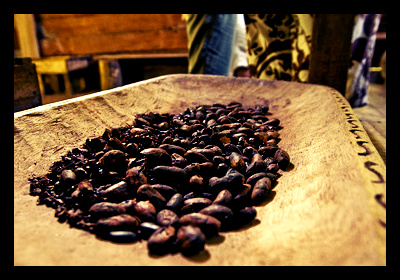
28,000 member co-op ECOOKIM has started to push for longer contracts than the yearly ones that are the industry norm. A representative of ECOOKIM has suggested three years as the minimum length of contracts going forward. This would allow growers to make longer term, concrete plans for their farms and to focus on the biggest challenge facing the chocolate industry today: the world is running out of chocolate.
The world is poised on the edge of the longest-running chocolate shortage in 50 years.
Last year, the world consumed approximately 70,000 more metric tons of cocoa than farmers produced. According to Bloomberg, the deficit is expected to last through 2018. Chocolate-makers are taking an even more dire view—they believe the cacao deficit could reach two million metric tons by 2030. The International Cacao Organization claims that in the past two years, only about four million tons of cacao have been produced.
Experts are pointing to many different factors as causes in this huge and growing shortfall. The first is that the market for chocolate is exploding. With the rapid expansion of the global middle class, more people than ever before can afford, and want to buy, chocolate. China in particular has seen a massive uptick in the consumption of chocolate, and the trend shows no signs of slowing down.
Not only are these millions of chocolate consumers demanding more than they ever have before, they are demanding it in more concentrated form. Between claims of healthy antioxidants and perceived prestige, a great deal of chocolate consumers prefer dark over milk chocolate. Milk chocolate can contain as little as 10 percent cacao, while dark chocolate usually contains 50 percent or more. This means the average bar of chocolate is taking more and more cacao to produce.
On top of this new and exploding demand, farmers are facing a biological threat. A fungal blight called frosty pod has, by one estimate, destroyed 30-40 percent of global cacao production.
Even Mother Nature is getting a hit in. The recent spate of droughts worldwide, largely attributed to climate change, has hit countries like Ghana and the Ivory Coast very hard. These two countries combined produce about 70 percent of the world’s cacao beans, and they are in terrible danger from the water scarcity plaguing their farms.
Plant breeders and genetic engineers are rising to the challenge to save the world’s tastiest treat. According to Bloomberg, Costa Rican farmers are developing several strains of cacao. These trees show promise in disease resistance and taste, which is a relief to connoisseurs concerned the cacao bean is about to go the way of the hothouse tomato, plentiful but tasteless.
Unless the world starts taking notice not only of chocolate, but of cacao farmers, we could be doomed to a much less delicious future. The growing demand and shrinking supply will make chocolate scarce and will drive prices up to extreme levels. As John Mason of the Ghana-based Nature Conservation Research Council, put it, “in 20 years, chocolate will be like caviar. It will become so rare and expensive that the average Joe just won’t be able to afford it.”
– Marina Middleton
Sources: Confectionery News, Equal Exchange, International Business Times, Fox News, The Washington Post, The Week
Photos: Flickr

Health Finance and Governance in the Kyrgyz Republic
How can a government ensure that resources devoted to health are used efficiently and effectively? Which performance-based incentive is really providing the desired outcome? How responsive are health policies to the actual needs of its target community? The Health Finance and Governance (HFG) project was launched by USAID in 2012 to help answer these questions. It is a five year- 209 million dollar global project to improve health finance and health governance in partner countries. The end goal is to improve health outcomes and access to health care, as well as generate evidence on the most efficient improvements to health management.
HFG works on five broad topics relating to financing health projects: transparency and accountability, pricing and management, development of evaluation metrics, and capacity building. Perhaps the single most important factor in dealing with these issues is that local, regional and cultural aspects contribute to the problems and the solutions. No one solution can fit all countries or even all target populations within one country. Let us consider just one example of HFG’s work.
In 2013, the Kyrgyz Republic had a tuberculosis (TB) incidence rate of 141 for every 100000 people. It is among the countries suffering from the most high multi-drug resistant TB (MDR-TB) burden in the world, yet TB detection rate at 66 percent, and drug susceptibility testing coverage, at 25 percent is still low. The WHO cites poor coordination of TB data management, insufficient oversight of treatment and monitoring of adherence to treatment, and non-compliance by patients and health providers to the prescribed antibiotic regimen as well as poor infection control as causes for rampant prevalence of TB and the spread of MDR-TB.
In the 1990s, the Kyrgyz Republic transitioned its general hospital system to case-based financing, where funds are provided to a hospital based on the previous years bed occupancy levels. This incentivized hospitals to increase hospitalizations, which not only is not always required leading to ineffective use of funds, but also exposes the patient to an infection-rich environment where depressed immune systems can acquire secondary, drug resistant infections.
The HFG assisted the Kyrgyz Republic to transition to a financing system that is based on the number of patients treated. Under this model, the hospital would receive a set fees for complicated MDR-TB cases and a lower fees for less complicated cases. This kind of financing structure also stimulated hospitals to require bacterial confirmation of the disease as opposed to a more subjective clinical diagnosis, which would reduce the number of cases treated in error. To complete this transition successfully, the government had to be fully involved to ensure that finances saved by reduced hospitalizations would be reinvested to provide better support for TB outpatient services like patient transportation, supplies, and social support.
In this region, this kind of approach integrates well with more standard approaches of launching rapid diagnostics like the work done by the National TB program and TB Reach, or providing access to new antibiotics like the End TB Erogram run by Partners In Health, Medecins Sans Frontieres, Interactive Research and Development and UNITAID. There is still a long way to go and a lot of gaps to fill. As about 44 percent of the financing for TB projects in Kyrgyzstan comes from foreign aid, assistance in mobilizing domestic resources can make health projects more sustainable. This would parallel the work of HFG in Nigeria where it is working to increase the resource mobilization capacity to support HIV/AIDS treatment.
When the various arms of the government work effectively with each other and with private sector and donor organizations, inefficiencies and wastage in development projects can be resolved. However, the first step remains identifying these gaps and designing novel solutions to fill them. When the HFG completes its term in 2017, a full measure of its successes can guide further development decisions.
– Mithila Rajagopal
Sources: HFG, Medecins Sans Frontiers, StopTB, WHO, The World Bank
Photo: USAID
Cottage Industries
Cottage industries have faced many challenges over the ages from, at the time, the industrial revolution and now, globalization. Yet people living in rural areas even now often engage in small scale manufacturing activities like weaving, sewing and other artisanal crafts, to supplement their income. These activities need little investment and are usually conducted at home, sometimes passed on from generation to generation.
The benefits of cottage industries and other small scale enterprises are a no-brainer. Apart from productive income activities, they create an environment of lower income inequality and allow people to take control of their lives and bring earnings into their community. Most importantly, they generate gainful non-agriculture based employment for those who cannot find jobs elsewhere. They can play a surprisingly large role in improving a nation’s economic standing. In addition to general poverty alleviation programs, developing cottage industries is an approach that can boost the rural economy and diversify its production.
In spite of its benefits, cottage industries struggle to survive under the pressure of globalization. Their products are unable to compete with the cheap goods of efficient production. Lacking the marketing savvy to advertise their products and safeguard their interests, these entrepreneurs lose out on the global playing ground. On the flip side, globalization also opens new markets and increases demand for products of all kinds, ranging from tourism to uniquely embroidered textiles and crafts. Indian handicrafts export alone has grown from Rs. 10 crores in the fifties to over Rs. 4000 crores in the post globalization era in 1991.
What can be done to help the cottage industry thrive, even in the face of globalization? The main issues that face cottage industries in most countries are the same—lack of finance, infrastructure and an easily accessible method to advertise and sell their products. In Myanmar (Burma), 80 percent of cottage and small enterprises mentioned access to finance as a major roadblock to their operations. Microfinance and development banks play a critical role in alternative financing. In India, the MSME Act of 2006 was launched specifically to improve the development of such industries. They manage cluster development where groups of cottage industries can train and sell their products together, in addition to mandating stricter penalties for delays in payment by banks to cottage industries.
Cottage industry clusters promote employment, local capacity and collective power for small entrepreneurs. UNIDO cluster development program in India addresses all these issues, increasing productivity of the units by 15 to 20 percent by providing basic machinery, increasing market linkages, profit margins and empowerment of women artisans. Fluency in English, improved marketing skills, vocational training and access to raw materials can help small domestic business broaden their customer and product base. The scope for involvement of community service organizations and business associations in working towards this goal is large. The U.S. Food and Agriculture Organization supports women’s cooperatives in the war torn West Bank and Gaza strip in training in food processing, providing small equipment to aid their manufacturing and a centralized point of sale where they can get a constant market.
So far cottage industries have been focusing on products and services that have high demands and markets. However, the scope for such small community organizations in environmental, health and other sectors is also large. An exciting example of this is solar systems as a cottage industry. Dr. Richard Komp, Director of Maine Solar Energy Association, has been building solar cottage industries across South America and Africa. He teaches people how to build solar collector arrays from factory second photovoltaic cells that can be used for things like solar cookers and thermal systems. Cottage industries can accomplish so much given the right support and infrastructure.
– Mithila Rajagopal
Sources: FAO, Government of Odisha, Ministry of Economic Affairs, Bhutan, Ministry of Micro, Small and Medium Enterprises, Royal Thimphu College, Solar Array, Social Science Research Network, UNIDO 1, UNIDO 2
Photo: Wikimedia
Chocolate’s Future May Not Be Sweet
28,000 member co-op ECOOKIM has started to push for longer contracts than the yearly ones that are the industry norm. A representative of ECOOKIM has suggested three years as the minimum length of contracts going forward. This would allow growers to make longer term, concrete plans for their farms and to focus on the biggest challenge facing the chocolate industry today: the world is running out of chocolate.
The world is poised on the edge of the longest-running chocolate shortage in 50 years.
Last year, the world consumed approximately 70,000 more metric tons of cocoa than farmers produced. According to Bloomberg, the deficit is expected to last through 2018. Chocolate-makers are taking an even more dire view—they believe the cacao deficit could reach two million metric tons by 2030. The International Cacao Organization claims that in the past two years, only about four million tons of cacao have been produced.
Experts are pointing to many different factors as causes in this huge and growing shortfall. The first is that the market for chocolate is exploding. With the rapid expansion of the global middle class, more people than ever before can afford, and want to buy, chocolate. China in particular has seen a massive uptick in the consumption of chocolate, and the trend shows no signs of slowing down.
Not only are these millions of chocolate consumers demanding more than they ever have before, they are demanding it in more concentrated form. Between claims of healthy antioxidants and perceived prestige, a great deal of chocolate consumers prefer dark over milk chocolate. Milk chocolate can contain as little as 10 percent cacao, while dark chocolate usually contains 50 percent or more. This means the average bar of chocolate is taking more and more cacao to produce.
On top of this new and exploding demand, farmers are facing a biological threat. A fungal blight called frosty pod has, by one estimate, destroyed 30-40 percent of global cacao production.
Even Mother Nature is getting a hit in. The recent spate of droughts worldwide, largely attributed to climate change, has hit countries like Ghana and the Ivory Coast very hard. These two countries combined produce about 70 percent of the world’s cacao beans, and they are in terrible danger from the water scarcity plaguing their farms.
Plant breeders and genetic engineers are rising to the challenge to save the world’s tastiest treat. According to Bloomberg, Costa Rican farmers are developing several strains of cacao. These trees show promise in disease resistance and taste, which is a relief to connoisseurs concerned the cacao bean is about to go the way of the hothouse tomato, plentiful but tasteless.
Unless the world starts taking notice not only of chocolate, but of cacao farmers, we could be doomed to a much less delicious future. The growing demand and shrinking supply will make chocolate scarce and will drive prices up to extreme levels. As John Mason of the Ghana-based Nature Conservation Research Council, put it, “in 20 years, chocolate will be like caviar. It will become so rare and expensive that the average Joe just won’t be able to afford it.”
– Marina Middleton
Sources: Confectionery News, Equal Exchange, International Business Times, Fox News, The Washington Post, The Week
Photos: Flickr
IntraHealth International Provides Health Treatment for Poor
Founded in 1979 at the University of North Carolina Chapel Hill School of Medicine, IntraHealth hopes to strengthen the medical support given to those in need. This could mean lending support to the victims of maternal complications, the HIV/AIDS virus or the current Ebola epidemic.
IntraHealth accomplishes this by sending health workers to where they are most needed and making sure they are trained and educated to treat their patients. They also educate others on reproductive and contraception, which they claim “could prevent the death of more than two million children annually and up to one-third of maternal deaths.” On top of that, IntraHealth tries to form support groups in communities where mothers, especially those who are facing HIV/AIDS, can mentor and comfort each other.
Additionally, the organization prioritizes gender equality, an often overlooked issue that is present in many developing areas. IntraHealth health workers make sure to advocate for equal rights in whatever country they are located in and are quick to treat any victims of gender-based violence they come across. They are also vocal about the stigma that comes with an HIV/AIDS diagnosis. The workers of IntraHealth do not only work as health workers, they work as activists.
IntraHealth has also recently introduced “SwitchPoint” in 2013, an annual conference where supporters and workers can collaborate on new ideas to solve health-related issues. People listen to speakers to be inspired and come up with new ways to save lives around the world. Among previous speakers are former President Bill Clinton and Bill and Melinda Gates. The next SwitchPoint conference will be held in Saxpahaw, North Carolina on April 23 and 24, 2015.
IntraHealth International believes that by providing the best technologies, tools and training to health workers, people around the world can have their life be dramatically improved or even saved.
– Melissa Binns
Sources: InterAction, IntraHealth, WHO
Photo: Flickr
Malnutrition in Kazakhstan
When focusing on malnourished children, the most fragile victims, it is evident that Kazakhstan has higher numbers than other neighboring countries. In Kazakhstan, four percent of children under the age of 5 are moderately underweight, and only 0.8 percent are classified as severely underweight.
Some children, however, are not reaching their growth potential. The age group that contained the highest number of growth stunts was the 12 to 18-month-old age group with 16.6 percent of children not reaching their potential. Even though this is the highest figure of the negative-oriented data, it is still comparatively okay.
Why is Kazakhstan doing well? Kazakhstan takes food security very seriously, which is probably a main factor. It is one of the world’s top producers of grain and flour, and it is also active in creating humanitarian aid programs for people in need. KazAID is one of the programs that Kazakhstan provides.
With its fundamental success in providing citizens with nutrition, Kazakhstan seeks to spread the well-being of its country to other countries in need using KazAID. Approval from major organizations, like the UNDP, has allowed KazAID to start providing assistance to other countries in the area.
– Erik Nelson
Sources: Kazakhstan UNSC, Penn State Journal of Law & International Affairs, UNICEF, UNDP
Photo: SciELO Public Health
The Fight Against Poverty in Sub-Saharan Africa
The paper defines and analyzes poverty in the form of various deprivations related to health, sanitation, food, water and education. Based on available data from 30 SSA countries, 86 percent of children under the age of 18 live with at least one deprivation. Within that 86 percent, 247 million children live with two or more deprivations, identified as lack of sanitation and poor infant feeding. In addition, 87 million children live with four or five deprivations, which include a lack of sanitation, poor vaccine coverage, unclean water and poor education. While research demonstrates a downward trend in poverty for the majority of the countries in SSA, Rwanda, Mozambique, the Ivory Coast and Guinea continue to see a rise in poverty, and the region is clearly left with pressing needs.
We have the numbers—now what? Some believe that the key to overcoming poverty in SSA is to promote and invest in science. SSA countries are encouraged to focus on scientific research and education to accelerate development and stimulate economic growth. The U.S. Agency for International Development has been a proponent of the initiative, vital to the success of these impoverished areas.
Two recent inventions that aid the poor are simple chlorine dispensers in Uganda, and a texting system that uses codes from prescription medications to ensure authenticity. USAID has taken additional poverty-fighting actions through the establishment of Power Africa, a program that collaborates with the government, private sector and others to allow more access to electricity for the SSA population. A reported 600 million people are without power.
In its regional economic outlook, the International Monetary Fund reported modest positive development in SSA, but also acknowledged that difficulties remain. Progress in the majority of these economies has sparked primarily through agriculture, infrastructure and services, but the widespread Ebola outbreak and security issues in the South Sudan and Central African Republic have left many with dimmed optimism.
Those working toward economic growth in SSA must not only direct their efforts toward scientific research, but also support for a post-Ebola recovery plan and promotion of regional stability. Costing lives and resources, Ebola has significantly hindered the progress of the economy. Tourism is at a notable low, along with manufacturing. The number of agricultural exports has also declined as farmers flee their land in fear of Ebola. Stability remains a challenge for many SSA countries; however, Chad, which has benefited greatly from a continuing era of stability, could serve as a leader on the forefront of peace. Although there has been some improvements to date, the SSA poverty crisis will require a global effort if it is to be ameliorated.
– Amy Russo
Sources: IMF, The World Bank 1, The World Bank 2, UNICEF, USAID 1, USAID 2
Photo: Sci Dev
Angelina Jolie as UNHCR Special Envoy
In 2001, she was named a UNHCR Goodwill Ambassador, as she conducted forty field missions to some of the most remote areas of the world. In April 2012, she was appointed as Special Envoy of UN High Commissioner for Refugees António Guterres. According to UNHCR, “In her new and expanded role, she will be focusing on major crises resulting in mass population displacements; undertaking advocacy and representing UNHCR and Guterres at the diplomatic level; and engaging with decision-makers on global displacement issues. Through this work, she will help contribute to the vital process of finding solutions for people displaced by conflict.” Her first mission as Special Envoy was in Ecuador in 2012.
Jolie’s contributions to UNHCR have been tremendous. Not only does she advocate on the behalf of refugees, engage with diplomacy and activities relating to global displacement issues and inspire others, she has also donated over five million dollars to UNHCR since 2001. Jolie continues to bear witness to and support disaster relief, vulnerable children, environmental conservation and international law and justice efforts.
In 2003, she started the Maddox Jolie-Pitt Foundation, which has contributed funds to Namibia, Ethiopia and Cambodia. This foundation includes microcredit programs, rural planning, health care, agriculture, education and infrastructure. She also launched the National Center for Refugee and Immigrant Children, co-chairs the Education Partnership for Children of Conflict, became a member of the influential Council on Foreign Relations and continues to be active in the international community and zones of conflict and instability.
In January 2015, Jolie visited Dohuk, Iraq in pursuits of ending suffering in the region. She met with Syrian refugees and Iraqi citizens of the Kurdistan region, investigating the current humanitarian situation. She reported, “As the conflict in Syria approaches its fifth year, the war in Syria is at the root of so many of the problems faced here in Iraq and across the region. There is an urgent need for international leadership to break the cycle of violence in Syria, and to find a way forward towards a just and sustainable peace agreement.” Her dedication to the cause of refugees, displacement and humanitarianism is indispensable.
Jolie has been recognized for her effective efforts. She was the first recipient of the Citizen of the World Award in 2003, followed by the Global Humanitarian Award in 2005 for her work with refugees. Her efforts were further recognized in 2007, when the International Rescue Committee awarded the Freedom Award to Jolie and High Commissioner Guterres for their contributions to the cause of refugees and human freedom.
– Neti Gupta
Sources: UNHCR 1, UNHCR 2, USA for UNHCR
Photo: Flickr
VisionSpring Provides Eyeglasses for the Poor
VisionSpring, an organization that provides glasses to the poor, realizes that more than 90 percent of these people live in a developing country. It also realizes that simply providing a worker with reading glasses for a mere $4 can improve his or her wage by up to $108 dollars per year. For citizens of developing countries, this amount could change the quality of someone’s life.
Founder and chairman of VisionSpring, Jordan Kassalow says that the organization’s operations rely on the motto “See to Learn, See to Work, and See For Safety.” Giving a pair of glasses to a student can equate to advancing his or her education up to a year, and glasses prevent injuries on the road and on the job.
Every dollar donated to VisionSprings adds up to an economic impact of $23 dollars. The organization sends out “vision entrepreneurs” to asses a community’s vision and spread the word about the opportunities available to that community. They travel around the world to the most impoverished places to advocate for this cause. This is nice because that means the help is coming to those who need it instead of vice versa—for example, in India someone could lose up to $10 dollars traveling to purchase a $4 dollar pair of glasses.
After performing vision tests for customers and providing them with glasses, a person can see his or her work productivity increase by 35 percent. VisionSpring also aims to consider the cultural differences between these various locations to best suit that community’s needs. For example, the organization has come up with a special pair of clear glasses for UV protection that can still shield eyes from the sun but are not the traditionally dark-shaded sunglasses the Western world is accustomed to.
“As I placed the glasses on the boy’s nose, I watched as the blank stare of a blind person transformed into an expression of unadulterated joy—I was witnessing someone seeing his world for the first time,” recounts Kassalow after giving one of his first pair of glasses to a seven-year-old boy in Mexico. VisionSprings considers a little-known issue that can bring big results—not only higher literacy and productivity rates but simply joy.
– Melissa Binns
Sources: The Christian Science Monitor, Forbes, VisionSpring
Photo: Boston Big Picture
Zambia, Malawi, and Mozambique’s Growth Triangle
In 2000, leaders of Zambia, Malawi, and Mozambique joined together to enhance national economic development objectives in the economically depressed regions of the three countries. Followed by a signing of the Memorandum of Understanding in 2003, the “Growth Triangle,” as it has been commonly referred to, was formalized and finalized in late 2014.
The objective of the Zambia/Malawi/Mozambique Growth Triangle (ZMMGT) is to incorporate the border areas encompassing eastern provinces in Zambia, the Tete province in Mozambique and the central and northern regions of Malawi. Representatives originally hoped to harness the natural resources of the area and, through infrastructure improvement, create jobs with the goal of eliminating poverty.
According to a 2014 United Nations report covering economic development in Africa, economic activities and production as well as social sectors have increased steadily between 2003 and 2011.
The three countries banning together create an interesting investment. Zambia, Malawi, and Mozambique are all member states of both the Southern African Development Community (SADC) and the Common Market for Eastern and Southern Africa (COMESA), two key trade regional economic bodies. Therefore, investors in these three countries enjoy preferential market access to a bigger, tripartite regional market of just over 600 million people, ranging from tip of South Africa in the south, to the northern tip of Egypt in the north.
The African Business Review states that “perhaps the most important business reform that the ZMMGT is set to initiate will be the simplification of border relations…which will [remove] any limits placed on conducting cross-border commercial activity…The immediate effect of this will be the streamlining of business transactions across the triangle.”
A railway line that spans the three countries is also due to be completed and will facilitate the transport of goods across Zambia and Malawi, to the port of Nacala in Mozambique.
Investment and infrastructure are key concepts for any country to grow. Three African countries agreeing to enhance the economy is a positive sign of growth in Africa overall.
– Alaina Grote
Sources: African Business Review, Africa Strictly Business, UNCTAD
Photo: Flickr
The Osaka Slum with No Name
Kamagasaki: The Osaka Slum
Within Japan, a slum exists that is a prime example of foreign global poverty. It is a small area, only .24 square miles. The city itself cannot be found on maps of Japan. It is where the poorest people in Osaka, Japan reside. It is the largest slum in Japan: Kamagasaki.
Almost 40 years ago, Kamagasaki was a thriving area in Osaka, due to its construction businesses, and many laborers came from throughout Japan to work there because of such high demand. Three historical events changed Kamagasaki. In 1995, the Hanshin earthquake killed over 6,000 people throughout Japan. Then, in 2010, the rate of economic growth began decreasing in Japan, and it no longer had the second largest growing economy in the world. The demand for labor in Kamagasaki further declined and created more poor. And finally in March 2011, the Great East Japan earthquake occurred. In Kamagasaki, of the 330,000 workers evacuated after the earthquake, 200,000 were estimated to be out of work.
There was a rapid decline into poverty in this specific area of Osaka after 1995 as people began to leave the area. As a result, currently, due to the lack of employment, it is now home to only 25,000 aspiring elderly workers. Of the aspiring workers, 1,300 of them are homeless. The employment options are few and far between—there are very few jobs available. The lack of technology and access to the Internet affects the ability for the unemployed to connect with employers and better paying jobs. Picking through garbage has become a common source of income for residents, allowing them to earn from $9 to $13 per day.
Unskilled laborers after the age of 50 rarely get work and do not qualify for government assistance until the age of 60, leaving a gap of 10 years without income or eligibility for government assistance—including healthcare. The prevalence of tuberculosis infection rate in Kamagasaki is three in every 100 residents.The rate of tuberculosis infection is estimated to be between 30 and 40 times the national average in Japan.
Kamagasaki is a poverty stricken area in Osaka, Japan, the country with the third highest growth of economy in the world. The area was given a new name decades ago: Airin-chiku.
Continued focus on Millennium Development Goal 1, eradication of extreme hunger or poverty, needs to reflect further progress in this area, regardless of what it is called.
– Erika Wright
Sources: The Guardian, The Japan Times, Pulitzer Center
Photo: Epoch Times