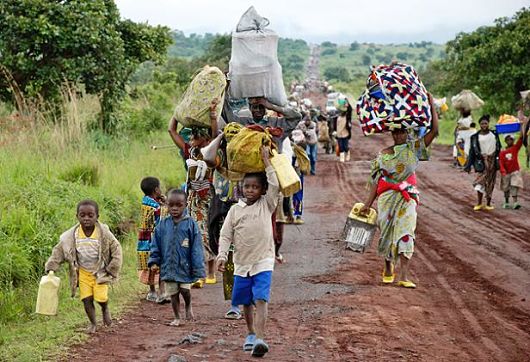
On July 1, 2015, the U.N. High Commissioner for Refugees, Antonio Guteress, addressed a congregation of international humanitarian organizations in Geneva about the escalating challenges his agency faced in what is widely being called the greatest refugee crisis the world has ever known.
“For an age of unprecedented mass displacement, we need an unprecedented humanitarian response and a renewed global commitment to tolerance and protection for people fleeing conflict and persecution,” the High Commissioner urged.
In his speech Guteress told listeners, “The moment of truth had arrived.” He was speaking in regards to the tremendous strain the world’s current refugee crisis has placed on the resources of Europe and other host countries. Across the globe, fleeing refugees are migrating at unprecedented rates.
The world’s current refugee crisis cannot be explained in simple terms. It is a complex issue with many factors involved. Political instability, devastating wars and lack of adequate economic opportunities are all reasons why people are leaving their countries in search of greener pastures.
In last month’s United Nations High Commissioner for Refugees (UNHCR) Global Trends Report: World at War, the estimated number of people displaced due to war, conflict and persecution was a staggering 59.5 million at the end of 2014. On average, 42,500 people are newly displaced per day.
A few countries are well known to all, such as Iraq, Afghanistan and Syria, but they do not represent the entire spectrum of refugees. The refugees come from Myanmar, Sudan, Ukraine, Pakistan, North Korea, Mexico and many other South American countries. Most are currently fleeing to Europe, but others are going to the United States, Indonesia and Australia.
It truly is a global refugee crisis.
In a newly published Human Rights Watch report, “The Mediterranean Migration Crisis,” senior analysis reported that in 2014, over 219,000 refugees attempted to navigate the Mediterranean Sea into Europe, which is considered the world’s deadliest crossing. This was up from 60,000 the previous year. So why are people enduring such dangerous undertakings for a better life?
The report interviewed over 150 refugees and asylum seekers from Somalia, Syria, Eritrea and Afghanistan. The migrants echoed similar reasons for leaving their countries—lack of security and basic necessities such as food, water and medicine. Not surprisingly, these are some of the poorest countries in the world with some of the direst need for humanitarian aid.
There is a direct correlation between humanitarian aid and fleeing refugees. The nations with the largest need for humanitarian aid are also responsible for some of the largest number of fleeing refugees.
Humanitarian aid is used to run programs that provide potential refugees with more than just food and water. Humanitarian efforts provide tools for farmers to grow crops that they can sell in market places, providing income to their families and strengthening their local markets.
The aid also provides educational facilities, training people with the skills that they need to be successful. People who are finding economic stability in their own nations are less likely to flee.
However, passing aid to the ailing countries is not the only way the world can help solve the refugee crisis. Host nations and coalitions such as the European Union (EU) need aid to support refugee and asylum seeking processing facilities. The burden of dealing with so many refugees must be equally distributed among developed nations. The blind eye approach many developed countries are practicing is not helping the situation.
Even though the United States is not the destination for the majority of refugees, it is tremendously affected by the issues of extreme poverty that are driving these migrations. An example is the situation in Greece, a country already preoccupied with economic collapse and in desperate need of a bailout. The U.N. reported more than 48,000 refugees entered the country in 2014. The economic pressure of all these issues reduces the buying power of Greece, in turn reducing U.S. exports to the country.
This year, the U.N. has declared that it needs no less than $18.1 billion to meet the needs of over 80 million people. Currently it has only received 26% of that amount.
The United States cannot continue to ignore the global refugee crisis and must work with the EU to provide more aid. The Borgen Project has demonstrated extensively how providing foreign aid in such situations reduces global threats to the United States and bolsters the U.S. economy.
If the United States does not help provide more aid and the refugees continue to flee, years of development and aid will all go to waste. Rebuilding developing nations will be a lot more expensive for future generations, considering there will be no one there left to help rebuild.
— Adnan Khalid
Sources: Human Rights Watch, International Organization for Migration, U.N. 1, U.N. 2, UNHCR
Photo: NGO News Africa

In Transit: The World’s Fleeing Refugee Crisis
On July 1, 2015, the U.N. High Commissioner for Refugees, Antonio Guteress, addressed a congregation of international humanitarian organizations in Geneva about the escalating challenges his agency faced in what is widely being called the greatest refugee crisis the world has ever known.
“For an age of unprecedented mass displacement, we need an unprecedented humanitarian response and a renewed global commitment to tolerance and protection for people fleeing conflict and persecution,” the High Commissioner urged.
In his speech Guteress told listeners, “The moment of truth had arrived.” He was speaking in regards to the tremendous strain the world’s current refugee crisis has placed on the resources of Europe and other host countries. Across the globe, fleeing refugees are migrating at unprecedented rates.
The world’s current refugee crisis cannot be explained in simple terms. It is a complex issue with many factors involved. Political instability, devastating wars and lack of adequate economic opportunities are all reasons why people are leaving their countries in search of greener pastures.
In last month’s United Nations High Commissioner for Refugees (UNHCR) Global Trends Report: World at War, the estimated number of people displaced due to war, conflict and persecution was a staggering 59.5 million at the end of 2014. On average, 42,500 people are newly displaced per day.
A few countries are well known to all, such as Iraq, Afghanistan and Syria, but they do not represent the entire spectrum of refugees. The refugees come from Myanmar, Sudan, Ukraine, Pakistan, North Korea, Mexico and many other South American countries. Most are currently fleeing to Europe, but others are going to the United States, Indonesia and Australia.
It truly is a global refugee crisis.
In a newly published Human Rights Watch report, “The Mediterranean Migration Crisis,” senior analysis reported that in 2014, over 219,000 refugees attempted to navigate the Mediterranean Sea into Europe, which is considered the world’s deadliest crossing. This was up from 60,000 the previous year. So why are people enduring such dangerous undertakings for a better life?
The report interviewed over 150 refugees and asylum seekers from Somalia, Syria, Eritrea and Afghanistan. The migrants echoed similar reasons for leaving their countries—lack of security and basic necessities such as food, water and medicine. Not surprisingly, these are some of the poorest countries in the world with some of the direst need for humanitarian aid.
There is a direct correlation between humanitarian aid and fleeing refugees. The nations with the largest need for humanitarian aid are also responsible for some of the largest number of fleeing refugees.
Humanitarian aid is used to run programs that provide potential refugees with more than just food and water. Humanitarian efforts provide tools for farmers to grow crops that they can sell in market places, providing income to their families and strengthening their local markets.
The aid also provides educational facilities, training people with the skills that they need to be successful. People who are finding economic stability in their own nations are less likely to flee.
However, passing aid to the ailing countries is not the only way the world can help solve the refugee crisis. Host nations and coalitions such as the European Union (EU) need aid to support refugee and asylum seeking processing facilities. The burden of dealing with so many refugees must be equally distributed among developed nations. The blind eye approach many developed countries are practicing is not helping the situation.
Even though the United States is not the destination for the majority of refugees, it is tremendously affected by the issues of extreme poverty that are driving these migrations. An example is the situation in Greece, a country already preoccupied with economic collapse and in desperate need of a bailout. The U.N. reported more than 48,000 refugees entered the country in 2014. The economic pressure of all these issues reduces the buying power of Greece, in turn reducing U.S. exports to the country.
This year, the U.N. has declared that it needs no less than $18.1 billion to meet the needs of over 80 million people. Currently it has only received 26% of that amount.
The United States cannot continue to ignore the global refugee crisis and must work with the EU to provide more aid. The Borgen Project has demonstrated extensively how providing foreign aid in such situations reduces global threats to the United States and bolsters the U.S. economy.
If the United States does not help provide more aid and the refugees continue to flee, years of development and aid will all go to waste. Rebuilding developing nations will be a lot more expensive for future generations, considering there will be no one there left to help rebuild.
— Adnan Khalid
Sources: Human Rights Watch, International Organization for Migration, U.N. 1, U.N. 2, UNHCR
Photo: NGO News Africa
Effects of Emerging Technologies on Geopolitics
Although the final episode aired in September of 2013, Futurama remains a popular TV series today as it appeals to a range of generations, from youths to adults. This series is an exaggerated representation of a prediction of 31st century life: exploration and the discovery of life in countless other galaxies, acknowledgement of robots as true life forms and an even greater reliance on up-and-coming technologies.
Although it is a satire, the show does address interesting points about this human-techno relationship that applies even in the 21st century. This is evident, for example, in today’s use of drones.
It is speculated that, in the future, artificial intelligence systems will take over most jobs currently held by humans. Amazon’s new drone delivery system promises faster, more efficient deliveries, thus lessening the need for other methods of package delivery. The drone could drop off a package on someone’s doorstep in approximately 30 minutes or less. While this system, overall, would be more convenient for the general public, it would take out a good number of jobs.
However, there is a bright side to this situation. More jobs relating to drones, such as drone operations and drone assembly, will open to the public, and newer technologies that make these drones easier to operate will open up jobs for those with fewer qualifications.
Another important aspect to address is the ease at which people communicate through technological mediums. According to Kristel van der Elst, head of Strategic Foresight of the World Economic Forum, “Technology will not only allow us to be constantly in contact in an increasingly close-to-reality manner, it will also soon enhance communication beyond what traditional face-to-face interaction could ever allow.” Van der Elst also said that “technology has the potential to redefine the relationships between civil society, government and business.” Communication technology improves the ease of communication in geopolitics around the world.
More often, in the media, there have been discussions about how technology helps and hinders communication. Also addressed is the fact that the more we communicate via this medium, the less private human interaction becomes. Criminals are now turning to new technologies to communicate, and governments have limited abilities to regulate threats of attack.
So, are we to regulate and respect human privacy? Or not to regulate and allow for more criminals to make the utmost use of technology? Authors have suggested that instead of trying to fight the evolution of technology, the government should find new methods of integrating technology into their everyday lives and into geopolitics, which would greatly improve internal operations in local governments as well as appeal to the public.
– Anna Brailow
Sources: Scientific American, GCN, Comedy Central, YouTube
Photo: CNN
Improving Governments Decreases Poverty
A country is as strong as their government, and as the world comes closer to ending global poverty, policies in developing nations are beginning to improve. Poor countries are adopting new ways to help the public and, as a result, find a decline in poverty. When people have access to resources like food, sanitation and education, they have a greater opportunity to improve their lives. Although resources are vital to improving governance, it is just as important to establish equal political participation.
The World Bank understands the importance of proper governance and collects data of the progress in developing countries. The data collected includes “Gender Statistics, African Development Indicators, and Education Statistics,” says The World Bank. Keeping track of governments that are improving policies will determine the rate of poverty. Measuring statistics gives a better look at what is working to help improve the lives of those in need.
USAID has taken measures to better the lives of those living in Afghanistan. They have brought safety to the population and voter inclusion for women. “Since 2012, USAID has supported over 1,200 community improvement activities, such as construction of potable water pumps and maintenance for local schools and clinics,” according to USAID’s website. Elections in Afghanistan have greatly improved; representation of women has brought a greater turnout of voters.
Latin America has also experienced economic growth thanks to the efforts of USAID. “Political advances have been notable as well: free elections, vibrant civil society, and responsive governments are mostly the norm,” says USAID. They continue to focus on drug trade, civil rights and natural disasters. However, USAID has improved family planning, revitalization in Haiti and the decline of violence in El Salvador.
The government of a country represents the health and safety that the people are receiving. If development continues to progress, poverty will continue to decline. It is vital that the World Bank continues to track progress and organizations like USAID help those in poor countries.
– Kimberly Quitzon
Sources: World Bank, USAID, USAID 2,
Photo: UN
Water Privatization’s Biggest Offenders
An estimated 783 million people worldwide lack access to clean drinking water. Despite the importance of expanding access to this basic building block of life, many companies instead view water as a commodity to be bottled and sold at the expense of the world’s poor and the environment.
Bottled water is incredibly wasteful. The bottle itself also leads to widespread environmental damage, with more than 85% of globally consumed bottles being thrown in the trash, as opposed to being recycled. Furthermore, 10% of all plastic reaches the ocean, leading to the deaths of an estimated one million birds and marine animals yearly.
Yet, if the environmental impact of bottled water is disgraceful, its impact on human rights is horrifying.
Fiji Water has nearly exclusive access to a 17 mile aquifer on the north coast of Fiji while many Fijians have lived with water shortages resulting in rations as low as 4 gallons of water per family per week. Coca-Cola’s extraction of water in India to produce Dasani, meanwhile, has resulted in water shortages for over 50 villages.
Water extraction has also led to a variety of health problems. The inadequate and unclean water supply in Fiji, for instance, has lead to typhoid outbreaks and parasitic infection. The pollution caused by Coca-Cola through its Indian bottling plants has included dangerous compounds such as lead.
Of course, the causation of health problems through privatization only brings to attention a broader issue in the bottling and privatization of water—the philosophical denial of the right to water. Nestle came under fire in 2013 after the emergence of a video of CEO Peter Brabeck stating that water is not a human right, but a commodity to be given a market value and sold. Nestle owns over 15 bottled water brands, including Poland Springs and San Pelligrino, and has been criticized for its sale of Nestle Pure Life water to the developing world at the expense of the development of clean-water infrastructure. The sale and purchase of bottled water on its own denies the right to water as an infrastructural need, and instead treats it as a commercial product through which the wealthy continue to benefit at the expense of the world’s poor.
Protecting the right to water, globally, is highly important. It is a right which must exist to protect the health, agriculture and infrastructure of the developing world. Water privatizations, and the actions of the companies that control significant portions of the world’s water supply, deny the important progress to be made on this front.
– Andrew Michaels
Sources: Food Is Power, Mother Jones, World Watch, The Guardian, UN Water, Huffington Post,
Photo: Food and Water Watch
Banning Bull Slaughter Makes Vulnerable Populations Poorer
Earlier this year, the government of Maharashtra, India, decided to ban bullock and bull slaughter. The slaughtering of cows, which are considered to be sacred in Hinduism, had already been prohibited since 1976. This new law has faced opposition from many sectors of society that claim it destroys businesses, makes farmers’ livelihoods more vulnerable, and hurts the very animals it hopes to protect.
Another argument against the law is that is promotes Hindu extremist interests over the nation’s secular principles. The Bharatiya Janata Party (BJP), the force behind the new law, argues instead that it protects religious beliefs. However, even one of the BJP’s strongest allies, the Republican Party of India (RPI), has expressed discontent with the law.
Farmers from the state have protested that banning bull slaughter means they can no longer sell their old animals that have outlived their usefulness. Many farmers count on the money made from the sale to pay back loans. In India, where huge numbers of farmer suicides have been a pressing concern, the new law has made farmers’ limited sources of income more precarious.
Some people have even argued that the law will lead to farmers simply abandoning their cattle because they cannot afford to look after them. They will be left on the streets to starve and die, or be smuggled in terrible conditions to Bangladesh, where they will be slaughtered. The very purpose of the law—to protect bulls—would be left unfulfilled.
The law has also eliminated the only type of meat poor people can afford. In India, beef is commonly called the “poor mans’ protein,” as it is much cheaper than mutton or chicken. Buffalo meat, while still legal, is predicted to become more expensive because of a lack of alternatives. In a country where more than half of children under five are malnourished, this ban is feared to increase rates of starvation and sickness.
Specific castes have also been negatively affected. The Qureshis, a Muslim community that has been synonymous with bull slaughter for generations, can no longer practice the only livelihood they know.
The Dharavi leather market has also lost its bearings. Dharavi, one of the biggest slums in Asia, obtained much of its income from its once-thriving leather industry, where workers would make wallets, belts, jackets and handbags. Now, hundreds of workers have been left jobless.
Sources: The Hindu 1, The Hindu 2, The Hindu 3, Times of India, The Independent, Al Jazeera, New York Times 1, New York Times 2
Photo: Stock Photos
Unlocking Accessibility for People with Disabilities in Paraguay
Through improving labor access, Paraguay has made recent advancements to become a more inclusive and equal society. Although only 15% of people worldwide have disabilities, an estimated 80% of them are out of work. Fundacion Saraki is at the forefront of finding employment and thus improving the lives of people with disabilities in Paraguay. Its first step was to work toward compliance with a congressional law providing labor inclusion in public institutions.
Congress agreed to grant the foundation an agreement for the “Effective Labor Inclusion” of those with disabilities in both the private and public sectors. Through this, Fundacion Saraki has begun to work toward increasing access to jobs with companies such as McDonald’s and Supermercados España, a Paraguayan supermarket chain. Both companies recently hired interns with disabilities who were later offered jobs with the companies in Capiata and San Lorenzo, two cities near the capital, Asunción.
The foundation has also worked to improve building access. Working with architecture students from local universities, the foundation is working toward raising building standards in the country. Students inspect the buildings and make recommendations to the companies housed there on how to improve their construction to accommodate disabled workers and customers. Thus, this solution is an improvement for both those with disabilities who can enjoy increased services and the companies who serve them in increasing their consumer base. They have also worked toward improving bus conditions to increase the ease of riding for everyone.
Through cooperation with USAID and the National Democratic Institute, the foundation has reached an agreement with Paraguay’s Superior National Electoral Tribunal to ensure improved participation of those with disabilities in the country’s upcoming election in November 2015. These organizations have recently published a manual titled “Equal Access: How To Include Persons with Disabilities in Elections and Political Processes.” Through this publication and continuing efforts on the part of all involved organizations, previous obstacles that prevented disabled people from voting in elections will be removed. Because those who are disabled are often also poor and marginalized, their voices in the political process are crucial.
“We are trying to work the government because in Paraguay disabilities have not been a priority, and we hope to have a greater impact on the private industry as well,” said Fundacion Saraki’s Executive Director Maria Jose Cabezudo Cuevas. Indeed, improving the quality of life and increasing opportunities for those with disabilities supports success and creates a more inclusive, fairer society for everyone.
– Jenny Wheeler
Sources: USAID, National Democratic Institute
Photo: USAID
Baltimore City Schools Provide Free Meals to All Students
Worldwide, approximately 805 million people are classified as hungry. They do not have access to enough food to provide adequate nutrition and calories, putting them at risk for malnutrition or starvation. Although most of those affected by world hunger live in developing countries, about 15 million people in developed countries also struggle to put enough food on the table.
For children, struggling with hunger can be particularly devastating. As of 2013, about 15.8 million children in the United States live in food insecure households, and households with children reported food insecurity at a higher rate than those without.
Hunger has a clear negative impact on children’s education. Inadequate nutrition has been proven to delay brain development and impair the ability to learn. Children who do not have enough to eat at home often receive lower test scores and have more absences. They are also more likely to repeat a grade. Their reduced academic achievements could be linked to the fact that hunger can impair one’s ability to concentrate. Furthermore, they display more behavioral problems, such as higher rates of aggression and oppositional behavior.
Without enough food, children cannot properly learn. Recently, Baltimore City, where 84% of children qualified for the Free and Reduced Price Meal Program, has made tackling this issue a priority. Despite the fact that Maryland is one of the wealthiest states in America, 36.5%of Baltimore’s children live below the poverty level. Now, they can all receive a free breakfast and lunch at school, regardless of income level.
The Community Eligibility Provision, a part of the Healthy, Hunger-Free Kids Act of 2010, states that entire schools are eligible for free meals if 40% of the students come from low-income families. Maryland adopted this program under state legislation passed in the General Assembly. Over 2,000 U.S. districts are now participating in this program, with Baltimore City as the largest.
The federal government will be reimbursing the schools based on the number of meals that they serve, so the district does not anticipate any negative financial impact. Previously, students eligible for free or reduced meals may not have claimed them for a number of reasons. They may have been embarrassed or did not realize that they qualified. If their parents or guardians spoke limited English or struggled to fill out the paperwork for another reason, they may never have received free meals. Now, any stigma and limitations are gone and all students have access to free meals with no explanations or paperwork necessary.
This program is a step forward in ending childhood hunger in the United States. Other developed countries have similar programs. In Finland, legislation passed in 1948 allows free meals for all students from pre-primary to upper-secondary education. All enrolled in compulsory education enjoy free school lunches regardless of income in Sweden and Estonia. While many developing countries utilize school feeding programs with the assistance of organizations such as the World Food Programme or UNICEF, the programs in Finland, Estonia, Sweden and now Baltimore could provide a model for other developed countries to follow. Feeding the world’s children goes hand-in-hand with providing quality education.
– Jane Harkness
Sources: Care2 , Feeding America , Finnish National Board of Education , The Food Effect , Maryland Alliance for the Poor , Uppsala Universitet , World Food Programme 1 , World Food Programme 2
Photo: Baltimore Post Examiner
Misleading Poverty Statistics in Argentina
Earlier this year, the President of Argentina Cristina Kirchner publicly decreed Argentina’s level of poverty to be among the lowest in the world. While such an announcement should receive admiration and praise from other global leaders, Argentina has instead been put under the microscope for possibly falsifying information about its poverty statistics.
Last week, President Kirchner appeared at U.N. Food and Agriculture meeting in Rome and boasted her country’s supposed impressive poverty numbers. Kirchner was quoted as saying, “Today the poverty rate is less than 5 percent, and the rate of indigence is 1.27 percent, which has made Argentina one of the most egalitarian countries.” Her claims would place Argentina near the top of the list of economically successful countries, but her remarks have come under fire by prominent Argentinean figures for being inaccurate and misrepresenting Argentina’s true economic status.
The Catholic University of Argentina was one of the earliest critics of President Kirchner’s report on poverty citing a study conducted in April of 2014 that reported a 27% poverty rate in Argentina. The University attributed the blame in flawed figures to Argentina’s statistical research center INDEC.
According to an article published by the International Business Times, “critics have long questioned the poverty figures that have been on the books, saying they were based on controversial methodology with manipulated inflation estimates that drove down the calculation of food prices factored into the poverty rate figure.” Thus, Argentina finds itself reporting inaccurate statistics as a result of poor government decisions.
On May 15th of this year, PanAm Post published an article reporting Argentina’s unsuccessful attempt at increasing public spending to reduce poverty levels. An excerpt from the article states that public spending “has been directed to the energy sector, to the payment of public-sector workers, and offering access to pensions and public services to an additional four million people.”
The article also goes on to criticize INDEC for manipulating figures to conceal the accurate poverty rate in Argentina. The article concludes by reporting that between 2011 and 2013, Argentina spent roughly $36 billion while poverty levels remained unchanged. It appears that Argentina’s experiment has failed and it is finally time to admit error and find a new, honest approach to reduce poverty.
– Diego Alejandro Catala
Sources: Blog of the Panam Post: The Canal, International Business Times
Photo: The Guardian
How Sevenly Raises Awareness and Funds Through Art and Design
Sevenly has become an outlet to create awareness about different causes around the world and collect funding.
They team up with different charities and organizations to create purchasable art. Every purchase that a person makes results in a donation to charity. People can buy shirts, prints, special edition products and many other things in the Sevenly Finds collection.
Every week, Sevenly chooses a certain charity and organization and gives $7 of each purchase to that charity.
The apparel company was founded in 2011 and, according to an article published by Mashable, Sevenly sold 864 shirts in their first week, raising $6,125 for charity. Sevenly’s mantra is “People Matter,” and they focus on promoting the causes of the charities they work with by creating videos that explain the mission of each one.
According to an article published by the Los Angeles Times, Sevenly makes donations to seven causes—anti-slavery, clean water, hunger relief, medical help, disaster relief, miscellaneous aid and anti-poverty.
Every week that Sevenly chooses a charity, their designers create typography and images that they can put on their t-shirts, bags, hoodies and different products. These products are sold for seven days to raise money for the cause that they are supporting that specific week.
Sevenly also created a project in which each subscribed customer receives a box of different goodies worth $150 of Sevenly’s socially conscious brands. Seven percent of each CAUSEBOX purchased is donated to various charities and world-changing causes.
According to Sevenly’s CAUSEBOX website, the CAUSEBOX is a way to provide meals, education, jobs, water and many other necessities to people around the world that are in need.
A PRWeb’s article mentions that Sevenly’s CAUSEBOX products are specifically created for this box. Each subscriber will have this box delivered every three months and there are two options for subscriptions. Customers can subscribe in a quarterly subscription of $54.95 per box or in an annual subscription of $199.80 that includes 4 boxes a year for $49.95.
Another part of the CAUSEBOX by Sevenly is that subscribers can choose the charity to which their donation goes.
Fans and CAUSEBOX subscribers are able to share their thoughts and love for the causes that this box supports by joining the community with #CAUSEBOXLOVE in social media.
This apparel company has the purpose to support good causes around the world by generating awareness by the products they sell. From shirts and hoodies to jewelry and prints, Sevenly approaches these causes with the use of art and design and raises $7 for each bought product.
CAUSEBOX by Sevenly is a different approach that the company uses to spread awareness and donate to good causes around the world. It is more interactive in that, while subscribers obtain a box worth $150 of Sevenly’s socially conscious brands, they also get to select the cause to which they wish to donate.
– Diana Fernanda Leon
Sources: Mashable, Sevenly 1, Los Angeles Times , Sevenly 2 , PR Web
Photo: Blog
Katya Cherukumilli Takes on Poverty in Rural India with Bauxite
Living in poverty often means consuming contaminated drinking water. Assembled by the Blum Center for Global Engagement, Katya Cherukumilli earned recognition in June 2015 at the University of California Irvine’s Designing Solutions for Poverty challenge. She has been addressing and innovating ways to cheaply eradicate fluoride from drinking water by using a remediation solution in groundwater. In doing so, she is helping to protect those without any other source for cleaner water.
Katya Cherukumilli developed a cheap way to use bauxite, a material that produces alumina and aluminum, in order to filter out fluoride in drinking water. She is a PhD student at the University of California, Berkley, set to complete an Environmental Engineering Degree in 2017. Her work with the Gadgil Lab for Energy and Water Research found a cheap solution to the problem concerning fluorosis.
The Gadgil Lab is located at the University of California, Berkley. Its mission is to alleviate poverty using research and engineering studies. Katya Cherukumilli is working specifically with fluoride removal. Having been born near the district of interest, Nalgonda, she feels, according to Alex Chan with Daily Pilot, “This is something that is very close to my heart. Access to clean water does not seem like something people should die for.”
According to Gadgil Lab, drinking excessive levels of fluoride, above 1.5 mg/L, can cause anemia, discolored enamel and bone deformities, also known as skeletal fluorosis. Affected groundwater exists on a global scale in places like Sri Lanka, China, Est African Rift Valley, northern Mexico and Argentina.
With 200 million people drinking toxic water, 66 million in India are at risk. A site is open for examining the water in Telegana, where contamination is the most acute and fixated. Ten percent of this district has been affected and 10,000 are permanently deformed.
Groundwater in the Nalgonda District in India has a toxic amount of fluoride that causes deformities with excess intake. Skeletal fluorosis patients reside here. Granite rocks underground are breaking apart and contaminating drinking water with fluoride.
A toxic level of fluoride in drinking water is a problem that has been known for six decades. When rural areas cannot reach safer alternatives, the problem continues. Responding to this issue takes time and manpower. Areas where innovations are costly, difficult to set up or culturally ineffective make it difficult to introduce defluoridation. Gadgil Lab lists a few requirement guidelines addressing the issues.
Any technology useful to the cause must be local, affordable, and appropriate for the culture. It should require minimal maintenance and must function very successfully in the rural area.
To satisfy these requirements, Cherukumilli has been researching bauxite ore. She found that remediating groundwater fluoride needs to be more cost-effective. Cherukumilli is refining bauxite in order to minimize expenditure per person per year from $50 to $1.
Her method to reduce cost includes improving sustainability, so less material is required. Also less energy and carbon costs are needed to solve the issue.
Forty community leaders, scientists, business partners and investors at the competition agreed her progress in this field of study has absolute potential. It will protect the less fortunate from further disfigurement that affects them socially, economically and medically. Her presentation at the Irvine’s Designing Solutions for Poverty challenge received the popular vote among three others.
– Katie Groe
Sources: GADGIL Lab 1, GADGIL Lab 2, The Orange County Register, The Daily Pilot, GADGIL Lab 3
Photo: Daily Pilot