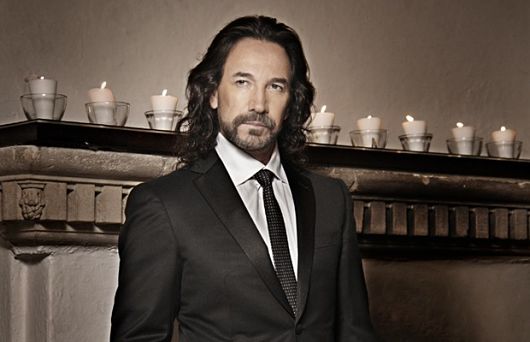
There are plenty of Latin songs from different countries such as Mexico, Puerto Rico, Cuba and Colombia that address the poverty and hunger situations that the countries are going through.
Many of these songs, more than only addressing a situation of poverty, address political disadvantages and the corruption that some of the Spanish speaking countries face.
These songs vary from sad ballads to rhythmic rap songs. Depending on the topic, some of these songs can have rude language to express frustration in regards to poverty and/or government corruption. Here are some more examples of songs in Spanish about poverty.
7 Songs in Spanish about Poverty
1. “Casas De Cartón” by Marco Antonio Solís
Que triste se oye la lluvia
en los techos de carton
que triste vive mi gente
en las casas de carton
Viene bajando el obrero
casi arrastrando sus pasos
por el peso del sufrir
mira que es mucho sufrir
mira que pesa el sufrir
The lyrics of this song portray the situation of poverty that many people live under. Phrases like “que triste vive mi gente en las casas de carton” (how sad my people live in cardboard houses) and “viene bajando el obrero casi arrastrando sus pasos por el peso del sufrir” (the laborer is coming down dragging his feet because of the weight of his suffering) give a strong meaning to this song.
2. “La Carencia” by Panteón Rococó
Por la avenida va circulando
el alma obrera de mi ciudad
gente que siempre esta trabajando
y su descanso lo ocupa pá soñar
This is a ska song by a Mexican band that talks about the working class and how hard it is to make a living with a minimum wage and long hours of work. “Gente que siempre esta trabajando y su descanso lo ocupa pá soñar” (People that is always working and use their free time to dream) is a reference to the working class and their condition.
3. “Baile De Los Pobres” by Calle 13
Tú eres clase alta, yo clase baja
Tú vistes de seda, y yo de paja
Nos complementamos como novios
Tú tomas agua destilada, yo agua con microbios
Tú la vives fácil, y yo me fajo
Tú sudas perfume, yo sudo trabajo
Tú tienes chofer, yo camino a patas
Tus comes filete, y yo carne de lata
In this song, Calle 13 compares both upper and mid-upper classes to poor and working class people. “Tú sudas perfume, y yo sudo trabajo” (you sweat perfume and I sweat work) is one of the references that the song makes to mark the differences among the social classes. He puts himself in the shoes of a working class man to find the differences with upper classes.
4. “El Pobre” by Attaque 77
Y andas perdido entre las marcas de tus manos
miras tu ropa y la que usan los demás
miras la chica que nunca podrás tener
y el chico que aspira el tren mientras viaja en Poxiran.
Tal vez pueda ser, lo que te rodea lo que quieras lo escuchas
Un poco de suerte para el pobre
“El Pobre” (The Poor) is a song from the perspective of the poor. “Miras tu ropa y la que usan los demás” (you see your clothes and the one that the others wear) gives the listeners an insight to what “El Pobre” is wearing and how his clothes are different from those of the middle class.
5. “Gimme Tha Power” by Molotov
Que nos guachan los puestos del gobierno
Hay personas que se están enriqueciendo
Gente que vive en la pobreza
Nadie hace nada
Porque a nadie le interesa
This is mainly a protest song by the Mexican band Molotov against the government corruption and the situation of poverty. “Gente que vive en la pobreza, nadie hace nada por que a nadie le interesa” (People that live in poverty, no one makes anything because nobody cares) protests the conditions in which poor people are living and how the government is doing little to resolve this problem.
6. Que Canten Los Niños” by Jose Luis Perales
Que canten los niños que viven en paz
y aquellos que sufren dolor
que canten por esos que no cantaran
porque han apagado su voz.
This is a song of hope that references children singing about hope and gives a voice to those who cannot speak. “Que canten por esos que no cantaran porque han apagado su voz” (May they sing for those who won’t sing because they have silence their voice) is a way for the song to express the desire to give a voice to those who are silenced.
7. “El Baile De Los Que Sobran” by Los Prisioneros
Bajo los zapatos
Barro más cemento
El futuro no es ninguno
De los prometidos en los 12 juegos
A otros le enseñaron
Secretos que a ti no
A otros dieron de verdad esa cosa llamada educación
Ellos pedían esfuerzo ellos pedían dedicación
Y para qué
Para terminar bailando y pateando piedras
This song has a political meaning and references social inequality topics in Chile. “A otros dieron de verdad esa cosa llamada educación” (They really gave to others that thing called education) is a phrase of the song that marks the difference of social classes and social inequality by portraying the opportunities that some people have over others.
– Diana Fernanda Leon
Sources: SinEmbargo, 5 Canciones Sobre, 20 Minutos, Proyecto 100 Canciones
Photo: Domingo

7 Songs in Spanish about Poverty
There are plenty of Latin songs from different countries such as Mexico, Puerto Rico, Cuba and Colombia that address the poverty and hunger situations that the countries are going through.
Many of these songs, more than only addressing a situation of poverty, address political disadvantages and the corruption that some of the Spanish speaking countries face.
These songs vary from sad ballads to rhythmic rap songs. Depending on the topic, some of these songs can have rude language to express frustration in regards to poverty and/or government corruption. Here are some more examples of songs in Spanish about poverty.
7 Songs in Spanish about Poverty
1. “Casas De Cartón” by Marco Antonio Solís
Que triste se oye la lluvia
en los techos de carton
que triste vive mi gente
en las casas de carton
Viene bajando el obrero
casi arrastrando sus pasos
por el peso del sufrir
mira que es mucho sufrir
mira que pesa el sufrir
The lyrics of this song portray the situation of poverty that many people live under. Phrases like “que triste vive mi gente en las casas de carton” (how sad my people live in cardboard houses) and “viene bajando el obrero casi arrastrando sus pasos por el peso del sufrir” (the laborer is coming down dragging his feet because of the weight of his suffering) give a strong meaning to this song.
2. “La Carencia” by Panteón Rococó
Por la avenida va circulando
el alma obrera de mi ciudad
gente que siempre esta trabajando
y su descanso lo ocupa pá soñar
This is a ska song by a Mexican band that talks about the working class and how hard it is to make a living with a minimum wage and long hours of work. “Gente que siempre esta trabajando y su descanso lo ocupa pá soñar” (People that is always working and use their free time to dream) is a reference to the working class and their condition.
3. “Baile De Los Pobres” by Calle 13
Tú eres clase alta, yo clase baja
Tú vistes de seda, y yo de paja
Nos complementamos como novios
Tú tomas agua destilada, yo agua con microbios
Tú la vives fácil, y yo me fajo
Tú sudas perfume, yo sudo trabajo
Tú tienes chofer, yo camino a patas
Tus comes filete, y yo carne de lata
In this song, Calle 13 compares both upper and mid-upper classes to poor and working class people. “Tú sudas perfume, y yo sudo trabajo” (you sweat perfume and I sweat work) is one of the references that the song makes to mark the differences among the social classes. He puts himself in the shoes of a working class man to find the differences with upper classes.
4. “El Pobre” by Attaque 77
Y andas perdido entre las marcas de tus manos
miras tu ropa y la que usan los demás
miras la chica que nunca podrás tener
y el chico que aspira el tren mientras viaja en Poxiran.
Tal vez pueda ser, lo que te rodea lo que quieras lo escuchas
Un poco de suerte para el pobre
“El Pobre” (The Poor) is a song from the perspective of the poor. “Miras tu ropa y la que usan los demás” (you see your clothes and the one that the others wear) gives the listeners an insight to what “El Pobre” is wearing and how his clothes are different from those of the middle class.
5. “Gimme Tha Power” by Molotov
Que nos guachan los puestos del gobierno
Hay personas que se están enriqueciendo
Gente que vive en la pobreza
Nadie hace nada
Porque a nadie le interesa
This is mainly a protest song by the Mexican band Molotov against the government corruption and the situation of poverty. “Gente que vive en la pobreza, nadie hace nada por que a nadie le interesa” (People that live in poverty, no one makes anything because nobody cares) protests the conditions in which poor people are living and how the government is doing little to resolve this problem.
6. Que Canten Los Niños” by Jose Luis Perales
Que canten los niños que viven en paz
y aquellos que sufren dolor
que canten por esos que no cantaran
porque han apagado su voz.
This is a song of hope that references children singing about hope and gives a voice to those who cannot speak. “Que canten por esos que no cantaran porque han apagado su voz” (May they sing for those who won’t sing because they have silence their voice) is a way for the song to express the desire to give a voice to those who are silenced.
7. “El Baile De Los Que Sobran” by Los Prisioneros
Bajo los zapatos
Barro más cemento
El futuro no es ninguno
De los prometidos en los 12 juegos
A otros le enseñaron
Secretos que a ti no
A otros dieron de verdad esa cosa llamada educación
Ellos pedían esfuerzo ellos pedían dedicación
Y para qué
Para terminar bailando y pateando piedras
This song has a political meaning and references social inequality topics in Chile. “A otros dieron de verdad esa cosa llamada educación” (They really gave to others that thing called education) is a phrase of the song that marks the difference of social classes and social inequality by portraying the opportunities that some people have over others.
– Diana Fernanda Leon
Sources: SinEmbargo, 5 Canciones Sobre, 20 Minutos, Proyecto 100 Canciones
Photo: Domingo
Should I Sign the Up for School Petition?
At the time of this posting, eight million people and counting have signed the Up for School Petition. These people want to make sure that children all over the world get an education — a good one. One that will help end the cycle of poverty.
This includes children displaced due to natural disasters or wars. This includes children living in poverty so bad that their parents cannot afford to send them to school, and the children themselves are forced to work. This includes girls who are married off as children or who are unmarried but get pregnant while still of primary or secondary school age or who have their period but no appropriate way to take care of the blood.
Up for School, a petition sponsored by A World at School, demands government leaders to fulfill their promise made at the U.N. in 2000, which guarantees all out-of-school children will be in school before the end of 2015. As Hellen Griberg, A World at School Global Youth Ambassador, reminded world leaders of the Up for School Petition at the Oslo Summit for Education Development on July 7, 2015, “We know that nothing changes without pressure. Therefore, we have been building support in every corner of the world.”
In 2000, 102 million primary school children were out of school. By 2011, the number dropped to 57 million. Progress was being made in developing countries. Primary school enrollment reached 90 percent. Literacy rates were on the rise and gender gaps were narrowing. In 2012, however, the number started rising again to 58 million children out of school. The number is still rising and has now reached 59 million.
Along with this increase in numbers is a decrease in funding. International aid to basic education started falling in 2011 for the first time since 2002. In 2014, only one percent of overall humanitarian aid went to education. Now progress is stalling, placing the 2015 target at great risk.
Yet education is crucial to overcoming poverty. The United Nations Children’s Fund considers education to be critical in achieving all the Millennium Development Goals. Education provides future generations with the tools to fight poverty, disease and gender disparity — all issues that need work in order for the world to improve the environment, the economy and our security. From the midst of today’s primary school children, our future leaders will emerge — our educators, doctors, scientists, economists, heads of state and all the others who will be needed to support a developed world. We may not know them by name now, but one day they will be making decisions about our world.
“Sometimes we wait for others and think that a Martin Luther [sic] should raise [sic] among us, a Nelson Mandela should raise [sic] among us and speak up for us. But we never realize that there are normal humans like us, and if we step forward, we can also bring change just like them,” asserted the Nobel laureate, Malala Yousafzai, on the June 18, 2015 airing of The Daily Show. Yousafzai is the survivor of the Taliban’s assassination attempt in 2012 for openly supporting girls’ right to education.
Why should I sign the Up for School Petition? I cannot think of a reason why anyone should not — or cannot. Most of us may not have had a voice at the Oslo Summit for Education Development on July 6-7, 2015 or at the International Conference on Financing for Development in Ethiopia on July 13-16, 2015. We also will not have the opportunity to speak at the U.N. Summit to adopt the post-2015 development agenda on September 25-27, 2015. What we can do, though, is visit the Up For School Petition website to sign the petition now. I just did. It took three minutes.
– Janet Quinn
Sources: United Nations 1, United Nations 2 UNICEF, UpWorthy, A World at School 1, A World at School 2
Photo: A World at School
How to Make Water Drinkable
One of the biggest issues in many developing nations with regards to poverty is the lack of necessary resources. One such resource that many impoverished people lack is safe and sustainable drinking water.
Though most countries seem to have plenty of water sources, many of these are not safe for people. This means they are not safe not only to drink but to bathe in, as many people do in poor and underdeveloped nations.
The World Health Organization (WHO) has done studies that have shown that only approximately 59 percent of the world’s population has access to safe drinking water. WHO also has stated that it is proven that having adequate and sustainable water resources has prevented the outbreak and spread of disease. This means that the other 41 percent of the global population without safe drinking water are not only without a resource necessary for the sustenance of life, but are also at risk for the outbreak and spread of dangerous diseases.
For example, unsafe and contaminated water sources are responsible for the increasingly rampant spread of dangerous diseases in Africa, especially amongst young children and the elderly. Although just over half of the world has access to safe drinking water, only about 16 percent of the population in sub-Saharan Africa has access to such a resource.
This issue revolves around a number of flaws in the maintenance of water filtration systems in poorer countries in Africa. It is also attributed to a lack of education for the people in what they should consider safe drinking water, the potential risks of drinking from unsafe sources and how to get access to safer water.
How to make water drinkable:
Despite the flaws in the system, there are a number of actions being taken by NGOs and charity organizations as an effort to end such problems with such an essential resource. For example, The Water Project is a nonprofit organization that works with communities in sub-Saharan Africa to create sustainable and safe water filtration systems. This includes not only building infrastructure that would physically yield more drinking water, but also educating the people of the region in safer habits and smarter financial practices that would make these efforts have a more long-term impact.
It is through organizations and programs such as these and smarter maintenance of innovative systems by the states themselves in underdeveloped and developing nations that will make sustainable water resources something that 100 percent of the world’s population will soon have access to.
– Alexandrea Jacinto
Sources: The Water Project, World Health Organization
Photo: IKKUMA
The Global Teacher Shortage Crisis
There have been huge gains in global education recently. Schools have been built, enrollment numbers have soared and equality has risen. While much of the focus has been on these factors – schools and teachers – there is another that needs more attention.
Teachers. Love or hate them, they are key to education anywhere. But there is a problem associated with them in the developing world: there are not enough of them in many places. Ninety-three countries around the world do not have enough teachers. United Nations estimates suggested that the world needed four million teachers by this year in order to meet the 2015 Millennium Development Goal of primary education for all. Of this four million, 2.6 million were needed to replace teachers either retiring from or quitting the profession.
Even more teachers will be needed for the next round of development targets set for 2030. Up to 27 million teachers are needed to meet the goal of universal primary education for all by 2030. India alone will require three million new teachers and Sub-Saharan Africa will need 6.2 million.
One issue that comes with the need for more teachers, is that for every teacher trained and put to work, more children are born. This is especially true in Africa, where many country’s populations are expected to explode if they are not already. For every 100 primary school-aged children in 2012, there will be 147 in 2030. This is why out of the 6.2 million new teachers needed, 2.3 million will be completely new positions at schools around Africa. This presents another problem: to pay for all these new teachers, $5.2 billion will be needed for their salaries.
Fueled by desperation for more teachers, many countries fail to train their teachers to the required standards. One in three countries with data available shows “less than 75 percent of primary school teachers were trained according to national standards; and less than 50 percent in Angola, Benin, Equatorial Guinea, Guinea-Bissau, Senegal and South Sudan.” This means that for every one trained teacher in Chad, there are 101 students. In the Central African Republic, the ratio is even worse: 138 students for every trained teacher
It could be said that simply training teachers and putting them into school is not actually that daunting of a task. But the real issue at the root of the global teacher shortage is the rate that teachers are leaving the profession. Teaching in the developing world, where survival comes before everything, the pay is not enough. It is for this reason that 24 of the 28 million teachers needed by 2030 will serve to replace other teachers leaving the profession for.
To combat this, countries are trying a whole range of different tactics. In Indonesia and Benin, the governments have raised teachers to civil service status, and in Korea seasoned teachers are enticed to stay with salaries more than double what new teachers make.
Addressing the global teacher shortage is extremely important in the fight against poverty. Education is a gateway out of destitution, but more properly trained teachers are essential for this to be true. “An education system is only as good as its teachers.”
– Greg Baker
Sources: Worldwide Learn, BBC, The Guardian, UNESCO
Photo: The Recruiting Times
Students Slowly Returning to School in South Sudan
Decades of conflict have denied millions the right to education in South Sudan. Currently, about one million primary school-age children are not in school, and only 10% of those who enter actually complete a primary school education. Seventy percent of children ages 6 to 17 have never attended school at all, and gender and wealth gaps play a huge role in preventing some children from ever accessing education.
Even before violence broke out across the young nation in December 2013, schools were basic and ineffective. But now, the situation is even more dire—in the worst effected states of Jonglei, Upper Nile and Unity, 70% of the schools have closed. In some counties, no schools are currently open.
Five decades of civil war left a generation of adults who never had the opportunity to attend school in South Sudan. This is one major factor behind South Sudan’s adult literacy rate of 27%—one of the worst in the world. Only 2% of the adult population has completed primary school, meaning that many teachers in South Sudan never received a comprehensive education themselves. This has resulted in poor quality of instruction and a lack of official training in areas such as effective classroom management. Furthermore, schools themselves lacked important resources, from sturdy building materials, to textbooks.
Violence over the past year and a half has worsened the situation. Soldiers have re-purposed school buildings, and there is a deficit of teachers. Some teachers have been killed or forced to flee, while others have become involved in the conflict. 400,000 children have been forced out of school. Many have been displaced due to the violence, and when they fled for their safety, they had no choice but to put their education on hold.
In April 2006, the government’s “Go to School” initiative—one of the world’s most rapid reconstruction programs—enabled more than 1.6 million children to enroll in school, but the conflict has reversed some of this progress. Recent surveys have shown that citizens see education as a top priority, as it could be a path to peace for the country, and many groups are still working to improve the education system in South Sudan.
UNICEF began their Back to Learning Campaign in South Sudan in November 2014, and they have reached 121,000 children so far. They hope to reach 400,000 by December 2015. They are currently running two programs: the Integrated Education in Emergencies program for internally displaced students, and the Basic Education Package, which can be utilized by any child who is out of school.
South Sudan also has an Alternative Education Program, which initially began for soldiers but is now open to anyone. Many adults who never had access to education as children are utilizing the program. Furthermore, aid agencies are encouraging more women to attend school. South Sudan is still struggling in many areas, but with more students returning to school, education can become a means to further developing the nation.
– Jane Harkness
Sources: The Guardian, IRIN Africa, UNICEF 1, UNICEF 2
Photo: SBS
Human Rights and Gender Equality on the Rise in Central and West Africa
Recently in Dakar, Senegal, UNAIDS and the Alliance Nationale Contre le Sida, or ANCS, held a three-day capacity workshop. This workshop was designed to discuss the continued political, legal, cultural and social challenges that hinder efforts addressing the HIV epidemic in Africa.
So then, why are human rights and gender equality so important? According to UNICEF, “A lack of respect for human rights fuels the spread of HIV and exacerbates the impact of the epidemic … at the same time, HIV undermines progress in the realization of human rights and hampers the scale-up of high-impact interventions.” Without proper education of human rights and gender equality, atrocities like gender-based violence not only increase the vulnerability of the area, but also the likelihood of transmitting the HIV infection.
The discussions focused on the fact that human rights, gender equality and the involvement of people living with HIV were rarely factored into the national programs and planning aimed at reducing or preventing HIV. In the few instances where human rights, gender equality and the involvement of people living with HIV were included, they were not addressed at the cost and budgeting phase; with little ability to track progress, these programs were not evaluated or taken to scale.
Over fifty participants from ten countries across Western and Central Africa, including Burkina Faso, Cameroon and Chad, participated in the workshop.
Participants stressed the importance of different approaches and tools for ensuring the inclusion of programs to advance human rights and gender equality. Each country elaborated on individual national action plans with specific commitments to integrate these human rights and gender programs into their national HIV/AIDS response.
Leopold Zekeng, deputy director of the UNAIDS Regional Support Team for West and Central Africa, said, “Unless the legal and social environments are protective of the people living with and vulnerable to HIV, people will not be willing or able to come forward for HIV prevention and treatment. Human rights need to be at the core of our Fast-Track efforts towards ending the AIDS epidemic in the region.”
At the end of the meeting, the delegation concluded that human rights and full access to services for everyone in West and Central Africa should be the core of the “Fast-Track” declaration, now named the Dakar Declaration, which aims at scaling up the HIV response in West and Central Africa. With this new plan, one hopes to see positive and significant change—such as erasing AIDS from the region by 2030.
– Alysha Biemolt
Sources: UNICEF, UNAIDS, HRW
Pakistan’s Commitment to Improve Education
Pakistan has seen its fair share of violence that has torn the country apart. Part of this was a disruption in the education of the youth. Pakistan currently spends seven times more on military spending than on primary school education. The results of this is shown in the numbers of children in school and the literacy rates—63 percent of school-age children in class and 49.5 million adults can’t read. And within these numbers, 4.5 million girls don’t attend school and two-thirds of adult women are illiterate. Since 1999 Pakistan has made rather small progress. Recently, however, Pakistan has made a commitment to improve education.
That is why the statement of Prime Minister of Pakistan, Nawaz Sharif, addressing education issues at the Oslo Education Summit is so important. Sharif stated that that his government will focus on improving the quality of education for both boys and girls as well as increasing the opportunities for young girls to attend school.
Recently, Pakistan’s poverty rates have begun to slip again. This is due to the large increase in population and the low productivity of the population due to a lack of education. Another factor is the inequality of education and literacy rates between men and women. About 70 percent of men are literate, compared to the 40 percent of women.
By increasing education opportunities for the youth, especially female children, Pakistan can begin to turn around the poverty rates. They will create a more informed population that begins to transform the economy and raise Pakistan’s poverty rates.
Sharif believes that by investing in education, Pakistan can begin to improve the living conditions for its people. During the Oslo Conference he stated, “education of youth is the only way forward for socio-economic progress of our future generations and that eradicating illiteracy is essential for promotion of peace, tolerance, and harmony in any society.”
– Katherine Hewitt
Sources: CNN, Poverties, Samaa
Photo: Pakistani Youth
Why More Children are Out of School
Children are out of school: The original Millnenium Development Goals, set in 2000, aimed for every primary school-aged child in the world to be in school by 2015. At the time, 100 million children ages 6 to 11 were out of school. By 2012, significant progress had been made, but 58 million children were still out of school. However, as of 2015, that progress has been reversed, and the number of children who are not currently attending school has risen to 59 million. Looking at a wider age range, the discouraging trend still holds true. In 2011, 122 million children ages 6 to 15 were out of school, but by 2013, the number had increased to 124 million.
2015 marks the end of the MDG’s timeline, and 9 percent of primary school-aged children worldwide are still denied the right to education. 41 percent of these children have never set foot in a classroom and most likely never will, 20 percent had attended school in the past but were unable to continue for a variety of reasons and 38 percent will likely start late. The issue is worse in certain countries, with at least one million children denied the right to education in India, Indonesia, Kenya, Niger, Nigeria, Pakistan, the Philippines, South Sudan, Sudan and Tanzania.
Children are barred from receiving an education for various reasons. Child laborers often struggle to balance work with school and have a high risk of dropping out: this is the reality for 168 million children ages 5 to 17 worldwide. Between 93 and 150 children live with a disability, and may lack accessible school buildings, properly trained teachers and appropriate materials. Furthermore, in some areas there is a social stigma against children with disabilities attending school. Language barriers also present a challenge for the 40 percent of students worldwide who lack access to education in their mother tongue, an issue which primarily affects children from marginalized or isolated ethnic groups. The gender gap in education is also concerning: over half of out-of-school children are girls, and poor girls from rural areas with uneducated mothers are the ones most likely to not go to school. Contributing factors to girls’ lower attendance rates include rigid gender roles, gender-based violence and menstruation.
Currently, one of the largest barriers to educational access is conflict. 36 percent of out-of-school children live in countries affected by violent conflict. This can stem from political changes and war or organized crime and gang warfare, and poses multiple threats to education. Lives are lost and schools can be destructed or repurposed. Entire communities can be displaced and families dispersed. Students may stop attending school out of fear for their own safety. Families affected by conflict often find themselves worse off financially than before, making it even more unlikely that their children will complete their education.
Several solutions have been proposed to keep more children in school. Many are advocating for more humanitarian aid dedicated to education. Funds are not typically set aside in anticipation of emergency situations that interfere with education: recent examples include the war in Syria and the earthquake in Nepal. Currently, less than 2 percent of aid goes directly to education, and the global education community is now pushing for an increase to 4 percent. However, UNICEF is aiming for even more, with the goal of allotting 10 percent of aid to education specifically for children affected by conflict and natural disaster.
In September 2015, the UN will be implementing a new set of Sustainable Development Goals, focusing on universal access to primary and secondary education. This goal is ambitious, but not impossible, and governments must continue to invest money and effort into education until every child is in a classroom.
– Jane Harkness
Sources: All in School 1, All in School 2, All in School 3, All in School 4, TES, UNESCO
Photo: Time and Date
5 Peruvian Organizations Fighting Poverty
There are various organizations and associations in Peru that fight for the eradication of poverty and the betterment of the country by providing the citizens with opportunities and help.
According to an article published by the United Nations Development Programme (UNDP), or Programa de las Naciones Unidas para el Desarrollo (PNUD in Spanish), in 2009 the national average incidence of extreme poverty in Peru was 11.5%.
Different organizations such as Solaris Perú, Traperos de Emaus San Agustin, APRODE PERÚ, Cáritas del Perú and the American organization CARE, with their Peruvian location, fight to address poverty in their communities with different approaches, depending on the organization.
5 Peruvian Organizations Fighting Poverty
1) Solaris Perú
This is a nonprofit organization based in Peru that has the mission to end poverty. Solaris Perú focuses on the creation of programs that create better the community, such as the implementation of educational models that create positive change for children.
This organization collaborates on political, social and technical dimensions in order to have an efficient use of the resources that will provide positive results to Peruvian communities.
2) Traperos de Emaus San Agustin
This is a Peruvian organization that gives a function to objects that are no longer in use or thrown away. The purpose of this organization is to give these functional objects to people that are in need in order for them to have improvements in their life.
The recovery of these disused but still functional objects creates sustenance in the community and improves the development of their social activities. The organization accepts donations that help to provide assistance and support to people that are living in extreme poverty conditions.
3) APRODE PERÚ
This organization works toward improving and developing the country. They fight to eradicate poverty and provide assistance to the ones in most need.
They create programs and projects that contribute with the social, cultural, and economical development of the communities that are living poor areas. They create encounters with the Peruvian government in order to promote their causes and raise awareness of the conditions that poor people live in.
4) Cáritas del Perú
This is a Peruvian Catholic organization that promotes and encourages the creation of programs that favor poor communities in Peru in order to provide them with opportunities and better development.
Their mission is to support these poor communities by providing charity and solidarity service that, with compromise, leads to the transformation of the society by implementing christian principles.
5) CARE Peru
The Peruvian location of this American organization creates programs that serve to empower poor communities in Peru to exercise their rights. These programs work to empower women, indigenous groups and rural populations.
This organization helps to increase household income, reduce malnutrition, bring educational improvements, and improve access to water and sanitation, among others.
According to the UNDP, eight out of 10 people living in extreme poverty conditions in Peru live in rural areas. These Peruvian organizations use different approaches in order to eradicate poverty in both urban and rural areas.
– Diana Fernanda Leon
Sources: PNUD, Caritas del Peru, Aprode Peru, Traperos De Emaus San Agustin, Solaris Peru, Care
Photo: Flickr
Canadian “Mincome” Program Aims to Reduce Poverty
Alberta Canada is enacting poverty reduction measures that have been long talked about by many experts in the field. The proposed “mincome” program guarantees a minimum income to people who need it. The program would give between $900 and $1,450 per month to households currently receiving welfare. Unlike other programs aimed at boosting household incomes, the mincome program allocates the funds without set guidelines on how to spend it, allowing the process to be streamlined—an attractive idea in comparison to multiple binding and restricting programs for different allowances. The mincome would be implemented as a “negative income tax,” working as the reverse of a regular income tax, helping to boost those below a designated amount.
In a few Canadian towns and U.S. cities, similar programs have been piloted in the past. The results suggest that although, as expected, hours worked generally decreased as a result of the stipend, there were promising social benefits. Most common benefits seen were higher levels of educational attainment and fewer hospital visits, related specifically to mental health. The findings suggest that granting the poor a regulated guaranteed income alleviates high stress and gives children who often feel the need to help support their families in times of economic turbulence enough stability to stay in school and receive an education. These results have, or course, tremendous benefits for the country in the long-run. Higher educational attainment is associated with lower crime rates and higher workforce and political participation. Among many economists, particularly left-wing anti-poverty activists, the idea of a guaranteed income for those below the poverty line has been a popular topic for many years. However, the new findings have brought the idea back into light.
Still, critics remain. Most commonly, the fear is that the program will allow those who do nor work to continue doing so, comfortably. Also, the fact that the mincome would be funded by higher taxes could bring back the very problems that the policy is trying to eliminate. Still, many experts agree that the benefits outweigh the risks. While the program is still relatively new and therefore lacks the abundant research needed for fierce backing, if implemented in Alberta, more data can be collected to be analyzed for the potential for more widespread implementation. Although the program may seem only feasible for developed countries like Canada and the United States, similar programs have been tested in countries such as India and Malawi. Tailoring the program to fit the needs of the country and of the people could allow for widespread growth and poverty reduction. The program is still experimental, but if the data continues to support the policy, more and more political leaders could be convinced of program’s benefits and broader use.
– Emma Dowd
Sources: National Post, PRI, The Star
Photo: The Globe and Mail