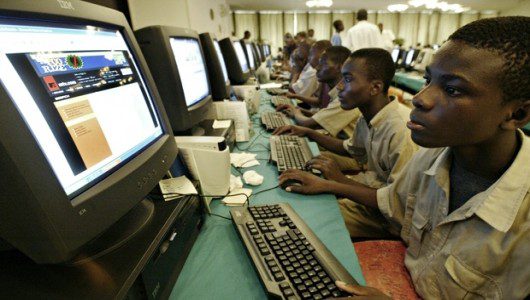
The economies of African nations are growing at levels never before seen, but so is the continent’s youth population. As a result, job creation is at a critical point.
For Africa to maintain its current growth trajectory, it’s estimated that 400 million people under 25 will need viable employment by 2050.
Unemployment isn’t a concern solely in Africa, however, as the U.N. reported in 2014 that global unemployment hit over 201 million people, with a large percentage of these people being women and children.
With rising levels of unemployment, the Internet is starting to play a large role in helping create jobs, especially for populations in Africa. One organization, the Rockefeller Foundation, started its own initiative to jumpstart employment opportunities in certain African nations.
The foundation launched its Digital Jobs Africa program in 2013, with the goal of creating sustainable jobs focused on information communications technology for the youth in Africa.
Specifically, the foundation wanted to have a positive effect on at least one million lives in Egypt, Ghana, Kenya, Morocco, Nigeria and South Africa.
Digital Jobs Africa emphasizes three pathways used in its approach: generating digital jobs in assorted sectors by building promising business environments, prioritizing the hiring of youth in the private sector, and partnering with organizations that provide job training to help make sure the youth have the necessary skills for these jobs.
In starting Digital Jobs Africa, the foundation partnered with the World Bank Group. Since doing so, the two organizations have done lots of work to boost digital job creation opportunities in Africa.
The Rockefeller Foundation and the World Bank Group focus on the Internet because of the impact it can have on the traditional ways of working.
Using the Internet in the workforce creates new opportunities; it therefore has the ability to change lives for the better in both developed and developing nations.
By using the Internet, employers can extend jobs and reach talent on any corner of the globe. People can also work from anywhere.
This strategy is a business model referred to as online outsourcing, or online work.
The World Bank Group was the first organization to take a deeper look into online outsourcing, as it carried out the first comprehensive study having to do with this particular business model. It was called “The Global Opportunity in Online Outsourcing.”
The results of the study, which the World Bank Group did in partnership with Dalberg Consulting and with support from The Rockefeller Foundation, were released in June.
The group wanted to help connect governments, companies and people to online outsourcing, which it did by completing the study.
The study was released side-by-side with a web-based toolkit that can, according to the World Bank Group’s website, “diagnose the feasibility for establishing the online outsourcing industry in developing countries, in order to increase access to employment and income-generation opportunities.”
In the study, the group analyzed experiences people had with online outsourcing in different parts of the world and how it could impact job creation, economic growth and social inclusion.
In doing so, the World Bank Group recommended policy ideas for developing countries to allow them to use online outsourcing as leverage for promoting inclusive growth. It also explained what possible tasks could be available through the business model and which skills were necessary to be successful.
The influence of online outsourcing is expected to grow, as estimates say that by 2020 the market size could hit between $15-$25 billion and have the potential to employ 30 million registered workers.
So how can companies and workers benefit from online outsourcing?
For starters, it gives employers wider access to specific skill sets and faster hiring. It also allows for productivity around the clock, as companies can have workers all over the world.
For those seeking digital jobs, online outsourcing gives them international job opportunities and a flexible work atmosphere.
In terms of societal impact, online outsourcing has the ability to push social change for women.
In India, for example, women who take care of children and elderly family members can make money while at home by having an online job. In Egypt, women can use online outsourcing instead of having to go to workplaces dominated by men.
But online outsourcing isn’t a lucrative alternative to the traditional ways of working just because of flexibility – it could also be the more profitable option.
One aspect of the study conducted by the World Bank Group found that in Kenya, Nigeria and India, full-time online workers earned a salary equal to or greater than their counterparts in a traditional workforce.
Not only can online outsourcing lead to higher wages, but through its flexibility, inclusiveness and innovation, it also has the ability to reach women and youth. This is proof that the Internet can boost economic growth and drive social inclusion.
– Matt Wotus
Sources: The Rockefeller Foundation, The World Bank
Photo: The Guardian

Fashion Project: Supports Good Causes
Raising money for charity is a mission that many organizations and movements have, but it is their techniques what makes them different.
Fashion Project has the mission to raise as much money as possible in order to donate it to charity and humanitarian causes. They achieve this through the creation of a community that donates and shops for clothing pieces to support causes these donors and buyers care about.
According to Fashion Project’s official website, this technique has placed them as the industry leader in online clothing donation.
The designer brands that the Fashion Project sells and accepts for donation are Fendi, Balenciaga, Alexander McQueen, Alexander Wang, Bottega Veneta, Burberry, Chanel, Dolce Vita, Elie Saab, Free People, Gucci, Hermes, Lanvin, Prada, Michael Kors and Valentino, among others.
Once donors select the cause they want to support, they can donate their gently used or new designer clothes, shoes and accessories. Fashion Project covers shipping and they also photograph the donated clothing pieces in order to sell them in their online boutique for buyers. In addition, clothing and accessories donors will get a tax receipt.
While their online shop offers sale prices in designer brand items, buyers can take advantage of the savings these items offer and, at the same time, their purchase provides a donation to charity.
Up to 55 percent of the sells of Fashion Project’s online shop are directed to support different charity programs.
As of today, Fashion Project has raised around $700,000 for charity, and is supporting 2,016 charities and organizations.
Some of the charity partners that Fashion Project supports are She’s The First (sponsors girl’s education in developing countries), Neads (dogs to help the deaf and disabled people), Apne Aap Women Worldwide (empowers women to gain independence) and Women’s Global Empowerment Fund (produces programs that reduce poverty and the marginalization of women and their families), among others.
On the other hand, people can also create their own “Fashion Project” as a fundraising campaign.
Fashion Project gives fundraisers the necessary tools to create their fundraising personalized site so they can invite people to donate or shop fashion items for a good cause. Once the fundraiser reaches his goal, Fashion Project will direct their raise to its destination.
This project has been growing with the years to a point in where Fashion Project has partnered with Neiman Marcus, and the Mercedes-Benz Fashion Week. The project has also launched donation programs with Nordstrom, Joie and Elie Tahari, among others.
According to an article published by Forbes, partnerships with retailers have been an important aspect to spread Fashion Project’s mission.
The most popular designer brands on the online shop are Coach, Theory, Kate Spade, Michael Kors and Tory Burch. Most of the donors and buyers are from the United States but they have had donations from Europe countries interested in donating to the cause and supporting the mission of Fashion Project.
– Diana Fernanda Leon
Sources: Forbes, Fashion Project 1, Fashion Project 2, Fashion Project 3
Photo: Boston.com
Internet Plays Crucial Role in African Job Development
The economies of African nations are growing at levels never before seen, but so is the continent’s youth population. As a result, job creation is at a critical point.
For Africa to maintain its current growth trajectory, it’s estimated that 400 million people under 25 will need viable employment by 2050.
Unemployment isn’t a concern solely in Africa, however, as the U.N. reported in 2014 that global unemployment hit over 201 million people, with a large percentage of these people being women and children.
With rising levels of unemployment, the Internet is starting to play a large role in helping create jobs, especially for populations in Africa. One organization, the Rockefeller Foundation, started its own initiative to jumpstart employment opportunities in certain African nations.
The foundation launched its Digital Jobs Africa program in 2013, with the goal of creating sustainable jobs focused on information communications technology for the youth in Africa.
Specifically, the foundation wanted to have a positive effect on at least one million lives in Egypt, Ghana, Kenya, Morocco, Nigeria and South Africa.
Digital Jobs Africa emphasizes three pathways used in its approach: generating digital jobs in assorted sectors by building promising business environments, prioritizing the hiring of youth in the private sector, and partnering with organizations that provide job training to help make sure the youth have the necessary skills for these jobs.
In starting Digital Jobs Africa, the foundation partnered with the World Bank Group. Since doing so, the two organizations have done lots of work to boost digital job creation opportunities in Africa.
The Rockefeller Foundation and the World Bank Group focus on the Internet because of the impact it can have on the traditional ways of working.
Using the Internet in the workforce creates new opportunities; it therefore has the ability to change lives for the better in both developed and developing nations.
By using the Internet, employers can extend jobs and reach talent on any corner of the globe. People can also work from anywhere.
This strategy is a business model referred to as online outsourcing, or online work.
The World Bank Group was the first organization to take a deeper look into online outsourcing, as it carried out the first comprehensive study having to do with this particular business model. It was called “The Global Opportunity in Online Outsourcing.”
The results of the study, which the World Bank Group did in partnership with Dalberg Consulting and with support from The Rockefeller Foundation, were released in June.
The group wanted to help connect governments, companies and people to online outsourcing, which it did by completing the study.
The study was released side-by-side with a web-based toolkit that can, according to the World Bank Group’s website, “diagnose the feasibility for establishing the online outsourcing industry in developing countries, in order to increase access to employment and income-generation opportunities.”
In the study, the group analyzed experiences people had with online outsourcing in different parts of the world and how it could impact job creation, economic growth and social inclusion.
In doing so, the World Bank Group recommended policy ideas for developing countries to allow them to use online outsourcing as leverage for promoting inclusive growth. It also explained what possible tasks could be available through the business model and which skills were necessary to be successful.
The influence of online outsourcing is expected to grow, as estimates say that by 2020 the market size could hit between $15-$25 billion and have the potential to employ 30 million registered workers.
So how can companies and workers benefit from online outsourcing?
For starters, it gives employers wider access to specific skill sets and faster hiring. It also allows for productivity around the clock, as companies can have workers all over the world.
For those seeking digital jobs, online outsourcing gives them international job opportunities and a flexible work atmosphere.
In terms of societal impact, online outsourcing has the ability to push social change for women.
In India, for example, women who take care of children and elderly family members can make money while at home by having an online job. In Egypt, women can use online outsourcing instead of having to go to workplaces dominated by men.
But online outsourcing isn’t a lucrative alternative to the traditional ways of working just because of flexibility – it could also be the more profitable option.
One aspect of the study conducted by the World Bank Group found that in Kenya, Nigeria and India, full-time online workers earned a salary equal to or greater than their counterparts in a traditional workforce.
Not only can online outsourcing lead to higher wages, but through its flexibility, inclusiveness and innovation, it also has the ability to reach women and youth. This is proof that the Internet can boost economic growth and drive social inclusion.
– Matt Wotus
Sources: The Rockefeller Foundation, The World Bank
Photo: The Guardian
The Price to Educate the World
This past weekend, many international leaders and education advocates met in Oslo to discuss strategies on how to meet the Millennium Goal of education, as well as discuss the price to educate the world. Among the attendees were UN secretary-general Ban Ki-Moon, Malala Yousafzai and former British Prime Minister Gordon Brown.
A high-level panel offered diverse perspectives on financing education. The Indonesian Education Minister, Anies Baswedan pointed out the need to bring down high cost education affecting teaching materials, curriculums and assessment. Rwanda’s Prime Minister Paul Kagame said one of the key factors for successful educational reform was strong partnerships.
Ms. Yousafzai addressed the congregation, urging the international community to spend more money on projects to provide education to those in poverty. She told them, “We will not stop. We will continue to speak out and raise our voices until we see every child in school.”
When the world’s leaders met during the Millennium Summit in September of 2000, they outlined eight core areas of need to reduce extreme poverty in the world. Among those eight core areas, one of the goals was to ensure that, by 2015, children everywhere, boys and girls alike, would be able to complete a full course of primary schooling. To this day, only two of the eight goals have been met, and education is not one of them.
According to the Malala fund, the NGO she helped start, Universal fee-free primary and secondary education for a 12-year period costs an estimated $340 billion per year through 2030. The United States defense budget was $526.6 billion in 2014 alone.
In a July 2015 report released by the United Nations Educational, Scientific and Cultural Organization (UNESCO), the number of out of school students around the world is on the rise, reaching 124 million in 2013. That figure includes 59 million primary students and 65 million young adolescents aged from 12 to 15 years old. This is up from the 122 million that was reported in 2011.
Age is not the only disparity in the fight to educate all children. Efforts to abolish gender gaps have broken down in recent years. Although they are better than in the earlier 2000s when the program was initiated, progression has gone stagnant. According to the 2013 figures, 1 in 10 girls and 1 in 12 boys were out of school in 2013.
The study gives two explanations for the recent decline. First, the sub-Saharan countries are finding it hard to keep up with the rising demand of school education from the school-age population that is experience a surge in population.
Secondly, the old business model that was proposed in the early 2000s is outdated. That model included abolishing tuition fees, the construction of new schools and a system of more teachers, classrooms and textbooks.
The world must come together to pool resources in order to reach the goals set out in the Millennium Development Goals and address the challenges of the UNESCO report. On the fifteenth anniversary of the Millennium Development Goals, the United Nations is expected to adopt a new set of Sustainable Development Goals that will call for universal primary and secondary for all students by 2030.
This is definitely a step in the right direction, but will require more cooperation and resources from the international community and national governments. The World Bank has invested US $4 billion in education alone. This year, they have created a new Results in Education for All Children Trust Fund (REACH). Norway was the first donor followed by USAID. That aid must be used efficiently and with proper strategy.
According to the UNESCO report, what is needed now are “targeted interventions to reach the most marginalised children and youth who are out of school today, including those with disabilities; from ethnic, religious or linguistic minorities; and children affected by armed conflict.” Continuous citizen advocacy is need to make sure U.S. foreign aid stays consistent over the course of the next 15 years in its commitments to universal education, or else the price to educate the world will go even higher.
– Adnan Khalid
Sources: U.S. Department of Defense, Government of Norway, Malala Fund, United Nations, UNESCO, The World Bank
Photo: Flickr
The Jompy Water Boiler: A Lightweight, Inexpensive Solution
From 1990 to 2011, over 2 billion people gained access to an improved water source—that’s a hugely improved standard of living for more children, families and communities worldwide. However, not all water is clean drinking water, which is exactly what Celsius Global Solutions aimed to fix with the Jompy Water Boiler.
The Jompy Water Boiler is a lightweight, inexpensive device that simultaneously enables people to cook a meal and heat water to bacteria-killing temperatures, making the water safe for drinking and bathing.
The boiler itself is a flat metal disk with a handle connected to a container of water through a tube. The flat disk is placed over the heat source. Its shape allows the user to put cooking tools right on top of it. As the disk gets hot, the heat is transferred through the tube to the water container, which quickly heats up, and the water becomes decontaminated. The Jompy Water Boiler works equally well on stovetops and on open fires, making it useful in urban and rural settings.
In 2006, Glasgow University did a test run of the Jompy Water Boiler in Uganda. The test was conducted with 99 families, 49 of which were given water boilers. The World Health Organization set the objective of this research to have zero water-born diseases, such as E. coli, in the families that used the product.
The results were impressive. Of the 49 families with Water Boilers, only one family had a case of E. coli. Meanwhile, of the 50 families without water boilers, there were several cases of the water-born disease.
On top of reducing the risk of disease, families reported that they saved an average of 3 kg of firewood per day and more than three hours of their time due to reduced cooking times using the Jompy Water Boiler. It saves time and effort, all while consuming less fuel and reducing CO2 emissions.
The Jompy Water Boiler is currently used in India, Kenya and Uganda, but it has the potential to make a serious impact on the lives of those living in developing countries. It is efficient, cheap and worthwhile.
– Hannah Resnick
Sources: Empowering People, Jompy, UNICEF, Venture Beat, Wikia
Photo: Siemens
Ingredients for Clean Drinking Water: Saltwater and a Car Battery
As of 2013, around 738 million people across the world do not have access to clean drinking water. Of these people, an approximate 8 million die as a consequence of this inaccessibility.
Water is the paramount need for all human being. Sanitation of this water is vital for preventing many water-borne diseases that can potentially be fatal. Despite the development of new methodologies to sanitize water, the process of chlorination remains unparalleled in its prevalence and efficiency.
The process of chlorination, as the name suggests, uses chlorine gas or bleach to purify water. Chlorine gas is highly toxic and an effective antimicrobial agent. Chlorine also remains in water through longer periods of time than its alternatives. This reduces the costs of repeated purifications.
Despite these advantages that put chlorination far ahead of its counterpart purification methods, it is still difficult to successfully utilize this technique in developing countries. Chlorine gas and its derivatives – such as bleach – are highly reactive and can be dangerous in excessive quantities. The chlorine gas is sold compressed in cylinders, and its pressure requirements change in accordance with the water source to be chlorinated. Hydraulic equipment necessary for safe chlorination is not always accessible in remote areas.
These safety considerations pose a dilemma for the safe sanitation of drinking water. Recently, Mountain Safety Research (MSR), an outdoor gear manufacturer, collaborated with an NGO to release an innovative solution to the problem.
Their device, Smart Electrochlorinator or SE200, uses saltwater and a car battery to produce a carefully-calculated amount of chlorine gas. It consists of a canister that attaches to a battery through jumper cables. The canister is filled with salt solution, and the dissolved salt is dissociated into ionic chloride ions.
The ions are then converted into bleach electrochemically. The hydrogen gas produced from the battery reacts with the chloride ions to form perchlorate, or bleach. The added advantage of the device is in its specificity – it is designed to calculate and produce specific amounts of chlorine per gallon of water. This maintains the concentration of chlorine in water at a constant level and within safe ranges.
The chlorinator is lightweight and portable, which is important in smaller remote areas. It can purify up to 20 liters in a meager 5 minute interval. The device is also notably energy efficient: a 12 volt battery can be used to generate enough chlorine to purify 400,000 liters of water.
The device has so far been tested successfully in field operations in Kenya, Mali, Tanzania, Zimbabwe and Thailand. It is especially noted for its feasibility in small population communities, where large-scale sanitation does not reach and household purification is a hassle. The chlorination is relatively inexpensive as well: at around US$200, it can provide a clean supply of water for 200 people for a period of five years.
As with any new technology, there are issues with this device as well. As it is designed for use in remote areas, it is questionable as to how technical issues might be dealt with. Any of the maintenance issues needing to be fixed can seriously jeopardize a steady supply of clean water. Moreover, in spite of pictorial instructions, there is always the danger for misuse. These are some of the issues that need to be fine-tuned for the chlorinator’s effective usage.
Despite the issues that need to be resolved, the chlorinator is undoubtedly an innovative initiative in the provision of clean drinking water to each and every human being in the world.
– Atifah Safi
Sources: CDC 1, NPR, Cascade Designs, CDC 2
Photo: Flickr
Medellín, Colombia’s Urban Transformation
In the 1990s, Medellín, Colombia had the highest murder rate in the world. The city set out to transform itself and lift its poorest sectors out of extreme poverty through architecture, the revitalization of public spaces, education and improved transportation.
Medellín’s new transportation systems are a major component of the city’s transformative project. The Metro Cable, a cable car that travels above the city, connects informal settlements in the upper regions of Medellín to the metro system in the lower regions, enabling much faster access to transportation. The metro system is clean, modern, and efficient. It reduces travel time from an hour to around ten minutes. The cable car system moves tens of thousands of citizens each day.
Medellín’s urban landscape sits upon steep hillsides. Residents used to have to climb hundreds and hundreds of stairs up these hills to commute to work and back. Today, the city has installed an escalator on this hill. It ascends 1,300 feet. For 12,000 residents, what was once a dreaded 30 story climb is now a quick 5 minute ride.
Another fundamental aspect of this urban transformation is the creation of public squares in the poorest areas of Medellín. Architects Horacio Valencia, head of Sustainable Urban Interventions at EPM (Empresas Públicas de Medellín), Carlos Pardo and Nicolás Hermelin, as well as the CEO of EPM (explain), Juan Esteban Calle, looked at images of the city from the air, and saw some unused, wooded areas. These, they thought, would be excellent ways to create public realms and bring a sense of community to impoverished, dangerous sections of the city.
Each public space is specifically adapted to the context and needs of the neighborhood it is situated in. One square, entitled Los Sueños, or The Dreams, “surrounds the solid concrete tank with jets of water, slides, plays of light and a designated area for events. Enclosed rooms are built into the topography to free up the largest possible area of open space, and house two multi-purpose classrooms, an internet café, public toilets and a launderette – a novelty in a city where it is not uncommon to rent a washing machine for half a day, and home-deliver it on a motorbike – describes The Architectural Review. The fresh public spaces have drawn residents out of their homes to interact with the urban fabric of their city.
Other initiatives involved in Medellín’s transformation involve education and the creation of libraries throughout the city. Residents voted to direct government funds towards funding new schools and college scholarships. In 2002, under 20 percent of public school students used to test at the national average. In 2009, over 80 percent do. Futuristic looking libraries enable all classes of citizens access to computers and the infinite information that comes with them.
EPM’s chief of operations, Federico Restrepo, now Medellín’s city planner, said “We took a view that everything is interconnected — education, culture, libraries, safety, public spaces. Obviously it is not just that we built and renovated schools. You have to work on the quality of teaching and nutrition in conjunction with architecture. But the larger point is that the goal of government should be providing rich and poor with the same quality education, transportation and public architecture. In that way you increase the sense of ownership.”
The Empresas Públicas de Medellín supplies the city with water, gas, sanitation, telecommunications and electricity. In Bogotá, the most impoverished slums lack basic needs like water and electricity, but in Medellín the EPM, mandated by the constitution, provides the most remote slums with these basics. The EPM has helped fund many of Medellín’s transformative projects such as schools, public plazas, metros and parks.
– Aaron Andree
Sources: Architecture in Development, Architectural Review, The Guardian, The New York Times, Planetizen
Photo: Flickr
Why Inequality is Bad for Business
What do poverty, inequality and economic flexibility have to do with each other? Well, according to a recent report co-authored by consulting firm KPMG and economic think-tank Oxford Economics, these three things are intimately intertwined. The report, called the Change Readiness Index (CRI), ranks 127 countries in order of their ability to resist economic shocks, natural disasters and social unrest. The report measures several indicators such as macroeconomic stability, ease of doing business and rule of law, which reveal the effects that inequality tends to have on each country’s society.
Inequality has traditionally been seen as a by-product of developmental challenges which would disappear with increased growth and poverty reduction efforts. However, inequality is increasingly seen as a problem unto itself which needs to be the focus of international initiatives as the Millennium Development Goals expire. This is because increased economic growth isn’t necessarily evenly dispersed, leaving those at the bottom of the economic ladder behind. Thus, poverty reduction needs to be combined with a more equitable distribution of resources to be effective.
There are certainly ethical and social reasons to favor a more economically equal development model. Societies that have lesser income disparities tend to be more socially and politically stable, and have much lower rates of poverty. However, there are also significant economic reasons why inequality reduction is a pathway to poverty reduction. Simply put, economic inequality and poverty are bad for business.
The big-picture macroeconomics of inequality warrants an explanation.
Plainly put, extreme income inequality, such as the kind found in Sub-Saharan Africa and South Asia, cause economic inefficiency. The relatively wealthy tend to save a much higher proportion of their income than the poor. In order to grow economically, a society must have robust rates of consumption. However, if most of the wealth of a country is owned by a very small percentage of its population, that wealth is saved, not spent. These savings are then invested by individuals and financial institutions.
In recent history, excess savings have fueled speculative investments, exacerbating asset price collapses like real estate bubbles, such as the ones that occurred in Spain, Ireland and the U.S. during the 2008 economic crisis. Furthermore, if consumption rates are low due to excess savings, the central bank of a country may lower interest rates to increase the availability of credit, which can further fuel speculative investment. Inequality peaked just prior to the Great Depression of the 1930s and the 2008 financial crisis, contributing to the underlying economic instability which caused those events.
Instead, if the wealth is more evenly distributed among the lower income earners of a society, who spend much more of their income, consumption goes way up. Thus, the poorest individuals, if they are empowered through greater income equality, may drive consumption, opening up new markets and creating increased economic growth.
So, how would income equality be implemented as a pathway to poverty reduction? According to ActionAid, a U.K.-based poverty-reduction organization, one way would be to empower women in the developing world. Up to 60 percent of the world’s poor are women, and only about half of them participate actively in the labor force. If developing societies became more inclusive of women in the labor market, they would represent a huge capacity to work, earn and spend, driving economic growth. This economic growth would act as a positive feedback mechanism, further increasing economic opportunity and pulling people out of poverty.
Something that the Change Readiness Index reveals is that the countries which have the highest levels of inequality also tend to have more persistent levels of poverty despite growth, and tend to have far less spending on public goods like healthcare and education, which are instrumental in reducing poverty. One example is Nigeria, where incredible oil wealth has reached only a tiny portion of the population, and social, political and economic instability abounds. Oil revenues tend to elude taxation, which limits funds available for public spending. Furthermore, Nigeria ranked 90 out of 127 on the CRI and 79 out of 86 countries in the OECD Social Institutions and Gender Index, which measures gender inequality, revealing the link between disparities in income and the participation of women in economic and political life.
As the Millennium Development Goals expire this year, policy makers are increasingly sensitive to the importance of reducing inequality as a pathway to reducing poverty. In 2013, the U.N. published a comprehensive report on global inequality acknowledging it as the greatest barrier to poverty reduction, emphasizing solutions such as the economic and political inclusion of marginalized groups such as women.
Furthermore, 90 economists, academics and development experts recently submitted a letter to Dr. Homi Kharas, leader of the panel on the post-2015 development agenda for the United Nations. The letter urged increased emphasis on reducing inequality as a set of Sustainable Development Goals are being crafted to replace the Millennium Development Goals.
Prominent economist Joseph Stiglitz suggests a Sustainable Development Goal on inequality which follows the style and spirit of the original eight Millennium Development Goals. The goal consists of two targets; by 2030, reducing “extreme income inequalities in all countries such that the post-tax income of the top 10 percent is no more than the post-transfer income of the bottom 40 percent.” And by 2020, establishing a commission in each country which will track and report the effects of inequality.
It’s clear that inequality needs to be a top priority to achieve effective poverty reduction in the next 30 years. Not only could income equality pull millions out of poverty, it could also open up new markets and be the new driver of global economic growth.
– Derek Marion
Sources: The Guardian 1, KPMG, The Guardian 2, ActionAid, Ethics and International Affairs, Save the Children, UN
Photo: Arts.Mic
India Pushes to Eliminate Elephantiasis Epidemic
Lymphatic Filariasis (LF), better known as Elephantiasis, is a painful and profoundly disfiguring disease and yet is a fairly common occurrence in poverty-stricken India. In fact, nearly half of India’s population, about 553 million people, is at risk of contracting LF.
In recent years there has been a mass drug administration (MDA) to people living in the poorest communities of the country. This initiative has been created to stop not only LF, but also many other preventable, chronic and debilitating infections known as neglected tropical diseases (NTD).
However, LF is still one of the most particularly challenging NTDs India has yet to face. Although almost half of India’s population is at risk of becoming infected, LF is one of the easiest NTDs to prevent. This could potentially lead to India eliminating LF within the next few years, and the government has increased efforts by launching the largest MDA in the world.
Yet, there has been little change, for most of the members of the poor Indian communities have been unwilling to take the free medicine. This unwillingness is due to little education, lack of disease awareness and risk perceptions, coupled with general public suspicion of the government distribution program.
Over the last 10 years, advances have led to new diagnostic and treatment tools, along with control strategies for dealing with LF. In October 2014, the Indian Ministry of Heath and Family Welfare (MOHFW) launched a communications campaign known as “Hathipaon Mukt Bharat” or “Filiaria Free India” to create and spread awareness about LF and the new tools to diagnose, treat and prevent the spread of the disease.
The initial campaign was a success, leading to a significant spike in people taking the medicine. With nearly 200,000 health workers in 14 of India’s states providing the information and medicine, the MOHFW was able to reach out to over 300 million people.
Today, India has revitalized its efforts with MOHFW’s Hathipaon Mukt Bharat campaign and has continued to work toward eliminating the LF issue. Recently, the Hathipaon Mukt Bharat initiative won a Silver Lion at the Cannes Lions International Festival of Creativity, earning it national praise for the work it has achieved and will continue to achieve within India.
– Alysha Biemolt
Sources: Impatient Optimists, WHO, JPGM Online, MedInd
Photo: Imagekb
Could Mobile Phones End Global Poverty?
One of the greatest challenges facing developing nations in Africa is connectivity, connectivity to reliable sources of electricity, infrastructure and the world around them. But on the other hand, there are more people in Africa with cell phones than there are with toilets in their homes. And this fact, say some creative individuals, is the key to tackling poverty in Africa.
In 2009, the Grameen Foundation, an organization working to connect the world’s poor with vital knowledge resources, launched a program called the Community Knowledge Worker initiative. The initiative was designed to create a bridge between rural farmers and agricultural experts via a mobile phone connection. Oftentimes, these experts were other members of the local community who shared their knowledge with their peers.
Access to a mobile phone grants a rural farmer access to information resources beyond what they could find without. Not only can local farmers share tips and tricks, but even the most rural farmer can quickly Google pest treatments or look up the current market value of their crops.
Other people are utilizing programs like Mobile Midwife, a mobile-based program that helps connect midwives and patients. The program allows midwives to track appointments, access patient records and even schedule voicemail messages to be send out to patients each week.
Zoona, a social enterprise mobile banking company in Zambia, specializes in managing transactions for Africans without a bank account. In a country where roughly 85 percent of the population has never entered a bank, companies like Zoona stimulate greater money flow in a community by encouraging individuals to carry out transactions and by encouraging savings investments.
However, the boons of the smartphone revolution aren’t just material or economic. With more and more Africans utilizing smartphones, social networking sites are gaining ground quickly, connecting people from all across the continent. The growth in social media activity has been so rapid that social media giant Facebook has recently announced plans to open a headquarters in Johannesburg, South Africa.
Mobile phones open up a world of possibilities, even in the most rural and impoverished areas. Access to vast amounts of information, secure banking and social connectedness are changing the face of Africa and are giving poor nations a strong platform for growth.
– Gina Lehner
Sources: The Huffington Post, Grameen Foundation, AFK Insider
Photo: Flickr
Foreign Aid Investments Saved Over 30 Million Children’s Lives
The Institute of Health Metrics and Evaluation (IHME), the top international agency for global health data collection and analysis, has provided a new report which scores the impact of foreign aid investments made over the past fifteen years.
The study, recently published in the Lancet Medical Journal, determined that between 2000 and 2014, low and middle-income nations invested $133 billion US into child health initiatives. These investments are estimated to have saved the lives of 20 million infants and children.
An additional $73.6 billion US of foreign aid investments provided by donors, both governmental and privatized, accounted for the saving of an additional 14 million infant and child lives, the IHME estimates.
In total, an estimated 34 million children’s lives have been saved in the past 15 years. The report estimates that US foreign aid investments saved the largest number of children under-five, with 3.3 million lives saved. The UK was also noted as a significant factor in this progress and is estimated to have saved 1.7 million lives through their own development funding. The Bill and Melinda Gates Foundation proved to be the largest privatized donor, having saved an estimated 1.5 million lives.
Ray Chambers, the UN Secretary General’s Special Envoy for Financing the Health Millennium Development Goals and Malaria, collaborated with the IHME to produce this report and hopes to use this form of analysis in the future to track the success of the Sustainable Development Goals.
Chambers said in an interview about the new score, “We know that despite the efforts of governments and donors to improve health in low-income and middle-income countries, too many children die before the age of five. Without a way to monitor and publicly share progress regularly, we will miss the opportunity to build on the momentum we have seen since the millennium declaration.”
The IHME estimates that within the most impoverished nations, the cost to save a child’s life is about $4,000 US. The organization stated in its report that within countries such as Tanzania and Haiti, the costs are $4,205. They estimate within nations such as Botswana and Thailand, where economies are more developed, that the costs to save a child’s life are above $10,000 US due to high health care costs.
The Director of the IHME, Dr. Christopher Murray, said in a recent interview, “You can spend $4,000 on many different things, but there are very few places where the money would deliver the kind of impact you get by investing it in child health.” He continued in reasoning, “If you invest in the poorest countries, you will see the biggest impact in child health because the costs of things like nutrition programmes, vaccines and primary care are lower.”
The report analyzed both governmental and privatized donors and included internationally renowned agencies such the Global Fund, World Bank, UNICEF, USAid and Gavi. The study concluded that the efforts and financial support of Gavi, a global non-profit organization focused on vaccination, has saved over 2.2 million lives.
Looking towards future development initiatives such as the Sustainable Development Goals, Dr. Murray said, “We have seen such incredible success in saving children’s lives over the past 15 years. We need to take what we have learned from that experience and push for more progress and more accountability as we enter the era of the Global Goals for Sustainable Development.”
The Sustainable Development Goals were developed at the UN Rio+20 Conference in 2012 and are designed to build upon the progress of the Millennium Development Goals in the coming years.
– James Thornton
Sources: The Guardian, News-Medical
Photo: The Guardian