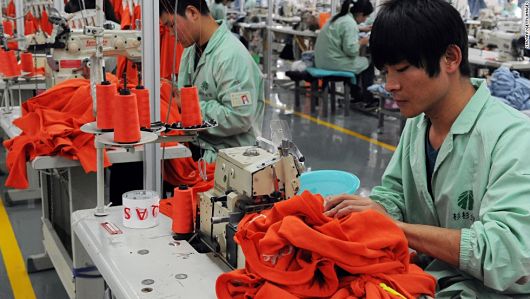
Every year, around the Chinese New Year, China experiences the world’s largest human migration. About 700 million people gather at boat landings, train stations and airports to return home; during this holiday period, 2,265 trains per day will carry this plethora of people across the country.
A majority of these travelers are in fact migrant workers who are returning home after working in China’s crowded but economically thriving cities. For many of these laborers, this will be their only visit home before they have to return to their place of employment for the rest of the year.
Traditionally, life for these millions of migratory workers has not been easy. While many leave their rural hometowns for greater economic opportunities in China’s booming metropolises, they often find more than they bargain for.
A study conducted by Cheng Yu at Sun Yat-sen University in Guangzhou surveyed the mental health of 807 migrant workers from Shenzhen and also saw Cheng discussing personal experiences with 60 of them. The study found that 58.8 percent of participants suffered from depression. Another 17 percent experienced anxiety, while around 4.6 percent had considered suicide.
The issue of mental health among Chinese migrant workers became widely apparent in 2010 after a series of suicides at a Foxconn manufacturing facility in Shenzhen. The company had assembled components for Apple products.
For migrant workers who must transition from rural life to city living without the support of their families, the chance of developing mental illnesses is much greater. They also face greater inequality through China’s hukou system.
The hukou essentially serves as a domestic passport which distinguishes between those of rural backgrounds and urban backgrounds. Unfortunately, migrant workers have to pay more for social services such as healthcare and education, which they could expect for little expense in their rural hometowns. They will frequently experience wage disparities and discrimination.
In 2008, a study found that urban workers earned around 1,000 yuan per month, while their migrant counterparts earned only 850 yuan. Most were expected to work around 11 hours per day for 26 days a month. Another study found that migrant laborers worked 50 percent more hours than their urban counterparts, yet in turn received 60 percent less in pay.
In order to improve their working conditions, laborers have recently taken to the streets in protest. In 2011 the country experienced 185 labor protests and things have only escalated since then: last year, 1,300 labor protests took place.
Even though the Chinese government guarantees workers’ rights under a 1995 labor agreement, workers must seek approval for strikes through the All-China Federation of Trade Unions, a government entity. If they don’t coordinate through the federation, they can face arrest.
Yet these arrests are usually only based on disorderly conduct and not for the actual strikes themselves. Wu Gaijin, a worker representative from Shenzhen, was detained for an entire year without a conviction. The government charged him with disrupting traffic.
However, life for laborers has been gradually improving. China has recently worked towards loosening restrictions on the hukou system in an attempt to lessen the disparity between urban and rural workers. Furthermore, individuals such as Cheng have advocated for required mental health testing at work facilities and for providing employees with a mental health support line to mitigate suicides and depression.
As China grows larger and its cities expand, changes such as these will have to be made in order to make its labor force sustainable and healthy.
– Andrew Logan
Sources: Business Insider, CNN 1, CNN 2, ILO, NPR, PBS
Photo: CNN

The Young African Leaders Initiative
The Young African Leaders Initiative (YALI) is the combined efforts of the U.S. government, Non-Governmental Organizations, universities and companies to support African youth and future leaders in hopes of creating a better future for Africa as a whole. It was established by President Obama in 2010.
Not only does YALI aim to create and shape African leaders, but it also wants to create a network between them. What is striking about this measure is that it lays down a framework for these future leaders who are full of potential, but then leaves the more substantial and meaningful portion of the work to the young leaders themselves, leaving it up to them to shape their world.
YALI goes about this goal in several ways. For example, it offers online courses for individuals who want to learn more about areas such as entrepreneurship, leadership and public management. Completion of a YALI course not only means that a person has learned about honing valuable life skills, but also that they receive a certificate to prove it.
YALI is also working to construct Regional Leadership Centers throughout Africa with the intent of increasing accessibility and relevance of training programs to leaders and future leaders across Africa. Two have opened so far this year, in Accra and Nairobi, and two more are planned for Dakar and Pretoria by the end of 2015.
The YALI Network face2face is a Facebook group that helps young African leaders share events encouraging leadership and fellowship, or even create new skills. Members are encouraged not only to attend events but to create their own on topics that interest them or that would be beneficial to their particular community. It’s a tool to help create and maintain connections.
Another huge event put on by the group is the Mandela Washington Fellowship for Young African Leaders, which brought 500 African leaders ages 25 to 35 to the United States in 2014 and 2015. Fellows take academic courses in business, civic engagement and public administration and receive leadership training. Some also participate in internships. What they take home is access to new opportunities, seed funding and useful skill sets to help build their own communities.
Participants in the fellowship are selected from almost 50,000 applicants. Next year, there are plans to double the number of participants to 1,000, as well as to develop an exchange program where 80 Americans are sent to Africa to work with alumni of the fellowship program.
Each applicant has his or her own story and set of experiences that make them valuable contributors to the fellowship. For example, Grace Alache Jerry, Miss Wheelchair Nigeria, is a spokesperson for people with disabilities, founder of her own nonprofit organization and organizer of a series of benefit concerts.
Eldine Chilembo is an advocate for women’s empowerment in the maritime industry in Angola. Noluthando Duma helps orphans in her South African Province of KwaZulu Natal and hopes to develop a home to provide resources to such children.
Kenyan Kezy Mukiri said of her experience in the fellowship, “What I’m taking back with me is humanity. We need to connect; the world is becoming a global village.”
The bringing together of such inspired, dedicated minds is an undoubtedly noble cause. President Obama summed up the goal of the movement nicely at his speech at this year’s Washington Summit.
“Our hope is. . . when you have all gone on to be ministers in government or leaders in business or pioneers of social change, that you will still be connecting with each other, that you will still be learning from each other.”
– Emily Dieckman
Sources: Insidevoa, Miami Herald, NPR, State, Voanews, Young African Leaders
Photo: The White House Blog
New Anti-Poverty Initiative for the Middle East
The Islamic Development Bank and the Bill & Melinda Gates Foundation have teamed up to launch a new $2.5 billion sharia-compliant fund targeting extreme poverty in the Middle East. By partnering with the world’s richest charitable institution, the IDB hopes to successfully combat poverty in the Islamic world.
Although the Middle East is home to some of the richest countries worldwide, it also includes some of the world’s poorest, such as Burkina Faso and Chad. Additionally, some countries show a combination of extreme wealth and poverty, such as Egypt and Indonesia. Others are known simply for their extreme violence, like Yemen and Syria.
Without the assistance of a strong partner, regions like these would normally have a much harder time bringing in grants and skills into their territories. Key players hope that the various connections established through the partnership will prove to be even more effective than the partnership itself.
Hassan Al Damluji, head of Middle East Relations at the Bill & Melinda Gates Foundation, recently discussed the Lives and Livelihoods Fund in an interview, stating, “We are engaging Gulf donors who will be around and are sustainable, unlike the Foundation, which is a family fortune and is thus finite.”
Al Damluji went on to explain that one of the key features of the fund is its encouragement of investment from the poor countries themselves. Another essential working part of the fund is that it gives aid linked to the loans taken by recipient countries, so these countries are held accountable for their own development.
The plan is for the fund to finance projects in four different areas: agriculture and food security, primary health care, infectious disease control and eradication, and basic infrastructure. Al Damluji explained that all of these areas represent major drivers of inequality across the globe.
The overarching goal is to maximize the beneficiaries of this partnership, regardless of race, country or religion. With the additional long-term goal of sustainability in mind, the fund will be strategically housed in and administered by the IDB.
So far, the IDB has provided $2 billion, and a remaining $500 million will come from donors over the next five years in the form of grants. Both partners will work together to determine which projects deserve priority. The partners will meet twice annually in order to ensure cooperation and coordination.
The reasoning behind the choice of the four main project areas is that over time, effects like improved health and increased farmer productivity will work to boost economies. The key to understanding the way the new fund will work is to operate from a big picture perspective and to take into account its long-term consequences.
This will be the first major fund of its kind to actually be based in the Middle East. Al Damluji boasted that the fund will also have a bank of shareholders that are not OECD countries and not traditional donors.
Both the IDB and the Bill & Melinda Gates Foundation understand the necessity of a well-functioning partnership in order to accomplish real change in the Middle East. The new partnership is more important than the fund itself and cooperation is absolutely necessary.
Additionally, both partners understand that two minds are better than one—especially when dealing with such a deeply rooted, complex problem. Together, the IDB and the Bill & Melinda Gates Foundation have raised the bar in the global anti-poverty fight.
– Sarah Bernard
Sources: Nonprofit Quarterly, Gulf News
Photo: Time USA Newsweek
Mobile App Keeps Fishermen Safe
More than 60 percent of India’s fishing communities, which comprise nearly four million people, earn less than a dollar a day. For each meager catch, they risk their lives sailing in flimsy boats through extreme weather conditions, only to return home to poor shelter, poverty, illiteracy and a lack of access to information.
Mobile technology organization Qualcomm is out to improve conditions with the Fisher Friend Mobile Application, which provides fishermen with real-time information about wind speed and wave height, weather conditions and disaster alerts up to 100 kilometers from shore. The Fisher Friend app also provides up-to-date market prices for fish, allowing fishermen to maximize their earning potential.
As of Feb. 2015, 1,000 people had been trained to use the app. Immediate benefits were seen; in one case, the Fisher Friend app’s GPS feature was used to locate and rescue 40 fishermen caught in rough weather conditions.
In addition, fishermen report that the Fisher Friend app helps to increase their haul. Subscribers receive a voice message bulletin in native regional languages five times a day, detailing, along with the other information, potential fishing zones where fishermen will bring in a larger catch.
Sanatan Behera, a fisherman at Chilika Lake in Odisha, India, said, “Two years ago, I used to catch only 50 kg of fish daily. Now, after I know the exact fish location through the voice message, I am able to catch almost double.”
The Fisher Friend app also warns fishermen when they approach Sri Lankan waters, allowing them to avoid being apprehended and potentially harmed for accidentally crossing the maritime border. The right of Indian fishermen to operate in Sri Lankan waters is still a highly contested issue between the two governments.
Fishing bans are another area the messages cover, informing fishermen of temporarily imposed bans placed by the government. Taking into account the impoverished nature of fishing communities, the app also covers information about government welfare programs.
All things considered, fishing communities face many challenges, ranging from cyclones and floods to illiteracy. These can place them in dangerous territory concerning governmental bans and allow fishermen to be taken advantage of with regards to fair market prices. However, Fisher Friend’s mobile app and the information it provides will help keep fishermen safe in India and empower them to draw a higher income from their hard work.
– Emma-Claire LaSaine
Sources: Huffington Post Impact, Economic Times, The New Indian Express, Qualcomm
Photo: The Telegraph
Education in Japan to Favor Business Skills
Japan is rethinking its higher education programs, forgoing liberal arts subjects in cooperation with a business-first society keen on better-skilled graduates.
Prime Minister Shinzo Abe’s aspiration is to change Japan’s government-sanctioned universities into global frontrunners in scientific exploration or vocational training schools. Abe has called on Japan’s higher educational programs to “redefine their missions” and transform their expected criteria.
The 86 Japanese public universities were instructed by the ministry of education to send their plans to restructure their educational format by the end of June to continue receiving their funds contributed by the government.
In accordance with this decision for adjustment, many of the country’s companies have altered their training programs, counting on universities to train more for business skills. The expectation for young professionals with teamwork, managerial and social abilities is higher than ever in Japan.
This change is inspired by Abe’s decision to rejuvenate the country to become a world leader. The Prime Minister wants universities to include innovative schooling techniques that are more demanding of students for the betterment of the Japanese economy.
Despite Abe’s assurance of this success, many feel as though exempting liberal arts subjects will be detrimental to the experience and value of learning in higher education. This debate started long before Japan’s educational reformation, earning a lasting presence in the United States’ arguments over education. Nevertheless, Japan’s critics are worried about the quality of educational instruction because of the miscommunication between expectations of Japanese employers.
The Dean of Temple University’s Japan campus, Bruce Stronach, said that society needs people who contribute to all aspects of humanity, including social issues.
“That’s why those traditional fields like arts, literature, history and social sciences are also—and will always be—important,” Stronach said.
Despite Stronach’s negative reaction to these changes, not all Japanese educators are displeased with Abe’s declarations.
Katsushi Nishimura, a law professor at Ehime University in Japan, said that students need to learn how to work according to society’s expectations.
“We also need to come out of the ivory tower and listen to the real world,” he said.
According to Nishimura, the university’s funding for the humanities and education departments’ courses will be cut and given to an improved business training plan created by a board of business and academic leaders. Originally, according to Nishimura, the teaching staff was in charge of altering education courses.
In addition, Nishimura said that the new programs will highlight training for local industries such as tourism and fisheries.
Like Nishimura, Japanese educators will likely abide by Abe’s decisions. Education in Japan fueled the country’s rapid economic growth and is one of the driving forces toward the production of high technology.
No doubt, even without liberal arts courses, Japan will continue to be a large contributor to the international economy.
– Fallon Lineberger
Sources: Ehime, OECD Observer, The Australian, Wall Street Journal
Photo: GaiginPot
Power Africa Continues to Face Hurdles
In 2013, President Barack Obama launched Power Africa, an $8 billion foreign aid program designed to help improve access to electricity in sub-Saharan Africa. It aimed to provide electricity to the region’s 961 million residents, who currently only use as much electricity as New York City. Two-thirds of sub-Saharan Africa do not have access to electricity.
Power Africa is adding 60 million new electricity connections and is generating up to 30,000 megawatts of power in six countries: Ethiopia, Ghana, Kenya, Liberia, Nigeria and Tanzania. The project works with local and U.S. partners to improve regulations, build capacity and provide technical assistance. However, two years in, research has shown that Power Africa still faces major hurdles in its implementation.
In Kenya, for instance, the power grid infrastructure has rapidly expanded, covering most of the countryside. However, only 30 percent of Kenya, including just five percent of rural households, have power. Building a bigger infrastructure was not going to be a solution, researchers realized, because connecting to the power grid was much more expensive than what many households could afford. Moreover, Kenya lacked people who could design and construct electrical wiring. Even when a household bought a connection, it still took months to actually get electricity. When they finally did get power, it was extremely unreliable. Power outages would sometimes last for weeks at a time.
Power Africa has not brought any electricity to Nigeria at all. Bickering between government agencies, private companies and foreign governments has slowed projects down in a country that is not able to provide electricity to half of its population. Officials say there have only been conversations about potential projects in the future. The Obama administration has boasted of a few closed deals, but they had already been in the works before the Power Africa initiative.
In such countries, only the wealthy can afford electricity, which they get through the use of private generators. It has even become a status symbol to own one. However, private generators add to these countries’ worsening environmental problems.
President Barack Obama said, “Access to electricity is fundamental to opportunity in this age. It’s the light that children study by; the energy that allows an idea to be transformed into a real business. It’s the lifeline for families to meet their most basic needs. And it’s the connection that’s needed to plug Africa into the grid of the global economy. You’ve got to have power.”
The U.N. predicts that sub-Saharan Africans will make up nearly 25 percent of the world’s population by 2060. Ensuring that this generation has access to electricity in order to expand their economy, improve education and enhance living standards is important to mitigate poverty in future generations. Currently, blackouts are costing sub-Saharan Africa 2.1 percent of their GDP every year.
– Radhika Singh
Sources: Reuters, USAID, NY Times 1, NY Times 2
Photo: NY Times
The Plight of Chinese Migrant Workers
Every year, around the Chinese New Year, China experiences the world’s largest human migration. About 700 million people gather at boat landings, train stations and airports to return home; during this holiday period, 2,265 trains per day will carry this plethora of people across the country.
A majority of these travelers are in fact migrant workers who are returning home after working in China’s crowded but economically thriving cities. For many of these laborers, this will be their only visit home before they have to return to their place of employment for the rest of the year.
Traditionally, life for these millions of migratory workers has not been easy. While many leave their rural hometowns for greater economic opportunities in China’s booming metropolises, they often find more than they bargain for.
A study conducted by Cheng Yu at Sun Yat-sen University in Guangzhou surveyed the mental health of 807 migrant workers from Shenzhen and also saw Cheng discussing personal experiences with 60 of them. The study found that 58.8 percent of participants suffered from depression. Another 17 percent experienced anxiety, while around 4.6 percent had considered suicide.
The issue of mental health among Chinese migrant workers became widely apparent in 2010 after a series of suicides at a Foxconn manufacturing facility in Shenzhen. The company had assembled components for Apple products.
For migrant workers who must transition from rural life to city living without the support of their families, the chance of developing mental illnesses is much greater. They also face greater inequality through China’s hukou system.
The hukou essentially serves as a domestic passport which distinguishes between those of rural backgrounds and urban backgrounds. Unfortunately, migrant workers have to pay more for social services such as healthcare and education, which they could expect for little expense in their rural hometowns. They will frequently experience wage disparities and discrimination.
In 2008, a study found that urban workers earned around 1,000 yuan per month, while their migrant counterparts earned only 850 yuan. Most were expected to work around 11 hours per day for 26 days a month. Another study found that migrant laborers worked 50 percent more hours than their urban counterparts, yet in turn received 60 percent less in pay.
In order to improve their working conditions, laborers have recently taken to the streets in protest. In 2011 the country experienced 185 labor protests and things have only escalated since then: last year, 1,300 labor protests took place.
Even though the Chinese government guarantees workers’ rights under a 1995 labor agreement, workers must seek approval for strikes through the All-China Federation of Trade Unions, a government entity. If they don’t coordinate through the federation, they can face arrest.
Yet these arrests are usually only based on disorderly conduct and not for the actual strikes themselves. Wu Gaijin, a worker representative from Shenzhen, was detained for an entire year without a conviction. The government charged him with disrupting traffic.
However, life for laborers has been gradually improving. China has recently worked towards loosening restrictions on the hukou system in an attempt to lessen the disparity between urban and rural workers. Furthermore, individuals such as Cheng have advocated for required mental health testing at work facilities and for providing employees with a mental health support line to mitigate suicides and depression.
As China grows larger and its cities expand, changes such as these will have to be made in order to make its labor force sustainable and healthy.
– Andrew Logan
Sources: Business Insider, CNN 1, CNN 2, ILO, NPR, PBS
Photo: CNN
Successful Poverty Reduction in Peru
Poverty rates in Peru have dropped significantly over the past four years. Specifically, extreme poverty rates among those with non-social assistance-based income have dropped from 32.8 percent to 24.1 percent in the poorest, most rural parts of the country. While Peru has faced its fair share of challenges, progress is being made.
Ana Revenga, the Senior Director of the Poverty Reduction Unit of the World Bank, recently stated that Peru’s economic growth and poverty reduction is one of the best in the region. Revenga explained, “The significant and sustained growth of the Peruvian GDP benefited the poorest, which resulted in a decrease in inequality.”
These impressive economic improvements throughout the country have come as a result of a major collective effort. In particular, a variety of social initiatives have proven to be key in combating extreme poverty and inequality.
Programs like the National Strategy for Development and Social Inclusion — or “Incluir para Crecer” — are working to close gaps in available public services. Perhaps even more importantly, this type of social program works to expand exclusive economic growth that neglects to help those suffering most severely.
As the country strives to continue moving forward, additional programs like Juntos and Pension 65 will be offering support to Peru’s poorest population. These programs will be working to ensure the longevity of recent improvements in the economic and living conditions of the extremely poor.
The Juntos program has directly contributed to the reduction in child malnutrition under the country’s current government. Within the framework of the program, conditional transfers of state subsidy guarantee good health and growth for unborn and young children alike.
Amongst Peru’s rural population, child chronic malnutrition has declined from 37 percent to 28.8 percent. At the national level, it has dropped from 19.5 percent from just four years ago to 14 percent in 2015. This number is encouragingly close to the 10 percent target set for the end of the current administration period.
The country’s Minister of Development and Social Inclusion, Paola Bustamante recently stated that since 2012, there has been over $1 billion invested in these types of social programs.
She explained that all social programs are implemented under a performance-based budgeting framework, which prevents funds from being used for other purposes besides social programs.
However, despite the above mentioned critical steps in the right direction, Peru is still facing its fair share of structural challenges. In early July 2015, the Organization for Economic Cooperation and Development requested that Peru review and reorganize its denomination of rural and urban regions.
Such obstacles have not significantly curtailed the rates of improvement in poverty reduction and inequality, however. In fact, Bustamante Suarez, another government official, has assured the public that current social inclusion policy will most definitely be continued by subsequent administrations.
Strategically targeted social initiatives will continue to level the economic playing field. As explained by Suarez, these programs will continuously work to close basic services gaps, thus improving the living conditions of the poor population. Peru still has a long road ahead, but leaders are confident that it will come out on top.
– Sarah Bernard
Sources: Andina, Peru This Week
Photo: Peace and Hope International
Supporting the Digital Revolution in Africa
The spread of mobile technology and the Internet to the developing world has been well covered. More and more people acquire mobile phones and gain access to the Internet every day. But what drives this spread of technology?
While technology like this cannot be substituted for better infrastructure in other areas like healthcare, transportation and finances, it can connect and catalyze economic development. Mobile phones allow for farmers to stay up to date on crop prices and broadband has allowed the Kenyan capital Nairobi to become a hub for IT services and call centers.
A study by the World Bank found that if a 10 percent increase in mobile phone adoption took place, a developing nation’s GDP per capita would increase by 0.8 percent. The spread of broadband in a developing country raises this number to 1.3 percent. According to Christine Zhen-Wei Qiang, the author of a World Bank report on the role of information and communication technology (ICT), mobile technology has the potential to change the lives of many in the developing world: “The mobile platform is emerging as the single most powerful way to extend economic opportunities and key services to millions of people.”
Behind this explosion of digital media, mobile money payments, smartphones and Internet is the infrastructure that makes it all possible. East Africa is an excellent example of the importance of infrastructure for the spread of the digital revolution.
In 2010, three fiber optic cables were installed sub-sea. This ensured that East Africa was no longer the only place on the planet without “super-fast” broadband. Rwanda has also used a fiber-optic tech, putting in a 3,200 km network that connects up to 230 government offices across the country.
To go along with broadband progress in the region, Zambia announced back in April that it would invest $65 million in building new telecom towers that can be used by the country’s three major mobile companies. While fiber-optic is important, most people in Africa get their Internet via their mobile phones, which is why these new telecom towers are so important in Zambia.
The number of mobile users in Zambia is around 10 million, a number that lags behind other countries like Uganda and Kenya. The Zambian government hopes that the new towers will increase subscribers and connectivity. The country’s president, Edgar Lungu, said, “Once implemented, the project will reduce the problems of telephone and Internet connectivity in the country.”
Communications infrastructure is extremely important for countries in the developing world. Without strong infrastructure for mobile and broadband technology, which have essentially become prerequisites for business, countries cannot advance in the global economy.
The benefits of investing in the infrastructure are clear. As most of East Africa’s population – 120 million – lives in rural areas, mobile phones are their key to the Internet. Telecom infrastructure enables countries to get ahead in a way by promoting communication through mobile technology.
Today, mobile phones are the first choice for communication and research. Farmers can gather information on seeds and fertilizers, as well as cooperate with other farmers in their area. The infrastructure also incubates international trade. With more investment will come more benefits in the region.
– Gregory Baker
Sources: Vodafone, PC World
Photo: BUSINESSTECH
The Poor Find Haven In Monrovia’s Cemeteries
Liberia has had a trying past couple of decades. Most recently, it was plagued by the Ebola virus, which killed thousands of people. Before this, it had suffered through a 14-year-long civil war, which had taken place just a few years after yet another civil war ended. Both wars killed hundreds of thousands of people, leaving many homeless and destitute. Lacking housing or money, many poverty-stricken Liberians have turned to living in cemeteries, many of which are in Monrovia, its capital.
Most go to the Palm Grove Cemetery. Many of these dwellers arrived when they were just children and after their parents had been killed. Some had been child soldiers. They were taken there by friends from the street who used the relative peace and security of the cemetery to indulge in marijuana, cocaine and heroin. They used tombs for shelter after smashing them open and throwing out their long-dead inhabitants.
Monrovians look upon the cemetery dwellers with distaste and fear. They are viewed as criminals and drug addicts who disrespect the graves of their families and are deprecatorily called “friends of the dead.” On Decoration Day, a public holiday when Liberians paint and adorn tombs, conflict always erupts between the tomb dwellers and the families of the tombs’ rightful owners.
Rather than provide an area for the homeless to live in, President Johnson Sirleaf simply put up walls around the cemetery in 2007 to keep them out. Just a few months later, however, people had already breached the walls to live in the cemetery once again. Now the walls serve to better hide the dwellers and their activities rather than keep them out.
Prostitution has also become commonplace behind the cemetery’s walls. Some women and girls are only able to survive through sex work. They are afforded no protection from the police, who often rape them themselves. Unwanted births are commonplace.
Many diseases also run rampant. Ebola was just another problem to add to a list of illnesses that included ones such as tuberculosis and diarrhea.
Hope may yet be around the corner for these cemetery residents. Last year, the British charity organization, Street Child, began to work with them, setting up counseling sessions, schools and rehab centers. However, many roadblocks stand in the way of their progress. It is extremely difficult for many residents to even consider weaning themselves off their dependency on drugs. Sometimes, drugs make them aggressive and hostile, which makes it hard for people from Street Child to engage with them.
The outbreak of Ebola also set back efforts. Schools were banned, as were public gatherings. Street Children also started redirecting efforts to the 2,000 children orphaned because of Ebola. Officials have been hostile to Street Children’s efforts in cemeteries, calling their residents a “lost cause.”
Now that Ebola has largely disappeared in Liberia, Street Children is ready to make a renewed effort to help the cemetery dwellers. To the charity organization, small successes have boosted their belief that these people can be saved from a lifetime of poverty and dependency.
– Radhika Singh
Sources: Independent, BBC 1, BBC 2
Photo: Independent
Working Australian Actors Still Live in Poverty
While many consider actors to make a decent amount of money, that couldn’t be farther from the truth for many actors working in Australia.
According to a recent University of Sydney study, 56 percent of actors in Australia earn less than $20,000 a year from their profession. An additional 36 percent earn less than $10,000 annually. One in four actors in the country are currently living below the poverty line.
“Actors as a group are extremely low paid,” Zoe Angus, director of the entertainment industry union Actors Equity told Perth Now. “Most have to earn supplementary income from other sources, but even then, one quarter still live below the poverty line.”
In Australia, the set union pay rate for an “established, experienced performer” on a television show is roughly $600 a day. While this may seem like a highly substantial paycheck, most television actors who aren’t very high-profile are only working around one or two days a month.
What Australian actors are experiencing represents the current plight of actors on a global scale. According to Equity, an acting union based out of the U.K., 56 percent of its members earned less than £10,000 between November 2012 and 2013.
“The industry is driven by dreams,” Macquarie University economics lecturer Dr. Jordi McKenzie told the Courier Mail. “People see actors like Liam Hemsworth, who’ve come through the local industry and go on to become some of Hollywood’s biggest names. Of course, those are the exceptions and not the rule. For every actor who makes it, there are probably 1,000 who don’t.”
– Alexander Khalid
Sources: The Sunday Times, The Courier Mail, The Telegraph
Photo: The Telegraph