Throughout history, activists have played major roles in inspiring change and fighting injustice across the globe. From challenging dictatorships to opposing racism to promoting equality for women, nearly every social and political change has come about due in large part to advocacy and public engagement. With that in mind, here are 10 quotes to inspire activism within all of us.
10 Quotes to Inspire Activism
1. Malala Yousafzai
“One child, one teacher, one book, and one pen, can change the world,” Yousafzai said while giving a speech to the U.N. Youth Assembly.
Yousafzai has spent her life advocating for Pakistani women and children and fighting for access to education worldwide. The young activist recently collaborated with British journalist Christina Lamb to publish a book titled “I am Malala: The Girl Who Stood Up for Education and Was Shot by the Taliban.”
“When the whole world is silent, even one voice becomes powerful,” the Nobel Peace Prize winner said during a speech at Harvard University in 2013.
2. Rev. Dr. Martin Luther King Jr.
“One of the great liabilities of history is that all too many people fail to remain awake through great periods of social change. Every society has its protectors of status quo and its fraternities of the indifferent who are notorious for sleeping through revolutions. Today, our very survival depends on our ability to stay awake, to adjust to new ideas, to remain vigilant and to face the challenge of change,” King said in a speech near the Washington Monument in 1968, on the dangers of neglecting important social issues.
As a Baptist minister and social activist, King was a prominent leader of the U.S. Civil Rights Movement. His speeches and legacy continue to inspire activists to pursue political and social change.
3. Anne Frank
“How wonderful it is that nobody needs to wait a single moment before starting to improve the world,” Frank wrote as a child while hiding with her Jewish family from the Nazis during World War II.
Frank’s writings were later published as a book titled “Anne Frank’s Tales from the Secret Annex” and have inspired activists for decades.
4. Sir Ian McKellen
“Try and understand what part you have to play in the world in which you live. There’s more to life than you know and it’s all happening out there. Discover what part you can play and then go for it,” McKellen said.
As an accomplished and well-known actor, McKellen has used his public stance to advocate for LGBT rights across the globe for many years. In 2014, McKellen published an open letter to President Vladimir Putin in an effort to address LGBT issues in Russia.
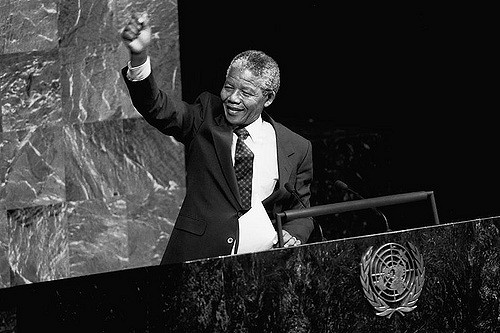
5. Nelson Mandela
“What counts in life is not the mere fact that we lived. It is the difference we have made to the lives of others that will determine the significance of the life we lead,” Mandela said in 2002, at the 90th birthday celebration of Walter Sisulu in Johannesburg.
Mandela dedicated his life to global peacemaking. In 2009, his birthday was declared Mandela Day, an international day to promote peace, celebrate his legacy and inspire activism across the globe.
6. Sue Monk Kidd
“There’s a gap somehow between empathy and activism. Rev. Dr. Martin Luther King Jr. spoke of soul force, something that emanates from a deep truth inside of us and empowers us to act. Once you identify your inner genius, you will be able to take action, whether it’s writing a check or digging a well,” Kidd said to Marie Claire.
Kidd is an accomplished author, best known for her novel-turned-film “The Secret Life of Bees” and has spent her career writing narratives that inspire women in particular.
7. Gary Zukav
“Developing compassion for Congress and politicians is a good way to begin practicing the new social activism if you want to make effective changes in the world. Perhaps the most startling new insight of all is that there is no other way to effectively change the world,” Zukav told the Huffington Post.
Zukav is a New York Times bestselling author, who is well known for advocating for compassion in politics and society.
8. Melinda Gates
“Optimism for me isn’t a passive expectation that things will get better; it’s a conviction that if we can make things better — that whatever suffering we see, no matter how bad it is, we can help people if we don’t lose hope and we don’t look away,” Gates said in the Bill & Melinda Gates Foundation 2014 commencement address.
Gates is a well-known philanthropist and businesswoman. She is the co-founder of the Bill & Melinda Gates Foundation.
“Sometimes it’s the people you can’t help who inspire you the most,” she said.
9. Bill Gates
“Don’t let complexity stop you. Be activists. Take on the big inequities. It will be one of the great experiences of your lives,” Gates said in a Harvard University commencement speech.
While Gates is widely known as a co-founder of Microsoft, he has devoted much of his life to philanthropic work to promote global policy and advocacy and is also a co-founder of the Bill & Melinda Gates Foundation.
10. Kerry Washington
“Do it! What are you waiting on? Do it! Stand up for what you believe in. The world needs your voice. Whoever you are, you have something to say. Say it,” Washington told Women’s Health.
As a well-known actress, Washington has been a vocal proponent for women to stand up for causes they believe in.
“I’m really inspired by women who are unafraid to be of service around social issues,” she said.
– Lauren Lewis
Sources: Anne Frank House, Bio. 1, Bio. 2, Gaiam Life, Good Reads, Huffington Post 1, Huffington Post 2, Huffington Post 3, Inc., Invisible Children, Marie Claire, Stanford News, The Washington Post, Women’s Health
Photo: Flickr

What is the Job of a Senator?
The job of a senator is to act on behalf of the American people in legislative sessions to ensure the voice of the common citizen is heard. Each of the 50 U.S. states has two Senate representatives. Discussed below are the most important aspects of the job of a senator.
The Job of a Senator: Key Aspects
Represent Constituents
The most important job of a senator is to represent the people. A senator speaks with citizens about problems, concerns or suggestions they have for their district.
People elect their senators with the expectation that they will fight for legislation that is in the best interest of the average citizen.
Senators’ offices take phone calls and emails from citizens who want to share their opinions. They then review the information they receive to find out the stances of their constituents on various issues.
Inform the Public
In addition to gathering information from members of the community, a state senator shares information with the public.
A senator must be proactive and diplomatic. They may make many visits to schools, clubs and other organizations that want to learn more about the legislative process.
Senators also hold press conferences, give speeches and speak with the media in order to educate people on current issues and inform them of current legislation.
Additionally, if a constituent is having difficulty working with a government agency, they can contact their state senator to help facilitate interaction and strengthen their voice.
Serve on Committees
Senators are required to serve on Senate committees. Each committee has a different focus such as health, education, business or national security.
At each scheduled committee meeting, members listen to presentations from lobbyists, organizations and other interested parties on important topics. Afterward, senators debate new bills and propose amendments to the existing legislation.
Introduce Legislation
A senator also uses constituent feedback to identify new laws that need to be passed. Senators work with their staff to research topics, identify issues and propose laws to protect citizens.
An important part of the job of a senator is to be active and vocal in order to get as much publicity and support for a bill as possible. They consistently network with fellow Senate members and organizations to convince others why supporting their bill is important and just.
A finalized bill will pass through several committees on its way to the Senate floor for a full vote.
If said bill originated in the Senate, it is passed on to the House of Representatives for approval by Congress. If approved by Congress, the bill goes to the president to be signed into law or vetoed.
So what are the differences between the Senate and Congress?
The Senate and the Congress share the responsibility of drafting and passing legislature for the law. However, each body has differing structures and powers.
According to AllGov’s website, the Senate is known as a “continuing body,” because its members are only up for reelection every six years, whereas members of Congress are reelected every two years. Additionally, while the rules of procedure for Congress are re-adopted for every new session, the rules of the Senate have remained continuous since 1789.
The Senate also has the sole power to approve or reject nominations by the president and treaties with foreign governments by a two-thirds vote.
– Taylor Resteghini
Sources: AllGov, United States Senate, United States House of Representatives
Photo: Flickr
10 Quotes to Inspire Activism Within All of Us
Throughout history, activists have played major roles in inspiring change and fighting injustice across the globe. From challenging dictatorships to opposing racism to promoting equality for women, nearly every social and political change has come about due in large part to advocacy and public engagement. With that in mind, here are 10 quotes to inspire activism within all of us.
10 Quotes to Inspire Activism
1. Malala Yousafzai
“One child, one teacher, one book, and one pen, can change the world,” Yousafzai said while giving a speech to the U.N. Youth Assembly.
Yousafzai has spent her life advocating for Pakistani women and children and fighting for access to education worldwide. The young activist recently collaborated with British journalist Christina Lamb to publish a book titled “I am Malala: The Girl Who Stood Up for Education and Was Shot by the Taliban.”
“When the whole world is silent, even one voice becomes powerful,” the Nobel Peace Prize winner said during a speech at Harvard University in 2013.
2. Rev. Dr. Martin Luther King Jr.
“One of the great liabilities of history is that all too many people fail to remain awake through great periods of social change. Every society has its protectors of status quo and its fraternities of the indifferent who are notorious for sleeping through revolutions. Today, our very survival depends on our ability to stay awake, to adjust to new ideas, to remain vigilant and to face the challenge of change,” King said in a speech near the Washington Monument in 1968, on the dangers of neglecting important social issues.
As a Baptist minister and social activist, King was a prominent leader of the U.S. Civil Rights Movement. His speeches and legacy continue to inspire activists to pursue political and social change.
3. Anne Frank
“How wonderful it is that nobody needs to wait a single moment before starting to improve the world,” Frank wrote as a child while hiding with her Jewish family from the Nazis during World War II.
Frank’s writings were later published as a book titled “Anne Frank’s Tales from the Secret Annex” and have inspired activists for decades.
4. Sir Ian McKellen
“Try and understand what part you have to play in the world in which you live. There’s more to life than you know and it’s all happening out there. Discover what part you can play and then go for it,” McKellen said.
As an accomplished and well-known actor, McKellen has used his public stance to advocate for LGBT rights across the globe for many years. In 2014, McKellen published an open letter to President Vladimir Putin in an effort to address LGBT issues in Russia.
5. Nelson Mandela
“What counts in life is not the mere fact that we lived. It is the difference we have made to the lives of others that will determine the significance of the life we lead,” Mandela said in 2002, at the 90th birthday celebration of Walter Sisulu in Johannesburg.
Mandela dedicated his life to global peacemaking. In 2009, his birthday was declared Mandela Day, an international day to promote peace, celebrate his legacy and inspire activism across the globe.
6. Sue Monk Kidd
“There’s a gap somehow between empathy and activism. Rev. Dr. Martin Luther King Jr. spoke of soul force, something that emanates from a deep truth inside of us and empowers us to act. Once you identify your inner genius, you will be able to take action, whether it’s writing a check or digging a well,” Kidd said to Marie Claire.
Kidd is an accomplished author, best known for her novel-turned-film “The Secret Life of Bees” and has spent her career writing narratives that inspire women in particular.
7. Gary Zukav
“Developing compassion for Congress and politicians is a good way to begin practicing the new social activism if you want to make effective changes in the world. Perhaps the most startling new insight of all is that there is no other way to effectively change the world,” Zukav told the Huffington Post.
Zukav is a New York Times bestselling author, who is well known for advocating for compassion in politics and society.
8. Melinda Gates
“Optimism for me isn’t a passive expectation that things will get better; it’s a conviction that if we can make things better — that whatever suffering we see, no matter how bad it is, we can help people if we don’t lose hope and we don’t look away,” Gates said in the Bill & Melinda Gates Foundation 2014 commencement address.
Gates is a well-known philanthropist and businesswoman. She is the co-founder of the Bill & Melinda Gates Foundation.
“Sometimes it’s the people you can’t help who inspire you the most,” she said.
9. Bill Gates
“Don’t let complexity stop you. Be activists. Take on the big inequities. It will be one of the great experiences of your lives,” Gates said in a Harvard University commencement speech.
While Gates is widely known as a co-founder of Microsoft, he has devoted much of his life to philanthropic work to promote global policy and advocacy and is also a co-founder of the Bill & Melinda Gates Foundation.
10. Kerry Washington
“Do it! What are you waiting on? Do it! Stand up for what you believe in. The world needs your voice. Whoever you are, you have something to say. Say it,” Washington told Women’s Health.
As a well-known actress, Washington has been a vocal proponent for women to stand up for causes they believe in.
“I’m really inspired by women who are unafraid to be of service around social issues,” she said.
– Lauren Lewis
Sources: Anne Frank House, Bio. 1, Bio. 2, Gaiam Life, Good Reads, Huffington Post 1, Huffington Post 2, Huffington Post 3, Inc., Invisible Children, Marie Claire, Stanford News, The Washington Post, Women’s Health
Photo: Flickr
Five New Cosponsors of the Global Food Security Act of 2016
In February 2016, there were five new co-sponsors of the Global Food Security Act of 2016. Currently, this legislation has 120 cosponsors in the House of Representatives made up of 80 Democrats and 40 Republicans. In the Senate, there are 10 cosponsors, five Republicans and five Democrats.
The new cosponsors of the Global Food Security Act of 2016 are Representatives Curtis “Curt” Clawson, Norma Torres, Frank LoBiondo, Charles “Charlie” Rangel and John Kline.
Rep. Curtis “Curt” Clawson, (R-F.L.) and Rep. Norma Torres (D-C.A.), cosponsored this legislation on Feb. 1, 2016.
Rep. Frank LoBiondo, (R-N.J.) and Rep. Charles “Charlie” Rangel (D-N.Y.), co-sponsored the Global Food Security Act of 2015 on Feb. 23, 2016. Rep. Rangel was mentioned as one of the original cosponsors of an earlier version of this bill, Global Food and Security Act of 2013 (H.R. 2822), in a press release from Rep. Betty McCollum (D-M.N). The earlier version of this legislation died in a previous Congress.
Rep. John Kline (R-M.N.), who signed on as a cosponsor at the end of the month, wrote an op-ed for the Kenyon Leader stating he will continue to work with colleagues on both sides of the aisle until his retirement at the end of the year.
The Global Food Security Act of 2015 (H.R. 1567 / S. 1252) is a bipartisan bill designed to help developing countries reduce global poverty and hunger, especially for women and children. According to the legislation’s text, it’s purpose is to achieve sustainable agricultural-led economic growth and to build resilience among vulnerable populations.
These goals would be accomplished by requiring the President to create a global food security strategy to fight global hunger, improve coordination with all relevant federal departments and agencies and establish meaningful monitoring and evaluation systems to track performance.
In addition, the bill also aims to improve coordination with outside organizations, such as U.S. universities, faith-based organizations, the private sector and host countries.
This legislation builds on the success of the Feed the Future initiative by continuing crucial investments in poor, rural farmers. Since its inception in 2009, Feed the Future has worked to increase agricultural productivity and generate opportunities for economic growth in developing countries.
The initiative also helps to boost harvests and incomes of small rural farmers, improve agricultural research and development and increase resilience to prevent recurrent crises so that communities can rebound as quickly as possible.
– Summer Jackson
Sources: Bread for the World, Congress, Feed the Future, Govtrack, Govtrack, Congresswoman McCollum, The Kenyon Leader, Representative Torres
Photo: Wikipedia
Village HopeCore International Assists Rural Kenya
Village HopeCore International, a nonprofit working to end poverty in the rural regions of Kenya, was founded in 1982 by Dr. Kajira “KK” Mugambi.
A native of Kenya and former resident of a village located at the foothills of Mt. Kenya, Mugambi started this organization 19 years after leaving Kenya in pursuit of an education in the United States. Mugambi used the skills and knowledge he acquired while in school to give back to his home country.
The organization divides its efforts into two main programs: its Microenterprise Program and its Public Health Program.
The Microenterprise Program relies on microloans to help local business owners and entrepreneurs get their businesses up and running. It consists of six steps:
The Public Health Program helps counter many health issues in Kenya, such as malaria, tuberculosis and HIV. It is divided into five different areas of focus:
Village HopeCore International recently received worldwide recognition for their services and the positive impact they are having on communities in rural regions of Kenya. In the future, the organization hopes to expand their reach throughout Western Africa.
– Julia Hettiger
Sources: Street Insider, Village HopeCore, 2SenseWorth
Photo: Village HopeCore International
Empowering Women Through Technology
Women around the world experience poverty at higher rates than men because of certain customs and cultural norms. In many developing countries, women are confined to traditional roles and have limited access to capital, training and technology that could enrich their lives. Such inequality has broad consequences that affect not just women, but the entire community in impoverished regions. Empowering women and ensuring their health and safety correlates directly with ensuring food security for the whole community. The health and financial stability of mothers, in particular, has a huge influence on the welfare and nutrition of children.
The International Center for Research on Women (ICRW) has studied the ways in which the improved economic status of women positively affects children, families and societies.
Places where women have more social mobility and control over their finances also have lower child mortality rates, more transparent businesses and faster economic growth. In addition, children’s educational opportunities and job prospects are largely contingent upon their mothers’ incomes and financial stability.
The Role of Technology in Empowering Women
Access to technology also plays a large part in cementing gender inequality, especially in developing countries. For example, even though women constitute the majority of the agricultural workforce in developing countries, it is common for tools to be designed for men’s use, which makes them more difficult for women to use and also limits women’s productivity.
Women in these countries also have less access to information and communication technologies (ICTs), such as radio and mobile phones, that could facilitate better education and strengthen economic participation. When it comes to energy services in the home, many women struggle to find products that are clean, efficient, safe and affordable.
However, global efforts are being made to empower women and facilitate income-generating activities. In Kenya, the production of fuel-efficient cookstoves has created jobs for women and saved them money on energy. In China, India, Malaysia and Thailand, motorized scooters have increased safety for urban women and expanded employment and educational opportunities. Cisco Systems and UNIFEM have promoted ICT educational academies in the Middle East to give women more power and opportunities in the labor market.
The International Fund for Agricultural Development (IFAD) supports the efforts of nongovernmental organizations, the private sector and developed countries’ governments to empower women through technology. But they stress that women in developed countries must be included in such efforts. Specifically, they should be assisted to act collectively and be allowed to participate in the design process of new technologies.
This message has been heard by Congress. In November 2015, the House Committee on Foreign Affairs held a hearing on increasing opportunity for women through technology as a way of driving international development.
At the hearing, Sonia Jorge, executive director of the Alliance for Affordable Internet, advocated for policy reforms and investments that would expand women’s access to the Internet and other ICTs. Geena Davis, founder and chair of the Geena Davis Institute on Gender and Media, stated that such expansions ought to be crucial to U.S. foreign policy, since they would help “boost economic growth, empower democratic governance and advance global development.”
– Joe D’Amore
Sources: House Committee, ICRW, IFAD, Practical Action
Photo: Sameday Papers
Mexico’s Poverty Rate Increases
The number of Mexicans living in poverty increased by two million between 2012 and 2014, according to Reuters. These figures of Mexico’s poverty rate highlight the challenges President Enrique Peña Nieto is facing in meeting pledges to help millions in need.
President Enrique Peña Nieto Struggles with Mexico’s Poverty Rate
“With his six-year term half over, Enrique Peña Nieto is trying to rally public confidence in his government’s economic plan amid lackluster growth projections,” said International Business Times.
While his efforts have focused on making Mexico a competitive nation, “the government is flailing in its battle against staggering income inequality and poverty rates that have remained virtually unchanged over the past 20 years,” according to International Business Times.
In 2014, Mexico’s poverty rate increased from 45.5 to 46.2 percent, corresponding to 55.3 million people in the country of approximately 120 million, said a spokesperson for the government’s social development agency.
According to Oxfam Mexico’s executive director, “while the wealth of Mexican multimillionaires is multiplied by five, 48 percent of state schools have no access to sewage, 31 percent have no drinking water, 12.8 percent have no bathrooms or toilets and 11.2 percent have no access to electricity.”
Under Peña Nieto’s administration, the problem has only worsened. While many Latin American countries have diminished their levels of poverty, Mexico’s have continued to increase.
Peña Nieto recognizes that income inequality, global economic turmoil and corruption have prevented Mexico from both an economic boost and a diminished poverty rate.
Jonathan Foxx, a political science professor at American University in Washington, D.C. suggested that “neither inequality nor poverty reduction have been major priorities of this administration, nor the previous administrations.”
The government has been criticized for being too focused on attracting foreign investment and strengthening large-scale private industries, rather than concentrating on reducing its poverty rate.
Professor Foxx added that Mexico’s poverty rate remains the largest concern, regardless of wide income disparities. “If the government was more effective at reducing poverty, then people would worry less about inequality,” he said. “But since neither is getting better, it’s hard to disentangle.”
A major shift in focus and strategy is needed if Mexico is to succeed in combating its increasing poverty rate.
– Isabella Rölz
Sources: International Business Times, Reuters, World Bank
Photo: Flickr
The Cost of Education in South Africa
South Africa’s education system is badly managed and poorly equipped, with students performing far behind their African peers, according to World Policy Blog.
With the government failing to provide children with a decent education, private and fee-paying schools are becoming more popular. But not everyone can afford to access these superior schools. The City Press decided to calculate the cost of sending your child to one of these schools up to grade 12 in South Africa and here is what they found:
These figures were calculated based on a child who starts school in 2016 and finishes in 2028 — and include every necessity such as stationary, supplies, uniforms and boarding costs.
South Africa has struggled to provide affordable quality public education, but low-cost private schools are now on the rise and are providing alternatives to the high cost of education in South Africa.
Instead of private schools only available to the elite, low-cost private schools are providing education to middle and lower-income families who feel the state education system is failing their children. According to the Economist, there are some low-cost private schools that cost as little as $1 per week.
Due to inadequate public schools, these low-cost private schools have a much bigger share of primary school pupils in developing countries than in developed ones. Elsewhere in Africa, Nigeria, Kenya and Ghana, in particular, have also seen a large increase in the number of low-cost private schools opening, according to World Policy Blog.
Although the South African government has been criticized for not doing enough to address the issues with their education system, the expansion of these low-cost private schools provides the possibility of quality education to students who cannot afford to attend elite private schools or even the average fee-paying government schools.
– Jordan Connell
Sources: Business Tech, The Economist, World Policy Blog
Photo: Google Images
The Kellogg Family-Based Approach to Poverty
The Kellogg Foundation, founded in 1930 by Kellogg Company CEO Will Keith Kellogg, focuses on issues relating to child development, primarily in Haiti, Mexico, the U.S., Brazil and southern Africa. Within the U.S., the foundation concentrates on Michigan, New Orleans, New Mexico and Mississippi.
“Concentrating our resources on early childhood (prenatal to age 8), within the context of families and communities, offers the best opportunity to dramatically reduce the vulnerability caused by poverty and racial inequity over time,” states the foundation’s website.
To achieve this, the Kellogg Foundation focuses on the following three strategic goals:
Educated Kids: Increasing the number of children who are proficient in reading and math by third grade.
Healthy Kids: Increasing the number of children born at healthy birth weight and who receive the care and healthy food they need for optimal development.
Secure Families: Increasing the number of children and families living at least 200 percent above the poverty level.
Embedded in these goals are a commitment to civic and community engagement and racial equity. The foundation considers these elements to be essential if communities are to create conditions under which all children can thrive.
Under the rubric of Educated Kids, the Kellogg Foundation seeks to increase the support and training that educators receive in a bid to enhance their leadership skills and professional development and ultimately improve the quality of both teaching and learning.
In the category of Healthy Kids, the foundation focuses its grants on efforts to improve the health of mothers and families, increase breastfeeding rates, provide community-based oral health care and transform food systems.
And to ensure Secure Families, the Kellogg Foundation assists families with their financial and employment prospects, helping them to increase their economic and social mobility. “We help make connections to financial resources and job skills training, so that families can be debt-free, pay their bills and feel empowered to help their children succeed,” says the foundation’s website.
The foundation also stands for racial equity and social justice, seeking to stamp out structural racism: “Far too many children of color live in racially isolated neighborhoods in metropolitan areas, and in segregated rural and tribal communities across the United States,” the foundation says.
NonProfit Quarterly notes that efforts to change structural racism can be difficult for foundations to achieve: “It is easier to find and fund the mentoring and leadership development programs which, in many cases, are hardly new, than to pinpoint how to effectuate changes in institutional and public policies that sustain these structural inequities.”
In spite of these challenges, the Kellogg Foundation continues to work on improving the health and development of children around the world and in the U.S. as well as enhancing communities and striving for racial equity.
– Mayra Vega
Sources: WKKF, Nonprofit Quarterly
Photo: Flickr
Educating Women in Developing Countries
Educating women is a powerful weapon in fighting global poverty. But those living in developing countries may not reach their full potential because they often do not receive a proper education.
Currently, females are underrepresented both in school enrollment and attendance in developing countries.
According to the book “Deprived Devis: Women’s Unequal Status in Society,” “The evidence is overwhelming that education improves health and productivity and that the poorest people gain most. When schools open their doors wider to girls and women, the benefits multiply.”
There are several indicators that reveal important patterns and trends in women’s education in developing countries, such as measures of literacy, enrollment status and years spent in school. The World Bank says, “Each of these indicators leads to the same conclusions: the level of female education is low in the poorest countries, with just a handful of exceptions, and by any measure, the gender gap is the largest in these countries.”
Literacy Rates
Literacy is one of the dominant objectives of education around the world. The ability to read and write is a human right; nonetheless, the literacy rates remain low among women, especially in developing countries.
Primary School Enrollment
UNICEF says that low adult literacy rates are a result of past under-investment in the education of women, specifically referring to primary school.
Dropout Rates and Years of Schooling
According to the World Bank, “Gross enrollment rates, which are usually reported for all primary and secondary classes, tend to mask some other important measures of educational progress. These include how many of the students remain in school, how many are promoted to the next grade, and how many complete each cycle.”
Secondary School Enrollment
Female enrollment at the secondary level has remained low in the developing world. Many women drop out during primary school or do not have access to the resources they need in order to attend secondary school.
Teachers Training
The lack of access to education in developing countries can also be blamed on the decline in teacher training. This diminution is due to the shortage of teachers in low-income countries. There are not enough resources to train individuals for this role.
Poverty
Poverty is also considered a major contributor. “If a family has limited funds and has to be selective on whom to send to school, more often than not, it is going to be the men,” according to UNICEF.
Cultural Practices
The machismo ideology still prevails in some developing countries — and adverse cultural practices also contribute to the lack of access to education. Females are more likely to stay home and learn how to be housewives and mothers.
Recently, a UNICEF spokesperson emphasized that “females are often shackled by gender roles and outdated traditions, with male privilege and entitlement ensuring that when educational opportunities are limited, men will take available classroom space. Gender roles and traditions that keep girls from school contribute an additional barrier to universal education: illiterate mothers.”
The speaker also added that UNICEF ensures children have access to a rights-based, quality education that is rooted in gender equality because it creates a ripple effect of opportunity that impacts future generations.
The United Nations identified the importance of universal education during the establishment of the Millennium Development Goals (MDGs). In order to meet the goals, the World Bank said that “developing countries need to focus more on improving female enrollment and attendance of secondary and tertiary education as well as continuing efforts to improve women’s access to primary education.”
The U.N. recognizes three social benefits of providing females with education: better health care for women and their families, better maternal and infant health and outcomes, and finally, access to better jobs that help families and countries prosper. UNICEF adds that “All of these occurrences are imperative to global development, and they can be accomplished by educating females in developing countries.”
– Isabella Rölz
Sources: Google Books, The World Bank, UNGEI, UNICEF, United Nations
Photo: Women Thrive
Electrify Africa Act Signed Into Law
President Obama has signed into law the Electrify Africa Act of 2015, which will bring electricity to millions in Africa.
About two-thirds of people in Africa do not have access to reliable power, according to BBC News. The Electrify Africa Act will establish a strategy to help sub-Saharan countries implement power solutions to promote economic growth and reduce poverty.
For people without electricity, simple tasks such as cooking or reading are complicated without a light source at night. Many people in Africa are also unable to use modern technologies, like cell phones or computers, or do basic tasks such as refrigerating food and medicine.
The lack of electricity causes some families in Africa to use fossil fuels or charcoal, which has a negative effect on the environment and health.
According to BBC News, House Committee on Foreign Affairs Chairman Ed Royce stated that this initiative will “improve the lives of millions in sub-Saharan Africa by helping to reduce reliance on charcoal and other toxic fuel sources that produce fumes that kill more than HIV/Aids and malaria combined.”
Power Africa was launched by President Obama in 2013. It took nearly two years for it to pass through the Senate and House of Representatives and become the Electrify Africa Act of 2015.
The U.S. initially invested $7 billion in the project but that number has since risen to nearly $43 billion. According to Voice of America, the high cost of energy in sub-Saharan Africa makes producing exports impossible, so it would be beneficial to the U.S. to help Africa become a major trading partner.
In addition to the U.S. government, African governments and private companies are involved in the development of the Power Africa initiative. The Electrify Africa Act provides a framework for companies to invest in African energy solutions.
The long-term goal is to double the amount of electricity available to people in sub-Saharan Africa, bringing electricity to 50 million people in the region by 2020.
– Kaitlyn Arford
Sources: BBC, Christian Science Monitor, Voice of America